
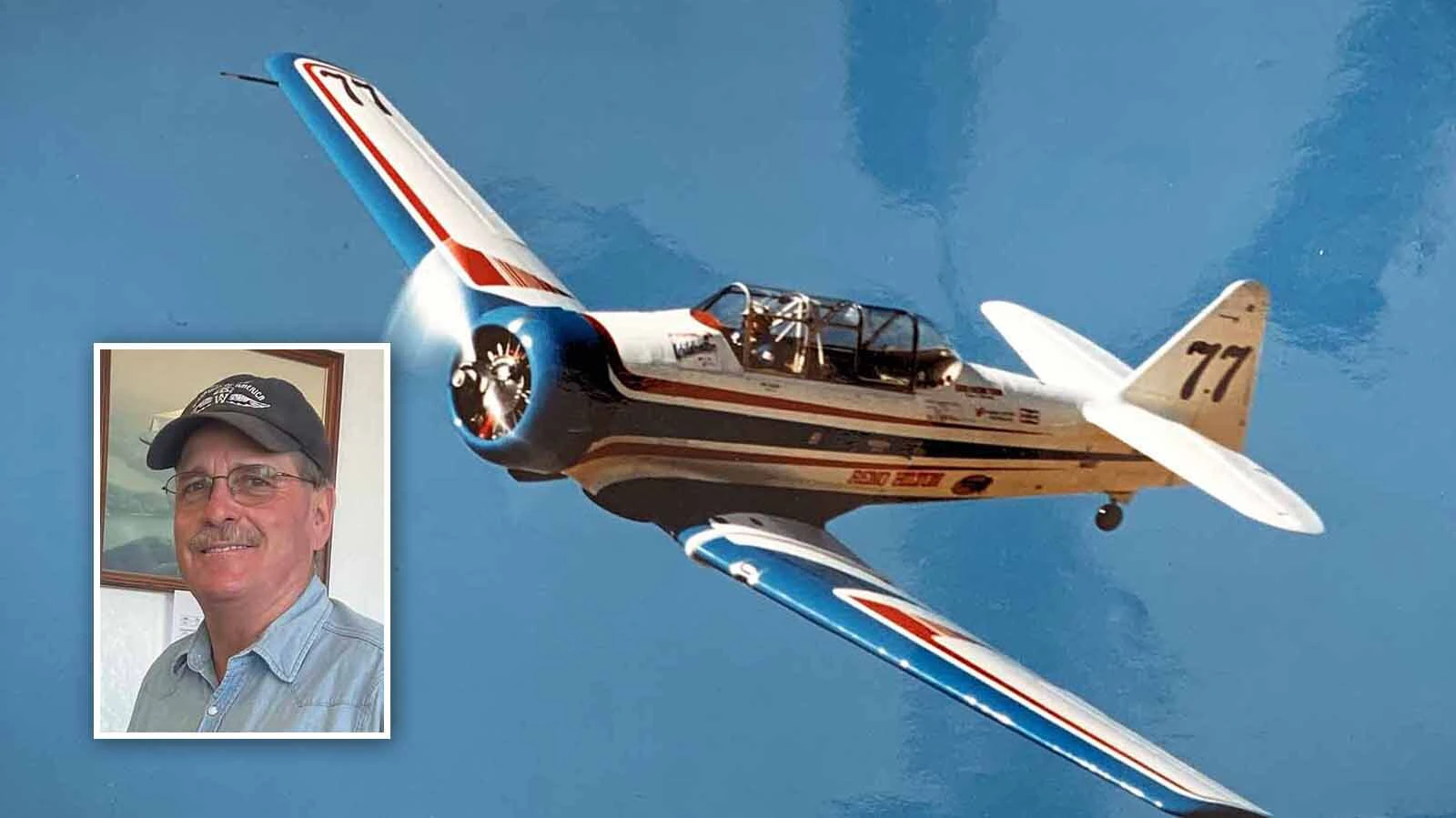
A World War II-era warbird aircraft with a long history tied to Casper, Wyoming, will take to the skies and compete for the first time in several years at the National Championship Air Races and Air Show.
The competition will take place at Roswell, New Mexico, this coming week.
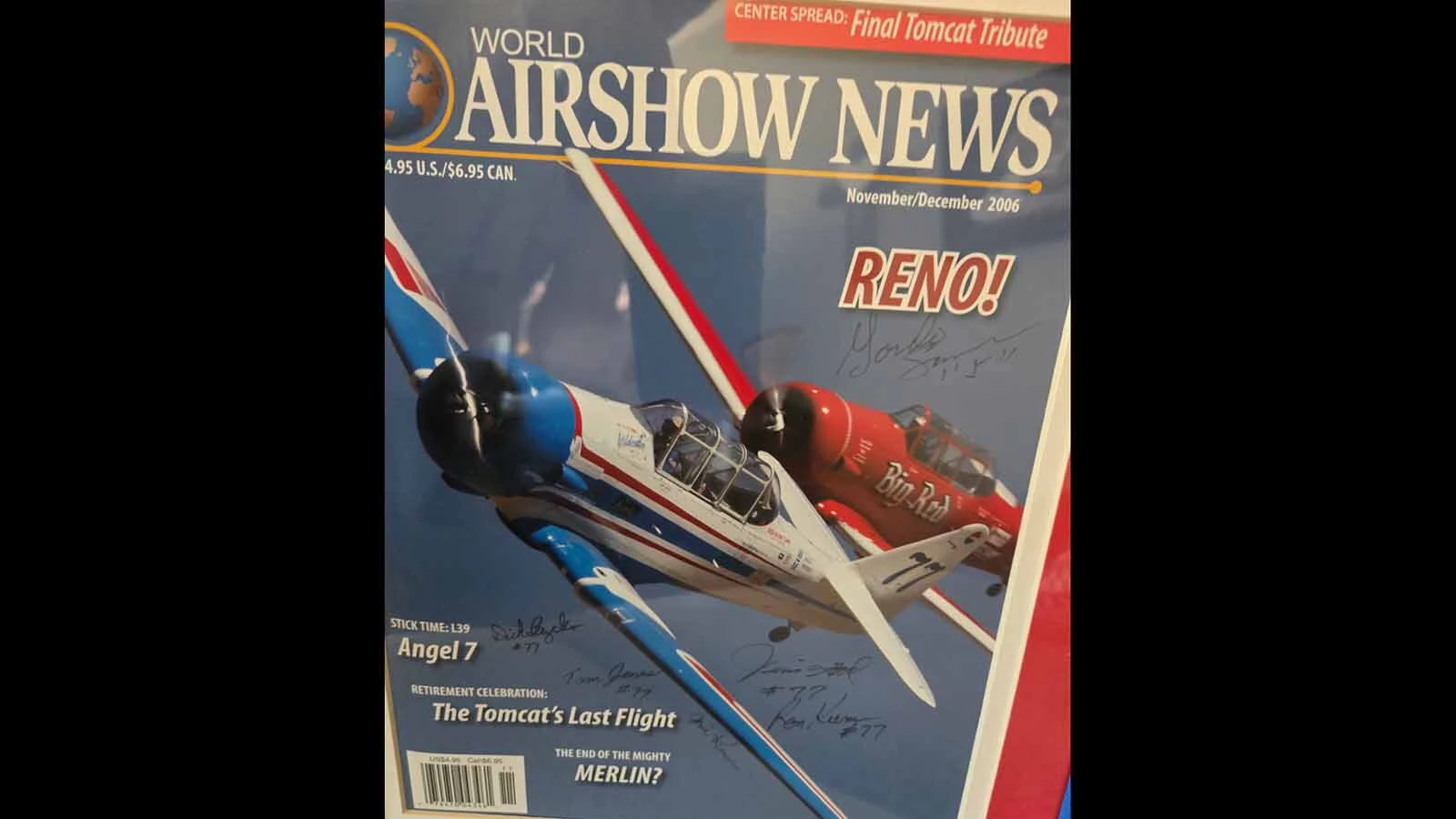
The T-6 Wyoming Wildcatter flown and known by many at air races in Reno, Nevada, from the 1980s through the 2000s will tackle competition from similar planes. Casper businessman Virgil Tatman will be at the controls.
Tatman and his team are in Roswell preparing for the races.
Tatman bought the T-6 from longtime Casper aviator Jim Good’s estate about eight years ago. He said he heard through the grapevine someone from Florida was going to purchase the former racer and scrap it out for parts.
“I wasn’t really schooled up on the T-6 and racing and all that stuff, but I ended up buying the airplane,” he said. “We (had) the engine gone through and we rebuilt it and then just started flying it.”
Tatman said he has about 600 hours in the plane and planned to fly in a racing school this weekend. In recent years he has attended clinics about formation flying and is embracing his “rookie” status as the national championship approaches.
Tatman, owner of HAMM Equipment, a company that specializes in repairs and rebuilding of heavy mining equipment, said he has been flying since the mid-1990s. At 64, he decided to try his skills against others on a national stage.
“Most people are trying to slow down and take it easy,” Tatman said. “But I’ve been working all of my life and need to spend some money, so here we go.”

Practice Runs
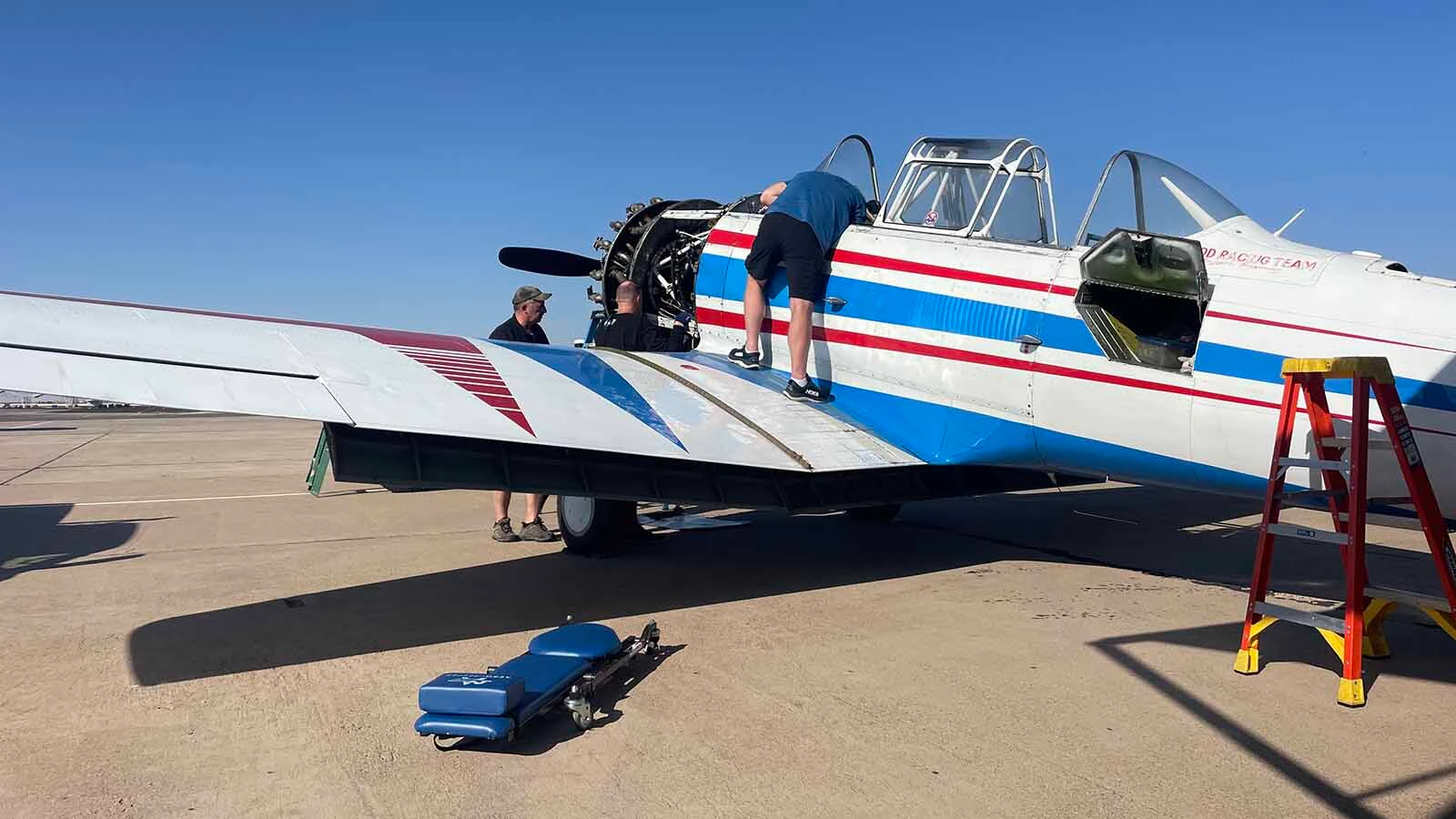
While preparing for the race in Roswell, he and his team have gone through the mandatory inspections and testing. Tatman hoped to fly practice runs in the Wildcatter with other experienced pilots in the seat behind him to gain tips.
Tatman said he has a pilot friend in Casper who owns an Extra 330 aircraft, and he has been practicing acrobatics in that craft as well. He enjoys the challenge of flying the T-6 and characterizes it as “the old man’s aerobatic airplane.”
“They call it the pilot maker. It was the airplane that they trained in for World War II. You had to have 200 hours in a T-6 before they put you in the fighters,” Tatman said. “The fighters were actually easier to fly than the T-6, and it’s easy to fly -- it’s just hard to land.”
Tatman said when trying to race with the T-6, the pilot has to manage the aircraft’s energy because there is not enough “horsepower-to-weight ratio” to escape trouble if “you do something dumb.”
His ties to central Wyoming go back to a group of Casper-based aviators called the Tired Iron Racing Team in the early 1980s. They had a couple of P-51 fighters, B-25 bomber, and the T-6 advanced training fighter.
An article in the Casper Star-Tribune on May 31, 1981, reported that the team was headed to Reno with the T-6 aircraft to race at the national airshow.
Good, who died in April 2016, became acquainted with the racing team and learned to fly their planes. When the team disbanded, he bought the T-6 and started racing the plane every year at the Reno national competition in the mid-1980s until 2007, when he quit flying because of his wife’s health, Ed Good, his son told Cowboy State Daily.
Tatman said he met Good after he had retired from flying and kept some of the information he painted on the side of the plane. He said he kept Good’s name on the airplane until his crew thought he should have his own name on it for the races.
“It’s always been known as Jim’s airplane,” he said.
Information on the Internet race page for the Roswell competition states that the T-6 Class can include the T-6 “Texan,” U.S. Navy “SNJ” version or a Canadian “Harvard” version.
'Adrenaline Rush'
The racers follow a 5.06-mile course that is marked by 50-foot pylons. The race promoters characterize the T-6 races as a fan favorite.
“Because the aircraft are all of the same type, the T-6 Class provides some of the most exciting racing, with an emphasis on strategy and pilot skill rather than raw horsepower,” the website states.
Tatman, who also owns and flies a twin-engine Turbo Commander, a classic twin-engine Beechcraft Model 18, and a helicopter, said the thought of the competition intrigues him.
“I just like the adrenaline rush,” he said. “You know, flying 50 feet off the ground at 220 miles and hour with a bunch of other guys around you.”
The goal for Tatman and his crew is to keep the Wyoming Wildcatter flying at the T-6 races for the next several years.
He said he knows physically at some point he will have to turn the controls over to someone else.
“I hope to keep doing it in the future if they keep the races going, which I’m pretty sure they are going to,” he said. “Maybe I can pass it on to someone else when I get old enough and can’t fly anymore.”
Tatman flies the distinctive red, white, and blue aircraft with the number “77.” He joins six other pilots who are part of the competition this year.
The National Championship Air Races feature seven classes of aircraft and competition, with races each day. An air show draws hundreds of visitors and features aerobatic exhibitions, flybys and a weekend performance by the U.S. Air Force Thunderbirds.
Contact Dale Killingbeck at dale@cowboystatedaily.com
Dale Killingbeck can be reached at dale@cowboystatedaily.com.


