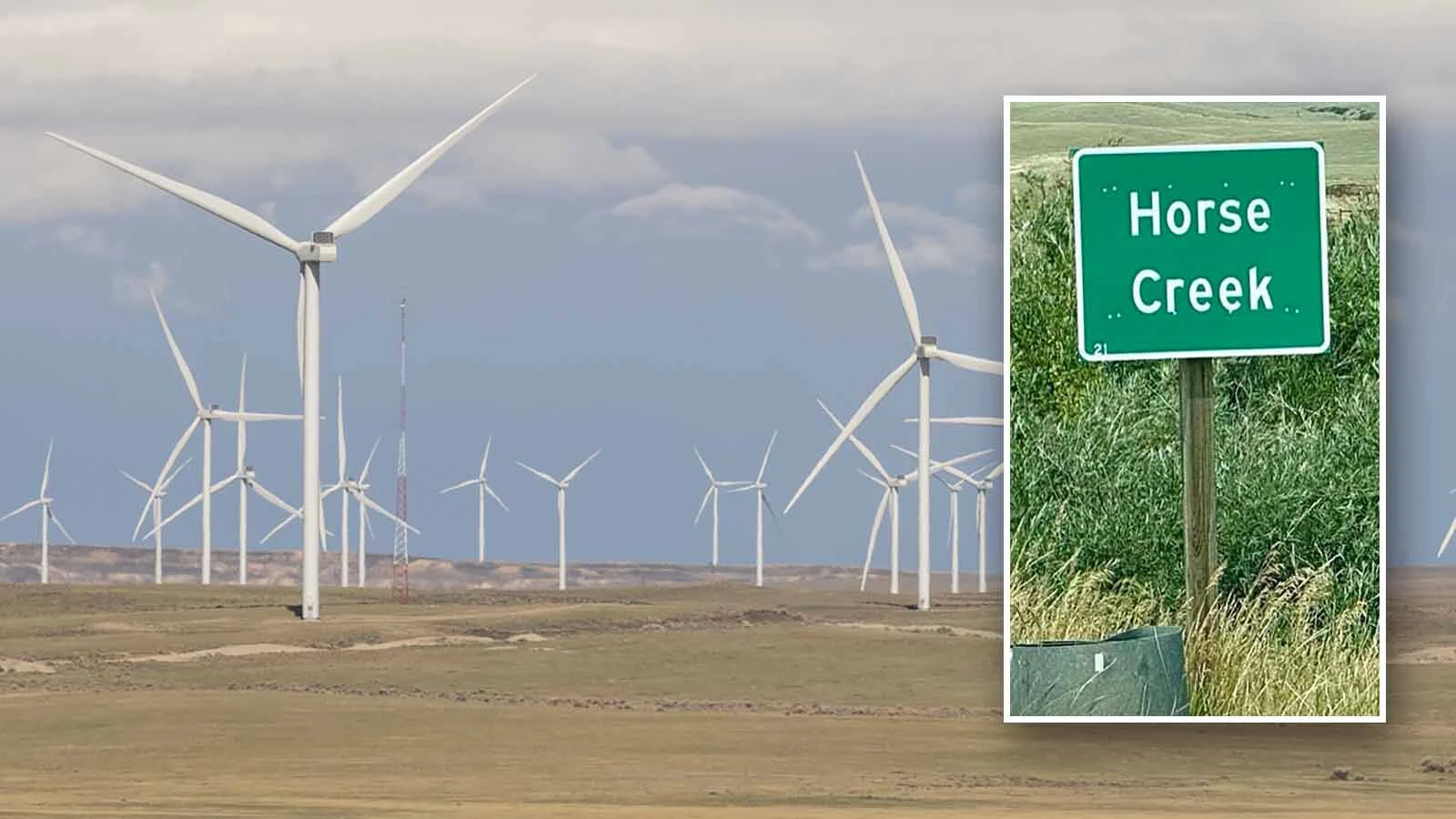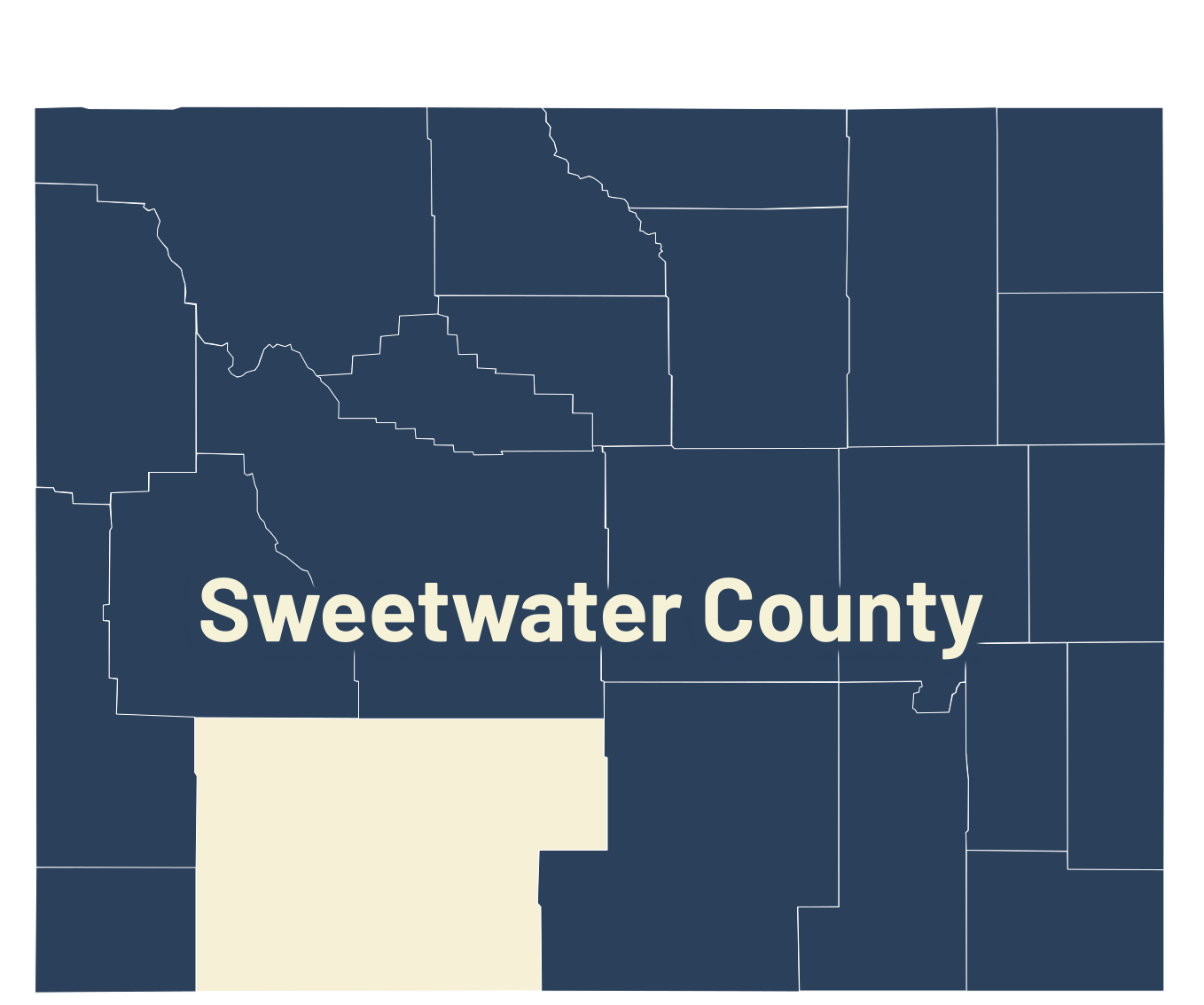
As Wyoming courts a new generation of power-hungry industries, the state increasingly finds itself facing a challenging question: Does its largest electric utility have the capacity to deliver it?
The issue revolves around data centers, trona and soda ash producers, and other large industrial users that need far more electricity than Rocky Mountain Power's existing system can readily provide.
The question is particularly pressing in southwest Wyoming, where communities regularly field inquiries from companies interested in locating energy-intensive operations but increasingly struggle to assure developers adequate electricity will be available.
For Sweetwater County, the issue is no longer theoretical.
“We don’t have any extra power in Sweetwater County at all to have any sort of new industry coming in,” Sen. Stacy Jones, R-Rock Springs, told Cowboy State Daily. “I don’t think we’re even aware of the businesses we’ve lost out on, because the minute they check on power availability here, they’re gone.”
Don Burkhart, a former state legislator who has been critical of Rocky Mountain Power’s approach, said the utility acknowledges it cannot supply the power needed to keep large industrial projects running.
“But they don’t want anyone else to do it either,” Burkhart told Cowboy State Daily. “Their philosophy is, let the companies come in and we’ll see if we can provide their power. Well, companies don’t work that way.”
He said the utility is “stuck in the past.”
System Under Pressure
Wyoming has spent years promoting itself as an attractive destination for energy-intensive industries, offering abundant energy resources, available land and relatively low taxes.
But the state’s ability to deliver electricity is increasingly becoming a determining factor in whether some of those projects materialize.
Rob Creager, Wyoming Energy Authority executive director, has noted that power availability is increasingly important to companies already operating in the state and new businesses considering investment.
The demand is coming from multiple directions, including manufacturing, oil and gas, mining, and data centers.
Nationally, the growth in anticipated electricity demand has been dramatic. According to Grid Strategies, the nation’s five-year load-growth projection has increased 456%, from 23 gigawatts to 128 gigawatts, while nationwide electricity demand is projected to grow 15.8% by 2029.
Rocky Mountain Power, however, said the picture in Wyoming is more nuanced.
The utility said in an emailed statement that organic electric load growth in the state remains relatively flat, even as requests from individual large-load customers, particularly data centers, have surged.
Rocky Mountain Power said it is seeing increased interest from large energy users and is working with prospective customers, communities, regulators and state leaders to identify ways to provide service.
“Our role is not to drive economic development, but to support it by providing reliable electric service in a way that balances new growth opportunities with our obligation to existing customers,” company spokesperson Jona Whitesides shared in an emailed statement to Cowboy State Daily.
The utility also said some stakeholders want additional generating capacity built before customers have committed to projects.
“Rocky Mountain Power has proposed a framework that would allow the state to pursue those economic development opportunities while protecting existing customers from the costs and risks of speculative infrastructure investments,” the company said.
That tension – between preparing for a potentially enormous wave of new demand and avoiding investments whose costs could ultimately fall on existing customers – is at the heart of Wyoming’s growing electricity debate.
Two Legislative Bills
Two bills being considered by lawmakers are an attempt to create another path.
At an August meeting of the Wyoming Legislature’s Minerals, Business and Economic Development Committee, lawmakers discussed two draft bills that could give large energy users another option: Generating or obtaining electricity outside the traditional utility system.
One proposed bill, titled “Utilities-regulation exception for electricity generators,” would carve out an exemption from public-utility regulation for certain electricity producers serving large customers.
Under the draft, an electricity producer could qualify if it exclusively serves either one customer with at least 25 megawatts of electric demand or no more than four customers with a combined demand of at least 100 megawatts.
An alternate version in the draft specifies that the electricity would have to serve new or expanded demand beginning July 1, 2027. The Wyoming Public Service Commission would be authorized to request information to determine whether a generator qualifies for the exemption.
The second proposed bill, “Nonpublic utility generators,” would establish a regulatory framework for companies that want to generate and provide electricity directly to nonresidential customers without being treated as traditional public utilities.
The proposal would limit those generators to serving customers located in Wyoming and at or near the generation site. They generally could not use public utility transmission or distribution facilities except through an approved tariff or special contract, and they could not interfere with an existing utility or its customers.
Neither proposal has yet become law. Both are working drafts sponsored by the Joint Minerals, Business and Economic Development Interim Committee.
Jones describes the proposals as “Plan B.”
“If utilities are able to provide that, it’s everyone’s number-one choice,” she said. “It’s not a cheap endeavor to make your own power. People would much rather get it from RMP, if there’s any way we can do it.”
A Lost Power Project
Wyoming has seen industrial projects turn away amid concerns about electricity availability.
In 2024, CarbonCapture Inc. abandoned plans to build Project Bison, a massive direct-air carbon capture facility in southwest Wyoming.
The company cited several challenges, including what it described as “intense competition from data centers” for electricity in the region. The project was expected to require an enormous amount of power – potentially as much as three times the 345 megawatts that will be generated by TerraPower’s Natrium nuclear reactor under construction near Kemmerer.
Earlier that year, CarbonCapture was working with Rocky Mountain Power to determine whether the utility had sufficient capacity for the project’s initial 100-megawatt electricity demand.
“We did not have the energy they needed,” Jones said.
The loss was particularly significant because the project represented a potentially billion-dollar investment and was part of a federal competition for funding for large-scale carbon removal projects.
For Wyoming economic development officials, the episode demonstrated how quickly electricity availability can turn from an infrastructure question into an economic development question.
How Big Is The Shortfall?
Wyoming is seeing unprecedented interest from projects whose electricity requirements can dwarf those of traditional industrial operations.
The state’s rules are designed in part to accommodate large-load customers while protecting ordinary ratepayers.
Rocky Mountain Power and its parent company, PacifiCorp, are majority owners of four coal-fired power plants in Wyoming, including the Jim Bridger plant near Rock Springs and the Dave Johnston plant near Glenrock.
The utility is also confronting rising costs across its existing system. Earlier this year, Rocky Mountain Power asked the Wyoming Public Service Commission for a $71 million rate increase, which the company said would amount to an average 8.8% increase for its roughly 150,000 Wyoming customers.
Wyoming regulators have allowed the company to increase its base rates by nearly 16% since 2024.
Who Pays For New Power?
Rocky Mountain Power maintains that Wyoming’s longstanding energy policy requires utilities to build infrastructure that is “used and useful” rather than constructing expensive facilities speculatively.
That approach, the company said, has helped keep Wyoming electricity prices relatively low.
“Rocky Mountain Power has achieved this mandate and, as a result, our power prices remain almost ¼ below the national average,” the utility said.
The company also emphasized that large-load customers are responsible for the costs associated with connecting to and being served by the system.
But that philosophy can create a difficult chicken-and-egg problem for economic development officials.
A company considering a massive project wants to know electricity will be available before it commits billions of dollars to Wyoming. The utility, meanwhile, does not want to build expensive infrastructure until it knows a customer will actually materialize and pay for it.
“Lead times are a reality for many hyper-scale and large load projects — around three years,” Rocky Mountain Power said.
The utility said it has proposed regulatory mechanisms that could allow businesses to connect more quickly while addressing the risks associated with speculative infrastructure.
Rocky Mountain Power also pushed back against the idea that there is a single explanation or timeline for its ability to serve new projects.
“Too often, misconceptions about electric service availability or timelines discourage opportunities unnecessarily,” the utility said. “While supply chain constraints can affect delivery of certain equipment, those challenges are being experienced across the industry, and customer-specific timelines depend on a variety of project factors rather than a single, generalized timeframe.”
Conflicting Explanations
Jones said she has received conflicting explanations about why the utility cannot provide electricity to some prospective projects, with some discussions focusing on generation and others on transmission.
“It’s hard to fix things when we’re getting conflicting reports,” she said.
Burkhart said the utility lags well behind the timeline required by some data center projects.
“Rocky Mountain Power cannot provide electricity in anywhere near the time frame that data centers are requiring,” he said.
Jones said the frustration is not that Wyoming wants to abandon Rocky Mountain Power. Rather, she said, lawmakers and economic development officials need another option when the existing system cannot meet a prospective project's needs.
“We definitely are trying to grow the state, but our hands are tied,” she said.
Kate Meadows can be reached at kate@cowboystatedaily.com.