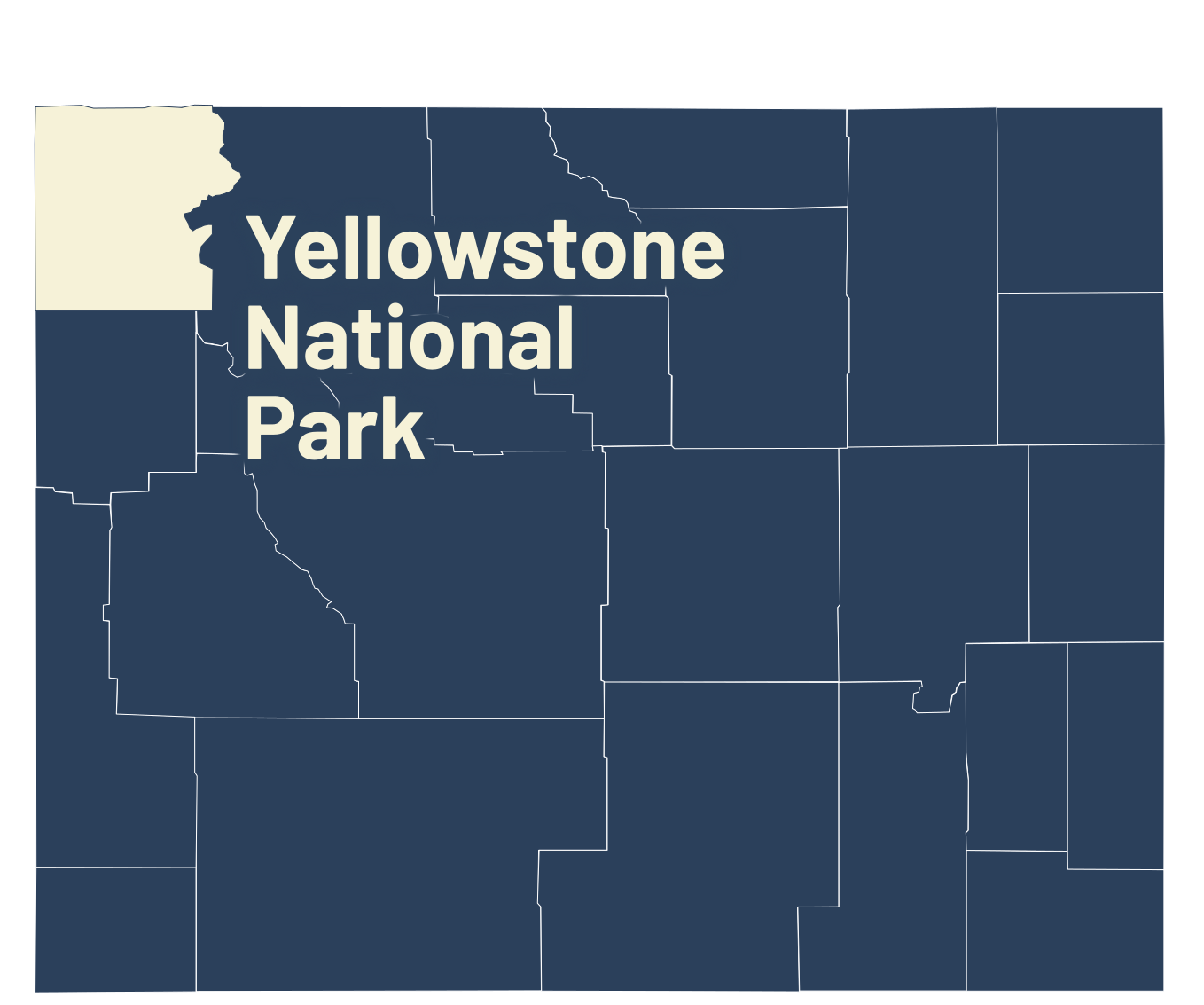
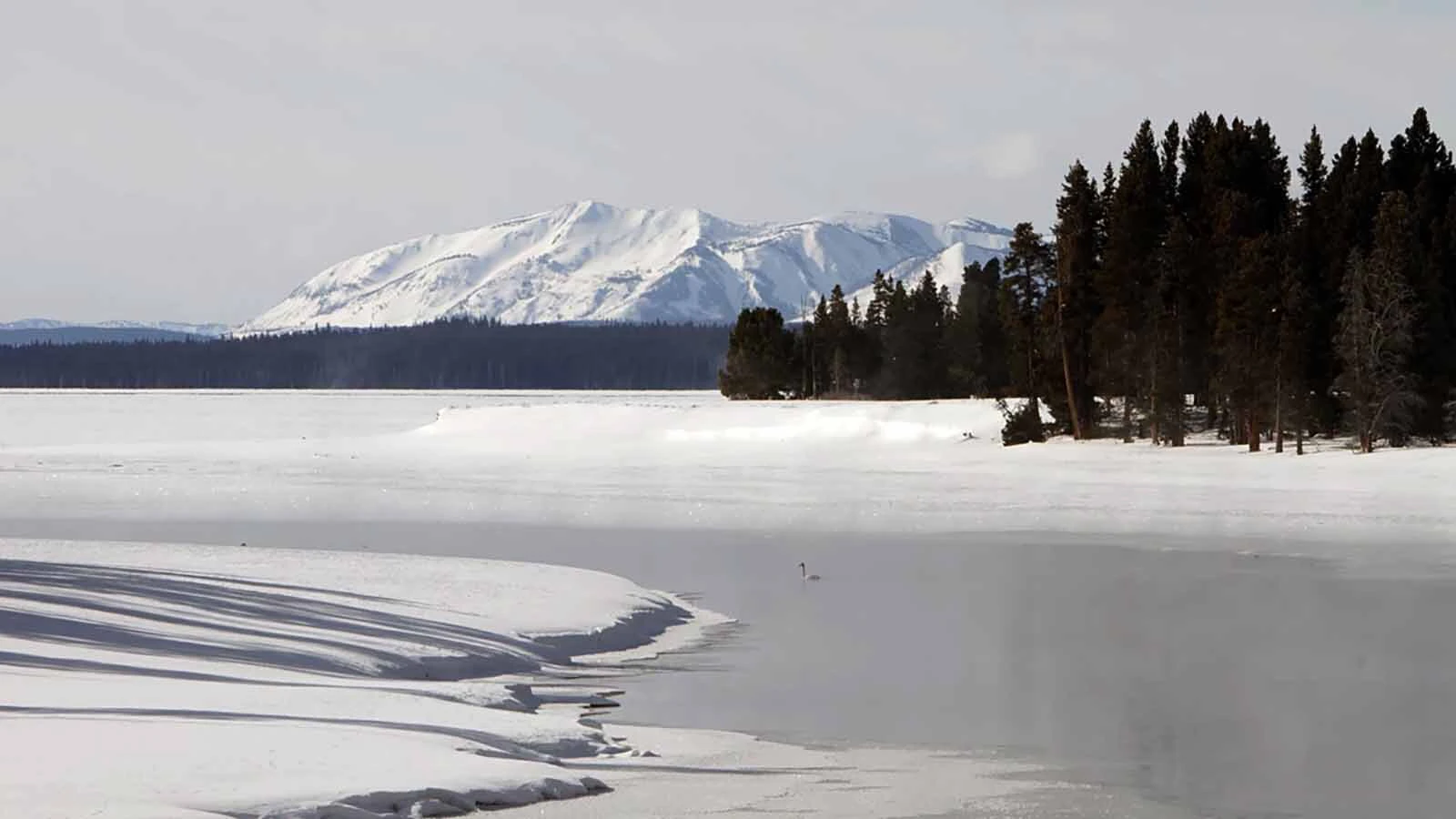
When someone visits Yellowstone National Park in winter, they might hear an eerie symphony of sound moving through the air and across the water of Yellowstone Lake. A fortunate few have heard it, but nobody’s been able to explain it.
It’s been described as everything from “ethereal organ music” to “the ringing of telegraph wires.” It’s the strangest and most inexplicable of the many unique noises in Yellowstone, and one that most visitors won’t ever hear.
“It’s mysterious, magical, and moving,” said Lifelong Yellowstone employee, enthusiast, and author Jeff Henry. “I couldn't describe it any better than that.”
Strange Symphony
Henry, who’s spent the last 48 years working as a winter keeper in Yellowstone, said he’s heard the “music” of Yellowstone Lake multiple times. He recalled one experience while he was working near the Lake Butte Overlook in early January.
“Because I was elevated above the lake, the sounds were especially clear,” he said. “If you're up in the air, the sound seems to rise. I spent probably two to three hours sitting on a rock listening that time.”
During another winter, Henry was living in a cabin at Lake Lodge, a short walk away from Lake Yellowstone. Once the sounds started, he dared to walk onto the ice-covered water.
“I could feel the vibrations through my boots into my feet as I walked around on the ice,” he said. “Again, I spent a long time on that outing because it was so unique and so darn cool.”
Other times, Henry recalled working near Yellowstone Lake and hearing the music being carried through the air.
“Some days, I worked all day long and was serenaded by the music of the lake while I was working," he said.
Same Old Tune
Henry isn’t the only one to vividly recall the music of Yellowstone Lake. Many others have documented their experience with the strange sounds.
Frank Bradley, a geologist with the Hayden Geological Expedition, heard something strangely beautiful while enjoying breakfast in 1871. It might be the earliest documented experience of Yellowstone Lake’s music.
“We heard every few moments a curious sound, between a whistle and a horse whine,” he wrote. “The sound increased in force, and it now became evident that gusts of wind were passing through the air above us, though the pines did not as yet indicate the least motion in the lower atmosphere.”
Hiram M. Chittenden was more descriptive about the music in his 1895 book, “The Yellowstone National Park: Historical and Descriptive.”
“They seem to occur in the morning, and to last for only a moment,” he wrote. “They have an apparent motion through the air … They resemble the ringing of telegraph wires or the humming of a swarm of bees.”
Henry speculated that the music had a much deeper history than that. After all, there have been people in Yellowstone for over 10,000 years.
"We have no archaeological evidence of people camping near Yellowstone Lake in winter, and it'd be a hard place to winter," he said. "Still, it makes sense, to me, that at least one group might have had to camp there. If they heard that music, that's some big medicine."
Henry had a hard time describing what Yellowstone Lake's music sounded like, because it was never the same. Each of his experiences was different.
“If you're close to the lake when it's happening, you can hear a ping that seems to start close and follows a linear path away from you,” he said. “Sometimes the sound is a type of groaning, while other times it reminds me of recordings I've heard of whale songs.”
There appears to be at least one constant, from Henry's experience. The music is most consistent from late December to early January, when Yellowstone Lake is starting to freeze over but the ice isn’t thick and solid.
Ironically, one of the best years for the music was one of the driest in Yellowstone’s recorded history. Henry said the winter of 1980-1981 was like a never-ending symphony of sound.
“There was basically no snow for weeks and weeks, so the lake continued to sing for weeks and weeks,” he said. “It's usually during the short time between when the lake freezes and when the ice gets covered up with snowfall, muffling the sound, that the pinging and groaning is audible.”
Music Theory
While the music of Yellowstone Lake hasn’t been studied in depth, the auditory phenomena of frozen lakes has been thoroughly studied.
John Downing described the source of the sounds in a 2021 blog post on the website Sea Grant Minnesota, a program of the University of Minnesota. He said the sounds occur as changes in climate alter, crack, and deform ice.
“Any abrupt change in the ice will create a vibration of the ice surface that will vibrate as it damps out due to friction with the air and water,” he wrote. “The ice warms and cools from changes in sun and air. As it cools, it shrinks away from the sides of the lake that constrains it, and as it warms it expands to push back against the shore.”
The expansion and contraction of the ice lead to cracking and deformation. When that occurs, it creates an eerie sound that easily travels through the ice and air.
Downing also explained why such sounds can only be heard when lakes are lightly iced over and not in the dead of winter.
“First, the ice is thicker, so it takes more force to fracture it,” he wrote. “Second, the ice sheet is heavier, so it takes more force to vibrate it. Third, the ice is usually snow-covered, and this acts to deaden sounds.”
Henry couldn’t attest to the scientific accuracy of Downing’s assessment, but he could accurately say that the music isn’t unique to Yellowstone Lake.
“I have heard other lakes in Yellowstone make similar noises,” he said. “I was walking on the ice on Feather Lake, north of Old Faithful, and I could hear and feel the vibrations through the ice.”
Henry has heard similar music in spring, but not at Yellowstone Lake.
“As a park ranger, I was stationed at the Lower Blacktail Patrol Cabin, on antler poaching patrol, for the entire month of April 1983,” he said. “Crevice Lake is really close to the cabin, and it was making identical sounds as it was thawing out. That’s the only time I think I've ever heard those sounds when the lake was thawing rather than freezing.”
Concert Masters
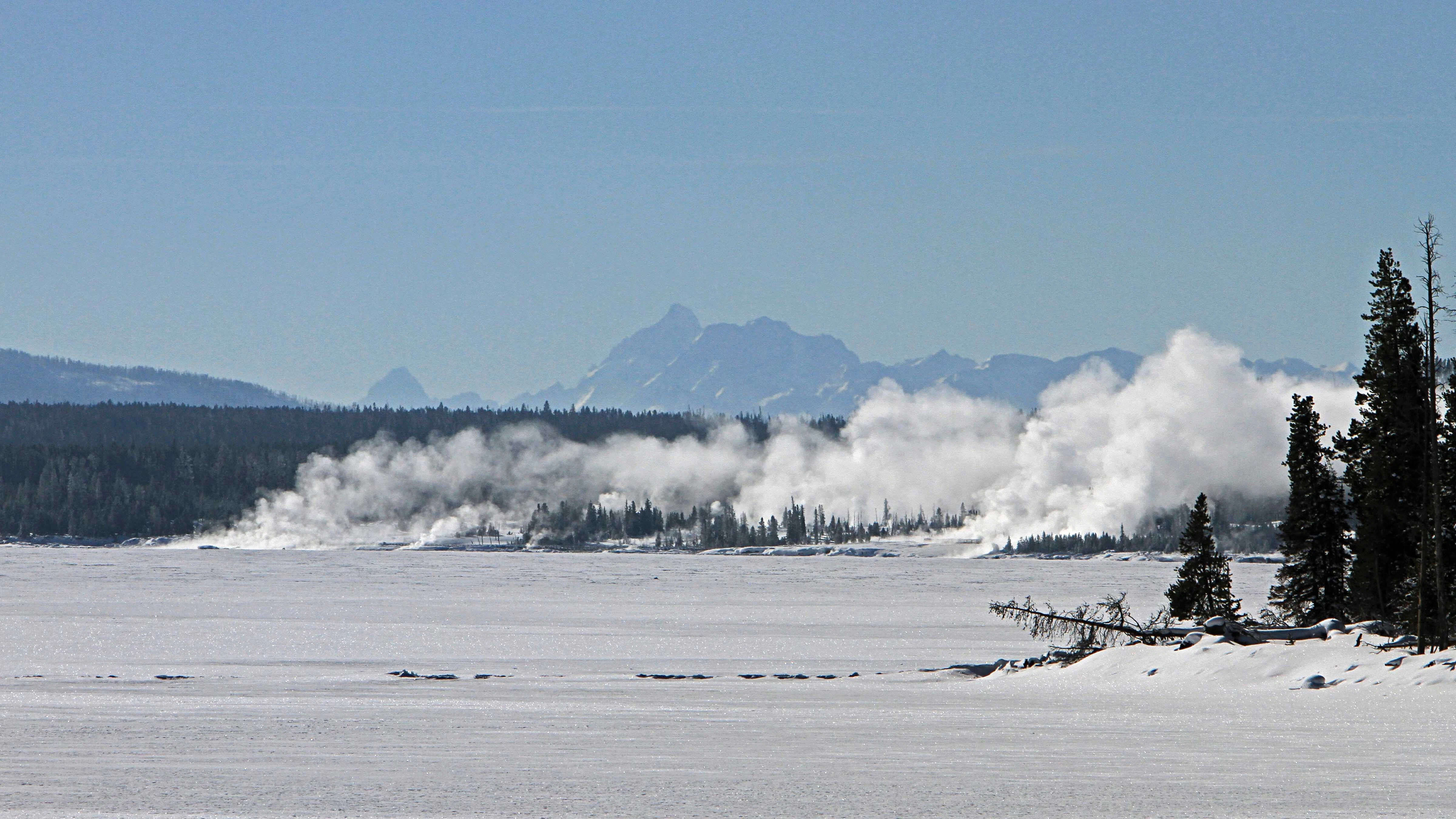
Anyone who wants to hear the music of Yellowstone Lake will have a hard time getting a good seat for the symphony. Most of the park is closed in winter, only accessible by snowmobile or snow coach.
Henry said he’s been lucky because he hasn’t had to go listening for the music. He’s encountered it organically while living and working in Yellowstone during the winter.
However, he did have one recommendation for anyone eager to hear the music.
“My friend, Arden Bailey, owns and runs the Yellowstone Expeditions yurt camp at Canyon Village,” he said. “I know he’s offered to take people to the lake specifically to hear the music of the lake.”
Bailey escorts music aficionados 16 miles from Canyon to Yellowstone Lake via snow coach. There, they sit and wait to listen to whatever there is to hear.
Even there, there’s no guarantee they’ll hear anything. Yellowstone Lake doesn’t perform on demand.
“You can't camp out on the shore of the lake for 24 hours a day for weeks at a time,” Henry said.
Timeless Classic
Some people have said the music of Yellowstone Lake has gotten harder to hear over the years. Henry disagrees, speaking from experience.
“It seems like some years it either doesn't happen at all, or it doesn't happen to the extent it has in other years,” he said. “I will say that you can never say that it hasn't happened just because you didn’t hear it.”
When a tree falls in the forest, and all that.
Henry has heard well-reasoned explanations for the source of the strange sounds of Yellowstone Lake, but he isn’t particularly interested in knowing. For him, that would take away from the mystery and joy of experiencing it.
“It is mysterious and magical, and the fact that you don't know exactly what causes it adds to the mystery and magic,” he said. “I’m already looking forward to next winter, and I should be able to hear it.”
Not everyone can be as fortunate as Henry, which he acknowledged. He’s spent most of his life fully immersed in the wonders of Yellowstone, or floating on them, and the wonders never cease.
“I know you probably can't print this, but I've been the luckiest son of a bitch in the world,” he said.
Andrew Rossi can be reached at arossi@cowboystatedaily.com.