
Protests in Washington, D.C., are common these days, but they weren’t in 1894, when the first major march on the nation's capital included many Wyomingites who had lost their jobs and were fighting for their survival.
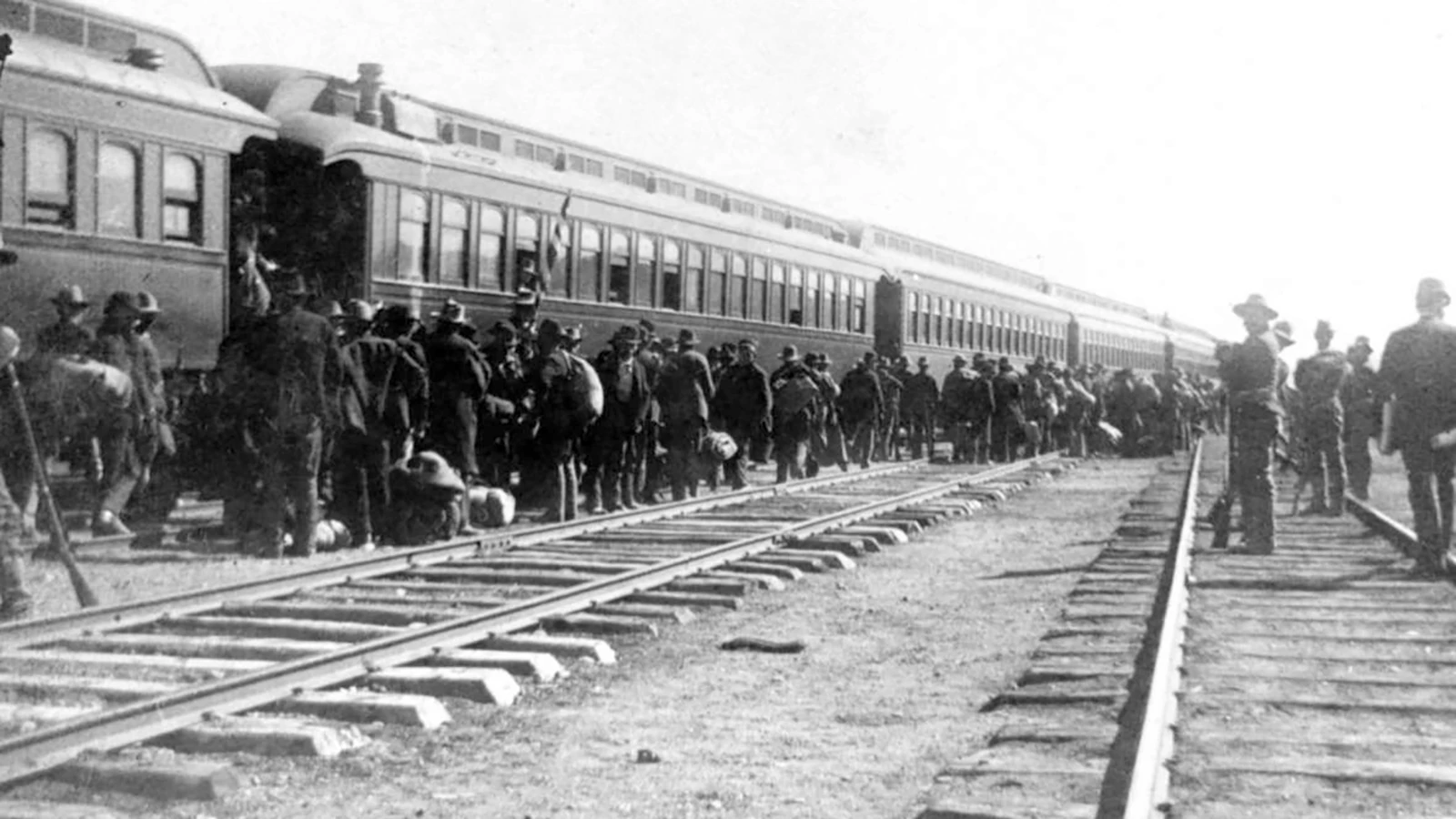
In addition to such hardships, getting to the East Coast wasn’t easy for anyone in the West. Some would-be protesters stole freight trains, and many who joined the march were arrested along the way, including a group of about 250 in Green River.
The protest became known as “Coxey’s Army,” named after leader Jacob Coxey of Iowa. The movement included many people in the West desperate to be heard, and those who could also joined them along the way.
The public was supportive, too, until those train thefts cast a pall over the entire effort.
And the group's exploits would later become the subject of speculation that it was the inspiraton for the best-selling 1900 book "The Wonderful Wizard of Oz" that was turned into a classic American film in 1939.
The country was in the middle of a depression that started in 1892 and became “the Panic of 1893.” Unemployment was at 20%, and many workers lost their jobs because of the industrial revolution of the late 19th century.
Working conditions were poor and payrolls had been slashed, and people were working much longer hours for less money.
Even those who had jobs, including miners and railroad crews who increasingly started strikes against their employers, were hungry and overworked.
Banks failed for many reasons, including a gold shortage and corrupt owners. One of the chief causes was over-speculation on the railroad industry.
“Industrial armies” were formed by Coxey and others, and they wanted to let employers and politicians know that they meant business.
It did not end well for them.
The Movement Begins
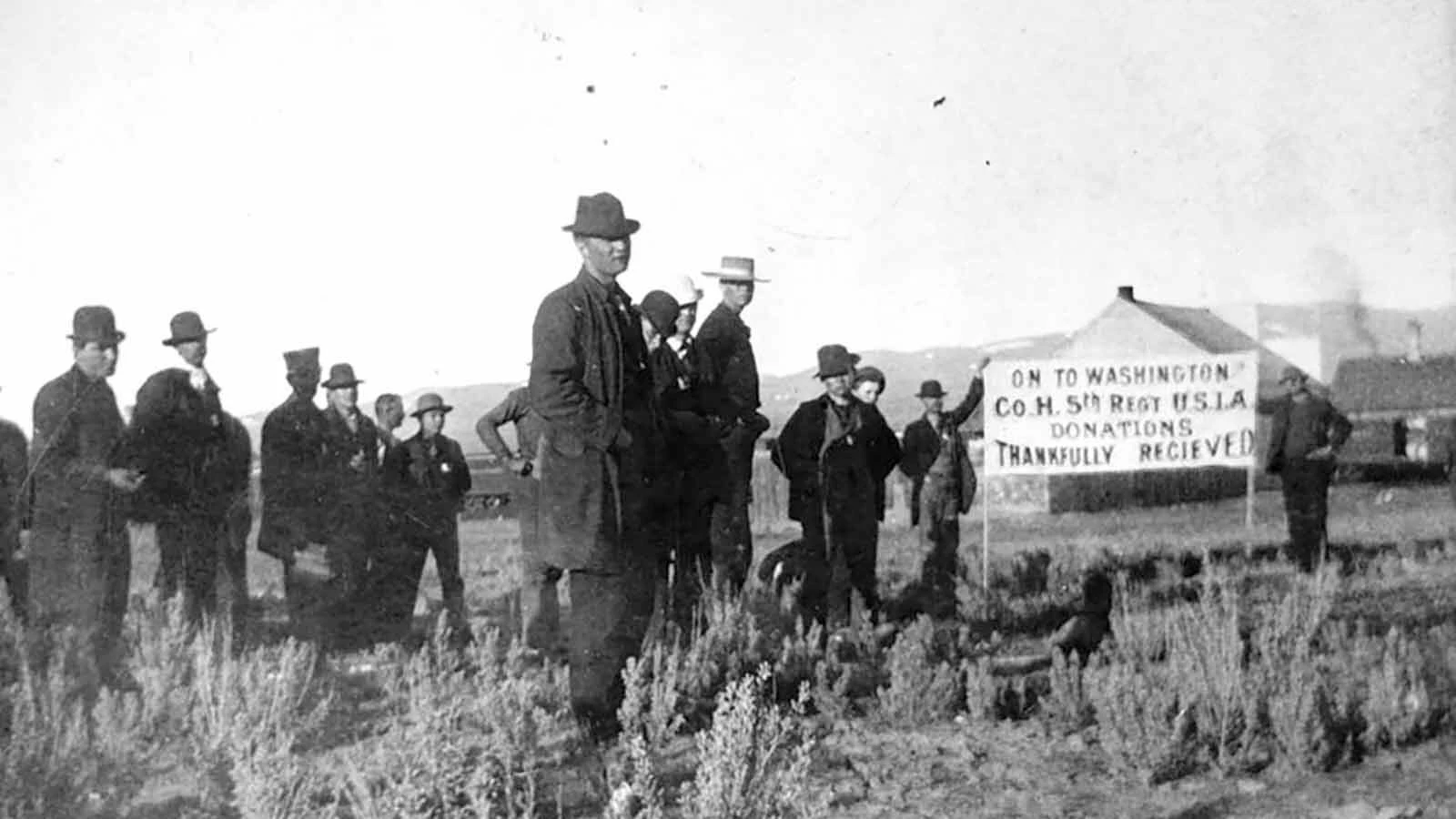
Initially stirring things up was a grassroots group named the Army of the Commonweal (correct spelling) in Christ, formed by Coxey. Its members were mostly laid-off railroad workers.
On April 12, 1894, a train with 27 boxes filled with California protesters arrived in Evanston. According to the Laramie Republican, they were met by an enthusiastic crowd that gave them “an abundance of grub” and enough provisions to last two days.
Gov. John Osborne had called out the National Guard to keep the peace, but it turned out the troops weren’t needed.
Continuing on their journey, the newspaper reported that the men were “quiet and peaceable and in the best of spirits.” In Laramie, they were greeted by an immense crowd “apparently filled with a curiosity to see what the contingent looked like.”
Cautious about another possible encounter with the National Guard, leaders had the train speed through Laramie while “several hundred begrimmed [sic] faces popped from the openings and gave-vent to a hoarse greeting.”
But when the protesters camped for the night at Red Buttes, they received the same positive response they had met in Evanston.
Other contingents of Coxey’s Army in Wyoming and neighboring states were having a much tougher time, mostly due to their criminal behavior.
Protesters seized a Northern Pacific train in Butte, Montana, and headed east. Marshals tried to arrest them near Billings but were overpowered, and several officers were injured.
Arrests In Green River
Several of the Coxey Army regiments were still trying to get to Washington to meet with their leader, who arrived at the capital on April 30.
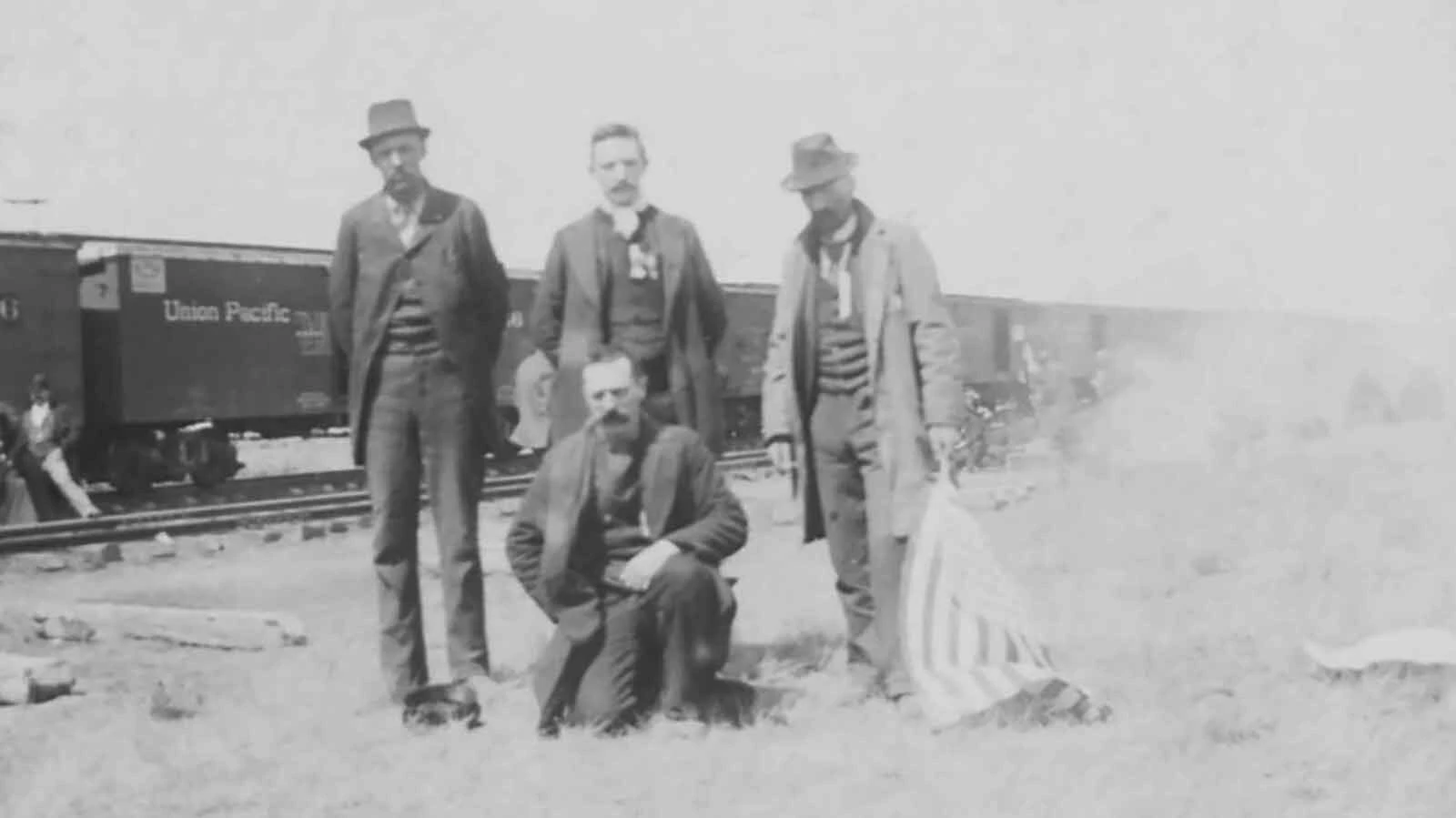
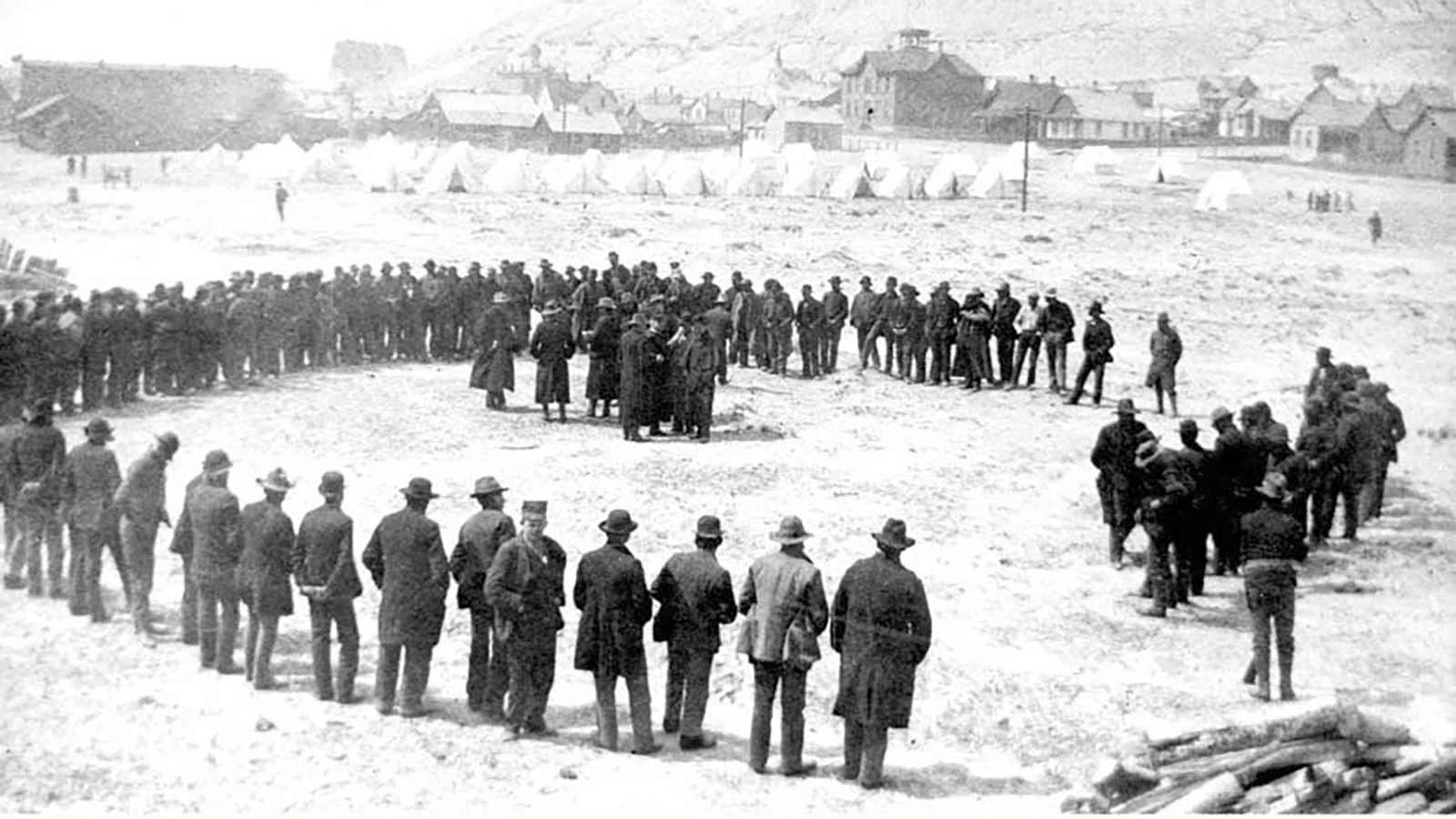
A group of “Coxeyites” numbering about 250 had started from Portland, Oregon, and stole a train in Montpelier, Idaho. U.S. Marshal Joseph P. Rankin, accompanied by eight new deputies, tried but failed to stop it in Cokeville, Wyoming.
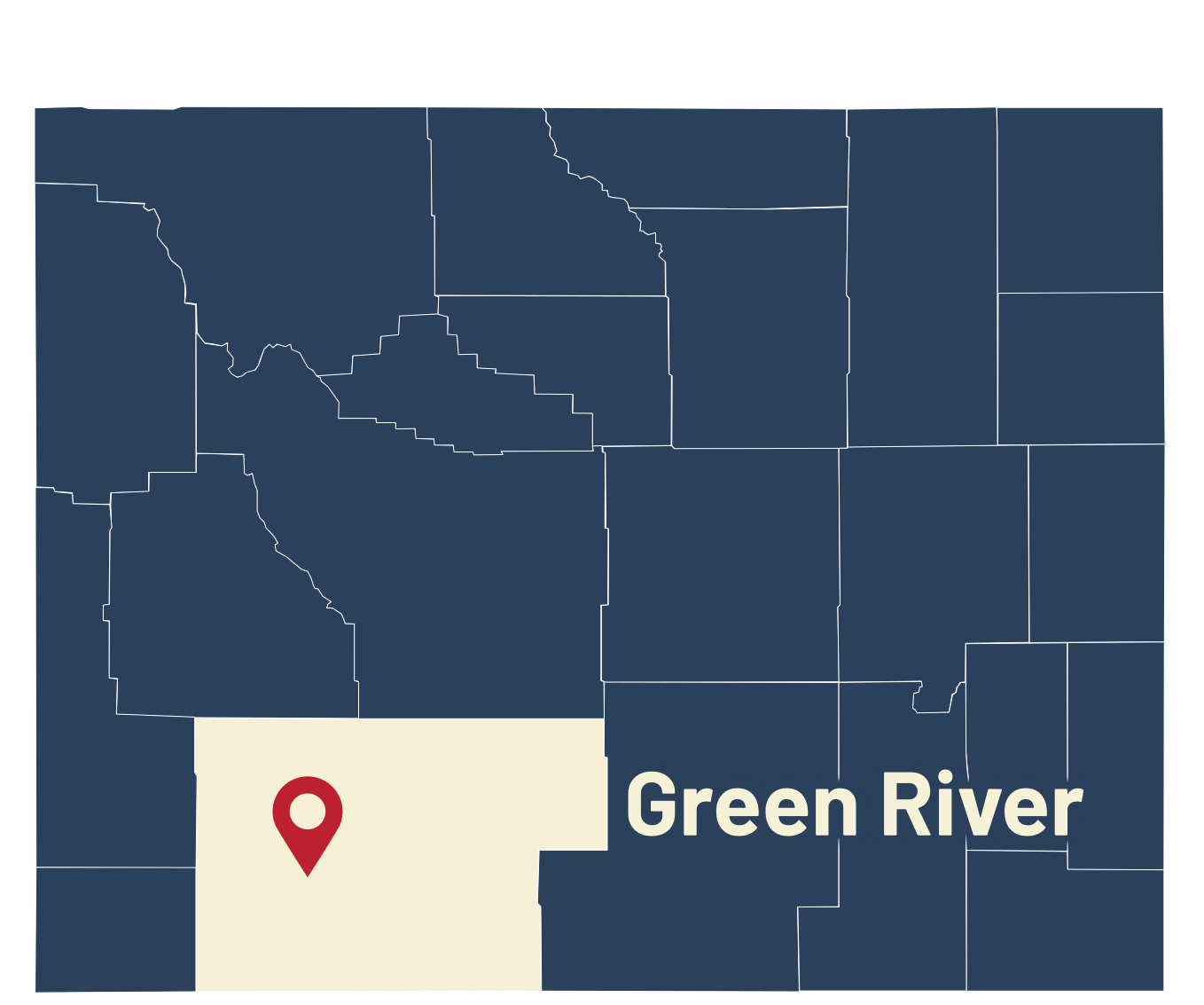
The authorities met up with the protesters in Green River, where the Union Pacific-owned Oregon Short Line met the main UP line. Rankin and a deputy spotted four protesters trying to cut the telegraph wires but couldn’t catch them.
But a hastily organized group of local men did. Rankin arrested the Coxeyite “general” while he was resting in the Big Horn Hotel in Granger on May 14.
Rankin rounded up 15 of the presumed protest leaders and shipped them to Cheyenne to stand trial in state court. The remainder were held in Green River until soldiers in four companies from Fort Russell in Cheyenne could take them back under a federal warrant to Idaho, where they were all convicted of minor offenses.
But two leaders who eluded capture in Green River managed to hop a train to Cheyenne. Authorities learned of their escape and plan to continue to Washington, but a large-scale hunt for them was fruitless.
Rankin, though, was rewarded handsomely by the federal government for the Green River arrests. His office was given $6,000 for salaries to use in the next fiscal year — a sum worth more than $200,000 today.
Rankin told the Carbon County Journal he was disgusted by the Coxeyites, and the newspaper agreed, editorializing that “half the men arrested in Green River were professional bums (who had) left jobs to get a free ride and grub.”
March On D.C.
Coxey and a depleted, somewhat disgraced army of about 500 with little food, no provisions and sparse sympathy from the press finally arrived in Washington at the end of April. Another 6,000 protesters were camped at a large farm site in what is now Colmar Manor, Maryland.
Still, while many people were also upset with Coxey’s tactics, there was support for what he was trying to accomplish, which essentially amounted to the New Deal that future President Franklin D. Roosevelt convinced Congress to pass four decades later.
It was a doomed trip for Coxey. First, President Grover Cleveland refused to meet with him.
Coxey’s May 1 agenda included demanding government assistance and public works projects. It was presented in the form of a proposed bill to authorize $500,000 of Treasury notes in denominations of $1, $2, $5 and $10 “to be placed in a fund known as the General County Road Fund System of the United States, to be expended solely for said purpose.”
But when Coxey and some of his followers reached the U.S. Capitol, they were promptly arrested. Their crimes? Trying to speak from the Capitol steps and trespassing on the grass at the Capitol.
Despite the official rebuff of Coxey, Washington leaders soon recognized that they had to do something to calm the country in the wake of the Pullman strike. Congress officially passed Labor Day as a national holiday, and Cleveland signed the bill.
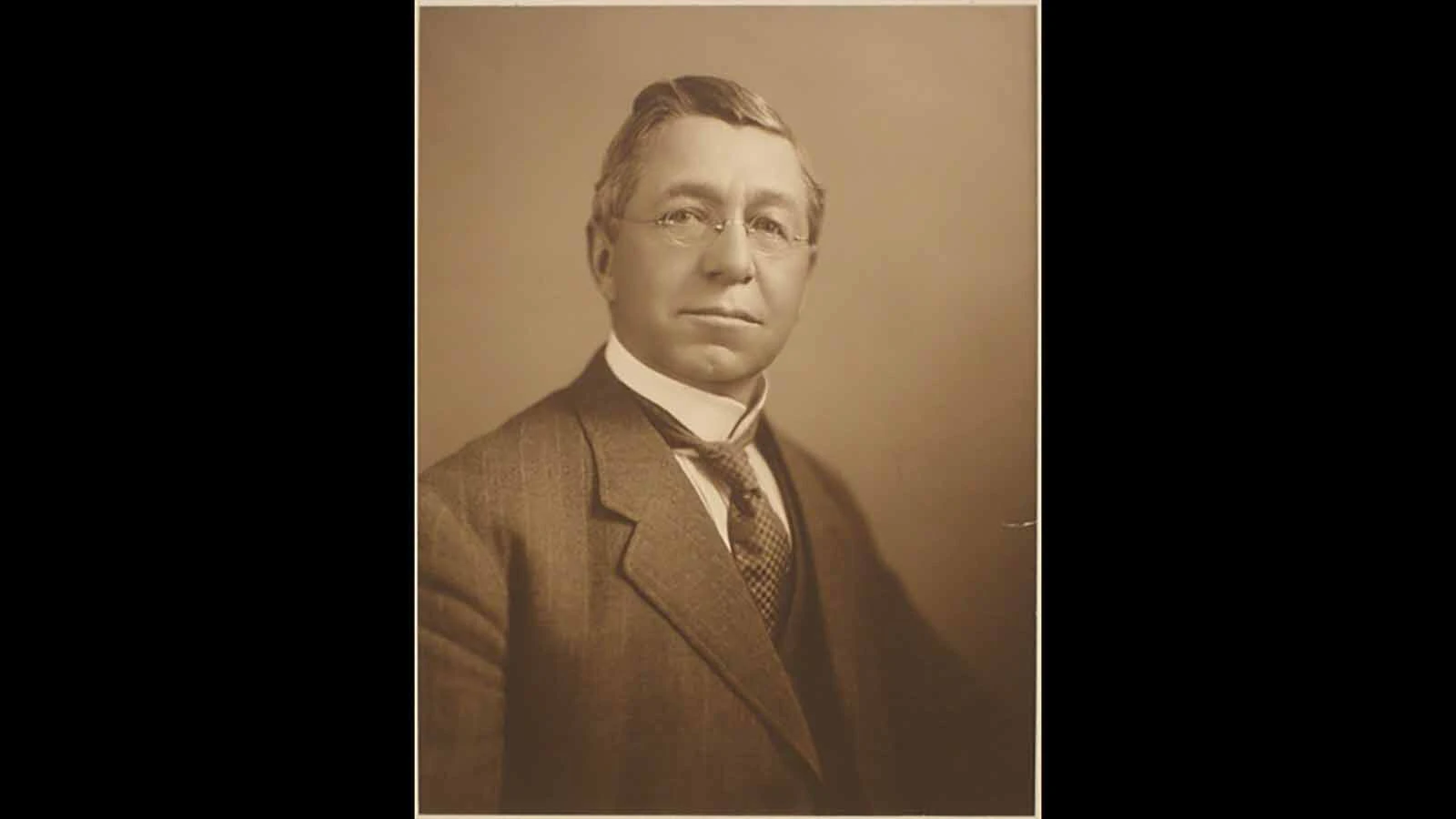
Perhaps reinvigorated by this labor movement victory, Coxey wasn’t done – not by a long shot. He organized another march in 1914, when the political climate for such a protest was much better. This time he did speak from the Capitol steps.
After many of the things he wanted to improve the economy and the lives of America’s working men and women became federal policy, Coxey was invited by Congress to appear again on May 1, 1944, to read his original petition on the steps of the Capitol.
The Wizard Of Washington?
Today, Coxey’s Army has a unique place in American culture.
"The Wonderful Wizard Of Oz" author L. Frank Baum was a keen observer of Coxey’s Army’s march on Washington, and some people believe his book was filled with hidden meanings related to the army.
They include the walk to Emerald City (Washington, D.C.) to demand help from the Wizard (President Cleverland). Dorothy’s silver shoes in the book are thought to represent free silver, Coxey’s idea to help the economy instead of continuing the gold standard (the Yellow Brick Road).
After all, it was a shortage of gold that led to the Panic of 1893. Those silver shoes, by the way, were only changed to ruby to enhance the Technicolor of the 1939 film based on the book.
Another famous author, Jack London, wrote about his own experiences in a contingent of Coxey’s protest called Kelly’s Army. It was a chapter called “Two Thousand Stiffs” in his 1907 book, “The Road.”
Kerry Drake can be reached at: Kerry.Drake33@gmail.com


