
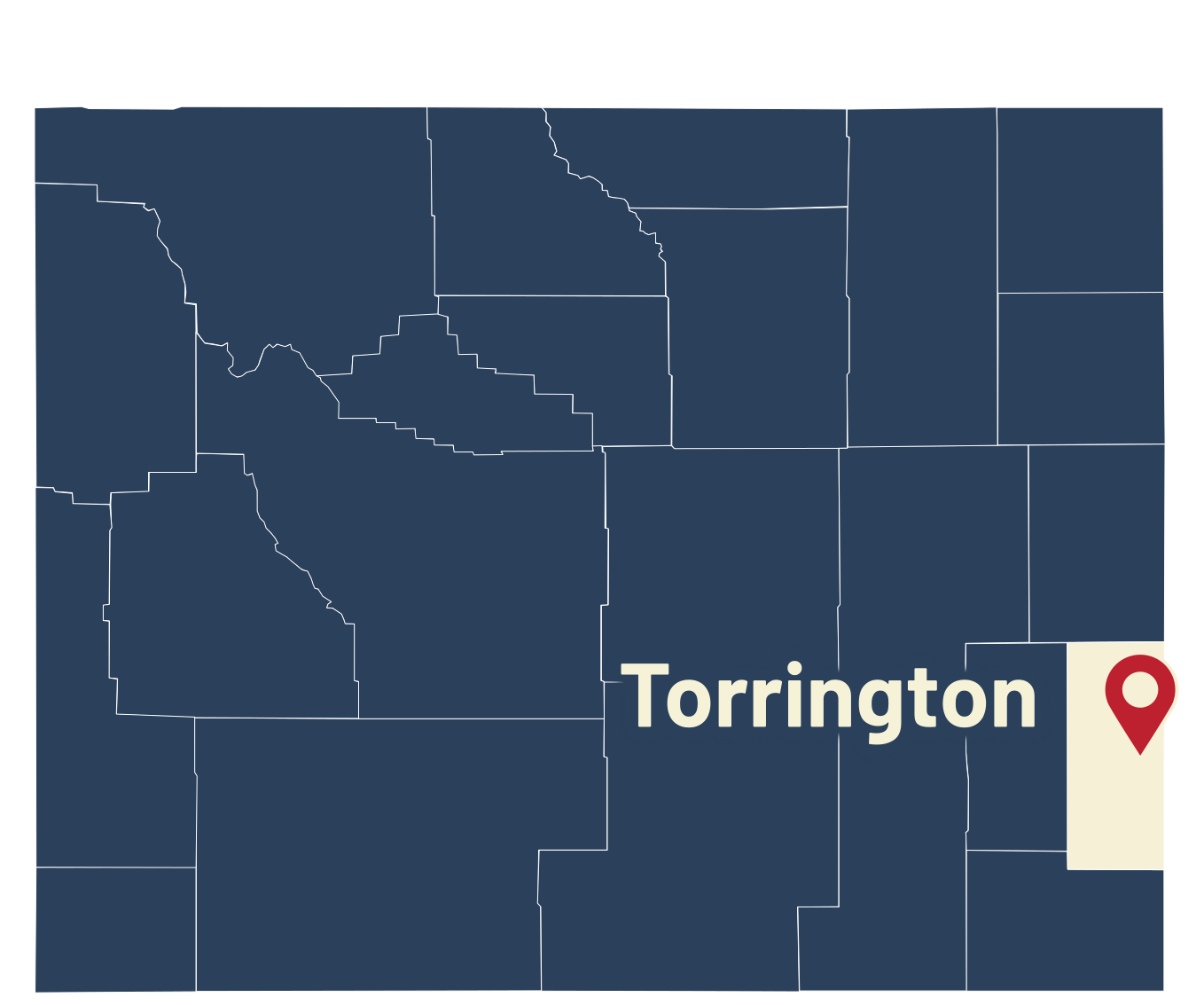
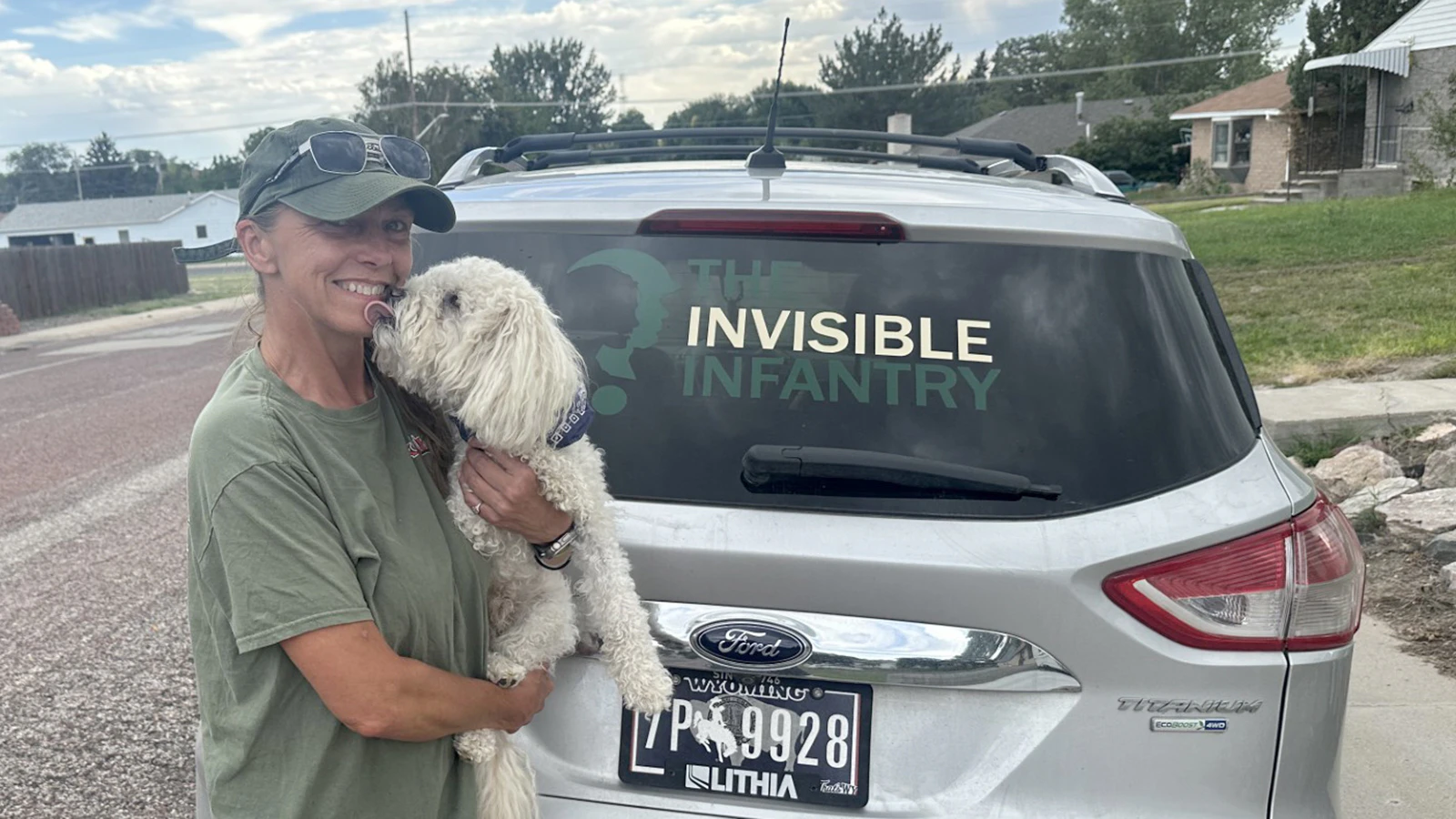
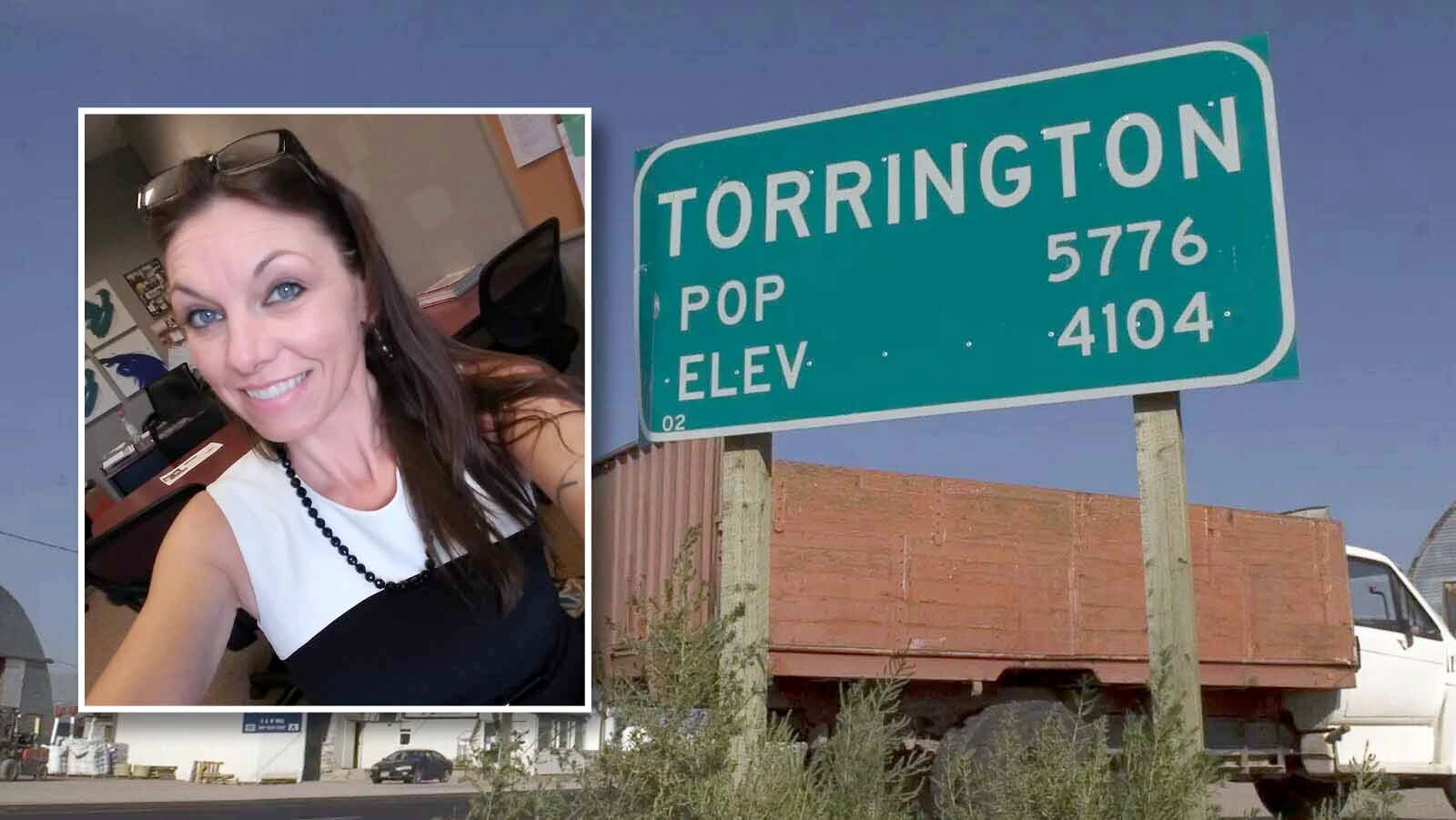
Beverly Dale has $994 a month, no permanent home and a Ford Escape she hasn’t made a payment on in nearly three years.
At the same time, the 51-year-old Torrington woman is building something meant to keep other people from ending up in similar situations.
Dale founded The Invisible Infantry L3C, a Wyoming low-profit limited liability company focused on combat veterans and the spouses and caregivers living alongside war-related trauma and domestic violence.
Federal vendor records show the company is registered in the federal SAM system under “Other Individual and Family Services,” while Dale’s planning documents outline residential treatment, vocational programs, long-term peer support and other services.
Her plans have grown into five proposed units.
One, called The Reclaimed Sanctum, would provide 90 days of residential stabilization for survivors, combining trauma treatment, childcare and vocational help with what Dale calls a “Financial Firebreak” — temporarily covering essential expenses so leaving an abusive home doesn’t also mean immediately losing transportation, housing or financial stability.
Another, Firebreak Battalion, would put combat veterans through 90 days to six months of decompression and reintegration built around peer support, ranch work and vocational training.
Other proposed units would provide continuing family support, medical stabilization and a commercial storage operation intended to generate revenue for the larger project.
Dale’s feasibility documents estimate a full-scale Wyoming pilot could cost $5 million to $10 million and serve 120 veterans and 60 families in its first year. Those are projections contained in Dale’s plans.
The idea grew, she says, from years spent trying to navigate veterans services, mental-health care, courts and, eventually, housing assistance — a process that often felt less like following a path than completing a scavenger hunt.
One office led to another. There was another phone number, another application, another set of rules.
Dale wants The Invisible Infantry to eventually make that search easier for somebody else.
She’s still doing some of it herself.
“I don’t want this to be a poor-me thing,” Dale told Cowboy State Daily. “But people gotta walk in your shoes for a day to understand why you make the choices you make.”
The Invisible Infantry
The Invisible Infantry didn’t begin as a veterans program.
Dale says it began with a question about the people living alongside them.
She met her second husband in Houston before the couple married in Texas in 2018 and moved to Wyoming the following year. Court records establish that he was a veteran receiving 100% service-connected disability benefits.
A 2023 counseling assessment records Dale saying she had spent years taking care of him and identifies him, based on information she provided, as a combat veteran with PTSD.
Dale says she spent those years searching for ways to help him navigate life after military service.
The marriage also became troubled.
By March 2023, counseling records show Dale was telling a therapist she wanted to get away from her husband and reporting verbal and mental abuse, along with a history of physical and sexual violence. Her therapist later described Dale as being in a “very abusive relationship” and made finding a safe environment part of her treatment plan.
By April, Dale was reporting that she did not feel safe at home and discussing changing the locks, consulting a divorce attorney and seeking a protection order.
Yet when asked why she stayed, Dale’s answer was simple.
“I wanted to help him,” she said.
She remembers wondering whether another treatment or program might work, or whether she could change something about herself.
“Maybe I moved or talked too fast, or maybe I didn’t explain myself well enough and he didn’t understand, or maybe I said the wrong thing,” she said.
So she kept looking.
Her husband filed for divorce in Sheridan County on May 10, 2024. Dale, representing herself, answered and counterclaimed June 6.
She also sought a domestic violence protection order in Goshen County, alleging physical and sexual violence, stalking and psychological abuse. A judge issued a temporary ex parte order restricting her husband’s contact with her.
Because the order was issued before he had an opportunity to contest the allegations, it was not a final judicial finding that the abuse occurred.
Dale says her first idea for The Invisible Infantry grew from thinking about spouses and caregivers who find themselves trying to navigate that kind of instability.
She developed The Reclaimed Sanctum first.
Her research eventually led her in the other direction, too: What if more could be done for combat veterans before trauma followed them deeper into their homes and families?
Firebreak Battalion grew from that question.
Looking For Help Herself
While Dale was researching ways to help other people, her own circumstances were deteriorating.
By June 2025, the Sheridan County divorce record shows she had filed an affidavit of financial hardship.
Her former husband’s attorney argued that his primary income was federal service-connected veterans disability and that he lacked the ability to pay alimony. The filing pointed instead to SSI, SSDI, SNAP and charitable programs as potential sources of assistance for Dale.
Dale eventually did turn to SSI.
An October 2025 letter from a licensed counselor with Volunteers of America Northern Rockies confirms Dale had been diagnosed with PTSD and agoraphobia and was participating in counseling and group treatment.
The clinician wrote that severe anxiety could interfere with Dale’s ability to process information and communicate verbally, recommending written questions, additional time to respond and a support person during appointments.
“I used to love people,” Dale said. “I loved being outside. I loved everything, and now I fear everything.”
Dale says her Supplemental Security Income payment is now $994 a month.
That is the maximum federal SSI payment for an eligible individual in 2026. Social Security describes SSI as a program for people with little or no income or resources who are disabled, blind or 65 or older.
“Honestly, I have no idea,” Dale said when asked how she lives on it. “I don’t have a home, and like I said, I haven’t paid my car in three years. There’s no way I’d be able to afford both.”
Her dog gets priority.
“He is my top, top priority,” she said. “He comes before I do.”
The house where Dale had been staying belongs to her father. She says he bought it when she and her husband were struggling to find a rental and has since decided to sell it.
Dale’s belongings are going into storage in Torrington.
She says she applied for a housing voucher in August 2025 and remains on a waiting list.
The math leaves little room.
Census Bureau figures put Wyoming’s median gross rent at $992 for 2020-2024, essentially Dale’s entire monthly SSI payment. That figure is a statewide median, not necessarily what Dale would pay for housing in Torrington, but it gives some scale to the problem of trying to establish a household on $994 a month.
Drawing A Map
Dale doesn't have a ranch, a treatment center or the millions of dollars her own plans estimate it would take to launch the larger operation.
What she has is a blueprint — written in large part while she was trying to find her own way through the maze, and she hasn't made it through yet.
Dale is still looking for permanent housing. She is still figuring out how to live on less than $1000 a month. She still needs mental-health care, and she still has days when the agoraphobia she describes makes it hard to do much at all.
There was a time when Dale admits she had little patience for someone in that position.
“Whenever I would hear some stories, I would think, well, just get off your butt and go find something. There's jobs out there. There's something," she said.
Being on the other side of that judgment has complicated things.
Dale has learned that “getting help” is rarely one thing. It can mean finding the right agency, proving eligibility, gathering records, waiting for an appointment, filling out another application and then figuring out what to do when the answer is no — all while dealing with whatever problem sent someone looking for help in the first place.
“You don't know what that person is struggling with,” Dale said.
That's the scavenger hunt Dale wants to shorten.
She is still playing it herself.
Kolby Fedore can be reached at kolby@cowboystatedaily.com.


