
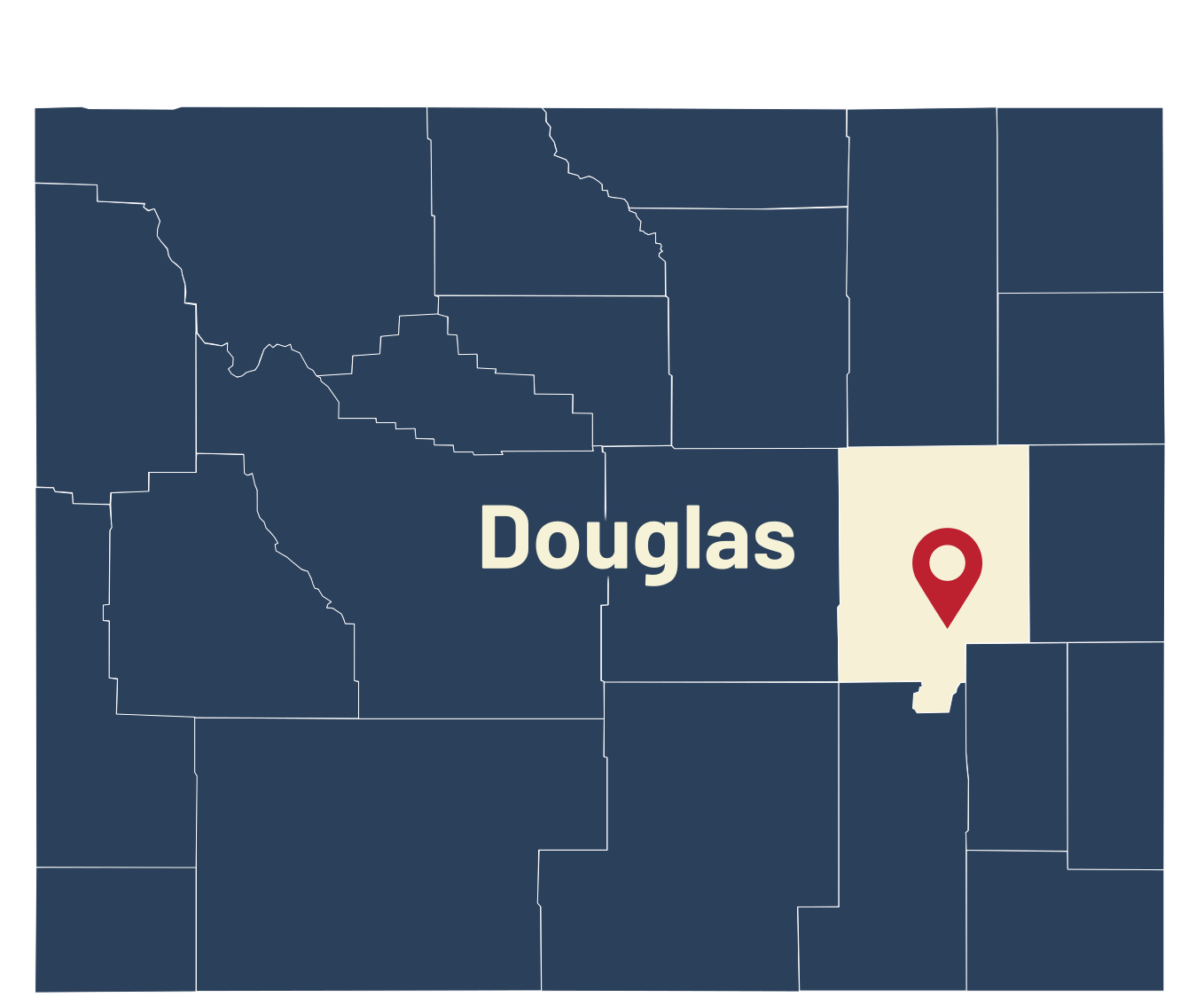
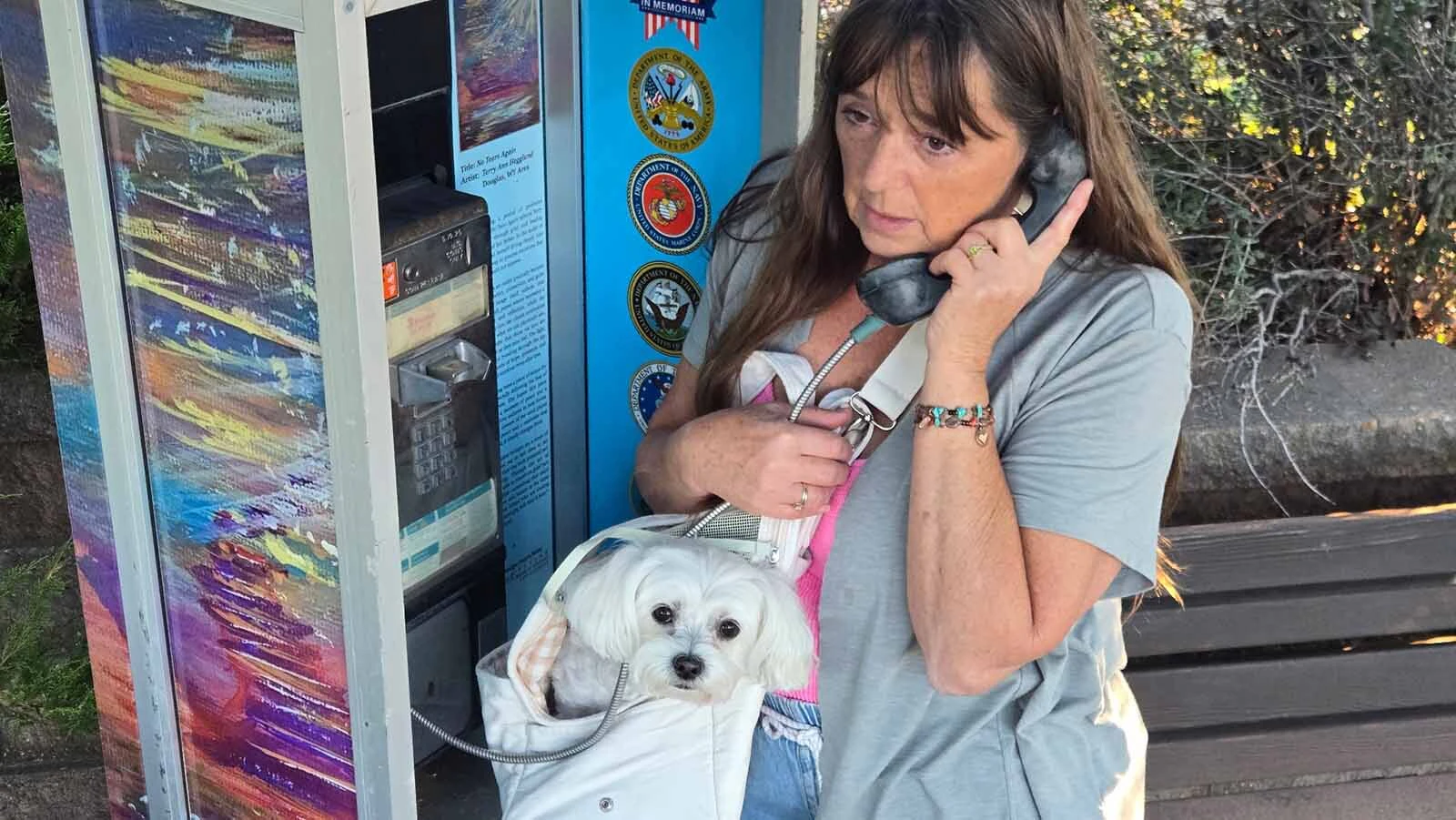
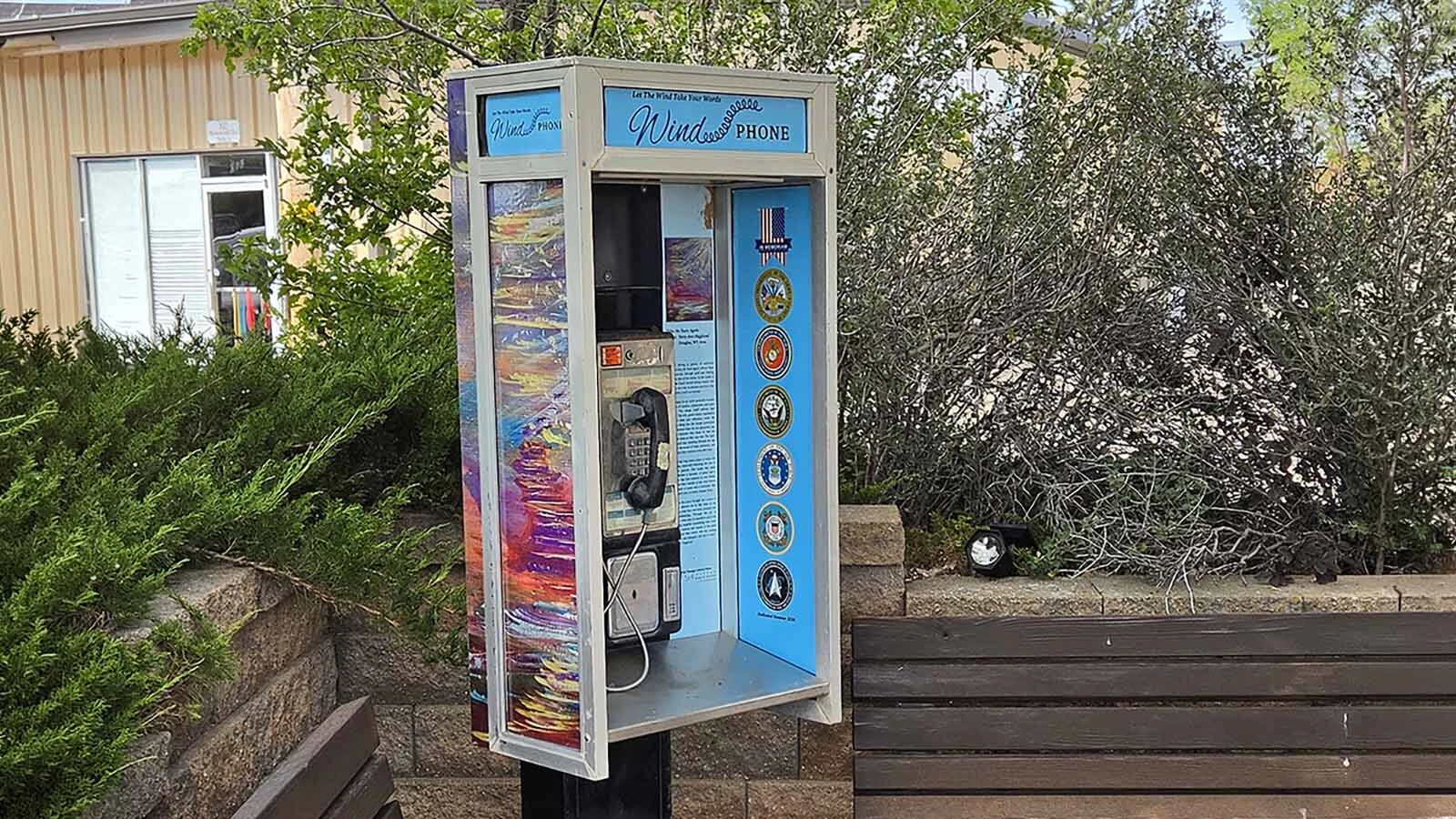
An old phone booth sits quietly beneath cottonwood trees in Douglas, listening to words not meant for this world.
No dial tone, no automated voice that says when to drop a quarter. Just the ghostly hum of the wind.
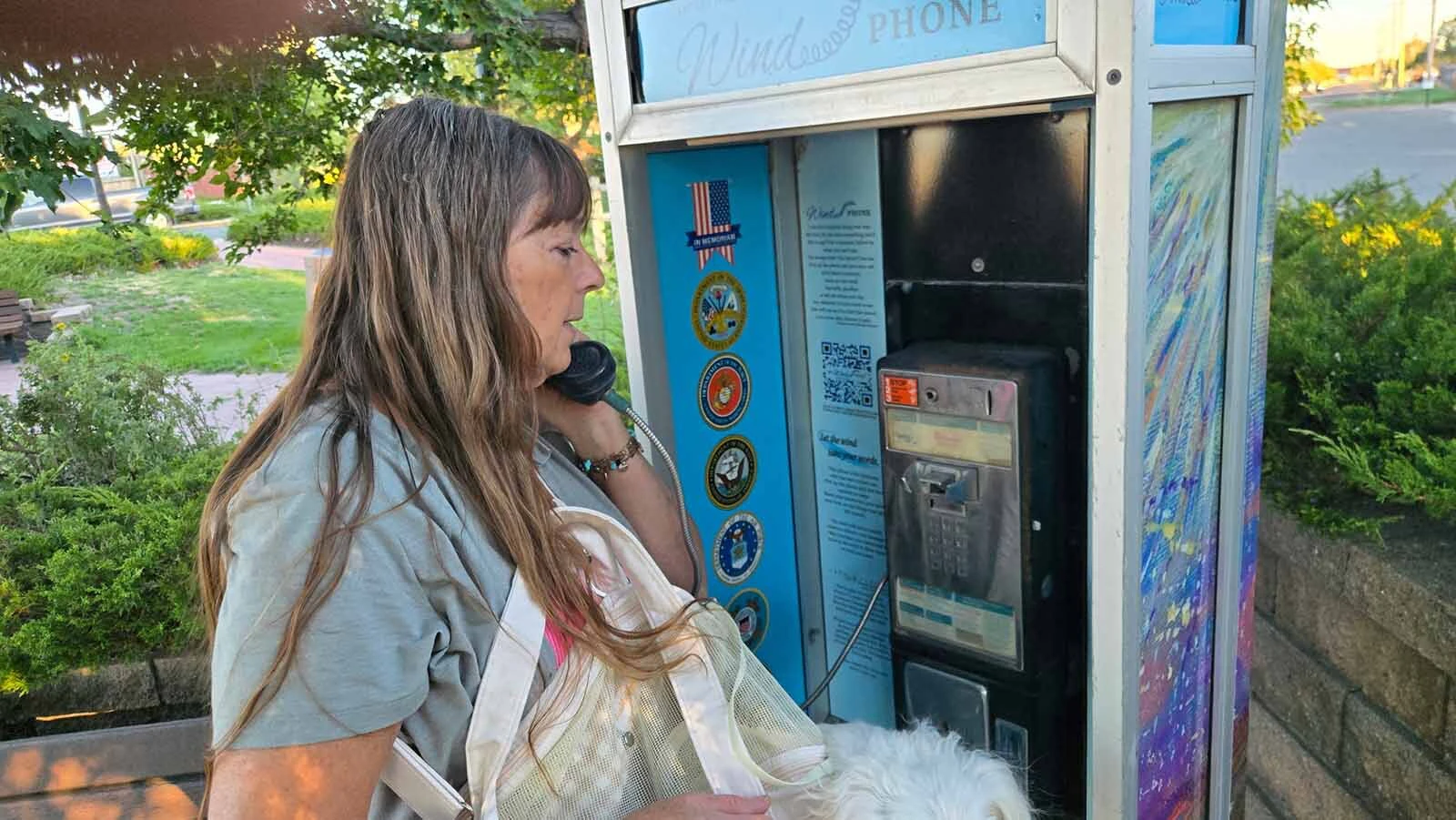
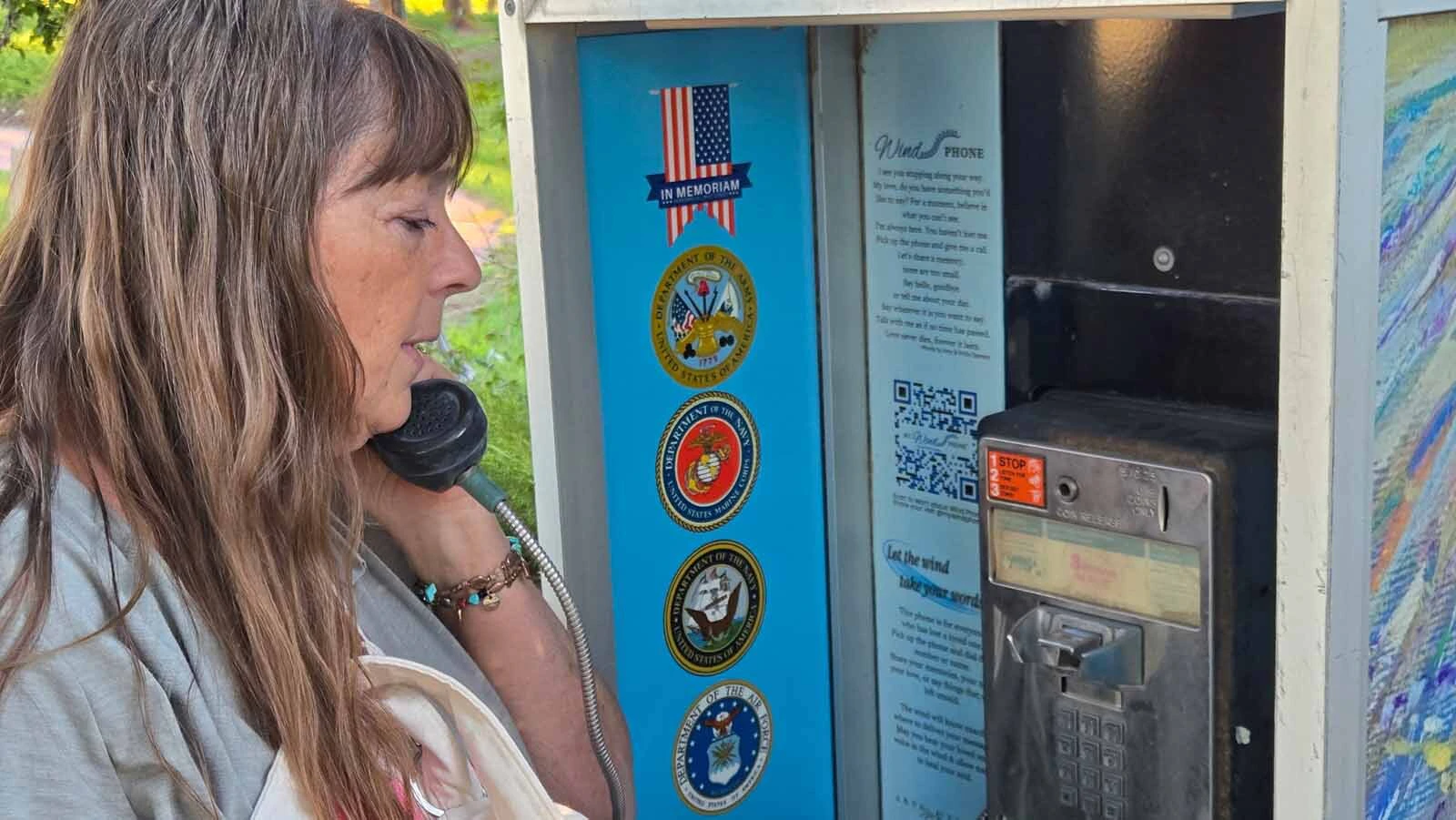
Still, people pick up the receiver and press it to their ear.
The baby came. Susan finally left her husband. The Raiders had a terrible year. I found that picture you were looking for. I miss you. I'm sorry. You were right.
There's something powerful about saying the words out loud, says Terry Anne Hegglund, the artist who helped paint the booth.
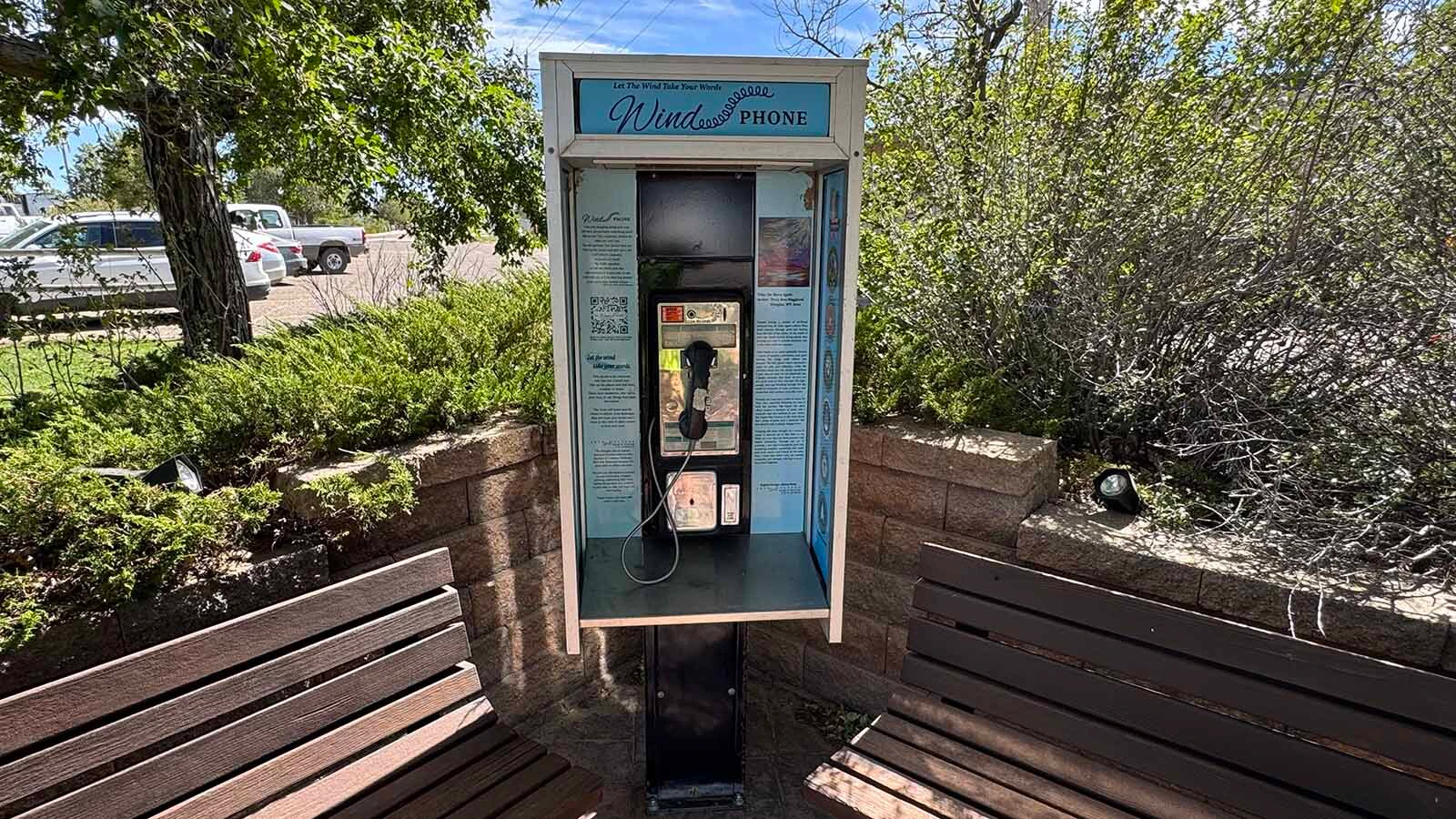
Its wires lead nowhere now and the receiver will never ring. It belongs to that not-so-distant world when people memorized precious numbers and carried quarters in their pockets.
It’s called a Wind Phone, and more than 600 are installed around the world for people to speak aloud to loved ones who have died — a simple ritual built around the idea that grief often leaves a person with plenty left to say and nowhere to say it.
The old phone that was once a lifeline for someone needing a ride home or calling a spouse to say they'd be late is, in its own way, dead. But people step inside anyway, dial a number, and talk.
"Hello, it's me."
Penny For Your Thoughts
Ron Casalenda knows who he would call first.
"Mom and Dad," he said without hesitation.
His father passed away in November 2021, and his mother died 75 days later.
Casalenda hasn't made that call yet.
He has driven past the booth and thought about stopping. Someday, perhaps, he will.
He knows others use it.
Pennies, nickels and quarters have begun appearing around a phone where money can't buy a single minute.
It's only been there since July. Before that, it spent years in Casalenda's backyard.
The retired police chief picked up the old booth from a local business several years ago because he thought it might look good in his yard next to a bathtub planter and an old windmill turning in the breeze.
For three or four years, the booth sat there, another orphaned piece of the analog world.
Million-Mile Locomotive
Jenna Rose is the Douglas Railroad Museum & Visitor Center manager who spearheaded the community’s Wind Phone project through the Douglas Arts & Culture Board of Trustees.
She said she already talks to the people she's lost along the way, but if she could reach them, she would want to hear from her ancestors.
Especially her great-grandmother, who came from Ireland and, somewhere in the work of becoming American, lost pieces of the family's traditions along the way.
For more than a century, people traveled the little bend along the North Platte on their way somewhere else. Soldiers rode out from nearby Fort Fetterman. Settlers waited for the railroad. Locomotives hauled people away again.
The railroad brought people who planted trees, laid out streets and put up buildings before winter. The town's first months held the whole frantic contradiction of the West at once: Saloons and churches, gunfights and school boards, merchants selling permanence in a place that had been tents weeks earlier.
The first burial in the old Pioneer Cemetery was reportedly a man killed in an August 1886 gunfight.
Now the depot is quiet.
The million-mile locomotive is still.
Grief Comes Calling
Hegglund has picked up the receiver many times.
The silence on the other end doesn't bother the artist. The point, she said, is letting it out.
“There's so much power in our words.”
It has been six years since her father's death.
Her mother died eight years ago.
Her mother-in-law had died the day before.
There is no orderly queue for losing people.
Painting, she said, has helped her heal.
“I really see myself on this path of sharing my art to help others that are hurting,” she said.
At first there was no grand plan for what the painting was supposed to become. She put colors on the surface. Water began to emerge. Then light. Then something appeared that looked like a staircase.
She looked at it and felt the enormous distance between herself and her father grow a little smaller.
Place For Remembering
Before the phone booth arrived, Casalenda had already helped shape the quiet corner where it would eventually land.
He and former Douglas City Councilman Doug Olson helped create the Veterans Walkway.
Casalenda's son served in the Army, and veterans, families and Douglas businesses helped build out the memorial, including bronze medallions honoring the military services.
The city announced the Wind Phone project July 27, describing the location as a peaceful atmosphere with universal accessibility.
Casalenda liked the Veterans Walkway because it offered something the more public locations didn't: Enough privacy for someone to pick up a dead telephone and talk without feeling like everyone was watching.
“I want people to think of it as a safe space where they are open to share their words without interruptions, judgment or questioning,” Rose said.
Whoever they're talking to is between them and the telephone.
Douglas' Wind Phone is only the second public installation of its kind in Wyoming, Rose said. The other is in Gillette.
There will probably be more.
She hopes so.
Kolby Fedore can be reached at kolby@cowboystatedaily.com.


