
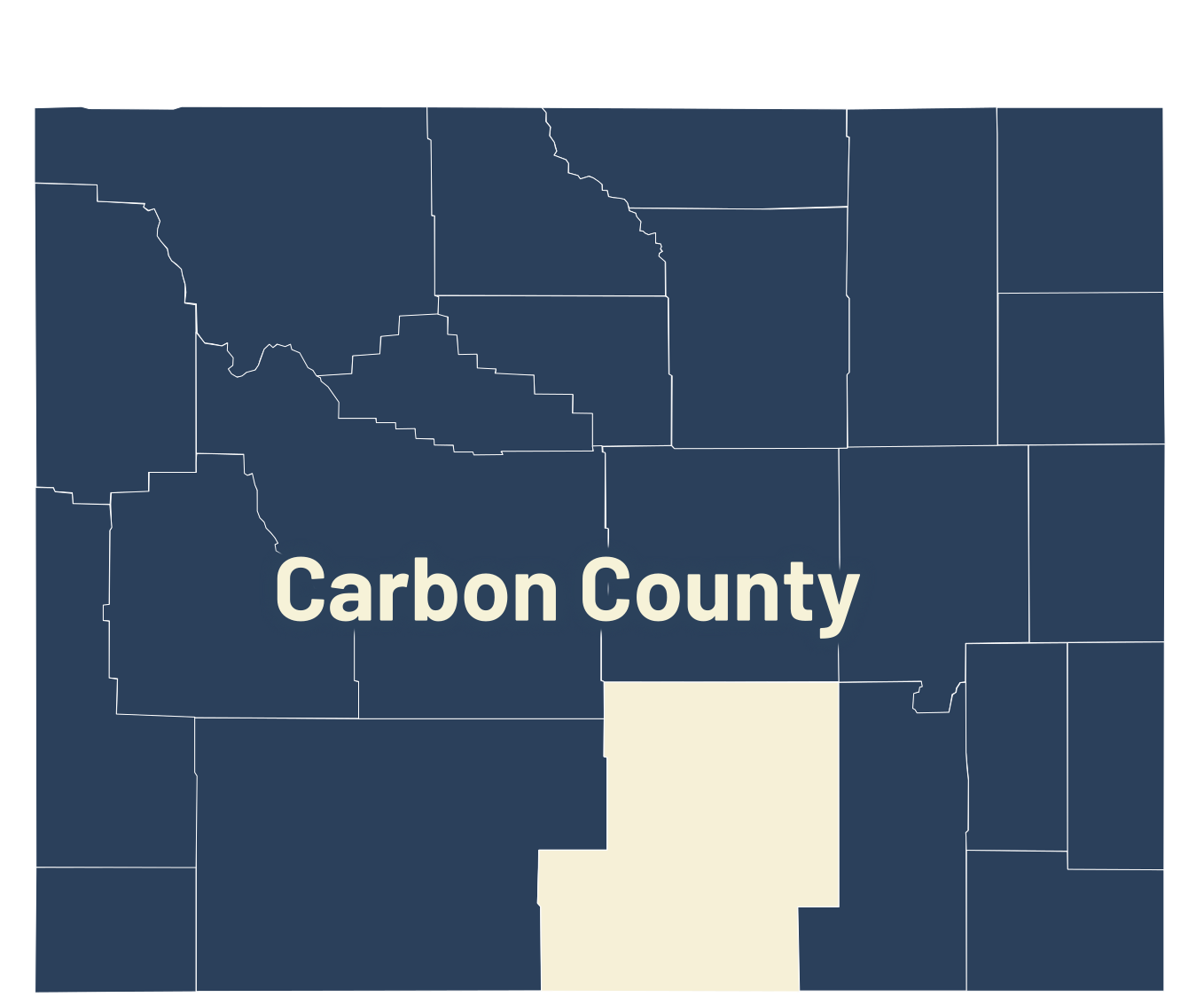
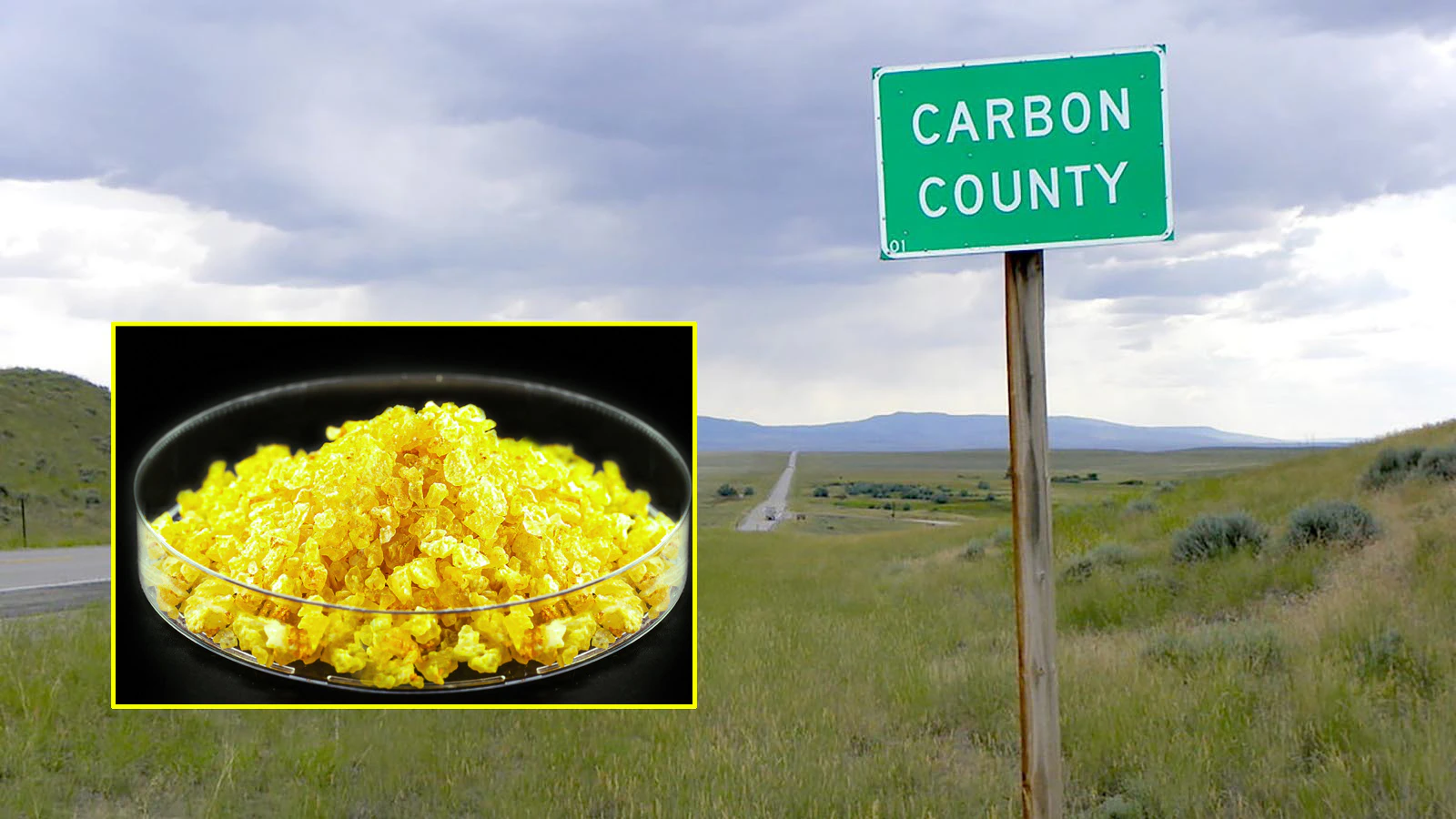
A chance encounter in a Carbon County grocery store could eventually lead the county into an industry that is rapidly taking shape in Wyoming – nuclear energy.
County Commissioner Travis Moore ran into Don Burkhart, a longtime acquaintance and Wyoming energy and infrastructure policy expert, and asked whether Burkhart was still involved in conversations about nuclear energy.
“We should talk,” Burkhart told him.
Moore’s response was simple.
“I shouldn’t be the only one hearing this.”
So Moore invited Burkhart to bring his ideas to the Carbon County Commission.
That presentation last week opened commissioners’ eyes to just how many ways Carbon County could potentially participate in the nuclear energy industry – even without building a reactor.
“(Burkhart) gave us the Reader’s Digest version,” Moore told Cowboy State Daily. “It piqued our interest.”
It doesn’t mean the county is going to “drop everything and chase it,” he said.
But if there are opportunities to bring sustainable jobs to Carbon County and help the area avoid the economic boom-and-bust cycles associated with traditional energy industries, he wants to hear about them.
“I think it would be irresponsible for us not to,” Moore said, adding he is an “all-the-above guy” when it comes to energy.
“With the nuclear end, I think there’s plenty of opportunity,” Burkhart said during his presentation.
And that opportunity, Burkhart said, is bigger than simply building nuclear power plants.
Wyoming Falling Behind?
Burkhart, who served in the Wyoming House of Representatives from 2011 to 2025 and now sits on the University of Wyoming’s Energy Resources Council, told commissioners Wyoming needs to regain some of the momentum it recently had around nuclear energy.
In 2022, TerraPower announced plans to build its first Natrium advanced nuclear reactor near Kemmerer.
At the time, Burkhart said, Wyoming appeared to be at the forefront of a new nuclear era.
“Wyoming was the envy of the country,” he said.
But Burkhart believes the state has lost some of that advantage.
“I think in some ways Wyoming needs to revitalize what it was doing on nuclear energy,” he told Cowboy State Daily in a Thursday interview.
Other states, he said, are making more aggressive efforts to attract nuclear-related businesses and development.
Wyoming, Idaho and Utah have signed a memorandum of understanding to cooperate on nuclear energy development, but Burkhart worries Wyoming could get the short end if neighboring states move faster.
Idaho and Utah, he said, are putting concerted efforts into developing nuclear opportunities.
Meanwhile, Wyoming is “bogged down in discussions that aren’t germane to nuclear energy,” he said.
That could matter because the nuclear industry is not limited to the communities where reactors are built.
There is an entire supply chain, including manufacturing, specialized welding, fuel processing and other highly technical work.
Burkhart told commissioners Carbon County could potentially position itself to capture some of that economic activity.
“What it can be is whatever the commission and the people of the county want,” Burkhart said. “I think the future is wide open. You just have to get people who want to come in and make them feel welcome to be here.”
More Than Reactors
One of Burkhart’s ideas involves something that might seem far removed from nuclear energy: Wyoming coal.
Researchers at the University of Wyoming are studying whether coal can be transformed into nuclear-grade graphite, a material used in some nuclear reactor designs.
Graphite has properties that make it useful for controlling nuclear reactions.
Most of the world’s graphite supply is controlled by China, Burkhart said. There is a gap in domestic production.
“If they can figure out a way to do that economically, it will help Wyoming’s coal market,” he said.
The research is still just that – research.
“No one is doing that right now. It’s all research,” Burkhart said. “But I think the research will eventually pay off.”
The work could be particularly applicable to coal from the Kemmerer area, Burkhart said, because not all coal is chemically or structurally identical.
He also sees an opportunity in high-tech welding for the nuclear industry.
That is a field that caught Moore’s attention.
In his day job, Moore said, he has some familiarity with welding applications. But when he asked friends what nuclear welding involved, they didn’t know.
“It is fascinating, technology I’ve never heard of,” he told Cowboy State Daily. “It could be a very specialized place where a group of folks could make a whole lot of money,” he said.
There is one problem, however.
Power.
High-tech industrial operations require electricity, and Burkhart said Wyoming’s ability to provide that power could determine whether the state captures or loses some of these opportunities.
“When you can’t get that power, you can’t wait for it,” he said.
Not Always Radioactive
One of the points Burkhart said he wanted commissioners to understand is that not all opportunities in the nuclear energy field involve radioactivity.
A nuclear-energy economy does not necessarily mean radioactive materials are being handled in every building or that every business is involved with nuclear fuel.
It can mean high-tech manufacturing — building valves, welding specialized components or producing other equipment used in nuclear facilities.
TerraPower recently announced 12 additional suppliers as it continues building the supply chain for its Kemmerer plant.
None of those suppliers are headquartered in Wyoming.
“If you look at that list, some of them are highly technical and have nothing to do with radioactivity,” Burkhart said.
Other companies are looking for places to locate nuclear-related facilities, he said.
One is Curio, a company developing technology to recycle used nuclear reactor fuel. Burkhart said Curio is looking for a location and is leaning toward Tennessee.
That is precisely the kind of opportunity he believes Wyoming should be pursuing.
But competition is not the only obstacle.
Public perception can be another.
Much of the conversation surrounding nuclear energy has to include dispelling fears and misconceptions, Moore said.
Burkhart's presentation helped do some of that for him.
“You say the word ‘nuclear,’ and we all imagine Fukushima,” Moore said.
But modern nuclear technology can look different from the massive nuclear plants that have dominated the public imagination for decades.
“How many people know there are self-contained generators the size of a shipping container?” Moore said. “We’re like, ‘What do you mean it’s not all 3-Mile Island?’”
Keeping Nuclear In Wyoming
Burkhart also pointed commissioners toward Wyoming’s existing role in the nuclear-fuel cycle.
Wyoming has the largest uranium reserves in the United States, according to the Wyoming State Geological Survey.
At one time, Rawlins and Riverton were centers of uranium mining, Burkhart said.
But much of the material leaves Wyoming for processing elsewhere.
The yellowcake produced through uranium mining is sent to Illinois, Burkhart said. From there, the material moves to New Mexico or Ohio for further processing.
Burkhart said he believes Wyoming should explore whether more of that supply chain can be kept within the state.
“Why ship truckloads of yellowcake instead of a few pressurized containers of uranium hexafluoride to have it enriched?” he asked.
The question is particularly relevant as Wyoming communities explore whether they can attract new nuclear-related businesses.
At a Minerals, Business and Economic Development meeting held last week as part of the Legislature’s Joint Appropriations Committee meetings, Sweetwater County officials discussed efforts to attract a uranium enrichment facility.
That effort ultimately did not come to fruition.
“Rocky Mountain Power admitted they cannot supply the power levels needed,” Burkhart said.
“In Tennessee, they can get power. In Wyoming, they can’t.”
For Burkhart, that illustrates the larger challenge facing Wyoming.
Having the land, resources and workforce is not enough without the necessary infrastructure.
A Lesson From Radiant
Wyoming has already experienced a nuclear-related opportunity slips away.
Last year, Radiant Nuclear abandoned plans to build its first nuclear microreactor manufacturing facility in Bar Nunn after months of heated debate over spent nuclear fuel storage.
The company chose Oak Ridge, Tennessee.
Radiant repeatedly warned Wyoming officials that regulatory uncertainty could push the company elsewhere.
State Sen. Ed Cooper, R-Ten Sleep, blamed the Wyoming Freedom Caucus for helping drive the business away.
Ray Wert, Radiant’s vice president of communications and marketing, told Cowboy State Daily that the contrast between Wyoming and Tennessee was stark.
The company faced “zero opposition” in Tennessee, he said, while in Wyoming it encountered opposition from some residents in Bar Nunn and a group of legislators.
Bar Nunn Mayor Peter Boyer said he doesn’t expect another opportunity like Radiant’s to come along soon.
“I think a lot of businesses would be really reluctant to come to Bar Nunn after seeing what happened with Radiant,” Boyer said.
For Burkhart, the episode is a warning.
Wyoming has spent years building a reputation as a place willing to embrace energy development. If the state wants to remain a leader in nuclear energy, he said he believes it needs to make sure that reputation extends to the emerging nuclear supply chain.
And Carbon County commissioners are interested in learning what that could look like locally.
“Until it becomes more real, just to know what’s out there, we’re interested in finding out more and finding out impacts and how technology has changed,” Moore said.
The county is not committing to a nuclear project.
But after Burkhart’s presentation, Moore said there is no reason not to start asking questions.
“I’m blown away that we’re not entertaining any of this,” he said.
Kate Meadows can be reached at kate@cowboystatedaily.com.


