
CHEYENNE — A renowned studio whose photographers documented the first six decades of Cheyenne’s history left behind thousands of remarkable pictures depicting everything from the mansions on “Millionaire’s Row” and legislators to visiting entertainers and a few murderers, including the infamous Tom Horn.
In the words of one of its owners, Billy Walker, the studio took photos of “anybody who was anyone” who lived in or visited Cheyenne.
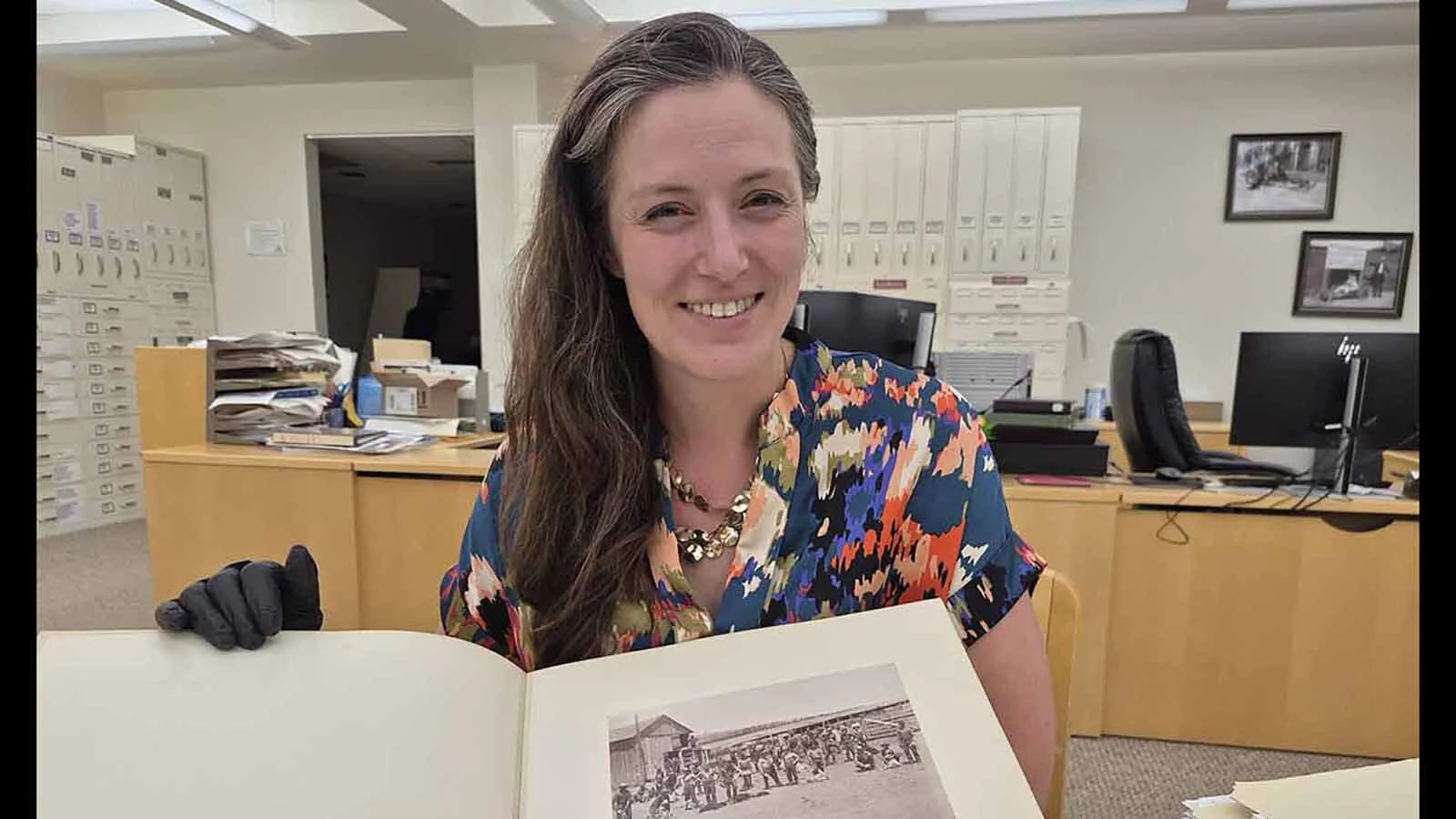
But Suzi Taylor, a reference archivist at the Wyoming State Archives, said there’s a darker side to the studio’s history, because thousands of negatives in the studio’s collection — perhaps up to 50,000 — were literally taken to the city dump by its last owner.
How could that happen? To understand what’s been lost requires starting at the beginning, when the studio was opened in 1876. It’s a tale that covers fascinating history, including the early regional rivalry between Cheyenne and Denver for economic dominance.
The studio’s founder and namesake was David Daniel Dare, who years later bought the European-style “Castle Dare” mansion when Oscar Swan, a millionaire who was building it as a wedding present for his daughter, was wiped out of the cattle business by heavy losses in the blizzard of 1886-87.
Kirkland Buys Dare Studio
Dare apparently lost interest in the photography studio early on, and though it still bore his name, he soon ventured into selling furniture, opening a hardware store and eventually Cheyenne National Bank. In 1878 he took on a talented young partner from Denver, Charles Kirkland, to run the day-to-day studio operation, and eventually sold his interest to him.
“Kirkland, who grew up in the photography industry with his brothers, developed a good reputation in Cheyenne for creating beautiful portraits of people,” Taylor said. “He also starts to take pictures that document the growth of the community.”
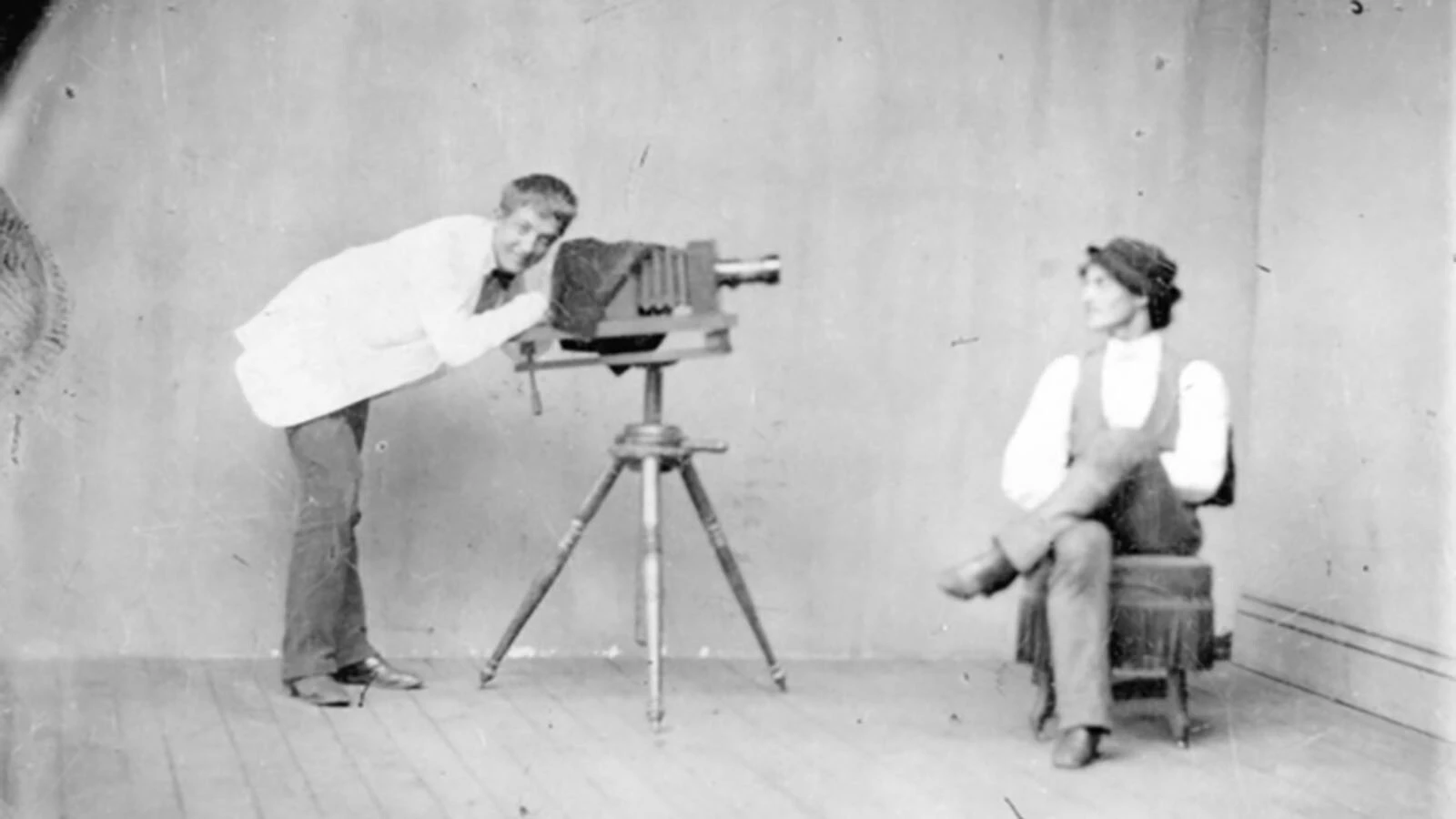
Dare equipped the studio with elaborate backdrops.
“Kirkland had a very artistic eye and so he's putting his subjects into these artistic poses, like he’s thinking about the way fabrics are draped and how people's arms are positioned,” Taylor noted. “It’s not just a ‘sit on this and I'm going to snap a picture when I count to three.’”
She described Kirkland as “kind of a dandy” who liked to be photographed wearing expensive, frilly shirts. But in other portraits he looked quite different.
“In one series of photographs that were probably taken in the same year, you don't know if it's like a Dutch master, if it's an 1860s schoolboy or an Ivy Leaguer,” the archivist said.
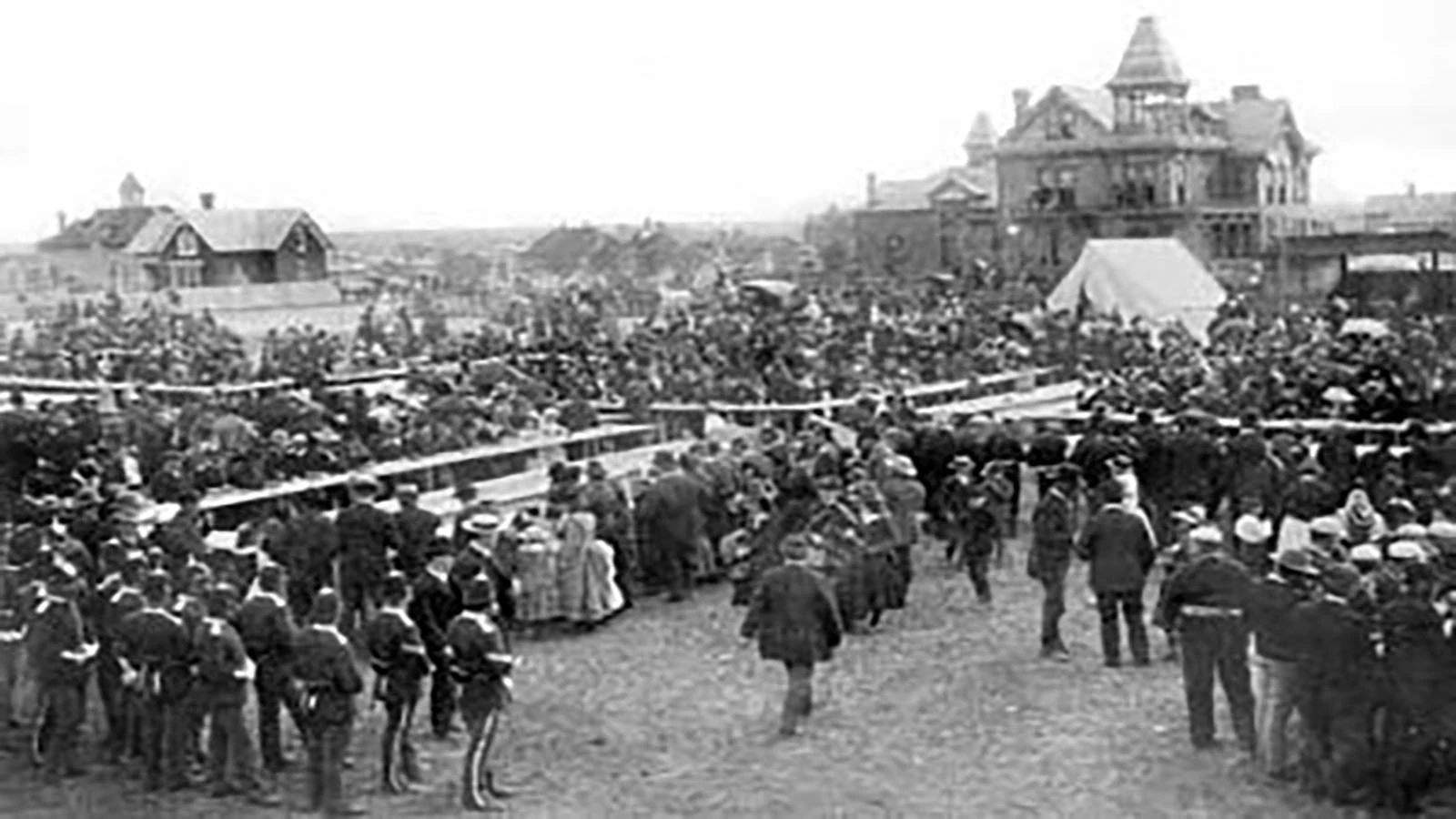
In addition to his portrait work, Kirkland started taking pictures of everything he saw, including working-class people, lawmakers, cowboys and opulent buildings. When the cornerstone was laid for the Capitol following a huge downtown parade, he was there.
Cheyenne Vs. Denver
“Cheyenne was a major stop on the Union Pacific Railroad and we were in the middle of the country,” Taylor observed. “We were kind of the last stop going from east to west, where the trains would refuel with coal and refill their water to get across that really steep grade on Sherman Hill.”
Cheyenne had an opera house, and famous entertainers who were in town to either perform or travel to other venues learned of Kirkland’s reputation as a photographer and stopped by his studio for a portrait. So did cattle barons and politicians.
“In the 1870s Cheyenne was neck and neck with Denver on who controls the economy in the Rocky Mountain region.” Taylor said. “We had the railroad, Denver had a spur. We were the shipping point for military supplies, which are really big with the frontier forts and campaigns.
“Cheyenne was set up to be a powerhouse in the region and Kirkland is now here on the ground floor,” she added. “He wasn’t wealthy, but he lived comfortably. I think his wife’s family had money.”
Kirkland had enough cash to play in some of the upper-class pursuits, and owned race horses and carriage horses.
Still, Taylor said the photographer had a taste for expensive things, so he was always looking to make more money. He had connections to big cattle owners who were raising livestock from north Cheyenne to Chugwater, including the Diamond Ranch, owned by Cheyenne architect William Rainsford.
‘Cowboy Life’
“He put this big series together called ‘Cowboy Life,’ and it's everything from bull fights to roping a pony to branding on the plains,” Taylor said. “It's chuckwagons, all of these very iconic images, and in the 1880s he's capturing these big herds with these cowboys that are going out on some of the largest roundups in Wyoming history. They're just incredible.”
Similar photo themes had already become popular in the U.S., so he marketed his work back East. Taylor said some illustrators used his photos as inspiration for their artwork.
Kirkland also experimented with photo technology. Taylor said the product he developed, Kirkland Lithium printing paper, essentially revolutionized the way photos were printed by using fewer chemicals. He needed less time to make better prints that were more stable. It quickly became a favorite of photographers across the nation.
“He starts to produce it in a studio but it gets too big for that, so he moves to the basement of the Opera House,” Taylor said. “It gets too big for that and so he decides he's going to build a factory here in Cheyenne.
“Kirkland goes to the Cheyenne city council and submits plans for a big brick factory downtown. At first it was going well, and then according to the stories there's one little old lady who went, 'I don't want to look at a brick building that big from my window, so no, you can't do that.’”
The city declined Kirkland’s request, but he still needed to expand his business.
Denver, which had started to promote itself well, told the photographer and entrepreneur it would find him the perfect spot to build his factory, help subsidize it with tax breaks, and find him workers.
It was an offer Kirkland couldn’t refuse, so he moved to Denver and built his factory. Eastman Kodak, which was expanding its photo empire, purchased Kirkland’s new technology.
In 1894 he sold his Cheyenne studio to his assistant, Billy Walker, a talented Scottish photographer who operated it until 1930.
Walker Takes Over
Taylor said Walker wasn’t as artistic as Kirkland and his portrait backgrounds were less ostentatious, but he still produced beautiful photographs.
In 1901, Walker was hired by law-enforcement authorities to photograph the crime scene where 14-year-old Willie Nickell was murdered. Two years later, Tom Horn, who had been hired as a range detective to stop cattle thieves, was convicted of the crime and executed by hanging in Cheyenne.
Walker testified at Horn’s trial, and described where he was standing when he took various photographs and what they showed at the crime scene.
“We don’t have the photos, and they don’t show up in any of the published works by the many historians who’ve written about the case,” Taylor said. “But we know from the court transcripts that he took them and they existed, but they’re missing.”
Some of Walker’s other photos in the Wyoming State Archives show Horn when he was in jail, and holding the rope that was used in his execution.
Walker sold the studio to Mac Fishback, who kept it running until Walker died in 1935. Fishback decided to return to Fort Collins, where he grew up.
He knew how valuable the studio’s collection since the 1870s was, and he was willing to sell it but wanted to be handsomely compensated.
“The story goes that he asked for an exorbitant amount of money — I’ve heard it was $10,000 — that nobody could pay,” Taylor said. “Everybody wanted the photos to stay but no one could afford it. This was during the Depression.
“So he's going through and cleaning house and getting rid of a bunch of the photos, going all the way back to the 1870s. He essentially said, ‘Well fine, if you're not gonna pay me for them, yeah, forget you,’ and he took a bunch of them to the town dump.”
Lost Treasures
No one knows what was lost, but in interviews with local newspapers Walker bragged that 50,000 negatives, mostly glass, were in the collection. Many prints still exist, in from excellent to poor condition, but without the negatives it’s impossible to tell what’s missing.
“I can't imagine what treasures would have been in there that we've lost,” Taylor said. “These pictures told Cheyenne’s amazing story, not just for people here but across the nation and across the world.”
Some heirs of people who inherited portions of collections from the studio’s four owners, as well as clients like Rainsford, have donated photographs and negatives to the state archives.
In a windfall last year, Taylor said three volumes of Rainsford’s collection were contributed, including photos from Kirkand’s cowboy photos from the Diamond Ranch. While she considers the Rainsford collection unique, Taylor said it’s another example of people who may have no connection to Wyoming who have been storing boxes of photos in their attics for years and wanted to get them in the right hands.
The state archives is, of course, happy to accept them.
“We’re eternally grateful to families for recognizing the value of preserving them and ensuring that they came back to Wyoming,” Taylor said.
Where’s The Photo?
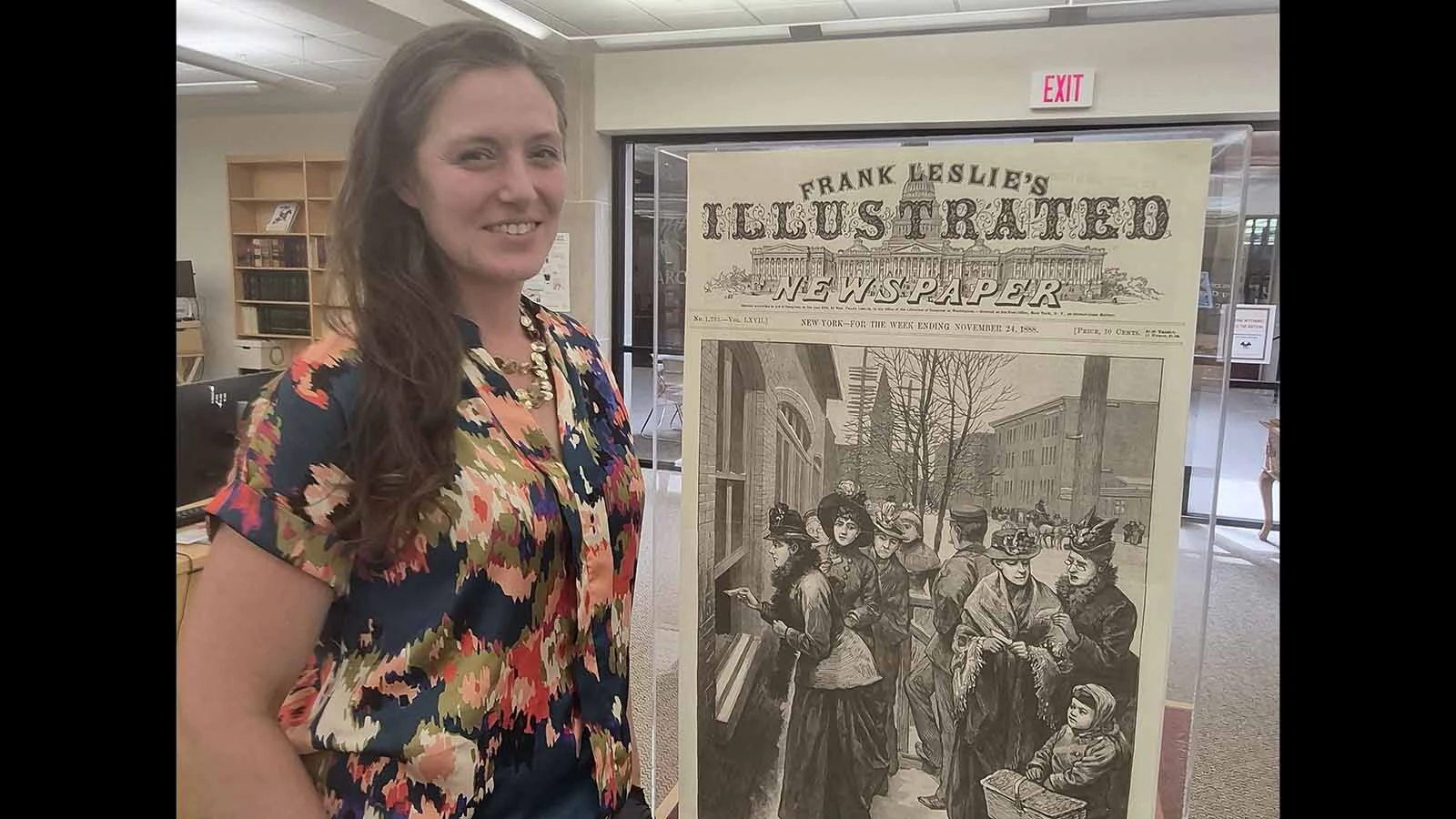
It’s frustrating for the staff, though, to know certain photos existed but can’t be found. One such case is an engraving featured on the cover of “Frank Leslie’s Illustrated Newspaper” published in New York, which depicts women voting in Wyoming — the first place in the world that recognized women’s suffrage.
A print of the cover is displayed at the Wyoming State Archives in the Barrett Building, next to the Wyoming State Museum in Cheyenne. At the bottom it explains the engraving was inspired by a Charles Kirkland photo.
“You know that if it’s an engraving, there were some artistic liberties taken with the image,” Taylor said. “But if it’s based on a photo, where’s that photo?” She hopes one day to find a copy “will come walking through the door” and the mystery will be solved.”
Many of the prints that survived aren’t marked in any way, so it’s impossible to know if they were taken by Dare, Kirkland, Walker or Fishback.
“We don't necessarily know that they came from that studio, so we're left with the newspaper accounts to tell us what the breadth of the whole collection was,” Taylor said. “If I come across a time machine I know exactly where I’d go back and visit.”
Given her passion for her work and intense interest in what was taken to the dump, Taylor would likely bring along $10,000 from someone to pay Fishback’s ransom for an invaluable portion of Cheyenne’s history that spanned its first 60 years.
Kerry Drake can be reached at: Kerry.Drake33@gmail.com


