
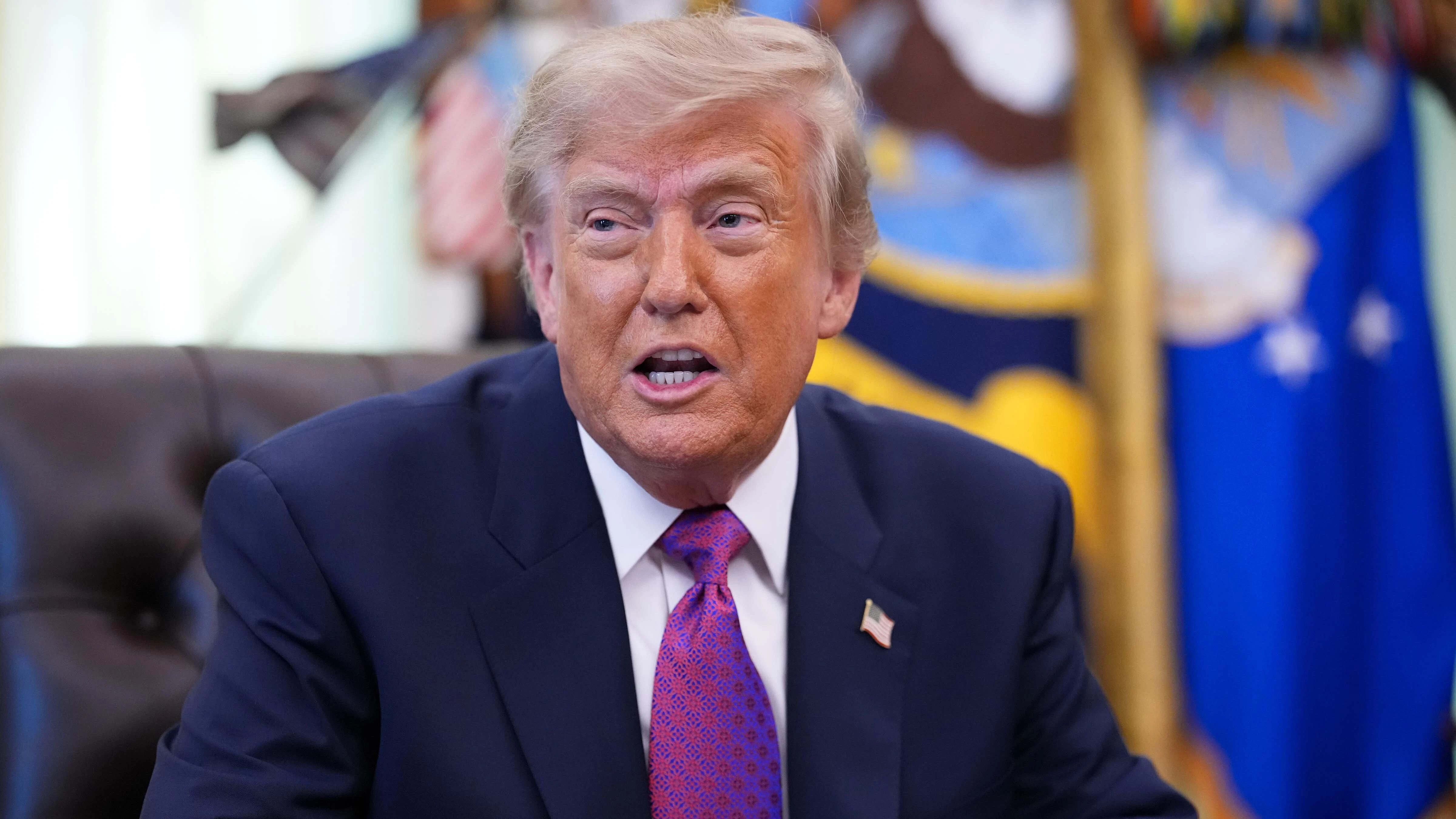
President Donald Trump says he wants to make it easier for American ranchers to process and sell their own beef — a move that could have implications for Wyoming producers who have long faced limited options for processing and marketing their locally raised cattle.
Trump announced Friday he is authorizing the preparation of legal documents that would allow farmers and ranchers to process their own food, saying he wants to take on a “nasty monopoly” in the nation’s food-processing industry.
Cowboy State Daily has previously reported on antitrust concerns over the nation’s meatpacking industry.
Agriculture Secretary Brooke Rollins said the administration will begin rolling out new initiatives Monday for local producers, including efforts to expand ranchers’ ability to sell beef across state lines, support smaller processors and eliminate what she described as outdated regulations.
For Wyoming ranchers, the interstate-sales provision could be significant.
Wyoming has a meat-inspection program that regulates state-inspected, custom-exempt and wild-game processing facilities. Meat processed at a state-inspected facility can be sold to Wyoming consumers and businesses, but it cannot be sold outside the state.
Custom-exempt plants operate under different rules. They can slaughter and process an animal for its owner, but that meat cannot be sold to other individuals or stores.
That means a Wyoming rancher who wants to raise cattle, have them processed and then sell packaged beef to customers in another state generally needs access to a federally inspected facility.
"We've always been big proponents of the packing houses, interstate sales, and some of the state inspections being equal to some of the federal inspection," Mark Eisele, former president of the National Cattleman’s Beef Association, told Cowboy State Daily on Friday afternoon. "It’s not a bad idea, but the food safety thing has got to be a big concern. If we have one illness or one outbreak, it would just be a black eye to the industry.”
Potential new market for Wyoming
Wyoming is a cattle state, with about 1.16 million head as of Jan. 1, 2026, including about 621,000 beef cows.
But having cattle and having a place to turn them into retail-ready beef are two different things.
Processing capacity is an important piece of the equation for producers who want to market beef themselves rather than simply sell live cattle into the conventional system.
That is one reason the Trump administration's proposal could be especially interesting to smaller Wyoming ranches.
A producer who can process and package beef under whatever new rules emerge could potentially sell directly to consumers outside Wyoming, develop wholesale accounts in neighboring states or build a regional brand without relying entirely on one of the nation's largest meatpackers.
But what about inspections?
Trump and conservative radio host Glenn Beck have criticized what they describe as burdensome federal regulations governing meat processing.
During an interview earlier this week, Beck called the inspections “insane” and said regulations were “killing us.” He urged Trump to take on the major meat-processing companies.
Trump has said ranchers and farmers are his “number-one priority,” describing them as hardworking, smart, efficient and clean.
But the meat industry is pushing back against any suggestion that food-safety inspections should simply disappear.
The Meat Institute, which represents meat and poultry processors, said federal and state inspection requirements exist to ensure meat sold to consumers is safe, wholesome and properly labeled. It warned that allowing uninspected meat to enter commercial markets would be the wrong approach.
The National Cattlemen’s Beef Association also has said weakening federal meat inspection and food-safety standards is not the answer.
Could this actually lower beef prices?
Whether Trump’s decision could lower beef prices for consumers is a more complicated question.
Trump's announcement comes as beef prices are already historically high, largely because the nation's cattle herd remains exceptionally tight.
Trump has been trying to address beef prices by increasing imports.
Last week, he announced that the United States would temporarily allow up to 300,000 metric tons of beef to enter without certain tariffs over a 90-day period. The administration said the move was intended to bring down the price of ground beef. Trump said imported beef would be sold at 25% below current market prices.
That move drew criticism from Wyoming ranchers like Dalton Banks.
Banks, who chairs the House Agriculture Committee, said the announcement only exacerbates the drought and skyrocketing hay prices growers already face.
“So, flooding the market with cheap foreign beef, I think, is just going to make it harder on us,” he said. “Really, that’s just the wrong way to go about it.”
Wyoming Department of Agriculture Director Doug Miyamoto described the federal restrictions that fall on Wyoming growers at June meeting of the Joint Agriculture, State and Public Lands & Water Resources Committee.
“One (deregulation) that I’ve been pushing for a long time … is eligibility for interstate sale of state-inspected product,” Miyamoto said.
The temporary tariff-elimination plan has drawn criticism from cattle organizations, including the American Farm Bureau Federation, National Cattlemen's Beef Association, Livestock Marketing Association and United States Cattlemen's Association.
In a letter to Trump this week, the groups warned that bringing in as much as 300,000 metric tons of beef could undermine the long-term recovery of the U.S. cattle industry.
“Flooding the market with discounted foreign beef is not the way to rebuild the American cattle herd, strengthen food security, or lower grocery bills in a lasting way,” the groups said in a letter they jointly signed.
The two Trump initiatives – increasing beef imports while making it easier for domestic ranchers to process their own cattle – could have different effects.
More imported beef could put downward pressure on consumer prices in the short term, but potentially weaken cattle prices received by U.S. producers.
More opportunities for ranchers to process and market their own beef, meanwhile, could allow some producers to capture a larger share of the retail value of their animals.
The big question for Wyoming
Friday’s proposal doesn't mean every Wyoming rancher will suddenly be able to put a beef-processing plant on the ranch and ship steaks around the country.
The practical impact likely will depend on what the administration actually changes and whether those changes can overcome the costs of slaughter facilities, refrigeration, packaging, labeling, inspection, labor and distribution.
If the administration can make it easier for smaller producers and processors to meet food-safety requirements and sell legally across state lines, Wyoming ranchers could have more options for marketing their beef.
Kate Meadows can be reached at kate@cowboystatedaily.com.


