
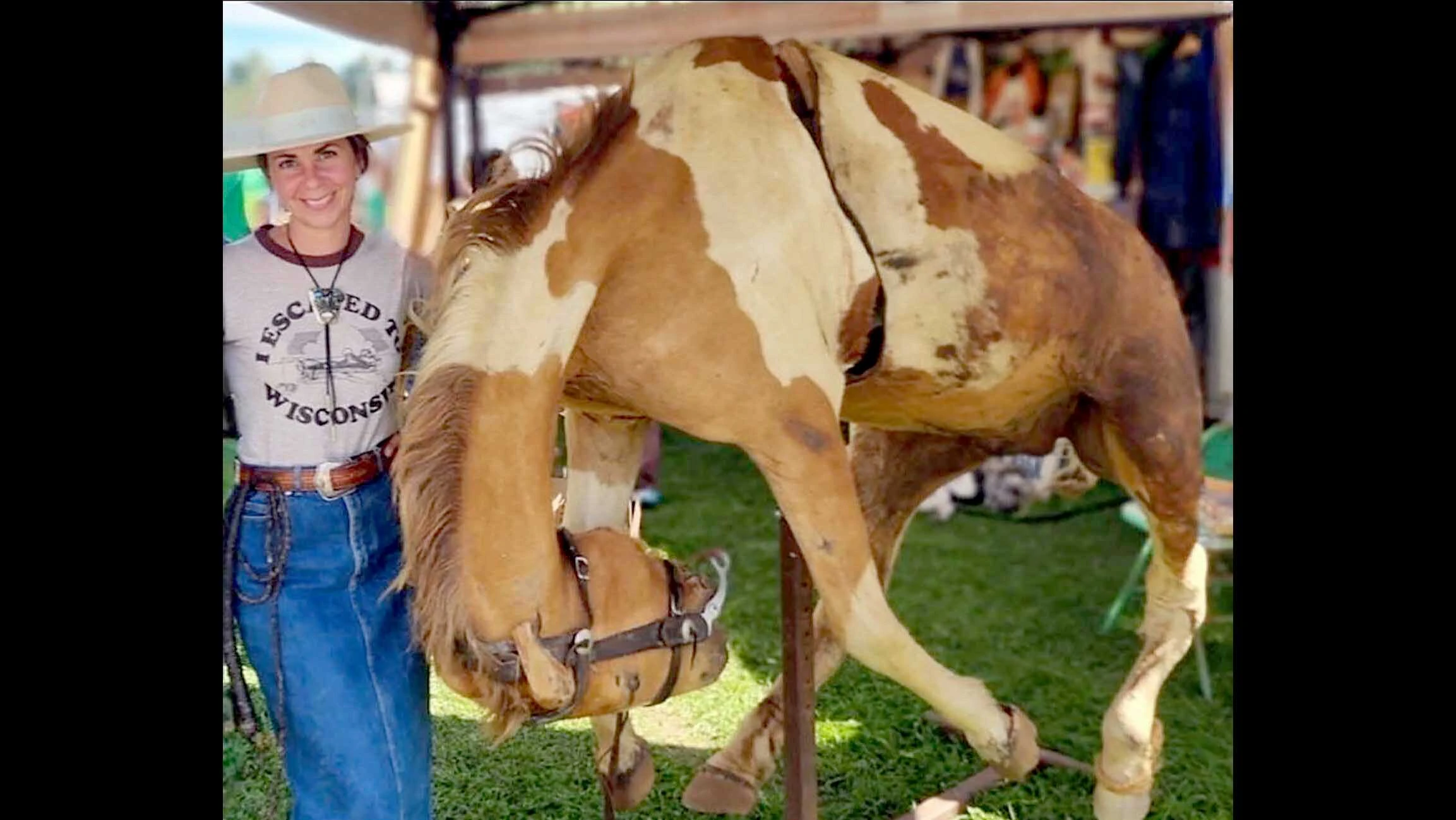
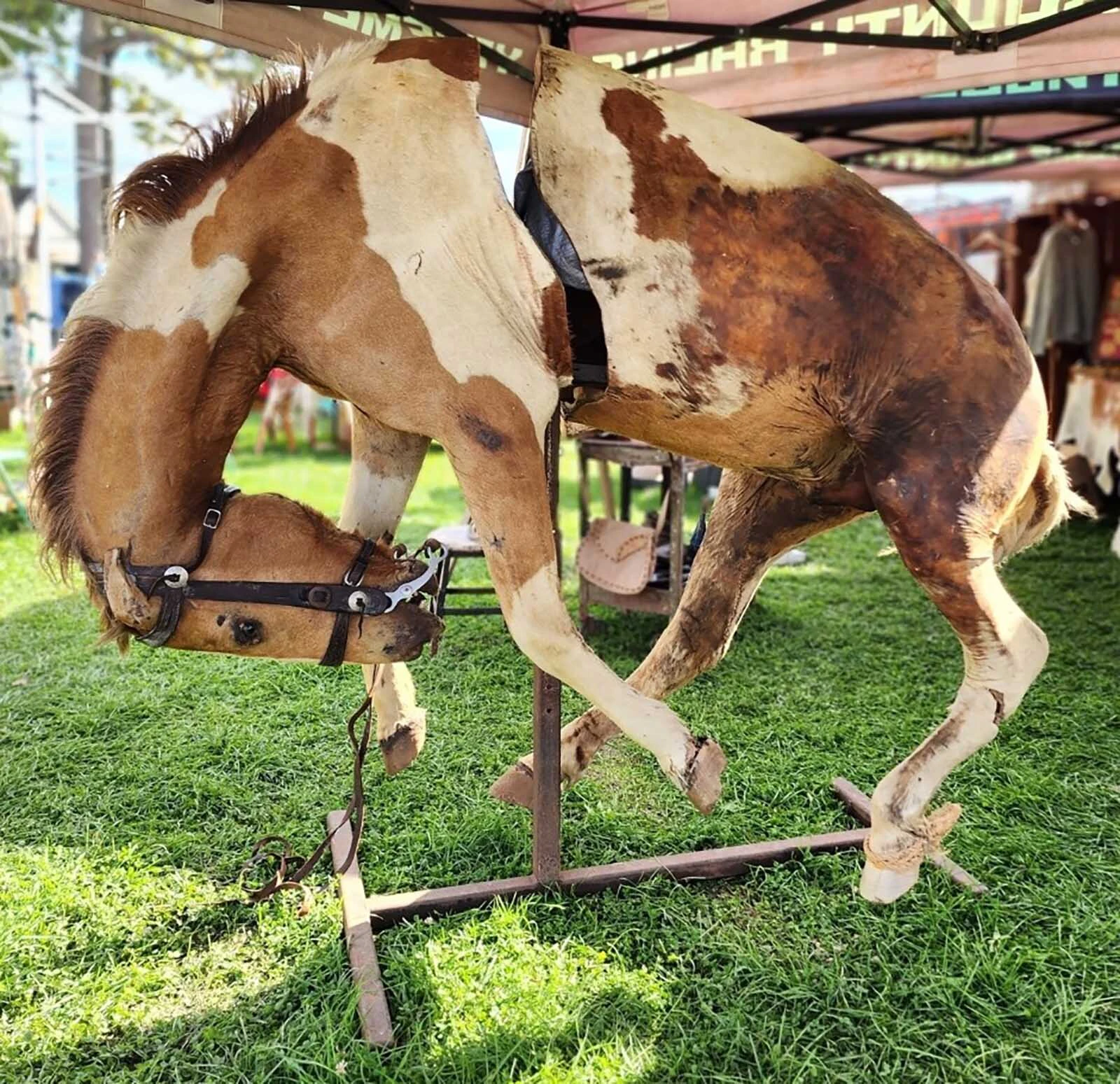
Mitzi Lukowski is a collector of odd things, so her friends weren't surprised when she bought a taxidermied horse, frozen mid-buck with its mouth open and four legs thrown into the air.
"It's more like, 'Of course you did,'" she chuckles.
The brown-and-white horse now lives with Lukowski in Florida. Its hide is stretched over an old framework of wood and other materials, and somewhere along the way the animal was separated into two hulking pieces.
Exactly how long it has been dead — and who the horse was when it was alive — is where things get complicated.
Lukowski was told the horse was more than a century old, that it had been displayed in a museum, and that it was a Spanish-American War horse with some connection to President Theodore Roosevelt, his Rough Riders or the Wild West era.
She has even wondered whether a hole visible through its hide might be a bullet wound deliberately preserved by whoever mounted it.
It's a fantastic tale. Now she just needs to figure out whether any of it is true.
“I think there’s a story to this horse,” Lukowski told Cowboy State Daily. “I just don't know what it is.”
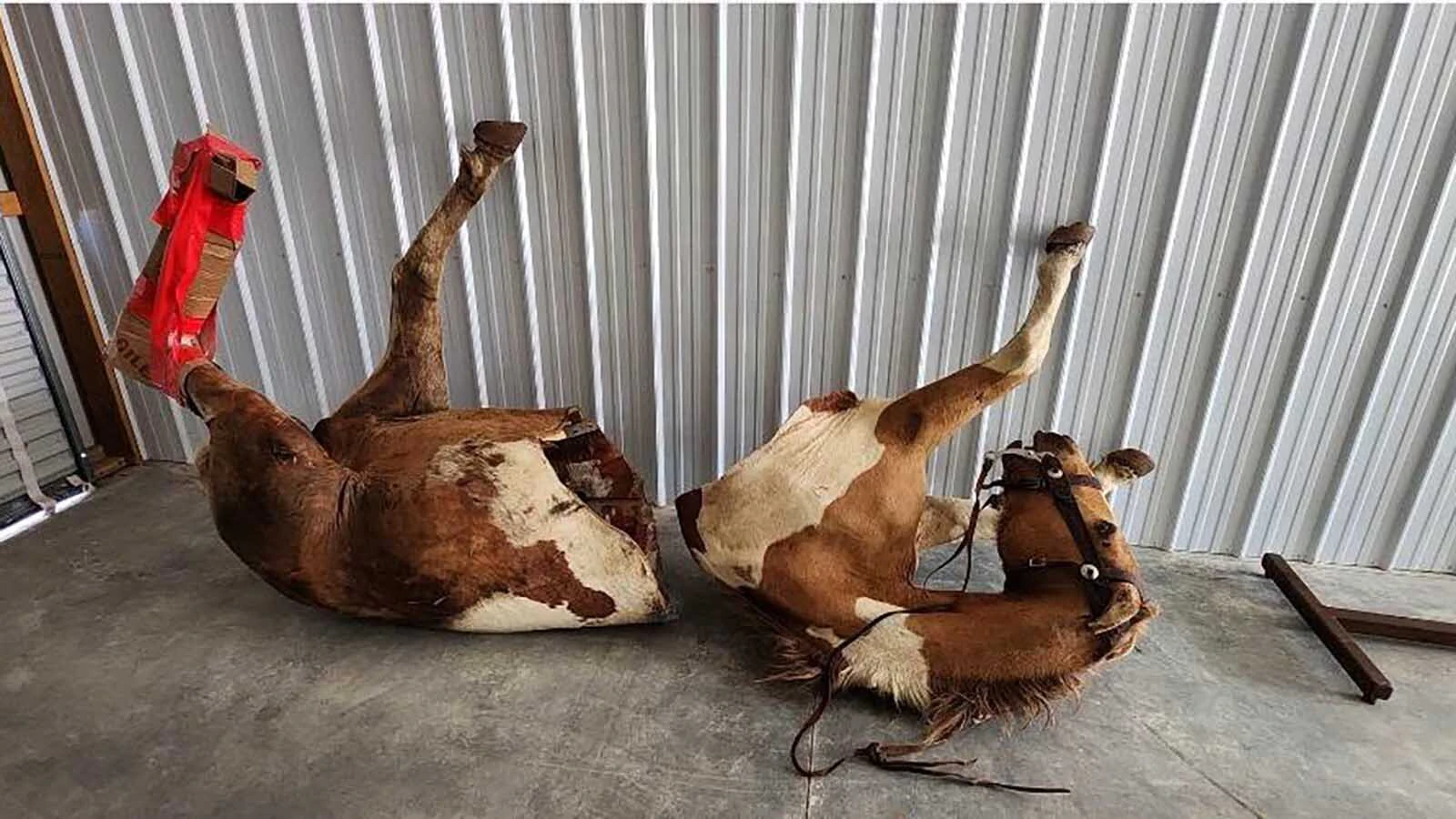
A weathered horse mount, still wearing its bridle and tack, lies in pieces after being removed from its longtime display. (Mitzi Lukowski) 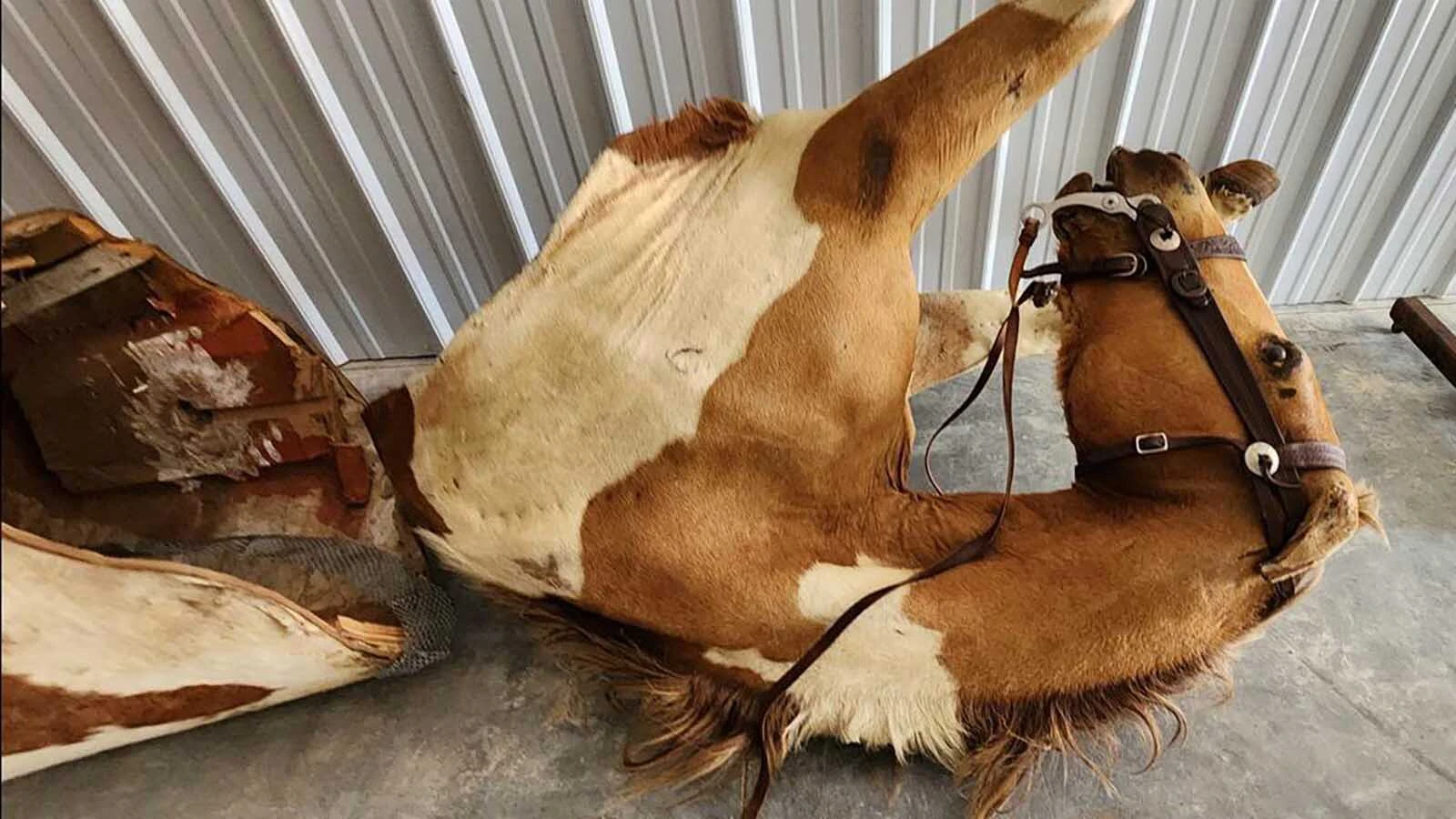
A weathered horse mount, still wearing its bridle and tack, lies in pieces after being removed from its longtime display. (Mitzi Lukowski)
Oral History, No Tags
Lukowski has been a collector since she was about 5 years old and opened her first vintage clothing store when she was 19.
She wasn't shopping for a dead horse when, about five or six years ago, she spotted one among items being sold from a collector's holdings in New York.
But there it was.
The timing made a peculiar sort of sense. Lukowski had rescued her first living horse from what she calls the “slaughter pipeline,” and she dreamed of someday opening a Western-themed store connected to her horse-rescue efforts.
A full-sized taxidermied horse would certainly make a centerpiece.
So she bought it.
The horse came with an extraordinary oral history.
Lukowski said she was told it was a Spanish-American War-era animal and that there was some connection to Roosevelt's Rough Riders. She also recalls being told it had once been exhibited in a Wild West museum, possibly in Colorado or Texas.
What it didn't come with was provenance.
There is no museum placard, catalog entry, historic photograph or documented chain of ownership establishing where the horse came from or who might have ridden it.
Recently, Lukowski put photos online hoping citizen sleuths might give her some leads. The horse went with her to southern Wisconsin last week, where she briefly considered selling it for $3,500 or more.
It didn't sell, and the horse and owner have since returned home to Florida.
Instead, the post generated theories.
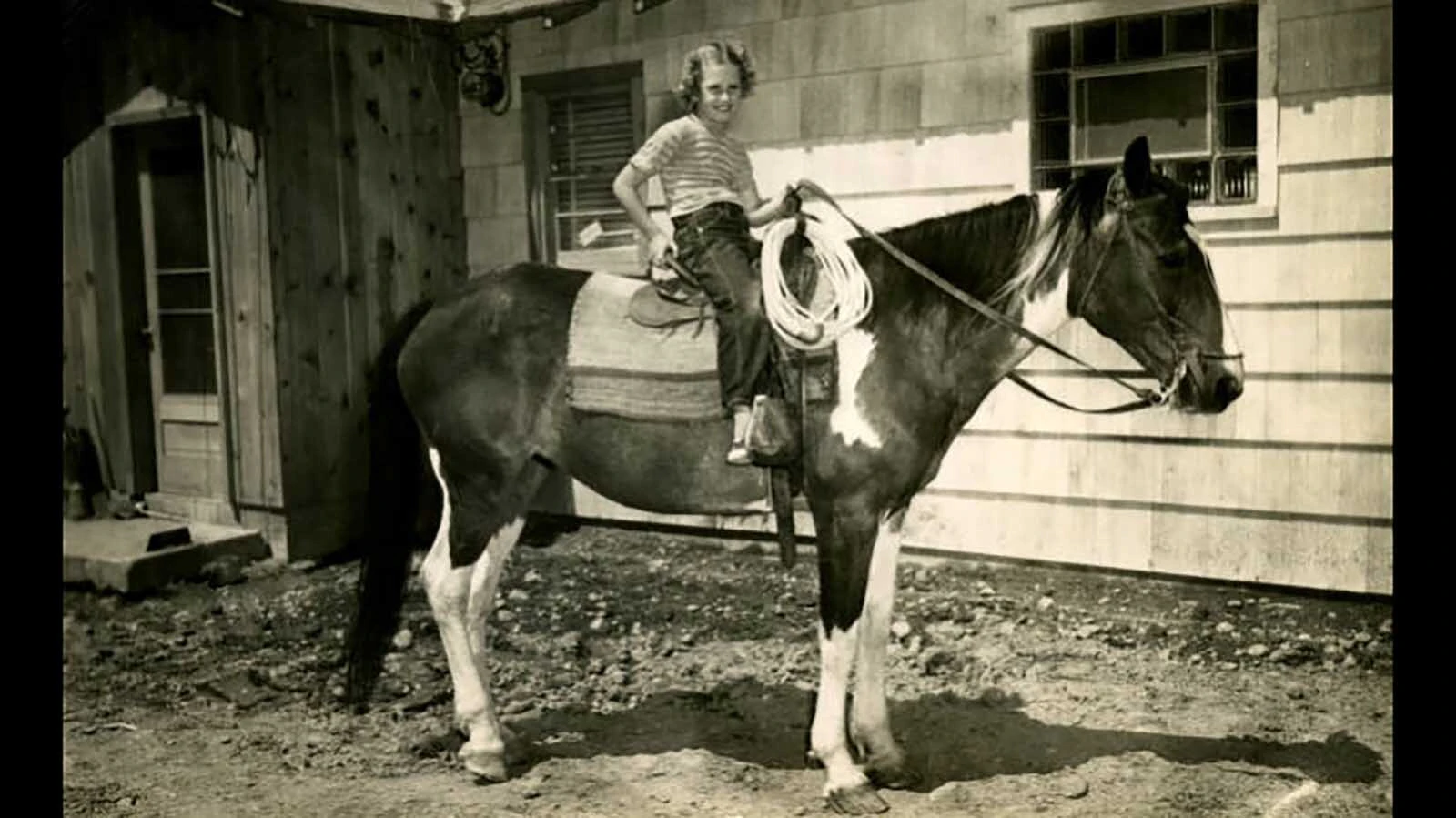
A girl poses on a paint horse sometime between 1910 and 1925. (Buffalo Bill Center of the West) 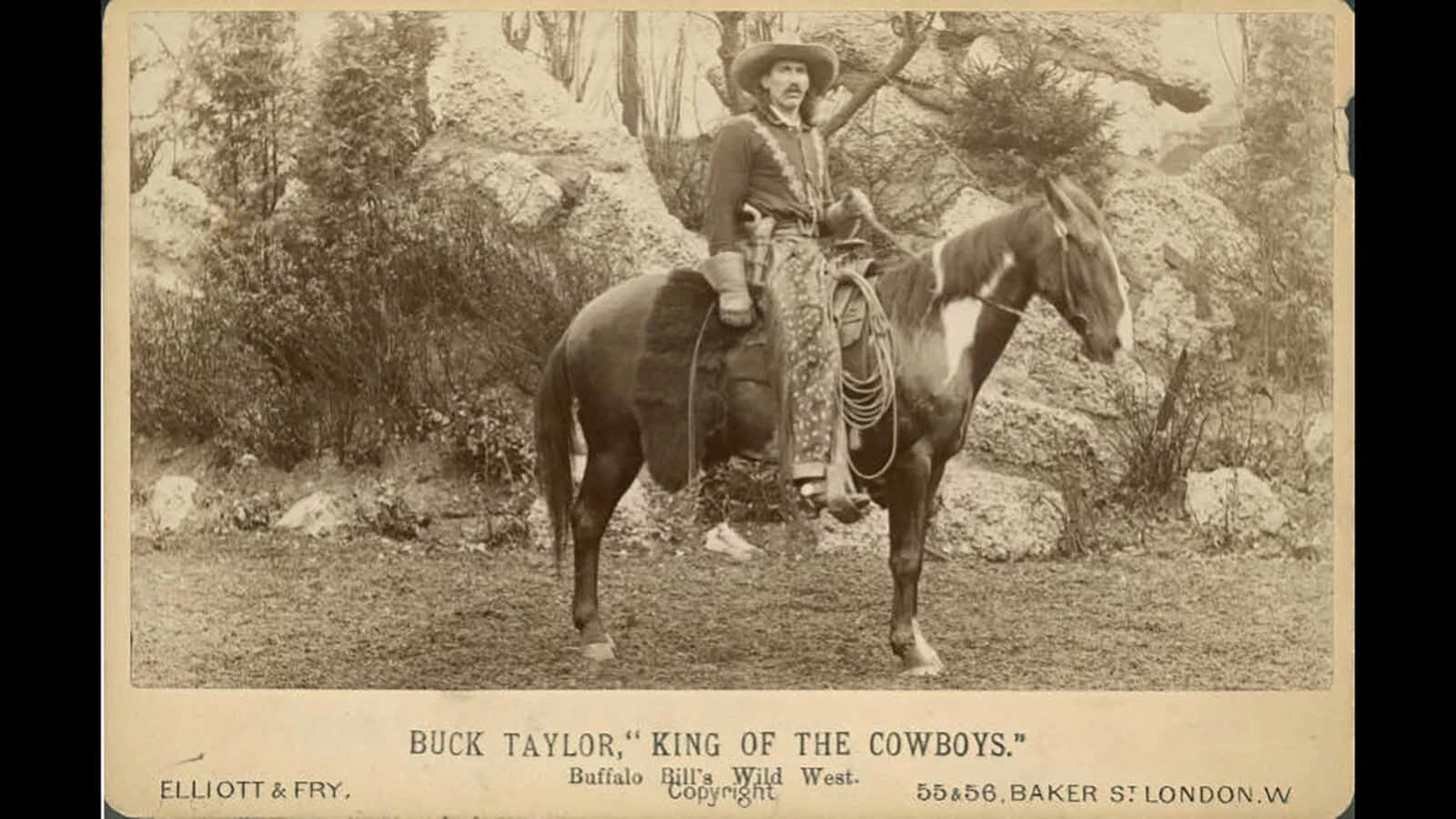
William Levi “Buck” Taylor, known as the “King of the Cowboys,” poses on a paint horse with Buffalo Bill’s Wild West in 1887. (Elliott & Fry via Buffalo Bill Center of the West) 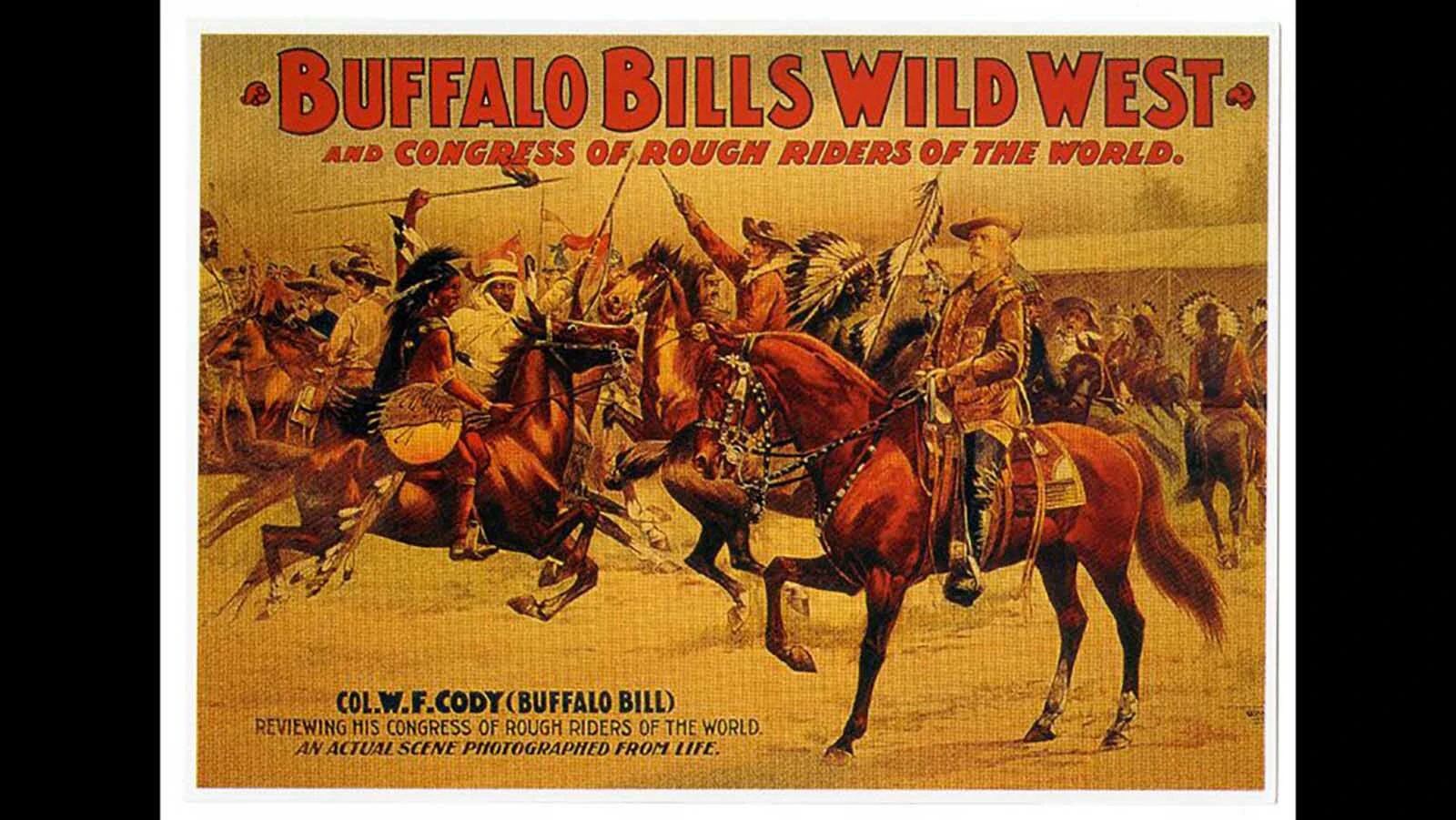
Buffalo Bill Cody reviews his Congress of Rough Riders of the World in a period postcard depicting his famous Wild West show. (Denver Public Library via Western History Collection) 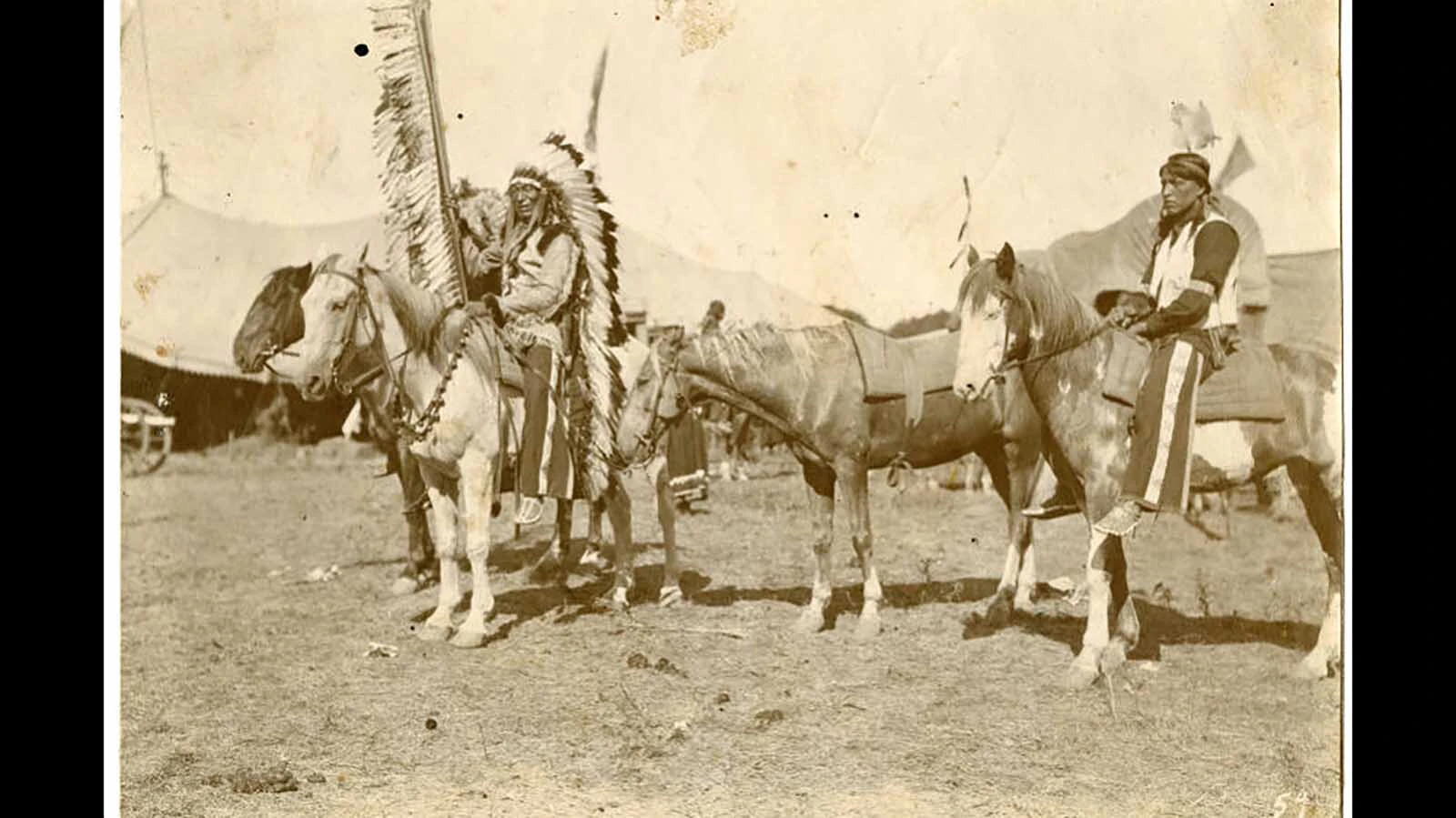
Chief Iron Tail holds a coup stick on horseback in 1912, with Buffalo Bill’s Wild West tents in the background. (Buffalo Bill Center of the West)
Enter Buffalo Bill
One tantalizing avenue leads straight back to Wyoming.
Buffalo Bill Cody's Wild West famously evolved into “Buffalo Bill's Wild West and Congress of Rough Riders of the World,” an enormous traveling spectacle that presented riders and horse cultures from around the globe.
Period advertisements Lukowski found specifically promoted the show's “Mounted Warriors of the World” and included “Roosevelt Rough Riders” among the attractions.
There were cowboys, cavalrymen, Indigenous riders, Cossacks, gauchos and others — and horses. Lots of horses.
Could Lukowski's strange bucking horse somehow have emerged from that world?
Samuel Hanna, Tate Assistant Curator and Hayden Fellow at the Buffalo Bill Museum in Cody, examined photographs of the horse for Cowboy State Daily.
He wasn't ready to saddle up with that theory.
“The pictured horse is indeed mounted ‘mid-buck,’ if you will, but that can hardly be considered evidence of connection to Buffalo Bill's Wild West,” Hanna said.
More importantly, the museum has no records showing horses involved with the Wild West were preserved through taxidermy.
"Whether or not it happened, though, I cannot say," Hanna said.
Everybody's Buffalo Bill Story
There's another reason to be cautious about an artifact that comes with a Buffalo Bill story.
Hanna has heard this sort of thing before.
A lot.
“It's stunning how often we're contacted about items that are in some way vaguely ‘western’ that have storied association with Buffalo Bill's Wild West,” he said.
The “claim of connection to Cody's exhibition speaks to the enormous success and enduring influence of the show worldwide,” he said.
That doesn't necessarily mean Lukowski's story is false. It means it needs evidence.
The Buffalo Bill Center of the West's digital collections contain historical photographs of dozens of horses associated with the Wild West, including a number of pintos and other distinctly marked horses.
There are horses carrying performers, Indigenous riders and Buffalo Bill himself.
Cowboy State Daily compared Lukowski's horse's distinctive brown-and-white markings with historical images in the collection, but no obvious match emerged.
Then there's another mystery: Is the horse really more than 100 years old?
Lukowski said people familiar with old taxidermy who have examined it believe it could date to the Victorian era.
From photographs alone, Hanna said it's difficult to tell.
The specimen, he said, “appears to be in remarkably good condition for a supposed age of well over 100 years.”
Wanted: One Old Photograph
The horse's paint pattern might now be its best chance at getting its identity back.
Its face is mostly brown with an irregular white marking. Its neck is predominantly brown before giving way to a broad white section across the body. Brown returns heavily around the hindquarters, while the legs carry their own distinctive transitions.
Those markings could function almost like a fingerprint.
If a sufficiently clear historical photograph of the same horse exists, the pattern could potentially provide a visual match.
Lukowski has considered offering $100 to the first person who produces a legitimate historical photograph, postcard or other credible evidence identifying it.
There's just one very modern complication. Artificial intelligence can now create a convincing old photograph of practically anything.
So a sepia-toned image of Teddy Roosevelt astride an uncannily familiar paint horse isn't going to cut it.
The evidence has to be real.
DNA Testing
Since posting the horse online, Lukowski has heard from oddities collectors, Western enthusiasts, horse rescuers and people with theories about where it might have come from.
One person involved in preserving Spanish mustangs even suggested sending a sample of hair or skin for DNA testing, Lukowski said. She plans to do it.
DNA won't reveal whether Buffalo Bill ever walked past the horse or whether a Rough Rider once sat on its back, but it could potentially provide another clue about the animal itself.
For now, the horse is back home in Florida.
Somewhere, perhaps, there's an old photograph gathering dust in a family album. Maybe there's a forgotten museum catalog, an auction record buried in a box or a postcard showing a brown-and-white horse caught in exactly the right profile.
Or maybe the remarkable story that followed the horse from owner to owner became a little more remarkable each time it was told.
Lukowski doesn't know.
Maybe, she figures, that's how it's supposed to be.
Kolby Fedore can be reached at kolby@cowboystatedaily.com.


