
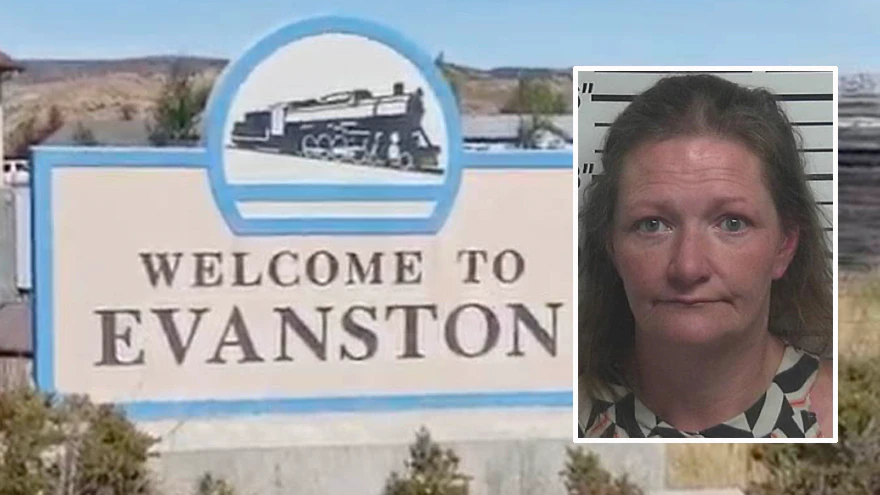
When federal and Wyoming drug agents descended on Stephanie Jepperson’s Evanston home last week, they found mason jars filled with mysterious liquids, plastic piping, measuring flasks, mixing tools and enough chemicals to prompt the arrival of investigators trained to deal with clandestine drug labs.
Jepperson, born in 1978, admitted she had been manufacturing a synthetic drug known on the streets as “bath salts” herself and distributing it to others around Uinta County, but not every batch made it out the door.
Jepperson told investigators she recently attempted to “cook” her product, but “burned” it instead, making it unusable — and, in her estimation, too “dangerous” for her customers, Justin Mathson, a Wyoming Division of Criminal Investigation special agent, wrote in an affidavit filed in Uinta County Circuit Court.
The problem, she explained, was that she failed to “cook” off the pyrrolidine.
Agents say they found mason jars containing the suspected ruined product, which presumptively tested positive for pyrrolidine, a corrosive, flammable chemical considered harmful if swallowed or inhaled.
Jepperson is now charged with delivery of a controlled substance and unlawful clandestine drug lab operations — charges that could put her behind bars for up to 30 years in prison.
She was arrested Thursday and remained in the Uinta County Detention Center as of Monday afternoon.
Mason Jars And Muriatic Acid
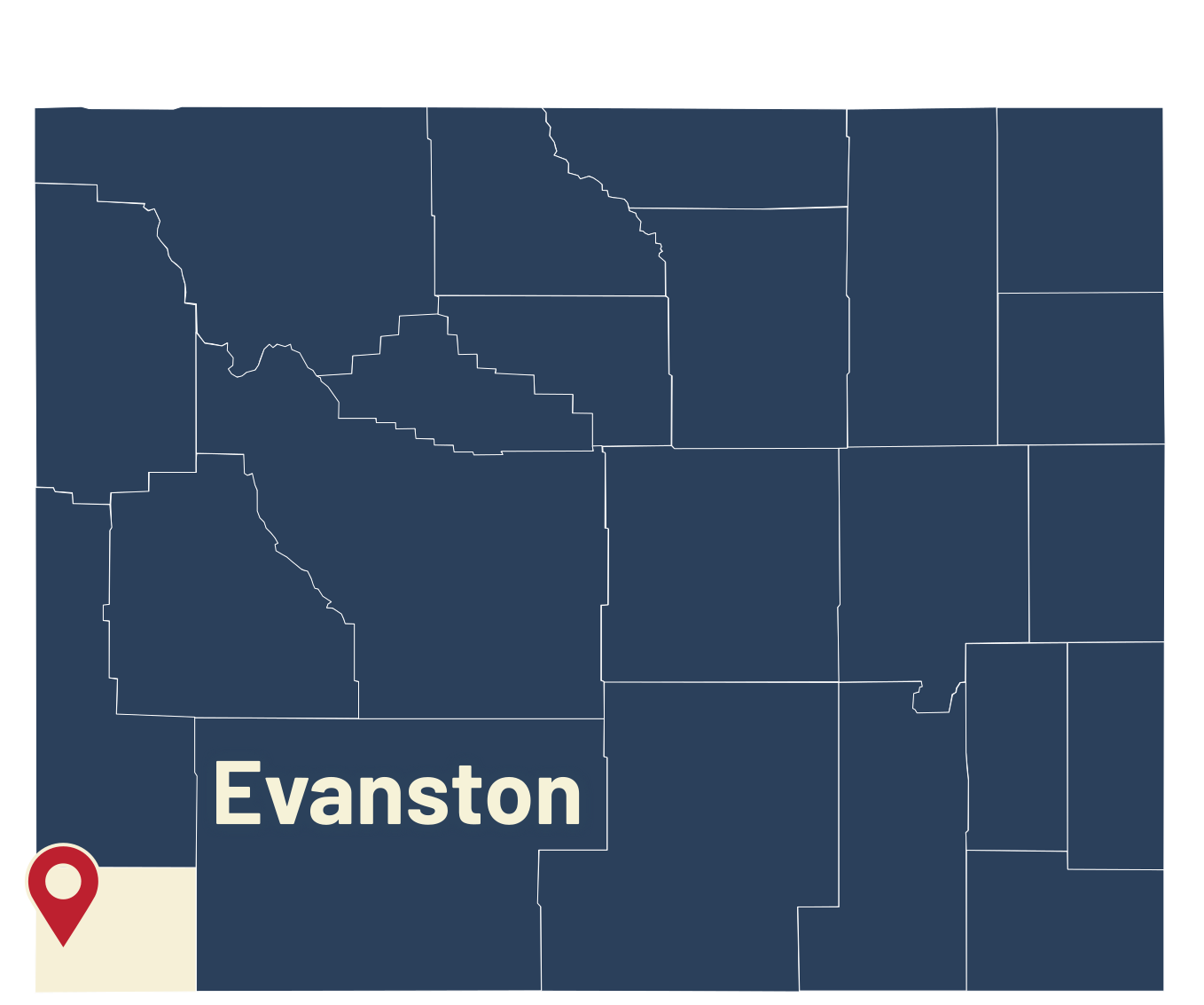
Mathson, a Wyoming agent assigned to the U.S. Drug Enforcement Administration as a task force officer, said he was assisting Utah DEA agents with the execution of a federal search warrant at Jepperson’s home on Yellow Creek Road in Evanston.
Investigators suspected the property contained a laboratory manufacturing synthetic cathinones, specifically alpha-PVP, a Schedule I controlled substance associated with what are commonly called “bath salts.”
They allege Jepperson was manufacturing alpha-PVP in Uinta County from about June 1 through Aug. 19.
Jepperson was at the home when agents arrived and was detained while they searched the property, the affidavit says.
Inside, agents reported finding mason jars containing liquids that presumptively tested positive for pyrrolidine, valerophenone and hydrobromic acid, which Mathson identified as precursor chemicals used in the manufacture of synthetic cathinones.
They also said they found “gas tubes,” plastic piping, measuring flasks and mixing tools. Bottles were labeled acetone, ethyl acetate and muriatic acid.
Another mason jar contained a liquid substance that presumptively tested positive for alpha-PVP and weighed approximately 315.8 grams, the affidavit says.
Not For The Tub
Despite the name, these are not the good-smelling crystals people dump in the bathtub.
“Bath salts” is a street term for synthetic cathinones, stimulants that can produce effects similar to methamphetamine, cocaine and MDMA, the DEA reports in its 2025 National Drug Threat Assessment.
Over the years, different versions have picked up names such as: “Ivory Wave,” “Meow Meow,” “Snow Leopard,” “Super Coke,” “Bliss” and “Blizzard."
The substance Jepperson is accused of manufacturing is alpha-PVP, is known as flakka.
The DEA describes alpha-PVP as a dangerous synthetic drug that may appear as white or pink crystals and can be eaten, snorted, injected or vaporized.
The desired effects can include euphoria and alertness.
The list of things that can go wrong includes but is not limited to paranoia, hallucinations, delusions, seizures, chest pain, increased heart rate, suicidal thoughts and violent outbursts.
Alpha-PVP itself has been linked to hallucinations, aggressive behavior, self-injury, overdose and death.
Which puts Jepperson’s alleged assessment that one of her own batches was simply too “dangerous” to distribute into some perspective.
Bath Salts In Wyoming
Bath salts aren't new to Wyoming, although they've never occupied the same space in the state's drug landscape as methamphetamine or, more recently, fentanyl.
They were strange enough in 2013 that when an 18-year-old Cheyenne resident was arrested with them, police called it the city's first known bath-salts arrest.
Cheyenne police warned then that synthetic drugs presented an unusual problem.
Their chemical recipes could continually change, making it difficult for users to know what they were taking, and difficult for authorities to write laws encompassing every new chemical combination appearing on the street.
Nationally, the drugs eventually faded somewhat from their early-2010s notoriety.
DEA forensic laboratories received nearly 13,200 synthetic-cathinone submissions in 2023. That fell to about 7,300 in 2024, continuing what the agency described as an overall downward trend since 2020.
Another Lab Down The Road
Just last month, federal prosecutors in Utah announced charges against a 51-year-old Duchesne man after investigators reported finding laboratory glassware, chemicals, a handgun and 351.8 grams of alpha-PVP.
The investigation began after police stopped the man in February.
Officers reported finding a three-neck flask, additional flasks, condenser tubing, measuring glassware, unknown liquids and containers of chemicals.
That was enough to bring in a DEA clandestine lab team.
Laboratory testing later confirmed the presence of 351.8 grams of alpha-PVP, the U.S. Attorney’s Office for the District of Utah reported.
There is no indication in Jepperson’s affidavit that the Duchesne case and the Evanston investigation are connected.
Still, the cases put alleged alpha-PVP labs on both sides of the Wyoming-Utah line within months of each other.
And it was Utah DEA agents who came across that state line with a federal warrant to search Jepperson’s Evanston home.
The affidavit doesn't explain what initially put Jepperson on investigators’ radar or what evidence led federal agents to seek the warrant.
‘Salt’
Another woman at the home with Jepperson told investigators she had a small amount of “salt” in a bag inside a vehicle, the affidavit says.
Investigators found the bag and reported discovering a brownish powder inside that presumptively tested positive for alpha-PVP.
After being advised of her Miranda rights, Jepperson admitted selling bath salts to the woman that day.
She also admitted manufacturing bath salts in Uinta County “for distribution to others,” the affidavit says.
Investigators showed Jepperson chemicals and equipment found at the home and inside vehicles, and she allegedly acknowledged they were consistent with what she used to manufacture and process alpha-PVP.
Jepperson told them she botched the batch by failing to remove the pyrrolidine, leaving behind a mixture she believed was too dangerous to sell.
She appeared in Uinta County Circuit Court on Friday, where her bond was set at $50,000 cash or surety.
Her preliminary hearing is scheduled for Thursday before Circuit Court Judge Michael L. Greer, when a judge will determine whether prosecutors have enough evidence to send the felony case to District Court.
Kolby Fedore can be reached at kolby@cowboystatedaily.com.


