
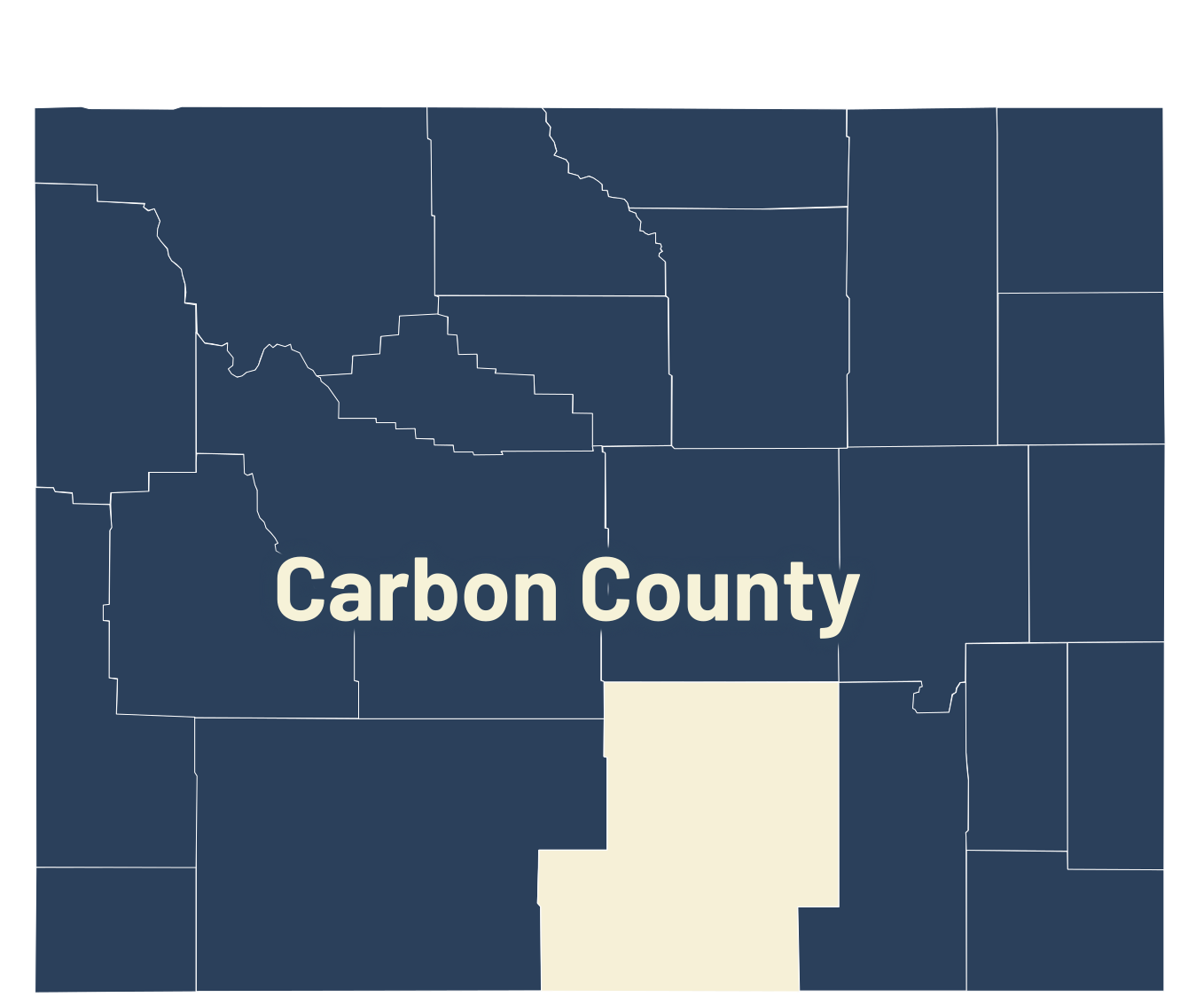
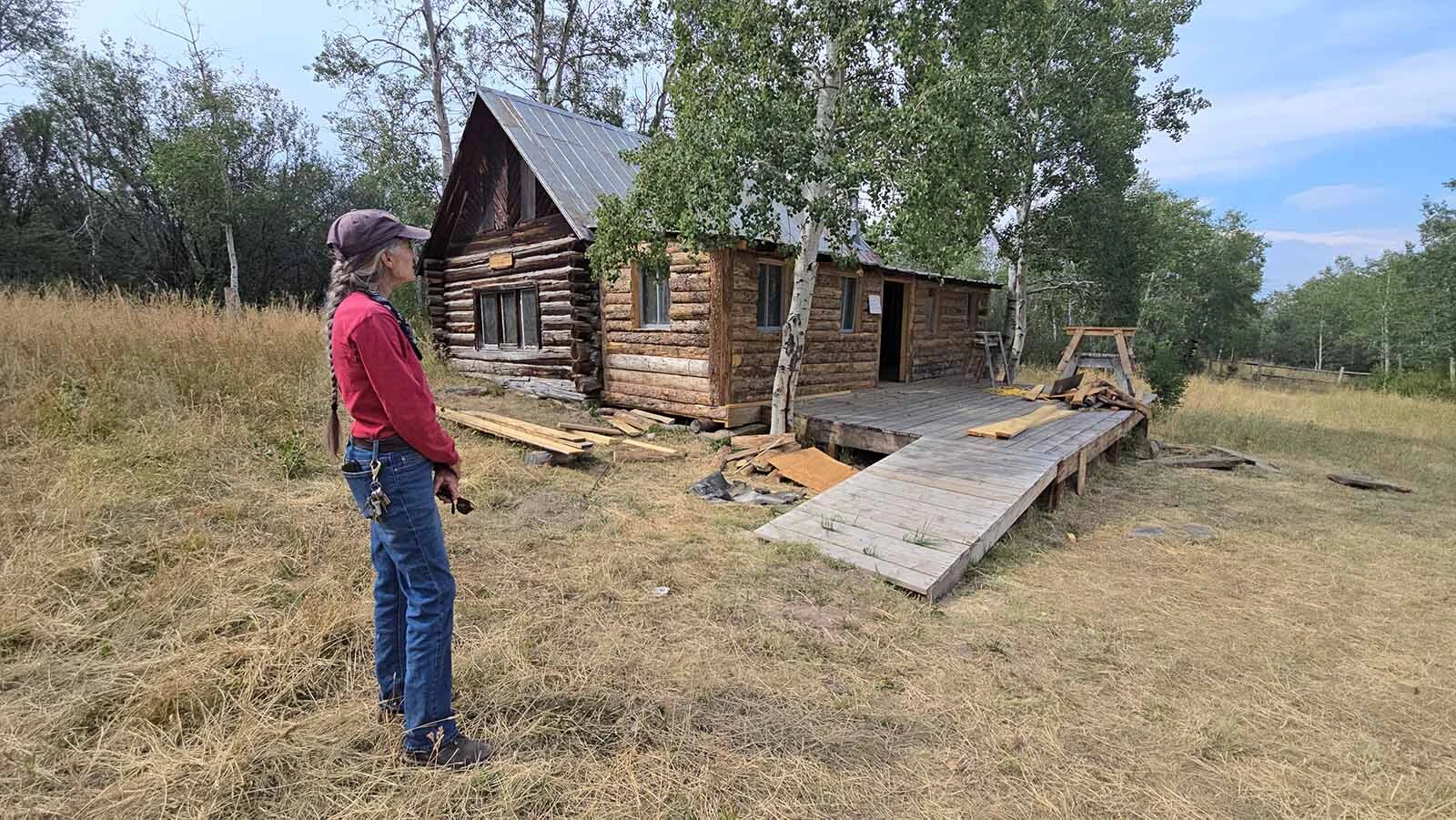
High on the Medicine Bow-Routt National Forest, a decaying log cabin that once anchored one of Wyoming’s old range-sheep operations was in danger of being lost after the Niland family’s long-held Forest Service arrangement ended.
Instead, the Little Snake River Museum, is working to turn it into a public window into the state’s historic sheep industry, which once moved thousands of animals — and dozens of wagons — through the high country every summer.
Lela Emmons is director of the Little Snake River Museum. The Divide Sheep Camp cabin she is working to save sits on a 40-acre permit area on the Medicine Bow-Routt.
It served as the summer headquarters for the Divide Sheep Company, a mid-sized sheep operation owned by the Niland family and established in 1909, four years after the Forest Service itself was created.
Emmons described the arrangement as a “100-year lease” and said the family’s ability to maintain the cabin was tied to continuous operation of the site.
After John Niland’s death, the family was required to decide whether to remove, relocate, or donate the structure to an entity such as the Little Snake River Museum for preservation.
They chose the latter, to keep the cabin’s history intact.
“This is one of the few remaining summer cabins for the sheep industry,” Emmons said. “This infrastructure of corrals and cabins and even the sheepherder art on the trees is all going away. There will be nothing left if we don’t preserve this cabin.”
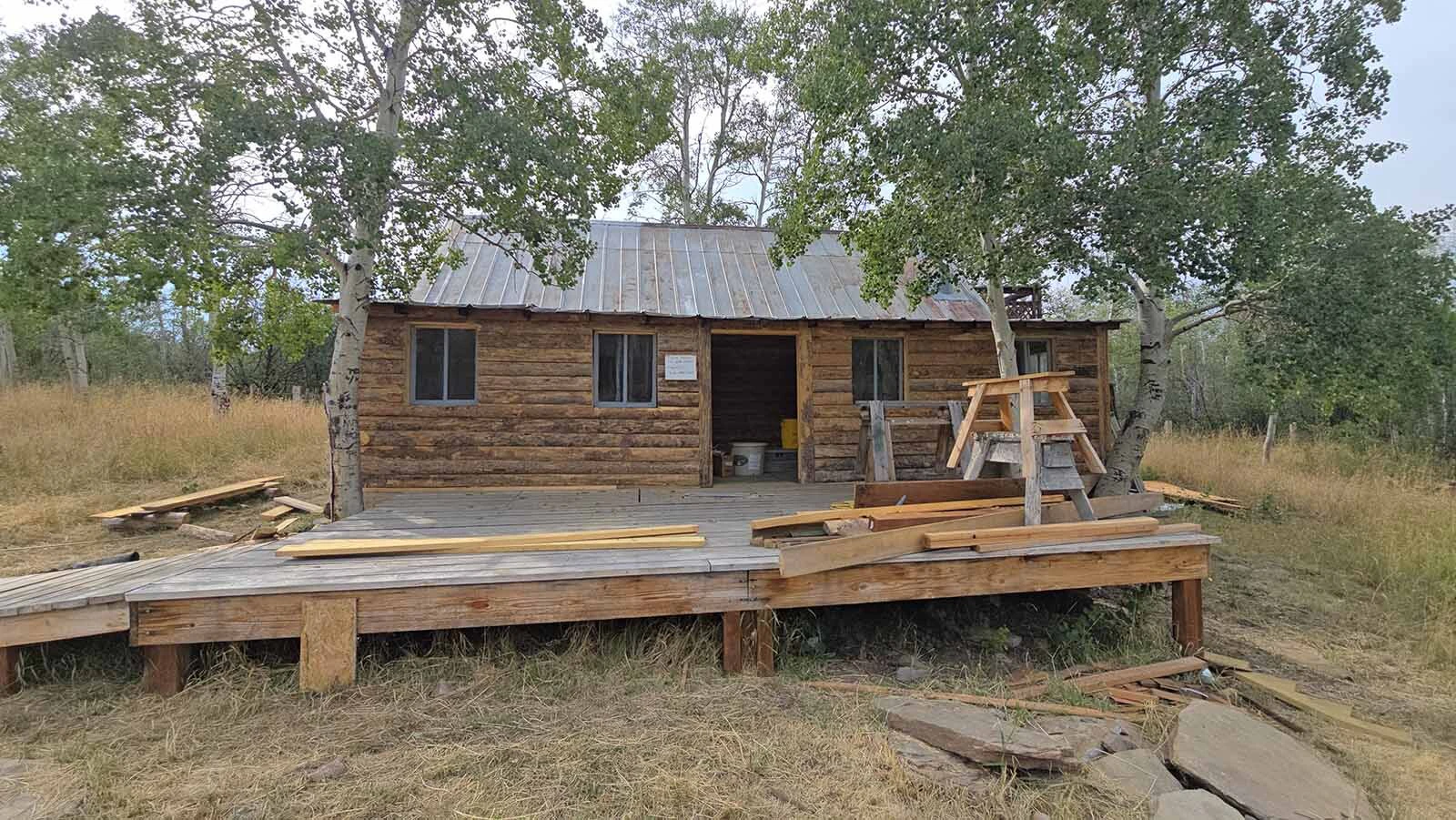
Work continues to restore the Niland cabin in the Medcine Bow-Routt National Forest. (Renee Jean, Cowboy State Daily) 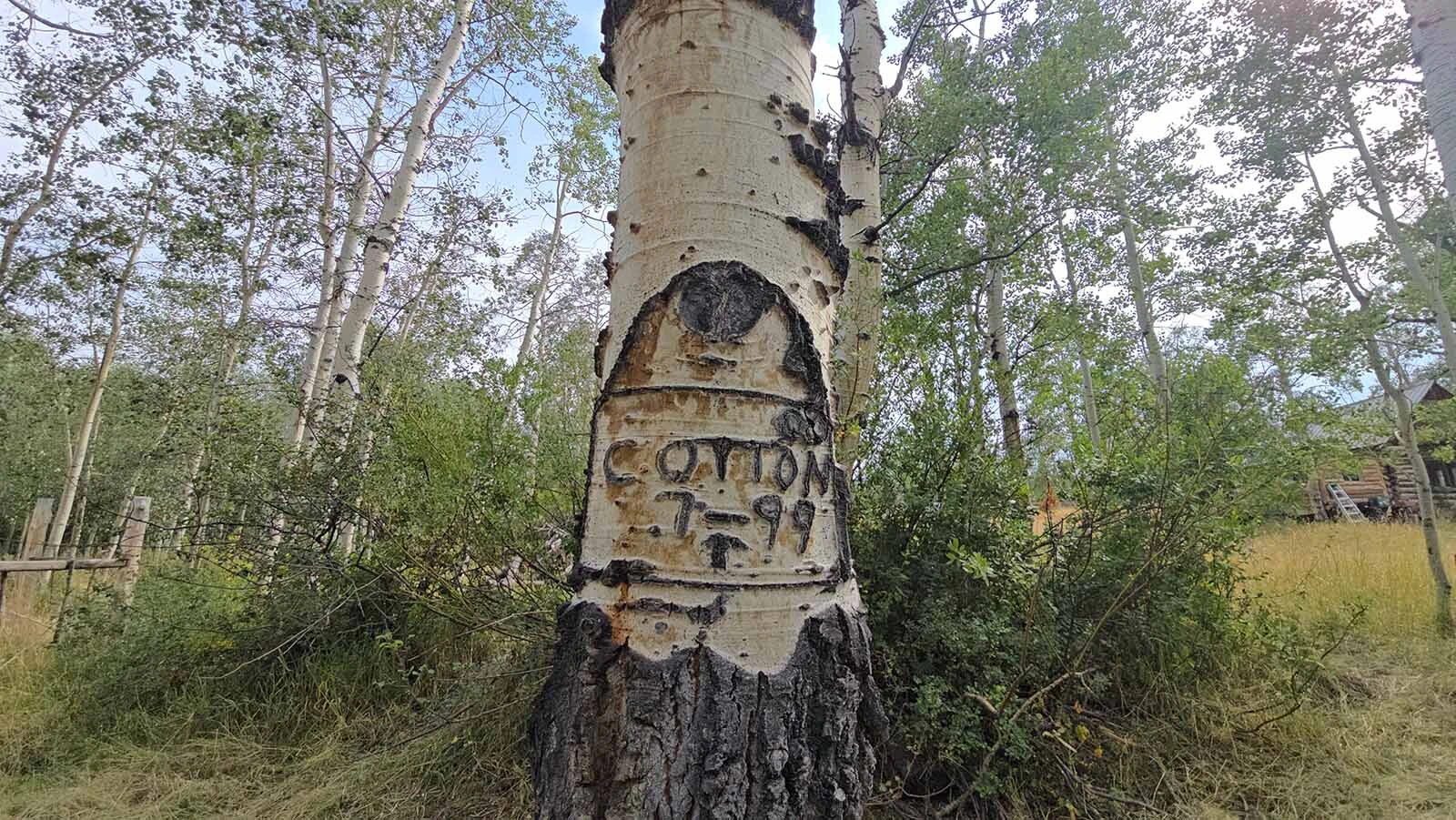
Signatures and messages have been carved on some of the aspen trees surrounding the Niland cabin in the Medcine Bow-Routt National Forest. (Renee Jean, Cowboy State Daily) 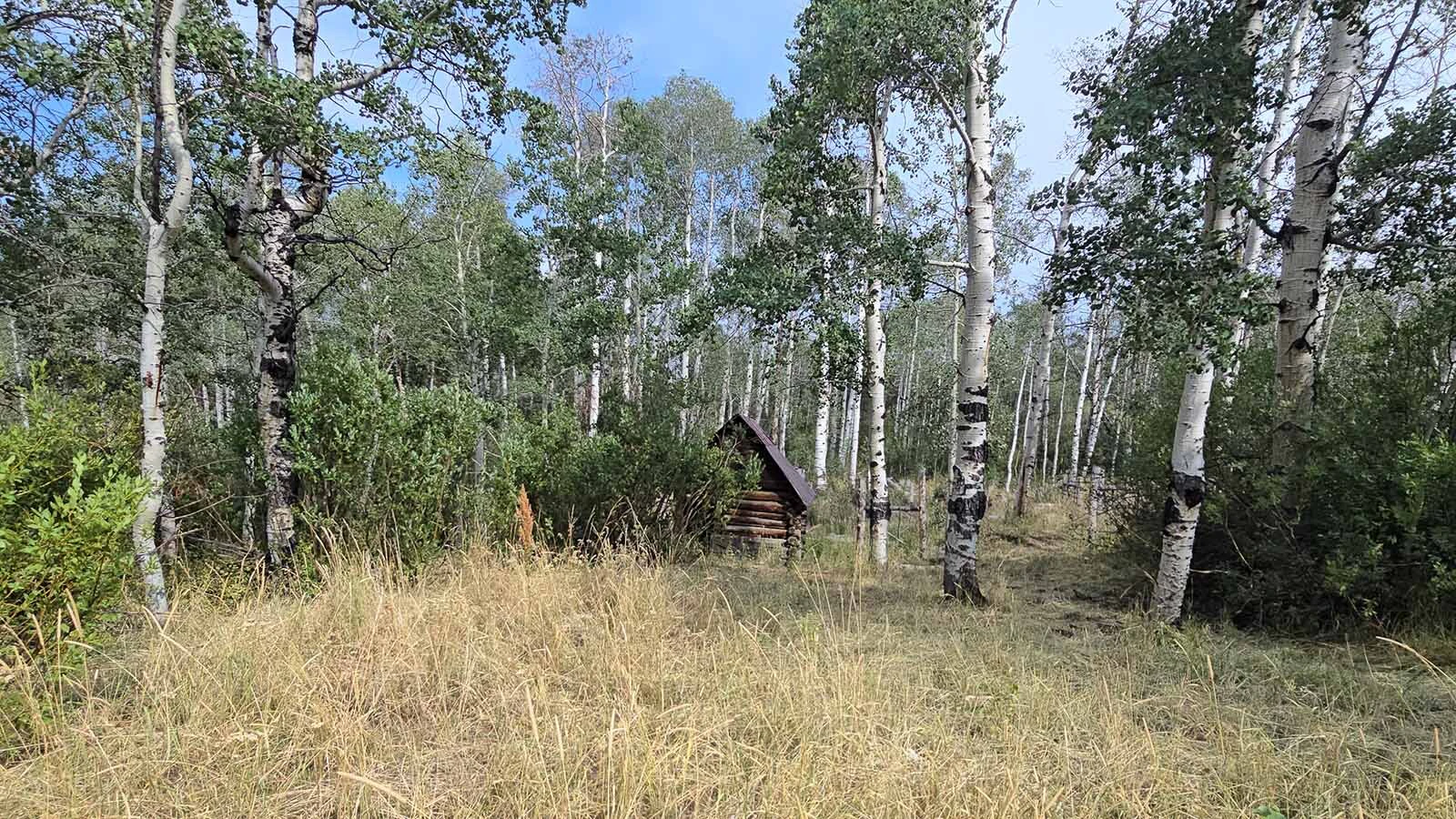
A tiny pump house sits in one corner of the Niland cabin property in the Medcine Bow-Routt National Forest. (Renee Jean, Cowboy State Daily) 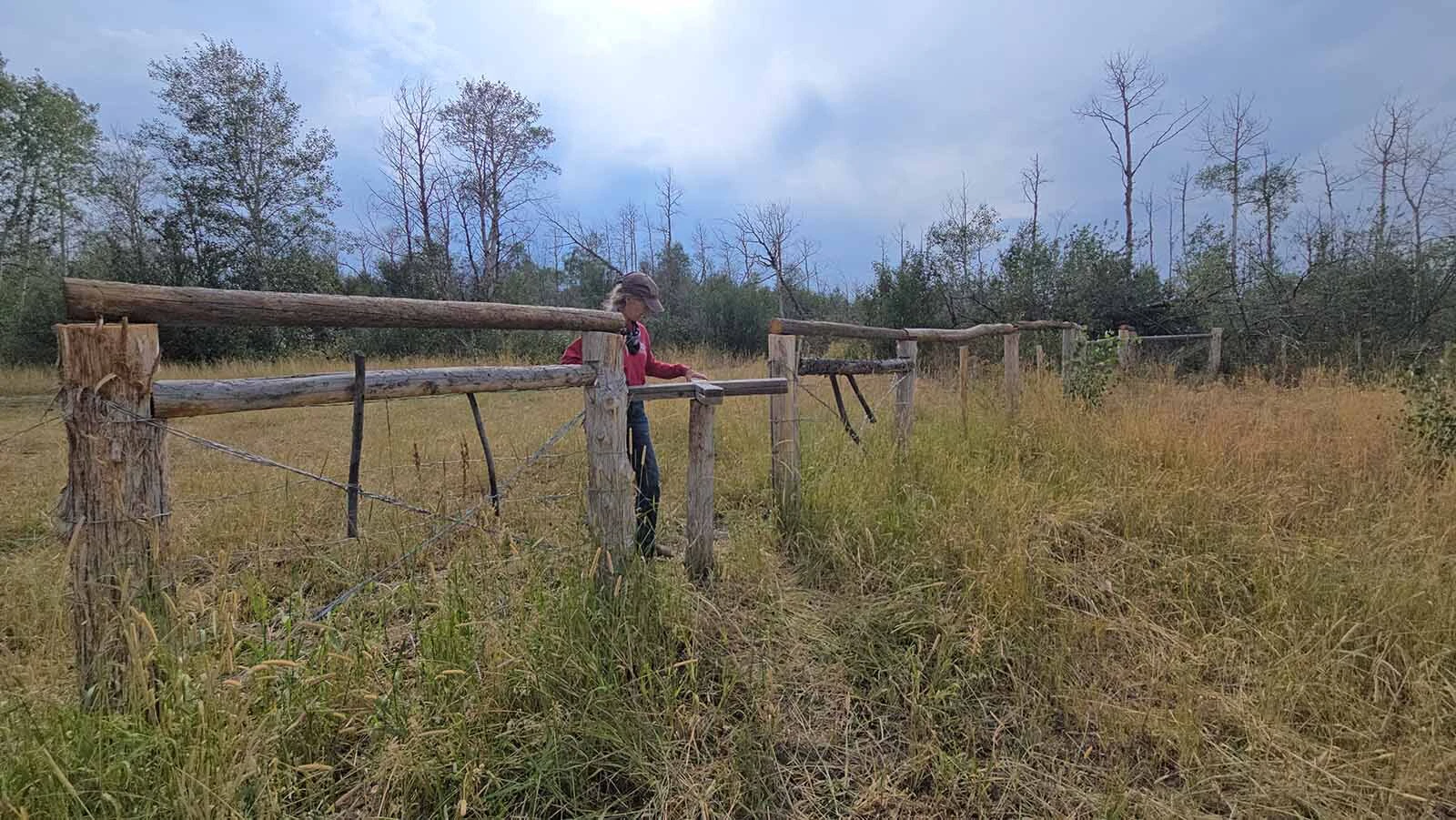
A turnstile in the fence allows humans to pass but keeps the cattle out at the Niland cabin in the Medcine Bow-Routt National Forest. (Renee Jean, Cowboy State Daily)
Regional Significance
The Niland cabin served as a collaborative hub for more than just the Niland family, which adds to the site’s historic significance.
“There would be like 50 wagons parked up there in the summer,” Emmons told Cowboy State Daily. “They would park all the wagons and then from this point on they would pack with horses. They’d have two or three pack horses and then they’d trail those up in the mountains and then they’d use little teepee tents.”
The tents had just enough room for a dry place to sleep, as well as little stoves to keep warm or cook food at night.
“They had little kitchen boxes, and they would spend the summer that way,” Emmons said. “They didn’t have wagons up in the mountains because it was too hard to get around in them.”
Many different operations used the Niland camp as a staging point. The camp had a centralized supply depot, as well as corrals and other workspaces where different operations could separate, count, brand, and dip their sheep for ticks.
“They didn’t have the spray-on stuff we have now, one shot gets rid of ticks,” Emmons said. “So they’d have to dip them. And before they’d come out, they had this tool where they’d dunk their head under and then pull them back up with the other.”
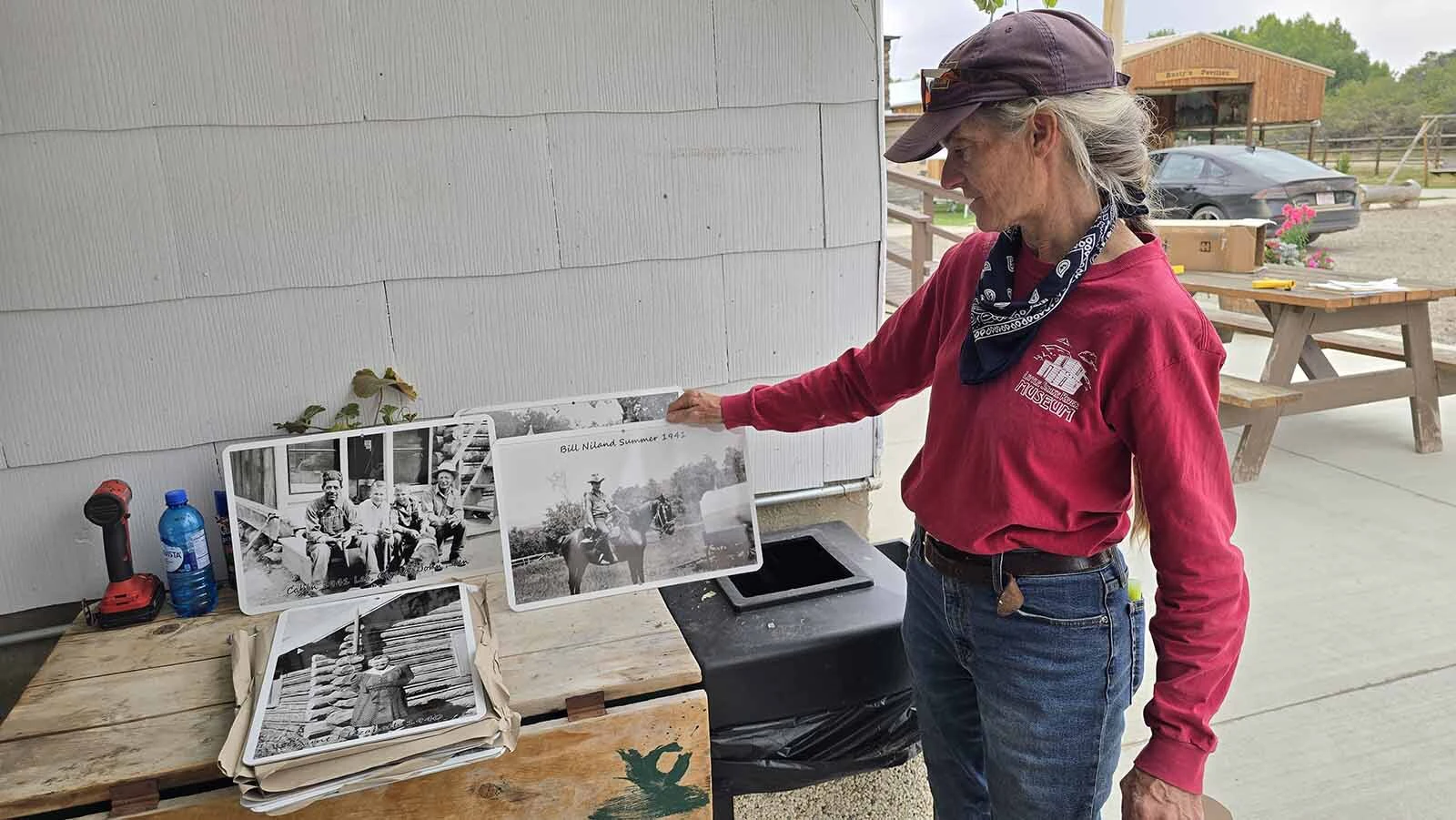
A metal plate with ap photograph of Bill Niland is among photographs Little Snake River Museum Director Lela Emmons will place at the Niland Cabin in the Medcine Bow-Routt National Forest. (Renee Jean, Cowboy State Daily) 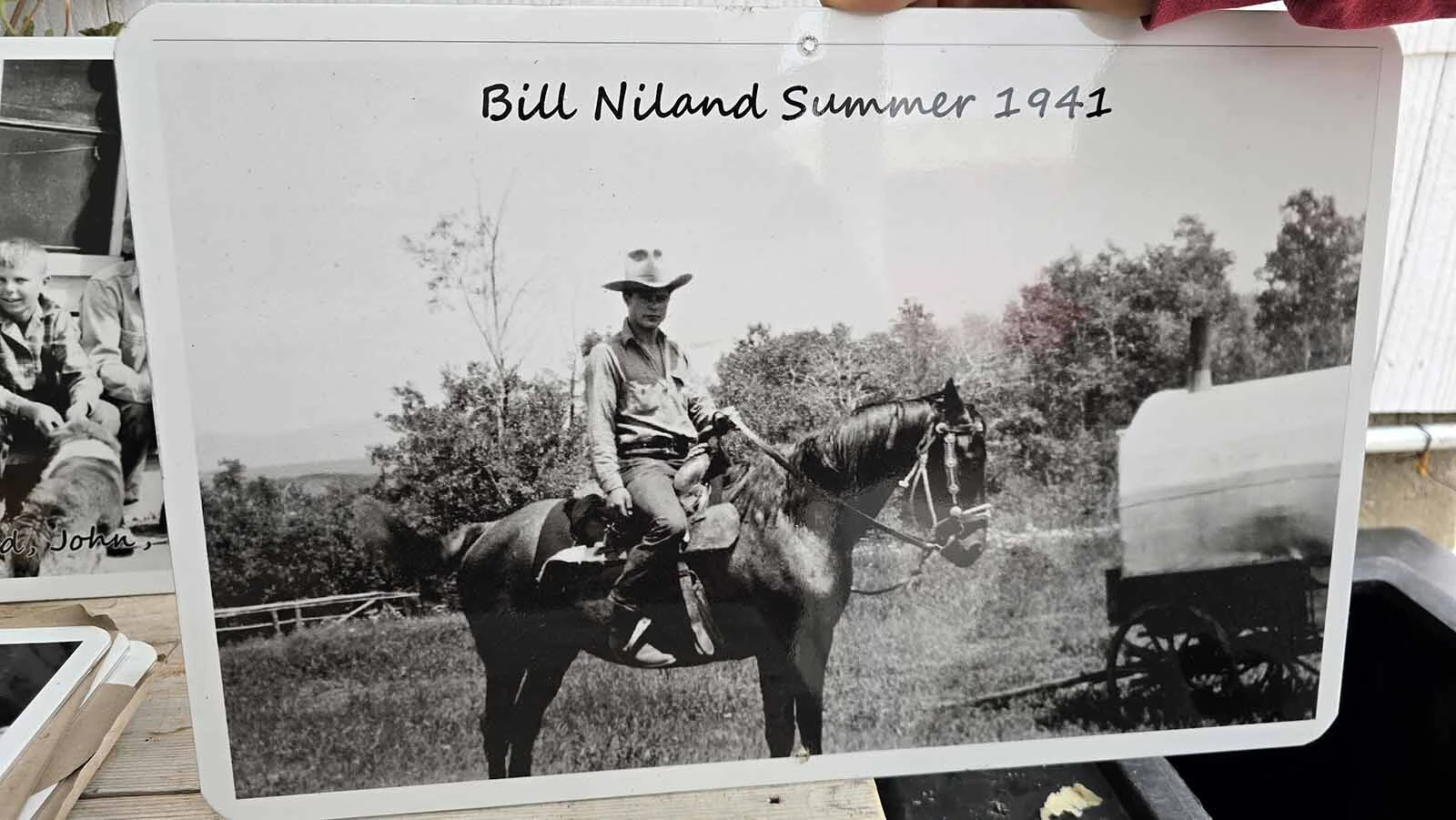
Photo reproduction of Bill Nilsand on a horse in the summer of 1941 at the Niland Cabin in the Medcine Bow-Routt National Forest. (Renee Jean, Cowboy State Daily) 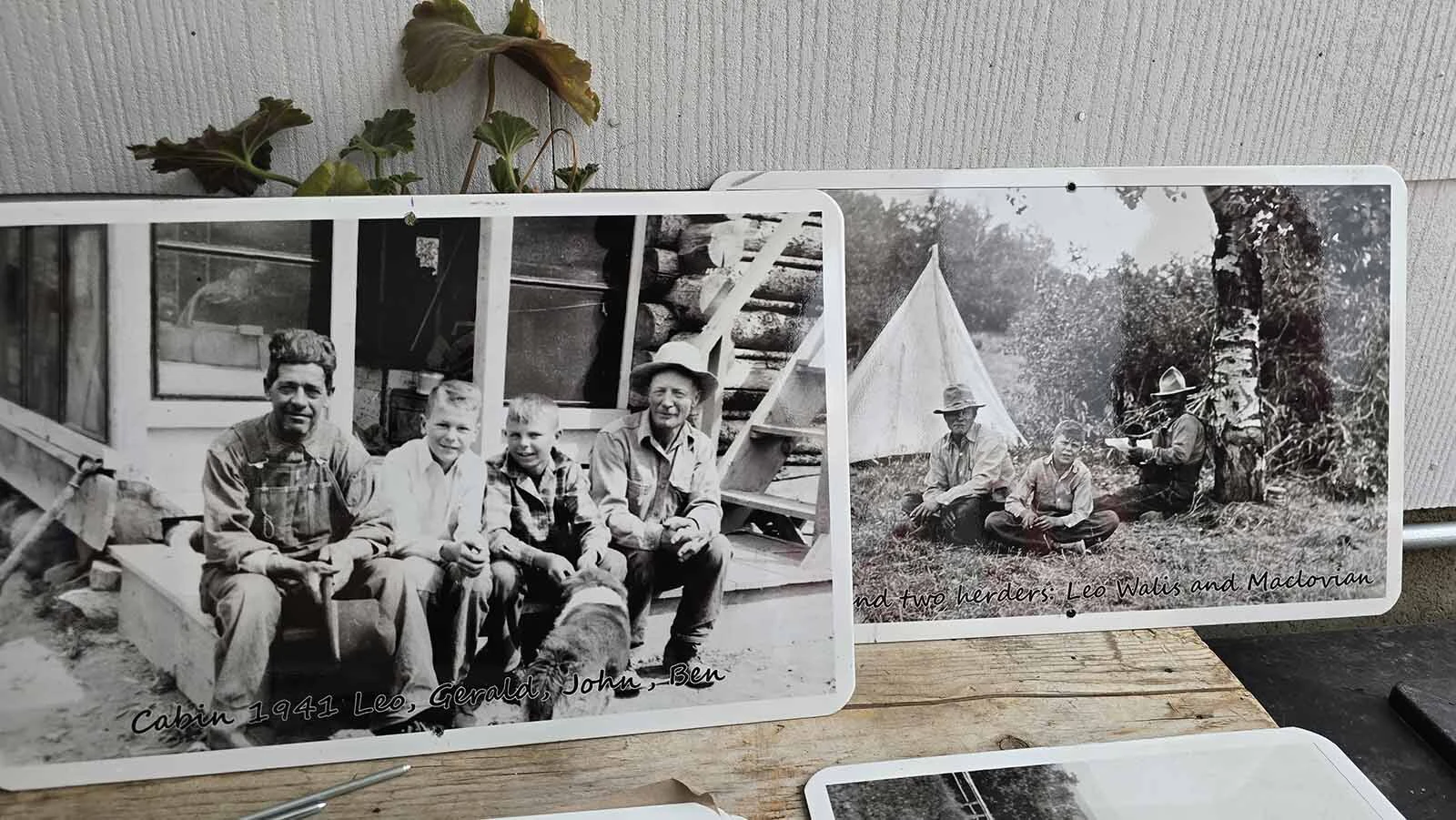
More photos of life at the Niland Cabin in the Medcine Bow-Routt National Forest. (Renee Jean, Cowboy State Daily) 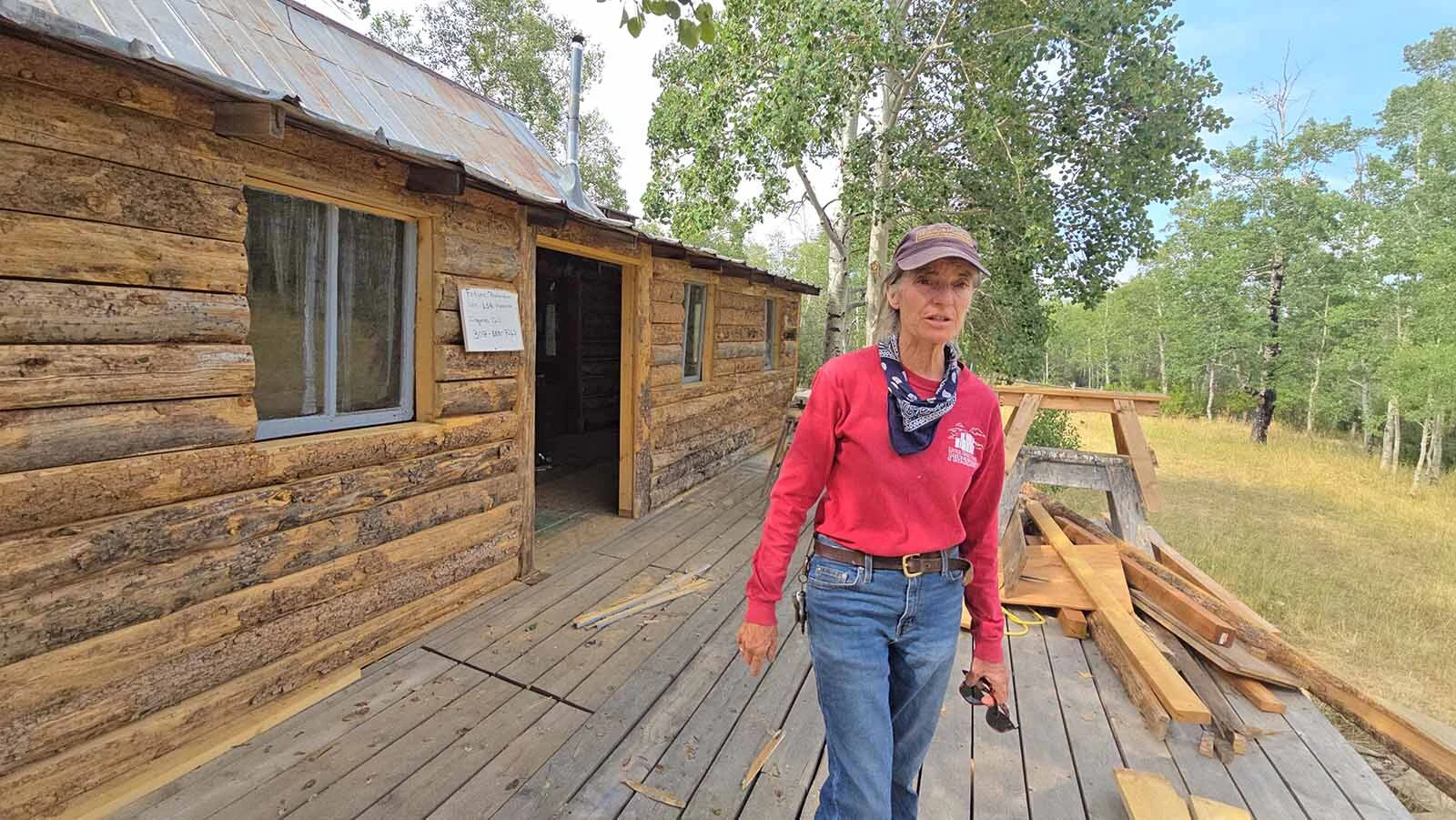
Little Snake River Museum Director Lela Emmons talks about restoration of the Niland cabin in the Medcine Bow-Routt National Forest, which is being restored. (Renee Jean, Cowboy State Daily)
Just In The Nick Of Time
The Niland cabin looks, at first glance, like a hundred other weather-beaten log buildings in Wyoming’s high country.
But many signs of its deeper history are still there, written on the walls and on the aspen trees that surround this little cabin in Carbon County.
Saving the cabin and all of its history has come just in the nick of time, too.
“This wall,” Emmons said, gesturing toward a newly built wall with pine logs on its face, “Wade (Golden) shored it up with things to hold the roof and then he gave (the wall) just one pound, and the whole thing just fell over. It was so rotten.”
Golden is part of a core restoration crew that also includes Mathias Kneeland and Rick Beck.
Because of that, Emmons is sure that the cabin wouldn’t have survived one more winter without falling apart.
The cabin’s restoration will remain true to its history, Emmons said, though a few changes are being made to help ensure it survives.
“We built this deck with removable panels here so that as the snow comes off in the winter, it can drop down there and won’t just sit and be heavy,” Emmons explained.
But they left the front room’s roof pitch the same as it ever was, deeming that too big a change for the preservation of history.
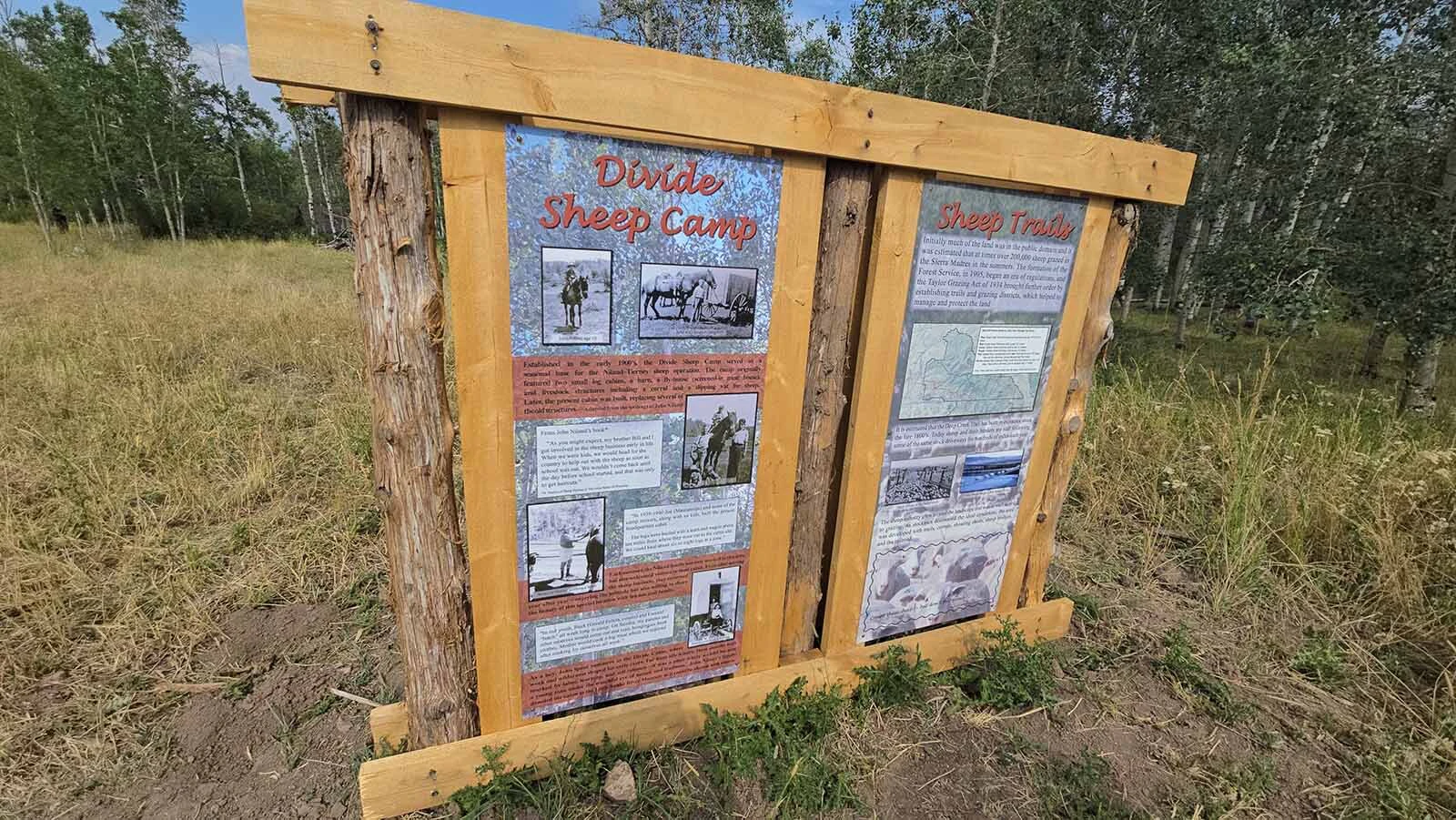
An interpretive sign has been placed at the Niland Cabin in the Medcine Bow-Routt National Forest, which is being restored. (Renee Jean, Cowboy State Daily) 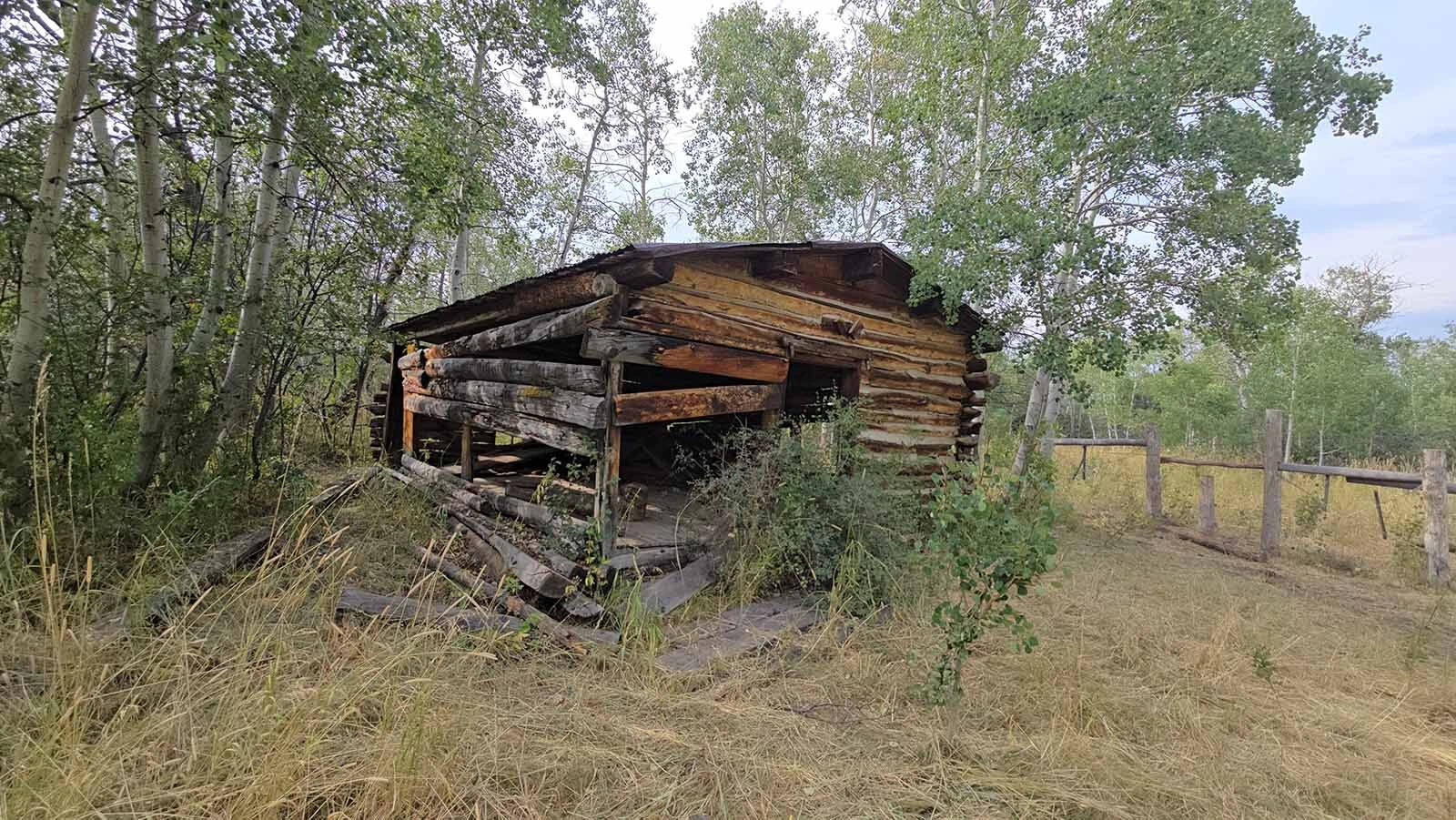
This cabin held saddle and tools for the Niland family's sheep operation at the Niland cabin in the Medcine Bow-Routt National Forest. (Renee Jean, Cowboy State Daily) 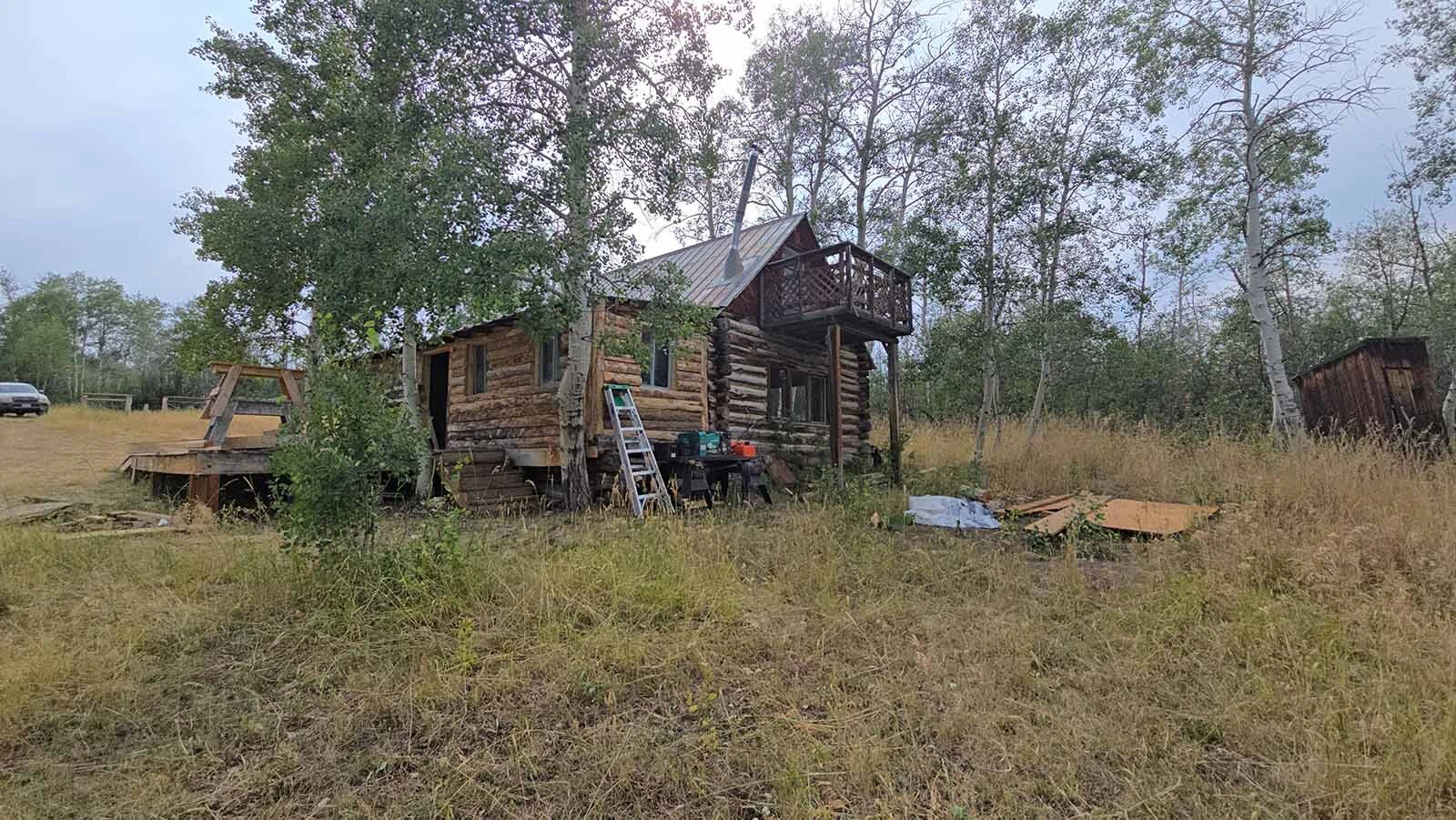
The Niland cabin in the Medcine Bow-Routt National Forest is being restored. (Renee Jean, Cowboy State Daily) 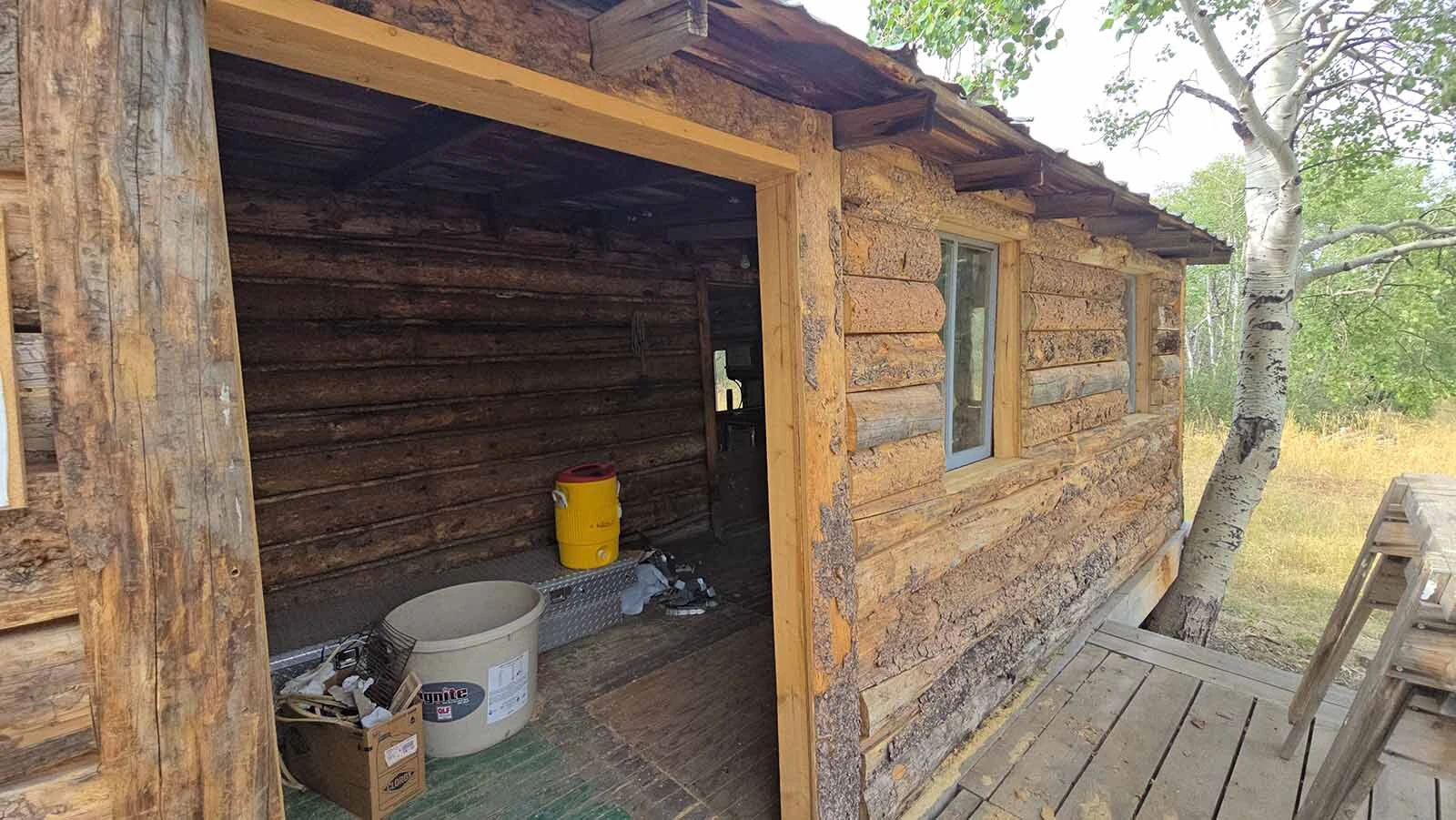
A new front made of pine logs has been placed on the Niland cabin in the Medcine Bow-Routt National Forest. (Renee Jean, Cowboy State Daily)
Summer Of Swimming And Leeches
Inside the cabin, there’s treasure of another sort. Guests of the cabin, through the years, have written little messages on the wall. It was part of a tradition at the cabin, talking who had been there and what had taken place when at the cabin.
“We went swimming at the second (illegible). Got leeches and we caught fish,” reads one message written by someone named Teagan.
“Marvelous Dinner + Company even better! Love Kate,” Reads another dated June 28, 1987.
“First time 12 yrs, I’ll be back,” is signed 9-19-96 by Bill Niland. Below that is another message from Bill that says, “I’m back for good! 5-25-03.”
Emmons has been told some of the signatures on the wall may belong to former Los Angeles Dodgers players. She’s still trying to verify which signatures belong to them, and where they might be located.
“I’m kind of hoping people don’t keep doing that,” she added.
While the older ones are a piece of history and part of tradition at the cabin, she said newer ones would no longer be adding to that tradition, given that the cabin’s use is changing and it is no longer a sheep operation.
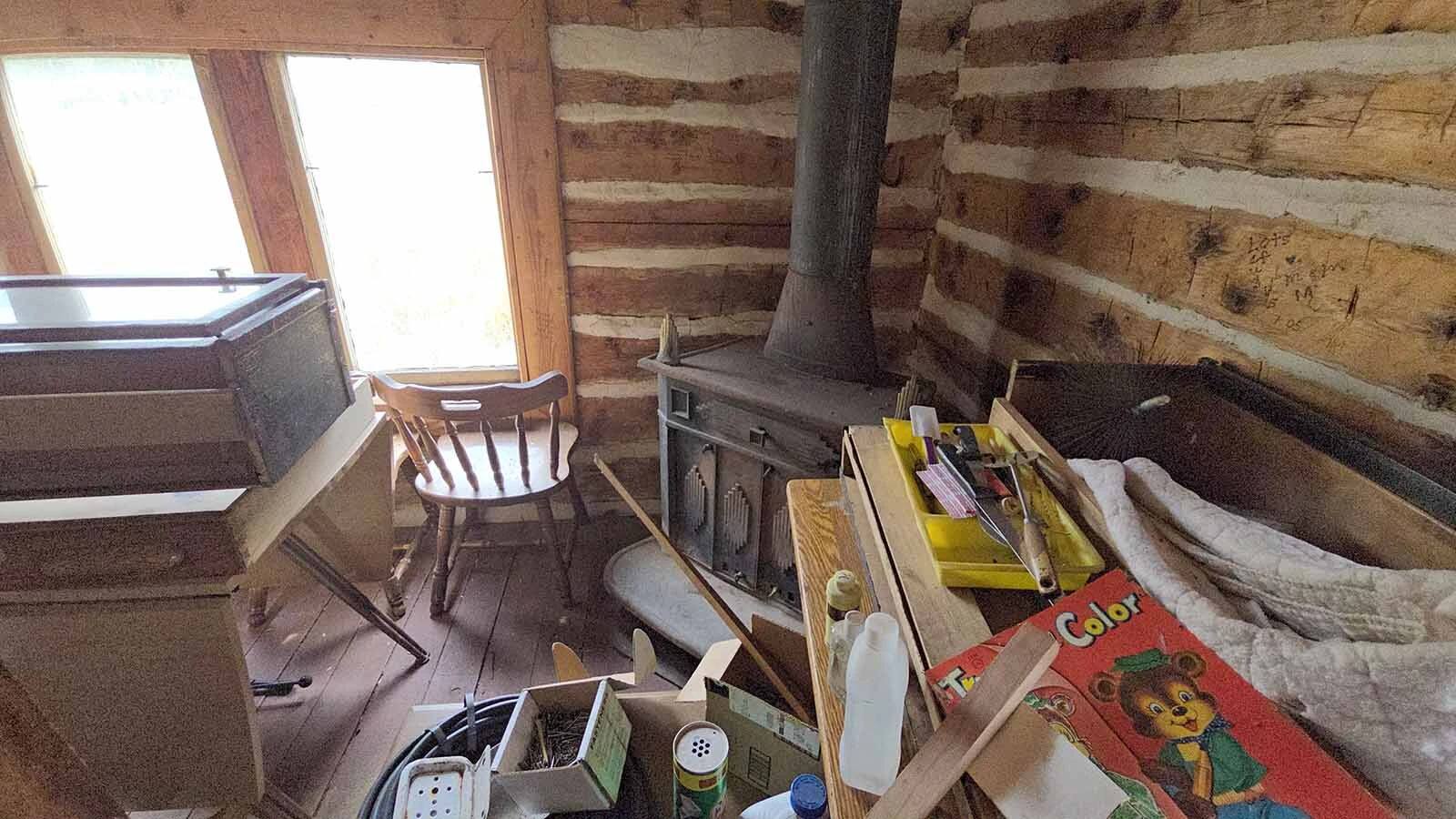
A wood stove in the corner was used to help heat the Niland cabin in the Medcine Bow-Routt National Forest. (Renee Jean, Cowboy State Daily) 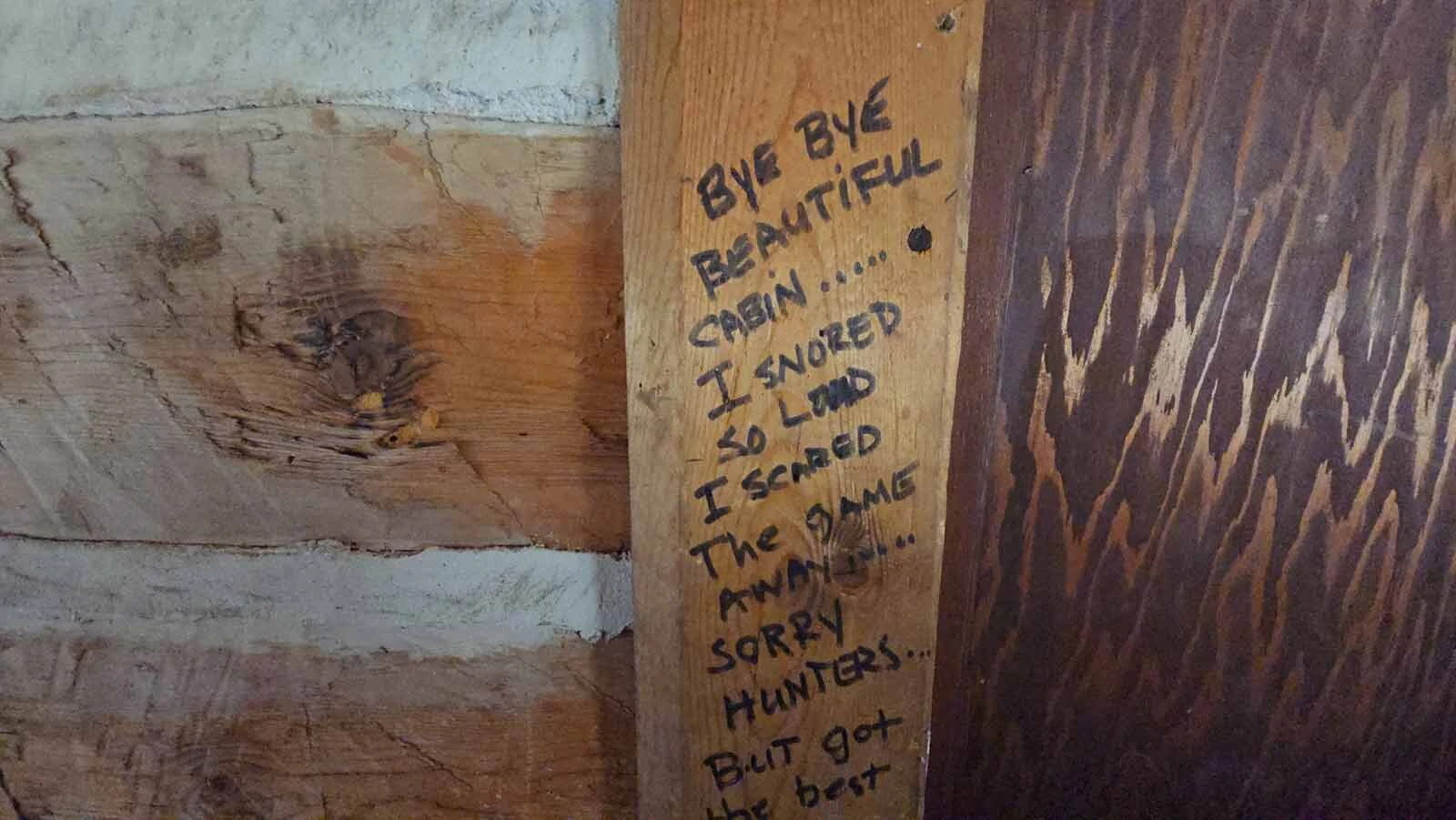
Some of the messages on the walls at the Niland cabin in the Medcine Bow-Routt National Forest tell funny stories. (Renee Jean, Cowboy State Daily) 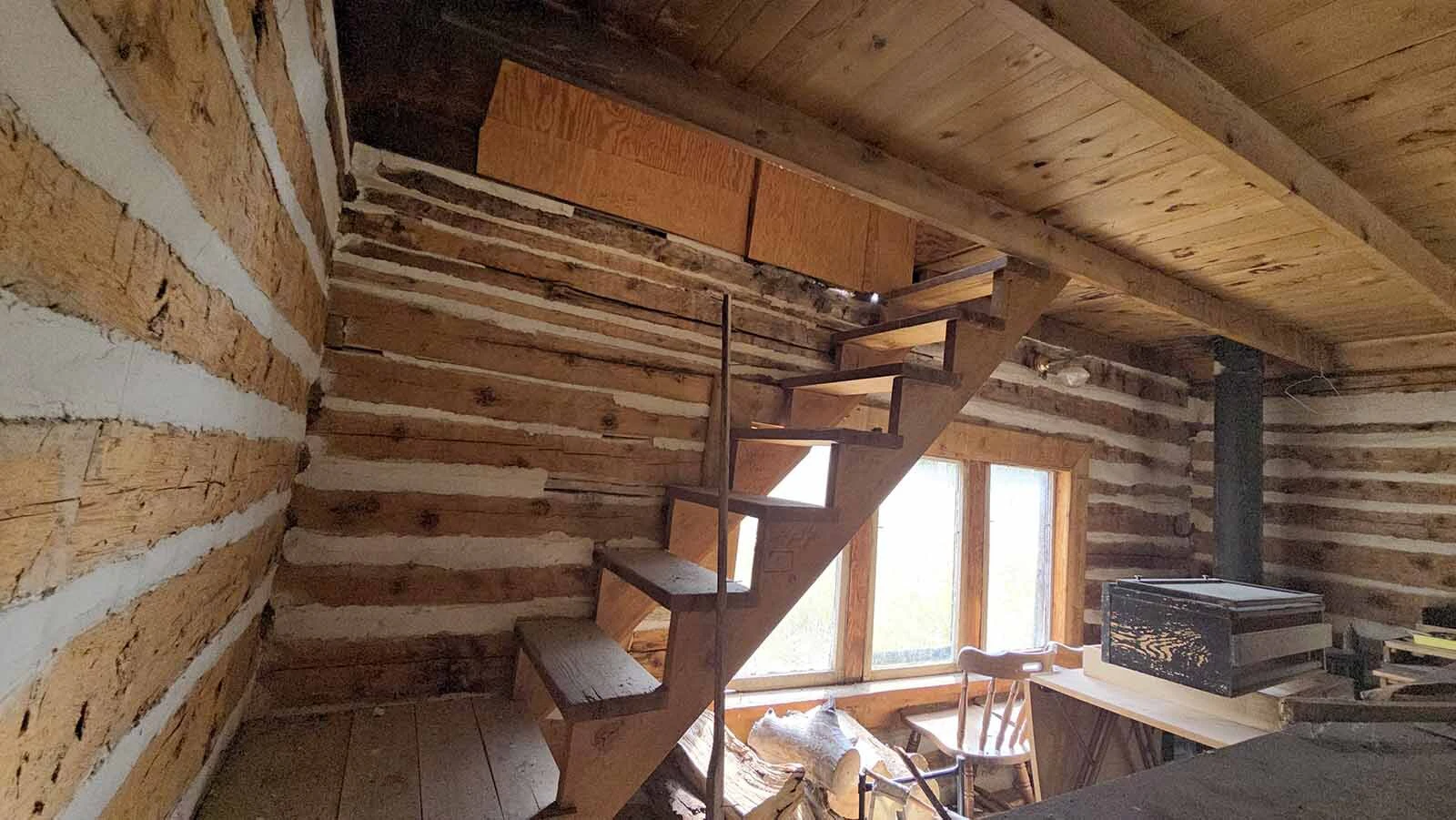
Stairs lead up to the second floor of the Niland cabin in the Medcine Bow-Routt National Forest. That area will become a sleeping area for guests of the cabin. (Renee Jean, Cowboy State Daily) 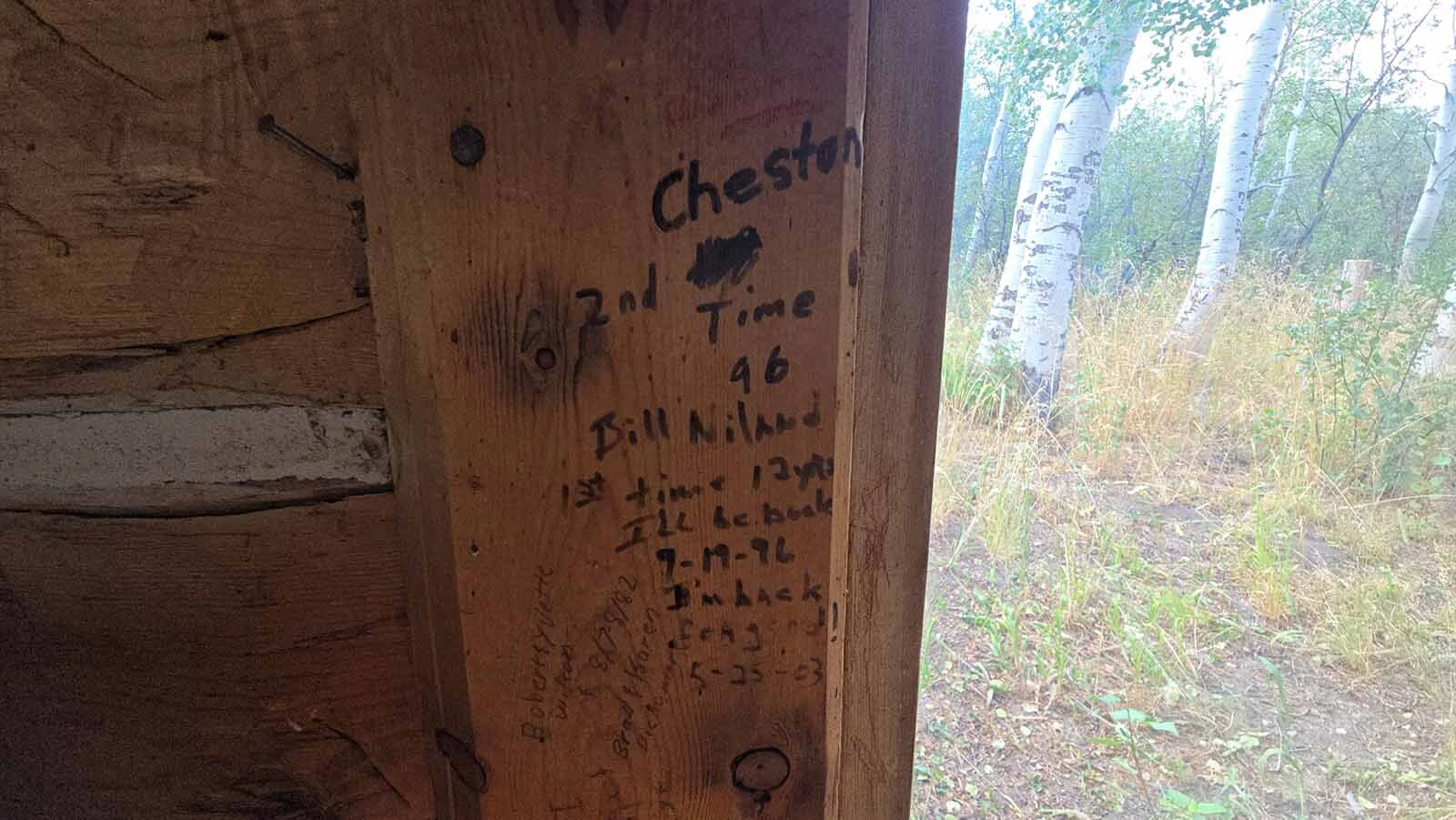
All of the walls have handwritten messages from people who stayed at the Niland cabin in the Medcine Bow-Routt National Forest. (Renee Jean, Cowboy State Daily) 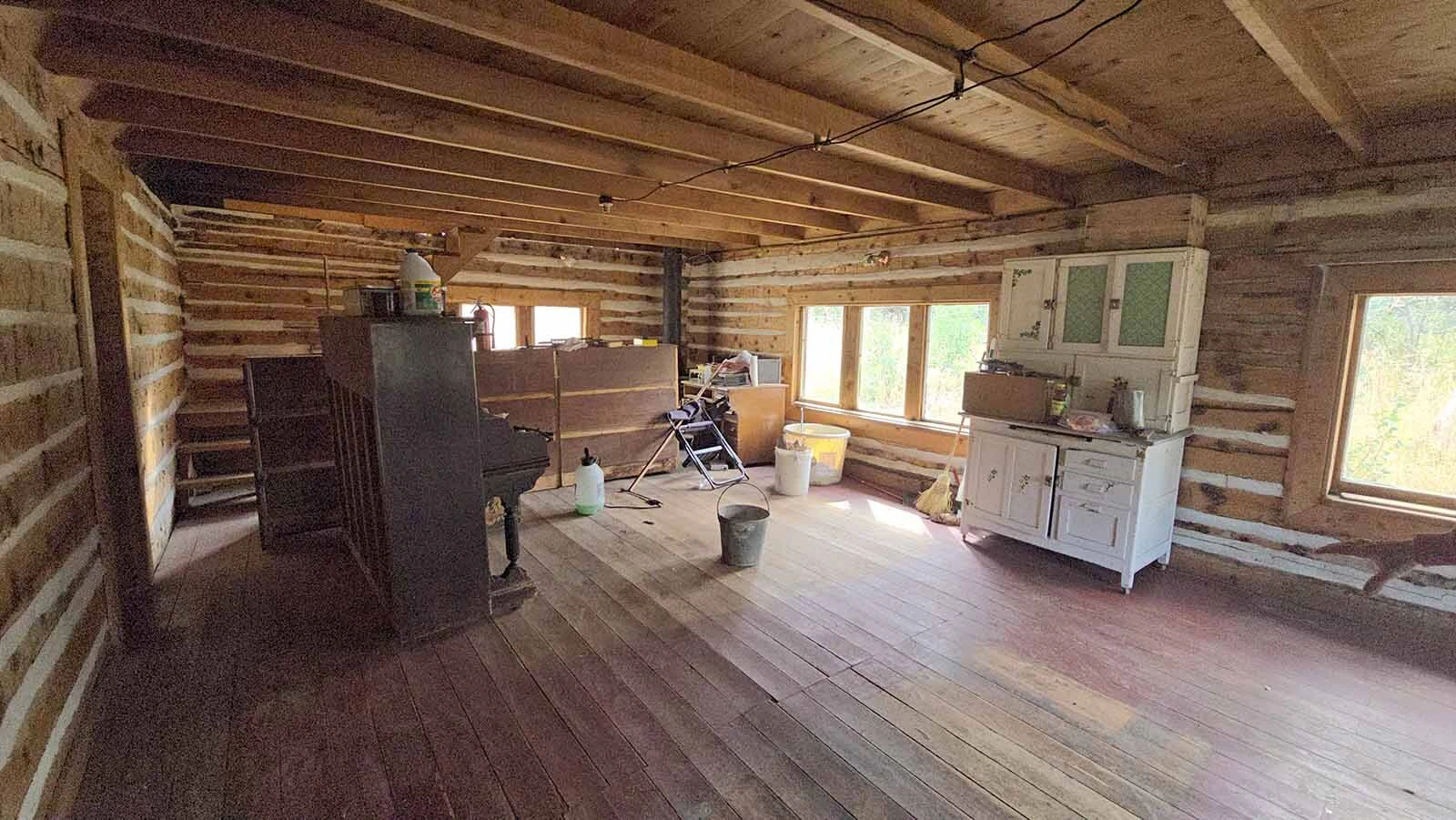
This area will have a kitchen, dining room, and living area for guests of the the Niland cabin in the Medcine Bow-Routt National Forest. (Renee Jean, Cowboy State Daily)
Windows Into Time
Emmons has taken photographs of life at the cabin and had them placed on metal signs. She plans to place the metal images strategically around the cabin. They’ll be a window into what might have been seen from that location during Wyoming’s sheep herding heyday.
While cattle ranching dominates Wyoming’s popular western image, Wyoming’s sheep herds and wool helped build the economies of communities across Carbon County and the state.
By 1910, the Cowboy State was grazing more than 5.5 million sheep, making it one of the leading wool and mutton producers in the United States. Carbon County, meanwhile, was once the top lamb-and-wool county in the nation.
Wyoming is also where sheep wagons were invented in the 1880s. The covered wagons had a bed, a stove, a table, and a kitchen sink, as well as some storage. They acted as tiny mobile homes for sheep herders, especially during the winter.
The industry also brought a unique mix of cultures to Wyoming, including Basque, Scottish, and Irish herders. Many of their descendants still live in Wyoming.
A Beautiful Place To Remember
The Niland cabin is surrounded by an aging aspen forest. Many of the trees have names and dates or other messages carved on them.
The landscape, though, is changing.
“All these trees are going to die,” Emmons said. “And then all the little ones will grow up again. So, all of a sudden, you’ll have these vistas through the trees you didn’t even know you had.”
It will be a scenic spot for a public access cabin, once completed.
Emmons hopes the cabin will prove useful for Wyoming students, whether high school or college, to learn about the forest and a little of Wyoming’s sheep herding history.
This fall, she’s hoping to finish installing a solar powered water system for the property, as well as a functioning toilet and fire-suppression capacity, thanks to a grant from the Wyoming Community Foundation.
“I love it up here,” Emmons said. “I would get up here about 7 o’clock in the morning or 6:30. The sun is just rising and the kids wouldn’t have shown up yet, and it’s just so peaceful up here. It’s amazing.”
The cabin’s restoration will take a few years, Emmons said, but once it’s ready there will be a picnic or a party to celebrate.
“We don’t get anything done in a hurry,” she said with a chuckle, looking around at the new fence around the property built by youths with the Wyoming Conservation Corps and the new front for the cabin that’s recently been installed. “But we do get it done eventually.”
Renée Jean can be reached at renee@cowboystatedaily.com.


