
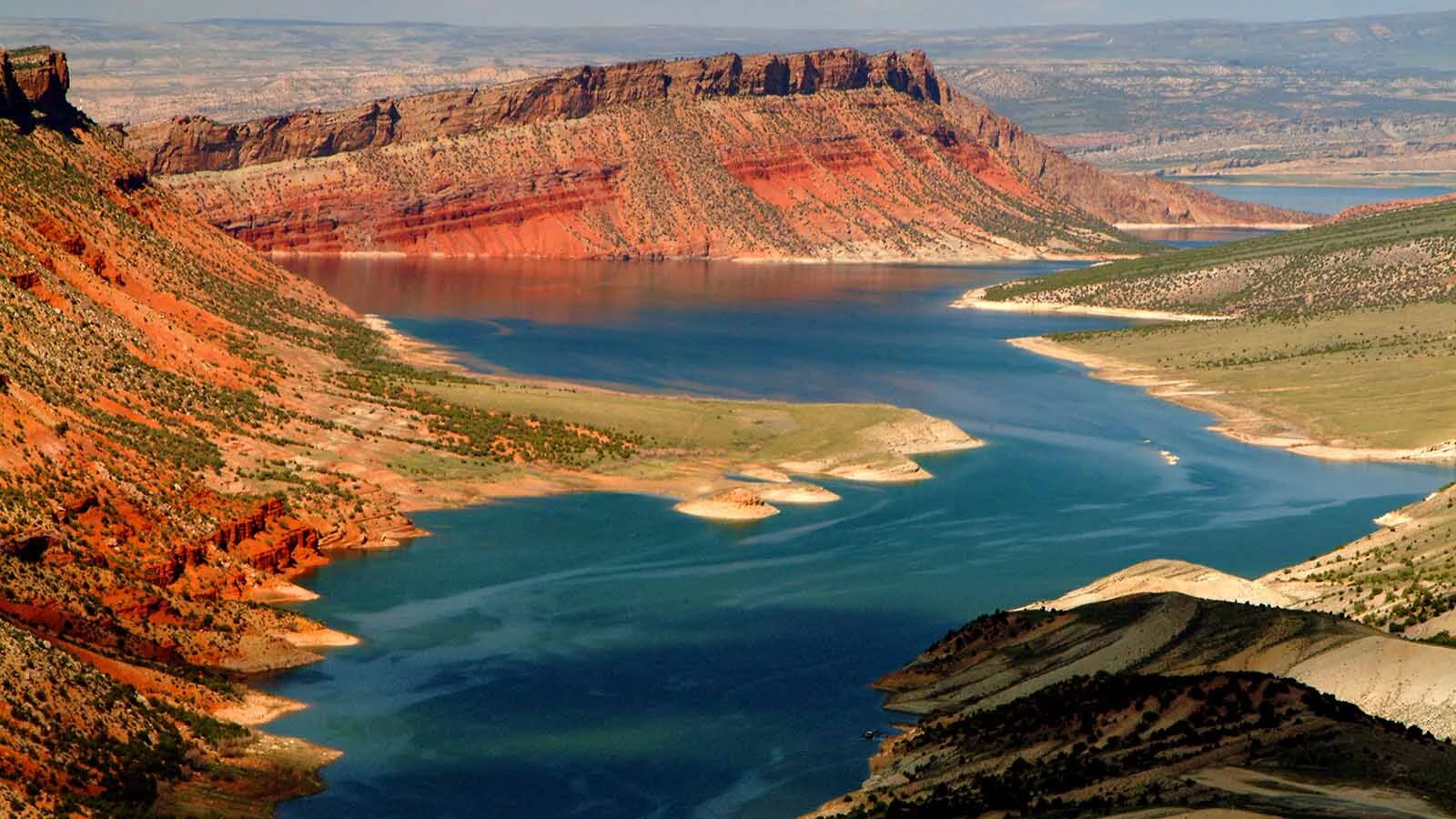
As demands increase for a dwindling supply of Colorado River water, the seven states that depend upon the river must keep talking to avoid lawsuits or federal intervention, Wyoming State Engineer Brandon Gebhart told lawmakers Thursday.
As it stands, there are rumblings that legal battles between states are imminent, Rep. Ken Chestek, D-Laramie, said during a meeting of the Legislature’s Select Water Committee in Cheyenne.
Gebhart appeared before the committee to give an update on Colorado River water. His remarks were informational and the committee took no action.
“I’ve heard talk about possible litigation between the Lower Basin states and the Upper Basin states, based on the recent federal EIS,” Chestek said while asking Gebhart his thoughts about the possibility.
“The best way to avoid it (litigation) is to get to an agreement among the seven states,” Gebhart answered. "Wyoming remains fully committed to that. I truly believe a seven-state agreement is much better than litigation or congressional intervention. Any time an EIS comes out, there is a potential for a whole host of folks or people or organizations to file suit.”
But it’s too early to tell whether that could turn into lawsuits between states, he added.
“I don’t have a crystal ball. But I’m going to continue to try very hard to avoid that outcome. I don’t believe it’s the best,” said Gebhart, who represents Wyoming on the Upper Colorado River Commission.
Water Pulled From Flaming Gorge
The U.S. Department of the Interior, through the Bureau of Reclamation, recently released its final Environmental Impact Statement (EIS) for Colorado River operations, including plans for operations from 2027 to 2036.
That proposal doesn’t include any immediate cuts for the Upper Basin states: Wyoming, Colorado, Utah and New Mexico.
In the Lower Basin, Arizona Gov. Katie Hobbs said her state faces “Draconian” cuts under the plan.
The other Lower Basin States are Nevada and California.
Independent of federal moves, Wyoming is implementing voluntary water conservation measures in the upper Green River Basin, Gebhart said.
The Green River is one of the Colorado River’s primary tributaries, and feeds into Flaming Gorge Reservoir on the Wyoming-Utah state line.
A plan is still on track to pull an additional 1 million acre-feet from Flaming Gorge, from May to April 2027, to make up for shortages at Lake Powell on the Utah-Arizona state line, Gebhart said.
As of mid-July, about 239,000 acre-feet had been pulled from Flaming Gorge, he said.
Two-Year Plans
The federal government is expected to release a record of a decision that would establish direction over operations, according to two-year operational plans, Gebhart said.
That would start with a 2027-2028 plan.
“We’re being told that these will come soon, but we are not provided a definition of what ‘soon’ is," Gebhart said.
Regarding perceptions of the “fairness” of the EIS as it applies to the Upper Basin versus Lower Basin, he said it’s important to remember the sections are managed differently.
In the Lower Basin, the Secretary of the Interior has direct control over reservoir releases and water deliveries, Gebhart said.
In the Upper Basin, policy is decided mostly by state law and according to water supplies, he said.
“I believe we should avoid measuring fairness by whether the action looks identical," Gebhart said. "Fairness is whether each basin is contributing through the authorities, responsibilities, operational tools and water supplies that actually exist.”
Grim Water Year
This has been one of the lowest water years on record across much of the West, Gebhart said, and Wyoming has been no exception.
“Over 83% of the state is in severe or extreme drought,” he said. "Luckily, no parts of the state are under exceptional drought, as of right now.”
For the entire Colorado River basin, the supply remains low.
The 10-year average flow at Lees Ferry in Arizona was recently measured at roughly 81 million acre-feet, Gebhart said.
Lees Ferry is considered the dividing line between the Upper and Lower Basins.
“The Lower Basin believes that it’s entitled to about 82.5 million acre-feet under the 1922 Colorado river compact. So, we will be dipping below what they think they’re entitled to under the compact,” he said.
Mark Heinz can be reached at mark@cowboystatedaily.com.


