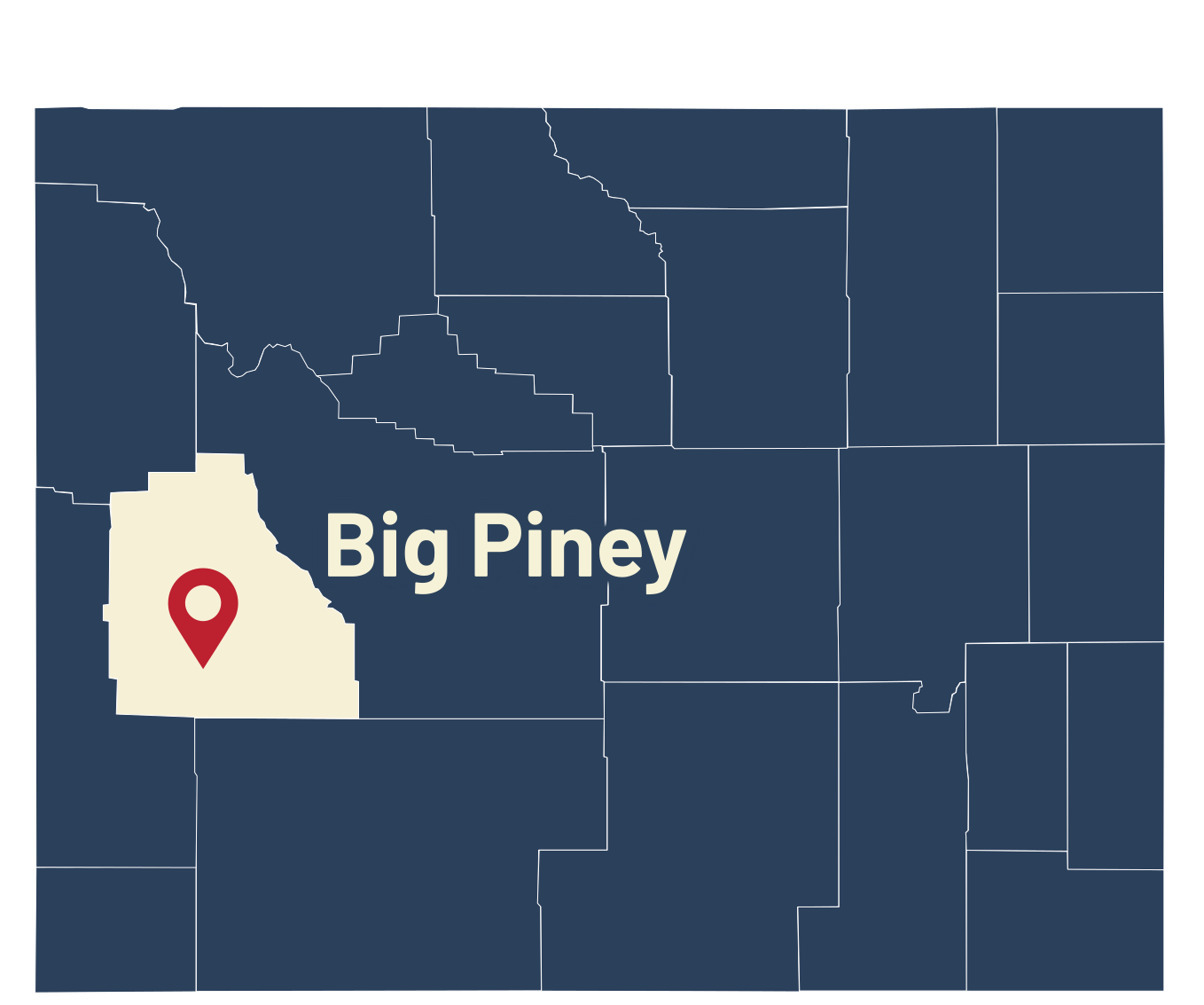

For nearly 60 years, Vern Palmer has been obsessed with Wyoming license plates.
The 90-year-old Big Piney man has spent decades roaming old ranches, forgotten dumping grounds and dusty corners of Sublette County looking for pieces of Wyoming history most people would walk right past.
It all started with his oldest son, Jim.
Together, the two spent weekends crisscrossing ranches, hunting for rusted treasures hidden beneath the sagebrush. Along the way they uncovered old bottles, antique tools, barbed wire, weathered signs and hundreds of Wyoming license plates.
Today, Palmer's collection includes every Wyoming license plate from 1914 to the present, along with every Sublette County plate issued since county numbers were added in the early 1930s. He's also just four states shy of collecting one plate from all 50.
But after six decades of searching, there's one he hasn't yet found.
The elusive 1913 Wyoming license plate.
"I do think that it's around Big Piney somewhere," Palmer said. "I found the 1914 plate pretty close to my home, but I have not found the 1913."
A Family Tradition
Jim likes to remind people that, technically, he started the collection.
As a boy in the late ‘60s, he began picking up old license plates in remote places of the Upper Green River Valley. Before long, his dad was just as hooked.
Summer weekends often meant disappearing into the middle of nowhere with no guarantee they'd find a thing. Palmer rarely bought license plates. Nearly every one in his collection came off the ground.
"He just liked going through old dump grounds looking for old treasures," Jim said. "Old glass ... old artifacts ... tools that you wouldn't find anymore. He just had a passion to find those things."
That passion eventually spread to a third generation.
His grandson, Joel Florquist, remembers countless summer days wandering through the country with his grandfather.
"A lot of times we didn't find any," Florquist said. "But a lot of times we did."
Before Modern Conveniences
Long before he became Wyoming's unofficial license plate historian, Palmer grew up on a Colorado farm where life looked different.
The family raised cattle, horses, hogs and chickens. They grew vegetables and fruit. His father worked as a carpenter.
There was no television, no refrigerator and no indoor plumbing.
His mother washed clothes in an irrigation ditch using a washboard.
When electricity finally reached the farm, the power company installed a single light bulb in the middle of the house and one electrical outlet.
"We didn't have anything to plug into it," Palmer recalled with a laugh. "But it was kind of nice to sit under the globe and do our schoolwork because it was a lot better than the lamp we'd been using."
Florquist said he believes those early years explain why his grandfather never looked at the world quite like everyone else.
"He grew up with not having a lot," Florquist said. "So you took care of what you had so it lasted longer."
He Valued People
Neighbors knew who to call when a pickup wouldn't start or a car broke down.
After serving in the military and transferring to Big Piney with El Paso Natural Gas in 1960, Palmer built a career as a mechanic before supervising the company's garage.
Then he'd go home and fix somebody else's vehicle.
"He went out of his way to help people," Jim Palmer said. "He never wanted to do it for credit or recognition. He loved people, and he wanted to make sure they were taken care of."
Palmer didn't just see value in old things.
He saw value in people, too.
To him, almost everything deserved another chance — an old license plate, a broken-down car or a neighbor who needed a hand.
"He got joy out of life by being able to help others," Jim said.
Every Plate Has A Story
Ask Palmer about license plates and you'll quickly discover they're much more than stamped pieces of metal.
They're tiny time capsules.
He can explain why Wyoming's 1944 plate was made from fiber instead of steel because of wartime shortages, why early Wyoming plates stretched nearly 16 inches long before they were standardized in 1958, and why every county still carries the same number it was assigned nearly a century ago.
He'll also tell you why Sublette County wears the number 23.
When Wyoming assigned county numbers in the early 1930s, they weren't random. Counties were ranked by their assessed property values at the time, and Sublette landed at No. 23. The rankings stuck, and so did the numbers on the license plates.
His collection includes roughly 650 license plates.
"When I hold one," Palmer said, "I see the history."
Curious About Everything
Long before Neil Armstrong ever stepped onto the moon, a young Vern Palmer told his teacher that one day people would walk there.
She laughed.
In 1969, Armstrong did just that.
"He always thought God's creation was amazing," Florquist said. "He wanted to know more."
That curiosity never faded.
Jim said his father didn't become an avid reader until he was about 65.
Now he reads two or three nonfiction books a week simply because he still wants to learn something new.
"Throw That Telephone Away"
"Dad hates the dot-com era," his daughter, Tammy, said with a laugh.
For Palmer, that means more than smartphones or computers. It's the gradual disappearance of face-to-face conversations, handwritten letters and the chance to simply talk to another person.
"Throw that telephone away," Palmer said matter-of-factly.
Then, after a beat:
"Throw that computer away."
His son says Palmer misses the days when paying a bill meant talking to a person instead of navigating an automated phone menu.
"Relationships were valuable to him," Jim said.
Family members believe Palmer's habit of staying in motion — hiking abandoned dumping grounds, working on cars, gardening and always finding another project — has helped keep him remarkably healthy well into his 90s.
Today, he spends much of his time tending a garden, working with his hands and turning leftover license plates into clocks. After oxygen made it difficult to spend long hours in his garage, his daughter built him a small workspace in the living room, where he's made more than 150 clocks for family and friends.
Still Looking
Palmer still believes the missing 1913 Wyoming plate — the state's first official metal license plate — is waiting to be found.
The year before, Wyoming motorists were simply assigned a registration number and expected to make their own marker.
"It was your responsibility to put something on your car with that number," Jim said. "It could have been a piece of painted wood. A lot of people had a leather license plate made, but horses used to gnaw them off of the car, believe it or not."
For years, doctors tried reminding Palmer that age catches everyone.
"Well, you're getting old," one doctor told him.
"Dad would just get upset," Jim recalled. "He'd say, 'I'm not getting old.'"
His oldest son isn't surprised.
"He had too many things that he wanted to do, and not enough time to get them all done," Jim Palmer said. "He just loves life."
Kolby Fedore can be reached at kolby@cowboystatedaily.com.