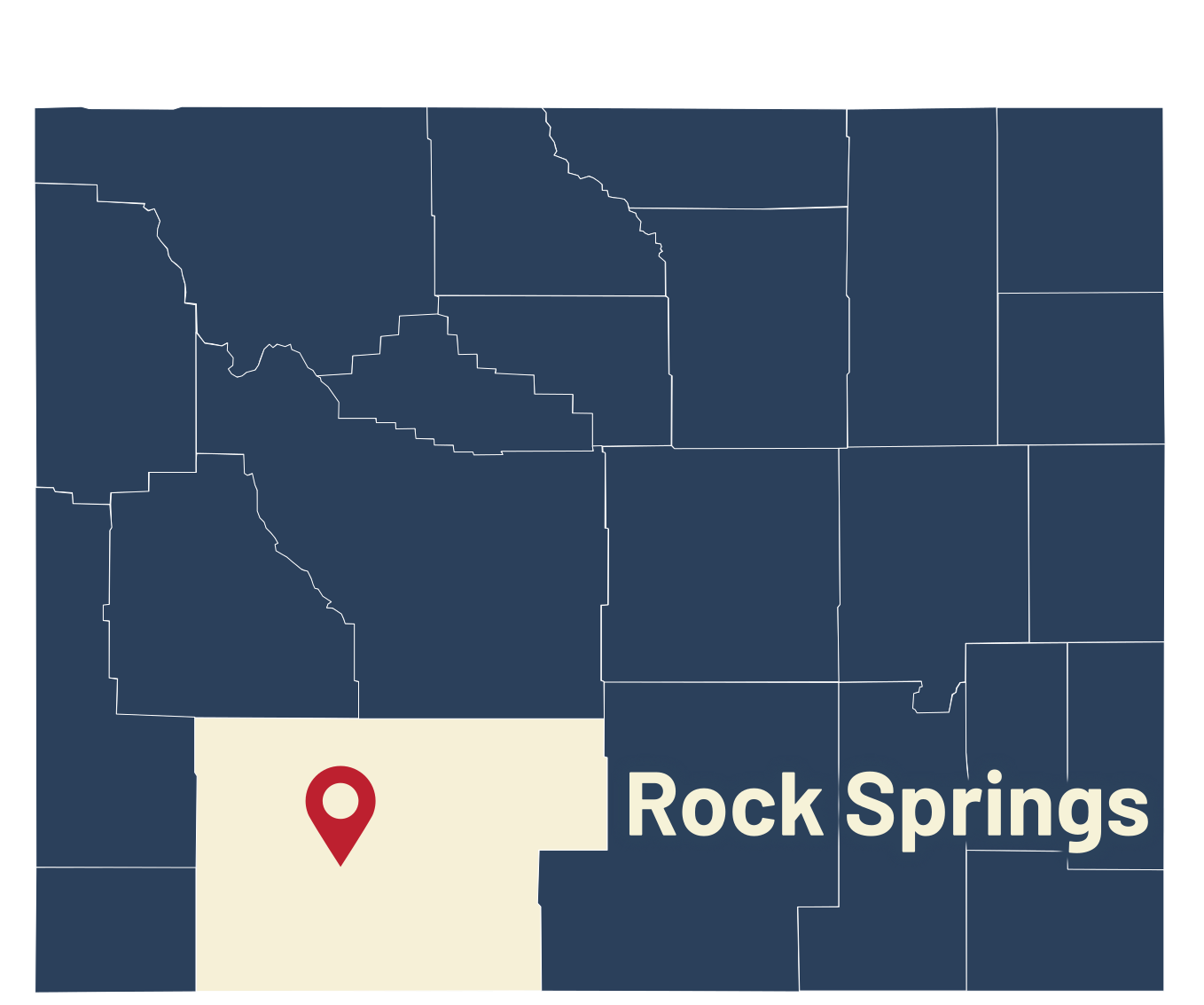
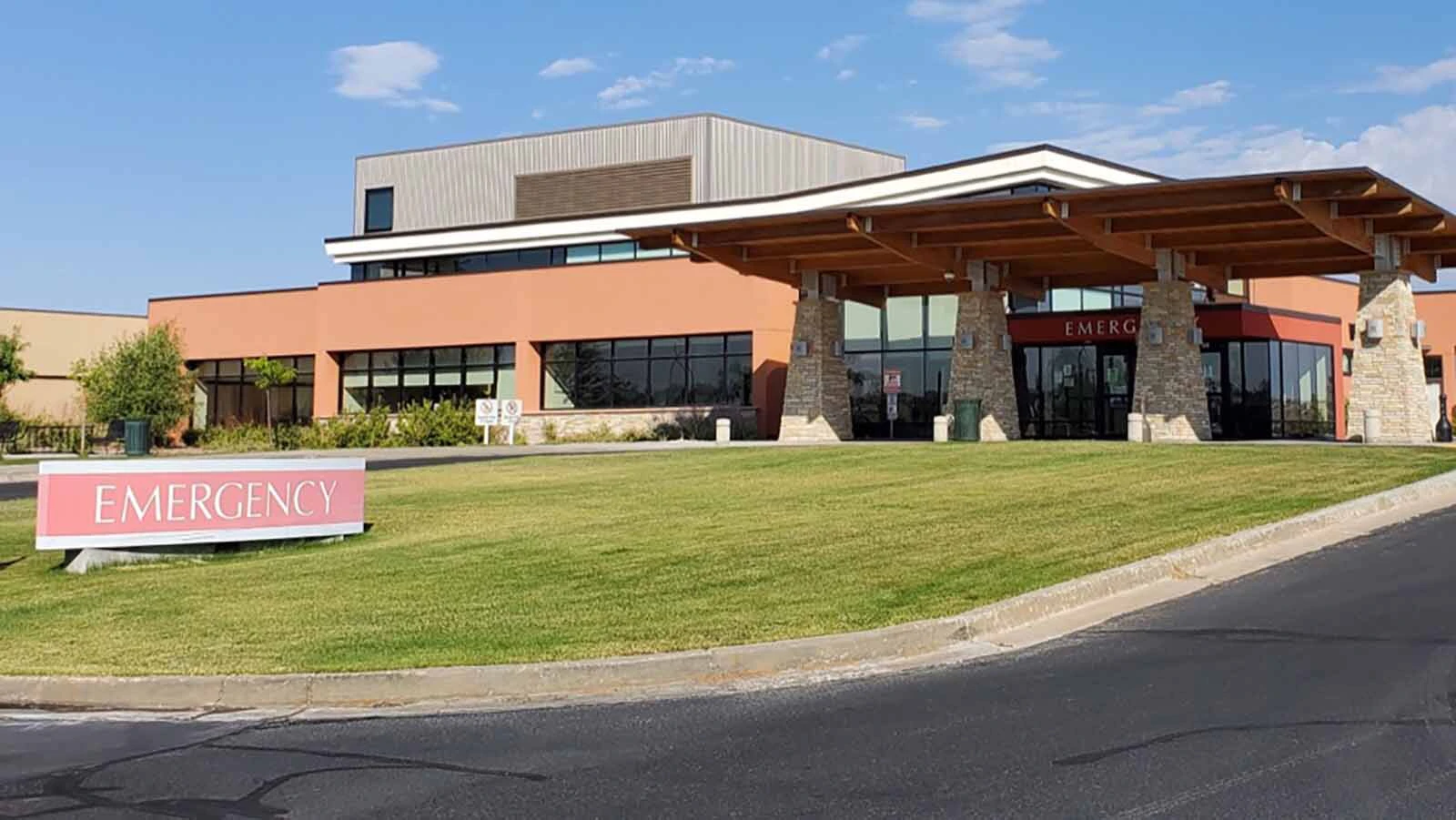
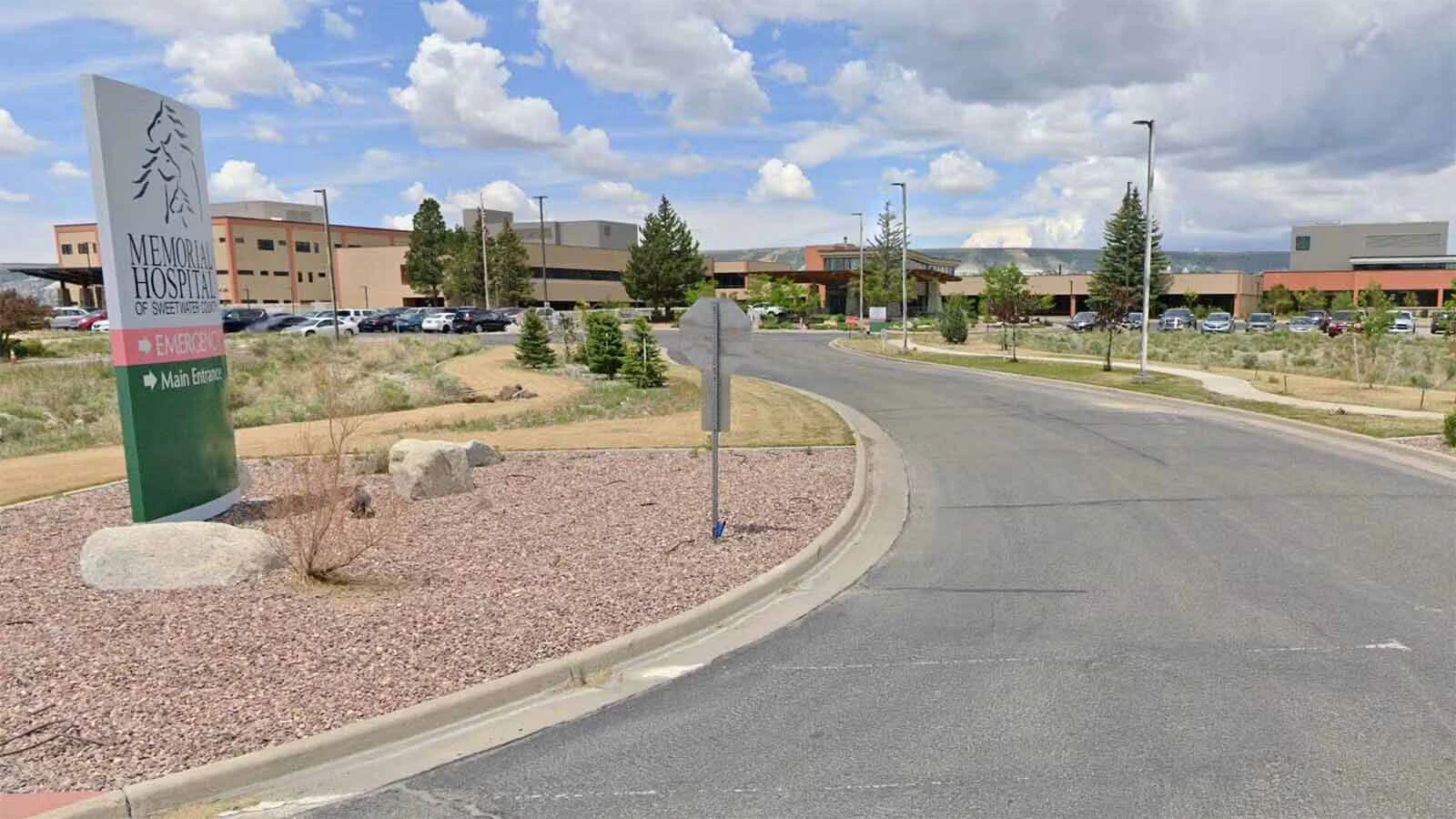
Typically, the people who bleed in the emergency room are patients. This past week at Memorial Hospital of Sweetwater County in Rock Springs, it was a nurse.
Around 9 p.m. July 20, emergency department nurse Christian R. stepped into a patient's room for a routine medication check. Seconds later, he fled with a broken nose.
“I asked the patient if he’d take his nighttime medication, then he stood up and walked towards me and with a closed fist punched me straight in the face,” Christian told Cowboy State Daily.
He heard a pop when the punch landed. Blood started pouring from his nose as he stumbled out of the room.
But there was no time to process the pain.
The patient chased Christian through the emergency department, catching him more than once and resuming the attack.
“He ended up catching up to me and throwing more punches and then using his knees to try and knee me in the head,” he said. “He did knee me a couple times, so I have lacerations to my lips.”
Christian ran around corners, down two hallways and eventually into the department lobby, where a security worker intervened by tripping the patient.
The patient tumbled to the floor, giving Christian enough time to sprint back into the emergency department, where a colleague pulled him into a locked supply room.
There, surrounded by shelves stocked with gauze, wound-care supplies and medical equipment, the shock finally began to set in.
“I was shocked that he attacked me, but he continued chasing me — that’s what shocked me the most,” Christian said. “The patient had run past countless other nurses and staff, but was just fully focused on me and trying to get me.”
Christian's experience was dramatic. Health care leaders say it’s not unique.
Health Care Workers Hurt Most
Health care workers are five times more likely to experience workplace violence injuries than workers overall, according to data from the Bureau of Labor Statistics.
While they make up less than 10% of the overall workforce, nurses and other health care workers experience 48% of all nonfatal injuries due to workplace violence, according to analysis from the Centers for Disease Control and Prevention.
In Wyoming, the problem takes many forms.
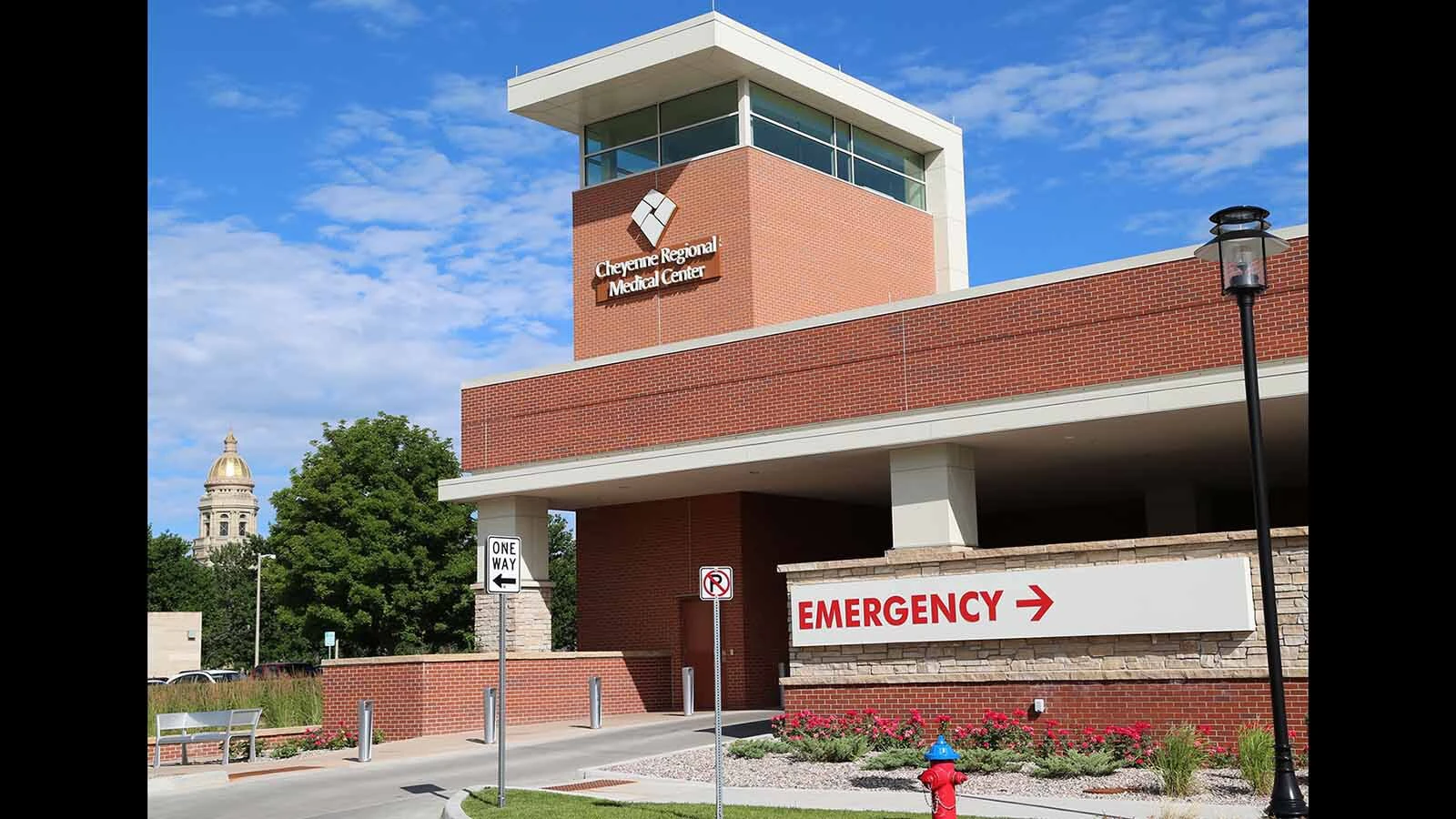
“First of all, you get a lot of verbal violence as a nurse. People call you all kinds of nasty names and four-letter words and curse and swear at you,” said Tracy Garcia, chief of nursing operations at Cheyenne Regional Medical Center, who’s seen the gamut after working in the health care sector for 37 years.
Garcia believes emergency department workers shoulder an outsized share of the problem.
“In the emergency department, I've had people slap me, kick at me, throw things at me,” said Garcia, adding that violence has become more common and more egregious over the course of her career.
“Several years ago, we had a physician who was pregnant, and that physician was punched in the stomach by a patient who knew she was pregnant, because the patient was mad at the care the physician was providing,” she said.
Garcia said her hospital averages roughly 50 incidents of workplace violence involving patients or family members each year. She worries what it does for retention in an industry already struggling to recruit workers.
"If people know about this workplace violence and we don’t come up with solutions, they may be less likely to go into nursing,” she said.
Why So Much Violence Against Doctors And Nurses?
The roots of the problem lie in the nature of hospital work itself, especially in emergency departments and other nerve-racking units where pain, fear and family crises often converge, according to Josh Hannes, former vice president of the Wyoming Hospital Association.
People arrive injured, intoxicated, distressed, or terrified for a loved one. Then there’s the intensely personal nature of the care, which can blur boundaries in dangerous ways.
This makes hospitals fundamentally different from other workplaces, as well as more volatile, Hannes said, adding that the issue has worsened in recent years in part because it’s not well understood.
“It's really an untold story,” he said, offering the example of one of his associates whose head was grabbed and thrown into a hospital door by a patient. "Most people don’t realize the literal danger their providers are in when they're at the workplace.
“People think of police officers or corrections officers and the risks for violence in those professions, and that makes sense, but they don't know this is happening to people who work in places that are meant to be places of healing.”
Hannes said one solution is to treat health care workers more like police officers, by which he means enhancing penalties for violence against health care workers.
That approach has been adopted by many states. Wyoming is not one of them.
Wyoming Among Few States Without Protections
Wyoming lawmakers have tried to address violence against health care workers.
Bills introduced in 2023, 2024 and 2025 would have strengthened reporting requirements, created workplace-safety standards and increased penalties for assaults against health care workers. None became law.
“It got caught up in the whole Freedom Caucus — they said, ‘These are special rights for a class of citizens’— and it went downhill from there,” said former state Rep. Dan Zwonitzer, R-Laramie, who sponsored the first major effort in 2023, adding that stripped-down versions his bill in successive years hit the same roadblocks.
“It had the medical community behind it,” he said. "It had tons of frontline stories talking about what happens and why it’s needed … and we still couldn't get it passed."
Opponents argued that creating health care-specific penalties risked turning the law into a patchwork of protected occupations rather than applying equal justice to everyone.
In addition, some legal experts say there is insufficient evidence that increasing punishment severity deters violence in hospital settings.
Though nurses like Christian have an existing legal remedy, recourse is complicated where mental health is involved, as may have been the case in Rock Springs this past week, implied Memorial Hospital of Sweetwater County CEO Kari Quickenden in a statement to Cowboy State Daily.
“Hospitals throughout Wyoming and across the country are seeing an increasing number of patients experiencing behavioral health crises,” said Quickenden. "Caring for these patients safely and compassionately is one of the most complex challenges facing health care today, and Sweetwater Memorial remains committed to providing that care while protecting the safety of our employees, patients, and visitors."
Reform advocates say this is more reason to establish new legal standards.
“The profession recognizes that there is a difference with psychiatric situations,” said Hannes. “This is not about taking people like a geriatric patient who has cognitive problems and trying to throw them in jail.”
What Will Christian Do?
While in the locked supply closet, a doctor told Christian his nose appeared broken, but he didn’t fully grasp the severity of his injury until a colleague handed him a mirror in a treatment room later.
“When I saw myself I said, 'OK, this is definitely something bad that happened to me,'” he said. “Seeing my bloody face with the nose that wasn’t straight anymore, seeing the damage — that’s when all the emotions really hit.”
Five days after the attack, he had two black eyes and a sore nose. He expects the physical injuries to heal. The emotional ones are harder to measure.
Christian is a Fort Worth, Texas, native who came to Rock Springs on a short-term nursing contract. He fell in love with the area's outdoor recreation and welcoming community and decided to renew his contract.
He’s recently signed his third consecutive renewal, but the incident last Monday has raised questions about whether he’ll renew for a fourth.
For the first time in his career, Christian is considering leaving emergency medicine altogether.
Christian followed his father and older brother into nursing, and said he chose emergency care because it felt the most impactful.
“I've always loved taking care of people,” Christian said. "If somebody got hurt, I always wanted to be the first one to try and help in whichever way I was able to."
According to Wyoming Medical Association Executive Director Sheila Bush, Christian is a prototype of health care workers who she described as people wired to help.
“The thing that gets me the most with this whole issue is the fact that our health care workers are one of the only professions that are strictly there to provide care and heal people,” she said. “They are located in facilities that cannot deny care, especially in an emergency situation.
“They are in health care because they want to help. They're not always trained in self‑defense always. They don't have any tools to enhance their ability to defend themselves.”
Christian was a prototype in this regard as well.
“I've never been in a fight,” he said. "I’d never gotten hit with a bare fist, ever."
He told Cowboy State Daily he intends to pursue criminal charges against the patient who assaulted him, and he is working with the hospital’s legal team to that end.
In addition to personal recompense, he hopes his experience will inspire changes for the industry.
“The biggest thing for me is just some kind of change, so that nurses … especially in this state … just feel safer going to work,” he said.
Zakary Sonntag can be reached at zakary@cowboystatedaily.com.