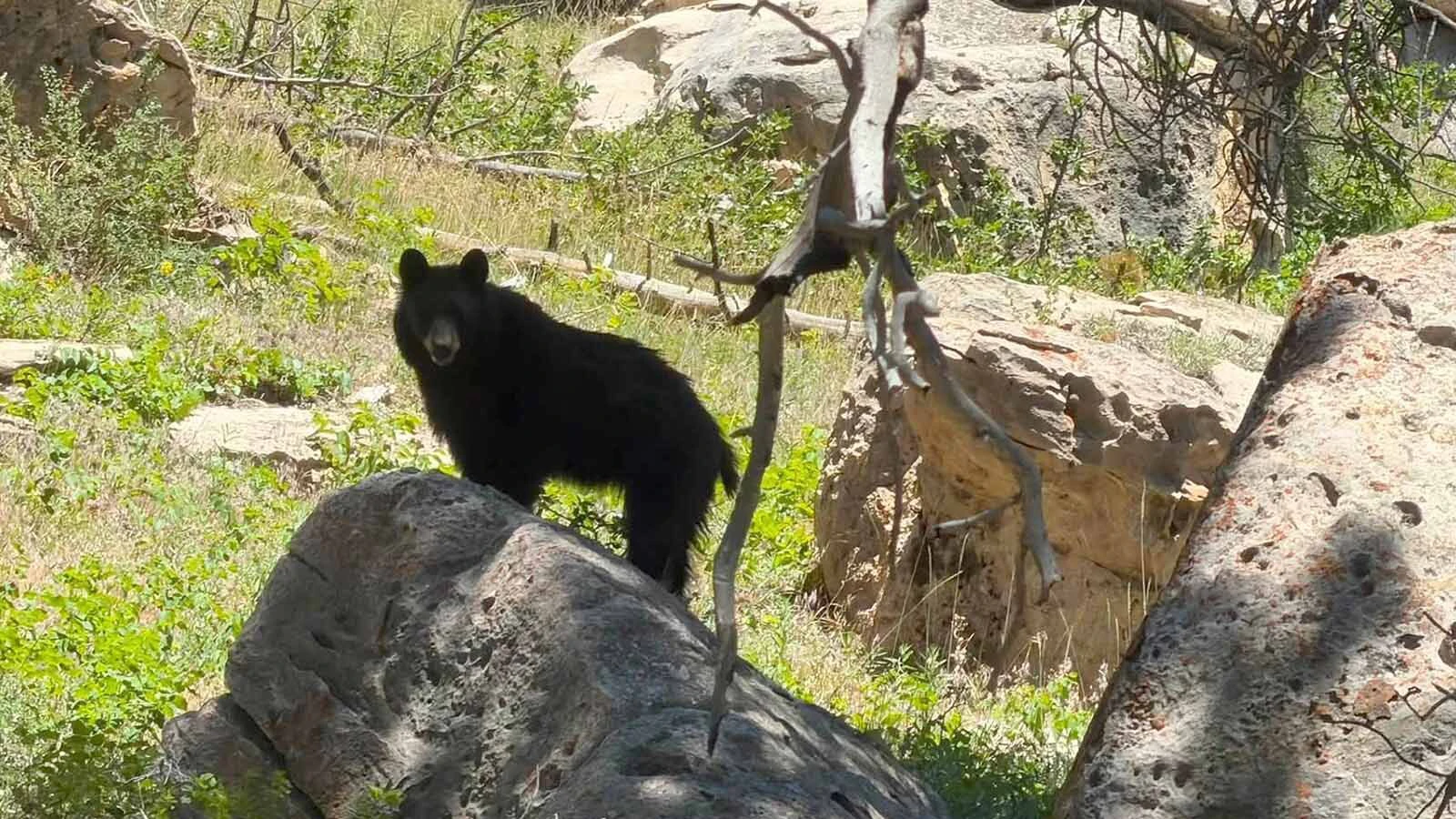
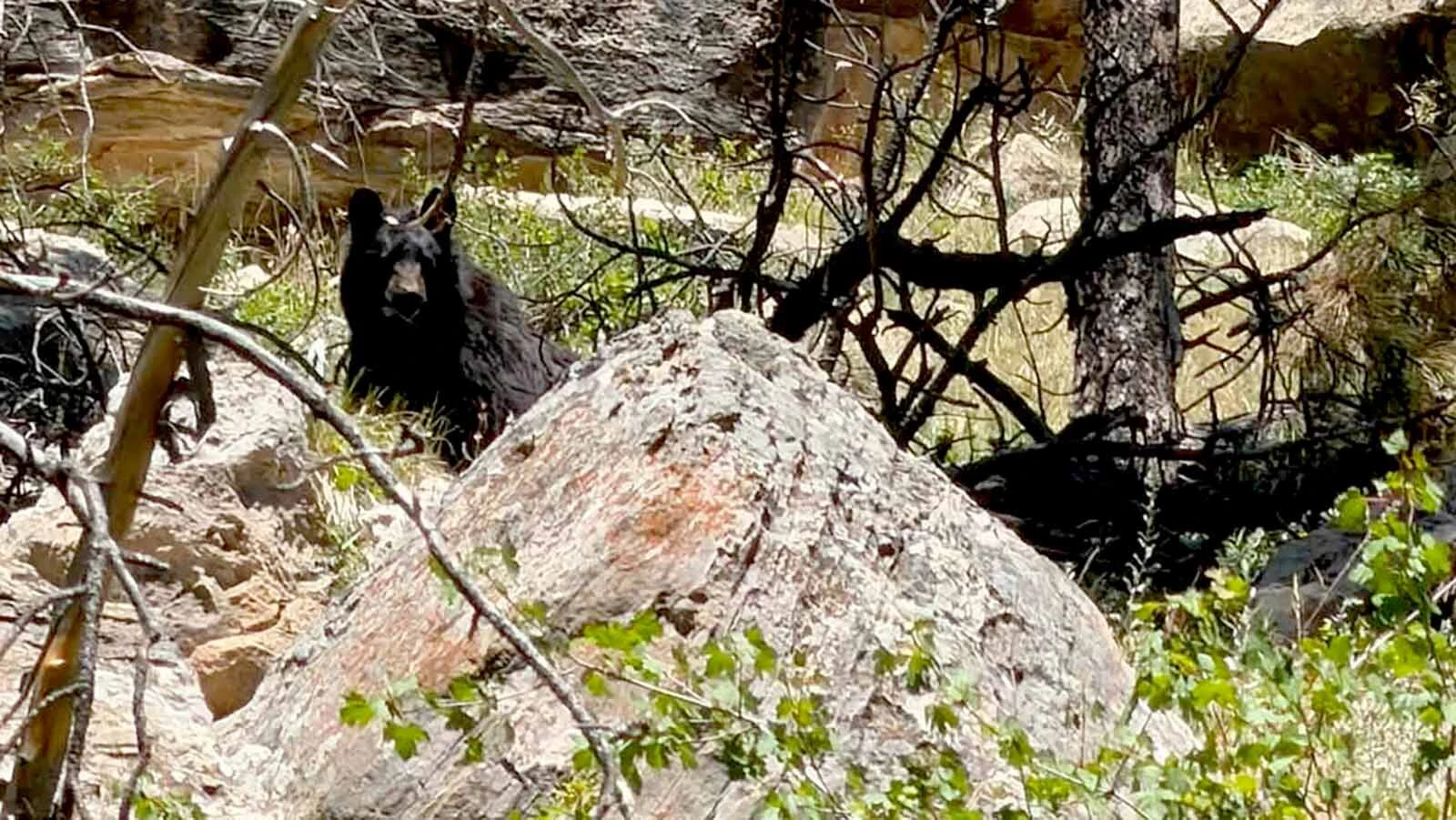
A Wyoming runner had rounded a bend on the Lower Ponderosa Trail on Casper Mountain when she came face to face with an adult black bear and her cub.
"I just came around a corner, and there was Mama Bear, Baby Bear, right in the middle of the trail," Leonard told Cowboy State Daily. "It startled me for sure."
Leonard had set out for her usual six-mile run on the morning of July 11 near the Casper Mountain property she and her husband purchased last fall.
Like many mountain residents, she was prepared for wildlife. She carries bear spray, a handgun and a whistle.
Still, she wasn't expecting to find a sow and cub on her trail.
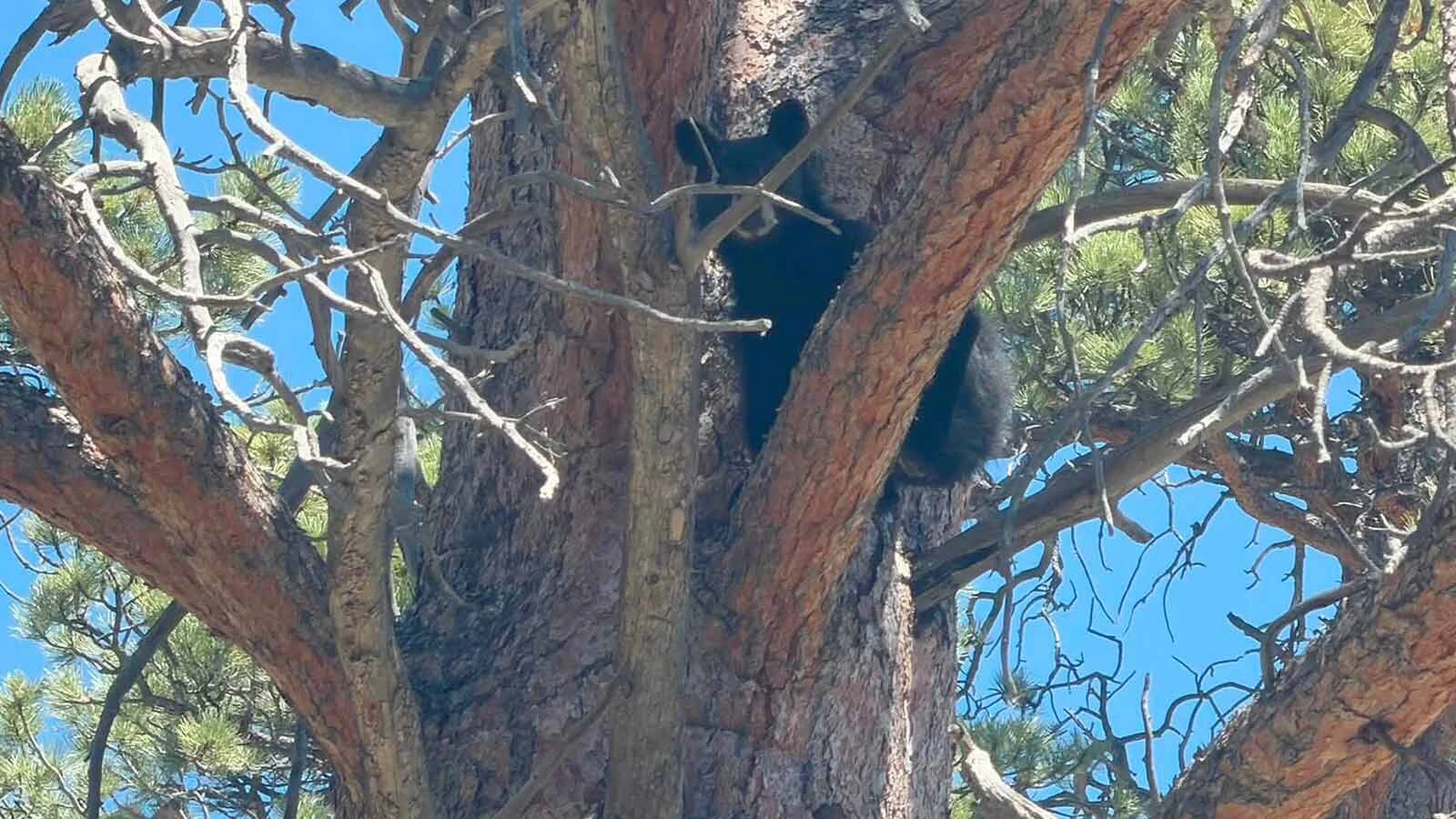
The cub darted up a tree while its mother bounded onto rocks, pausing to keep a watchful eye on the runner. Leonard blew her whistle as an extra precaution, but the sow never acted aggressively.
"It was beautiful. It was amazing," she said. "I finished my run and told my husband all about it. I showed everybody pictures because I'm like, 'That is the coolest thing ever'."
Her photos and story are just one of several bear sightings that have circulated online this summer, leading some Casper Mountain residents to wonder whether the mountain has more black bears than usual.
According to the Wyoming Game and Fish Department, it probably doesn't.
More Eyes, Not More Bears
"Black bear activity on Casper Mountain is nothing new," said Brandon Werner, the Game and Fish's wildlife management coordinator in Casper.
The department typically responds to just two or three nuisance incidents on Casper Mountain each year involving bears getting into garbage, damaging property or causing similar problems, Werner said.
"So far in 2026, we've received an average number of calls regarding black bears,” he said.
One reason people might think sightings have increased is simple: More cameras are watching the woods than ever.
"Many more people have cameras on their cabins and properties, so bears are being seen more often than they were in the past," Werner said.
Looking For Food
While the number of bears hasn't changed much, where they're looking for food might.
Daniel Thompson, a large carnivore biologist with Game and Fish, said dry conditions across Wyoming and much of the Intermountain West have reduced natural forage.
"Bear densities have not changed in any appreciable manner," Thompson said. "But bears are likely on the move looking for foods, and that leads to increased potential for sightings and even conflicts."
Werner said Casper Mountain is experiencing the same conditions.
A poor berry crop and fewer natural food sources due to drought are expected to push bears to travel farther in search of calories, he said. The department expects most bear-related calls to come during August and September, when black bears enter a feeding frenzy called hyperphagia.
"During this time, black bears are actively seeking as many calories as possible to prepare for winter hibernation,” Werner said.
That doesn't necessarily mean more bears are on the mountain, only that hungry bears might cover more ground — and be more likely to cross paths with people.
'On Their Land'
Longtime Casper Mountain resident Dan Peterson said he has noticed plenty of wildlife around homes this summer.
"It's the weather bringing wildlife closer," Peterson said. "Bears, sheep, elk and deer are like us ... seeking shelter from the extreme heat."
While wildlife officials say drought and shrinking food supplies are the primary drivers behind increased bear movement, Peterson's outlook reflects the reality of living in the mountains.
"It's scary, but we're on their land," he said. "We just have to be smart and aware of our surroundings. And don't get me started on rattlesnakes."
Peterson said he was sad to hear about a recent bear that was euthanized
BearWise
With late summer approaching, Game and Fish is encouraging residents and visitors to follow its BearWise recommendations.
That means securing garbage, grills, coolers, pet food and other attractants around homes and cabins. Hikers and mountain bikers should carry bear spray, travel in groups whenever possible, and stay alert, especially in areas with thick vegetation or around blind corners.
For now, Leonard considers herself fortunate her trail encounter ended the way most with black bears do.
A startled mother bear retreated into the rocks.
Her cub scrambled to safety in a tree.
And Leonard went happily on her way.
"I was psyched," Leonard said. "That is the coolest thing ever."
Kolby Fedore can be reached at kolby@cowboystatedaily.com.