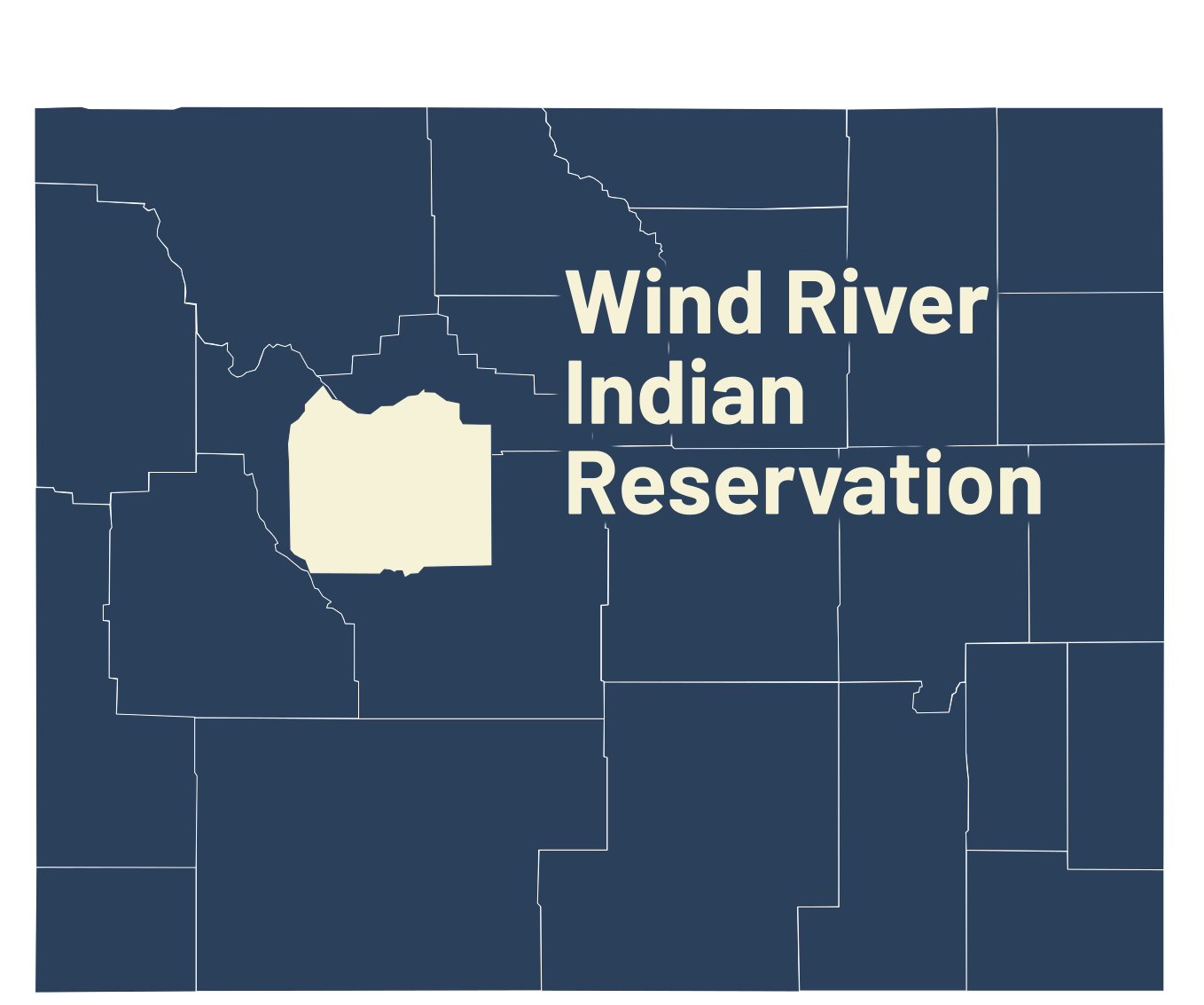
Days after a religious clash exploded on the Wind River Indian Reservation, the Northern Arapaho Tribe’s government says it has adopted a new policy requiring ministry and charitable groups to get tribal authorization for their work on the reservation.
The Northern Arapaho Business Council (NABC), which is the tribe’s six-person leadership board, posted an announcement about the new policy to social media Monday.
The announcement says the policy is “reaffirming the Northern Arapaho Tribe’s inherent sovereign authority to require consultation and governmental authorizations seeking to conduct recurring ministries, charitable services, outreach programs, and other organized activities on lands under the jurisdiction of the Northern Arapaho Tribe.”
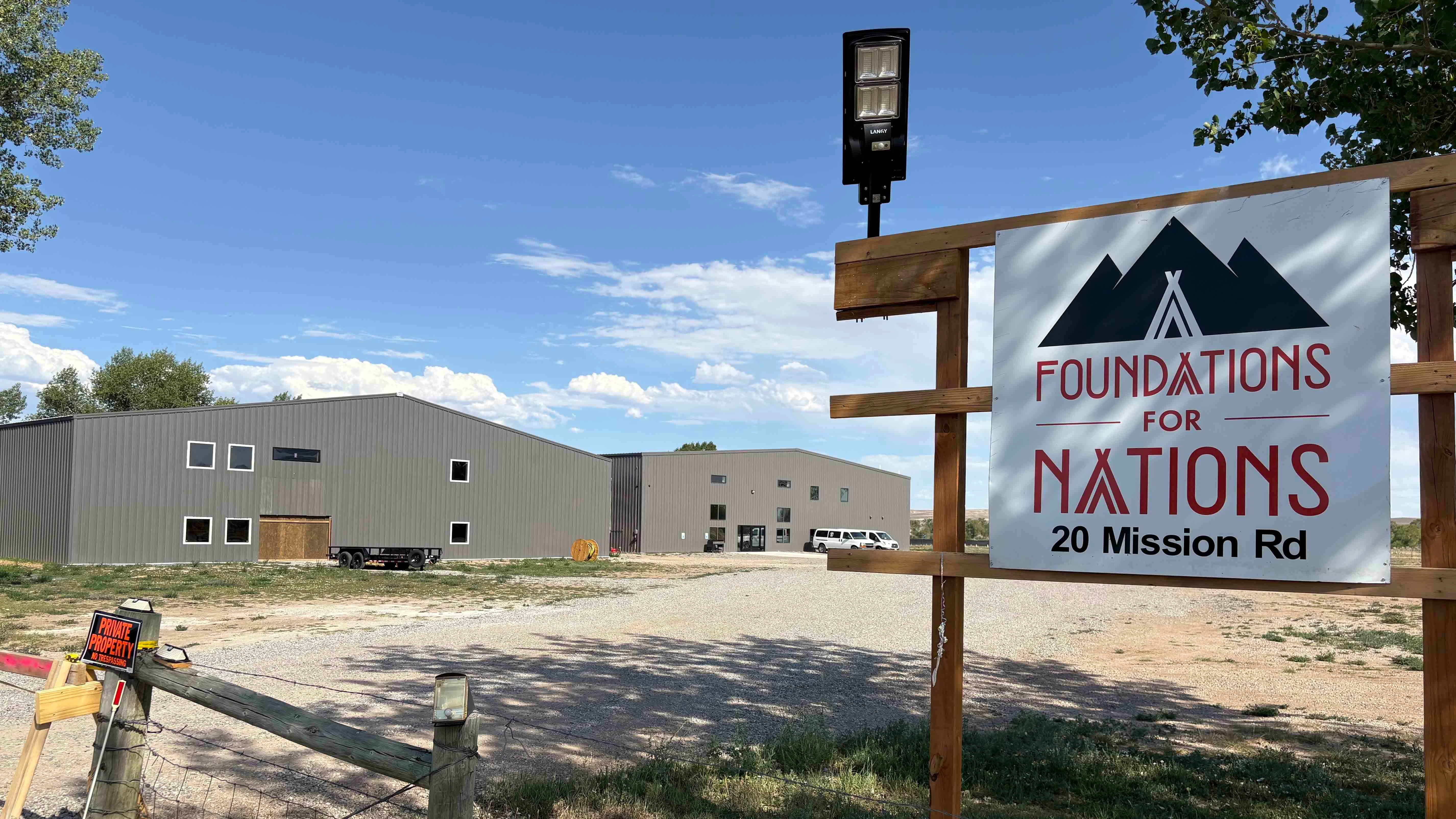
This controversy started July 5, when Christian pastor Sarah Lucas, of Foundations for Nations, preached against some of the tribe’s Sundance ceremonies involving a pipe relic as a prayer centerpiece. She had indicated praying "to pipes" is idolatry.
She had said, “a pipe cannot hear your prayers,” and “we know that Jesus is enough.”
Foundations for Nations falls within the exterior boundaries of the Wind River Indian Reservation but it sits on private, not tribal land. It has been ministering in Fremont County for nearly a decade, and runs a food pantry in town as well as kids' programs.
The NABC told Lucas and her family to leave the reservation. Lucas refused, telling Cowboy State Daily she’s sorry the sermon came off as an attack, but not sorry for preaching from the Bible.
“Jesus is the only way,” she said.
The board’s announcement says that the tribe’s records department reviewed records to see if Foundations for Nations had ever received authorization from the tribal government “to conduct recurring organized ministry or outreach activities on the Reservation.”
The review found no documentation that the church is authorized to work on the reservation, says the announcement.
NABC Chair Keenan Groesbeck has told the church that the tribe requests consultation “before any expansion of recurring ministry activities under the new policy,” the announcement says.
The tribe has invited “the organization” to meet with the NABC by July 25 to discuss its mission, leadership, funding, activities, and “any documentation it believes demonstrates authorization to operate on lands under Tribal jurisdiction.”
It may be a point of debate whether private land surrounded by tribal trust lands falls within tribal jurisdiction, and if so, for what purposes. It’s unclear if the tribe’s new policy is constitutional.
“This policy is not about preventing anyone from practicing their religion,” Groesbeck said in the statement. “It is about respecting the sovereign government of the Northern Arapaho Tribe. Any outside organization seeking to conduct organized activities within our jurisdiction should first communicate with the elected leadership of our Nation and work in partnership with the Tribe.”
NABC says in the statement that the policy will apply uniformly to outside groups.
Lucas declined Tuesday to comment.
Constitution, Law
The First Amendment to the U.S. Constitution says, in part, that Congress shall make no law prohibiting the free exercise of religion, abridging the freedom of speech or the freedom of the people to assemble peaceably.
After the American Civil War, Congress passed the 14th Amendment to expand those prohibitions to state governments. Neither amendment imposed restrictions on tribal governments’ ability to impede the free exercise of religion or speech, or other listed rights.
A century later in 1968, Congress imposed some – but not all – Bill of Rights restrictions on tribal governments through the Indian Civil Rights Act. The law protects rights similar to the U.S. Constitution’s first, fourth, fifth, sixth and eighth amendments, and portions of the 14th Amendment.
“No Indian tribe in exercising powers of self-government shall… make or enforce any law prohibiting the free exercise of religion, or abridging the freedom of speech, or of the press, or the right of the people peaceably to assemble and to petition for a redress of grievances,” the law says.
Disputes have surfaced over the years, regarding just how much Congress can regulate tribal governments.
The U.S. Constitution delegates just one congressional authority over tribes: “To regulate Commerce with foreign Nations, and among the several States, and with the Indian Tribes.”
Curiously, tribal governments were some of the strongest proponents of interpreting the “Indian Commerce Clause” to give Congress broad power over American Indian tribes.
That advocacy unfolded during the U.S. Supreme Court case Brackeen v. Haaland, which contemplated whether a federal law giving tribes primacy over Native child custody matters is constitutional.
The high court found it constitutional. It took a broad view of the Indian Commerce Clause to do so.
“As we already explained, our precedent states that Congress’s power under the Indian Commerce Clause encompasses not only trade but also ‘Indian affairs,’” says the majority opinion, by Justice Amy Coney Barrett.
Justice Clarence Thomas wrote a dissenting opinion proclaiming overreach.
By passing a law governing tribal custody matters, “Congress ignored the normal limits on the Federal Government’s power and prescribed rules to regulate state child custody proceedings in one circumstance: when the child in volved happens to be an Indian,” he wrote.
Thomas said the majority opinion “gets things backwards. When Congress has so clearly intruded upon a longstanding domain of exclusive state powers, we must ask not whether a constitutional provision prohibits that intrusion, but whether a constitutional provision authorizes it.”
Clair McFarland can be reached at clair@cowboystatedaily.com.