
Some Wyoming lawmakers are working to impose a near-ban on parents, clergy, medical providers and spouses giving alcohol to people under 21.
Currently Wyoming law doesn’t punish those who furnish alcohol to people who are under 21, if the alcohol giver is a parent or immediate family member. The law also exempts those performing a church service involving alcohol, and those administering alcohol for medicinal reasons.
The Select Committee on Tribal Relations advanced a bill Tuesday that would tighten those exemptions so that parents and others who benefit from the carveouts could be charged with a misdemeanor – if the underage person’s blood-alcohol content exceeds 0.02%.
That misdemeanor is punishable up to one year in jail and $100-$1,000 in fines, with a potential felony for repeat offenses.
Committee Co-Chair Sen. Cale Case, R-Lander, praised the bill as thoughtful, and said the BAC limit is better than “untangling the list of exceptions,” which he said would be “very divisive.”
The other co-chair, Rep. Ivan Posey, D-Fort Washakie, also supported the bill. The committee adopted it with unanimous consent by those present at its Tuesday meeting in Riverton.
Rep. Pepper Ottman, R-Riverton, voted aye.
So did Sen. Tim Salazar, R-Riverton, though he hesitated.
He asked Wyoming Highway Patrol Col. KC Ramsey whether the agency’s troopers would stay their enforcement power when approaching religious functions, like a bar mitzvah.
“Would I see one of your troopers, perhaps knowing that there was a bar mitzvah, a christening, something like that – would that change the trooper’s behavior on whether or not they would come to check specifically on an event where underage, um, minors are having alcohol?” asked Salazar.
Ramsey said the nature of the function doesn’t change anything, but troopers aren’t in the habit of lurking outside either “the local watering hole bar” or bar mitzvahs waiting for people to leave.
Ramsey later reiterated the nature of the event doesn’t change anything on the enforcement side.
Salazar said he’d vote yes to advance the bill Tuesday, but he looked forward to conversations about it in January when the 2027 lawmaking session opens.
This bill would have to pass the full Legislature and the governor’s desk to become law.
How Big Is That Drink?
Depending on weight, one beer could put people over the 0.02% BAC threshold.
The average weight for an 18-year-old male in the United States is 170 pounds, and for a female 152 pounds, the Centers for Disease Control and prevention says.
One beer would put a person of either size above the threshold. So would one glass of wine, according to BACcalc.org.
But, Case noted, a typical church communion serving of wine probably would not. At many churches, communion cups contain about a tablespoon of wine.
But, The Culture
No strong testimony emerged Tuesday, either for or against the bill.
Ramsey said WHP is neutral on it, but after a back-and-forth with Case confirmed WHP has nothing against the bill.
“I think what we need is more of a cultural change,” he said. “And this may lead to that.”
Ramsey gave an anecdote from his own experience growing up in Wheatland.
“(Having) an alcoholic father, if I'd gotten pulled over for an MIP, he wouldn't have cared because that was the culture in the household,” said Ramsey. “That's what we deal with in the state of Wyoming. So, that's a long road to go.”
The Revelation
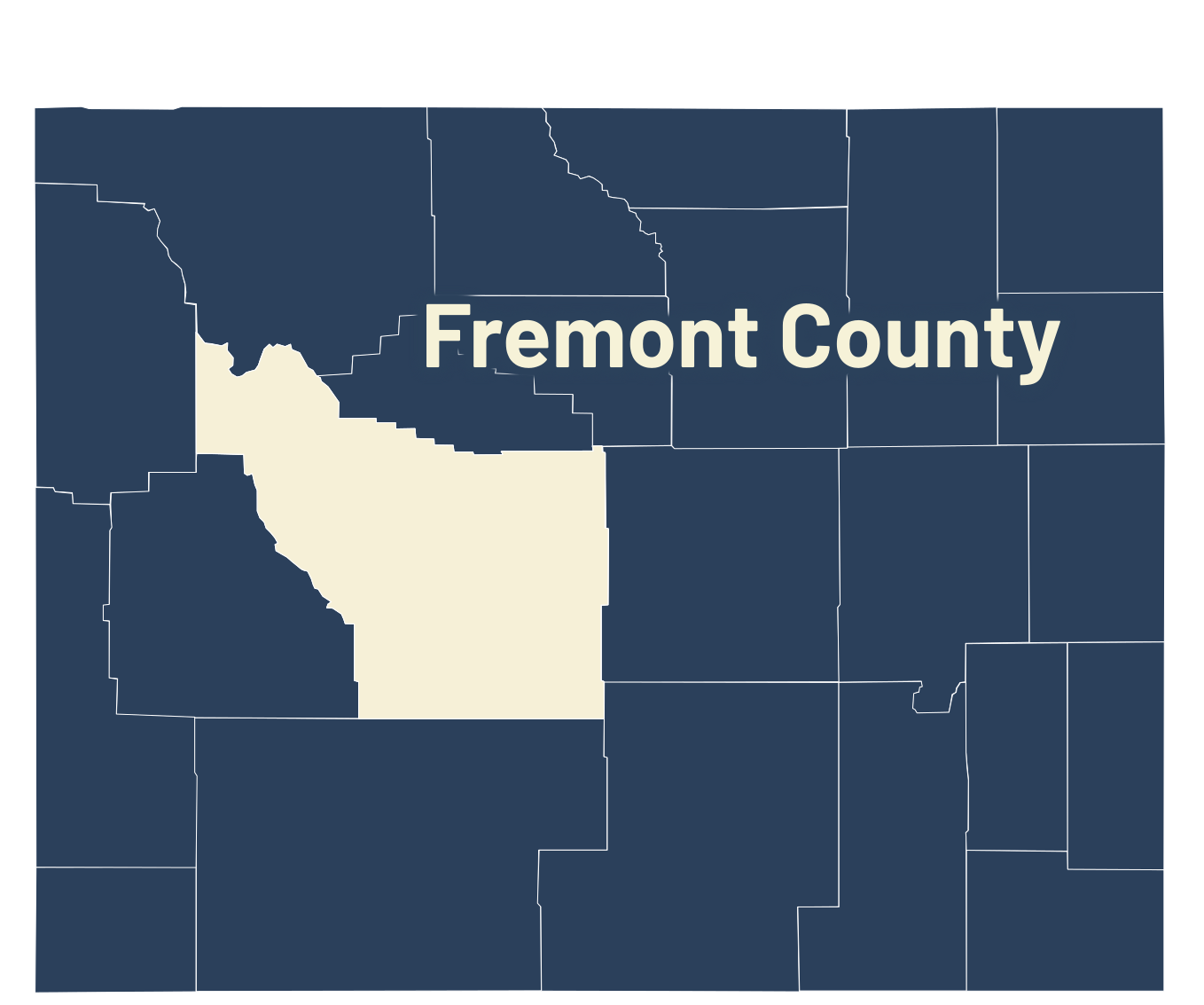
But a June meeting of that same committee drove the bill into existence, when juvenile services personnel of both tribal and Fremont County governments talked about extreme alcohol use, by kids, within the county.
“We know our kids’ blood-alcohol contents are troubling at best,” said Hattie Calvert, assistant director of Juvenile Justice Services of Fremont County,
The 2024 average for kids cited was 0.123%, with a range from 0.012% to 0.260%, she said, referencing a bracket including only kids under 18.
“This is alarming. It should alarm everybody,” said Calvert.
In 2025, she said, the numbers grew worse. The county saw a 0.329% BAC in a kid that year, she added.
Calvert testified that kids get alcohol largely from family, and also from strangers whom they pay.
Case was visibly concerned and pressed the matter at length, while Posey lamented alcohol use as an unfortunate rite of passage in the area.
After Case asked Calvert why the county doesn’t prosecute more people for furnishing alcohol, a Legislative Service Office staffer pointed to the exemptions in the law.
Then Case remembered those carveouts’ passage.
The Legislature passed the exemptions in 2010 with bipartisan support and two-thirds majorities or greater in each chamber. Case voted aye.
“There was discussion of families that give their children a glass of wine at dinner; it’s a family tradition and if it was normalized like that, ‘this isn’t really harmful,’” he said.
But, Case reflected, there’s no BAC limit tied to that exemption, which lets some parents enable their own kids to reach high alcohol levels.
Calvert was adamant.
“Yes, you are technically allowed to give your minor child a glass of wine,” she said. “But that is harmful. Every bit of it is harmful to that child’s development. You’re kind of creating a safe haven and a practice of drinking that will negatively affect them as they move through their life.”
The Shoshone and Arapaho Law and Order Code, which is applicable to tribal members on the Wind River Indian Reservation, bans even the intent of furnishing alcohol to anyone under 21, except by prescription.
People guilty of that section can face between 30 days and six months in jail, or $500-$1,000 in fines, the law says.
Clair McFarland can be reached at clair@cowboystatedaily.com.


