
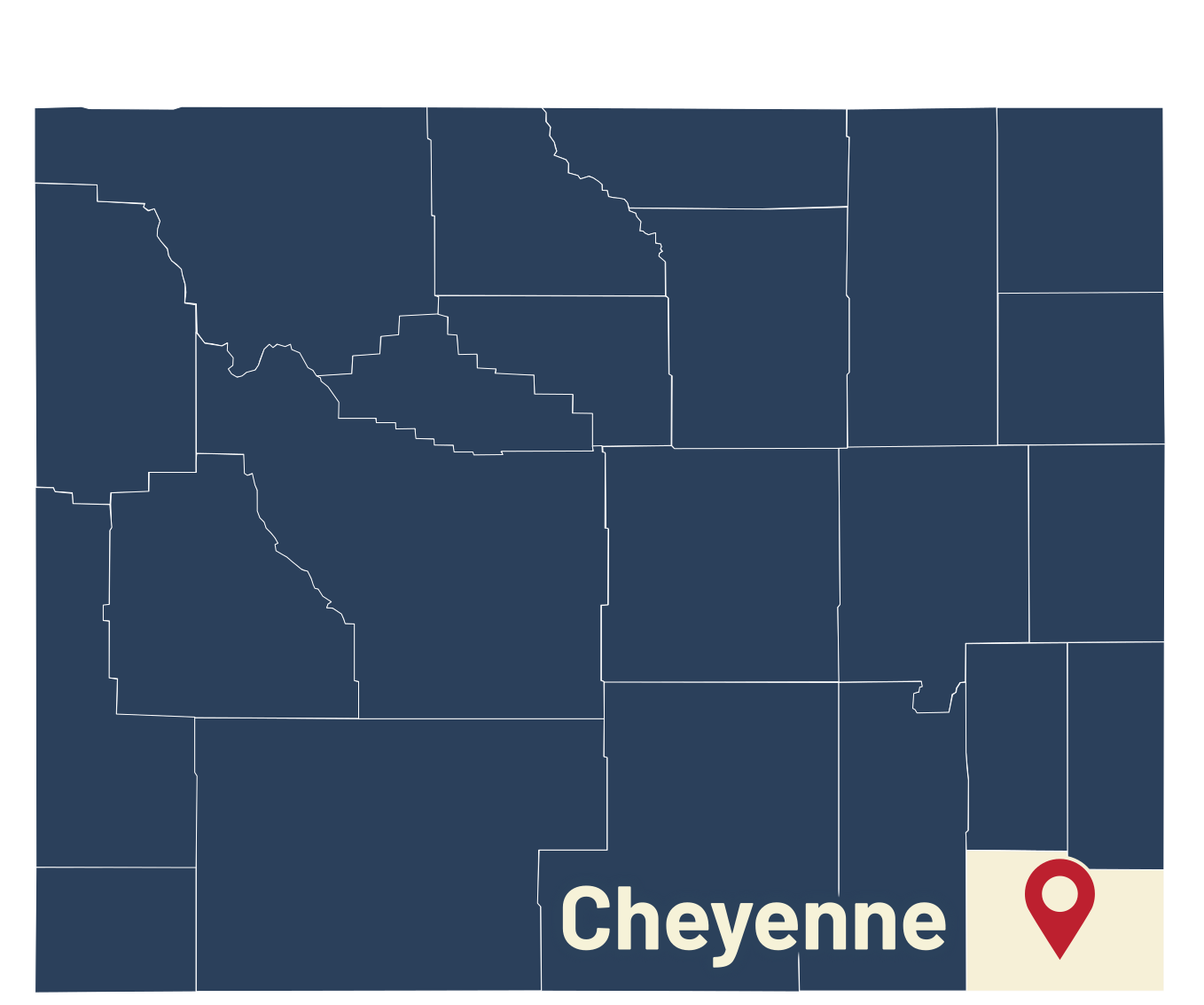
Cheyenne’s Board of Public Utilities will not move forward with a press conference this week to discuss details surrounding the contamination of the city's wastewater reuse system by a Meta data center contractor, despite publicly saying last week that it would.
Frank Strong, BOPU’s engineering and water resource division manager, told Cowboy State Daily in a phone call Tuesday that the board is “not able to” do the information event as initially planned.
He said he's unable to discuss why.
Instead, BOPU is putting together a list of questions it has received from media and members of the public and is working on drafting concise answers.
“We’ve received a lot of questions, a lot of inquiries,” Strong said, adding that he hopes the document would be publicly released Wednesday or Thursday.
The public upswell over the contamination has built for weeks after the BOPU made the contamination public months after it happened.
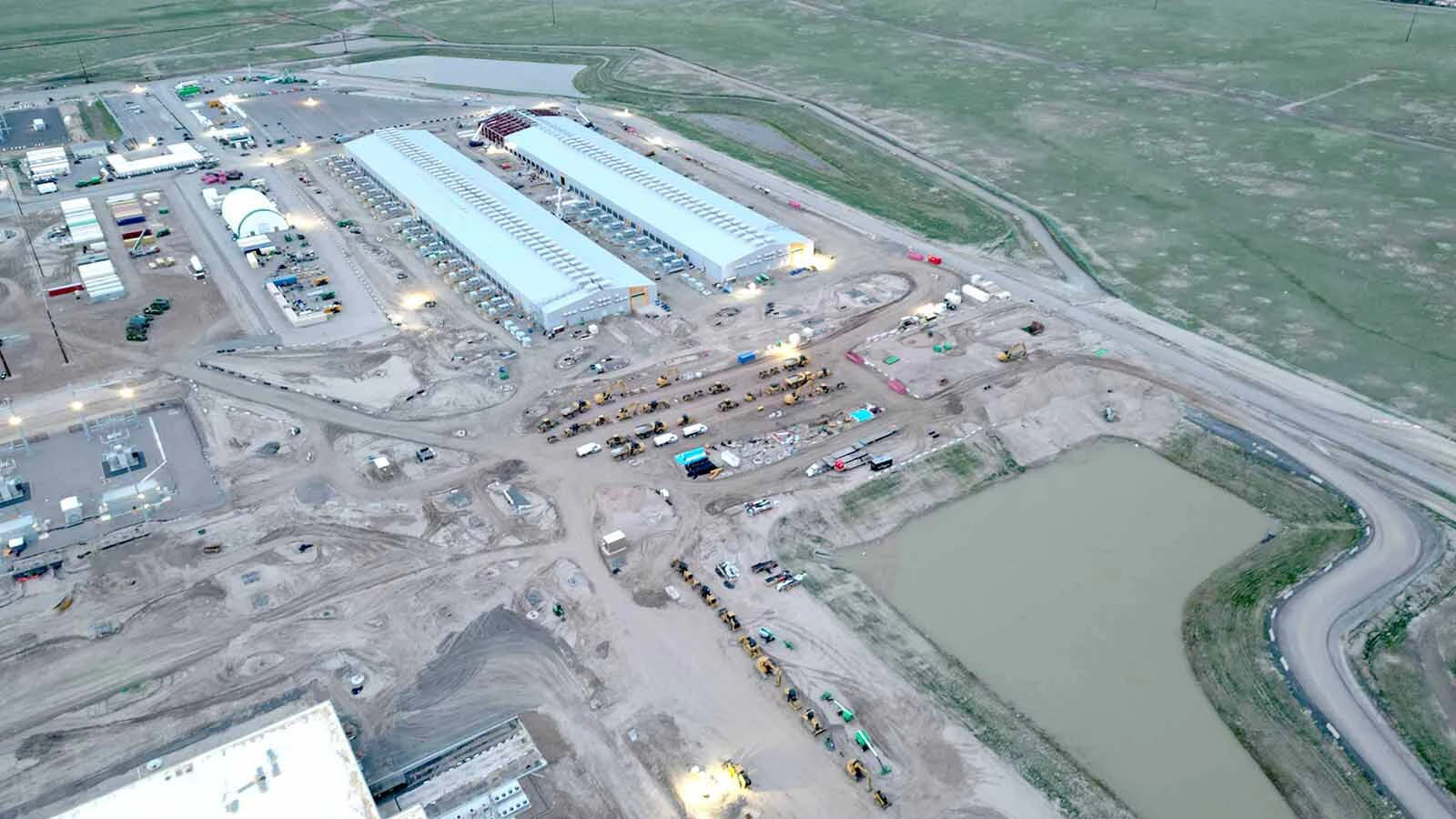
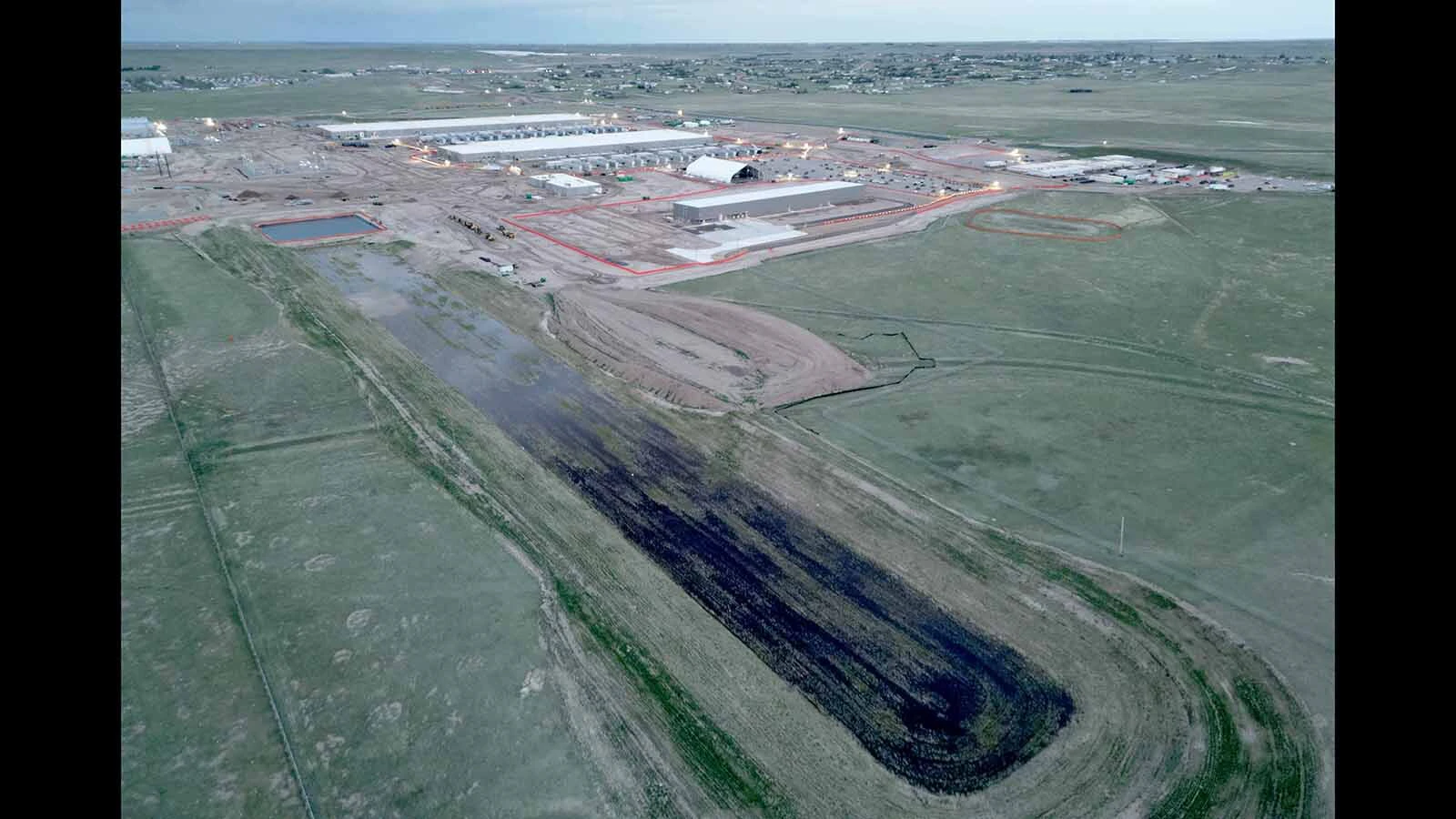
On July 2, the BOPU announced that Goat Systems LLC, the corporate entity Meta uses during construction of its nearly 800,000-square-foot data center campus, was in "significant noncompliance" with the city's industrial pretreatment regulations after discharging wastewater contaminated with Cupriavidus gilardii bacteria into Cheyenne's municipal reuse water system.
The board had issued a public notice June 26 that laboratory staff identified the contaminant in a February sampling from Meta’s closed-loop cooling system.
Meta would not comment publicly on the BOPU’s decision, nor would it comment on whether closed-loop cooling systems are safe and reliable for limiting water consumption from its data centers, whether it would publicly share the results of its own water quality tests and whether it plans any sort of community outreach in the wake of the incident.
Hageman And Meta
On Thursday, Rep. Harriet Hageman sent a letter to Meta CEO Mark Zuckerberg, asking pointed questions about the contamination and asking the company to release all information it has about the Cupriavidus gilardii bacterium that had been discharged into the city’s wastewater system.
Hageman's strongly-worded letter had demanded answers of Meta CEO Mark Zuckerberg.
For example, she asked why the public announcement about the contamination came more than four months after the Meta contractor disrupted the city’s reclaimed wastewater system with the rare bacterial contaminant.
Meta called Hageman’s office within 24 hours, the representative said in a Tuesday phone interview with Cowboy State Daily.
“First of all, I want to commend them. They called us immediately,” said Hageman.
That first phone call was between Meta personnel and Hageman staffers, she said. She took to X.com to call that first call “productive.”
Hageman said Meta’s stance was essentially that, “We want to be a good neighbor, be responsive, we recognize this is something that’s been announced (as coming) from our facility and we’re doing the investigation to find out what happened and address it.”
Hageman said she joined a second call with Meta officials Tuesday afternoon in which the tech officials said they are working with the Board of Public Utilities to “figure out what happened here.”
The representative said she sees her approach to this issue less as a federal lawmaker and more as an advocate for Wyoming.
“One of the things I’ve encouraged them, and other people either wanting to come to Wyoming or who are in Wyoming bringing ... different types of businesses expanding our workforce is, you need to work with the communities where you intend to go,” she said.
“Talk with city leaders. Have public meetings. Talk about what you intend to do. Make sure you’re doing that public outreach so people can engage with you and understand what it is you intend to do in the state of Wyoming,” Hageman added.
Hageman said she has not been in touch with the BOPU on why it isn’t planning to have a press conference this week and doesn’t have insight there, but believes that the entity should engage with the public also.
Priced Out Of Transparency
Erin Lamb, BOPU’s administrative and public affairs coordinator, has said that the company will pay for all remediation costs associated with the incident.
Exie Brown Jr., a Republican vying for a House District 9 seat in the Wyoming House of Representatives, submitted public records requests to the BOPU regarding the contamination, saying on social media, “These are legitimate questions about public infrastructure, water quality, and public health.”
Cost estimates to retrieve those records are estimated at $500 from the city of Cheyenne and more than $1,300 from the Department of Health, he said.
“These are not trivial amounts for an individual citizen seeking information that directly affects the community,” he said. “While agencies are permitted to recover reasonable costs for processing complex requests, fees of this magnitude on matters involving public health and ratepayer-funded infrastructure create real barriers to transparency.”
Brown expressed skepticism over BOPU’s decision against a press conference, saying it appears the board wants to craft its answers carefully. It also means it won’t be open to follow-up or other questions from those attending the press conference.
“It tells me they don’t want to have to try and answer any potential unexpected questions,” Brown told Cowboy State Daily in a Tuesday text message.
BOPU board member Jeff Fassett told Cowboy State Daily in an email Tuesday that he was checking with senior staff on the status of the agency's answers.
“I had expected some replies before now,” Fassett said.
‘We Did Not Want To Create A Public Panic'
More than four hours into Monday night’s lengthy Cheyenne City Council meeting, Laramie County resident David Knisely confronted Mayor Patrick Collins with a direct question: “Do you all promise to tell us anything that you know, immediately, that might affect us?”
The mayor responded he and the council would do everything they could to be transparent.
“So what happened with respect to contamination at Meta? Why was it five months or six months before we knew anything?”
After a pause, the mayor said, “I honestly don’t know why it took six months.”
“When did you know?” Kniseley asked.
The mayor responded that he was told “sometime this spring that an incident had happened and that BOP was looking into it.
“And then I think all of us learned the extent of that just a week or so ago,” he added. “But honestly, I did hear that an incident had happened. Not a lot of details, sir.”
Bryce Dorr, an engineer with BOPU, said at the meeting that the board will provide a detailed timeline of what happened, “as well as some answers to some of the questions we have seen.”
He reiterated that the issue was never with the city’s drinking water.
“We’re trying to get more answers,” he said. “We’re trying to understand further what has happened.”
Dorr addressed Knisely directly, saying that news about the contamination “has kind of been an explosion.
“I get why you’re scared,” Dorr said.
The holdout of waiting four months before informing the public was because “There was not a risk,” he said. “We did not want to create public panic.”
“If there is not an immediate risk to public health, it’s not something we want to create public panic over,” Dorr said.
‘Do It Immediately'
Dorr said he has taken a pay cut to work for the city, and what he values most about his position is that he has a role in protecting the community.
“And I know that’s what these people are here to do, too,” he said, acknowledging the City Council.
“But there are only certain things that we can control,” he said. “We are doing our best to protect the community and do what’s best for this community.”
Council member Pete Laybourn told Cowboy State Daily on Tuesday the BOPU has a clear responsibility “to detail every element of this and do it immediately. These circumstances certainly seed a narrative of complete distrust.”
Laybourn questioned the way the BOPU is handling the situation.
“You should not raise expectations of a press conference and then say you’re going to study it some more,” he said. “My guess is there’s a lot of studying that’s been going on for the past five months.”
“This couldn’t possibly have come at a worse time,” he added.
Mayor Collins said in an email to Cowboy State Daily on Tuesday that the BOPU had notified him of its change of plans for the press conference and that he had not had a chance to follow up.
Kate Meadows can be reached at kate@cowboystatedaily.com and Clair McFarland can be reached at clair@cowboystatedaily.com.


