
The DUI case of state Rep. Bill Allemand has shifted into a spat between lawyers about how they’re handling it, and a possible criminal action against Allemand’s defense attorney.
Allemand, a Republican of Midwest, Wyoming, was charged late last year with DUI, which is a misdemeanor punishable by up to six months in jail and $750 in fines. He’s set for trial Sept. 16.
Meanwhile, Buffalo Circuit Court Magistrate Jeremy Kisling has ordered Allemand’s attorney Mike Vang to appear in court Wednesday to “show cause” for why he did not attend a hearing last week.
Kisling had issued a June 26 order setting the July 8 hearing so that Vang could argue support for his allegations that the case prosecutor, Johnson County Deputy Attorney Joshua Stensaas, hasn’t given enough evidence from Allemand’s chemical blood test.
Stensaas in his own filings has called that assertion false — or at least refuted by his email records with Vang’s office.
Vang did not show for the July 8 hearing where Kisling had planned to weigh these conflicting claims.
Cowboy State Daily had contacted Vang by phone the night prior, July 7, to ask whether the hearing was still set.
Vang said he was unaware of the hearing, could not attend, and would file a “motion for continuance,” which is a rescheduling request.
He confirmed he was on the record during that phone call by adding, “and that’s my comment.”
No motion for continuance of that hearing appears in the public court file.
Kisling issued an order July 8 saying Vang’s “failure to appear may constitute a failure to comply with a lawful order of the court and may warrant the imposition of sanctions and indirect contempt of court.”
Kisling ordered Vang to appear for a hearing at 4 p.m. Wednesday.
Can’t Make This Hearing, Either
Vang wrote back in a motion, saying he and Allemand “did not intentionally fail to appear” for the July 8 hearing and that Vang “inadvertently failed to notice” the July 8 hearing setting at the bottom of the judge’s earlier order, so he failed to put it in his calendar.
Vang asked the court to reschedule his contempt hearing from July 15 to some other date.
He said he can’t attend Wednesday because he has a 3 p.m. hearing in Albany County’s Laramie Circuit Court.
Kisling checked that assertion and, according to a July 10 order by the magistrate, found it incorrect.
“Court staff in Johnson County contacted Albany County Circuit Court to confirm a setting for Mr. Vang on that date,” wrote Kisling. “The court docket in Albany County does not have a scheduled hearing for Mr. Vang at the time asserted in Mr. Vang’s motion.”
So Kisling denied Vang’s request to reschedule.
Later that day, Vang submitted a filing saying he’d had another issue with his calendar.
He attached a scheduling order from June 9 that showed he had been set to appear in Laramie Circuit Court on Wednesday at 2:30 p.m., not 3. Vang acknowledged that the 2:30 hearing has since been rescheduled.
But, he said, he hadn’t taken the original setting off his calendar when he’d originally protested the schedule conflict to Kisling.
“Again, Mr. Vang did not intentionally file information to mislead the court, and simply still had a hearing date on his calendar that had been reset for a later date,” says Vang’s motion.
Criminal contempt charges against attorneys are uncommon but not unheard-of.
They’re different from civil contempt charges.
In a civil contempt case, a judge penalizes someone to make him honor an order. In criminal contempt charges, the judge is punishing someone for having already disrespected the court.
Vang declined Tuesday to comment.
The Body Camera Is Out
In the same motion in which Vang had urged Kisling to reschedule the contempt hearing, Vang also asked Kisling to address two actions by “the state” that Vang calls problematic.
Firstly, Vang took issue with Stensaas “(accusing) Mr. Vang of making false representations to the court as it relates to … the litigation support package.”
Vang continues to assert that Stensaas is depriving the defense of important evidence about Allemand’s chemical blood test, which the prosecutor continues to deny.
Stensaas has maintained that Vang has received 72 pages of chemical test evidence and questioned why Vang says he only received 24 pages.
Secondly, Vang is asking Kisling to demand answers from the Johnson County Sheriff’s Office on why it released the body camera video of Allemand’s arrest.
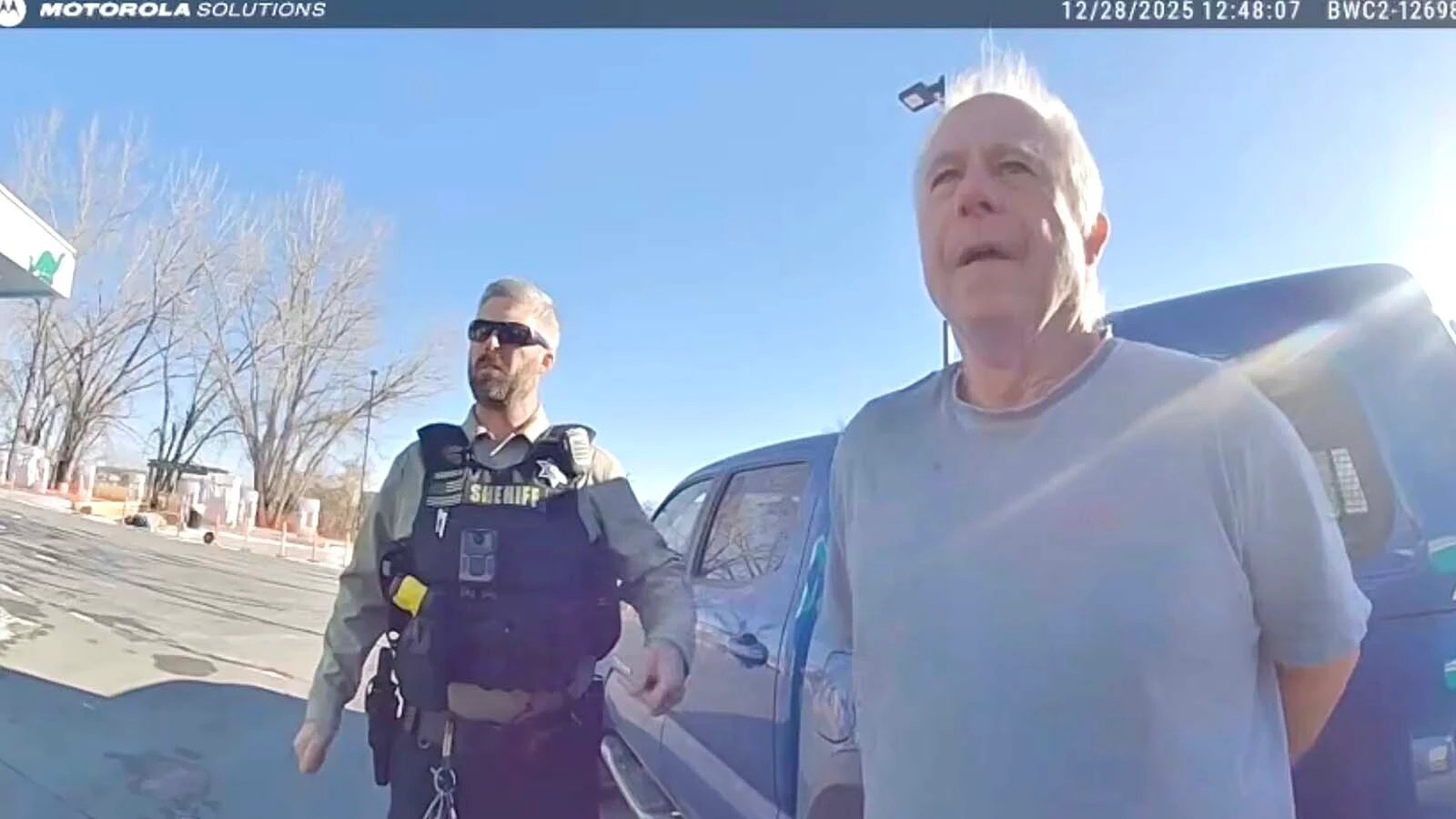
The sheriff’s office released that video to Cowboy State Daily pursuant to the outlet’s public records request days after Kisling barred 12 minutes of that recording from entering the trial.
Kisling found that for about 12 minutes of Allemand’s traffic stop and arrest, Johnson County Deputy Caleb Campbell had confined Allemand without mirandizing him, and had asked potentially incriminating questions.
Campbell was justified in confining Allemand in handcuffs during the traffic stop: he found a gun near Allemand and had officer safety concerns, wrote Kisling in his suppression order.
But the potentially incriminating questions Campbell asked Allemand while he was confined — and not Mirandized — can’t be part of the state’s main evidence pool at trial, Kisling ruled.
Officers must give a person his Miranda rights before asking him incriminating questions, if the person is confined.
Kisling did not put a wholesale gag order on the prosecutor’s office or sheriff’s office, though he did bar those 12 minutes of video from the trial.
Vang says the sheriff’s office’s release was improper.
“Unfortunately, potential jurors have now been exposed to evidence that this court suppressed, which has tainted the potential jury panel,” wrote Vang in his motion.
Concerns about a potentially compromised jury became part of another recent high-profile criminal case of Sublette County wolf abuser Cody Roberts.
In that case, then-District Court Judge Richard Lavery addressed those worries by planning a lengthy, voluminous jury selection in a larger-sized library building. But Lavery didn’t have to do that in the end because Roberts took a plea deal.
Johnson County Attorney Tucker Ruby did not respond by publication to a voicemail request for comment on Vang’s jury concerns.
Body camera video is public record, but with caveats. State law says keepers of body camera video generally should not release it, but they can release it either:
• to the person in the video,
• in the case of deadly force or serious bodily injury,
• in response to a complaint against law enforcement, or
• in the interest of public safety.
Allemand’s DUI case is ongoing.
Clair McFarland can be reached at clair@cowboystatedaily.com.


