He was a strategist and leader at the July 26, 1865, Battle of Platte Bridge when a young lieutenant named Caspar Collins was killed by Native warriors.
A fort and city went on to be named after the fallen soldier.
But after the campaign from 1866-1868 to stop settlement and incursion into tribal lands in central Wyoming, Red Cloud had a war, Indian agency, town, tobacco brand, mountain in Colorado, comic book villain and more named for him.
Jeffrey Means, University of Wyoming Department of History chair and an expert on Great Plains Indian culture, told Cowboy State Daily that Red Cloud definitely ranks near the top of significant Native American leaders.
“He’s on the top of the Lakota Mount Rushmore for sure,” he said. “His legacy of just being that guy that’s always trying to make things better for his people translated into having schools named after him and even a town. These kinds of things are part of that respect.”
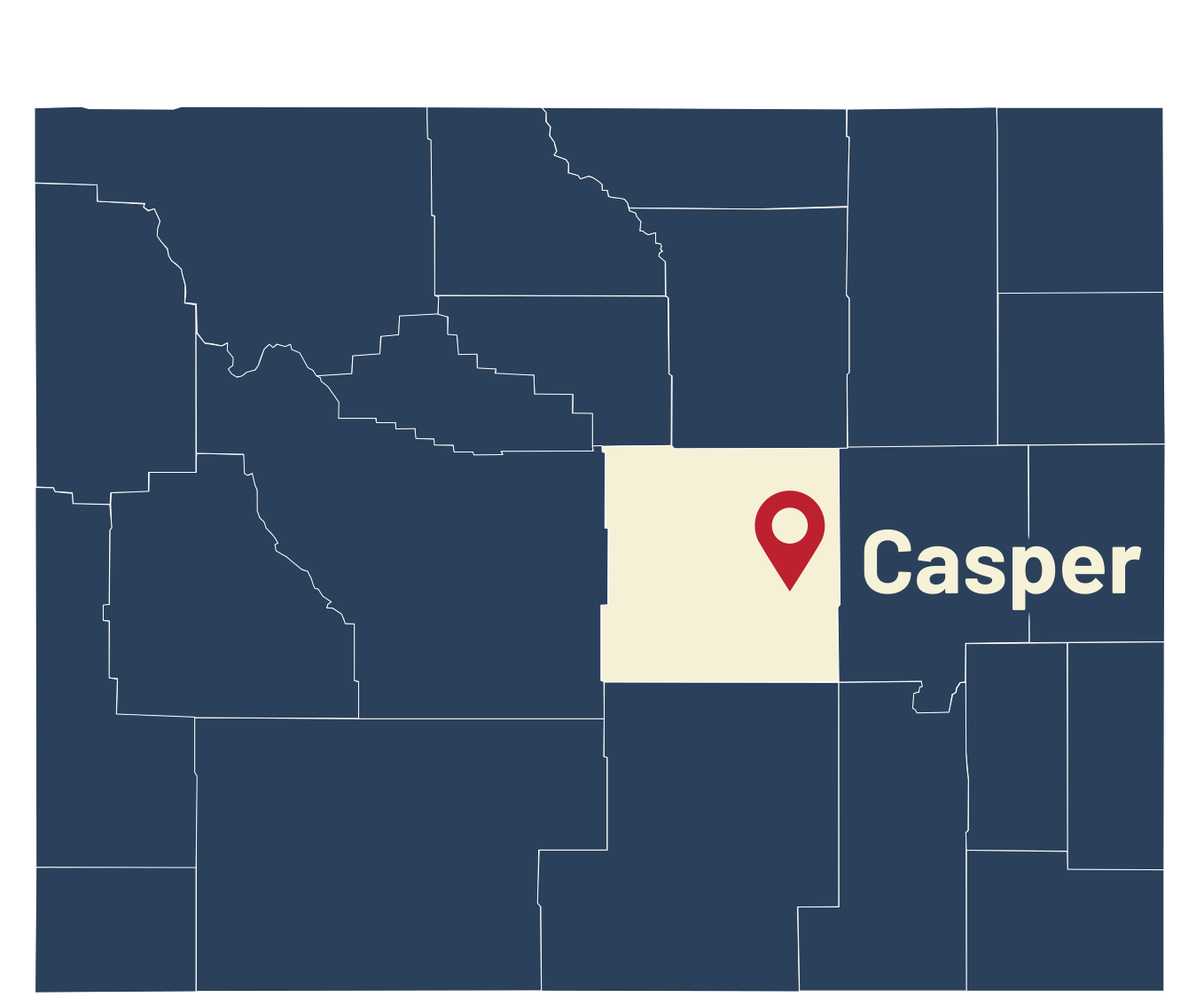
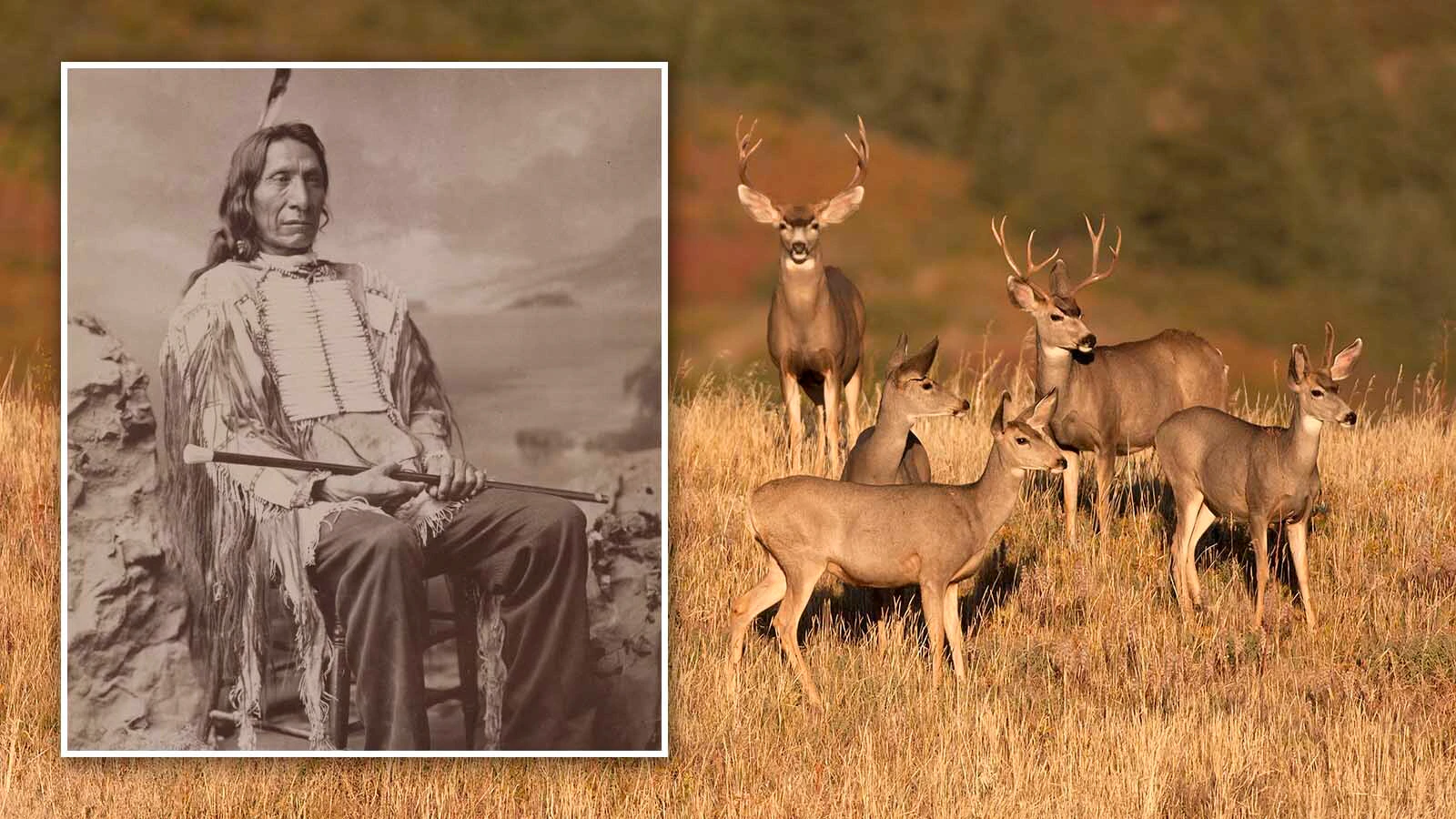
However, when Red Cloud returned to Casper about 30 years after his famous win at Platte Bridge and the Red Buttes, he was no longer a conqueror but under escort from lawmen and facing potential jail time for illegally taking game out of season.
Means said the incident in 1894 is interesting because at that point in Red Cloud’s life he was going blind.
“Him out on a hunting trip is pretty amazing,” he said. “Maybe he was just there to get off the reservation because he didn’t like it there.”
An article in the Argus-Leader newspaper in Sioux Falls, South Dakota, on June 2, 1894, reported that Red Cloud, then 68, and 50 others had stopped in Oelrichs, South Dakota, to trade with merchants before heading west into Wyoming for the Shoshone Reservation.
“They plan to go on a hunting expedition,” the newspaper reported.
When the group rode into Natrona County, reports that they were illegally taking game out of season filtered into town.
The Arrest
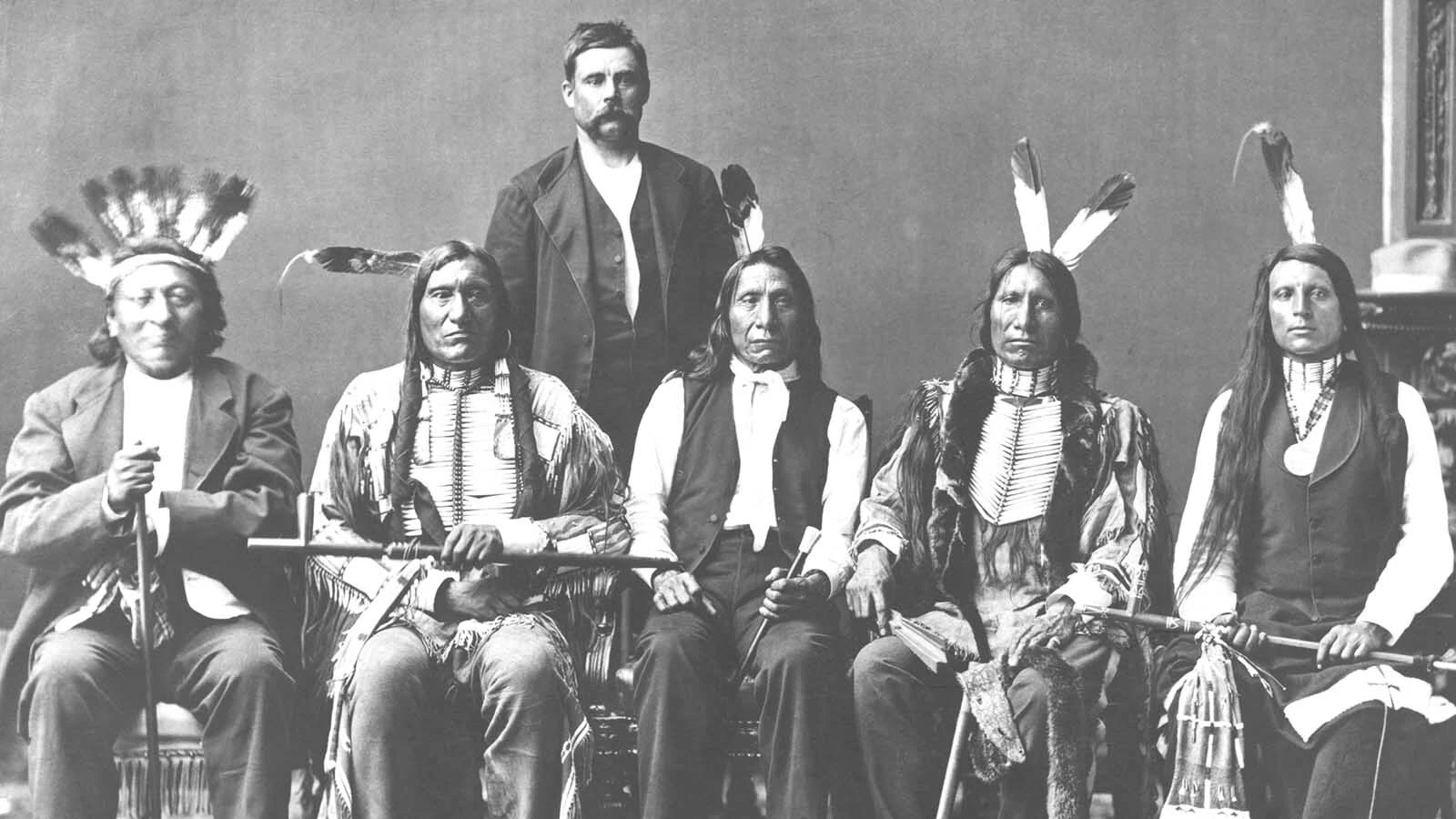
Alfred James Mokler, publisher of the Natrona County Tribune from June 1897 to October 1914, wrote in his history of Natrona County published in 1923 that the chief was broken in health.
He also noted that Natrona County and Casper residents “decided” Indians needed to comply with the same laws as everyone else and that the “wholesale slaughter” of game needed to stop.
Mokler’s account states the chief and his band were camped about 30 miles west of the city in the Pine Mountains. On June 10, a Natrona County Sheriff’s deputy and Casper town marshal were sent with warrants to arrest Red Cloud, his son Jack Red Cloud, and Dreaming Bear for killing game out of season.
“When the authorities came upon them, the Indians had broken camp and all of them except the big chief and his son were traveling in a westerly direction,” Mokler wrote. “There was an abundance of antelope meat and pelts in the chief’s wagon.”
The chief, his son and Dreaming Bear were shown the warrants and the Natives on the road were signalled to return and soon everyone was back in camp. Red Cloud and the others agreed to return to Casper but only if they could bring their guns.
Mokler’s account states that the trio spent the rest of the weekend in jail while Red Cloud’s wife sat outside mourning and armed Natives went through town scowling.
At a hearing Monday morning, the prosecuting attorney argued for a conviction and heavy fines. The Indians countered they did not know the law, were without food and hungry.
Both Mockler and a man who visited the Pine Ridge Indian Reservation in South Dakota in July 1894, who likely heard about it from accounts of Natives, concur on what happened next.
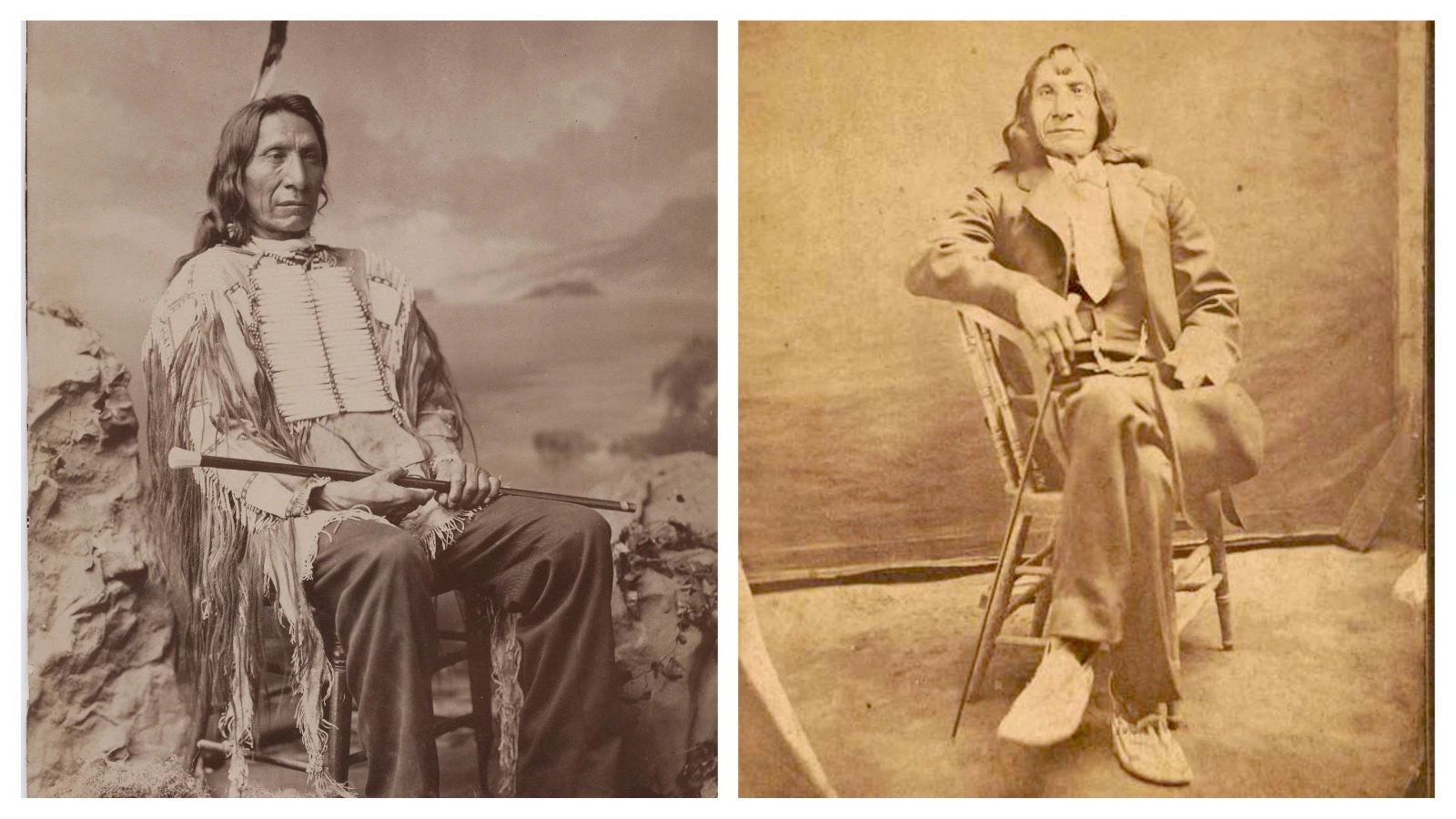
Fines And Freedom
Mockler wrote that the three men were fined $20 each by the judge. But given Red Cloud’s status and promise they would not kill any more game, they were let go without having to pay. The group then went to the Wind River Indian Reservation and, after the visit, came back through Casper and had again killed game along the way.
The three were arrested again and brought before the judge for trial. After initially refusing to pay the fine and with some of the Indians “making dire threats against the people of the town,” they asked the sheriff if he would take Red Cloud’s team, wagon and harness in exchange for the fines.
Mockler wrote that the sheriff agreed and made a bill of sale. The Natives returned to Pine Ridge.
In a story published in the Kansas City Weekly Journal on July 26, 1894, Charles A. Finlay was quoted as visiting Pine Ridge when the annual allotment of $100,000 was being distributed to the tribes. He reported Red Cloud “got into a little trouble.”
“It seems that he and his son have insisted from time to time on invading Wyoming and killing game there,” he wrote.
Several other newspapers also had stories on Red Cloud’s arrest and fines. The Sioux chief’s notoriety from Red Cloud’s War had not faded.
During that war the chief led efforts focused on preventing travel on the Bozeman Trail and white settlement in the Powder River area of Wyoming and southeast Montana. The Natives’ victory in the Fetterman Fight against troops from Fort Phil Kearny near what is now Sheridan in December 1866 claimed 81 soldiers’ lives.
Red Cloud’s efforts leading the Lakota, Cheyenne and Northern Arapaho resistance forced the U.S. back to a negotiation table at the Treaty of Fort Laramie in 1868 and the removal of forts from the Powder River area. Native control of the region held until the wars of 1876 at Rosebud and Little Big Horn.
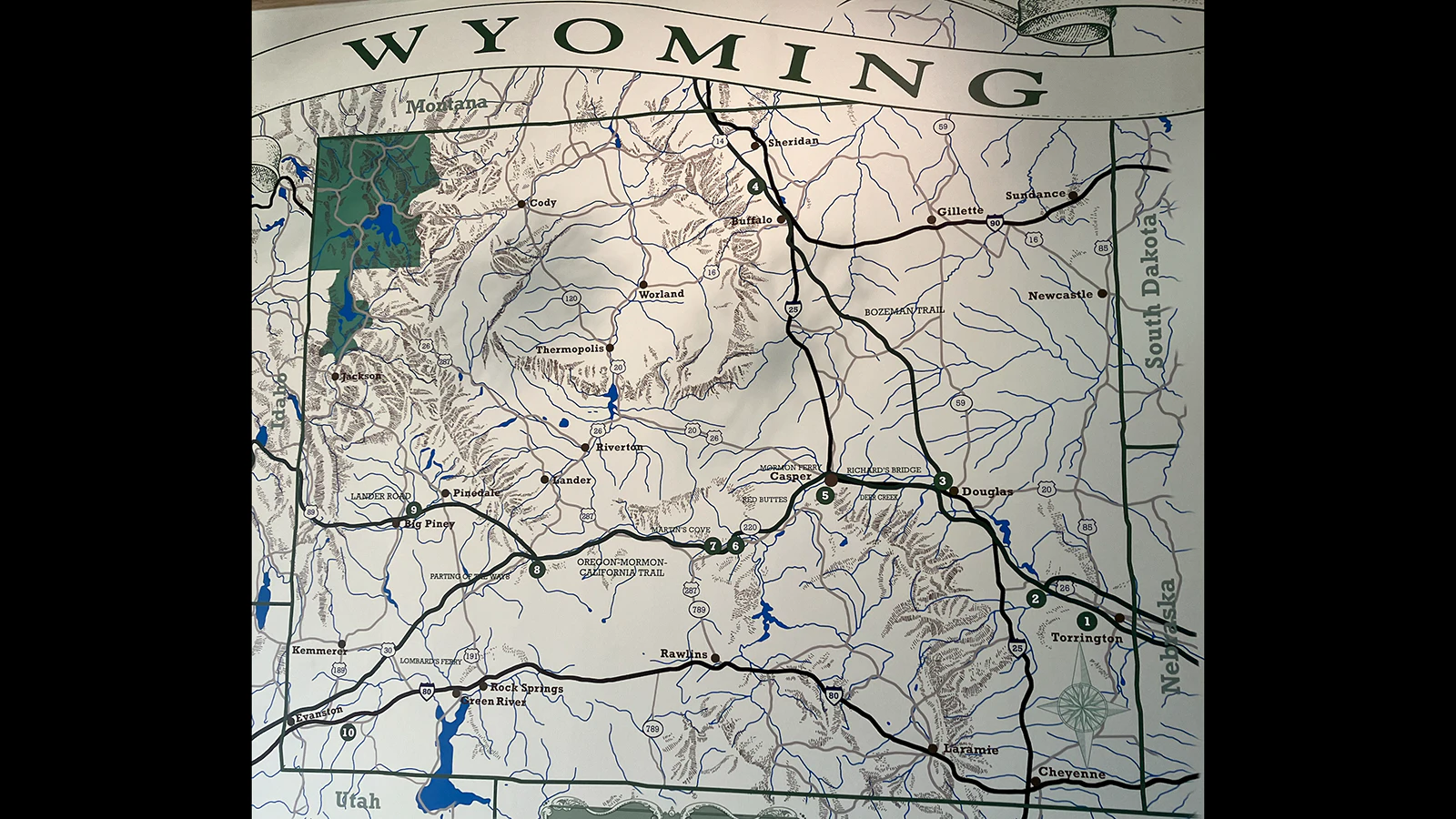
Promise Made
Means said what is not as well known is that Red Cloud kept his word that he would never take up a weapon against the U.S. again. He made that promise during negotiations for the Great Sioux Reservation that occurred at Fort Laramie in 1868.
“His method of fighting from then on was taking trips to Washington to talk with Congress or the president, or the secretary of the interior about conditions on the reservation and what the nation needed for supplies,” he said.
In 1895, Red Cloud’s influence in Washington apparently had its impact. A story in the Cheyenne Daily-Sun Leader on Nov. 26 reported that Wyoming Gov. William Richards received communication from a Col. George, who was an attorney in Washington, requesting the state return the fines and costs paid by Red Cloud and others in Casper after their arrests the previous year.
The request was made due to a court decision in another case involving a Bannock native named Race Horse who took an elk. A judge ruled that the Indians had the right to hunt game.
The governor replied that the case cited by George was under appeal “and that his request could not at present be considered.”
The case ultimately went to the U.S. Supreme Court, which ruled that states had the authority to regulate hunting.
Red Cloud’s promise not to fight also meant he did not take part in the Battle of Rosebud or at Custer’s Last Stand, Means said. But one thing he advocated for was to put cattle on the Great Sioux Reservation, which would allow the Sioux to maintain their lifestyle similar to the years they enjoyed before bison were killed off by the whites.
“A lot of Native leaders wanted to do this,” Means said. “They wanted to harvest cattle, just like they harvested bison … that way they could maintain their cultural structure, their political, social, and economic structure."
Means said the U.S. government was not interested in allowing that to happen.
The chief was one of the last of the Lakota to accept his allotment of acreage that came out of the Sioux bill of 1889, which broke apart the Great Sioux Reservation and took away 11 million acres. It was then that the smaller reservations were established, including Pine Ridge where Red Cloud lived.
“He fought that for a long, long time,” Means said.
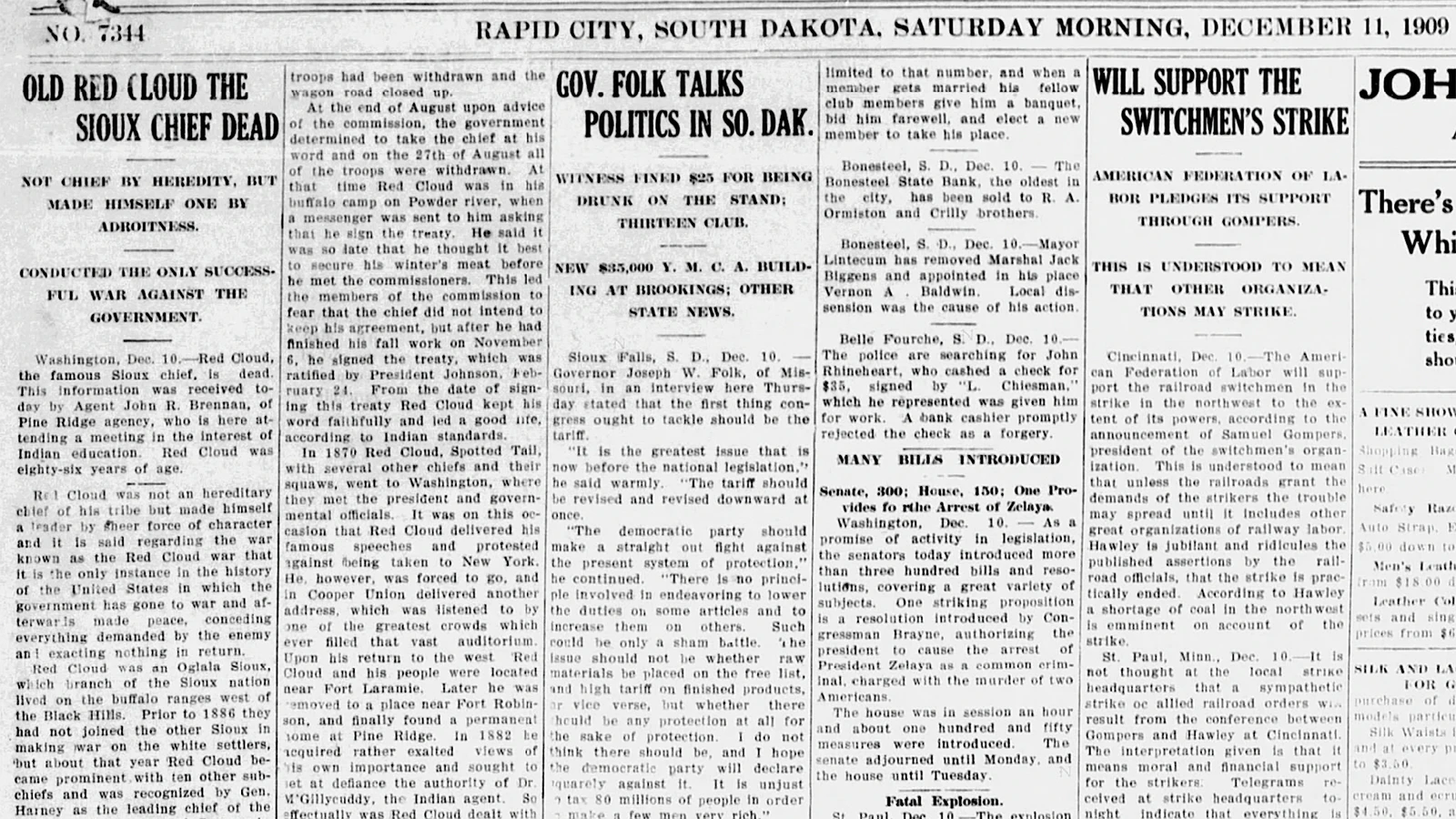
he Rapid City Journal in South Dakota was one of dozens of newspapers across the country announcing the death of Red Cloud in December 1909. (Newspapers.com) 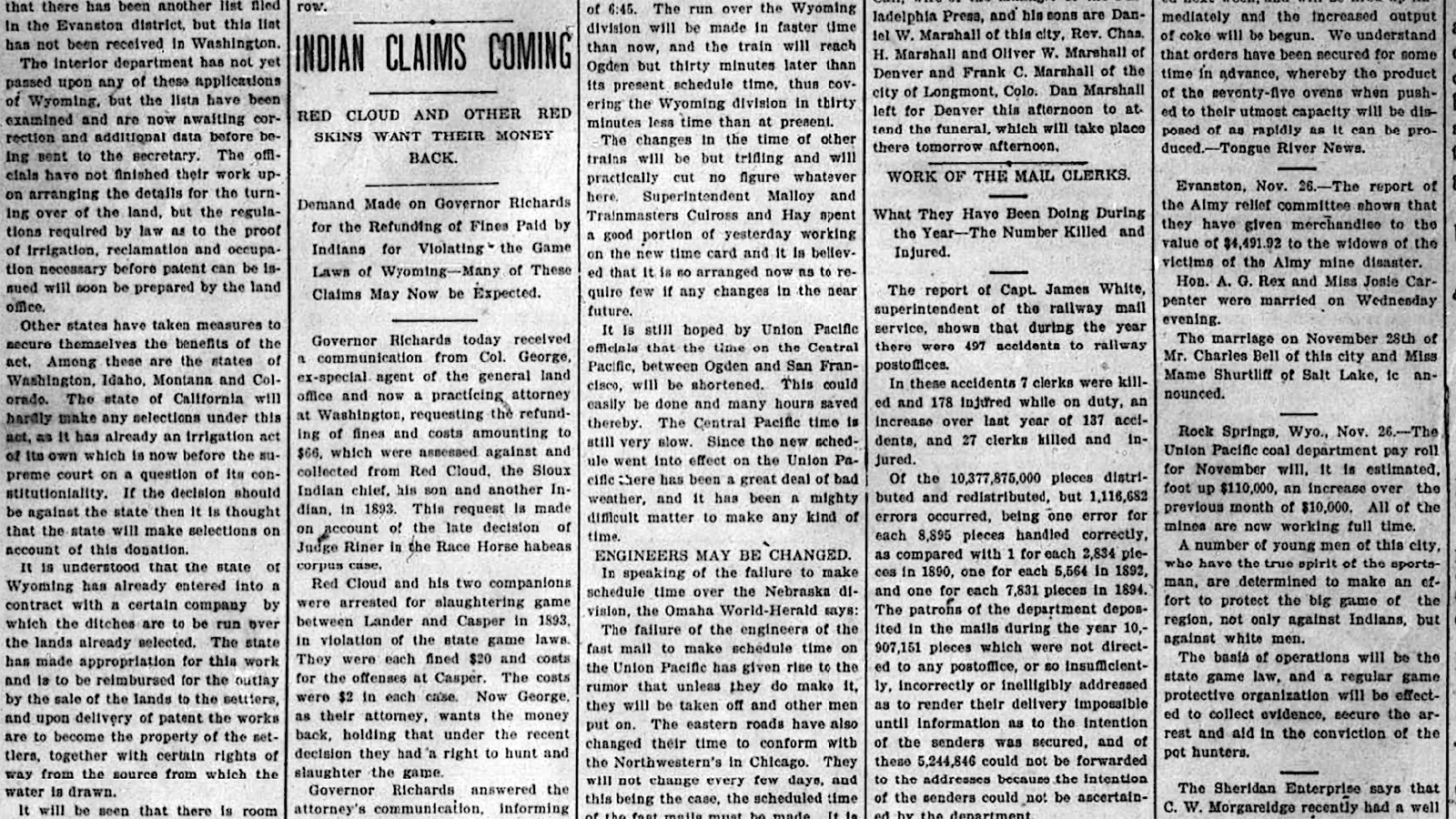
The Cheyenne Daily Sun-Leader on Nov. 26, 1995, reported on a request for Red Cloud to get his fines sent back to him. (Wyomingnewspapers.org)
Spokesman For His People
The historian said that during the early 1890s Red Cloud never became a proponent or advocate for the ghost dance.
However, after the Battle of Wounded Knee, newspapers quoted the chief as advocating for change in the federal government’s Indian department.
“Red Cloud blames the Indian troubles largely on the Indian department,” the Rapid City (S.D.) Journal reported on Jan. 11, 1891. “Red Cloud gives us to understand that these agents and officers of various grades are looking out for themselves well, making no end of money and letting the Indians starve.”
As he aged, Red Cloud continued to advocate for his people, and though he and his wife lived alone he was surrounded by family and other Natives would seek him out and he was invited to events off the reservation.
“Oftentimes what he did is he had his grandchildren help him,” Means said. “They would hold his hand and lead him around because he really couldn’t see as he got older.”
In 1903, newspapers across the country had stories predicting the chief’s death was near and that he was in a teepee. But the chief rallied and went on to live six more years.
At his death on Dec. 10, 1909, the Omaha (Neb.) Daily Bee published a story Dec. 14 from the Pine Ridge Agency that quoted a Col. William McCune, who reportedly knew the chief for many years and characterized him as the “greatest Indian of the 19th century.”
“We all loved him and none more so than Colonel Cody, ‘Buffalo Bill,’ who knew him most intimately. It was always the pleasure and desire of Colonel Cody to present Red Cloud with some substantial remembrance twice a year,” McCune said. “And that duty was entrusted to me. The old chief was grateful for it, because he was a poor man.”
Dale Killingbeck can be reached at dale@cowboystatedaily.com.