
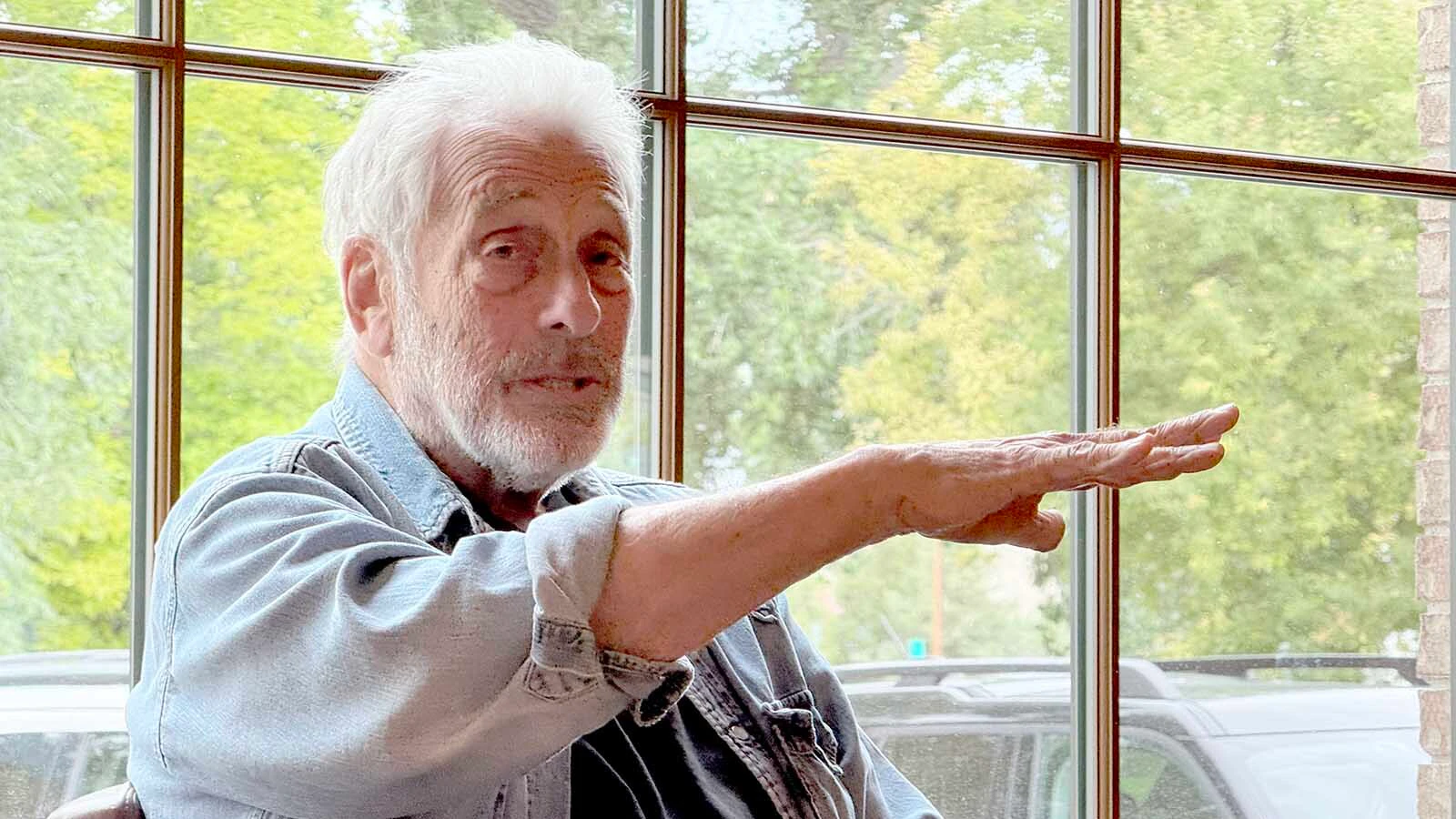
Howard Winchel “Hawk” Koch is a Hollywood legend. His credits include everything from “Chinatown” and “Marathon Man” to both of the “Wayne’s World" films.
Koch was the president of the Academy of Motion Picture Arts and Sciences and the Producers Guild of America, and has counted Robert Redford and Edward Norton among his close friends.
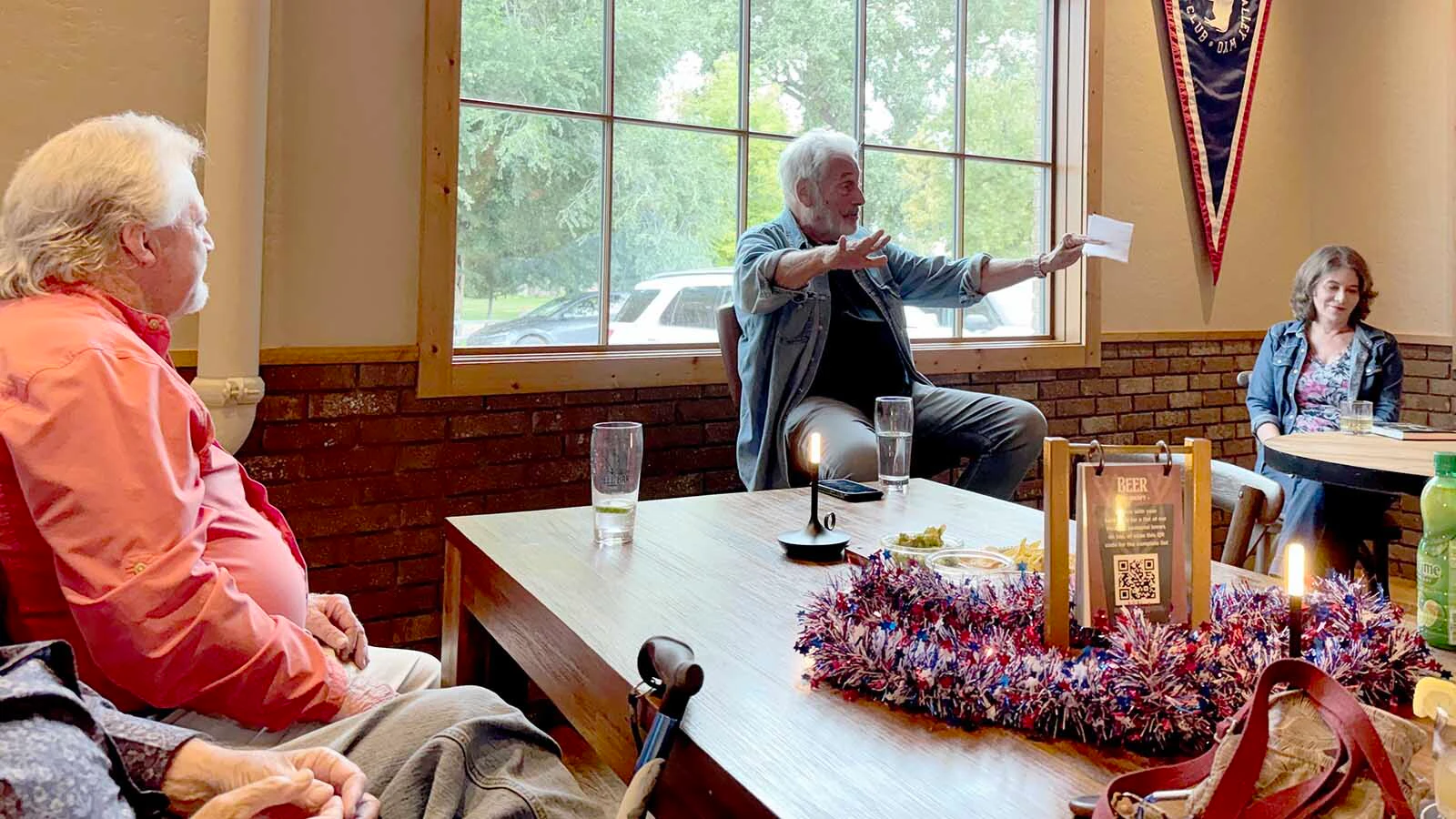
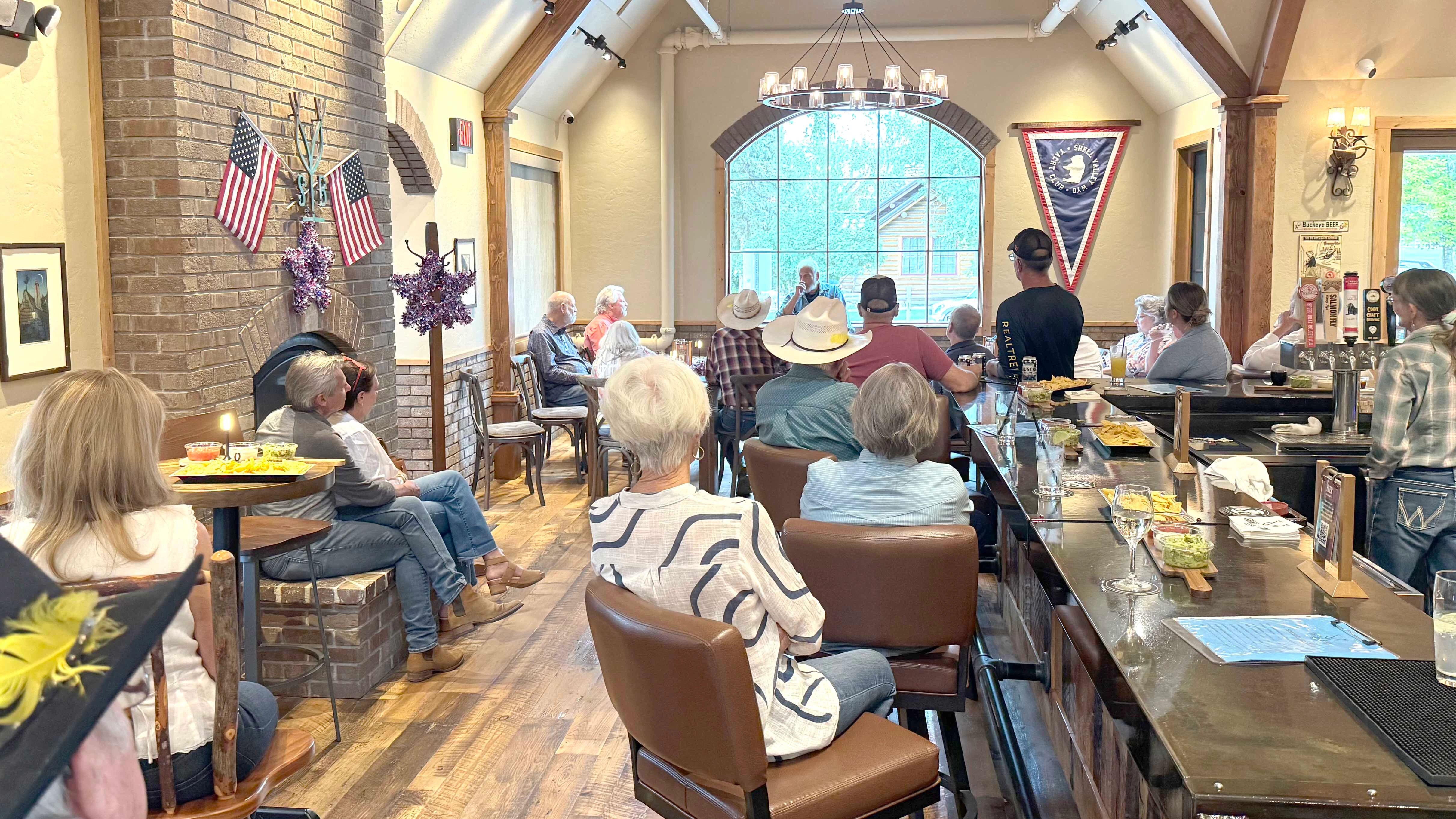
Those were among the stories and self-reflections he shared, for one night only, at the Shell Bar.
Koch was invited to entertain Shell residents with an evening presentation on what he’s learned after decades working behind the scenes in the film industry. The small but engaged crowd hung onto every word of wisdom and anecdote, many of which he included in his 2019 memoir: “Magic Time: My Life in Hollywood.”
“I can’t get you an Oscar, but I can get you my book,” he said.
Koch had been to Wyoming several times, but it was his first visit to Shell. He said he was amazed by the scenery and immediately felt at home among the ranchers and strangers in the audience.
“The people have been so lovely, and I can’t get enough of the views,” he told Cowboy State Daily. “I’ve made so many movies (in California), but also in New Mexico, Utah, and Colorado. To me, we’re all cowboys.”
First Time In The Saddle
Koch started his Shell presentation by sharing his first experience on a movie set. It was in Durango, Colorado, when he was 4 years old.
“My dad was making a movie up there,” he said. “I was a shy little kid who used to take my mother's dress and put it around my face so nobody would see me. After a 20-minute drive, I saw teepees. I saw cowboys and Indians, and this shy kid started running through the set.”
He didn’t know he was on the set of “Across the Wide Missouri,” released in 1951.
A “Native American” approached the young Koch, put him on his lap, and told him “stories of many moons.” He was actually being entertained by Ricardo Montalbán.
Then, a cowboy rode up and asked Koch if he’d ever been on a horse. He hadn’t, so the cowboy set Koch in front of him and took him for a ride around the movie set.
Later that night, Koch’s father, Howard Winchel Koch, got to tell his wife their son had gotten his first horse ride with Clark Gable.
From that day, Koch loved the movies. As a result, he’s never worked a day in his life.
“It’s magical,” he said. “I love movies, and hopefully some of you do, too. I loved being on any movie set and in any movie theater. It’s magical for me.”
That was the partial inspiration for the title of Koch’s memoir, “Magic Time.” The other source was a direct quote from the legendary Jack Lemmon.
“I got to work with Jack Lemmon a couple of times, including ‘The Odd Couple,’” he said. “What I learned is that Jack could be talking to you, and if he heard ‘Roll camera,’ he would say, ‘Magic time,’ out loud, and would totally get into character. He could be talking about anything, and he’d get right back into character.”
Now, whenever Koch needs to concentrate, he repeats Lemmon’s line in his head.
'The Primal Scream'
The first movie Koch worked on was 1966’s “This Property Is Condemned,” starring Natalie Wood and Redford, in one of his earliest films.
Koch, then 19, quickly made a big impression by quickly getting Wood out of her trailer.
“One of the first things I had to do was go get Natalie Wood from basecamp,” he said. “I knocked on her door and said, ‘We’re ready for you.’ She said, ‘Oh, I'll be out in a little while.’”
In an unexpected wave of inspiration, Koch told Wood that the cinematographer James Wong Howe had said to him, “The light is perfect.” That promptly got Wood out of her trailer and onto the set.
Since Wood “never got out of her trailer on the first ask,” Koch impressed his peers by doing just that. He had a comically cynical explanation.
“(Actors) are narcissistic and they like the way they look on camera,” he said. “I used that line on every actor for over 60 years.”
That film started Koch’s lifelong friendship with Redford. He recalled a road trip he took with the young actor, driving from Los Angeles to land the actor had “just bought” in Utah.
“I’m driving on a good road with no moon and a few stars when Redford says, “Pull off the main road.’ I asked why, and he said, ‘Just pull off the main road.’”
Koch obliged and drove down a dirt road until Redford grabbed the gear shift, put the car in park, and grabbed the keys.
“I am scared,” Koch said. “I'm looking for a knife. I'm looking for a gun. I don't know what's going on. He gets out of his side (of the car), and I get out of my side. We're both looking at each other over the hood of the car.”
Then, Redford started yelling at the top of his lungs. Koch called it “the primal scream.”
When he was done, Redford smiled, laughed, and threw the keys back to Koch.
“Try it,” he said. “It'll de-stress you.”
Koch said that was “the night Robert Redford almost slit my throat.”
Decades later, when Koch was president of the Academy of Motion Picture Arts and Sciences, he was preparing to appear before thousands of people on stage at the Oscars. When he got a 15-minute warning, Koch followed his friend’s advice.
“I went outside the Dolby Theater and what did I do? I did a primal scream, and I came back in,” he said.
Have Fun
Koch infused his anecdotes with wisdom that he hoped everyone in the Shell Bar, especially the younger folk, could take to heart.
“After 80 years of living, I've got a few ideas of maybe the things we all ought to do, and I'm sure most of you probably do the same things,” he said.
His experiences with Wood and Redford epitomized the idea to “have fun.” He was reminded of that during the production of “Wayne’s World.”
Koch brought his son, Robbie, to the set on the day they filmed the scene in which Mike Myers encounters Robert Patrick, making a cameo as the T-1000 from “Terminator 2.”
“It was a rehearsal,” Koch said “(Patrick) walks up to the car and says, ‘You were speeding.’ And Robbie, in front of the crews, the writer, the director, and Mike Myers goes, ‘Well, that’s not funny.’”
Myers, “to his credit,” asked Robbie why it wasn’t funny. Robbie pointed out that the T-1000 always carried a photo of John Conner, asking if anyone had seen him.
In the finished film, the T-1000 approaches Wayne with a Polaroid photo and asks Myers, “Have you seen this boy?” Wayne screams and speeds away.
The boy in the Polaroid is Robbie, on set the same day as the shoot.
“Every time we’d go to a theater, it got a big laugh,” Koch said. “If you're not having fun in your life, find something else to do, because it goes by way too quickly. Way too quickly.”
Have Courage
To emphasize the point “have courage,” Koch told the story about how firing Robert De Niro and losing his marriage led to a moment that defined his life and career on the set of “Marathon Man.”
In September 1975, Koch was working on his first film as a full producer, the ill-fated film “Bogart Slept Here.” It was slated to star De Niro in his third film, right after his Oscar-nominated performance in “Taxi Driver,” but there was a problem.
“De Niro didn't know how to do comedy, especially at that time,” he said. “It was directed by Mike Nichols, and if anybody’s funny, it’s Mike Nichols. But after two weeks of rehearsal, De Niro wasn’t funny.”
At one point, De Niro did such an intense Bela Lugosi impression, telling the young actress playing his daughter that he “wanted to suck the chocolate syrup from your veins,” that she ran off the set, terrified and yelling, “That man’s not my daddy.”
Nichols eventually pulled Koch aside to say he would not work with De Niro.
“I won't tell you what he actually said about De Niro,” he said. “I could see the steam coming out of his ears.”
After two weeks of trying to recast the role, nobody wanted to replace De Niro. The studio killed the film, which was eventually resurrected and released as 1977’s “The Goodbye Girl.”
When Koch told his wife what happened, fearing his career was over, she kicked him out of their home and immediately sought a divorce.
Koch was despondent, crashing on a friend’s couch, when he got a call from Robert Evans at Paramount, best known for his work on “The Godfather.” Things weren’t going well on the set of “Marathon Man.”
“Evans said they’d been shooting for 10 days and they were 10 days behind,” Koch said. “I asked what the problem was, and he said, ‘How the hell do I know? Why do you think I'm calling you?’ So, I got on a plane and flew to New York.”
The problem was apparent to Koch after one day on set.
Director John Schlesinger couldn’t decide how to shoot the first shot on the day's schedule. Cinematographer Conrad Hall kept adding his own input, constantly derailing Schesinger’s decisions.
Then, actor Dustin Hoffman announced he couldn’t do the scene because “the dialogue sucks.”
Screwing his courage to the sticking place, Koch immediately called a meeting with Schlesinger, Hall, and Hoffman. He was professional but didn’t hold back.
“I said, ‘John, you're the director. You have to know what you want to shoot, for every shot and every moment. Connie, you have every right to make a suggestion, but John makes that decision, and that's the way we're going to work from now on,” Koch said.
Hoffman, from the other side of the trailer, asked, “What does this have to do with me?”
“Dustin, you have every right to have a problem with the scene – a week ahead of time,” Koch said. “You have no right on the day of shooting to say now you can't do the scene.”
Koch got an assistant director credit for “Marathon Man” when it was released in 1976. It was a financial and critical success that lost only one additional day to its 75-day shooting schedule.
“It changed my career because I had the courage without fear of knowing what I know,” he said.
Show Up
One of Koch’s final points was the importance of “showing up,” just as he did in Shell.
“I can't tell you how many times I've shown up, and I've met somebody that was important in my life, or I learned something,” he said.
Shell resident Rosa Brooks became acquainted with Koch and his wife, Molly, through conferences they attended in Jackson Hole. She invited him to spend a few days in Shell and share his story.
“I grew up in a house with no TV, (so) I didn’t know anybody and nobody let me out much,” she said. “To the extent that I knew anything about the world of Hollywood, I thought it was all scary, intimidating, beautiful people. Hawk and Molly are incredibly warm, kind, curious people. They blew me away.”
Rancher Nolan O’Neal attended that evening because of the impact Koch's work had on his life.
“The movies he’s associated with were the most impactful movies you could imagine as a teenager at the time,” he said. “You need to go home and watch ‘Marathon Man’ and ‘Wayne’s World’ to grasp the work he did and how they comment on the value of society.”
Koch knows many people shrug off the cultural value of movies like “Wayne’s World,” but he doesn’t have the energy for cynicism.
“I've always tried to make a difference in my life,” he said. “I'm doing a lot of things that I'm hoping make a difference. The fact that some people will laugh or cry or scream because of things that I've had a part of is thrilling for me.”
Tell A Story
Koch had many more anecdotes to share, including how he overcame being a rare “Jewish junior” and adopted his new name at his much-delayed bar mitzvah.
“I realized that I’d had my father’s name for 50 years, and I wanted my own,” he said. “I had three kids and a career in the motion picture business and got a Hebrew name for my 50th birthday.”
Koch shared one more important piece of wisdom he picked up from decades in Hollywood. It’s something he knows everyone can do and hopes more people find the courage and enjoyment within themselves to do it.
“Learn how to tell a story,” he said. “If you learn how to tell a story, you can be a director, a producer, a writer, a production designer, a cinematographer, a salesman, an engineer. I don't care what business you're in or what you want to do in your life. Learn how to tell a story, because that’s where it all started.”
Andrew Rossi can be reached at arossi@cowboystatedaily.com.