After discovering an envelope postmarked in Marquette in her family’s belongings, Carole Thurmond Wills knew members of the family had once lived there and wanted to learn more.
So in 1997 she took a trip to the area. She stayed in Buffalo Bill State Park just west of Cody, selecting a random campground because she liked how it backed up to Sheep Mountain. Not long after arriving she discovered the site had much more significance.
“I was camping here, and I heard the ranger saying, 'Get the water started on the Thurmond ditch', and I went, ‘What?’”
It was then she discovered her father and his three siblings were born on that very land, owned by her grandfather Charles Thurmond in the early 1900s.
“I was astounded,” Wills said. “I feel as if I was ‘guided’ here. I love it here. My soul feels as if it is back home when I am in the North Fork area.”
That first trip has led to an annual pilgrimage for a few months each year. And as she’s learned more about her family’s history, Wills has shared it with others. Most recently she’s working on the Thurmond Family History Walk, featuring historical signs to be displayed around the North Fork Campground on land once owned by her grandfather.
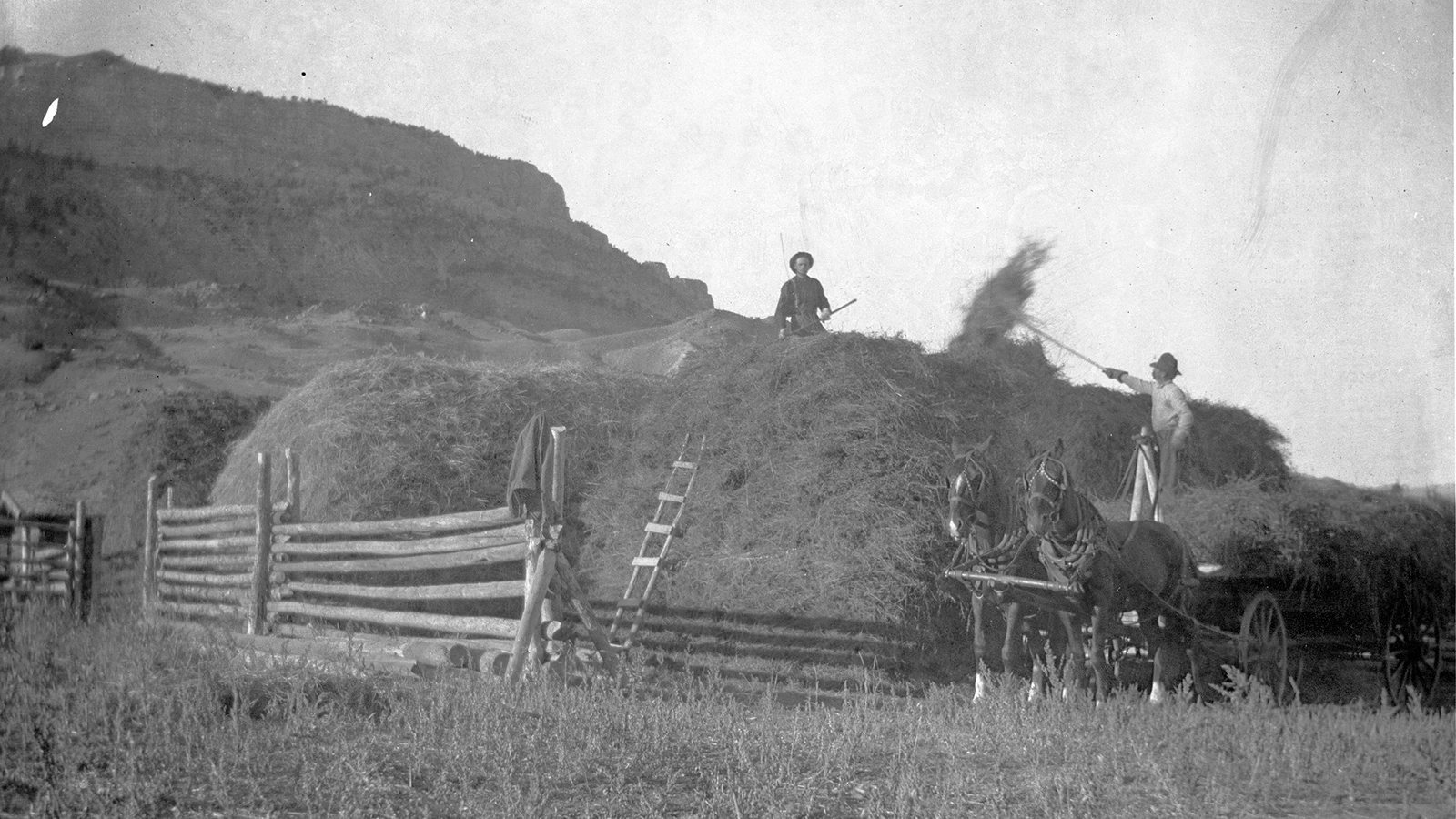
Stacking hay by hand in front of Sheep Mountain. (Park County Archives) 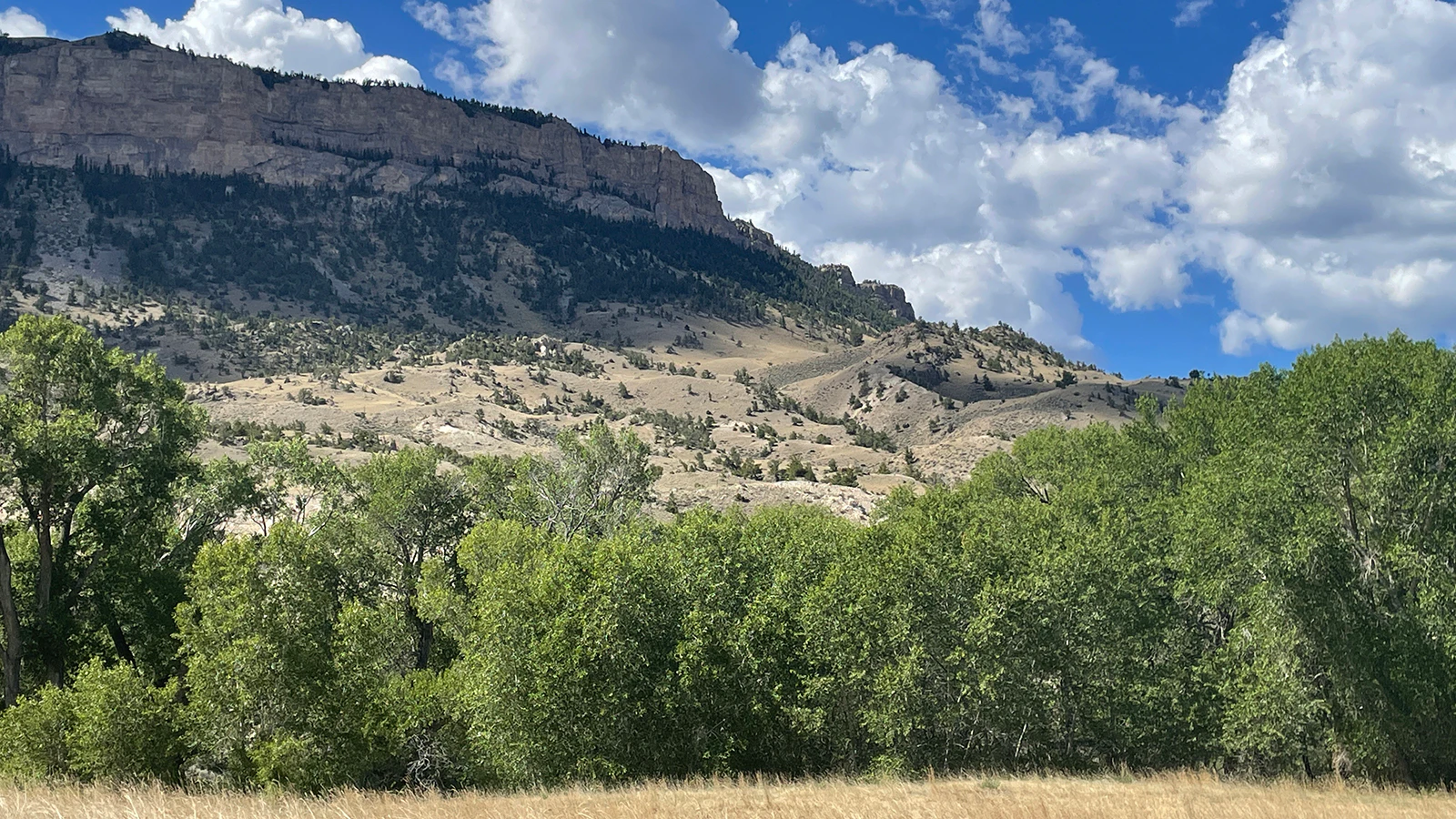
A view of the same sight today where the Thurmonds were stacking hay on their ranch in the early 1900s. (Dan Marty Photo) 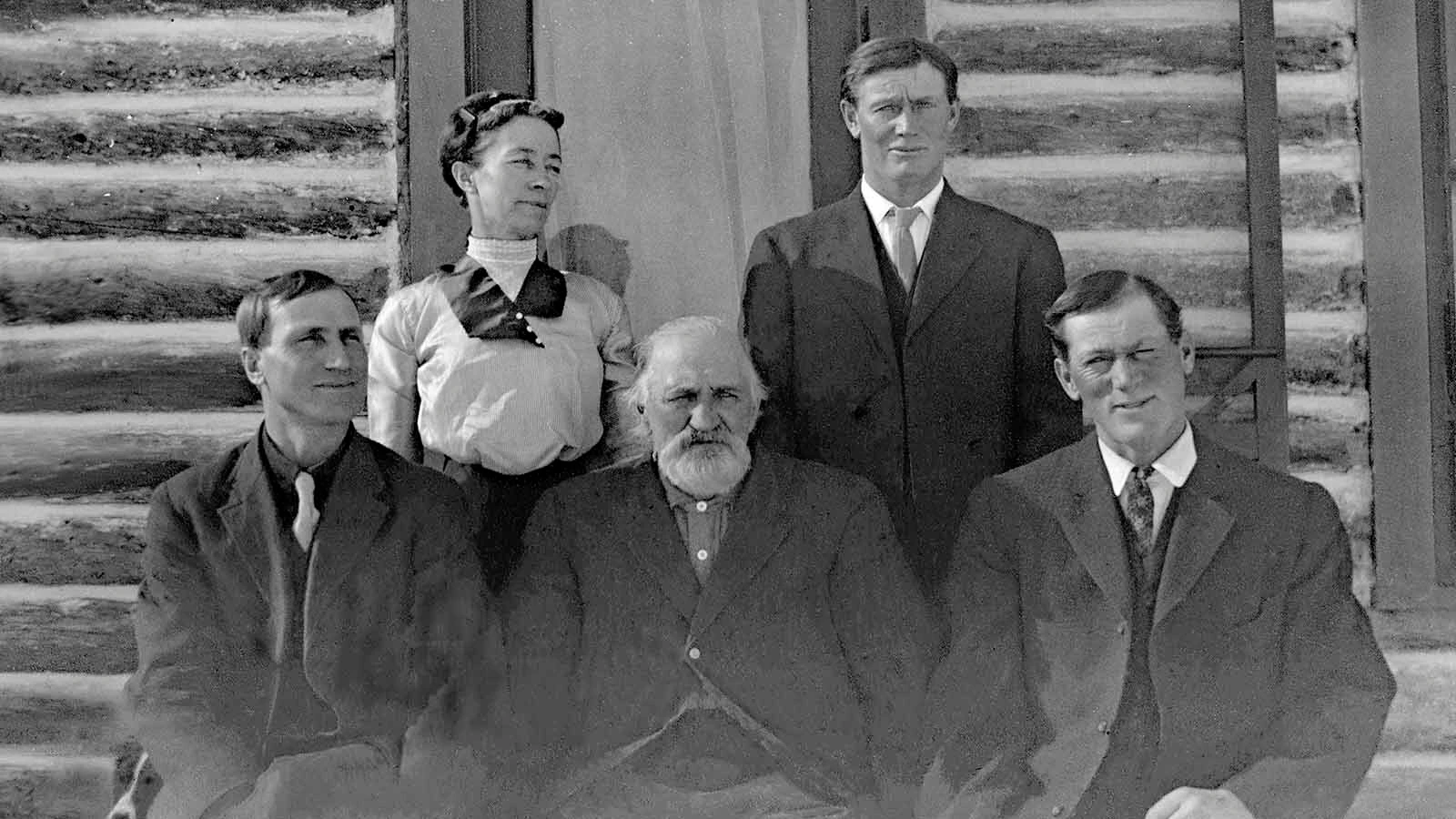
Elias Thurmond (center) and his children (clockwise from left) Henry, Annie, John and Charles in 1913 in front of Charles and Emily's two-story log house on the North Fork ranch. (Park County Archives)
Coming To The Cody Area
The family’s time in Wyoming began in Sheridan, but in 1895 Elias Thurmond and his children Henry, Annie, Charles and John decided to move farther west in search of greater opportunities. Their first homestead claims were filed in the Marquette area, with one near the South Fork River and the other on Poverty Flat (also on the South Fork).
Charles and his brother John later purchased adjacent 160-acre homesteads on the North Fork near Trout Creek. Wills said John filed his homestead claim in 1902 and was building a home by 1904. Her grandpa purchased an existing homestead claim in 1907.
“Someone else had homesteaded it, but there wasn't much there,” she said. “So he built the house and the barn.”
Charles built a large barn and a two-story log home in 1907 near the future road up the North Fork to Yellowstone National Park. They hauled logs from nearby forests and purchased roof planks from the sawmill in Marquette. They also dug a ditch from Trout Creek to irrigate their fields – the current location of the North Fork Campground at Buffalo Bill State Park.
In 1920, her grandparents moved the family to Hamilton, in Montana's Bitterroot Valley. Her grandmother was a former teacher in Shell and education was important to the family. Children could only attend school in Cody, which meant an hour by wagon both ways.
“My grandparents did not want to separate the family during the week, so they found a ranch in Hamilton that was near a middle school and a high school,” Wills said. “My dad and three siblings went to those schools.”
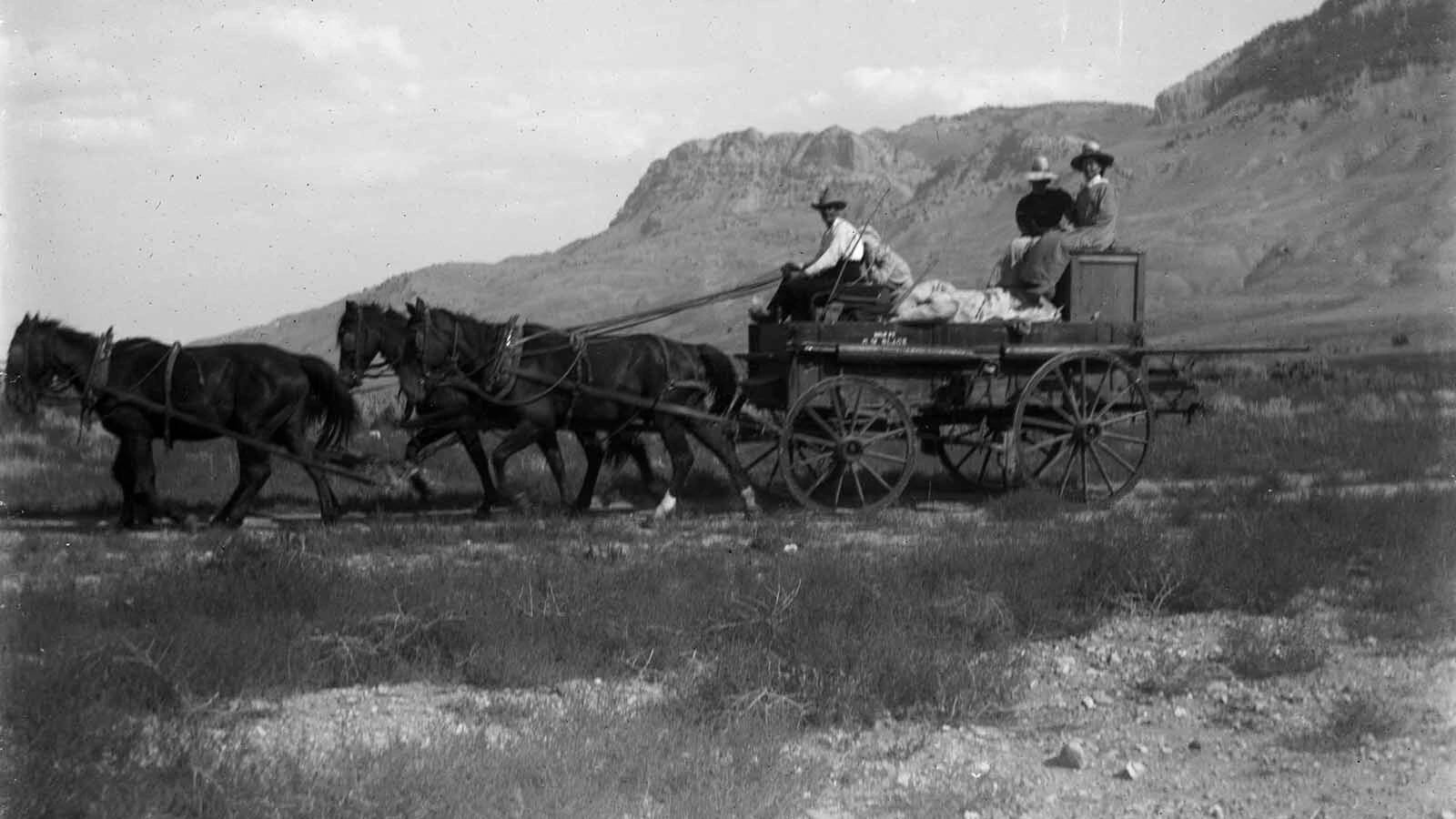
The Thurmond family in a wagon near where Gibbs Bridge is located today on the North Fork. (Park County Archives) 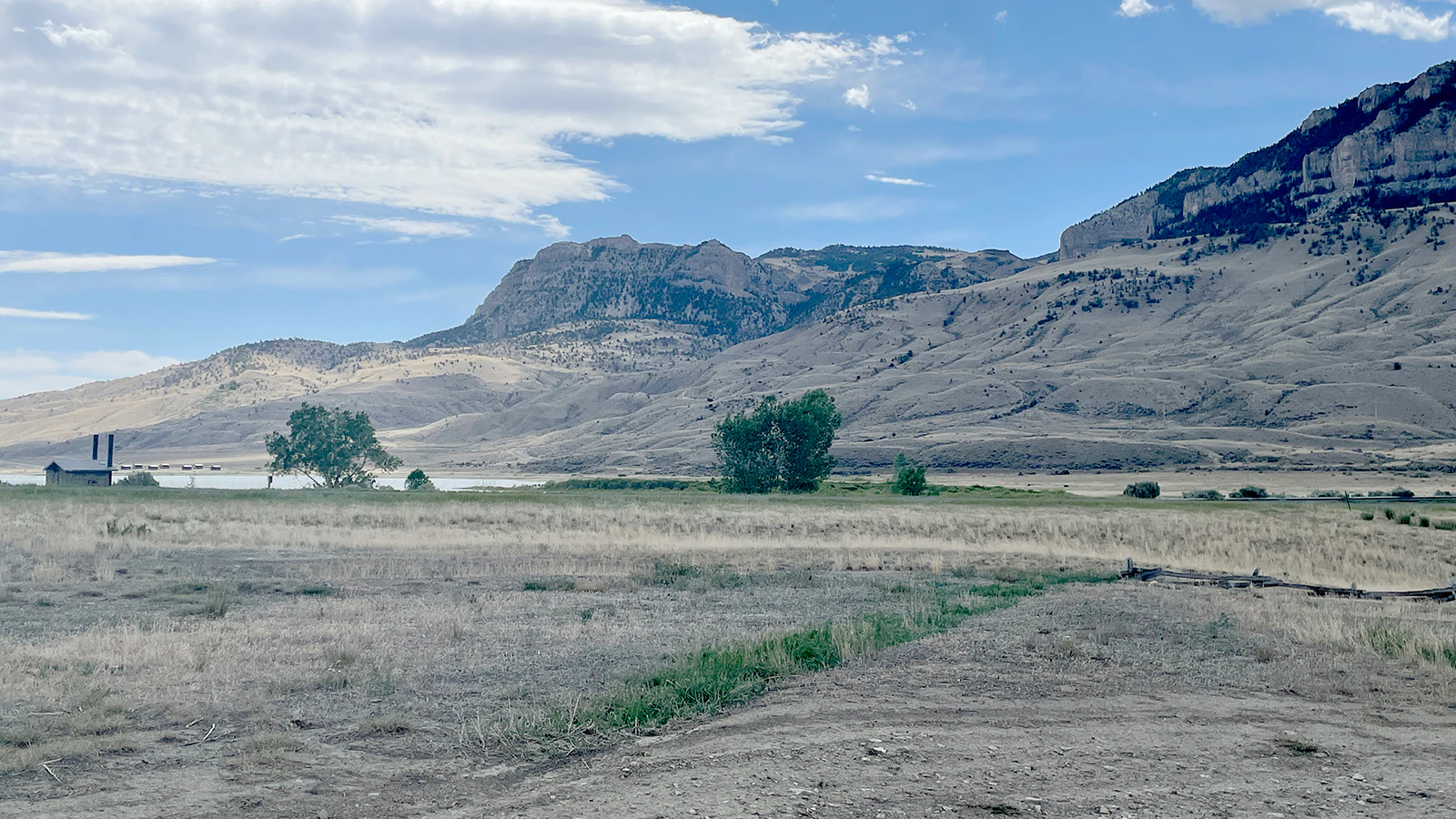
The same area is shown today with Buffalo Bill Reservoir and Sheep Mountain in the background. (Dan Marty Photo)
Another Amazing Discovery
It wasn’t until six years after discovering her family’s former homestead that she learned of another amazing piece of family history. Her family was in possession of more than 350 glass-plate negatives that had been taken by her grandfather between 1899-1912.
The images show ranch life around the turn of the 20th century, but also capture trips to Yellowstone and the construction of the Shoshone Dam. Charles developed them using water hauled from creeks and an improvised darkroom with a specialized Kodak kerosene tin lamp used during the photo developing process.
It was Rick Thurmond, great-grandson of Charles and Wills’ cousin, who determined a way to scan the negatives in 2013.
“They’re glass negatives, so they don't fit on a scanner,” she said. “So he built something to be able to scan them, and we were shocked to even know about them.”
The original negatives later burned in a forest fire that also destroyed Rick’s home in the mountains near Santa Rosa, California, but he managed to save the digital files stored on an external hard drive.
The scanned images needed to be cleaned up after the negatives had been damaged by age and exposure to the elements, so Wills took a Photoshop class and began the painstaking process of restoring them.
“They had been neglected for a long time, so it's really been meaningful to me to clean them up, because now they look the way they were originally,” she said.
The Thurmond family eventually donated the photos to the Park County Archives, with some of their memorabilia going to the Cody Heritage Museum as well as.
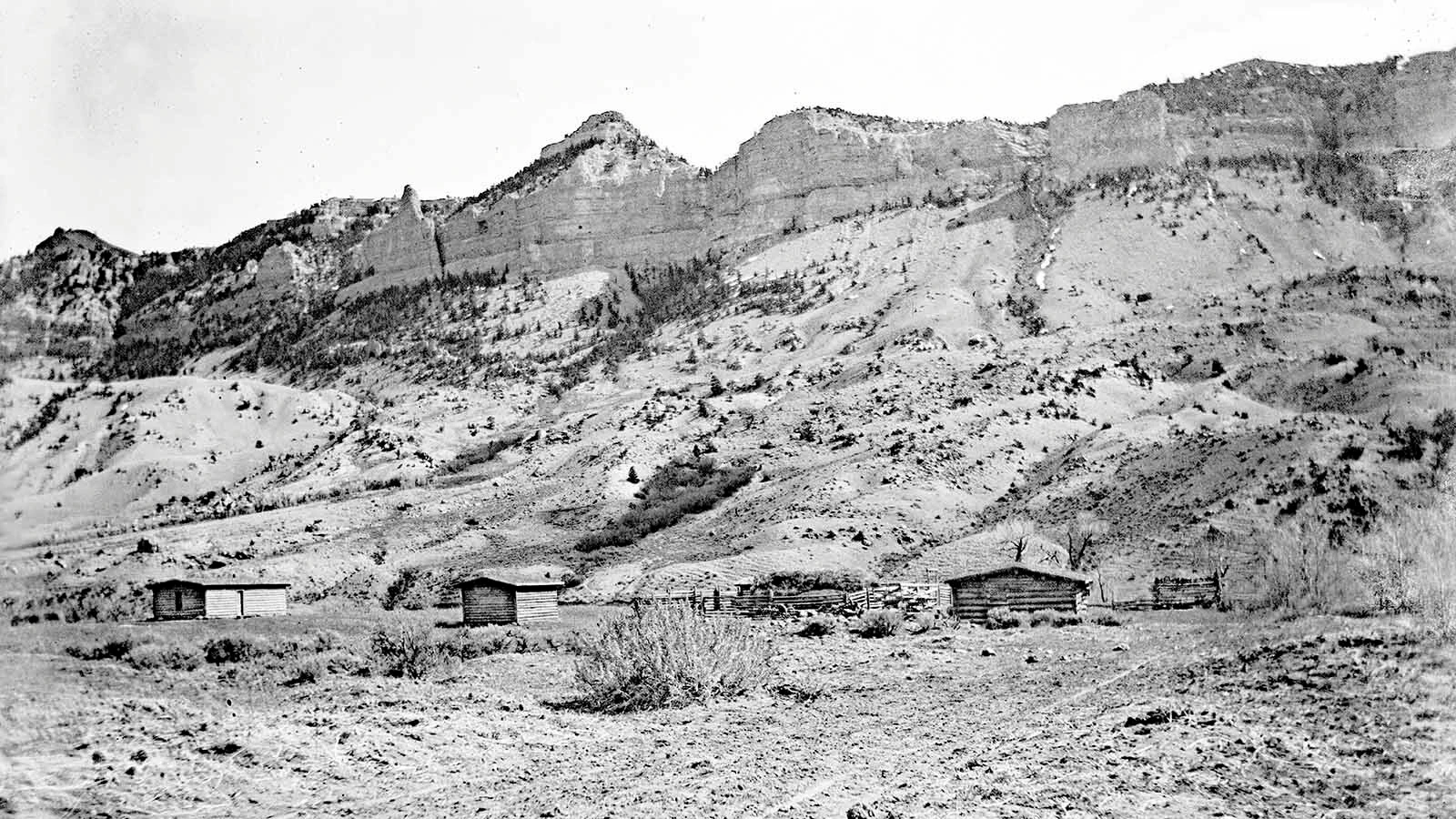
John Thurmond's house, corral and other buildings on Thurmond Ranch with Sheep Mountain in the background. (Park County Archives) 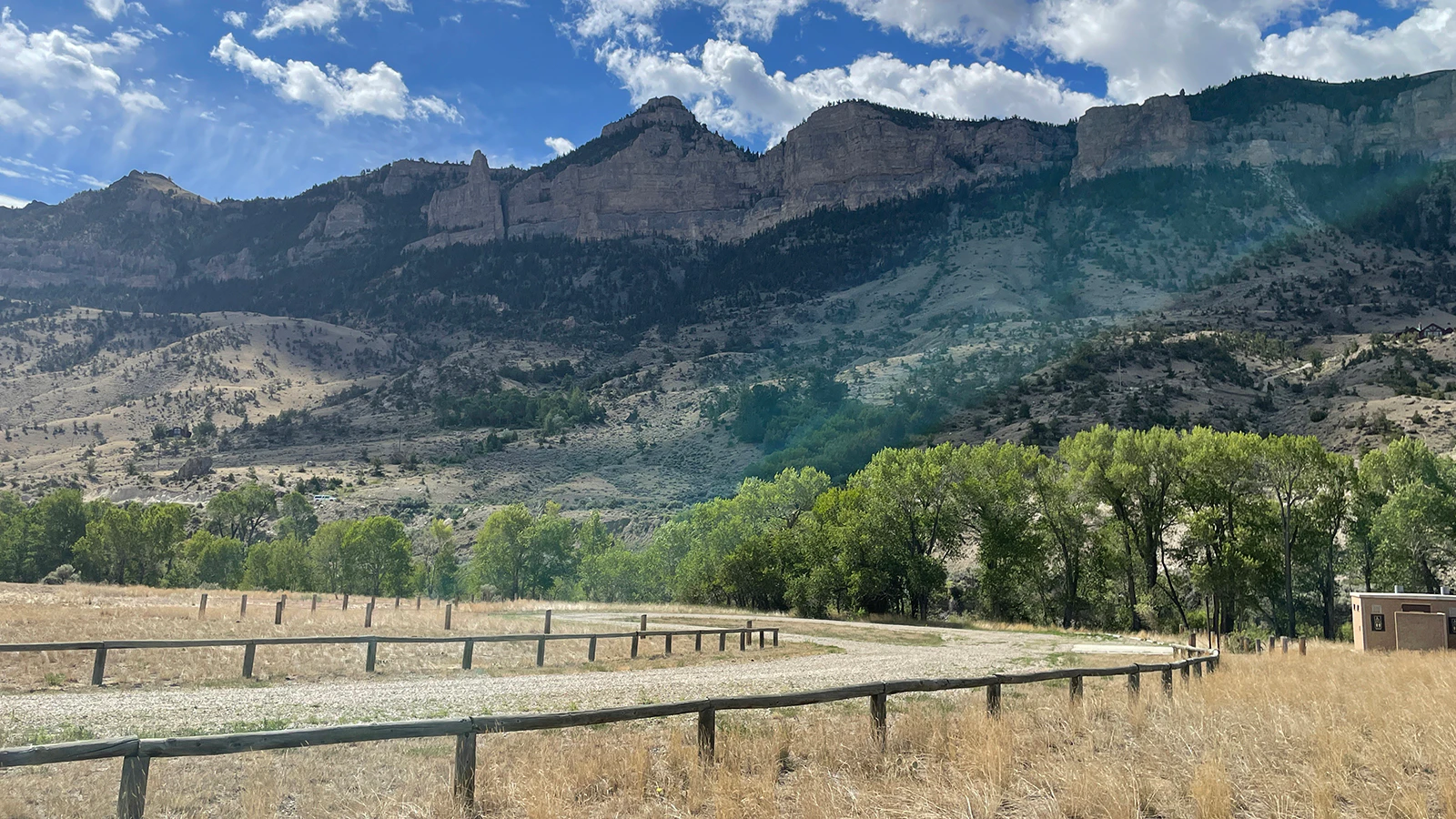
A view from the North Fork Campground in Buffalo Bill State Park today. (Dan Marty Photo)
An Idea Is Born
Wills lives in California but comes back in May and June each year to camp in Buffalo Bill State Park.
“I have an RV and it’s 37 years old,” she said. “I love it here but for health reasons, I need to be near my doctor most of the time, so this gives me the pleasure of spending time here. Cody feels like a second home.”
Since discovering and restoring the photos, Wills has done four projects using them.
One of her first was creating a sign that sits in the North Fork Campground featuring photos from the ranch. It was when that sign was installed that Wills met park Superintendent Dan Marty and the idea for the history walk began.
“She started this process with a different sign before I got here as superintendent,” Marty said. “She worked with past administrators for a history sign at the North Fork Campground, and that's where I got to meet her.”
Wills showed Marty more of the historical photographs. The two decided it would be interesting to have signs featuring some of them at the North Fork Campground sharing what life was like in the early 1900s.
“It's part of the history of this area, and it coordinates with the construction of the original Buffalo Bill Dam from 1905 to 1910, which was the tallest concrete dam in the world at that time," Marty said.
Needing money for the project, Wills wrote a grant to the Wyoming Cultural Trust Fund and it was approved in 2024.
“When I wrote the grant one of the things I talked about is how much Cody puts emphasis on Buffalo Bill, which he deserves, but I asked ‘Where's the history of the other local people?’”
She and Park County archivist Brian Beauvais then began working on drafts for the signs. There will be 13 in all, featuring photos and information about various aspects of early homesteading life, from a building home, to life in winter, to taking care of a farm.
“I think today a lot of the people don't have any clue how hard it was back then,” Wills said. “We tried to pick things that showed what life was like to help people of all ages understand things that we take for granted today.”
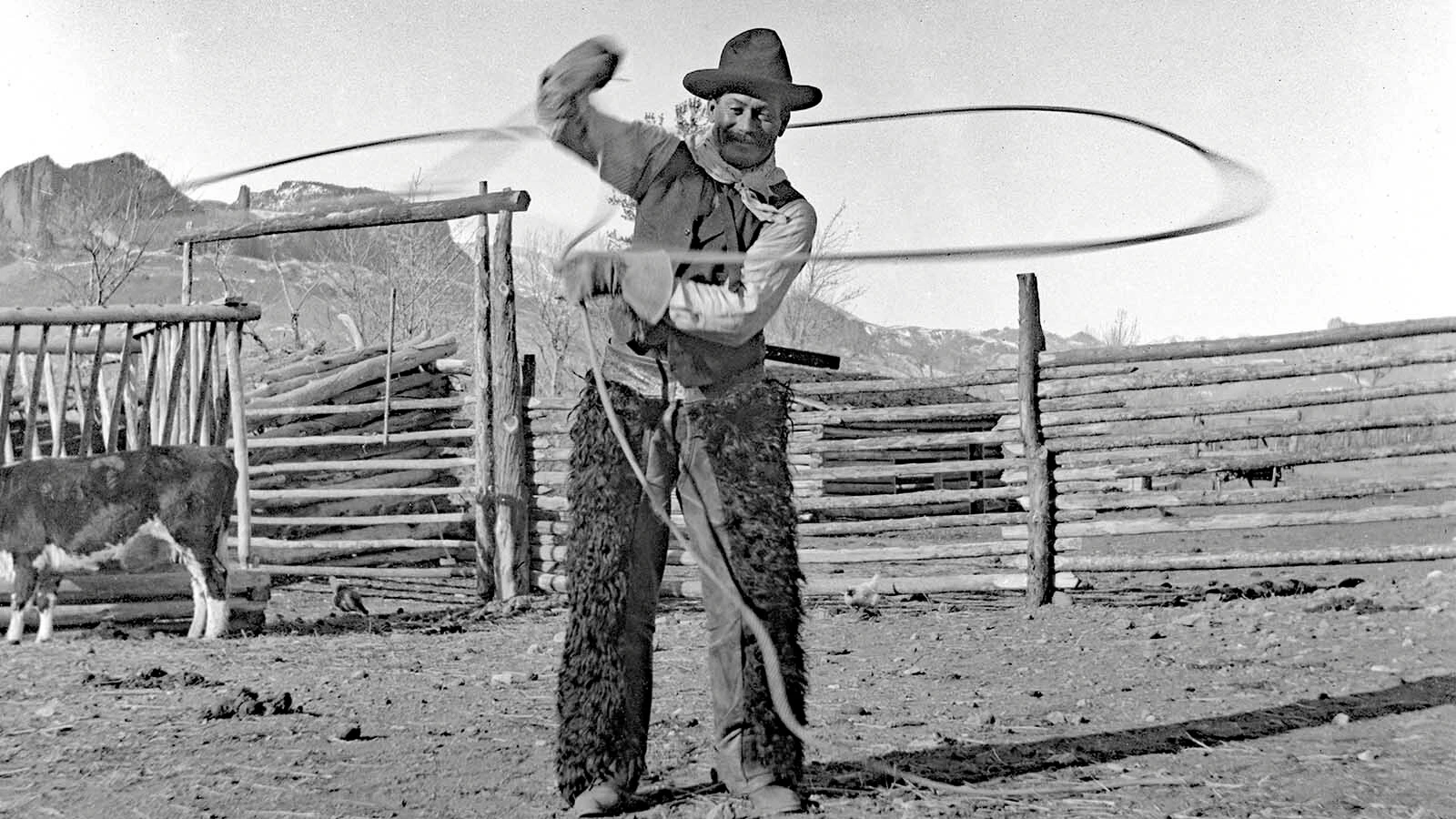
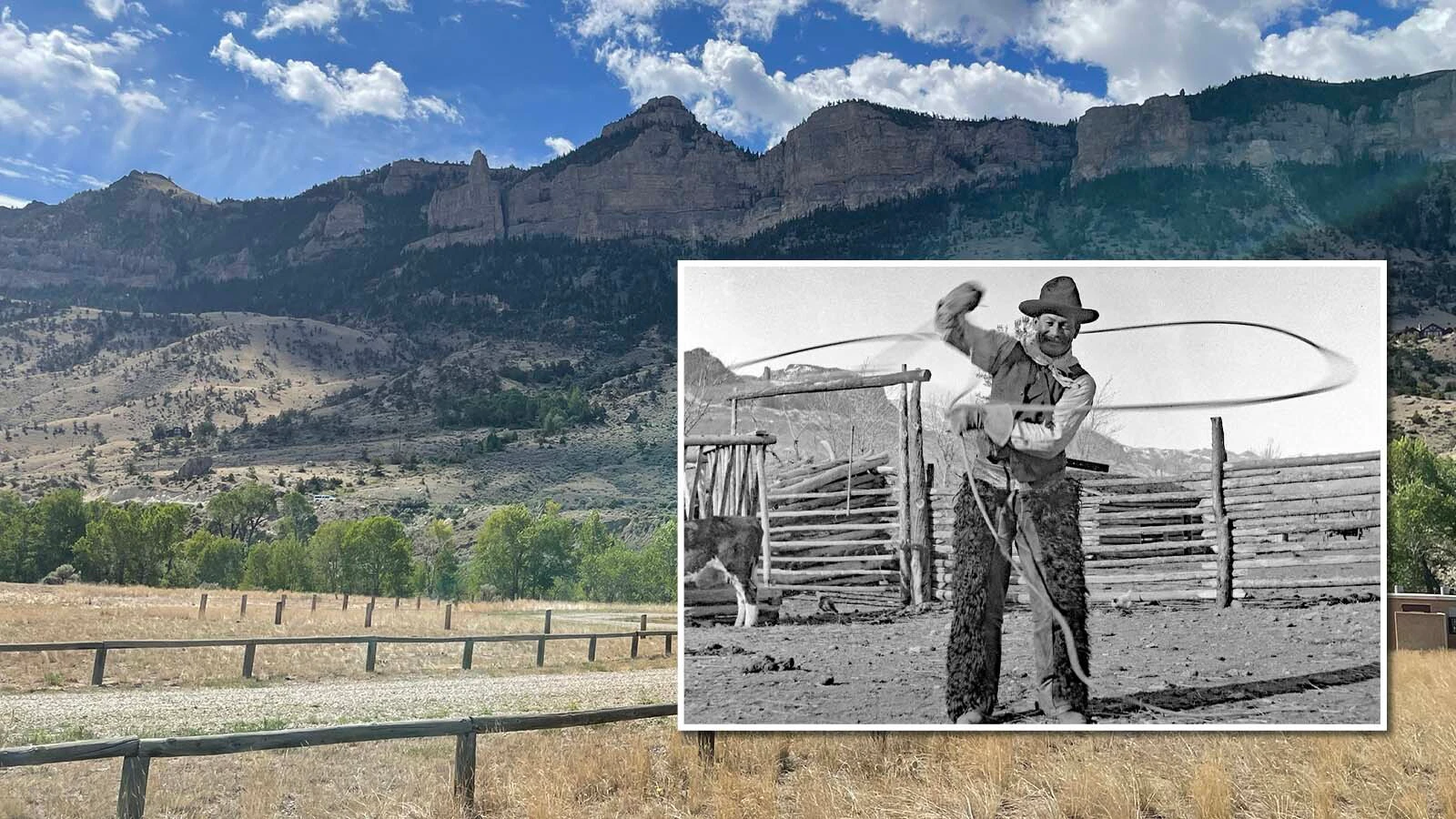
Charles Thurmond twirls a lasso. (Park County Archives) 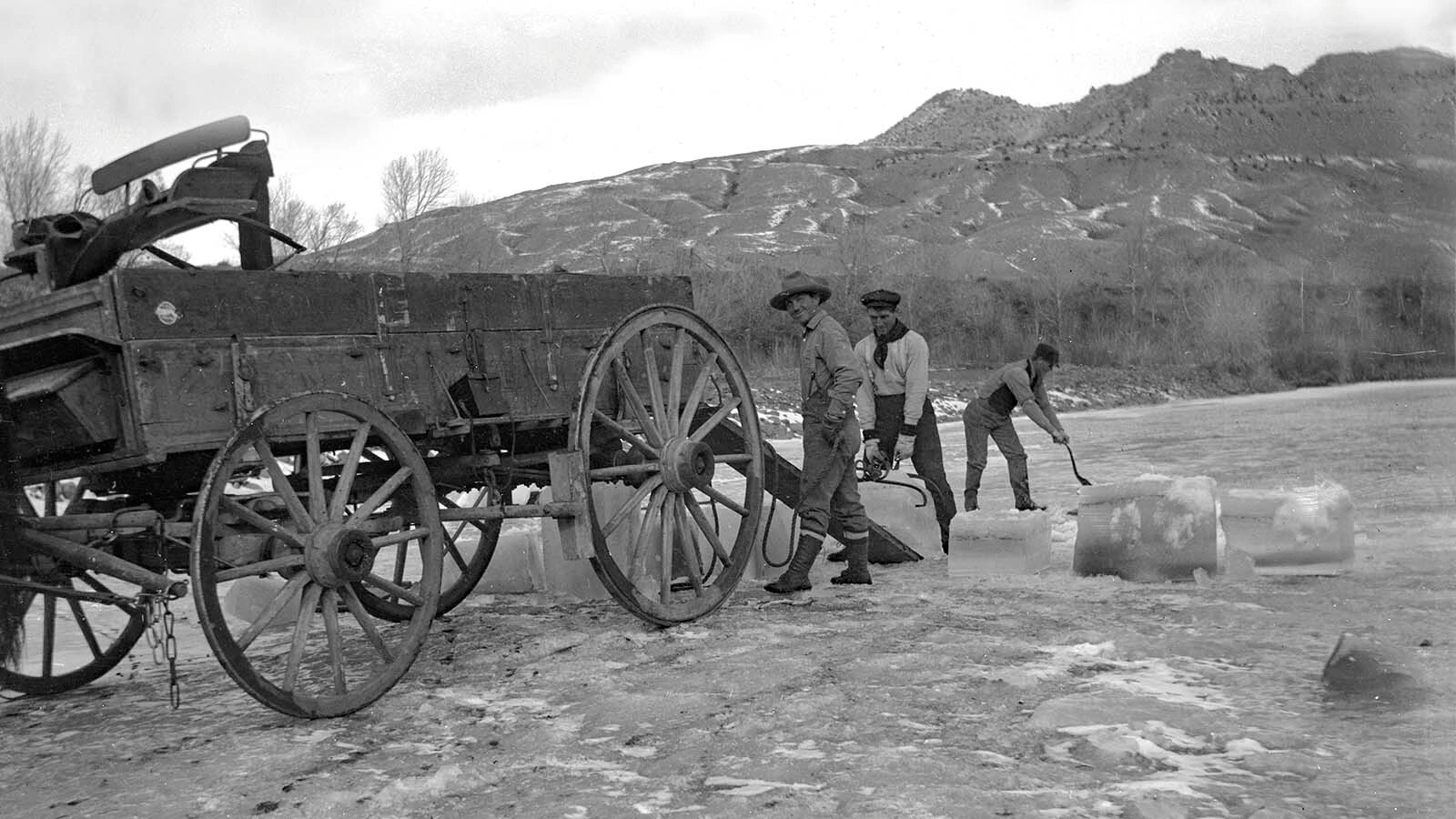
The Thurmonds and others cutting ice. (Park County Archives) 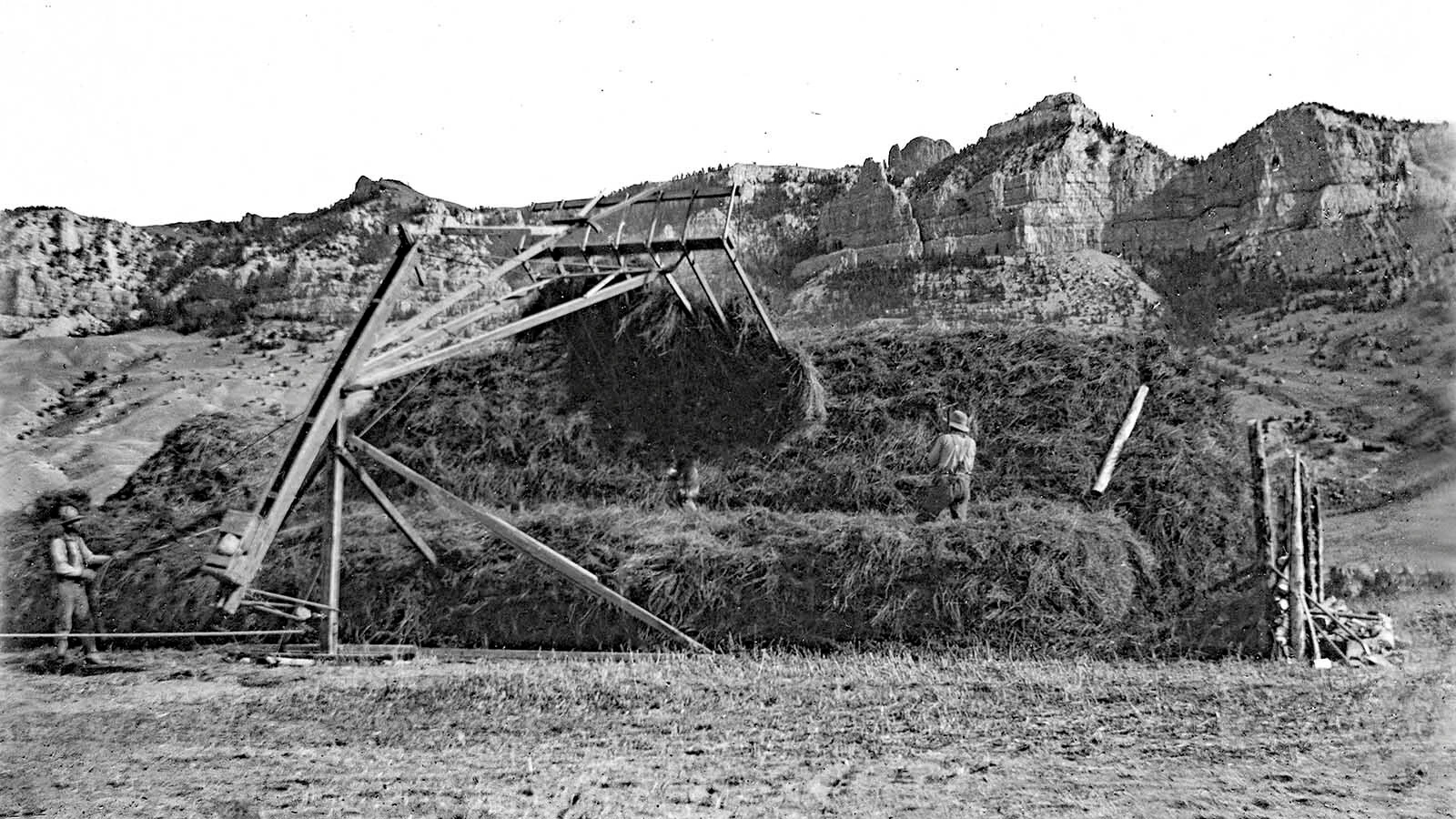
A hay stacker on the ranch in front of Sheep Mountain. (Park County Archives)
An Interactive Experience
Each sign will include a QR code that will direct participants to an interactive website. There will be photos of different artifacts from the family's ranch, as well as letters and diary entries from the family that can be read, and a detailed map showing the homesteads and surrounding area.
It also has a then-and-now section, where people can see what was happening more than 100 years ago, and then look at a photo of the site in the current day.
“This is a feature that I really am excited about,” she said. “Here's the original photo, and then you have a bar that you can move, and it'll show the same today.”
There will be a section about collodion photography, the technique used by her grandpa in which photographers coated glass or metal plates with a syrupy chemical mixture, sensitized them in silver nitrate and developed them while the plate was still wet.
“I didn't really know the technique, but the woman working on the website for this project down at Wyoming State Parks in Cheyenne has checked it out and showed me how you put the silver coating on a piece of glass,” Wills said. “It's fairly complicated, and then at the very end you have to wash it off. They didn't have any water, so they had to haul it.”
For younger viewers, there is an object scavenger hunt and word match, as well as some fun facts.
“I was able to get (local historian) Bob Richard to clarify some things,” she said. “Things I wouldn't have thought of like, ‘Why did my grandpa have a one-legged stool when he was milking?’ He said, ‘Cows often kick, so you want something that you could just grab fast and get out of the way'.”
When it is completed the walk will cover the entire loop of the campground, a distance of about a mile. While all involved are hopeful the signs will be approved and in place by next summer, Marty said an exact timeframe hasn’t been established.
“We're still waiting for the signs to get approval, and I’m still waiting for the cultural clearance from the Bureau of Reclamation,” he said. “All that has to be in place before the signs are even ordered. Once the signs are ordered, we’ll see how long until we get them. When they're in place, then the trail construction will begin. So we have two unknowns right now.”
Wills is excited to see it complete.
“I’m thrilled to be able to share their story with these signs,” she said.