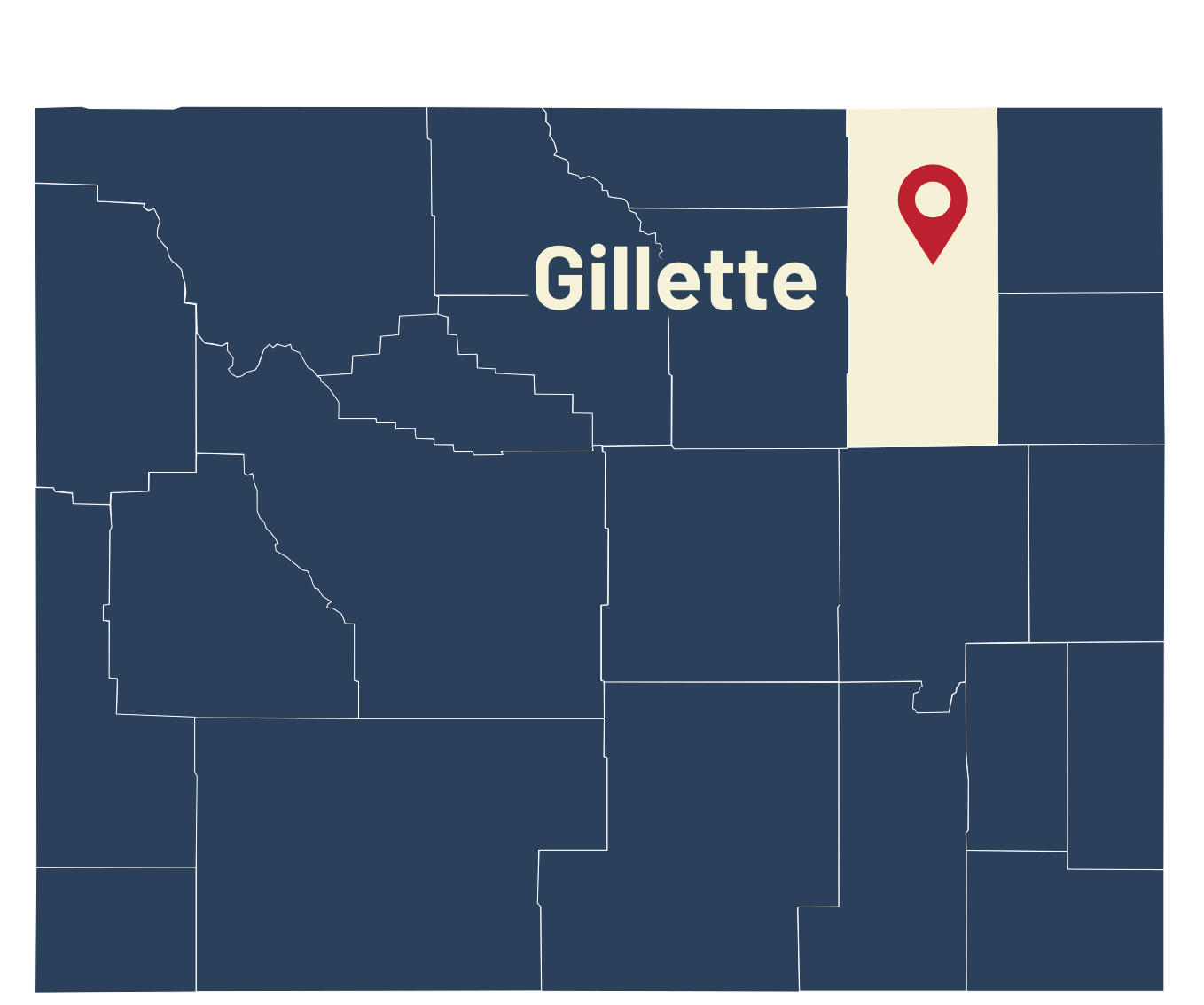
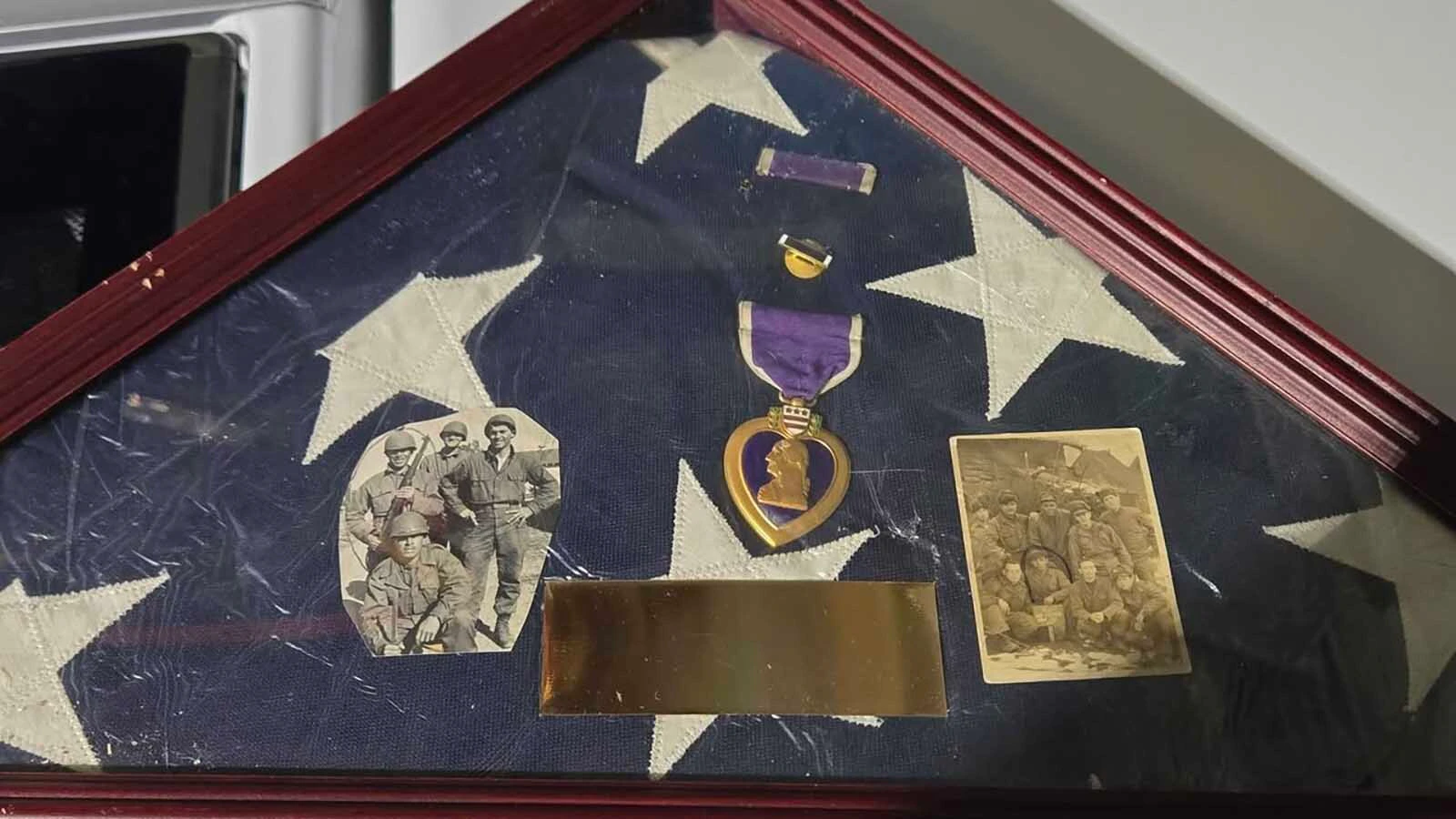
A Gillette man and his sister are trying to solve a mystery involving an American flag, Purple Heart, and two photos that fell into their possession two or three years ago but they just recently uncovered.
They want the items returned to the veteran’s family.
A weeklong effort through social media and help from a veteran’s service organization had Robert Van Kerrebrook and Brandi Billat closer to their goal as the nation prepared to celebrate its independence and freedom.
Gillette American Legion Post #42 Service Officer Amy King said Thursday once Billat shared the name of the veteran that was engraved on the back of the Purple Heart she was able to dig through records and determine he was killed in action during the Korean War in 1952.
“I don’t want to release his name until we get in contact with family,” King said. “He was at one of the positions that was defending the Punch Bowl area in eastern Korea. Being part of medical personnel, he was attached to a frontline battalion.”
Although the veteran’s name does not appear on the National Archives list of those from Wyoming killed in action during the war, King found other documents that supported that conclusion, she said.
King has reached out to relative of the veteran she had found on ancestry.com to try and determine next of kin and who the medal and photos can be returned to.
Van Kerrebrook considers the way he and his sister obtained the flag and photos as “crazy” because it must have been gathered a few years ago when he was trying to repurpose and sell things people were throwing away or putting out at the curb in Gillette.
“We thought that was a cool idea to reduce our carbon footprint and that’s how it started,” he said. “We were going all day, pretty much every day going and picking up stuff that people were saying they were just putting out on the sidewalk.”
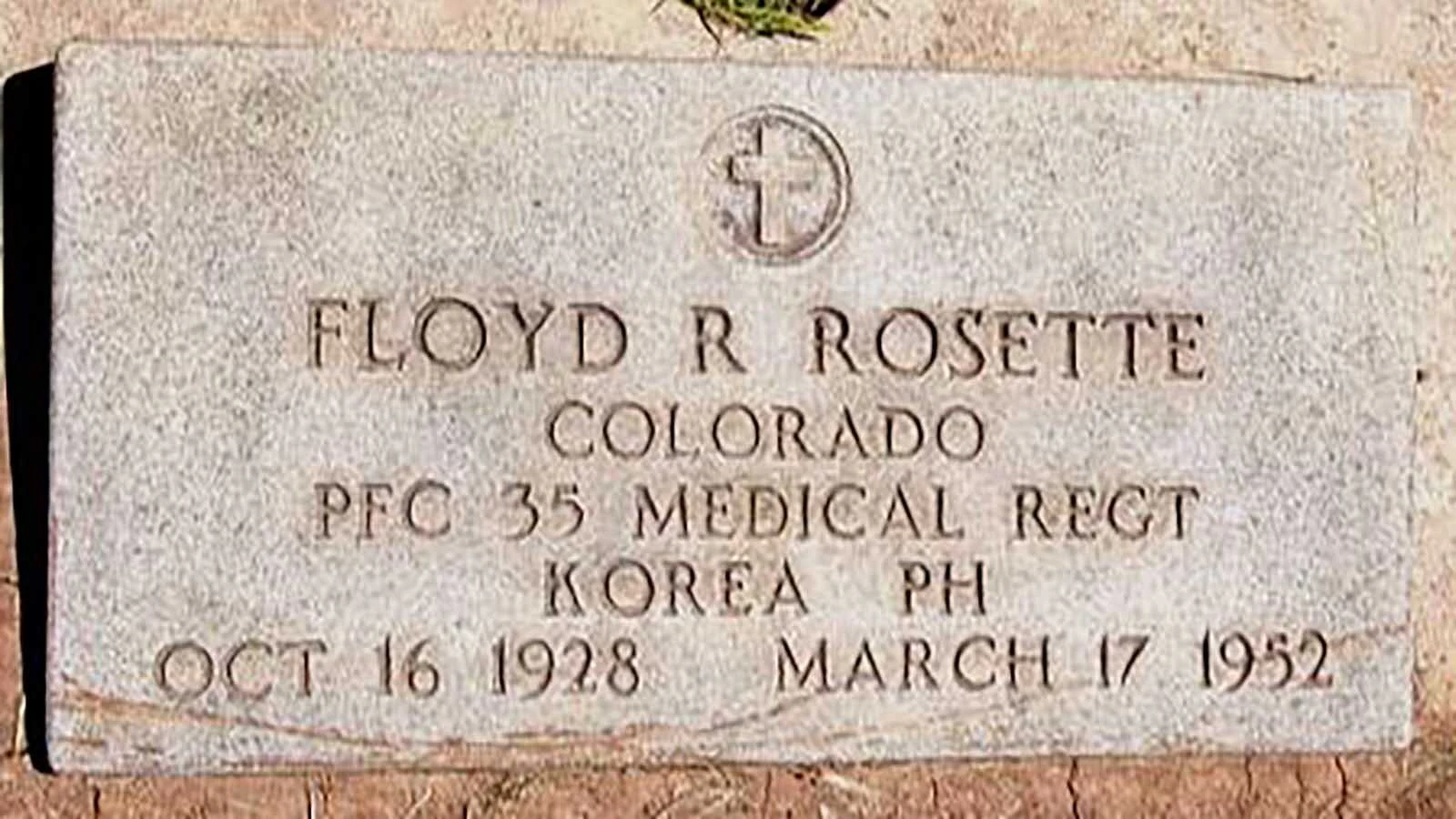
Pfc. Floyd Rosette is buried at the Calvary Cemetery in Grand Junction, Colorado. (Purple Hearts Reunited) 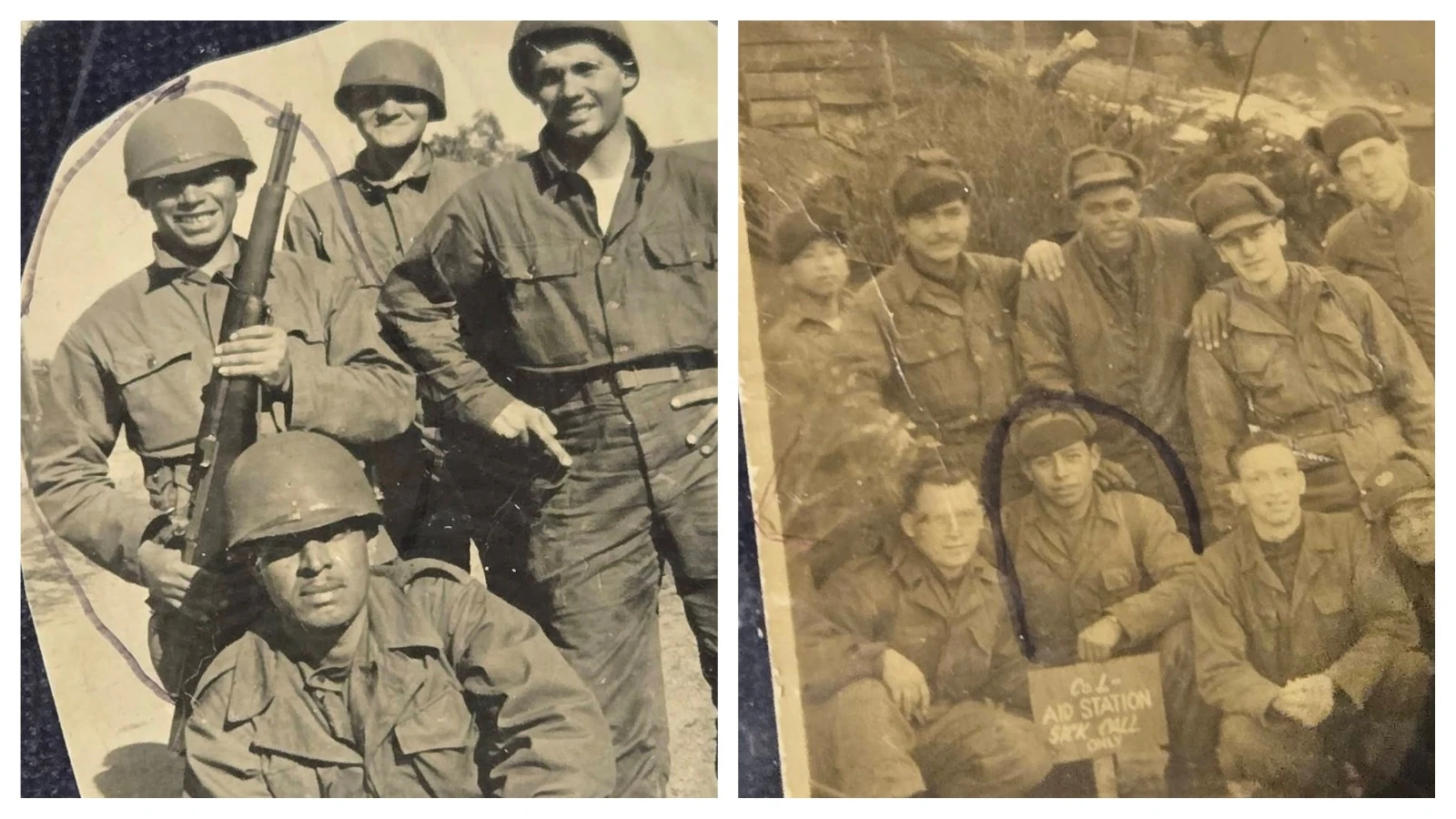
Left, a photo of soldiers apparently taken during the Korean War that is included with the American flag. Right, soldiers posing with an aid station sign. They are wearing caps that could indicate the Korean era. (Brandi Billat) 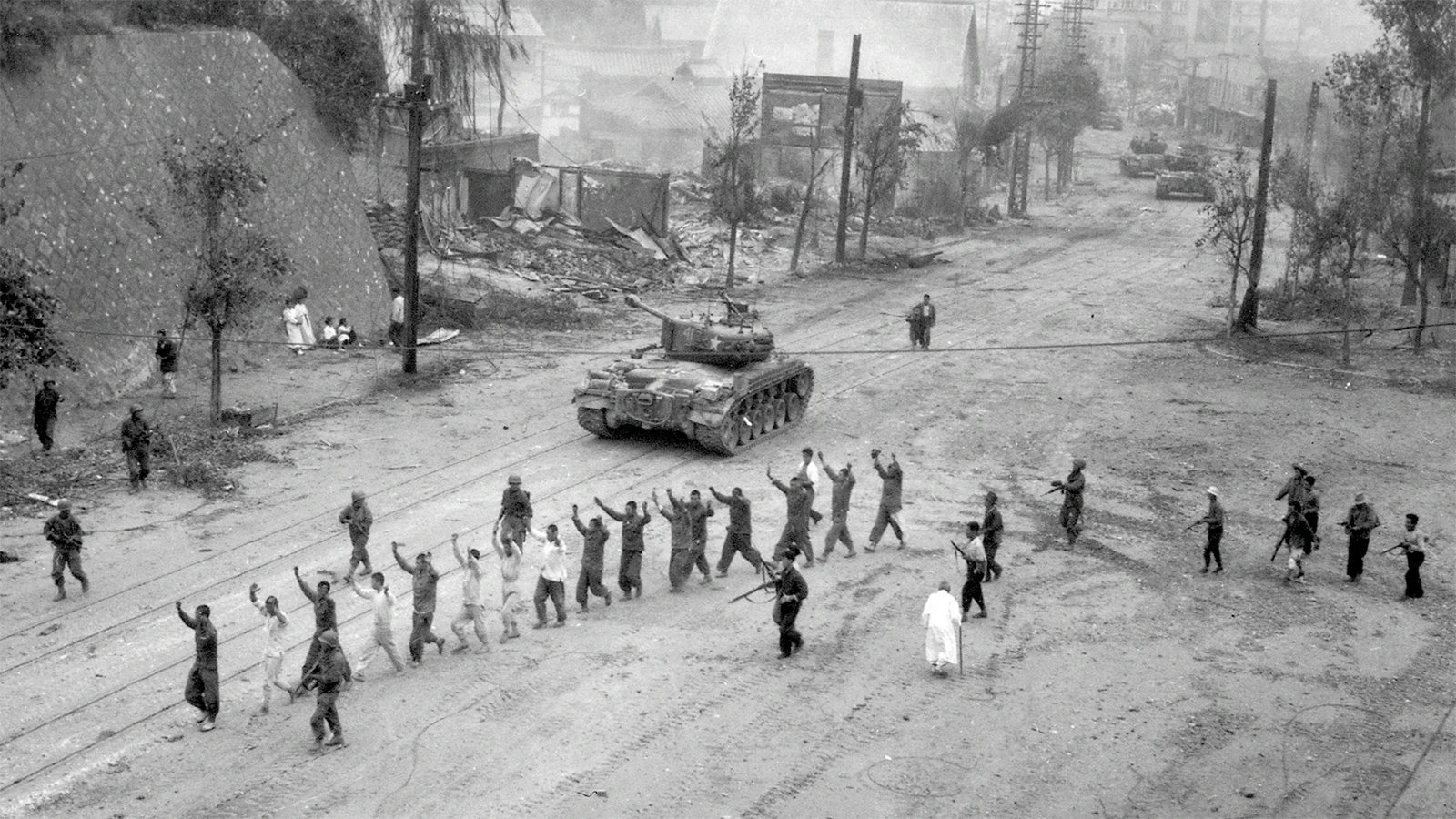
Tanks on a road during the Korean War. (Good Free Photos) 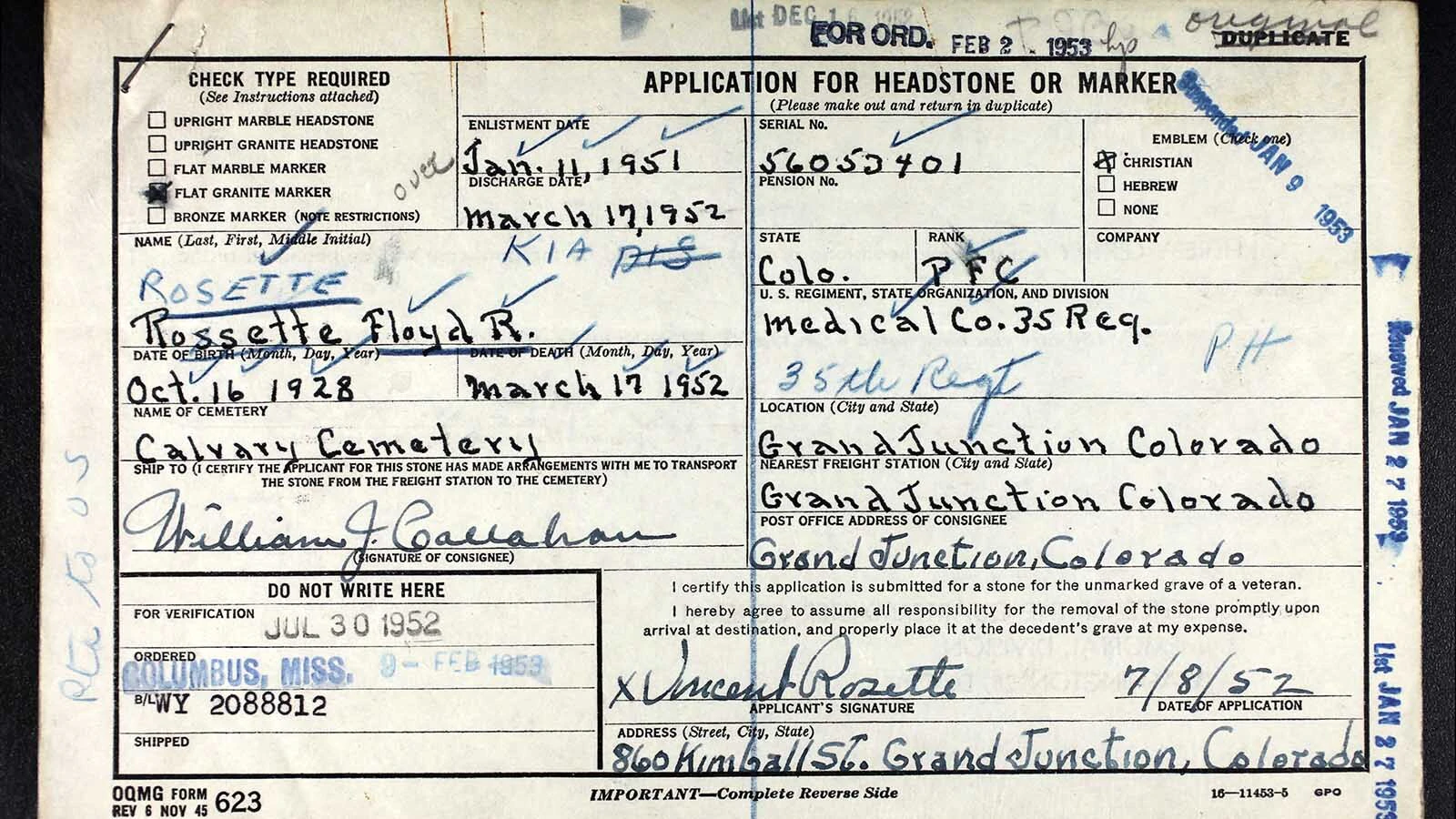
An application for a grave marker for Pfc. Floyd Rosette from 1952. (Purple Hearts Reunited)
Gathered Up
They obtained boxes and bins and so many items that they rented storage containers and then started to go through them, restore or repair things if needed, photograph, and then put it on the Facebook Marketplace to sell or repurpose.
Van Kerrebrook said the effort became interrupted by circumstances in their lives and he was recently consolidating things and found the framed flag that contains the photos and medal.
They initially posted photos of the flag and associated photos on Facebook hoping to get a response. Then on the advice of others, they looked behind the Purple Heart medal and obtained the name and reached out to King.
Retired U.S. Army Col. Larry Barttelbort, who once served as chief of staff Wyoming Army Guard, looked at the two photos associated with the flag and assessed they were likely from Korean War era.
One photo shows four soldiers, two with weapons, and a circle appears to have been drawn with a pen around one soldier. None of the quartet have uniforms with name tags or any kind of insignia.
The second photo shows nine soldiers, none with names sewn on their uniforms or insignia. They are standing and kneeling around a sign that reads: “Co. L AID STATION, SICK Call ONLY.”
The aid station photo appears to have two soldiers with oriental features.
Barttlelbort said the fact none of the soldiers had insignia or names could mean they were replacement uniforms when in combat.
“In some cases, it’s easier to issue new uniforms than to clean dirty, nasty ones,” he said.
The photo of the aid station shows soldiers wearing “M-51” caps with flaps for the ears that while developed in World War II were widely used in Korea, he said.
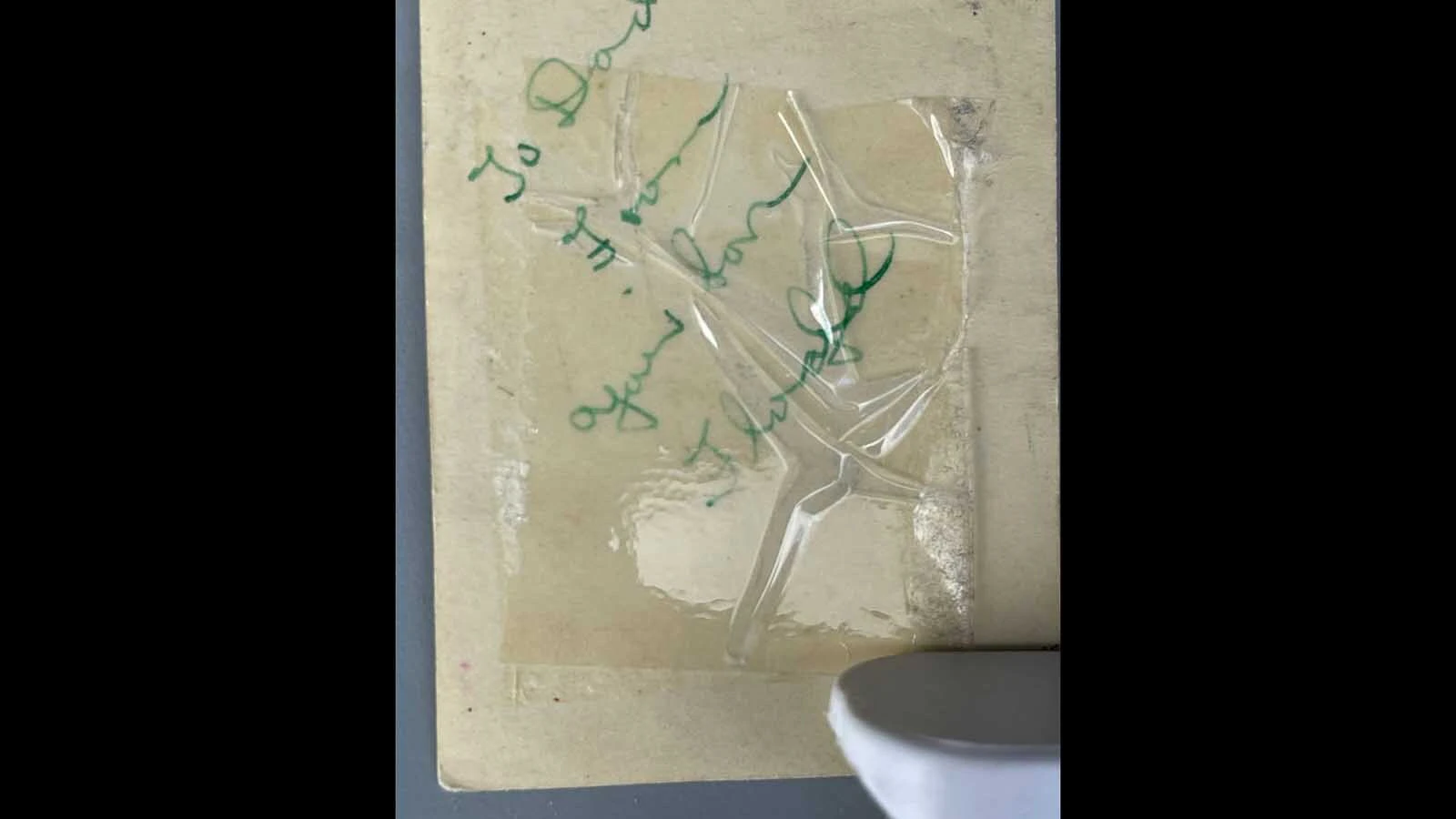
The message found behind one of the photos that was attached to the American flag. (Brandi Billat) 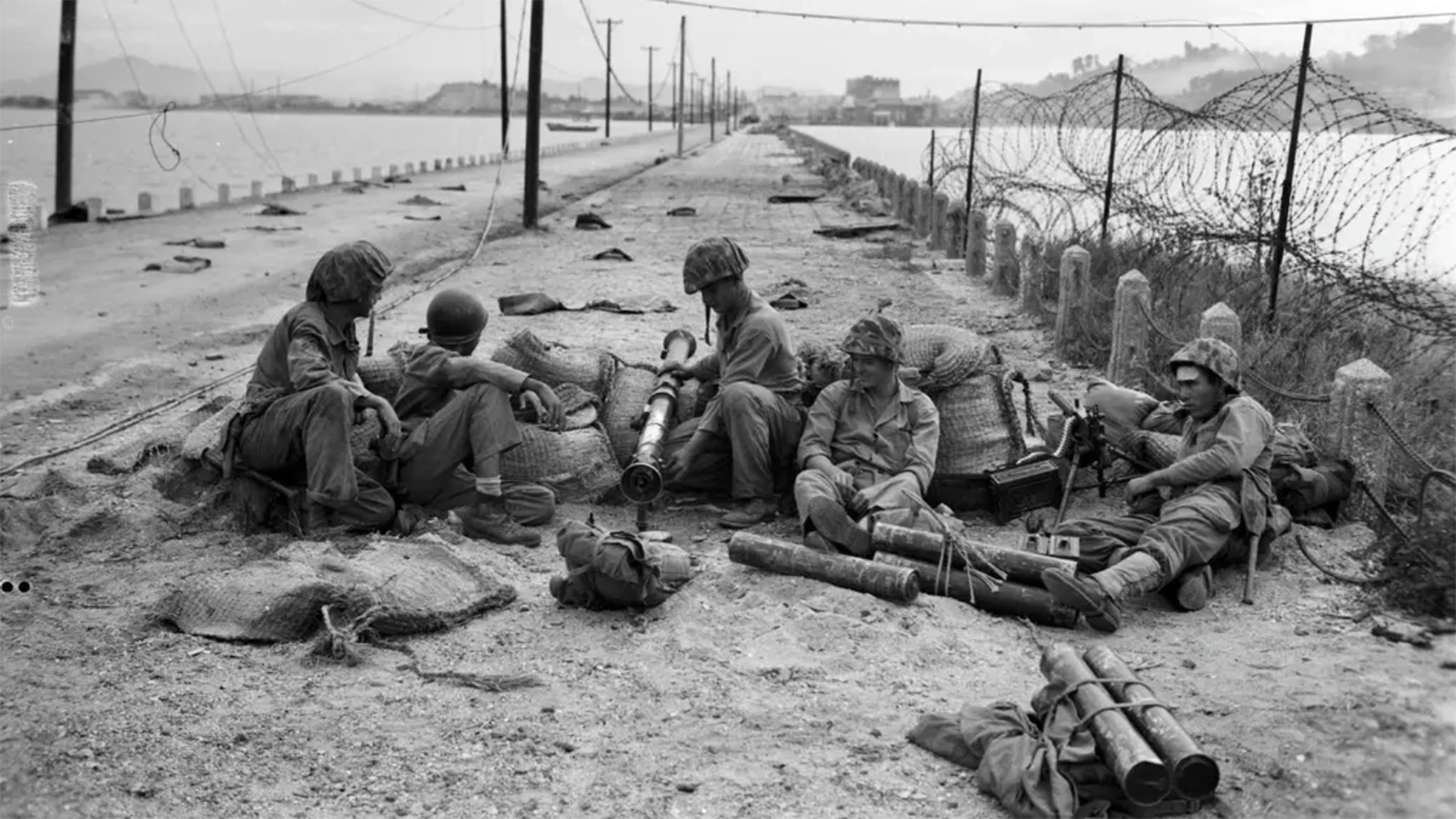
U.S. Marines block a road and establish and outpost during the Korean War. (U.S. Marine Corps, Nara and DVIDS Public Domain Archives)
Unprepared
When the United States entered the Korean War, the military and government were not prepared and that also could be a reason for the lack of names and insignia. Barttelbort said the aid station would have represented a medical unit assigned to a battalion-level organization or higher.
“There are two Asian fellows in the photo,” Barttelbort said. “These gents could very well be KATUSA (Korean Augmentation to the U.S. Army) started in 1950. These guys held a variety of jobs. They could easily have been on medical or interpreter duties. … Treatment of these augmentees was wide and varied. In some circles they lived a very privileged life (in terms of) housing, plentiful food, very different from that of the typical Korean Army soldier in a Korean unit.”
On the back of one of the photos is a message in cursive writing that says: “To Dad,” and then the word “love” or “from” “Floyd.”
King confirmed the soldier’s first name was “Floyd” and that he had been part of a medical company serving with the 25th Infantry Division. She said the fact his name was engraved on the back of the Purple Heart was another confirmation that he died in action.
The veteran came from Thornton, Wyoming, an unincorporated area between Upton and Moorcroft, she said.
King called the medal a “huge part of family history” and a memorial of the loved one who gave “the ultimate sacrifice for his country.”
“That Purple Heart is that remembrance, it is that way to pass down to future generations the history of not just that person and not just that family but the history of the United States,” she said.
Vermont-based Purple Hearts Reunited founder Zachariah Fike agrees returning Purple Hearts to next-of-kin is an important mission. He is an active duty major in the U.S. Army and has a Purple Heart for injuries sustained during a deployment to Afghanistan.
“We’ve returned over 1,000 to date, Purple Hearts specifically,” he said. “But we’ve returned over 5,000 related items … American flags, dog tags, jewelry in some cases, photos, pretty much anything that has a name on it or a related service number that can link the item to the veteran.”
WW II-Era Medal
When viewing the photo of the medal, flag and photos, Fike characterized the flag as likely a World War II flag and likely a World War II-era Purple Heart based on the front of the medal.
He said the U.S. government preparing for the invasion of Japan at the end of World War II anticipated thousands of casualties and had mass produced Purple Hearts that were then stored and later issued during the Korean War and up to the Vietnam era.
Fike encouraged people who want help returning lost, misplaced or stolen medals back to veterans and their families to contact his nonprofit.
"We’re the only organization that exists that does this specifically,” he said.
Van Kerrebrook was encouraged that they were getting closer to finding the rightful heir of the medal, flag, and photos.
“I can’t imagine that someone would want this piece of history gone,” he said. “Having my dad’s flag here at the house with me, that’s all I have left of him. … Who wouldn’t want to know that their dad earned a Purple Heart, or their great-grandfather or whoever it was.”
Dale Killingbeck can be reached at dale@cowboystatedaily.com.