
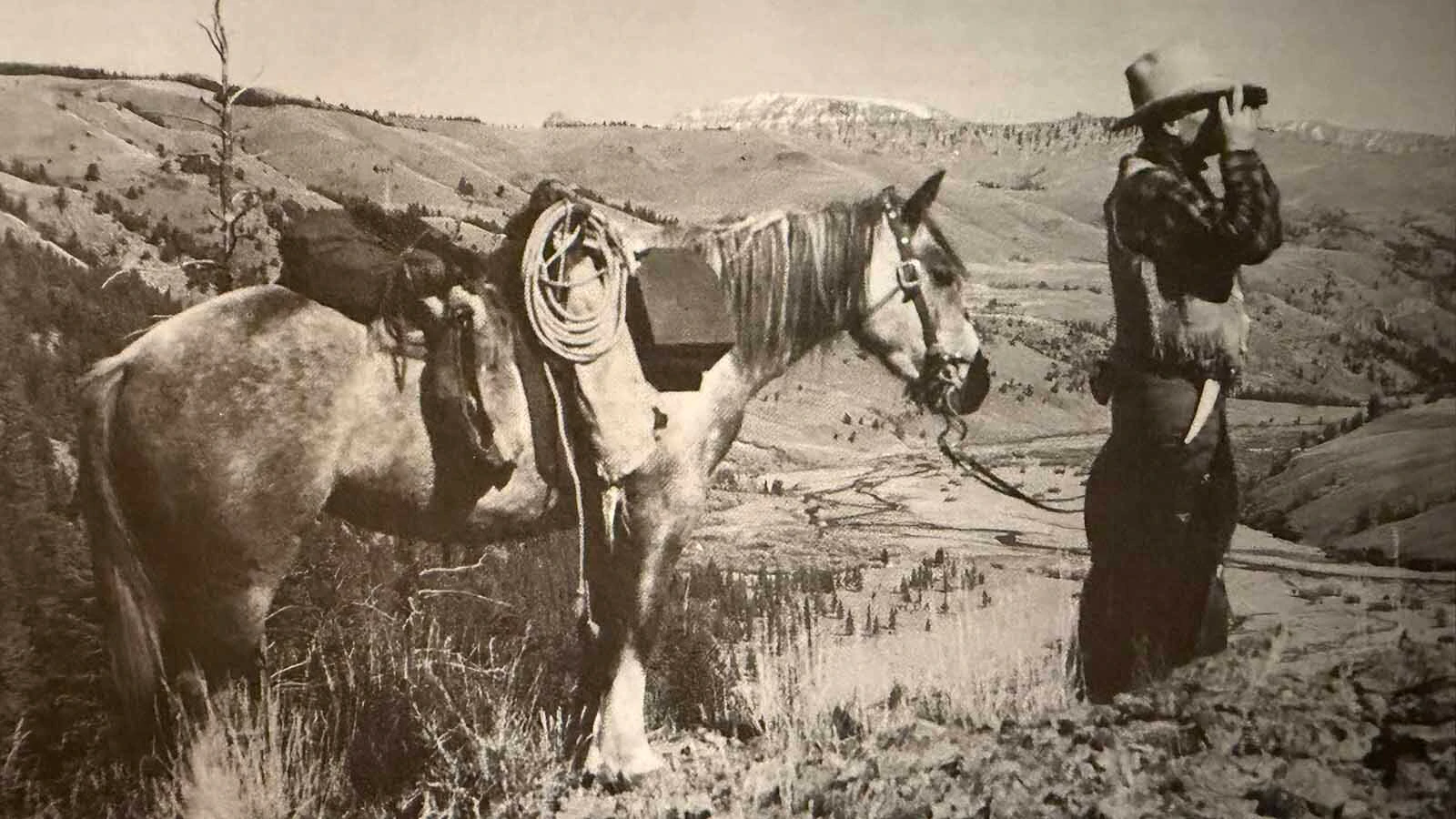
Former Yellowstone National Park Ranger Carl Dunrud was no stranger to danger when he came up against four boys in the wilderness of Wyoming.
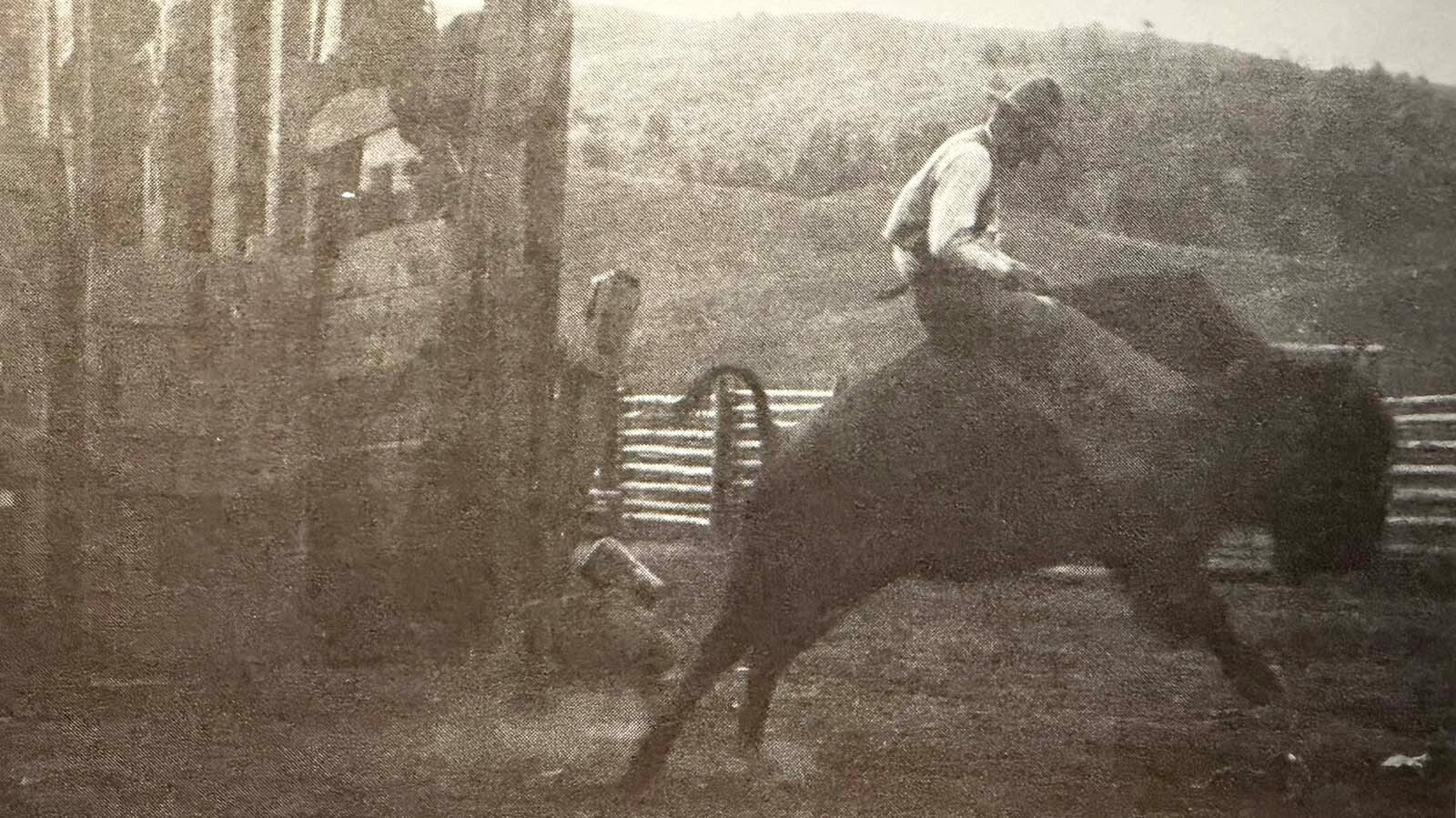
Dunrud had wrestled polar bears in the Arctic and rode a buffalo for a Wild West show stunt before buying a dude ranch at the height of the Great Depression.
He had paid $2.50 an acre for the former Kerwin mining claim to serve as the starting point of his pack trips into the Absaroka Range for his Double Dee Dude Ranch, and was focused on making a living, not tracking fugitives.
However, the many guests Dunrud and his wife, Vera, were expecting didn’t come.
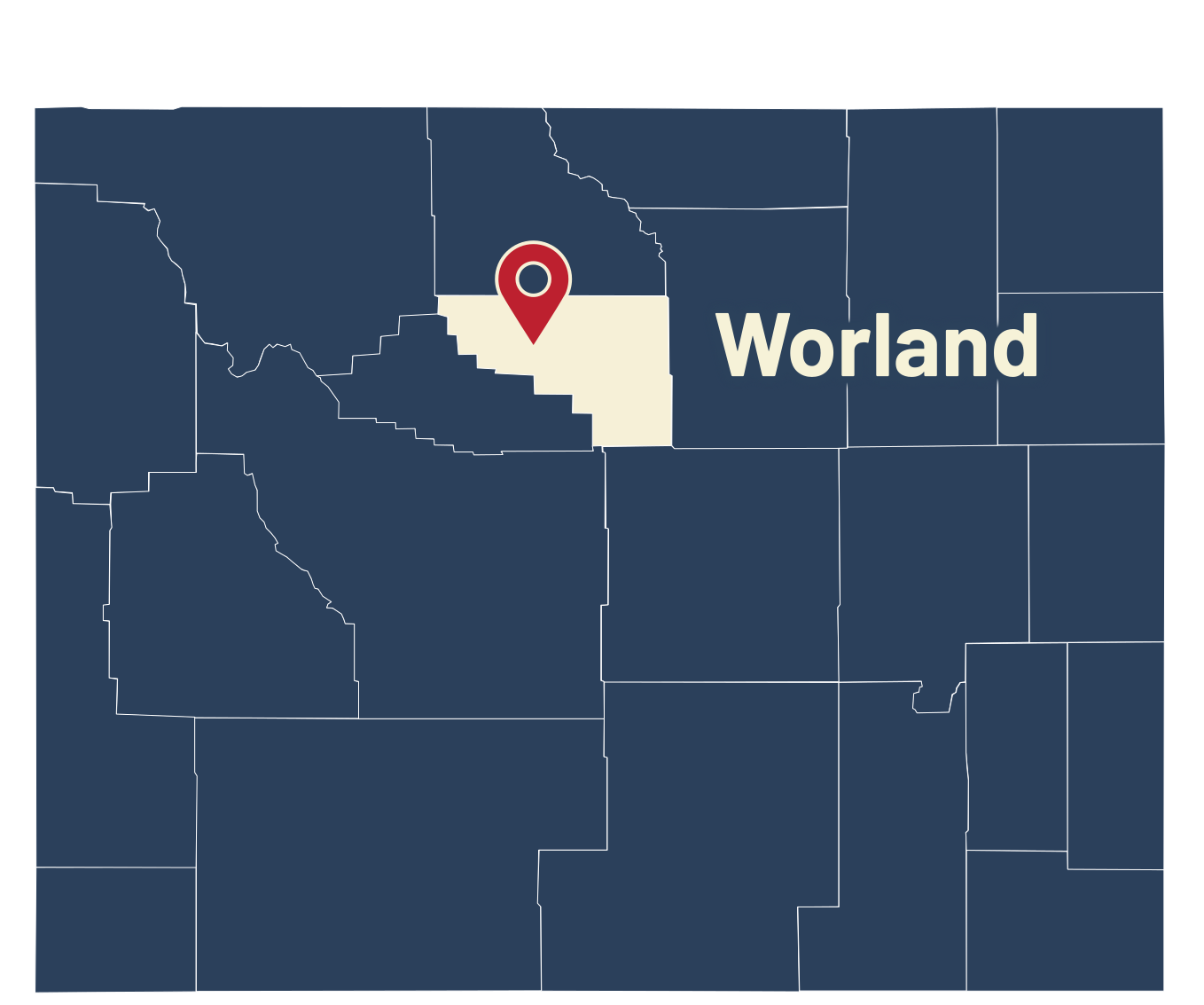
As they struggled to feed their family and survive the monotony, Dunrud got the urgent call from the warden at the Wyoming Industrial Institute in Worland, now called the Wyoming Boys' School, about four teen inmates on the run.
Despite his misgivings, Dunrud agreed to help, although he knew this task might prove more dangerous that lassoing a walrus.
“I was reluctant to stop breaking sod since I had just taken the rough edge off four young horses, but the pay was quoted at the unheard-of price of a dollar an hour, and I could keep my own time,” Dunrud wrote years later in his autobiography, “85 Years of Adventure.”
A Boy Called Sunshine
It was after midnight in 1932 when the telephone rang at the Double Dee.
The warden explained that four teens had escaped two days earlier, and no one had seen them since. Their tracks had just been discovered on Gooseberry Creek, about 20 miles southeast of Meeteetse.
Their leader was Sunshine, and it was his tracks that helped them identify the teens. He was wearing cowboy boots with steel plates on his heels. One heel was worn to a sharp point, so there was no mistaking who it was.
“We think they are heading across the mountain for Dubois,” the warden said. “Will you go and see if you can intercept them?”
The warden offered to send a trustee to Dunrud who was Sunshine's friend, and who the warden hoped would be a help to in apprehending Sunshine. The boys were traveling slowly, and the warden said there was no doubt they were tired and hungry.
Except, they were now armed. The boys had been tracked to Clarence Dollar's sheep wagon. They had robbed it of groceries, a .30-30 rifle and ammunition.
“Now remember, Sunshine is dangerous. He's young, but he's a pretty tough hombre,” the warden said. “The other boys are just kids.”
The Industrial School
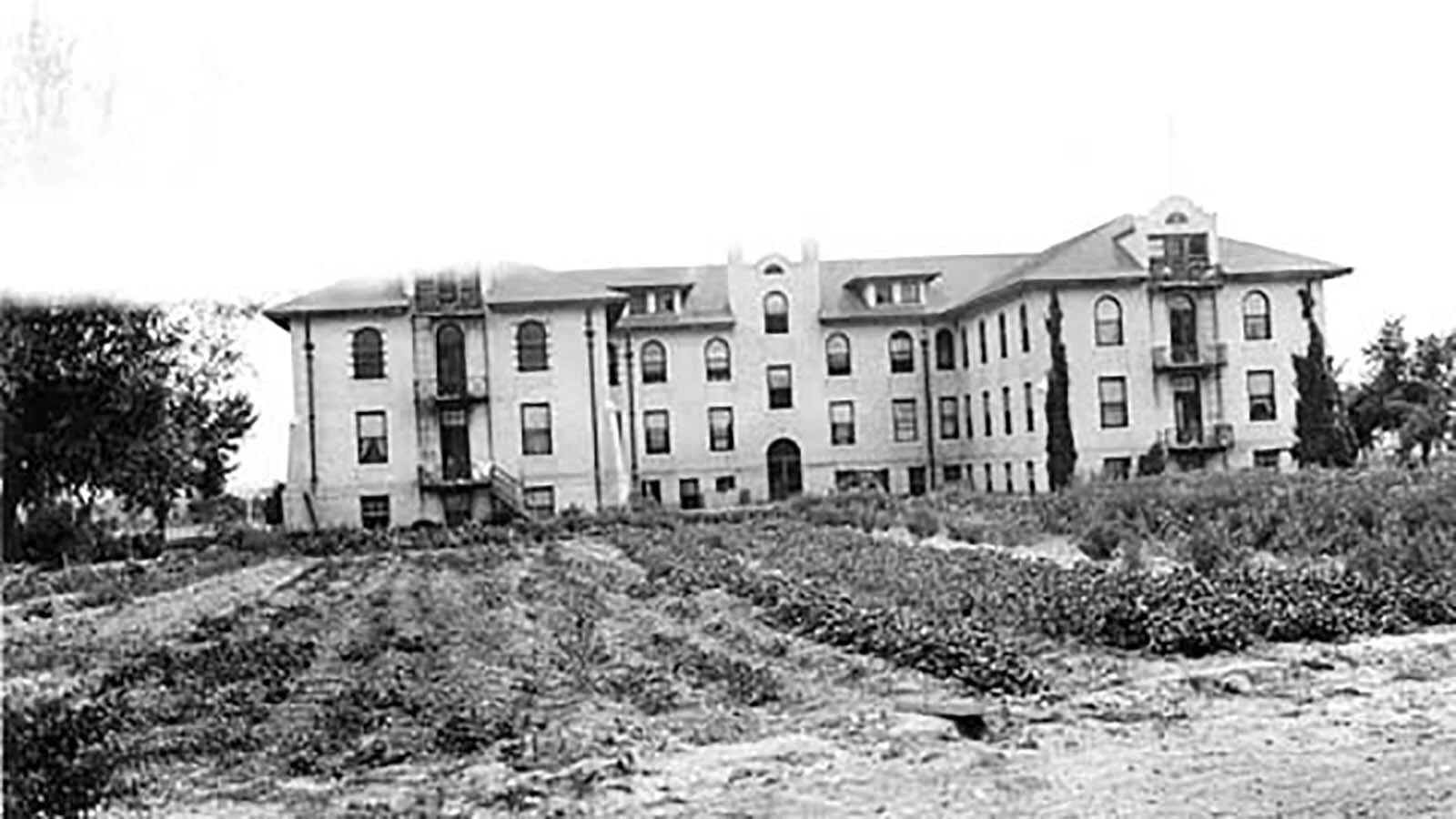
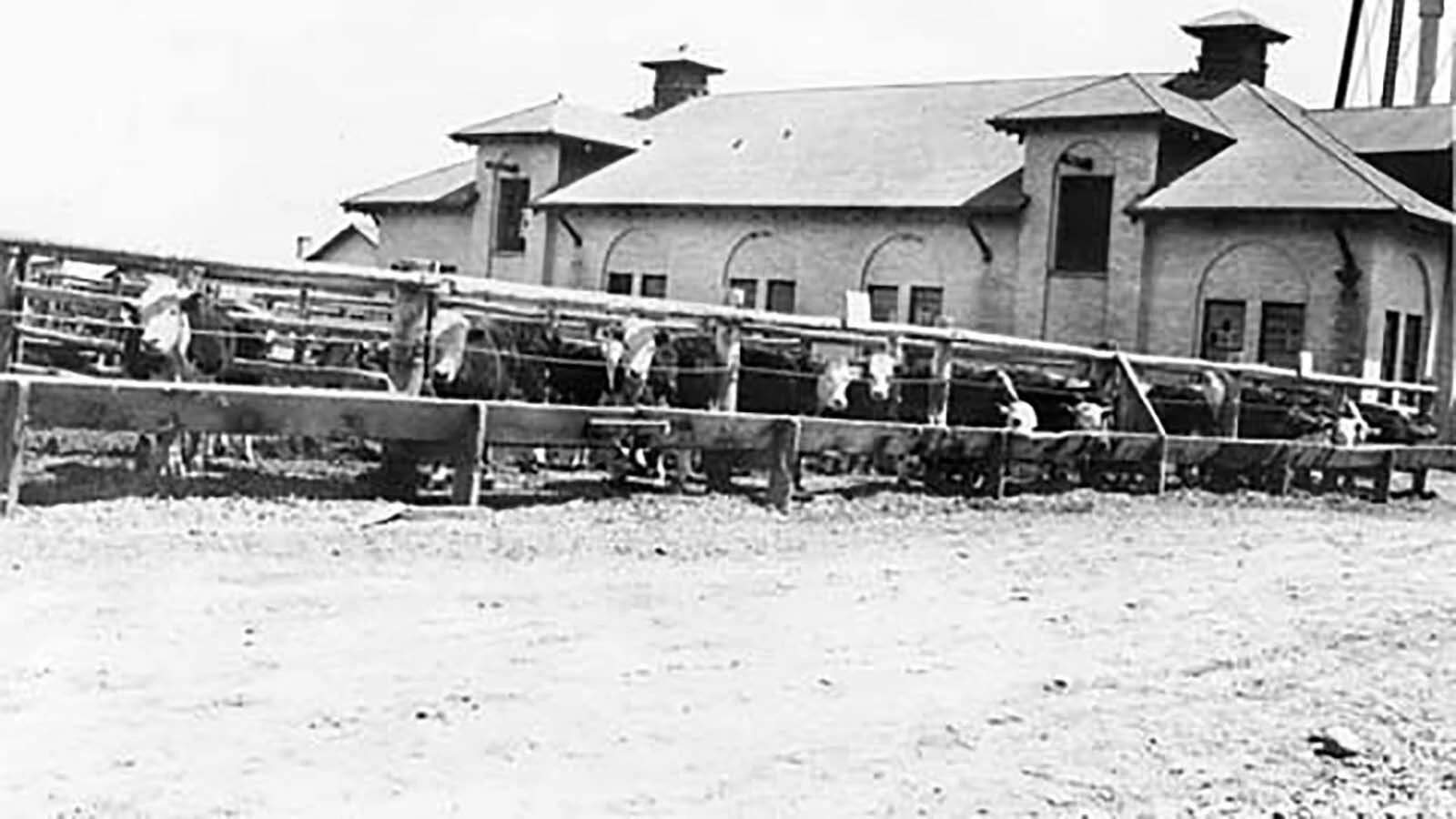
According to the Wyoming State Archives, the Wyoming Legislature passed a law in 1911 that established a “Reform Institution” to serve and house young male felons like Sunshine. The Wyoming Industrial Institute opened its doors in 1915 and by the time Sunshine and his boy gang were housed there, the institution was self-sustaining.
The school maintained a productive farming operation manned by inmates and was considered a model of self-sufficiency, especially during the Great Depression. The idea was that the wards, boys ages16 to 25, would learn life skills and a useful trade.
Sunshine would have been expected to help with the chores related to fattening the Hereford cattle for market, milking the dairy cows and caring for the sheep, hogs and chickens. Gardens and large fields of sugar beets were also planted and the boys were employed in a small, on-site cannery.
According to State Archives records the sale from the excess products equaled $86,700 for the 1928-1930 biennium, which is equivalent to $1.1 million today. By the time Sunshine was working in the fields, the institute was making an average of $700,000 in today’s dollars per year.
Sunshine obviously had enough of forced labor and escaped, taking with him three other boys.
Ski Patrol
The snow still lay deep on the mountains between the Double Dee and Dubois, so Dunrud took along old “Agony and Torture,” the hickory skis he had used on patrol in Yellowstone.
“I had traveled almost 3,400 miles on patrol as a ranger,” Dunrud said. “I figured that I could make better time on these old skis than the boys could on foot.”
Sunshine’s trustee and friend arrived at the ranch early the next morning. Dunrud saddled two horses and they rode 12 miles to the rimrock on Chimney Creek. He then sent the trusty boy back to the ranch with the horses.
“I had a bite to eat from food I had rolled in my bedroll and stayed in the lee of the rimrock that afternoon,” Dunrud said. “I decided to stay in the same spot that night while I scouted around for tracks.”
Dunrud had reasoned that if the boys were ahead of him, he could overtake them easily because they had been on foot on short rations and had been sleeping on the cold ground for two nights. After Dunrud climbed the rim and walked around on top, he could not find any signs of the boys.
“There was nothing to do but go back to my makeshift camp and wait,” Dunrud said. “On my way back, I almost walked into the boys coming my way."
Dunrud would have run “smack into them” except that their dog barked.
“I still hadn't seen the boys, but I heard them call the dog,” Dunrud said. “They were only 100 yards downhill from me when they started running.”
Dunrud raced downhill and identified Sunshine's tracks.
“The boys were running down a well-worn elk trail in high gear,” Dunrud said. “It was no use trying to outrun these young boys, especially since they had a head start.”
Dunrud went back to his “spike camp,” picked up his bedroll, and climbed the rimrock again. He followed the boys' tracks until dark.
“I had been warned that they were armed and could be dangerous, so I didn't want to come upon their camp in the dark,” Dunrud said.
The next morning, Dunrud headed back to the Double Dee. He figured they would have to come within a half-mile of the ranch if they were still planning to go to Dubois.
Sunshine Escapes
At daybreak, Dunrud drove up the Wood River Valley toward Kirwin to a sandy place where the boys had to cross. He found no tracks there, so headed back to where he had last seen the boys' tracks.
He stopped at the sawmill to let the men know about the fugitives and discovered fresh tracks from Sunshine.
“I was only about two miles from where I had seen the boys' tracks the day before, when it began to snow hard,” Dunrud said. “It snowed intermittently for two days as I tracked the boys down Wood River.”
At one point, the boys stopped at the Paul Foster ranch and asked for matches. Once more, they had eluded Dunrud.
The boys had started out aftertheir escape with determination, Dunrud noted, but now they were faring badly in the snowstorm and had no food as they headed toward Cody.
“When they got to a telephone, three of the boys had been “bad men” long enough,” Dunrud said. “They called the school collect and asked them to come and get them.”
Sunshine was not about to go back and left the boys behind.
“To the best of my knowledge, Sunshine never was apprehended nor ever was seen in these parts again,” Dunrud said. “Maybe he changed his name and became an honorable citizen, or maybe he was one of the lawless men that we read about in the newspapers or hear about on the radio.”
For a man who had captured live polar bears and rode a buffalo, it left quite an impression that Dunrud was outwitted by a boy criminal who had disappeared into the Wyoming wilderness, never to be seen again.
Jackie Dorothy can be reached at jackie@cowboystatedaily.com.


