
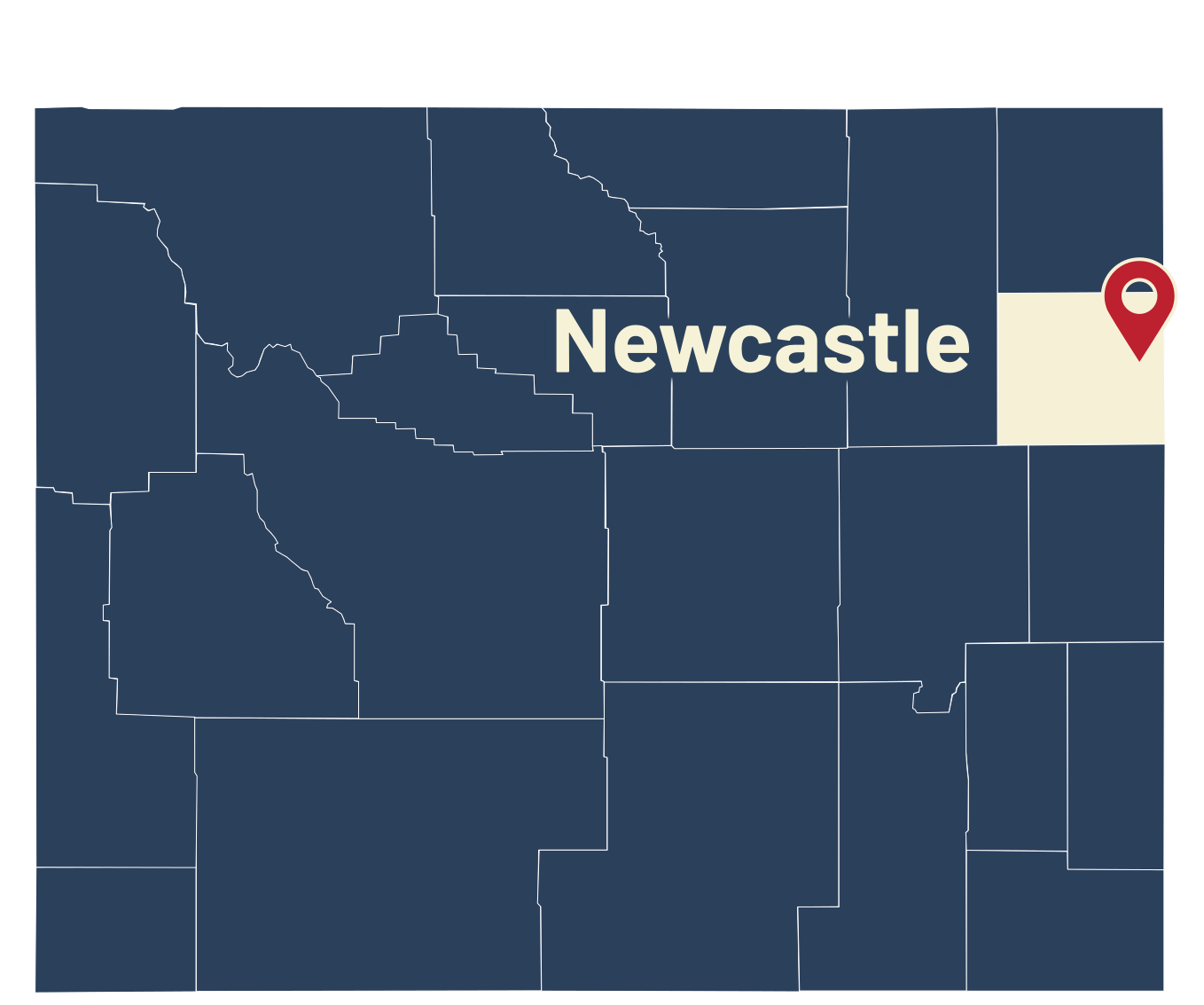
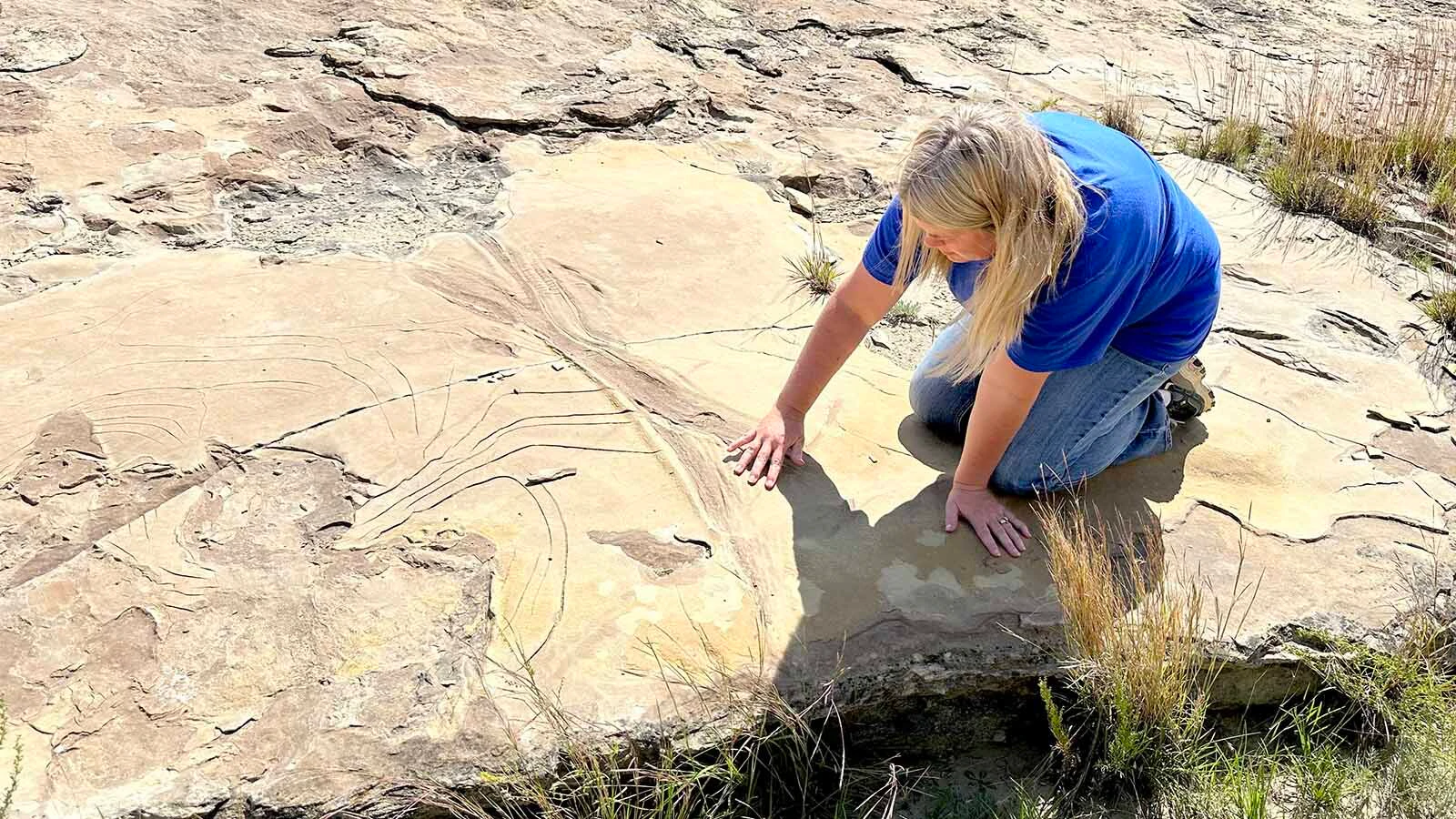
A one-of-a-kind dinosaur footprint site near Newcastle was vandalized by someone who would have gotten permission to do what they did — if they had asked.
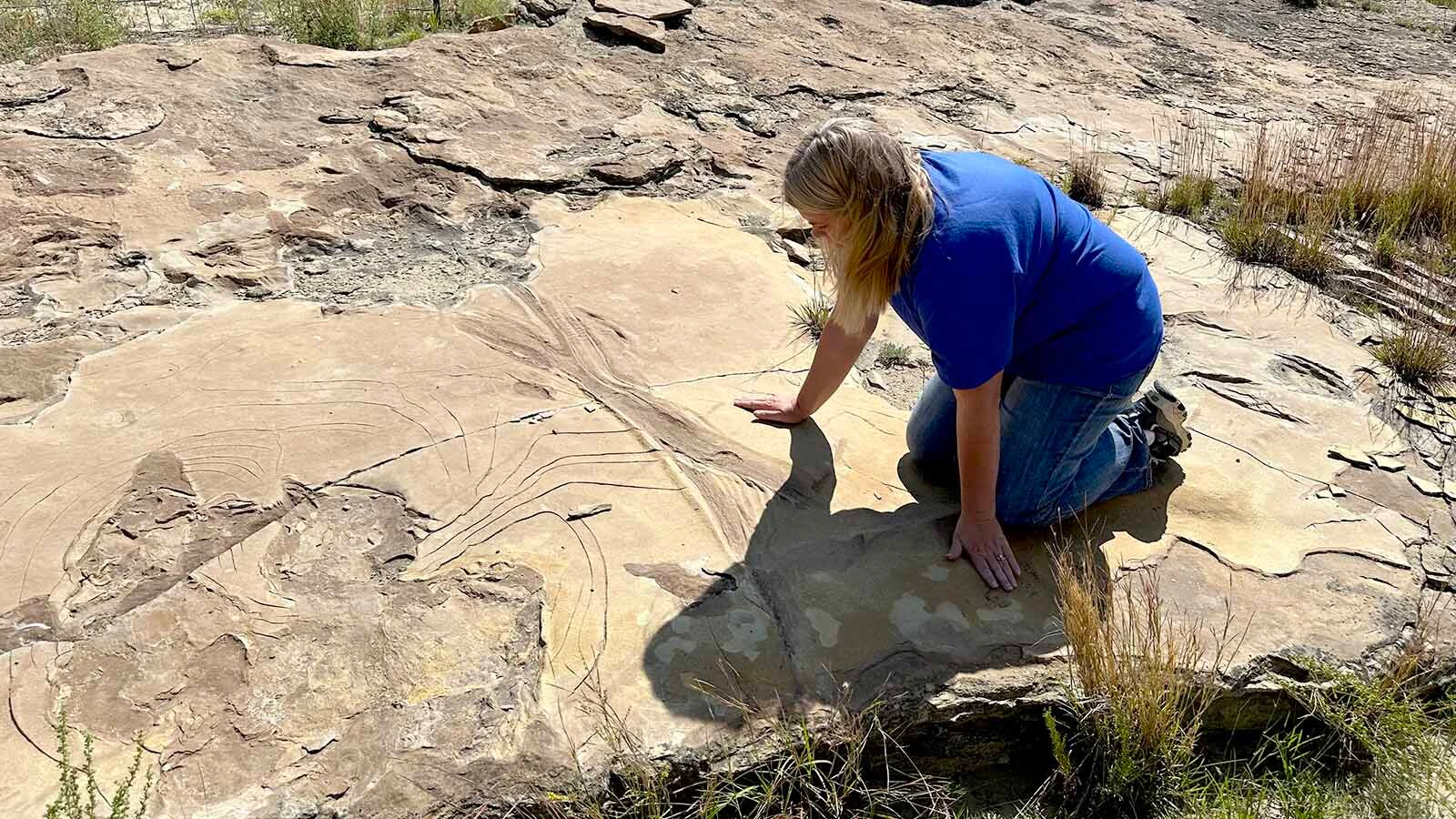
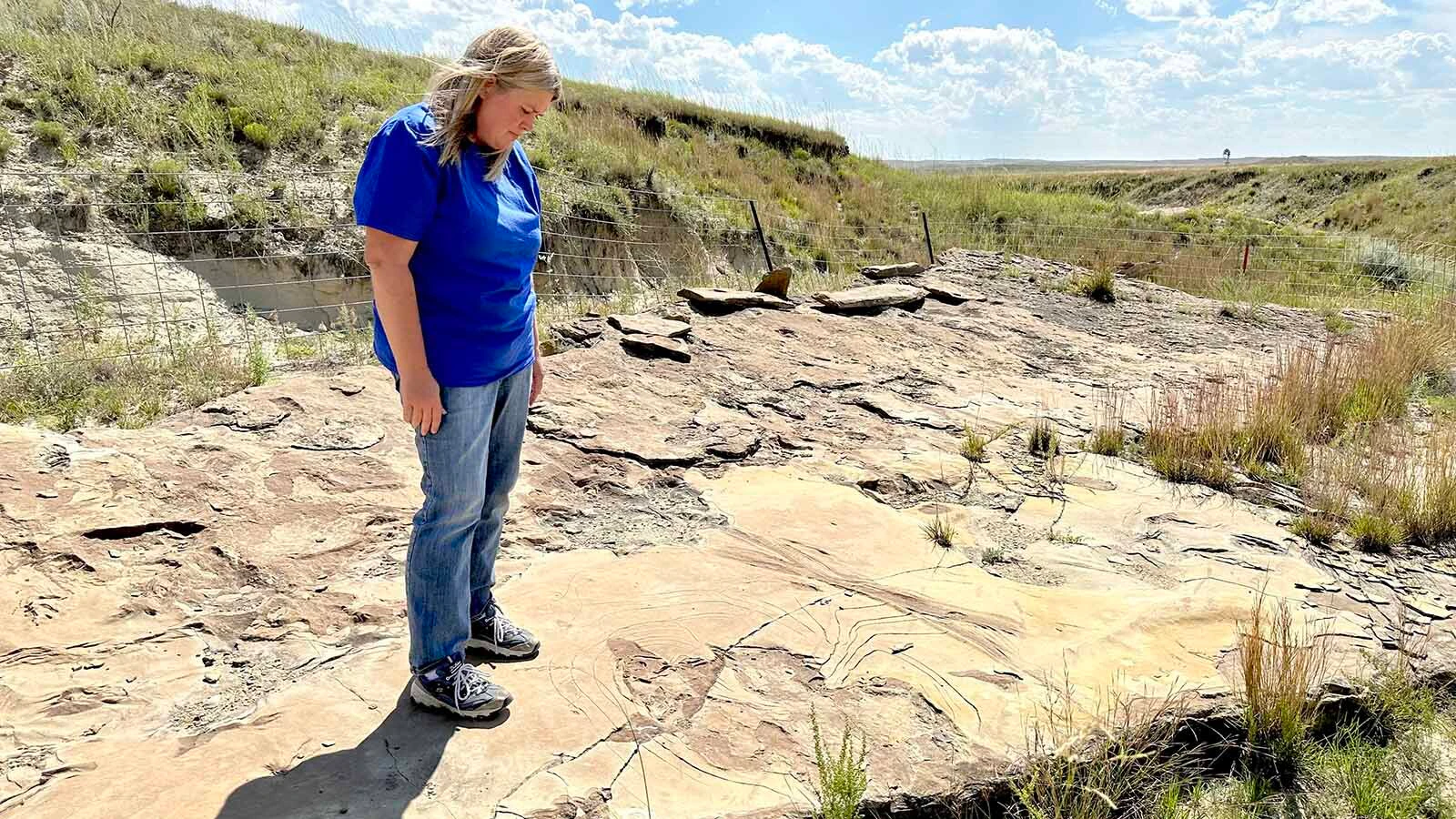
Kristen Stauffer of the “Paleo Park” Zerbst Ranch discovered the vandalism this week. Someone poured a large amount of blue silicone into one of the many dinosaur tracks exposed on a 67-million-year-old slab of rock on the Zerbst Ranch.
“I was shell-shocked,” Stauffer told Cowboy State Daily. “Nobody was authorized to be out there. Whoever did it was trespassing.”
Setting aside the enormous scientific value of the fossil, Stauffer was “heartbroken” by the blatant disregard for her family’s history. The Zerbst Trackway was found by her father, Leonard, and has enormous personal significance to her and her family.
“These tracks are part of our family's story,” she said. “We have spent years protecting them because we believed people would love them as much as we do. We opened our gates because we wanted to share something truly rare, not because we wanted pieces of it taken away.”
Not The First Time
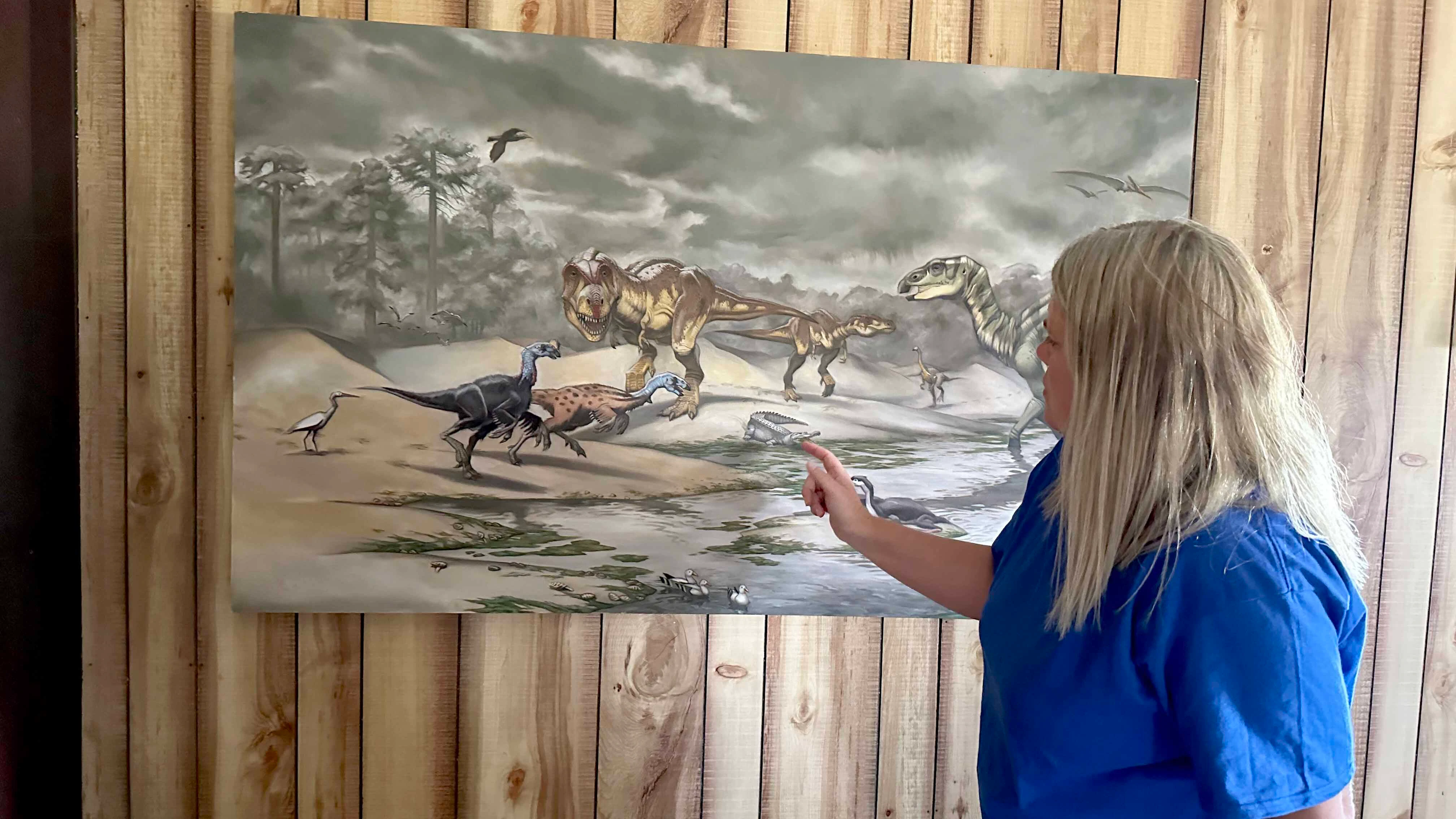
The Zerbst Trackway is one of the most extraordinary fossils of its type. It contains trace fossils from multiple dinosaurs and other animals that lived in Wyoming during the Late Cretaceous period.
Identified trace fossils include the footprints of the ostrich-like Struthiomimus, the tail swish of a crocodile, and one of the few known footprints from Tyrannosaurus.
The crown jewels of the Zerbst Trackway are the footprints of Saurexallopus zerbsti, a large bird-like caenagnathid or “oviraptor,” named in honor of the Zerbst family.
The vandalized footprint was left by a large hadrosaur. Stauffer had an idea why somebody might find it interesting.
“It definitely has impressions of the pads of the dinosaur’s foot, along with a toe drag,” she said. “All of the molding materials were around that print, and someone had poured blue molding material into it.”
Molding and casting are processes used to make replicas of fossils, preferably without damaging the original.
Whoever was responsible for the failed mold was covertly trying to get a copy of the hadrosaur footprint. Their intent was to leave the original there and make off with a replica, even if they had to trespass to get it.
They were also presumably hoping to find a way to reproduce and profit from a rare dinosaur fossil without sharing the proceeds with the Zerbst Family.
That’s theft.
Stauffer was, at least, relieved they didn’t try to chisel the footprint out of the rock. It would be extremely difficult to do, but that hasn’t stopped people.
“When we realized the Saurexallopus tracks were from two dinosaurs walking side by side, someone came and tried to take one of them out of the foot-thick rock,” she said. “They destroyed it. It was one of the only ones in the world, and they destroyed it.”
Stauffer isn’t sure who tried to make a mold of the hadrosaur track or when they attempted to do it. She said she believes it had to have been within the last month.
What’s truly baffling to Stauffer is that she wouldn’t be opposed to someone wanting to make a mold of the unique dinosaur footprint. If they’d asked, she probably would have said yes.
“If they had come to me and said they had a crazy idea to do a mold of it, I would have wanted to do it,” she said. “I like stuff like that. Let's do it together. Let’s make this work. But they decided to go the shady way.”
Stealing Statues
The 7,000-acre Zerbst Ranch has been in the family for five generations. Charles Zerbst homesteaded there in the 1890s, and it’s been their home ever since.
Stauffer has spent the last year working on a rebrand of “Paleo Park” to honor her family’s legacy while utilizing their ranch to its fullest potential.
“We're trying to diversify so dinosaurs aren’t the sole part of our ranch,” she said, “We’ve had different folks wanting to come out to do yoga and bird-watching retreats, and there’s a lot of interest coming in.”
That’s why the timing of this vandalism is especially discouraging. For Stauffer, it feels like a violation of trust after decades of readily welcoming people from all walks of life to enjoy her family’s legacy.
“It’s the audacity of doing something like that,” she said. “It’s like sneaking into somebody’s yard to make a copy of a statue you really liked. I would never in my life think that I could go into someone's private place to do something like this.”
The good news is that the rare hadrosaur footprint doesn’t seem to be permanently damaged, Stauffer said. She had already removed most of the blue silicone that had been abandoned there.
“If they had done a better job, I probably wouldn't even know that someone took molds of the tracks,” she said.
Leonard Zerbst eagerly invited people to enjoy his ranch and its treasures. Stauffer knows her father would be proud of how the family has kept his legacy alive by bringing school groups and excavation teams from across the country to have a life-changing moment.
That makes this brazen act all the more upsetting.
“If you ever stood beside those tracks and felt that moment of wonder, we're asking people to understand what was lost here,” she said. “Trust was lost. A little bit of hope was lost. And a place we loved sharing with complete strangers suddenly doesn't feel as safe anymore.”
Changed Before You Leave
The Zerbsts have been doing two-hour tours of their ranch, including a visit to the Zerbst Trackway, for years. After discovering trespassing, vandalism, and attempted theft, Stauffer decided to close the trackway indefinitely and is questioning whether they should continue offering tours.
“The old saying is true: one bad apple really can ruin it for everyone,” she said. “We’re still going to ponder what to do, but we’re going to start implementing things to protect the tracks. They’re too precious.”
Meanwhile, the ranch is still open to curious minds with genuine intentions.
The Zerbst Ranch has produced some of the best Late Cretaceous dinosaur fossils ever found. Those include one of the best-preserved Triceratops specimens ever, complete with large patches of skin, and two Edmontosaurus mummies from the newly discovered “mummy zone.”
“We want to go out and let others go out to do more prospecting,” Stauffer said. “The idea that there's another mummy out there somewhere, looking for some air, is exciting.”
Stauffer’s greatest delight is facilitating someone’s first experience with the prehistoric past, coupled with the legacy of her family’s Wyoming ranch. She described the exhilaration she felt when she helped a group of college kids from California find their first fossil, a stingray tooth.
“It's funny to sit back and watch the ranch do its magic to them,” she said. “Seeing that look on a kid's face when they find their first tooth or a fragment of a bone is what makes me happy.”
Despite the breach of trust, the ranch will remain open to people willing to explore with integrity. According to Stauffer, that’s exactly “where Mom and Dad really wanted (the ranch) to go.”
“I always (tell visitors) that the ranch will change your life before you leave,” she said. “You might not know it, you might not realize it, but it will change in a slight way before you leave. And then they’ll say something and realize that the ranch changed them.
"That’s what we want to keep and preserve as best we can.”
Andrew Rossi can be reached at arossi@cowboystatedaily.com.


