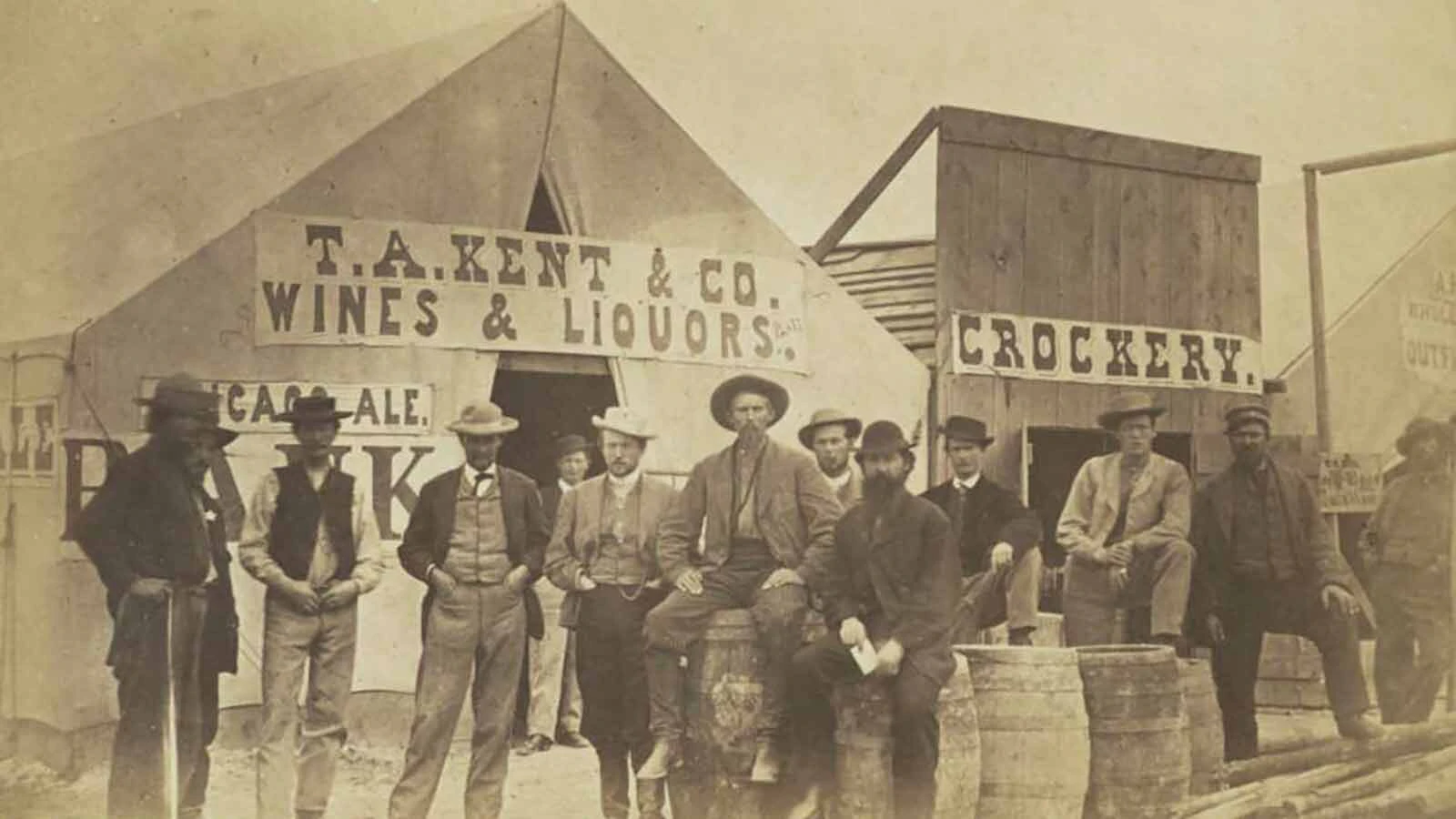
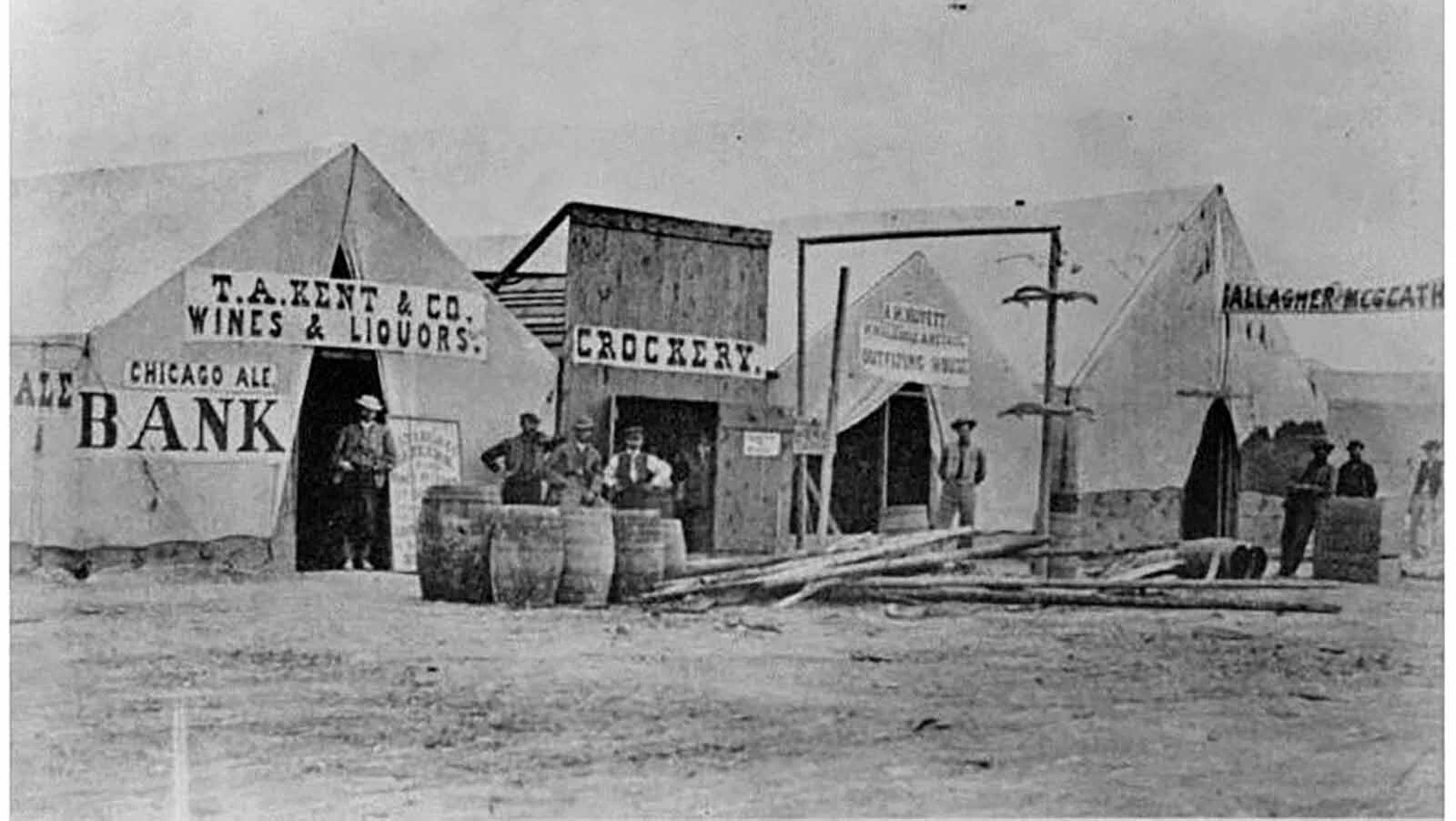
Benton rose overnight in the Wyoming Territory with canvas tents, sectional housing and buildings on wheels. It was July 1868 and the town “bred by the devil” was ready for business.
“There are perhaps, three thousand people in and around Benton,” brothers Legh and Fred Freeman wrote in the Aug. 11, 1868, Frontier Index newspaper. “To give an idea of the on-wheels movement we will mention that the office of Wells, Fargo & Co., torn down at Laramie three days before, had its sectioned shingle roof on, and stage business resumed in it that night.”
The Frontier Index, known as the “Press on Wheels,” was also a movable business that published its paper in these overnight towns.
“Business was so lively that we telegraphed the Laramie editor of our paper, to wheel on at once to Benton,” the Freeman brothers wrote. “We since learn that our new power press is threshing out the work there.”
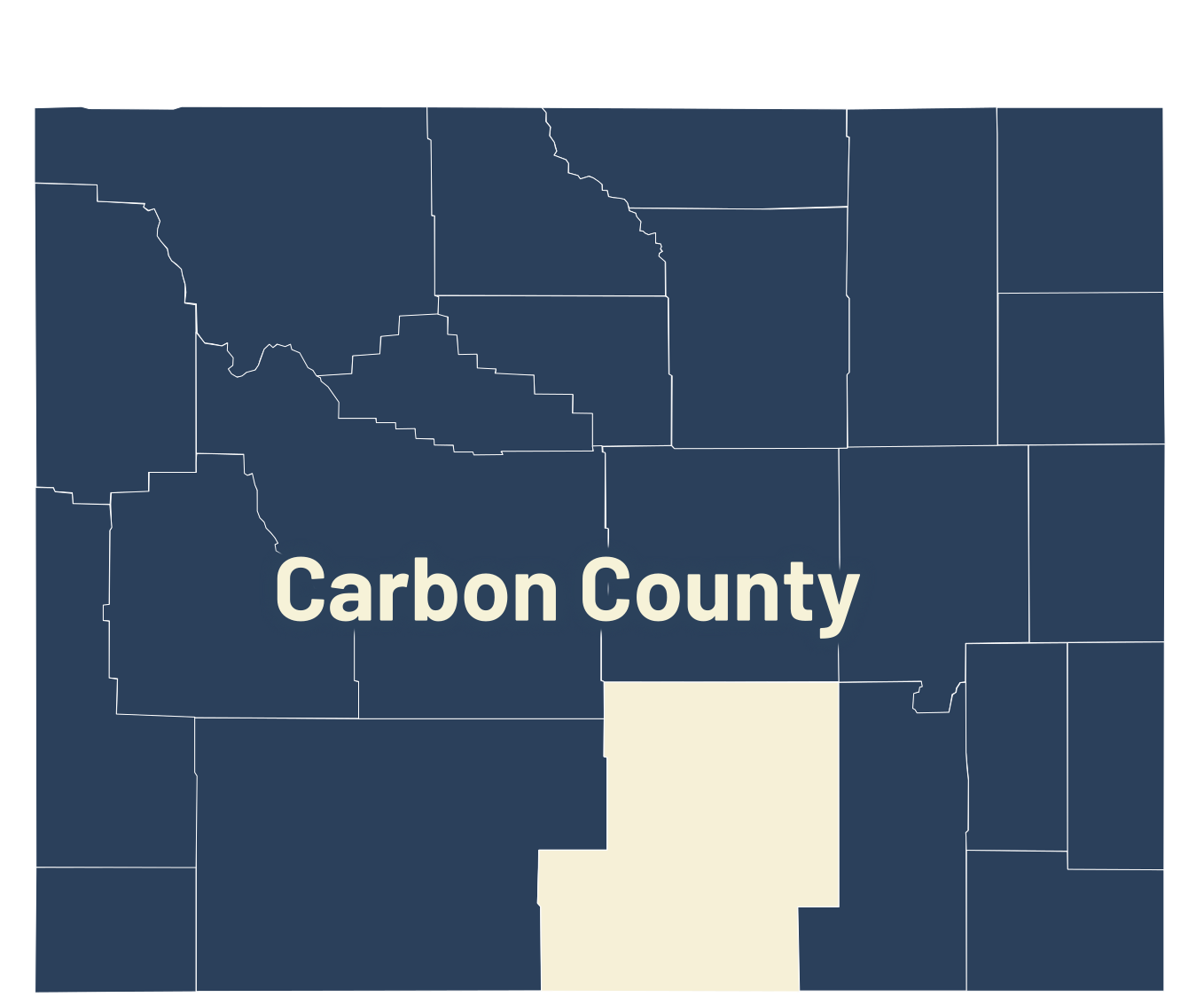
Benton was an end-of-track town on the construction front of the Union Pacific Railroad, about 12 miles east of present-day Rawlins and just west of present-day Fort Fred Steele.
The Baddest Reputation
Benton had earned a reputation as the worst of these Hell’s Tent Towns, with claims that 100 men had been murdered there in its short lifetime. Their reputation as a home to “bawdy women and swindlers” was earned when visitors passed through and were shocked by what they saw.
According to historians Mary Lou Pence and Lola M. Homsher, co-authors of “The Ghost Towns of Wyoming,” one story that portrayed Benton’s devilishness had been a misunderstanding.
Water for this new town was one of its most valuable commodities. It had to be carted by team and tank from the North Platte River two miles away. The water hauler charged an exorbitant 10 cents a bucket.
Seeing a new way to advertise, a whiskey distiller paid the hauler to paste large billboards on each side of his tank that read "Tanglefoot Whisky."
A Mormon woman soon arrived by train and was waiting for a stagecoach for the next leg of her trip to Brigham's Temple. When she saw the poster-plastered wagon and women rushing from their doors with pails in hands, Pence and Homsher said she became indignant.
"Why, the sinners!”, the Mormon woman said. “They're buying whisky by the bucketsful!"
Grant & Buffalo Bill Campaign
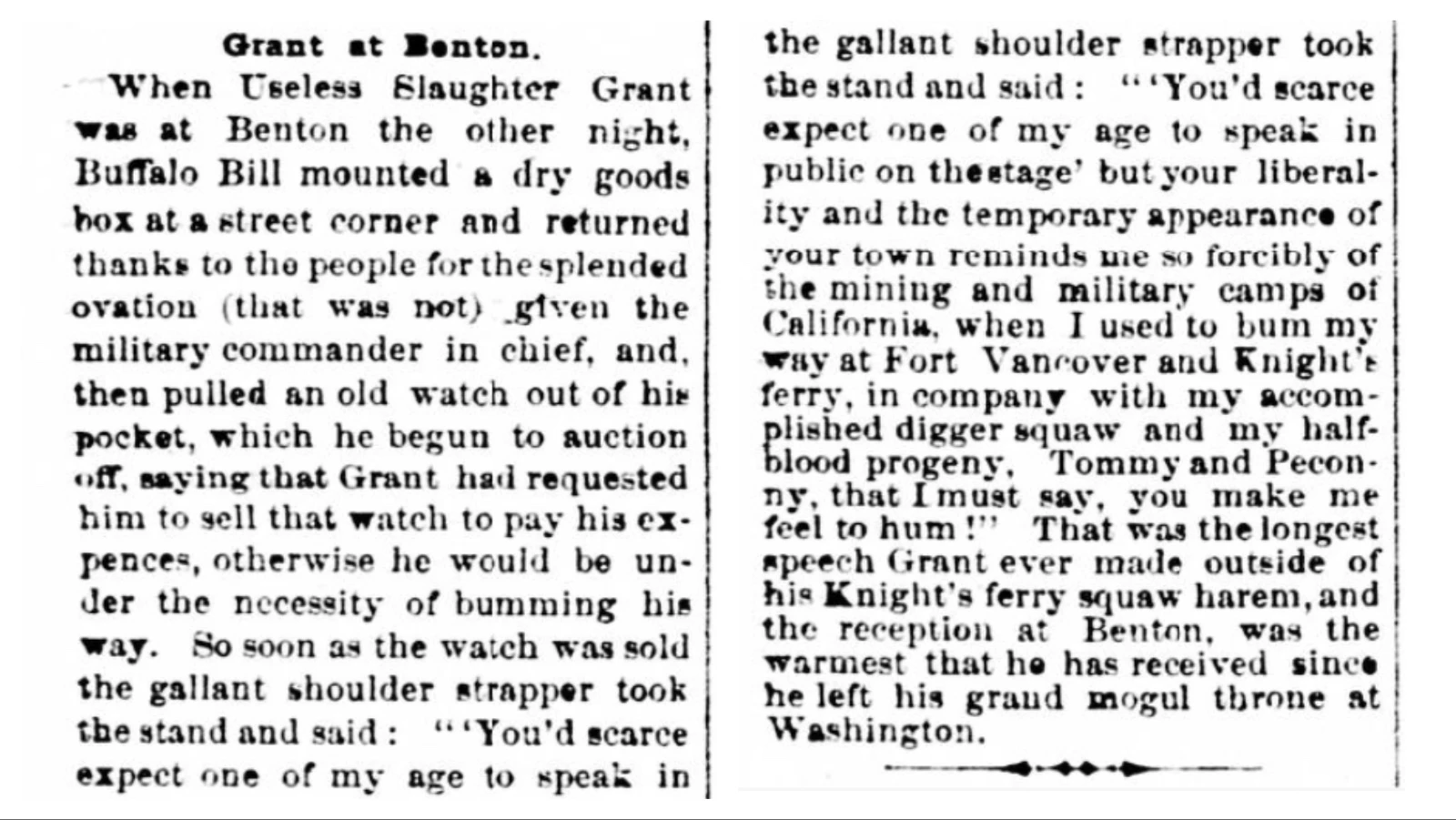
To add to Benton’s reputation, even future presidents visited the tent town. Ulyssis S. Grant arrived with Buffalo Bill Cody. The Republican candidate was said to have given a stump speech at Benton to an eclectic group of people, ranging from gentlemen to railroad laborers.
The Freeman brothers were heavily Democratic and former Confederate soldiers so the story they ran in the Aug.11, 1868, Frontier Index was a satirical attack on Grant and Buffalo Bill.
“When Useless Slaughter Grant was at Benton the other night, Buffalo Bill mounted a dry goods box at a street corner and returned thanks to the people for the splendid ovation (that was not) given the military commander in chief,” they wrote.
The editors claimed Buffalo Bill then auctioned off an old watch to pay for Grant's expenses on his campaign in Wyoming. Otherwise, Grant would be forced to “bum” his way back to Washington, D.C.
Mundane Shootings
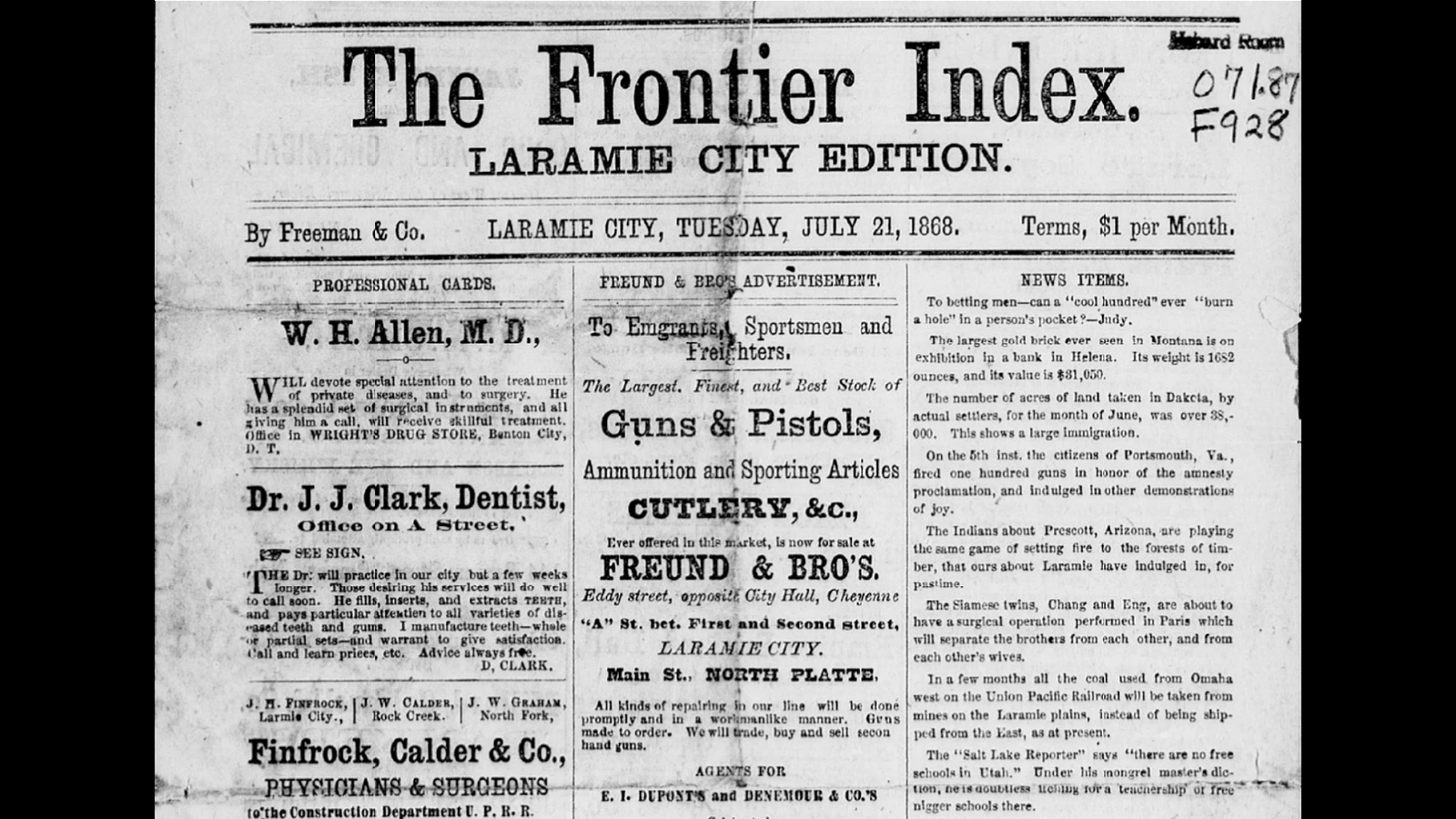
In the same paper, when the Freeman brothers shared the local gossip, usually reserved for such tidbits as who had arrived in town or who was engaging in business, the story was about the latest shootings. This time Brownsville, a construction camp not far from Benton, was the scene of several murders.
A shooting affray — a criminal offense involving at least two people — occurred on the streets between two men employed in Creighton's telegraph outfit, the Freeman brothers reported.
As the story goes:
“They had been throwing dice for a pistol, when they became dissatisfied, and the person who owned the pistol — James Williams — refused to give up the money received, which led to a difficulty in which he was shot and supposed mortally wounded. The murderer has escaped.
"A man, named John Wood, accidentally shot himself on Sunday morning while drawing his pistol to shoot a man in a gambling house. He is now in the hospital and is doing well.
"Mike Meehan was shot by a ranchman near Reynolds & Dowling's grading camp, about eight miles from Brownsville.
"The cause of the affair was, the graders were on a strike, and passed an order amongst themselves that any ranchman who would interfere with their strike or sell liquor to drunken men, they would clean out, and after giving them warning, they still sold liquor to the men, when the graders turned out and demolished some fourteen saloons.
"During the row, Michael Meehan was shot and instantly killed. The ranchman delivered himself up to the military authorities at Fort Steele."
Rise and Fall of Benton
During its short existence, 200 framed tents and portable buildings had been erected, lots sold to the highest bidder, from $800 to $1,000, and dusty streets laid out. Benton was plotted into five wards and a mayor and one alderman from each ward had been appointed.
It was thought, briefly, Benton might become a more permanent town. A forwarding house was even established to take advantage of the active business taking place.
The most prominent building was described by Pence and Homsher as an immense canvas tent lit by imported chandeliers.
“An immense plate-glass mirror behind the corner bar reflected a strange hubbub of humanity,” Pence and Homsher wrote. “Pistol-packing mamas; lace-gowned and French-heeled dancing damsels; plaid-vested and fob-twisting come-on spielers; campaign-uniformed Indian fighters; corduroyed and buckskinned freighters; bow-tied and velvet-coated dude dandies — all taking chances with fate.”
The historians claimed more than once during his night shift an overworked barkeep would have to change into another clean white coat to be rid of spatters of beer, bullets or blood.
By September 1868, the railroad had moved on, and so did nearly everyone else.
The depot was moved east three miles to Fort Steele and Rawlins was designated a rail terminal. Pence and Homsher said that as tents were erected in the new town of Rawlins, former Benton residents were hesitant to buy lots and be fooled again into spending money on real estate that would not last.
Benton only existed for three months before the town was dismantled and it became one of Wyoming’s most infamous ghost towns.
Jackie Dorothy can be reached at jackie@cowboystatedaily.com.