
Wyoming's uranium industry is accelerating after decades of limited exploration and production, driven by growing demand for nuclear energy, national security concerns and an effort to reduce America's reliance on foreign fuel supplies.
"There's a lot of interest in uranium in Wyoming right now," said Travis Deti, executive director of the Wyoming Mining Association.
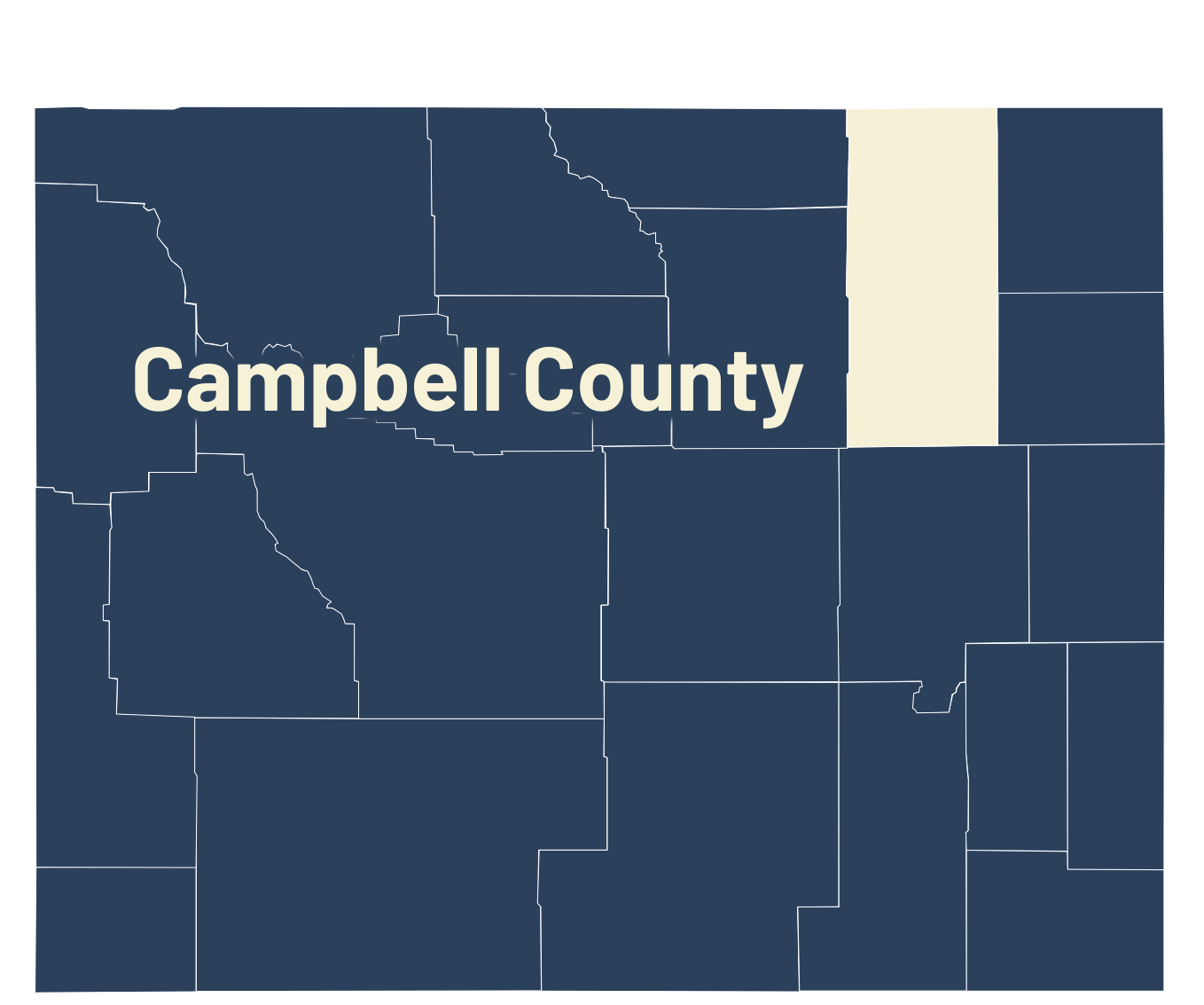
Much of that activity is centered in the Powder River Basin in northeast Wyoming, where companies ranging from established producers to smaller exploration firms are drilling again in what Deti believes is the beginning of another uranium boom.
"Our companies that have been on the ground for a while are producing again after a little down period," Deti said. "Domestic uranium production is really positioned well."
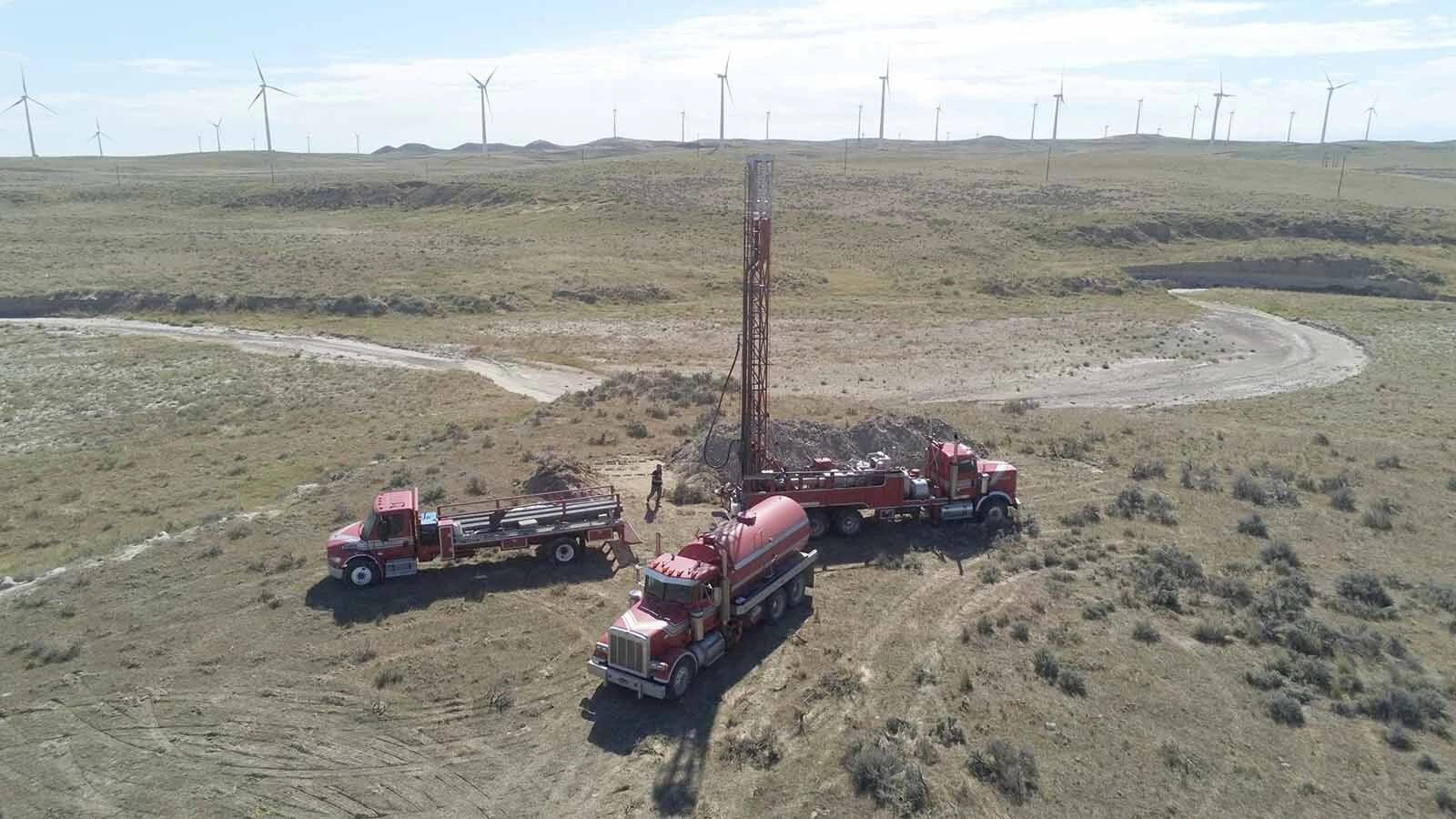
Among the companies expanding their footprint is American Uranium Ltd., which is in its fourth season of drilling near Casper.
"It's encouraging to see these companies getting back into business," said American Uranium CEO Bruce Lane.
A Growing Need For Domestic Uranium
For decades, the United States has imported most of the uranium used to fuel its nuclear reactors.
"We've been reliant on foreign actors that are not necessarily our friends," Deti said.
Nuclear energy still supplies about 20% of the nation's electricity, and the United States operates more nuclear reactors than any other country in the world, according to the U.S. Energy Information Association.
According to Lane, those reactors consume between 50 million and 55 million pounds of uranium annually, with the overwhelming majority coming from overseas suppliers.
"We've been off the playing field for a long time," Deti said. "It's time to get back on and build up our capacity to power our plants."
Congressional efforts to rebuild domestic nuclear fuel supplies, coupled with a ban on uranium imports from Russia, have accelerated interest in American production — along with a renewed push to develop advanced nuclear plants in Wyoming and the U.S.
Lane said the supply gap extends beyond the United States. Worldwide uranium mines produce about 140 million pounds annually, while demand is approaching 200 million pounds.
"The uranium industry has been on its knees all over the world," Lane said.
At the same time, roughly 80 nuclear reactors are under construction globally, many of them in China, he added. Each new reactor requires about 1.5 million pounds of uranium for its initial fuel load and about 500,000 pounds annually thereafter.
Uranium has strategic importance beyond commercial electricity generation. It is used by the federal government for defense applications like fueling naval reactors, while the military is exploring small, modular nuclear reactor technologies.
"I think everyone is realizing how vital it is for national security," Lane said.
American Uranium Drilling Again In Powder River Basin
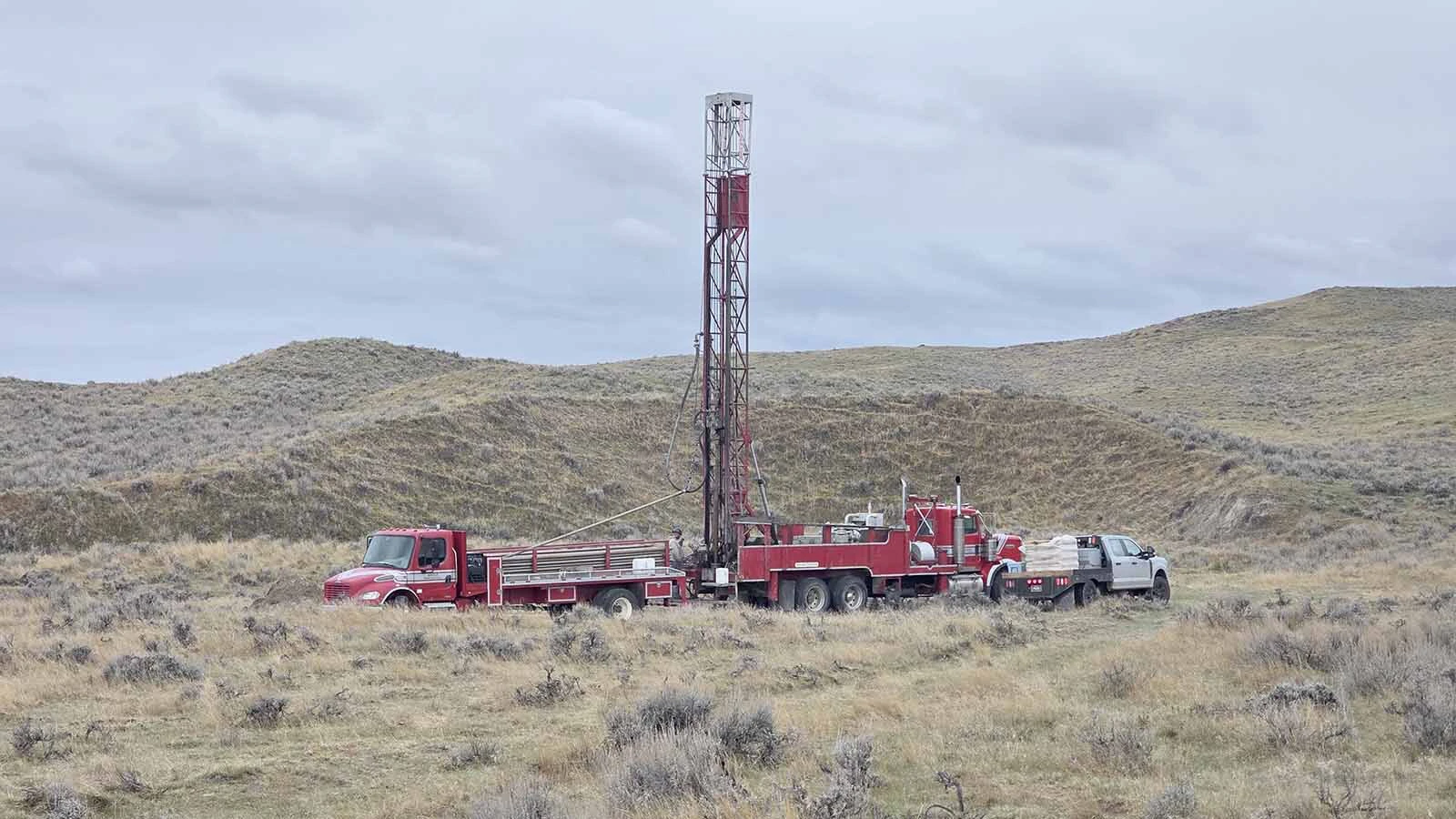
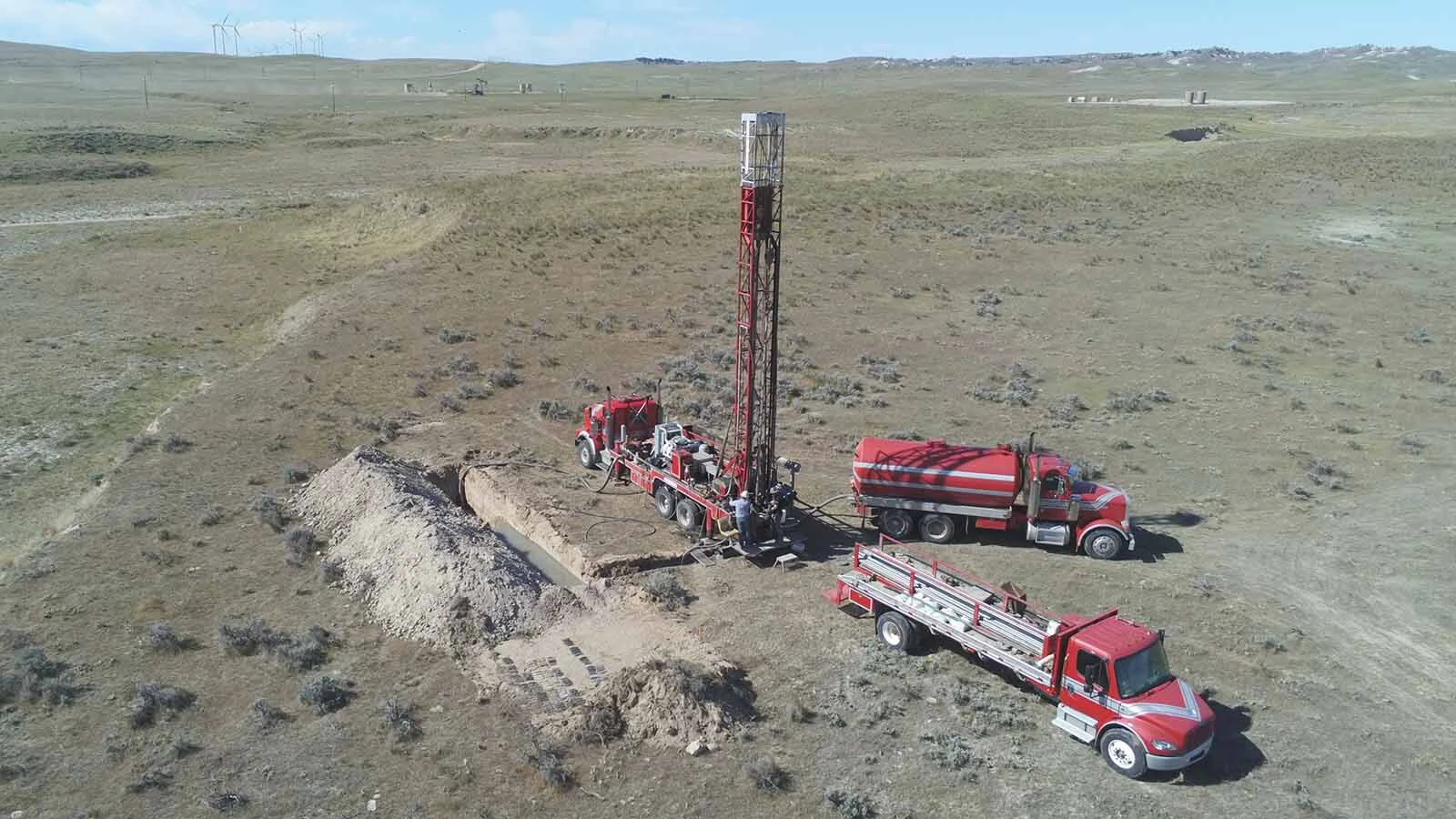
American Uranium has permits to drill 121 holes as part of its exploration program in the Powder River Basin. More than half have already been completed.
Lane traveled from Australia to Wyoming last week to visit the project and discuss the future of domestic uranium production with policymakers in Washington, D.C.
The company expects to complete its current drilling campaign within the next three weeks and plans to release an updated resource estimate in July.
"Our objective is to expand the project and improve confidence in the resource," Lane said.
The results will help determine future production scenarios, economic forecasts and a timeline for permitting and construction of in-situ production.
If development proceeds as planned, Lane said the company could be producing Wyoming uranium by 2029 or 2030.
Engineers are also conducting hydrogeological studies to better understand the aquifer that hosts the uranium deposit.
Unlike historical open-pit uranium mines, Wyoming producers primarily use in-situ recovery, or ISR, mining. The process involves circulating a mild alkaline solution through uranium-bearing groundwater hundreds of feet below the surface, dissolving the uranium and pumping it to the surface for processing.
Resin beads capture the uranium from the water. The uranium is then stripped from the resin and dried into uranium concentrate, commonly known as yellowcake.
"All we're doing is treating the water, a bit like water softening," Lane said. "It's a very clean process."
An Industry That Nearly Disappeared
Wyoming was once at the center of a thriving uranium industry.
Lane said domestic production reached roughly 44 million pounds annually during the 1980s. About 27% of that, or about 12 million pounds, came from Wyoming.
But the industry collapsed as large volumes of inexpensive uranium entered world markets following agreements between the United States and Russia after the end of the Cold War.
American producers struggled to compete against those lower prices, and exploration largely stalled. Now, under current geopolitical pressures, domestic production is beginning to rebound.
Lane said U.S. uranium output is expected to reach 4 million to 5 million pounds this year, up from about 2.5 million pounds in 2025.
Wyoming accounts for a significant share of that production, Deti added.
Momentum also increased after uranium was designated a critical mineral by federal officials in late 2025, a move Wyoming's uranium industry had long advocated for.
Deti said Wyoming's extensive uranium resources and favorable regulatory environment position the state to remain a leading national producer.
Data Centers Could Add To Demand
Supporters of uranium development also point to another fast-growing source of electricity demand: data centers.
The United States is expected to experience a sharp increase in power consumption over the coming years as companies build facilities to support artificial intelligence and cloud computing.
"We've got to get that power from somewhere," Deti said.
Natural gas remains the easiest near-term option for many developers, Lane said, but some technology companies are increasingly examining nuclear energy because it provides carbon-free, around-the-clock power.
Small modular reactors are viewed by many in the industry as particularly well suited for data centers because they can provide reliable electricity over long periods without the intermittency challenges associated with some renewable energy sources.
"The American data center buildout is real," Deti said. "We are in a race with the Chinese and other nations."
Wyoming, he added, is uniquely positioned because it produces many of the fuels needed to generate electricity, including coal, natural gas and uranium.
"With the projected significant growth in AI data centers, you really need every reliable source that you can get," Deti said.
For Wyoming, Lane sees uranium as another chapter in the state's long history of energy development.
Taxes generated by energy projects help support schools, hospitals and infrastructure.
"Uranium is one mixed phase of energy development that can really benefit the state," Lane said.
Deti agrees.
"We're going to need the fuel, and the fuel starts with Wyoming uranium," he said. "We have a tremendous opportunity."
Kate Meadows can be reached at kate@cowboystatedaily.com.


