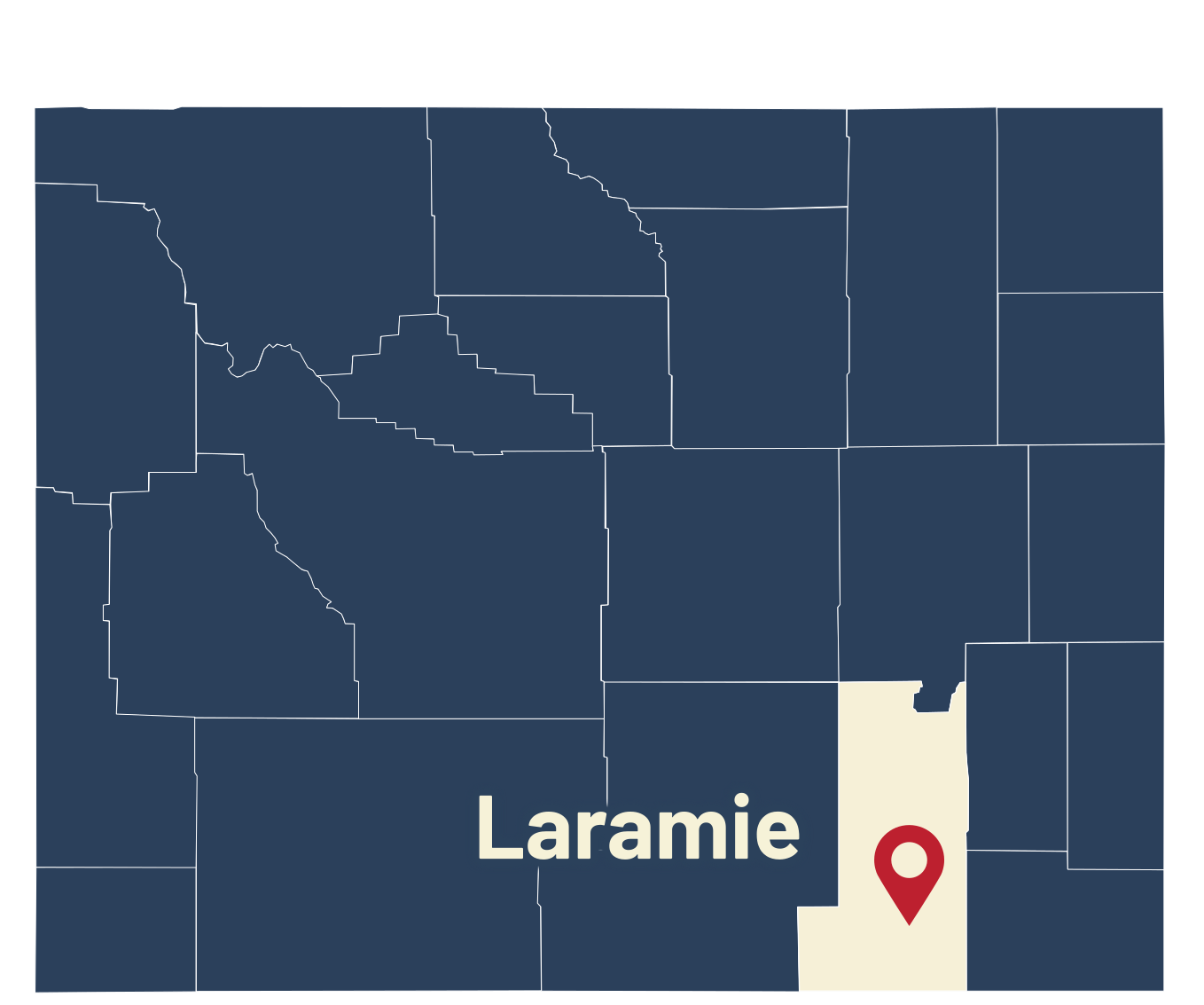
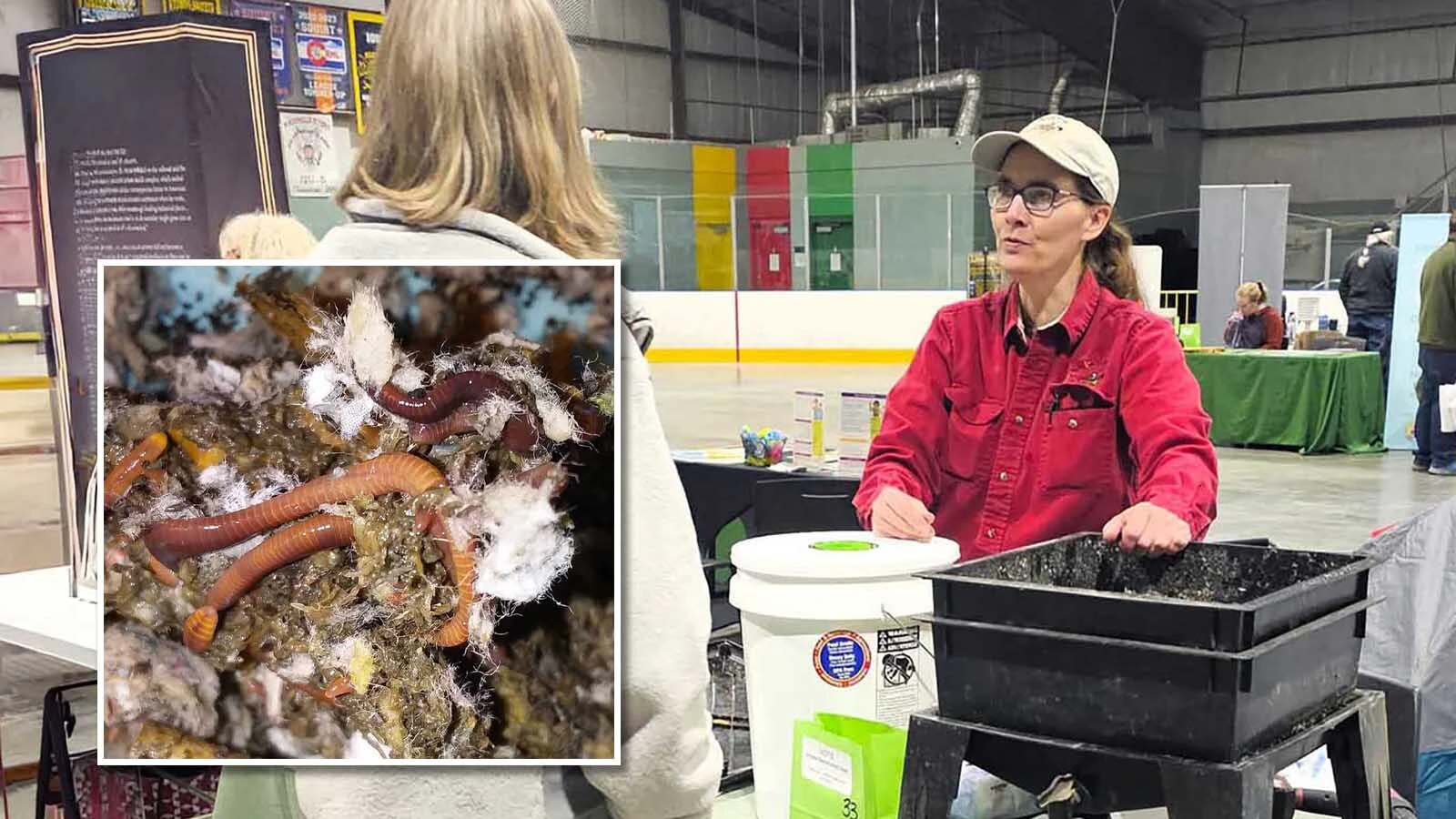
Erika Babbitt-Rogers grew up in agriculture and always figured livestock would be part of her life, but she didn’t expect that “livestock” would be worms.
Like many people in Wyoming, the Laramie woman used worms to compost and improve her garden soil.
Around 2009, she got the idea to raise worms on a larger scale and sell them for fishing bait and food for people's pet reptiles.
Where others see slimy creepy-crawly things they’d rather not handle, Babbitt-Rogers saw opportunity.
“I looked around here and I didn’t see that anybody else around here was doing that, so I decided to go for it,” she told Cowboy State Daily.
Becoming The Worm Wrangler
Then she had to decide what to call herself, in the business sense.
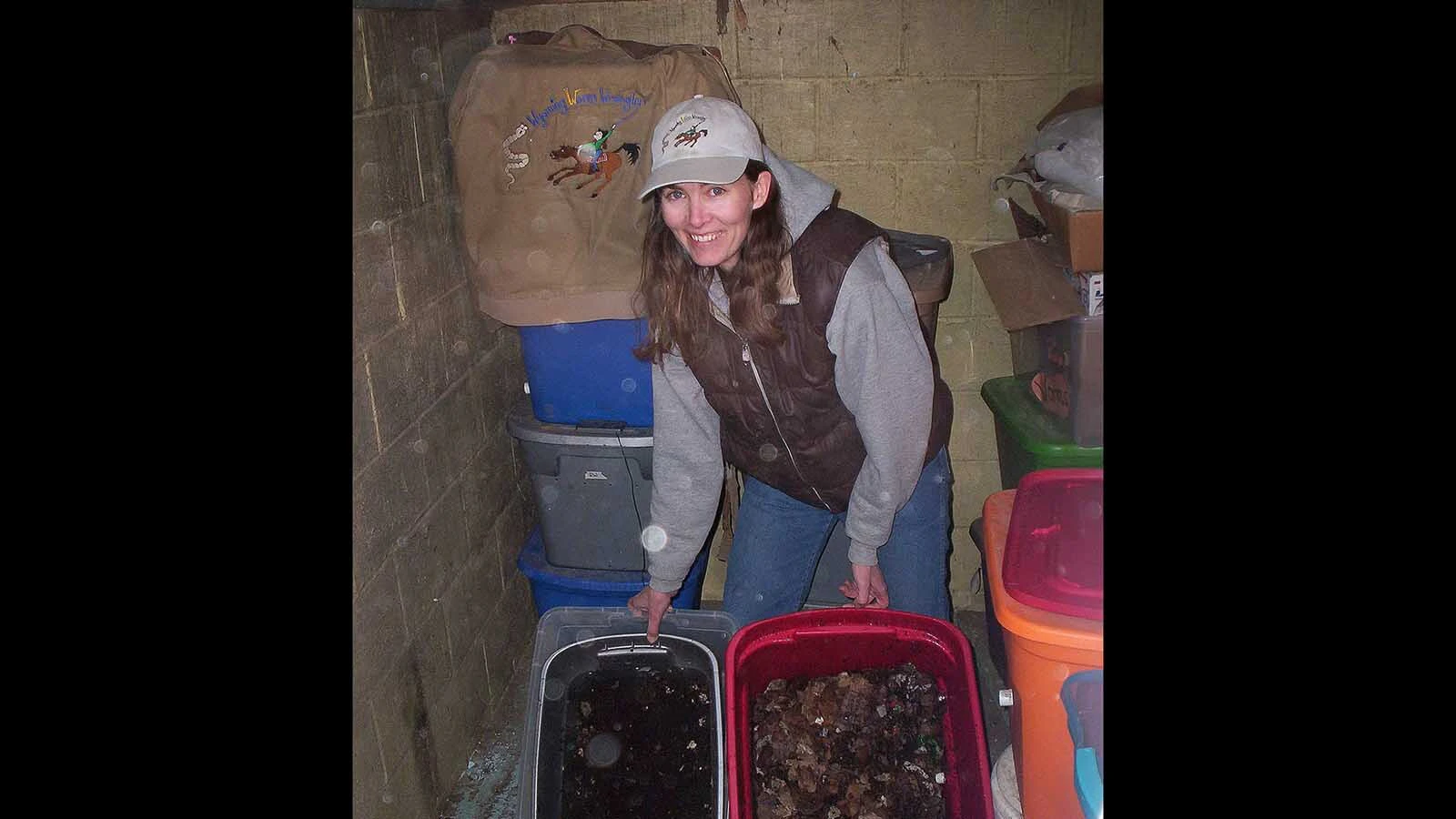
“I was a wrangler for a guest ranch, and I thought, ‘OK, wrangler. Well then ‘Worm Wrangler,' that will be great,’” and the moniker stuck.
She had a “Wyoming Worm Wrangler” logo designed, featuring a cartoon image of her on horseback wielding a fishing pole instead of a rope, wrangling a worm from the saddle.
“I have it on a T-shirt and people will ask me, ‘What is a worm wrangler,’” she said, which gives her the opportunity to tell her about her business.
Worm Poop Is A Hot Item
While building her worm wrangler brand, Babbitt-Rogers discovered that there’s also considerable demand for “worm castings.”
That’s a fancy way of saying worm poop which, it turns out, makes great fertilizer.
“Everybody’s wanting that worm poop on their gardens,” Babbitt-Rogers said.
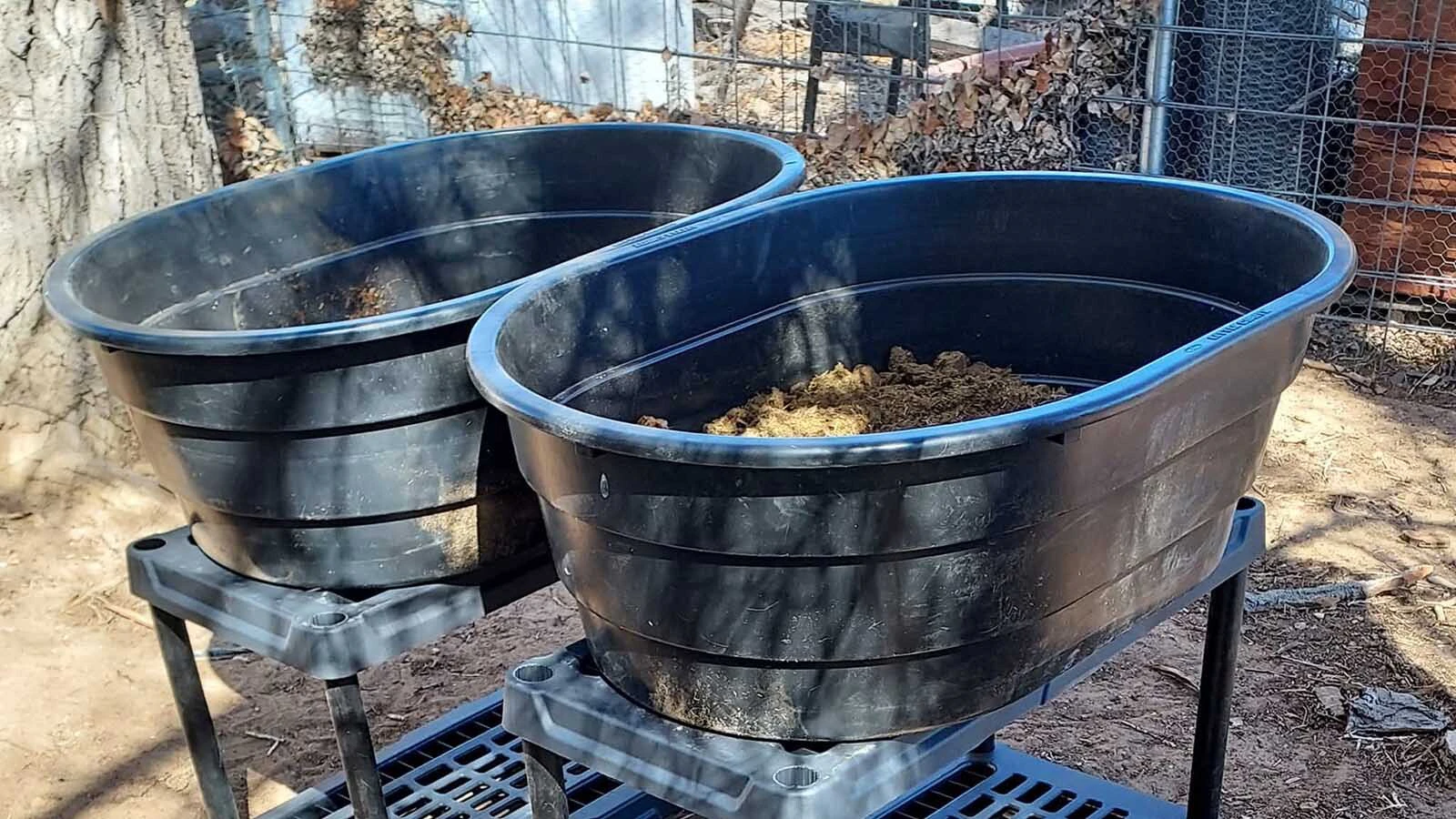
Babbitt-Rogers raises most of her worms in 40-gallon rubber tubs, using a wetted mixture of shredded cardboard, paper and old leaves as bedding.
One effective way of harvesting worm castings is to shove the old bedding to one side of the tub and place fresh bedding in the other side.
“The worms will migrate toward the fresh bedding,” she said.
Then she can sift through the old bedding to find the worm poop.
Refined worm castings look about like “coffee grounds” and are packed with “slow-release fertilizer” for plants, she said.
Some people who buy worm poop soak it in water to make “tea” for their gardens, she said.
To be clear, that’s tea to sprinkle or spray on houseplants or lawns, not to drink from a cup.
15 Pounds Of Worms
She raises a variety of worms, including common earthworms, mealworms, European worms and what she calls “super worms.”
“Super worms just look like extremely big meal worms,” she said.
Raising premium-quality worms requires hitting the right temperature range and feeding rates. The worms she raises do best at temperatures of 60 to 75 degrees.
She feeds them a mixture of vegetable scraps, coffee grounds, loose cheese and the like.
“Anything you can compost, worms will eat,” she said.
It’s important to not put too much food into the bins, or it will start to ferment and harm the worms, she added.
Babbitt-Rogers also raises some of her slippery livestock outside in “worm beds” about 2 feet wide by 20 feet long.
However, those also attract hungry critters.
“Everything that likes to eat worms will get into those worm beds,” including spiders, skunks and mice, Babbitt-Rogers said.
Worm production is measured by the pound.
“The average is about a pound of worms per square foot of worm bed surface,” she said. “I sell about 10 to 15 pounds of worms per year.”
For now, worm-wrangling is a side business, although someday, “I might retire into it,” she said.

Nightcrawlers For Fishing
When most people think of nightcrawlers, they think of the worm behemoths they find on their lawns after a rain.
“Those big nightcrawlers everybody thinks about for fishing are soil-dwelling worms,” Babbitt-Rogers said. "They don’t do it well in tubs. They actually like it colder."
The European nightcrawlers she raises are slightly smaller but are “an awesome little baitworm,” she said.
Four Seasons Anglers in Laramie is among the businesses that sell Babbitt-Rogers’ worms.
Four Seasons is almost exclusively a fly-fishing shop, but there is a customer base that loves the Worm Wrangler's nightcrawlers, store employee Doug Birkholz told Cowboy State Daily.
They’re a sure-fire bait for Wyoming trout, he said. “Any of the trout species are worm-eating species."
And for most angling in the Laramie area, “if it’s not a trout, then it’s a sucker or a carp,” he added wryly.
‘We Want To Hold The Worms!’
Babbitt-Rogers said she frequently sells worms and castings at the Laramie Farmers Market, and also does speaking engagements about worm wrangling.
She’s spoken at Wyoming farmers markets conferences and the Wyoming Food Coalition. She enjoys sharing knowledge about worms, particularly with children.
“I love teaching the kids,” she said. "The kids are always saying, ‘Oh, we want to hold the worms!’”
Contact Mark Heinz at mark@cowboystatedaily.com
Mark Heinz can be reached at mark@cowboystatedaily.com.