
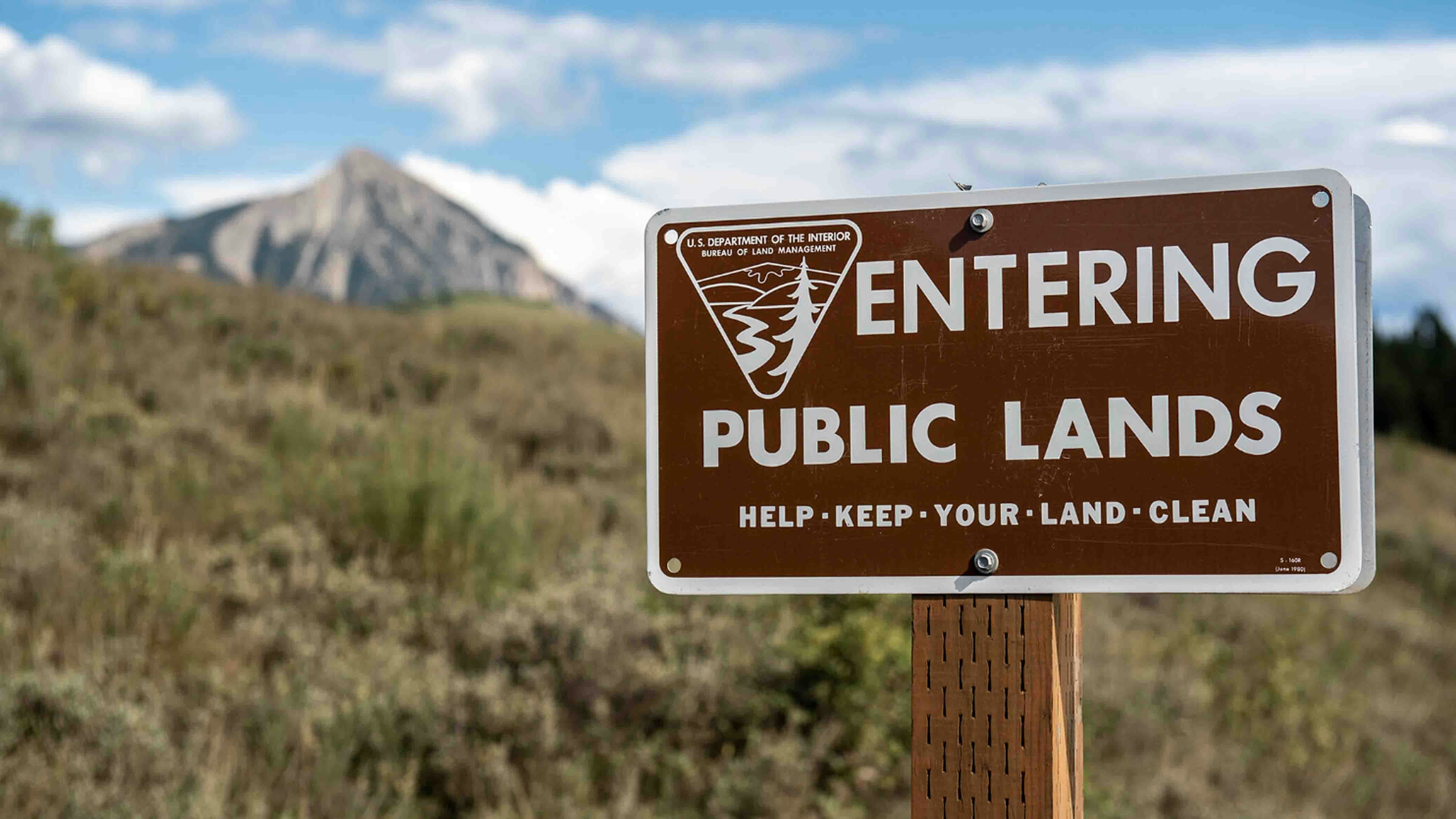
Pushing back against any more attempts to sell large swaths of federal lands, a pair of Democrats are pushing bills in the U.S. House and Senate to forbid such sales.
The lead bill is H.R. 9176, the Public Lands Integrity Act, introduced to the House earlier this month by Rep. Gabe Vasquez, D-New Mexico. A mirror bill was introduced in the Senate by Sen. Michael Bennet, D-Colorado.
Wyoming Republicans Rep. Harriet Hageman and Sens John Barrasso and Cynthia Lummis oppose the bills.
Aaron Bannon, executive director of the Wyoming Wilderness Association, told Cowboy State Daily that he thinks this is one time Wyoming’s congressional delegation should cross party lines.
“They might not want to sign on to a bill that came from a Democrat,” Bannon said.
He added that if they do, “They would not be disappointing the people of this state” but rather supporting the bill.
As evidence, he cited widespread pushback to a 2025 attempt by Sen. Mike Lee, R-Utah, to include federal land sales in President Donald Trump’s One Big Beautiful Bill Act.
After criticism from hunters, hikers, environmentalists and many others, Lee dropped his bid to sell federal lands.
At the time Hageman backed Lee, arguing that the lands he wanted to put up for sale weren’t in good hunting or recreation areas, and could have been used for housing development and the like.
What The Bill Proposes
The Public Lands Integrity Act aims to block any future attempts to propose federal land sales through the budget reconciliation process, which allows measures to be passed by a simple majority in the Senate.
It would therefore “close a loophole” allowing sales attempts like Lee’s to be slipped into budgetary procedures, according to Vasquez
“The Public Lands Integrity Act would amend a section of the Congressional Budget Act — commonly known as the Byrd Rule — to clarify that any provision resulting in the sale, transfer, or disposal of federal public lands is considered extraneous and outside the scope of budget reconciliation,” according to a statement from Vasquez.
That doesn’t mean federal land sales or exchanges would be shut down altogether, he argued.
The act “would not affect legitimate land exchanges, local conveyances, permitting reforms, grazing, timber management, energy development, or other public land management decisions,” Vasquez stated.
Delegation Says No
In statements to Cowboy State Daily, Hageman, Barrasso and Lummis said they’ll oppose the Public Lands Integrity Act.
Barrasso stated that it would undermine best land management practices at local levels.
“Local communities, not broad federal legislation, should determine how land is managed,” he said. "I remain committed to responsible, multiple-use management of our federal lands — including energy development, grazing, recreation, and timber management.”
Hageman stated that the bill takes the focus off of what she sees as a push to restore sound management to federal lands, including rescinding or nullifying the 2001 Roadless Rule.
Nullifying the Roadless Rule will make lands “manageable again,” Hageman stated.
“This bill ignores the reality facing public lands that continue to suffer under federal mismanagement,” she said. "It recklessly disregards the catastrophic wildfires and beetle outbreaks which have devastated forests across the country.
“I oppose any effort to make public land management more difficult with additional layers of red tape that threaten our Western way of life."
Lummis said the bill would “lock up” lands that belong to Wyoming’s people.
"The federal government owns nearly half of all land across the West — in states like Wyoming, Nevada, and Utah, that figure reaches or exceeds 50%. That level of federal control creates real challenges for our local communities, state governments, and effective land management. I will not support any legislation that advances efforts to lock up our public lands and shut out the ranchers, energy producers, recreationists, and families who depend on them,” she said.
Where We Go For Day Hikes
Bannon said the Public Lands Integrity Act would prevent the sales of “large swaths” of federal land.
He added that the attempts by Hageman and others to end the Roadless Rule go against many Wyomingite’s wishes.
“Hageman’s bill has a road-building mandate in it. That’s not what Wyoming people want,” he said. “I don’t think many people realize that the place they go for their daily hike is in a roadless area."
Craig Benjamin, executive director of the Wyoming Wildlife Federation, said his organization hasn’t taken an official stance on the Public Lands Integrity Act. But it seems to lean in the right direction.
“We haven’t done a deep review yet, but the basic principle lines up with where WWF has long stood: public lands decisions should be made in the open, with hunters, anglers, local communities, and wildlife interests at the table,” he said.
“Wyoming’s public lands are important to our wildlife, outdoor heritage, and way of life,” he added. "Decisions about their future deserve public scrutiny and full debate, not a shortcut through a federal budget bill."
Mark Heinz can be reached at mark@cowboystatedaily.com.


