As Father’s Day approaches, our screens and storefronts fill with the usual superficial tributes—greeting cards celebrating backyard barbecues, ties wrapped in glossy paper, and sentimental television commercials.
But step outside this commercialized warmth and a much harsher reality emerges: our culture has spent decades systematically denigrating, dismissing, and dismantling the role of the father.
We see it in media, where the father is routinely portrayed as a bumbling sitcom punchline—a redundant figure existing merely as an ongoing joke.
We see it in social theory, which increasingly views traditional paternal attributes not as vital structural pillars, but as something outdated, unnecessary, or even toxic.
We have made a catastrophic mistake.
I say this not only as an observer of our law and culture, but as a man deeply rooted in family.
I had the profound blessing of growing up in an intact family. Today, I look at the fruits of that stability in my own life: I am a father to four children and a grandfather to nine.
When I look back at my childhood, the memories of my father aren’t tied to grand speeches or material wealth. He was a man with an eighth-grade education that drove Greyhound busses for a living, but he possessed a profound, unspoken wisdom.
In 1931, when he was just 15 years old, he was caught in a catastrophic cave-in. He was crushed under the earth, breaking 22 bones in his body—including one leg that was shattered between the ankle and knee in 15 places.
In an era before penicillin and modern orthopedic rods, it was a medical miracle that he survived and kept both of his legs.
For the rest of his life, he walked with a short leg and endured grinding pain. Yet, he never once complained. He was a stoic.
Because of that immense internal discipline, what stands out most vividly in my mind is a feeling: it was an aura of calmness in his presence.
When my father walked into the room, a quiet stability followed him. He was the secure perimeter, the anchor signaling to a young boy that whatever chaos the outside world presented, the foundation of our home was immovable.
That calm, resilient presence is precisely what the unique architecture of fatherhood provides. Psychologists and sociologists note that while mothers excel at providing immediate nurture, a father serves as a vital bridge to the external world.
Through structured risk-taking, firm boundaries, and an authoritative model of integrated strength, a father teaches children how to manage vulnerability, endure hardship, and navigate accountability.
When you remove that anchor, the structure collapses.
The cultural narrative insists that the father is an interchangeable module whose absence can be seamlessly compensated for by state programs.
But the data tells a devastatingly different story. Landmark causal research, such as the longitudinal studies led by Princeton sociologist Sara McLanahan, has waves of empirical evidence showing that even when rigorously controlling for income and race, father absence remains a primary driver of societal decay.
The statistics are unyielding. Communities with high rates of fatherless households see violent crime and homicide rates skyrocket.
Children from father-absent homes are roughly twice as likely to drop out of high school and face statistically higher risks of suffering from chronic anxiety, depression, and low frustration tolerance.
Without a father to provide informal social control and a blueprint for self-regulation, a supervisory vacuum is created—one that is all too quickly filled by juvenile delinquency and the criminal justice system.
The data proves what common sense once dictated: fatherhood is not a luxury. It is a necessity.
Yet, knowing the immense value of a father also brings a heavy, personal burden. As I look back on my own decades-long journey as a parent, I do not do so with uncritical pride. In fact, I am deeply critical of my own performance and my own failings.
Like many ambitious young men, I worked hard. I poured myself into my profession, driven by the instinct to provide and achieve.
But looking back through the clarity that only time provides, I see the cost of that ambition. I find myself wishing I had worked less hard at my career and much harder on simply relaxing with my kids.
The ultimate trap of fatherhood is time. When you are in the thick of it, the days feel long and the demands feel endless.
But it is an illusion. The childhood of my children flew by all too fast.
Before you fully realize the weight of the moments you are missing, the toys are put away, the house is quiet, and the children are grown with families of their own.
This Father’s Day, we must look past the superficiality of the holiday and confront what our culture is actively losing.
We must reject the narrative that fathers are optional. We need to honor the quiet, stabilizing power of a father's presence—the unique authority and quiet stoicism that brings calmness to a chaotic world.
And to the younger men currently in the arena of fatherhood: learn from the regrets of those who walked the path before you.
The profession will always demand more of you, but it will never love you back. Close the briefcase, turn off the phone, and just be there. Relax with your children.
Guard their childhood fiercely, because it passes in the blink of an eye—and your presence in it is the greatest gift they will ever receive.
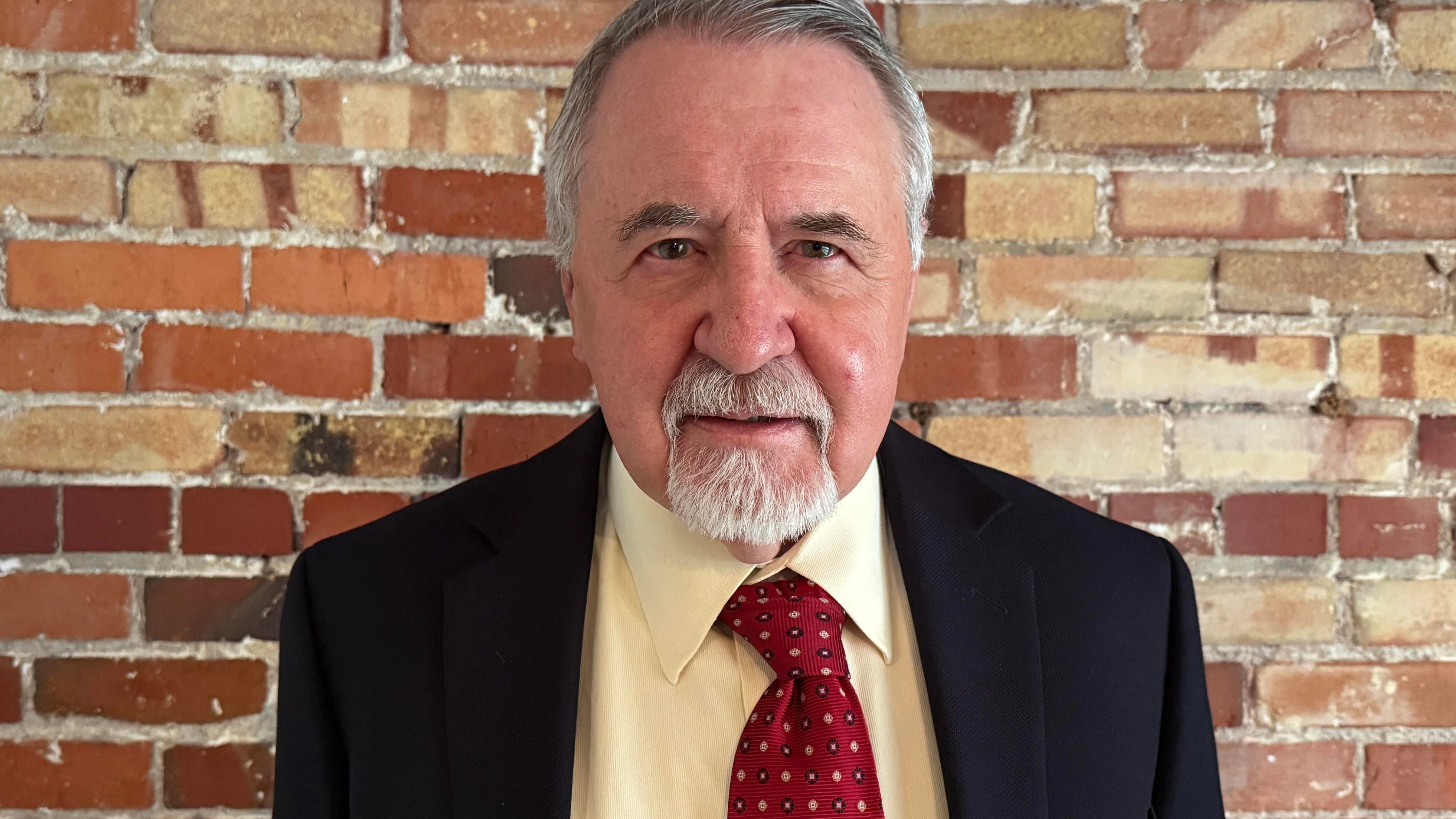
Fred Harrison is an attorney in Cheyenne and served in the Wyoming Legislature from 1982 - 1992. He can be reached at: Fred.Harrison@fjhlawoffice.com