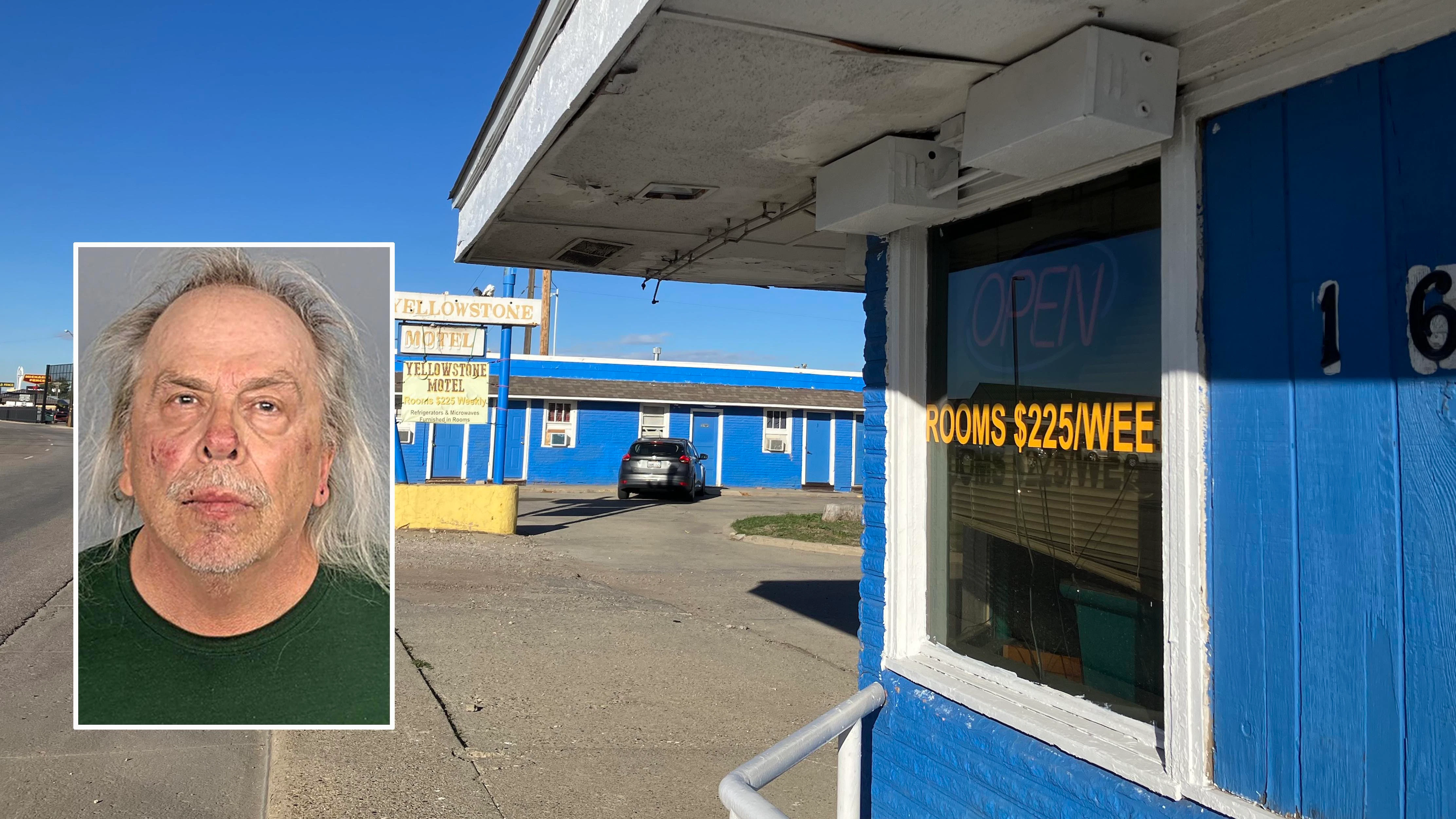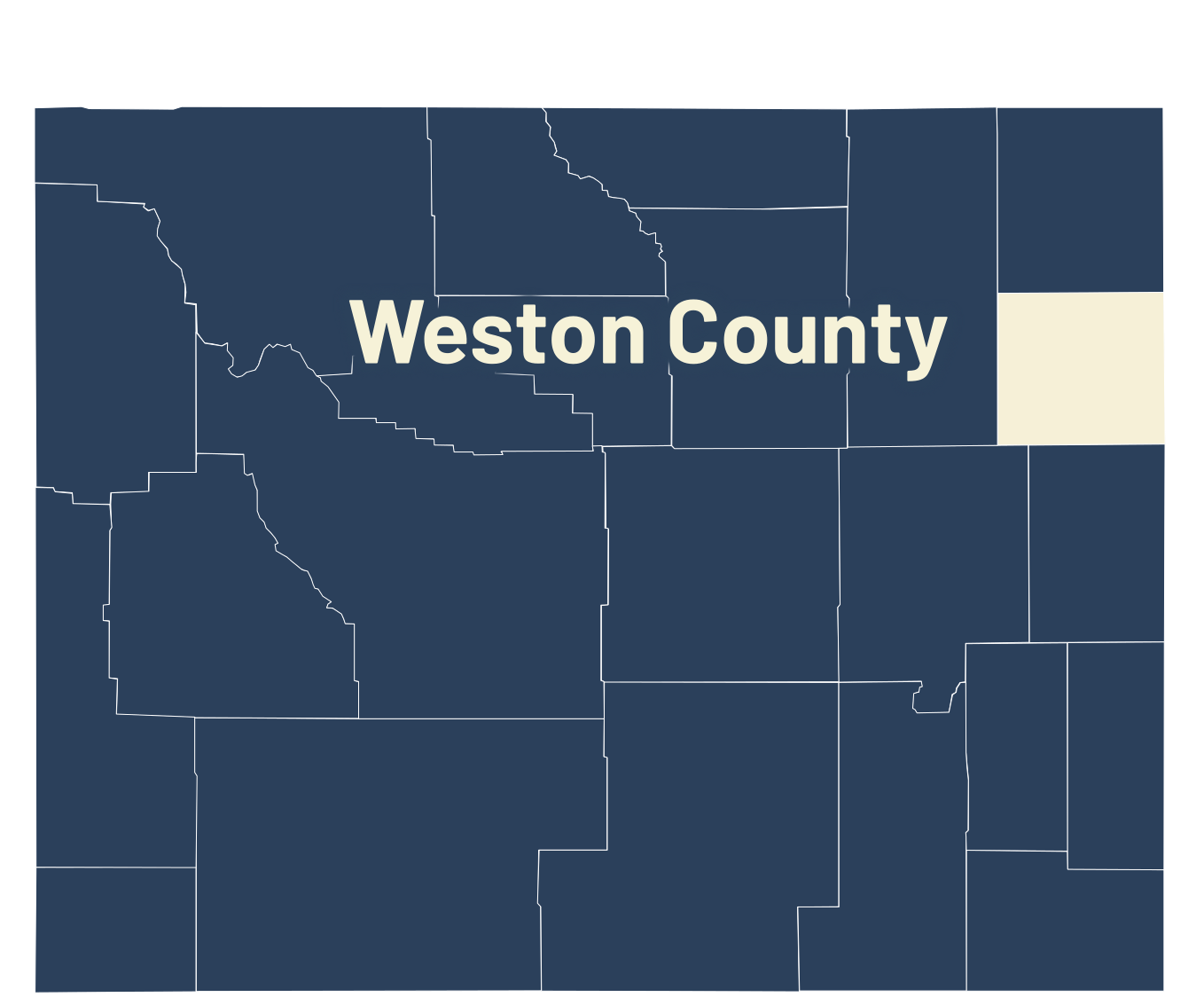
The Wyoming Supreme Court on Wednesday rejected the self-defense argument of a Weston County man who shot and killed his neighbor, then told police the neighbor had charged toward him while driving a skid steer.
Paul Manders is serving a sentence of 16-20 years in the Wyoming Department of Corrections for manslaughter. He was sentenced Feb. 27, 2025.
But the spat between Manders and his neighbor, Vernon Clyde, had turned deadly nearly four years earlier in the summer of 2021.
The neighbors had an ongoing dispute over Clyde’s goats escaping onto Manders’ property, and Manders shot one of the goats, the Wyoming Supreme Court’s Wednesday opinion on the case says.
On July 27, 2021, Manders called 911 to report he’d killed Clyde, the document adds.
Manders told police Clyde “came at” him with a skid steer, which prompted the shooting.
Weston County Sheriff’s Office deputies and Wyoming Division of Criminal Investigation agents converged on the scene and found Clyde dead in the skid steer — which they found about 20 feet east of Manders’ home.
Clyde had been using the skid steer to move rolls of fencing to fix the fence between their homes earlier that day, says the document.
Investigators found four rolls of wire fencing to the rear left of the skid steer.
Officers also learned, reportedly, that there was a dispute over ownership of the strip of land where the skid steer was during the shooting.
Clyde believed that to be a public alley or road running between their property. Manders believed it was part of his own property and Clyde wasn’t supposed to be there due to a no-trespass warning from the sheriff’s office, says the document.
A debris pile of corrugated pipe and rubble sat on the strip of land.
Neighbors told investigators they saw the skid steer near the fence, then heard one gunshot, a pause, then three more gunshots, the document says.
Law enforcement noticed tracks in the dirt indicating the machine was going in reverse before it came to rest. The control stick had blood spatter on it, which indicated Clyde’s hand was not on the control stick when he was shot, says the opinion.
Two of the shell casings sat farther away than the other two.
Police arrested Manders at the time on suspicion of second-degree murder.
The Self-Defense Argument
Manders asked for a John’s hearing.
That’s a chance for a defendant to show that he acted in self-defense, and for the state to try to overcome that with evidence that makes the opposite look more likely than not.
Manders showed, at first glance, that he acted in self-defense, arguing that his fear was reasonable because according to him, Clyde entered Manders’ driveway and drove the skid steer toward Manders.
But the case prosecutor overcame that showing of evidence with more evidence.
The prosecutor showed that there was no evidence Clyde was entering Manders’ home, so a castle doctrine provision letting people defend their homes wouldn’t help Manders. The state argued Manders’ use of deadly force wasn’t reasonable, either.
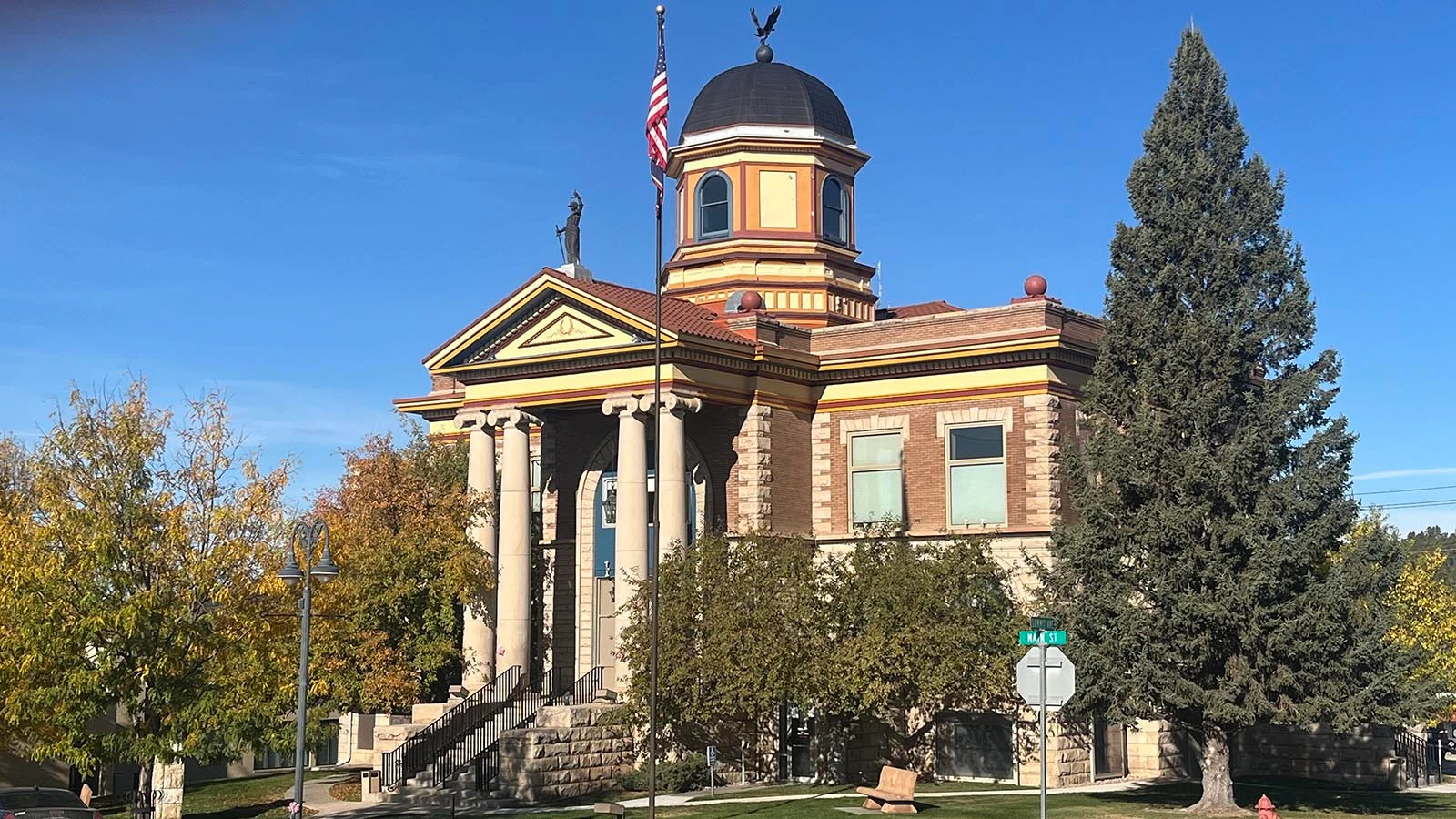
Weston County District Court Judge James Michael Causey held a three-day hearing.
The skid steer was turned on when police arrived, but the idle was turned all the way down and the parking brake was engaged, the state’s physical evidence expert noted in the hearing.
Some bullet casings sat on top of tracks in the dirt, indicating that the casings had been put there after the skid steer came to a stop, notes the opinion.
There was also a blood pool on the left tread of the skid steer indicating the blood landed there either during the shooting or directly afterward, “and the skid steer was not in motion when the blood was deposited,” says the high court’s opinion.
The Weston County Assessor’s Office map showed the “road” as a public access point which, whether correct or not, imbued Clyde with the belief that he had a right to be there, the document says.
The judge denied Manders’ request for the case to be dismissed early on self-defense grounds, and left the matter up to a jury.
But rather than go to trial, Manders settled with an Alford plea, which is a way of pleading guilty without admitting wrongdoing.
Manders reserved the right to appeal the judge’s finding on his self-defense argument, and he did.
Analysis
The evidence doesn’t show that Clyde was unlawfully and forcefully entering Manders’ home, so the castle doctrine doesn’t rescue Manders’ self-defense claim, says the opinion.
It notes that even if that strip of land was Manders’ driveway, the law doesn’t include someone’s driveway in that provision.
“We therefore decline Mr. Manders’s invitation to extend the statutory definitions of ‘home’ or ‘habitation’ to include driveways, yards, and other areas outside of a structure or occupied dwelling,” says the opinion.
Turning to the question of who the initial aggressor was, the court noted that multiple witnesses testified Clyde was in a good mood just minutes before the shooting.
He’d spoken with multiple neighbors about helping him fix the fence that weekend, and people saw him transporting the fencing materials just before the shooting, the document says.
“Evidence shows it is more probable than not Mr. Clyde went to the disputed area with the intention of fixing the fence, not to threaten or attack Mr. Manders,” the court wrote, adding that “The undisputed evidence showed the skid steer moved into reverse until it came to a stop.”
The physical evidence “could” support finding that Manders was the initial aggressor, the opinion says.
There was a dispute in this case about whether Clyde threatened to “smash” Manders’ home when Clyde came out to confront him about allegedly trespassing.
Even if rough words were exchanged between the two before the shooting, verbal attacks don’t make someone the initial aggressor in an altercation, the high court wrote in its analysis.
A footnote in the opinion notes that the state’s experts opined it would have been extremely difficult for Manders to hear what Clyde was saying if the skid steer was running at full throttle and moving.
Even if the court were to assume Clyde was the initial aggressor, the opinion says, the state showed it’s more likely than not that Clyde was trying to withdraw from the altercation before he was shot.
Manders could have raised his self-defense claims at trial, had he gone to trial, the opinion concludes.
Clair McFarland can be reached at clair@cowboystatedaily.com.