
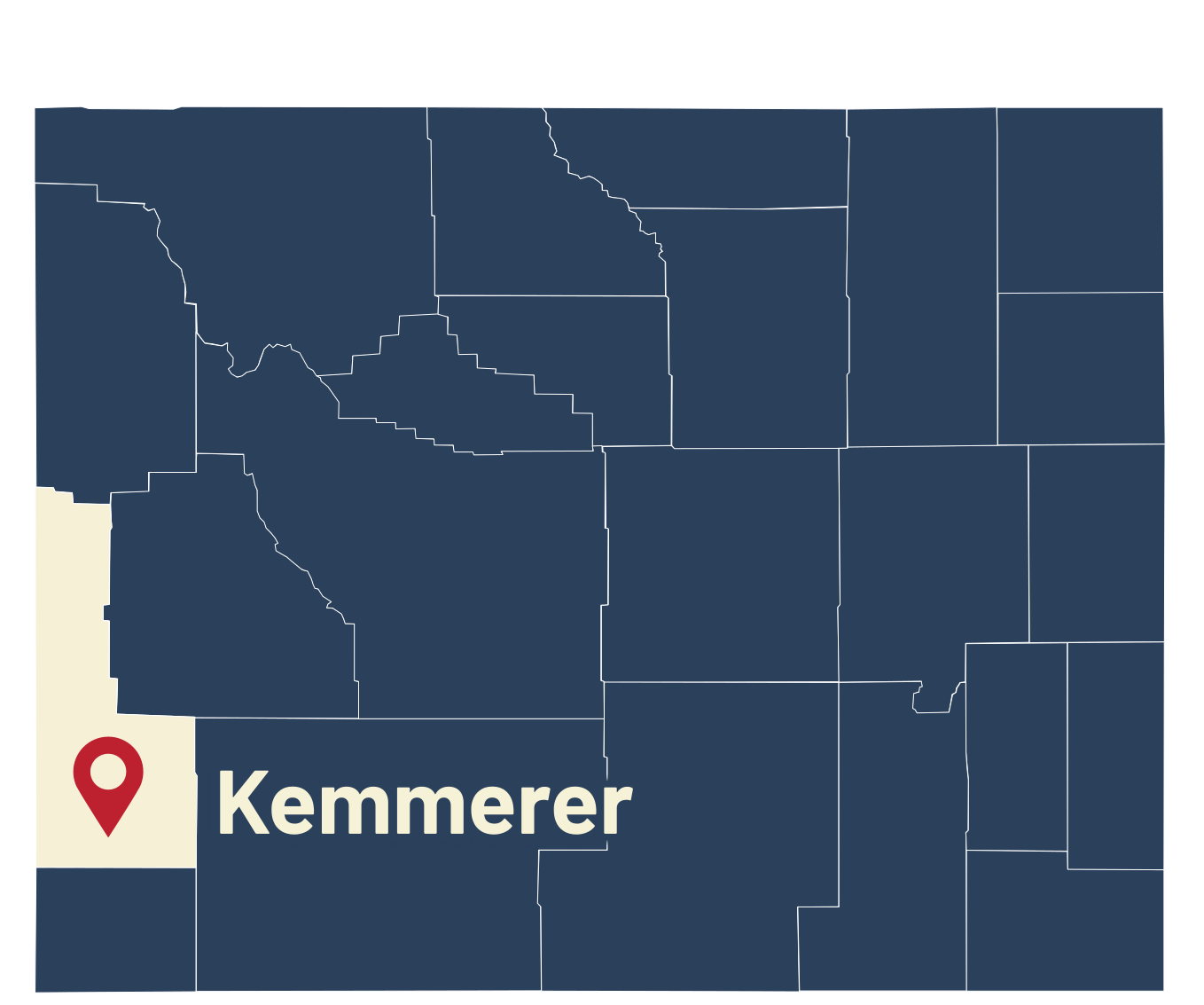
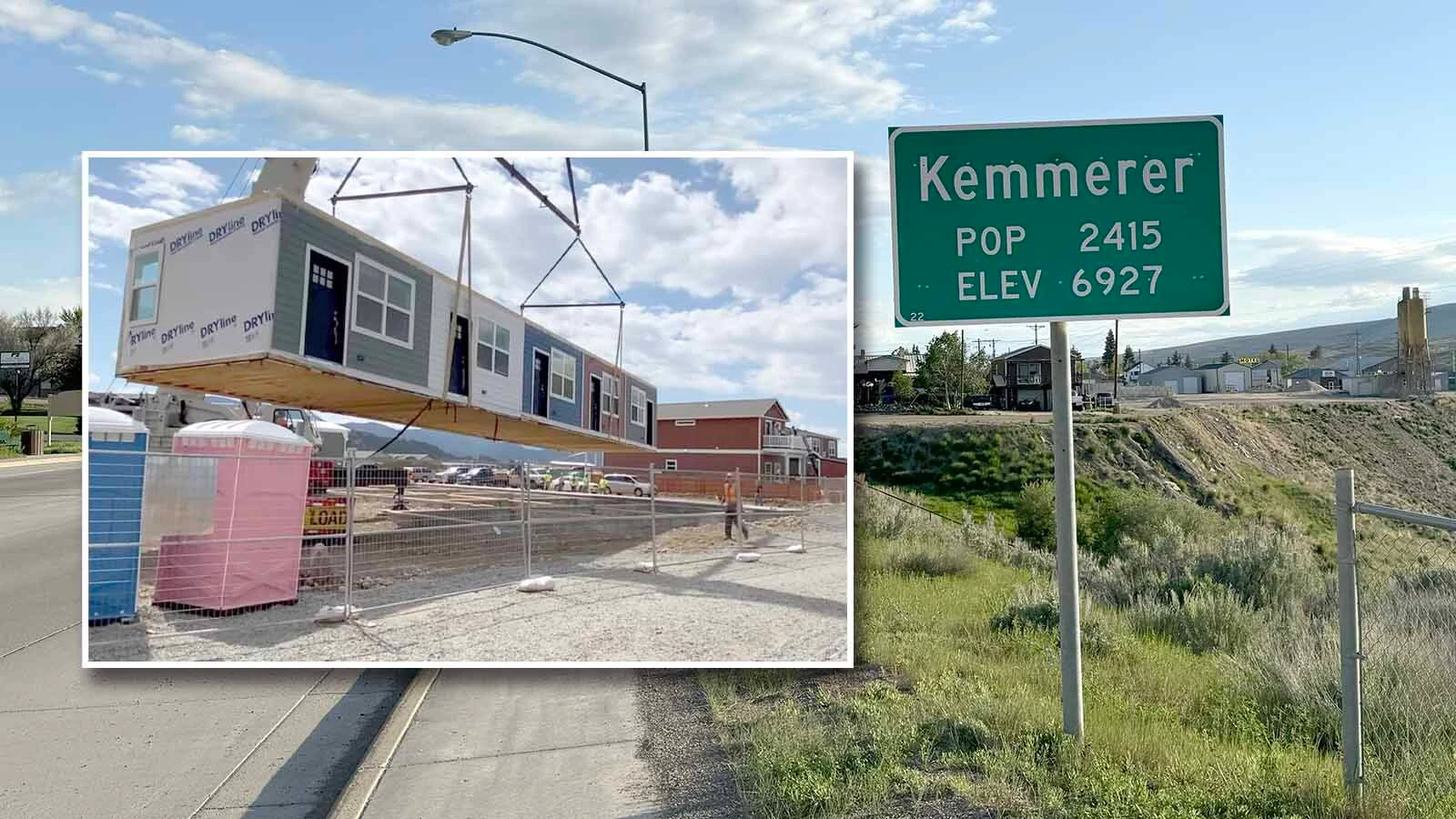
All winter long, Kemmerer has been performing what looks like an illusion.
By day, its hotel and motel parking lots appear empty of everything except ice. By nightfall, each lot has a truck in just about every spot, like a rabbit from a magician’s hat.
Most of those were clearly work trucks, though not all for one project.
The Naughton Plant was working on its switchover from coal to gas, while TerraPower was working on the Test and Fill facility at its nuclear power plant site.
Meanwhile, there were crews working on Lincoln County’s new Justice Center, as well as other projects.
Ballpark, there were around 1,000 construction workers in the area between all the projects.
It’s a small preview of what’s coming for this small community in southwestern Wyoming of about 3,000 people, where TerraPower is about to get nuclear for real.
The company has already begun the non-nuclear phase of its plant in Kemmerer, and now it has a construction permit in hand for the nuclear portion as well. Cowboy State Daily has been told the company will begin construction soon.
The nuclear plant will be one of the nation’s first advanced reactors and, at peak, TerraPower expects to bring as many as 1,600 workers to the site at once to build it.
Construction is projected to span a five-year period, with the plant expected to begin operating sometime in 2030.
For Kemmerer, that timeline turns this spring into a race to have enough housing in place before the nuclear plant begins operating so the town can keep as many permanent, high-paid workers as possible.
The outcome will determine how much of the boom Kemmerer keeps for itself, and how much it loses to other ZIP codes, making this construction season especially high stakes for a town that coal once built and nuclear energy is expected to sustain.
Finally Moving Dirt
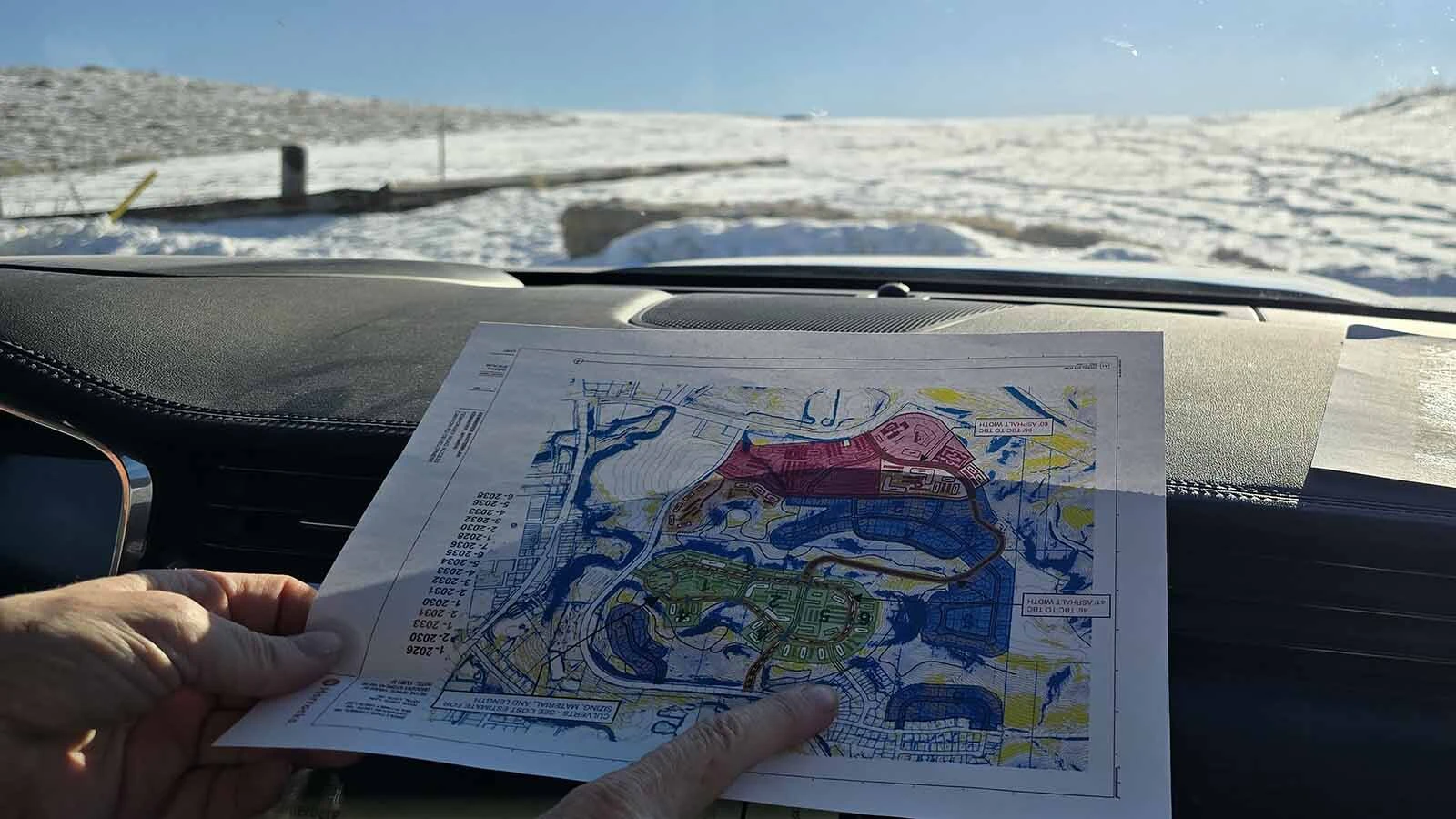
Construction crews will be moving dirt within the next week or so at two of Kemmerer’s largest proposed housing developments, developer Mark Germain told Cowboy State Daily.
Germain is the founder of North Carolina-based real estate investment firm 18 Squared Capital.
“A tsunami is coming,” Germain told Cowboy State Daily. “And we have to get ready for it.”
Germaine said the estimates he’s seen put 6,000 new jobs in southwest Lincoln County. That’s up to 18,000 new people, if one considers that many of those new employees will also have families.
First up will be the Gateway subdivision, where Germain plans to complete 25 homes by year’s end.
“That project is 116 acres, and will ultimately have 275 new homes,” he said. “It might be 274, it might be 280, but it’s in and around the 275 number by the time it’s completed.”
All of those homes won’t be built at once, though, Germain stressed.
“We’re not going to put up 50 houses and hope they sell,” he said. “We’re willing to put up 10 houses before they sell. … We’ve got the financing in place to do the infrastructure.
"But you don’t want to start building houses if people aren’t expressing interest in having a house.”
Infrastructure for the first 54 homes will go in all at once, though, which means Germain can scale housing construction up if demand is there right away.
“You do it in phases,” he said. “You don’t want to put out $50 million and be sitting on $50 million at 6% interest and say, ‘Oh, I’m just going to wait until people decide they want to buy it. Well all of a sudden after a year, it’s $53 million you’ve got invested. And then it’s $57 million. That’s not a formula for success.”
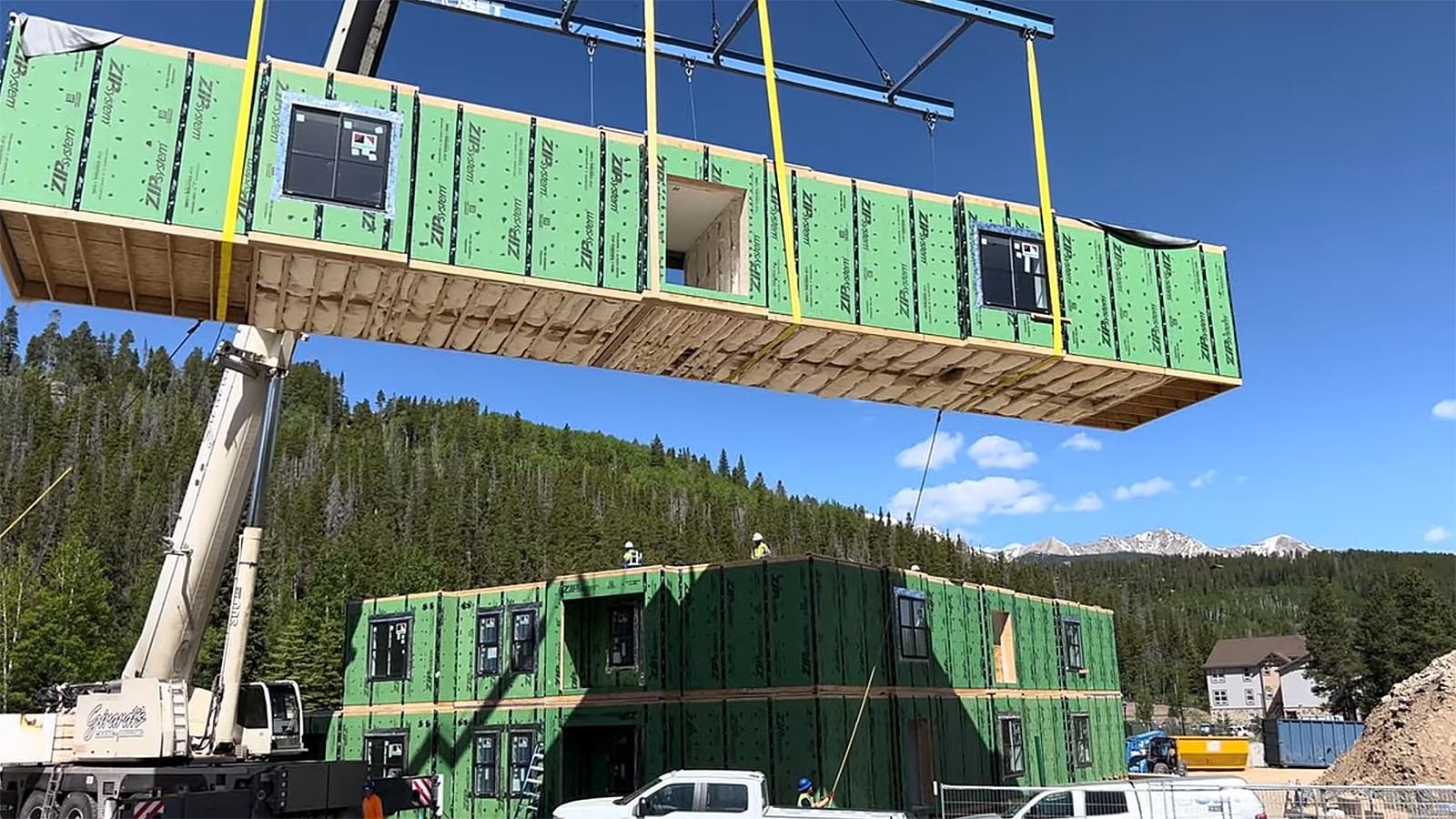
A week or two after Gateway’s infrastructure starts, Germain anticipates working crews moving into Canyon Road, where they’ll start on that development’s first 240 apartments.
“The name of those 240 units is going to be Canyon Crest,” Germain said. “So Canyon Crest will start, and that’s 240 units, so we should have 46 units by fall. And it will follow the same thing. (Construction crews) come in, they move the heavy stuff, and they do the roads, and then they do the infrastructure.
"We put in the slab and the utilities, so they’re ready to start assembly of the apartment units.”
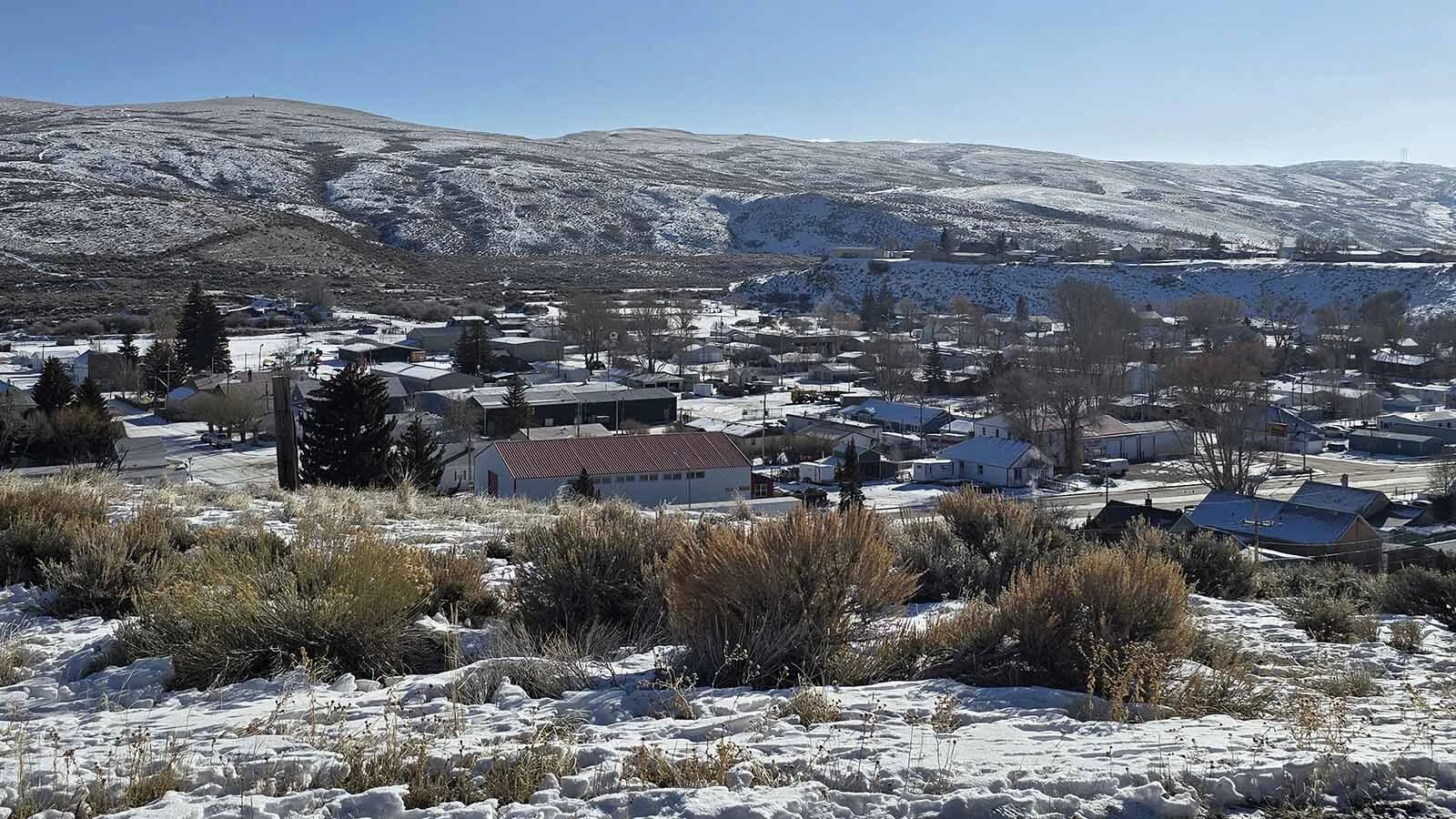
Kemmerer lies nestled against the Oyster Hills. (Renee Jean, Cowboy State Daily) 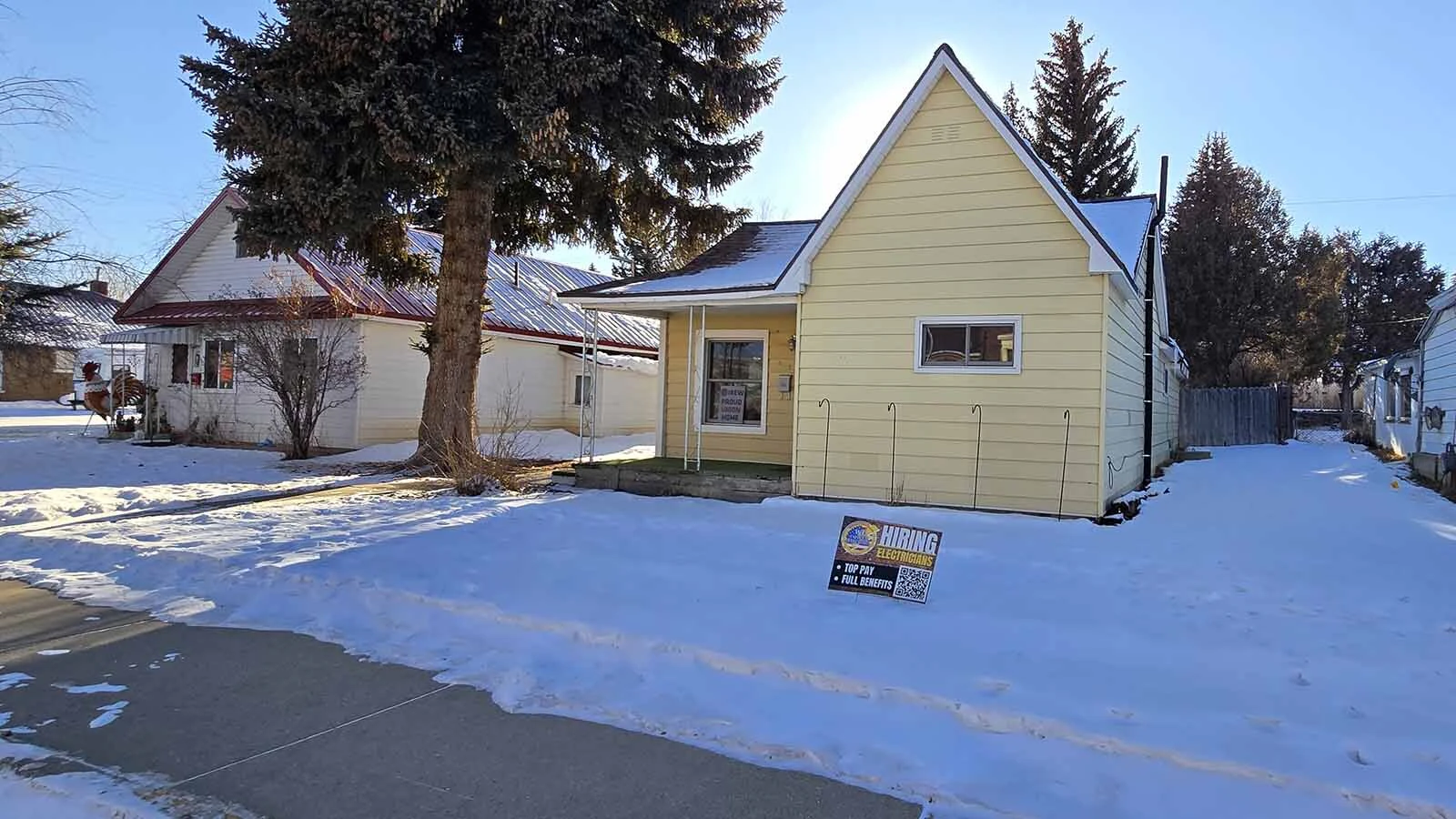
Hiring signs are far more common than for sale signs in Kemmerer, where there is already a housing crunch, ahead of the TerraPower nuclear plant. (Renee Jean, Cowboy State Daily) 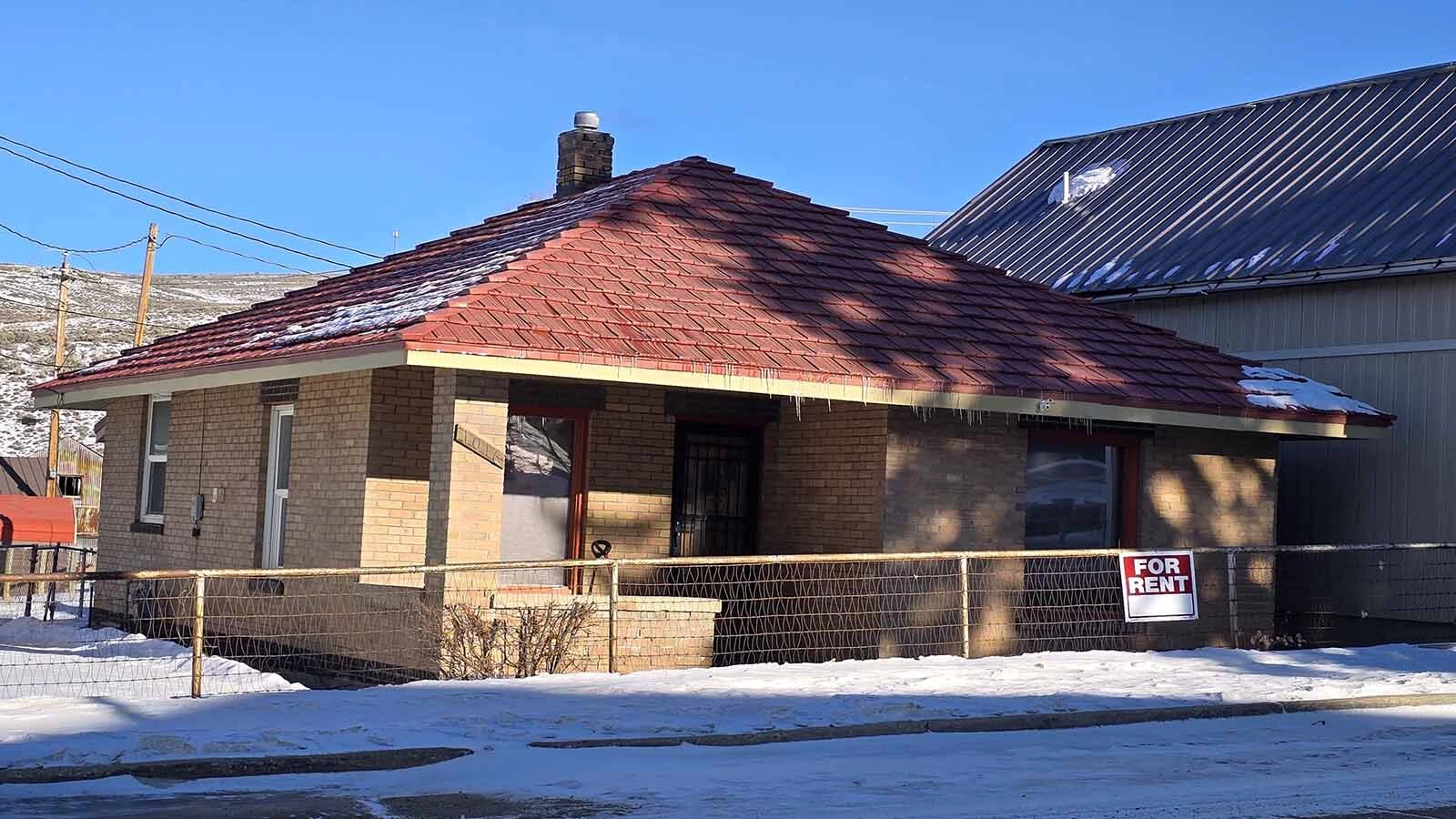
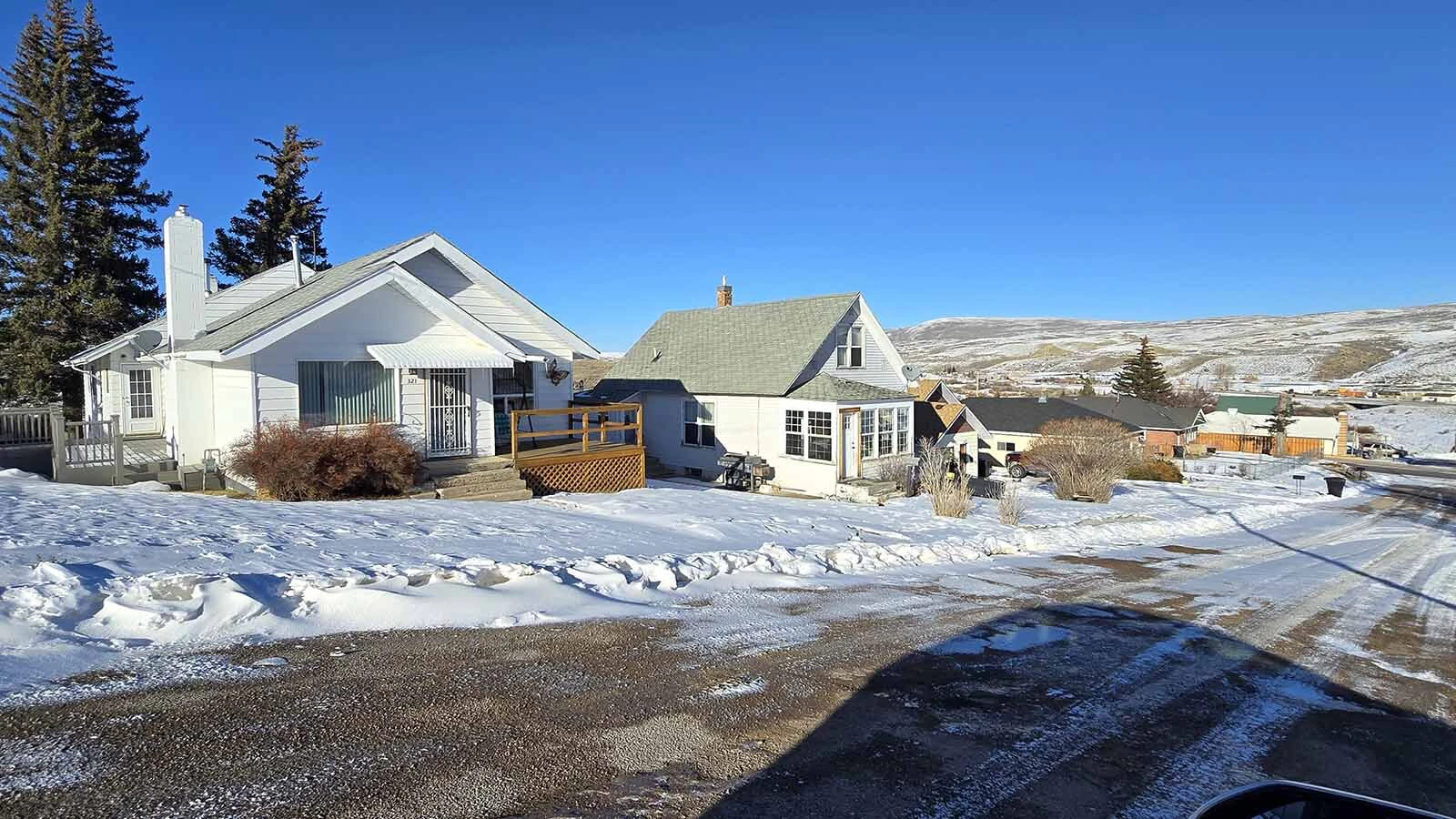
Few places show up for rent in Kemmerer. Housing stock is stretched thin too. Kemmerer will need more housing as TerraPower completes its nuclear plant, if it wants to capture new workforce. (Renee Jean, Cowboy State Daily) 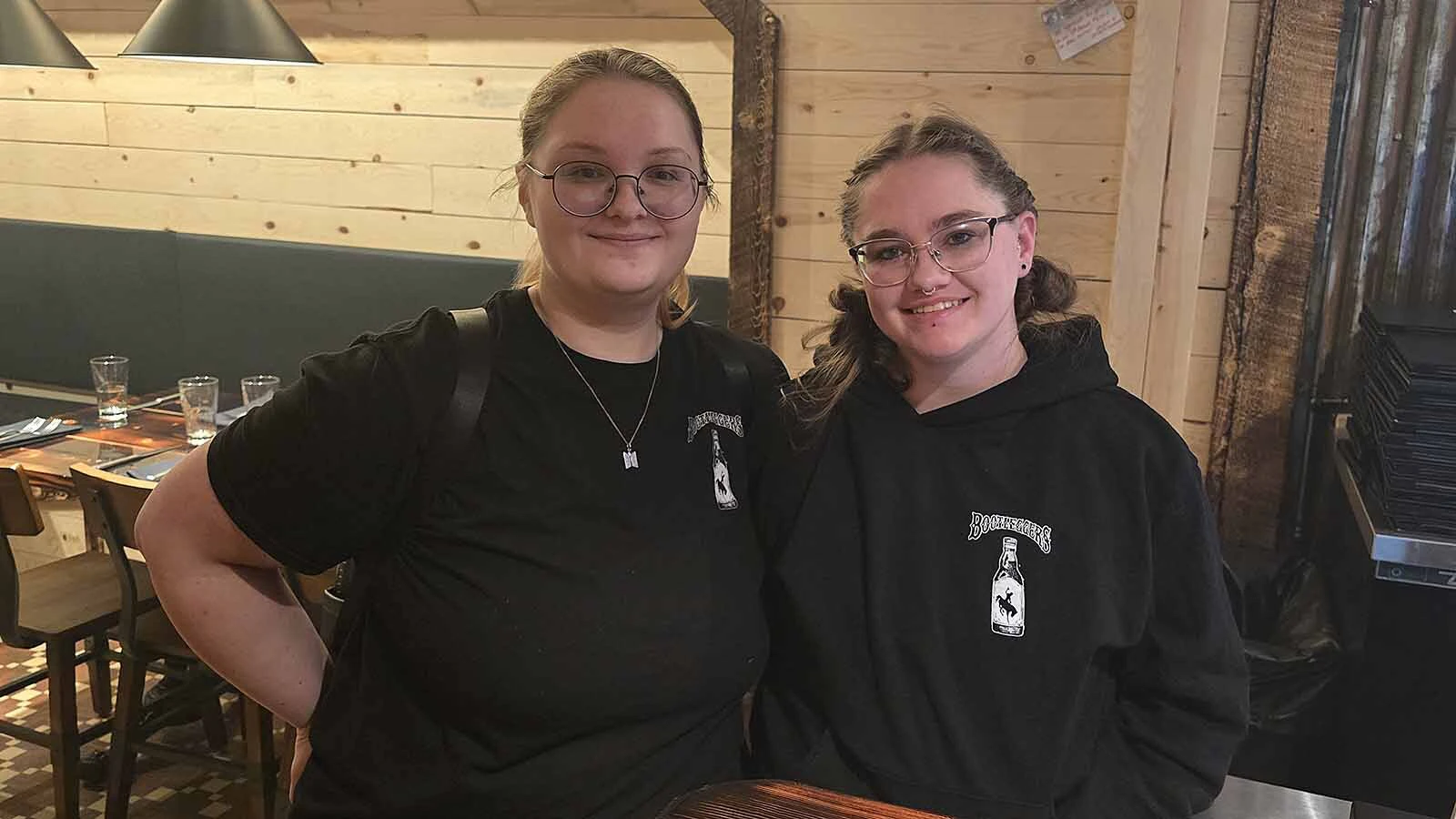
McKinley Chytka and Dakota Gordon pose for a photo after one of their shifts at Bootleggers. They are already seeing rent spikes, they told Cowboy State Daily, and they're worried Kemmerer isn't building new houses fast enough. (Renee Jean, Cowboy State Daily)
Housing Crunch Already Here
Even before Kemmerer starts construction on its nuclear plant, residents in Kemmerer were already reporting price spikes for rent.
Two young residents working at Bootleggers, a new steak and whiskey joint that’s recently opened in Kemmerer, told Cowboy State Daily both of them have seen rental rate increases at places where they previously lived.
Dakota Gordon, for example, had rented a “cute little house” for $650 a month until it was sold.
She was eventually able to move into her own home, but has since heard the rent where she was is now closer to $2,500. That $1,850 rental increase is a whopping 285% spike that had her shaking her head.
Her coworker McKinley Chytka, meanwhile, still lives at home with her parents, where she pays for utilities and internet as her “rent.”
That’s a deal she notes out-of-towners aren’t likely to get.
House hunting in Kemmerer, meanwhile, can be interesting, Gordon said.
“When the house we were living in got sold, we tried to buy a house,” she said. “But there were just so many issues with it because it was so old. It was like we can’t — we’re going to pay double the mortgage just trying to fix it.”
The couple ended up staying with her grandfather, and later on in an apartment above her mother-in-law’s gym.
“She was like, ‘If you take care of the gym, you can just take the apartment for a little bit,” Gordon said. “So it wasn’t as pressured as if we had to lease something (immediately).”
The home Gordon is in now came about primarily through community networking.
“The people who sold it to us knew we were from Kemmerer and wanted to start a family,” she said. “That’s the only reason we got our house, because we were outbid probably four times by (people from) Texas and California.”
To them, the story underscores just how tight the housing market already is. They’re worried that’s just going to get worse.
The Real Wild Card
Behind the scenes, the real brake on housing development isn’t related to framing crews or construction materials.
It’s the capacity of sewer and water, and it’s a classic, chicken-egg problem.
“Being a small town, we don’t have a huge amount of population to help fund infrastructure repairs and upgrades,” Mayor Robert Bowen told Cowboy State Daily. “So doing those things would put a massive burden on our population base.”
The city is still paying off a loan for its sewer treatment plant, a facility that has also already exceeded its lifespan.
“So we’re already in the hole on that plant,” Bowen said. “And that plant’s already exceeded its lifespan. So we need a new plant, or we need to upgrade this plant.”
That’s one of the reasons Bowen has said he doesn’t want to see Kemmerer grow too much beyond 5,000 to 6,000 people, so that growth will remain manageable.
One approach is to upgrade sewer and water services in stages, keeping it to $20 million stages each time.
The problem is that could end up being more costly long-term than just building a brand-new plant that’s the right size from Day One.
The price tag on a new plant is also cost prohibitive.
“If we were to do something like a local improvement district and hit every connection in town for the cost of those upgrades, even on a 20-year loan for a $70 million dollar plant, that’s going to add $100, $200 to every person’s bill every month,” he said. “And water rates are already high enough.”
Will-serve letters that have already been issued, meanwhile, are putting the city right at its present capacity, Bowen said.
“So that’s another big challenge for us is, how do we get our infrastructure upgraded to accommodate more businesses, more industry, more people, without putting a burden so heavy on people who are already here that it will bankrupt them,” he said. “Or that people on fixed incomes, you know seniors, or disabled, who can’t afford a $100 increase.”
Few places show up for rent in Kemmerer. Housing stock is stretched thin too. Kemmerer will need more housing as TerraPower completes its nuclear plant, if it wants to capture new workforce. (Renee Jean, Cowboy State Daily) 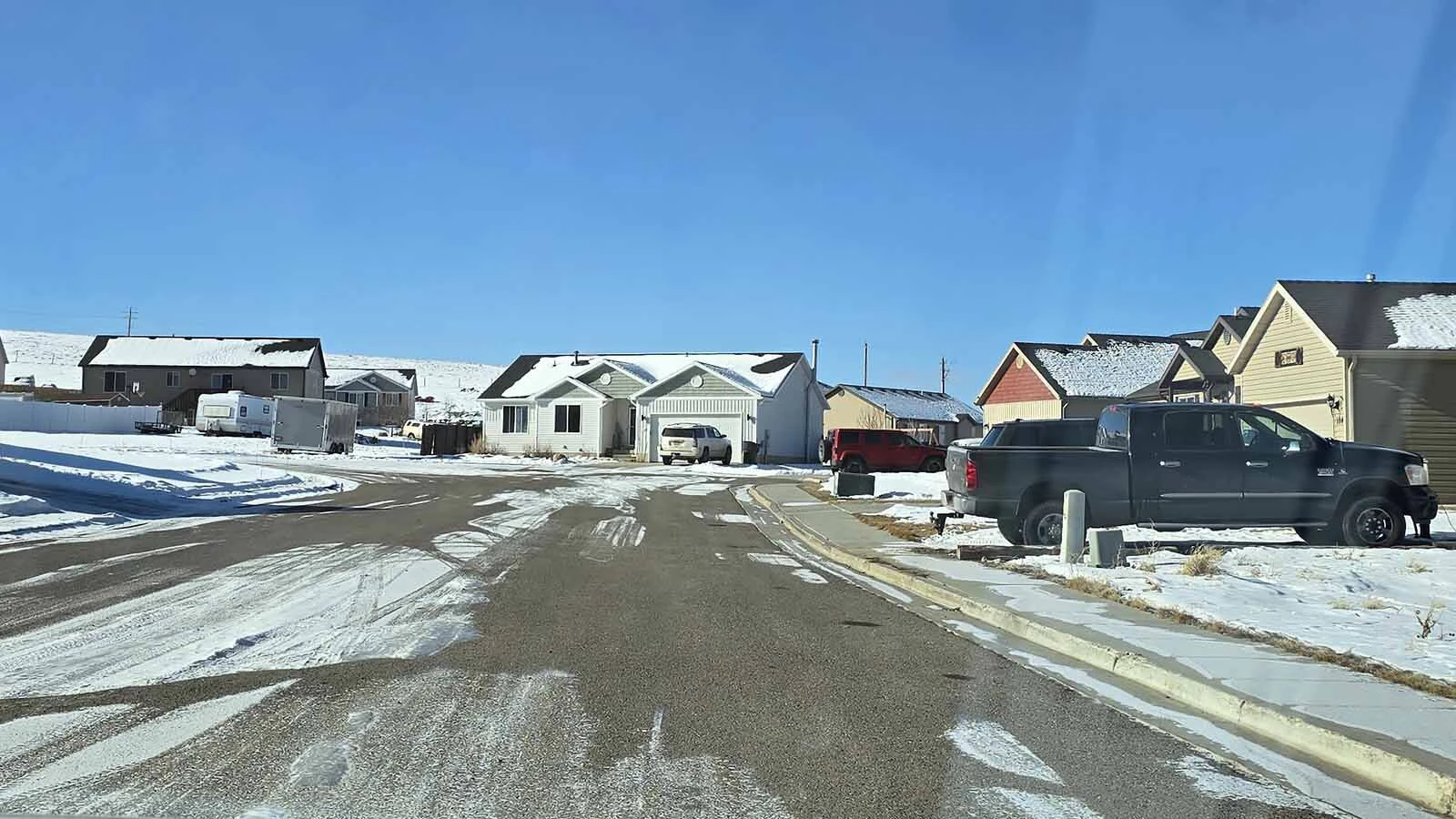
Housing stock in Kemmerer is limited and aging, Cowboy State Daily was told during a tour of Kemmerer housing. (Renee Jean, Cowboy State Daily) 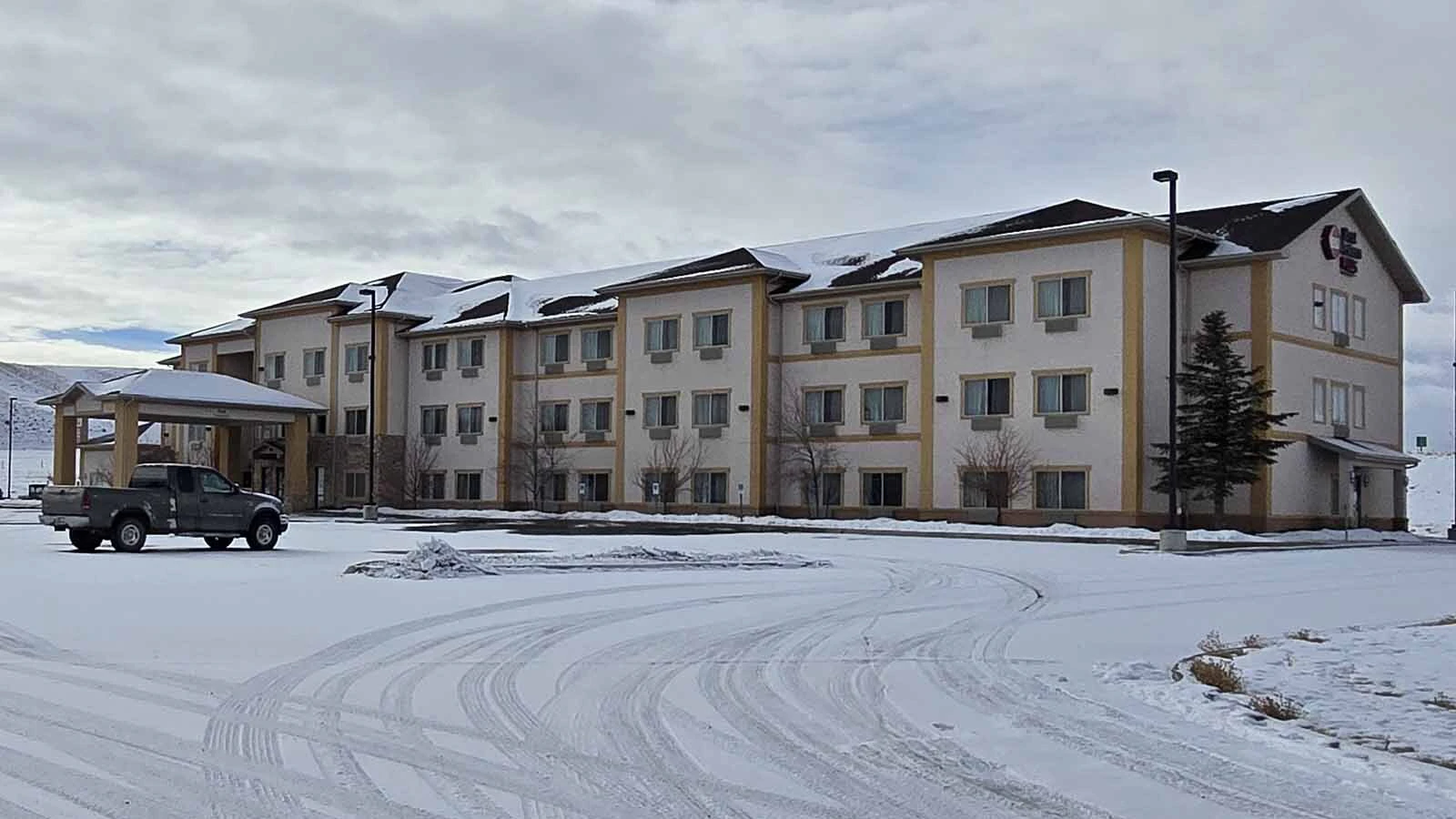
Hotel Parking lots were mostly empty by day throughout the winter in Kemmerer. By nightfall, however, every parking spot was filled. (Renee Jean, Cowboy State Daily)
Locals Want Basics, Not Hype
Inside downtown businesses and restaurants, what many residents told Cowboy State Daily they want to see most is just forward movement on the obvious needs.
There’s a widespread feeling that if the town can get the basics right — more housing, more places to eat, decent infrastructure and services — enough people will come and the rest will resolve on its own.
Get those things wrong, however, and the plant still gets built and the power still flows, placing burdens on the community while the prosperity needed to handle those burdens lands somewhere else.
“Food, I think, will keep people here,” Kemmerer resident Clint Unsworth told Cowboy State Daily. “If they have a place to stay, and they have a lot of food to cook or can go places to eat.”
But there are also less obvious needs, Unsworth said, that he’d like to see entrepreneurs thinking about.
“I mean, these guys are going to work 7-12s, so when they get off at 6 p.m., where are they going to get their hair cut?” he said. “That’s going to be a struggle.”
A 7-12 schedule refers to working seven days a week for 12 hours every day, for a total of 84 hours every week. It’s a grueling schedule, common in high-demand industries like welding, pipeline work, oil and gas, and construction.
If people don’t see the kinds of services needed to support that kind of schedule, Unsworth believes Kemmerer is likely to lose out to communities like Evanston and Rock Springs, which already have more of just about everything Kemmerer needs, whether it’s housing or services and amenities.
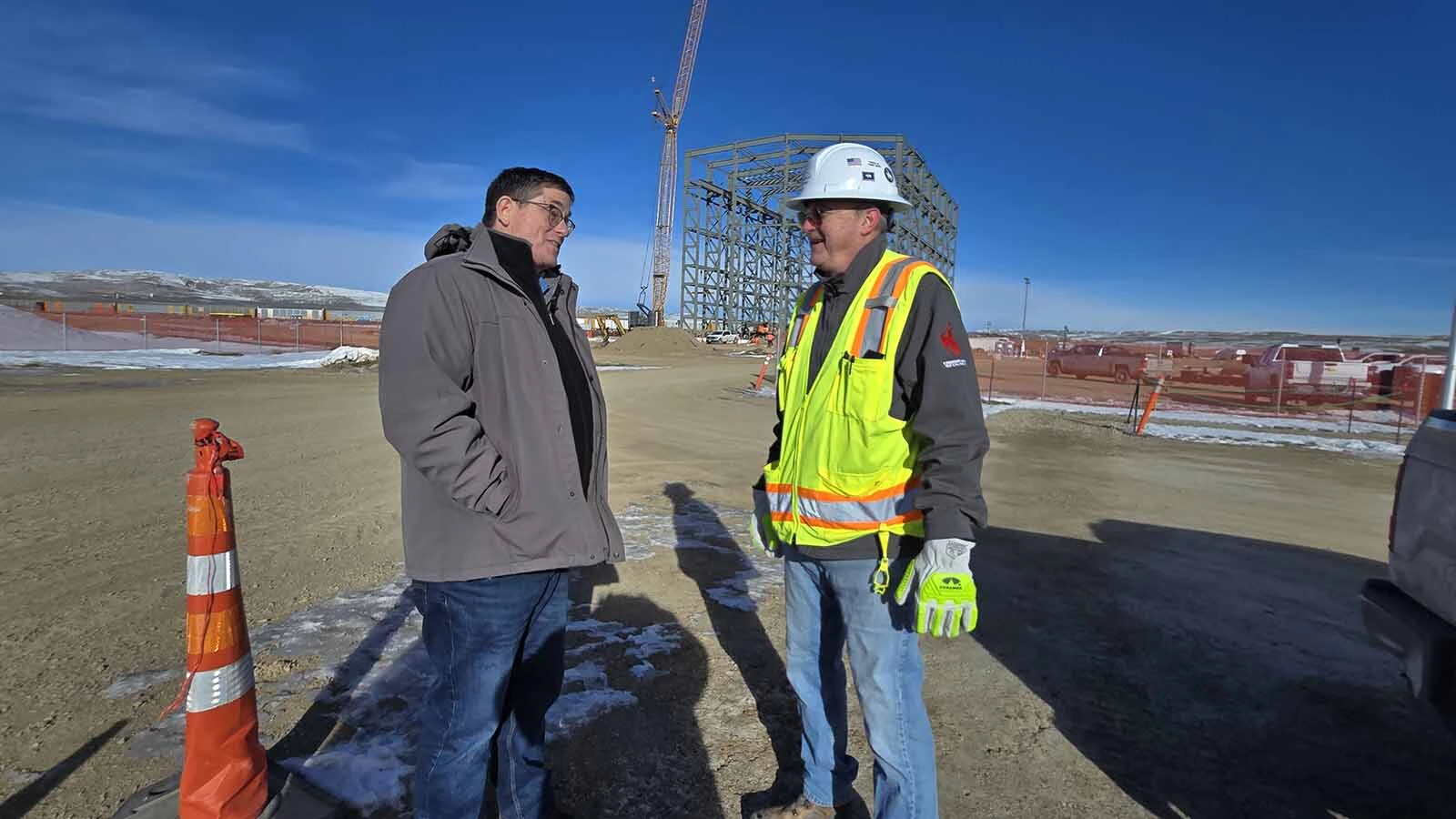
TerraPower Project Director for Natrium Pat Young, left, and TerraPower Director of Construction Andy Chrusciel told Cowboy State Daily they are meeting with community officials to discuss how to handle impacts from the Natrium nuclear plant they're building, including a potential housing shortage. (Renee Jean, Cowboy State Daily) 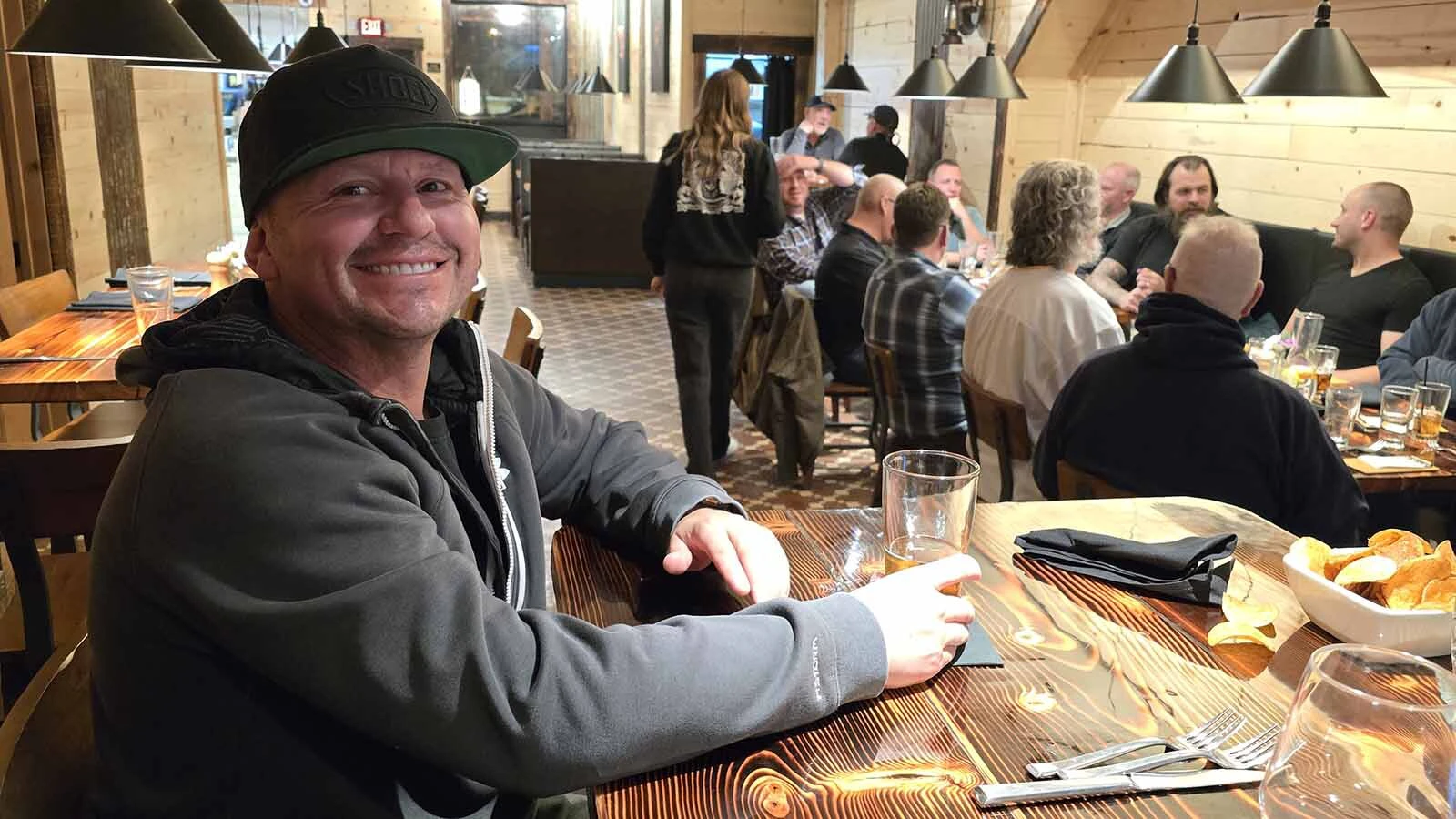
Kemmerer resident Clint Unsworth enjoys a meal at a newly opened restaurant called Bootleggers and talks with Cowboy State Daily about what he thinks the community needs to make the most of a coming economic boom, following TerraPower's new Natrium plant. (Renee Jean, Cowboy State Daily)
TerraPower’s Role And The Long Game
TerraPower has already been having conversations with community groups about these very kinds of issues, Cowboy State Daily was told during a tour of the Test and Fill facility in January.
It is working through strategies with construction partner Bechtel Corporation.
“I think (recruitment) is a challenge countrywide right now,” TerraPower Project Director for Natrium Pat Young told Cowboy State Daily. “This is an additional challenge given its location.”
Bechtel, he added has “worldwide expertise” in recruitment tactics for remote locations all around the world.
“Bechtel probably knows better than any construction firm in the world how to deal with those types of situations,” he said. “And it’s always a challenge. It was a challenge in Georgia. It was a challenge in South Carolina. But, I don’t know, they always seem to come.”
One selling point, he believes, is Kemmerer itself. It’s a quiet town that can offer families a safe environment to raise children, he said, and the worksite itself will be an “astoundingly safe site.”
“Families can be reassured that their loved ones will go to work and come home safe every day,” Young said. “You can’t say that about every place. You can say that about this place.
"And the salaries will be good. The work is good. It’s really good work. So it’s a challenge. We recognize it. And we’re using professionals to help us figure out the strategies to make that go.”
Avoiding The Housing Business For Now
Whether TerraPower’s strategy will include building some housing remains to be seen, Young said.
“We’re not in the real estate business,” said TerraPower Director of Construction Andy Chrusciel. “And we’re in lockstep with Brian Muir, the town administrator, and both the mayors.”
In his opinion, the town’s already starting to grow the way it needs to.
“Now they have a coffee shop,” he said. “Bootleggers has opened, Kettle’s has expanded, so we continue to grow. People see progress, and then the town is going to build out. So we’re confident, and one of the big things that Brian Muir and the mayors and also TerraPower (talk about) is sustainability.”
That means being thoughtful about growth and how the challenges are approached.
“We don’t just want to come here and then blow out of town and then everything, you know,” he said. “This whole corridor, I think, is now zoned industrial, and the county and the city have plans to build on what we started. So we lit the fuse, and they’re going to continue to make sure that flame burns.”
Whether Kemmerer’s new homes and new services arrive in time to meet that promise is the race Kemmerer is now running this construction season.
Renée Jean can be reached at renee@cowboystatedaily.com.


