Mozart made beautiful music. John L. Blair of Shell, Wyoming, makes equally beautiful saddles while listening to the Austrian classical music prodigy in his workshop nestled in the Shell Valley east of Cody.
Mozart, Blair said, casts a kind of spell over him as he works, a spell that never fails to inspire beauty.
Fantastical shapes bloom beneath his hands as he works to the music, the tap-tap-tap of his tools creating a hypnotic rhythm.
“Once you get going … you’ll get into kind of a trance,” he said. “And you’ll be sitting there tapping on those tools, and it’ll be making a rhythm, and you’ll be lost.”
Lost in music, lost in leather, and lost in the shape of the art he creates in leather.
Blair is a second-generation Wyoming saddlemaker whose one‑of‑a‑kind saddles, purses and more cost tens of thousands of dollars. They end up with everyone from working cowboys to celebrities.
Although the master craftsman is best known as a saddlemaker, Blair also loves figuring out what else he can make from leather.
People have asked him to create everything from “car parts to human parts,” he said with a chuckle. He doesn’t turn them down.
His favorite thing to make is anything he’s never done before.
He’ll pick up these challenges and turn them over like puzzles in his mind, a wizard figuring out how he can coax the leather to do as he commands.
“You decide at some point that you need to do different things,” he said. “Things where you have to go beyond the realm of most people’s imagination.”
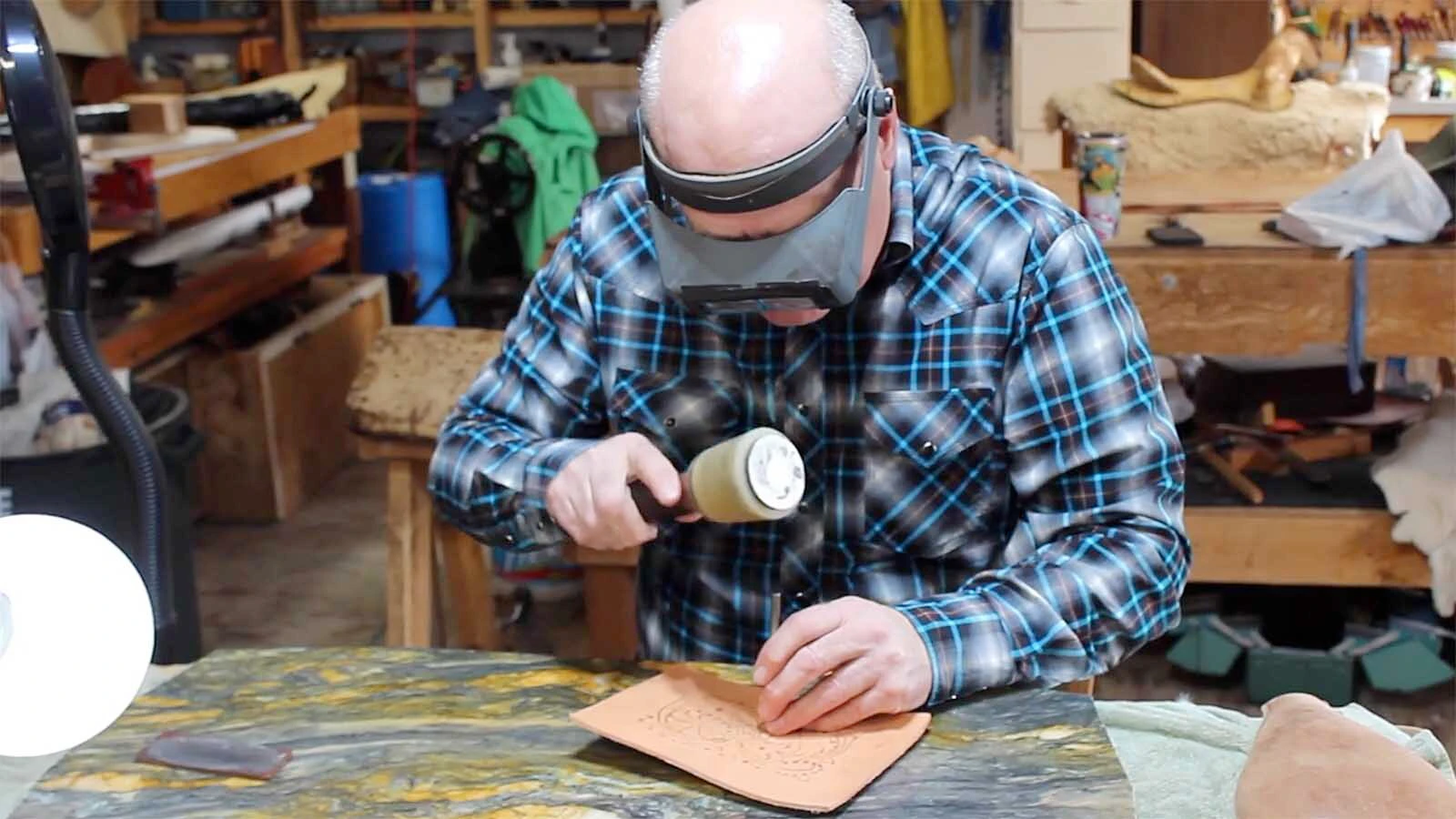
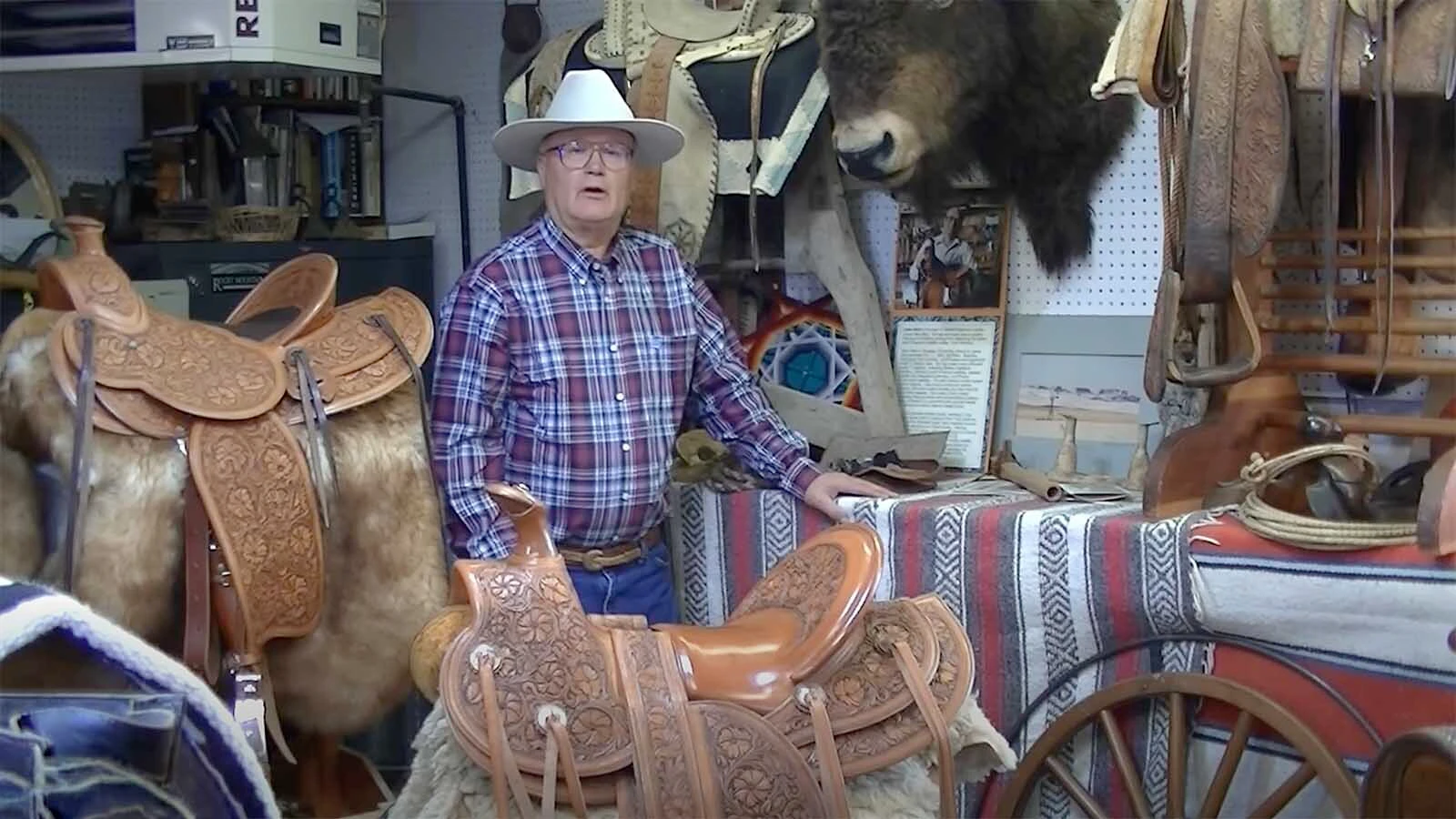
John L. Blair of Shell, Wyoming, is a master saddlemaker who commands more than $45,000 for a saddle, $15,000 for a leather bowl or $8,500 for a custom purse. He works listening to Mozart, one virtuoso inspiring another to create stunning leather art. (Courtesy John L. Blair) 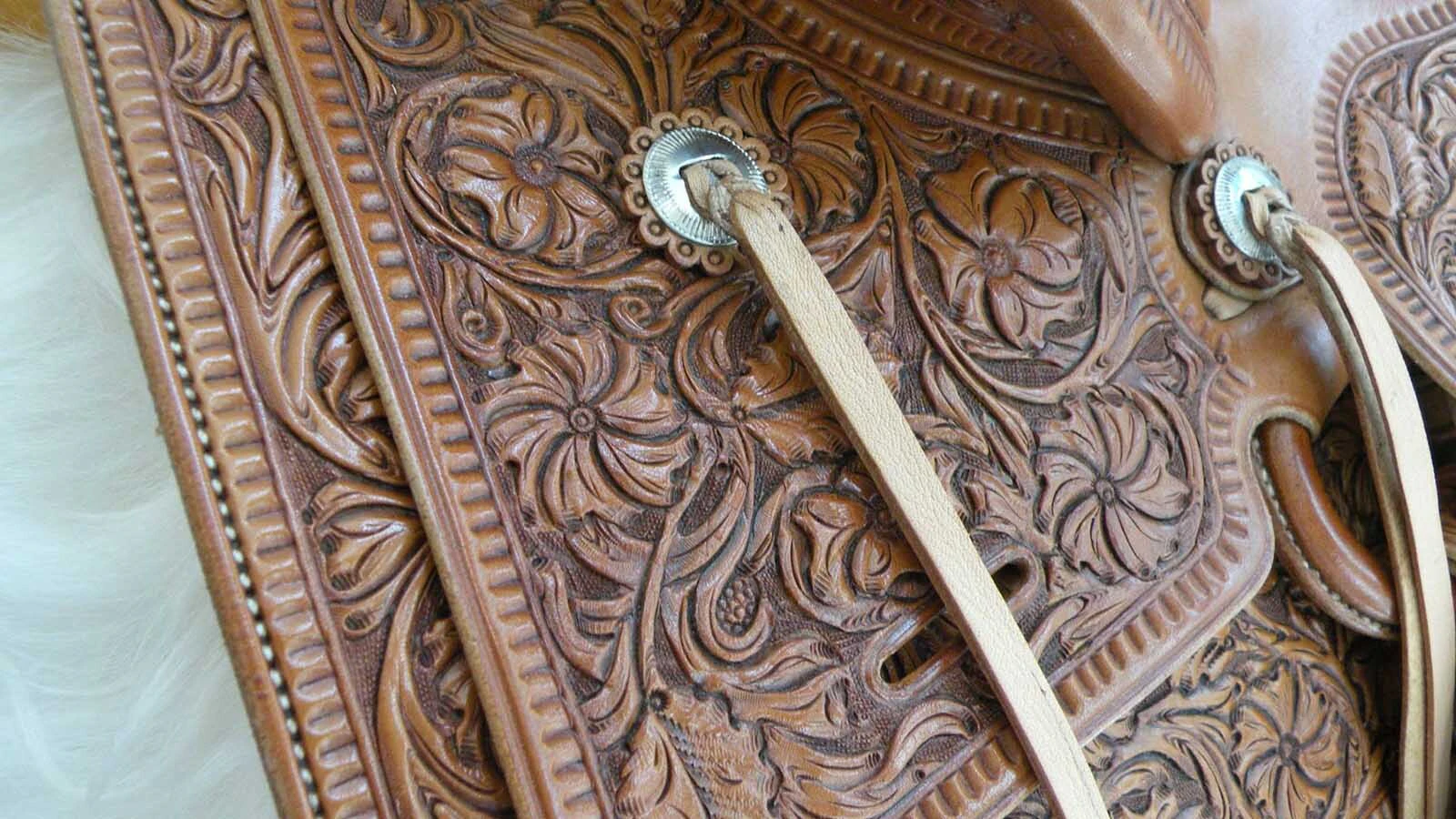
Details of a saddle made by wyoming leatherworker and saddlemaker John L. Blair. (Courtesy John L. Blair) 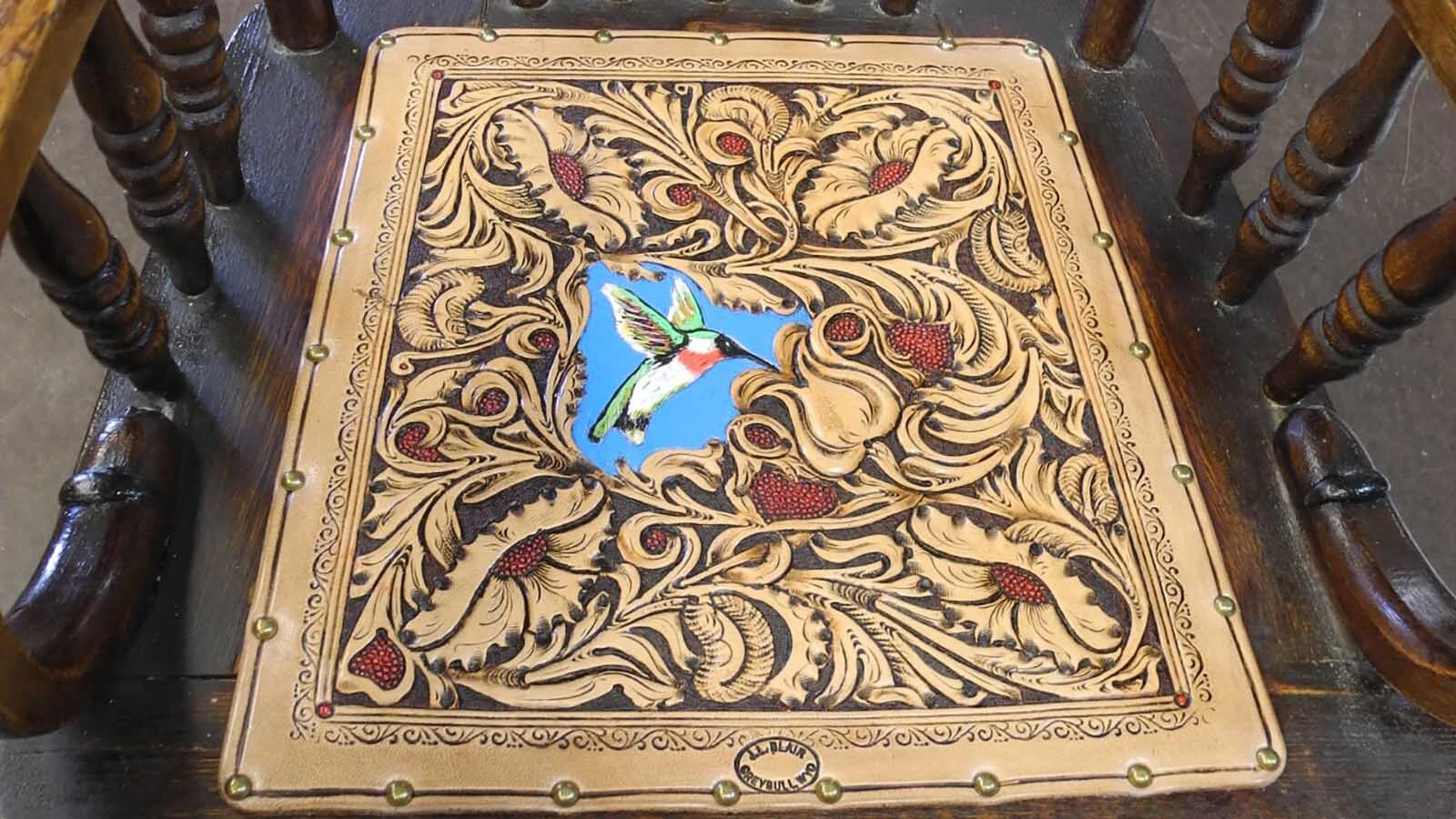
A leather seat for a rocking chair made by wyoming leatherworker and saddlemaker John L. Blair. (Courtesy John L. Blair) 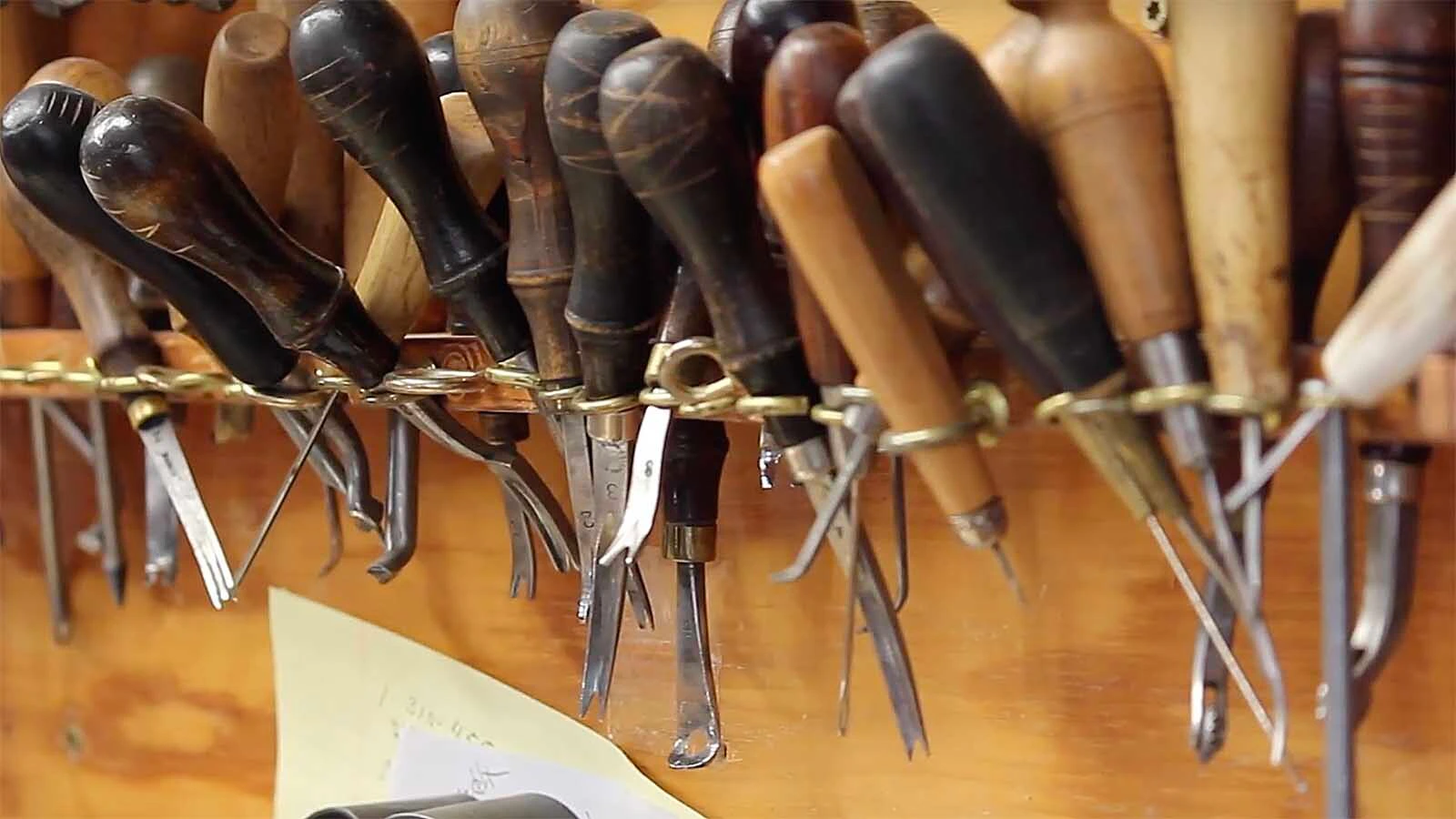
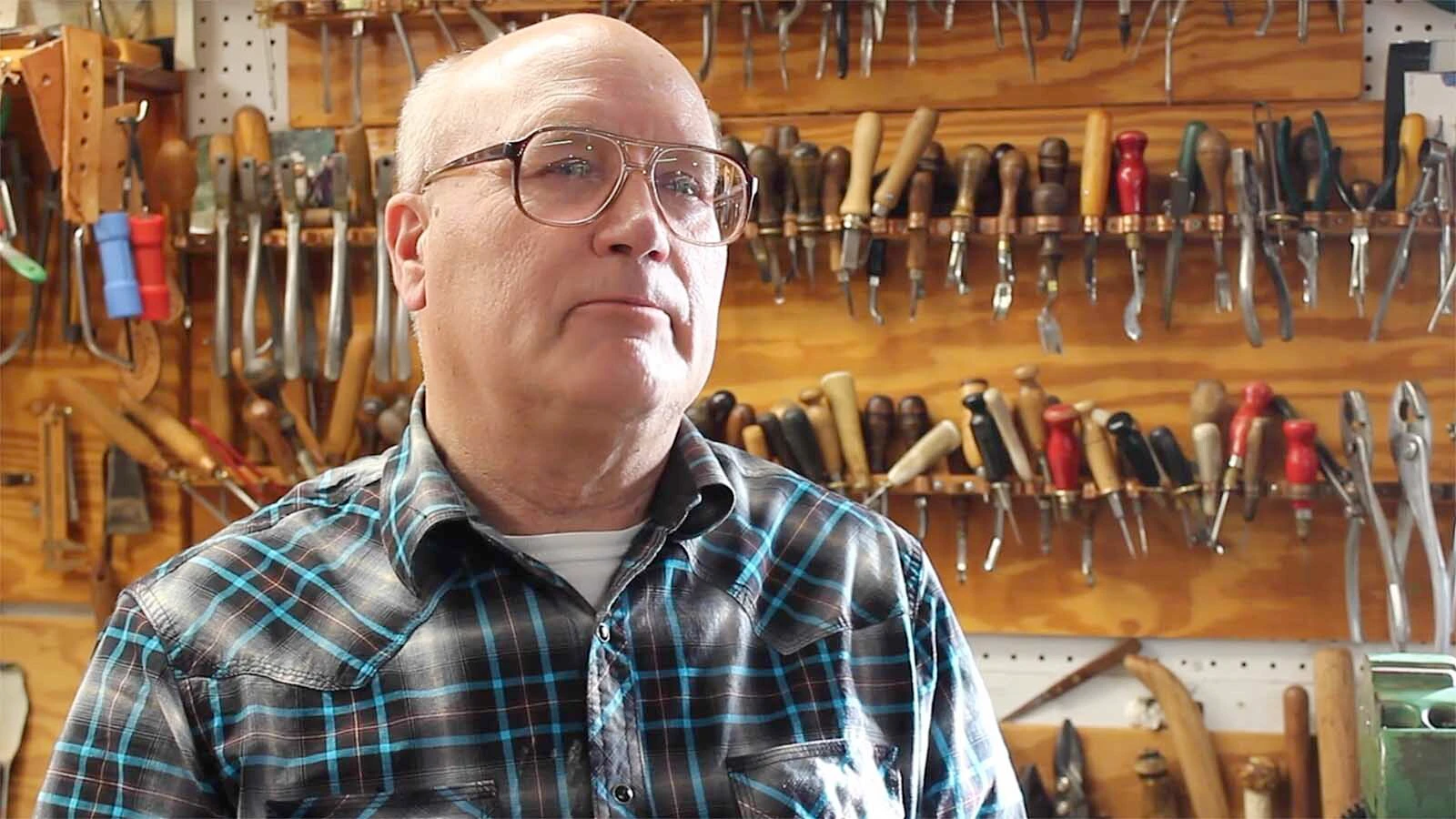
John L. Blair has collected a wall full of tools over 45 years. (Courtesy John L. Blair)
Floors Suitable For A King
Blair’s extrapolations have ranged from the mundane — a pencil holder and trim for pockets on a Western suit — to the sublime, like fine art vases and bowls that look like pieces of burnished wood instead of leather, decorated with silver accents created by a fellow artisan named Ernie Marsh.
Blair has made boots for walking and leather floors for walking on at a mansion at Wagonhound Ranch near Douglas.
“You’re into a different type of world is where you are there,” Blair said. “You can go shoot arrows just down the hallway. It’s long enough to practice archery at the big house.”
For the one-of-a-kind leather floor, Blair used cow hides in their natural shape, fitting the irregular pieces together using a technique called skiving.
That’s where ultra-thin layers of leather are pared away from the material and it is stretched, thinning and smoothing the leather. It’s often used for a smoother finish, or sometimes to form intricate shapes.
In this case, Blair used it to make the floor appear seamless.
The Magic Ingredient Is Patience
Blair’s current project is a purse with multiple leathers for a woman who ranches in Nevada.
Inside the purse, it is cherry red kangaroo hide, while the gussets (sides) of the purse are ostrich leather. Special flowers are being carved onto the purse’s exterior that have red centers and red berries.
The interior of the purse will also have several pockets for things like keys, as well as space for a wallet.
“Then it’s put together with a single ply for (a) round braid, which is a whole lot different than a lace,” Blair said. “It’s very time-consuming.”
Blair started the purse in January, and it will take him another couple of months to finish. It’s not a process that can be rushed.
There are certain finishes involved that require drying time, and there are other techniques that demand waiting time.
“Patience is the most important thing,” Blair said. “It’s not your ability. It’s your patience.”
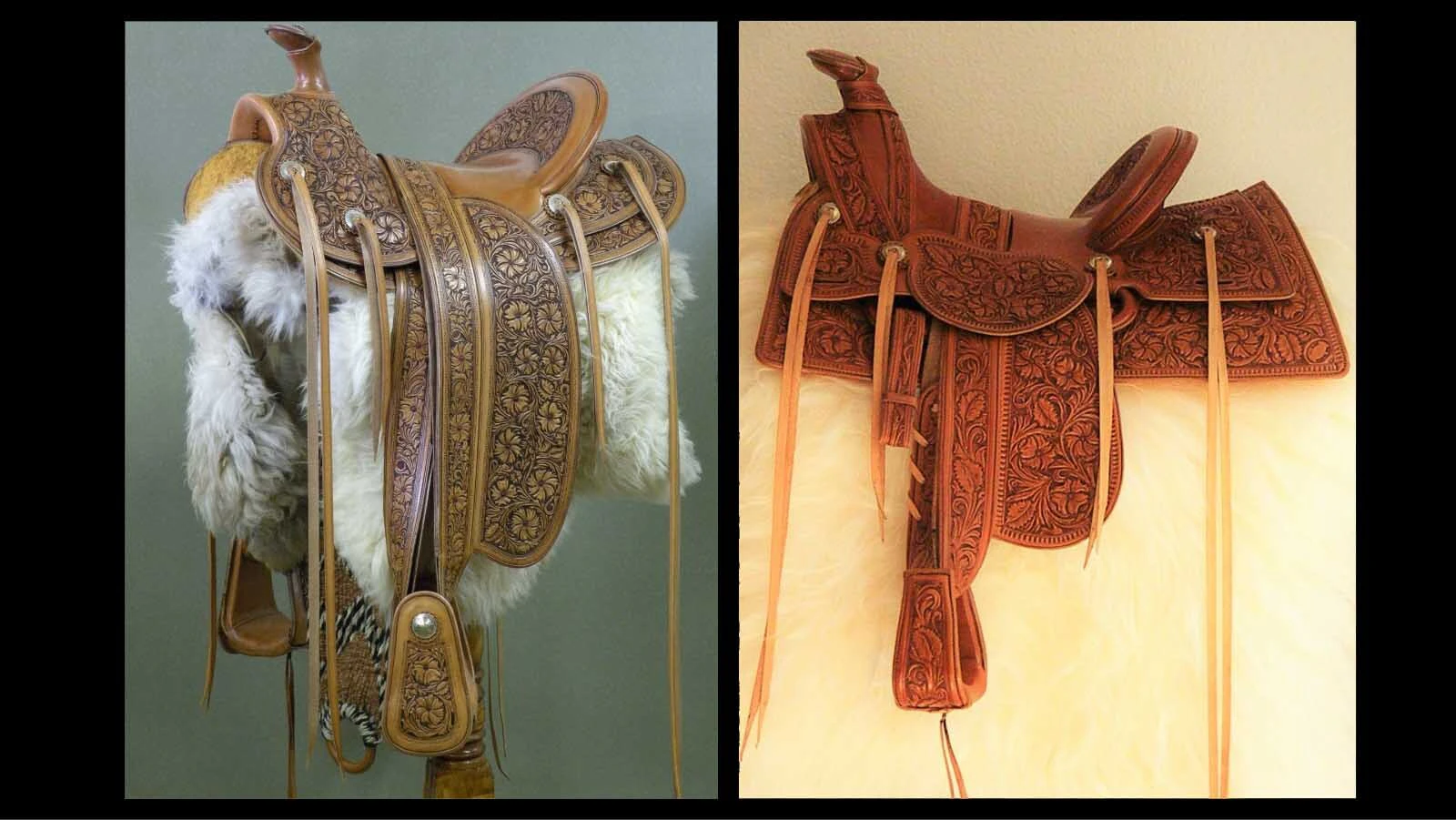
John L. Blair of Shell, Wyoming, is a master saddlemaker who commands more than $45,000 for a saddle. (Courtesy John L. Blair) 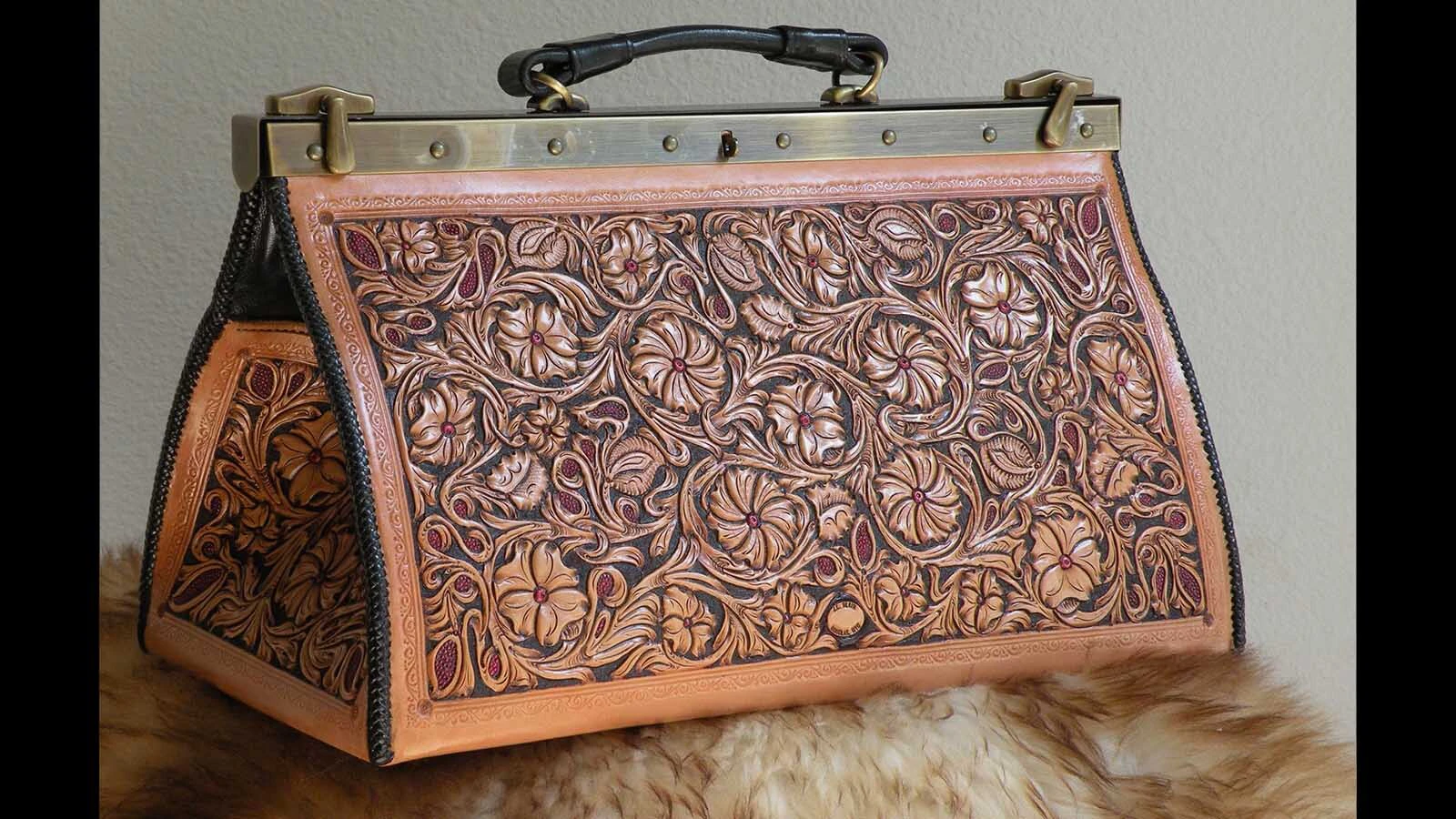
A physician's bag made by wyoming leatherworker and saddlemaker John L. Blair. (Courtesy John L. Blair) 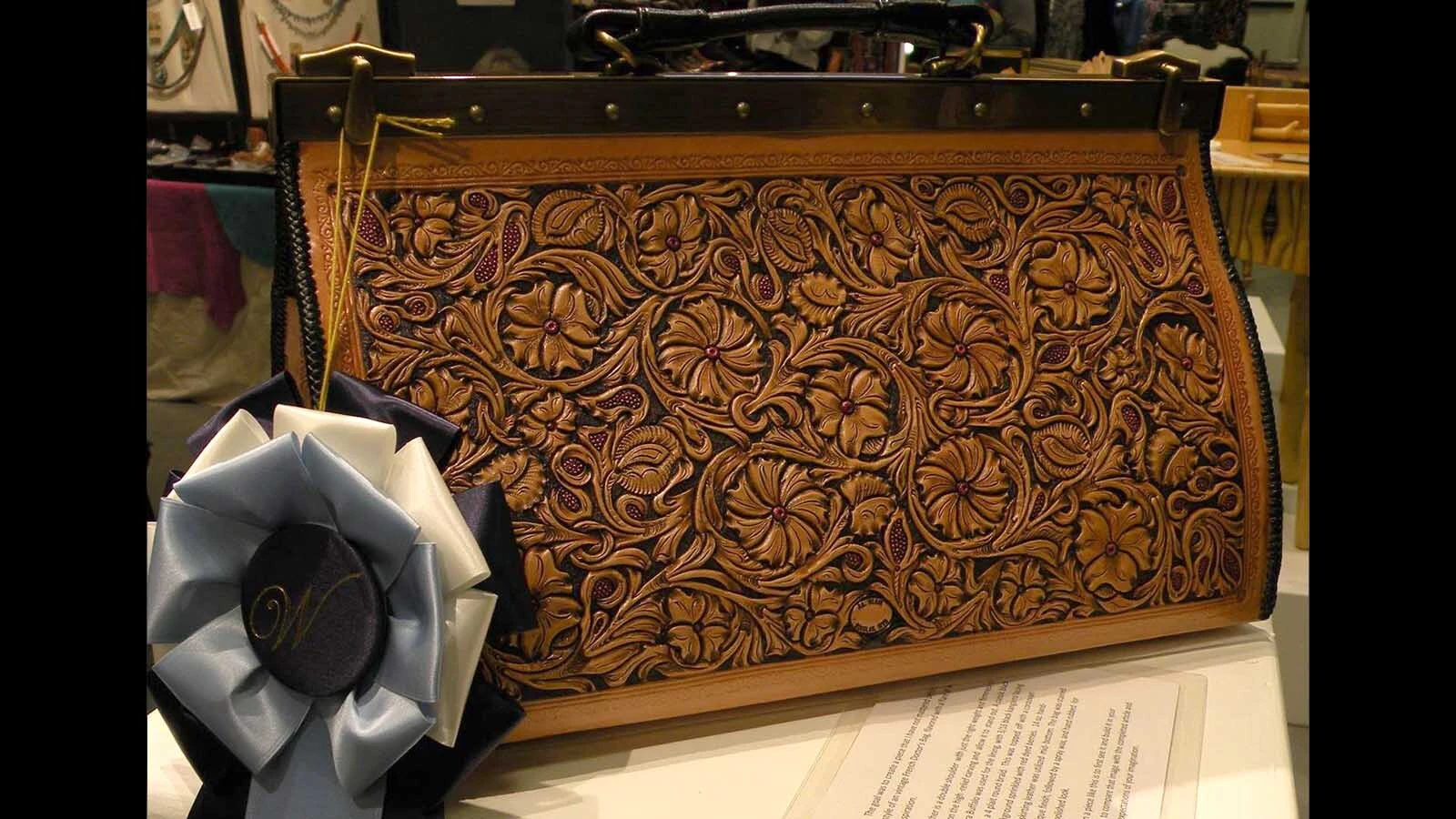
A physician's bag made by wyoming leatherworker and saddlemaker John L. Blair. (Courtesy John L. Blair) 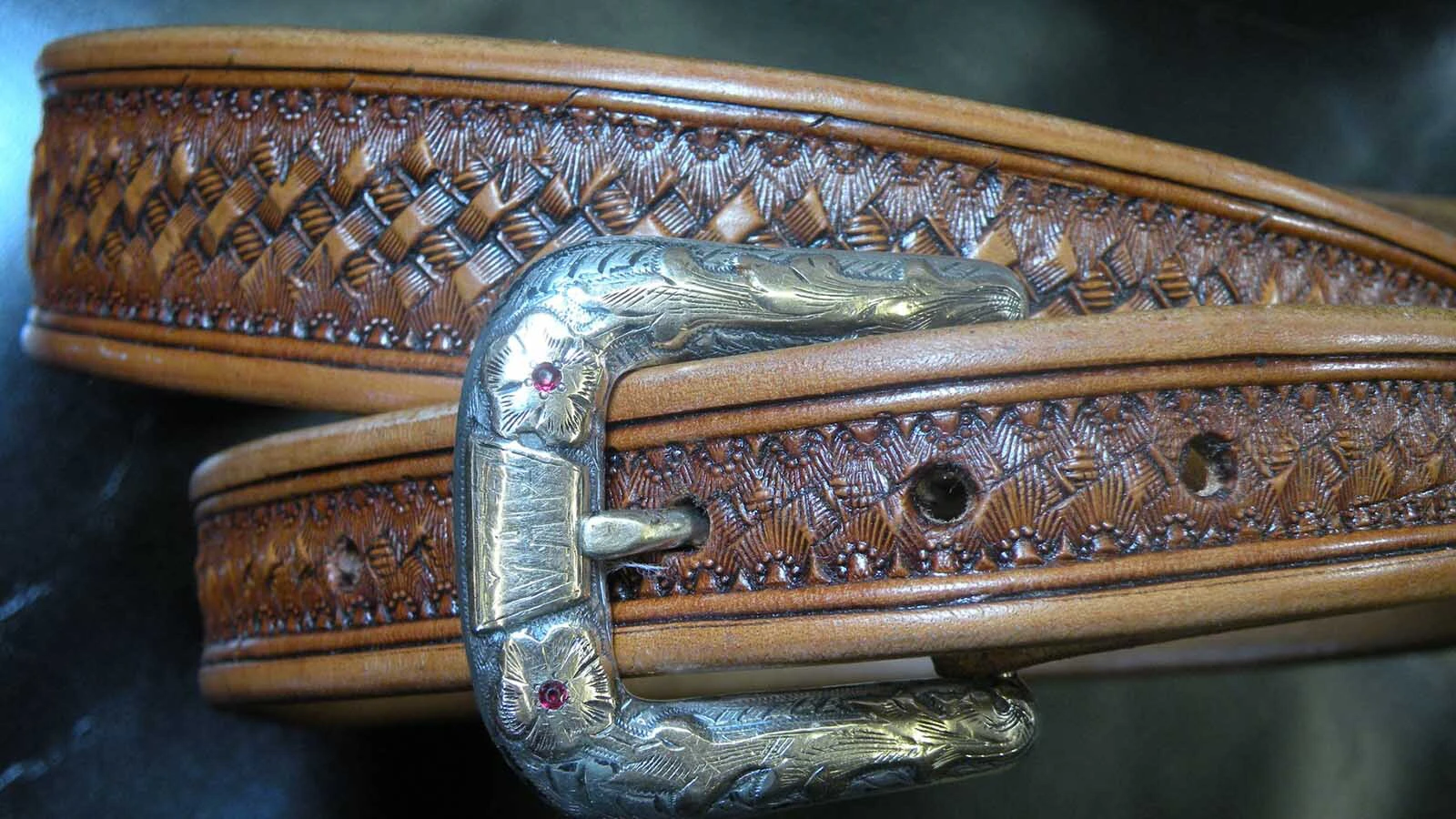
A belt with silver accents made by wyoming leatherworker and saddlemaker John L. Blair. (Courtesy John L. Blair) 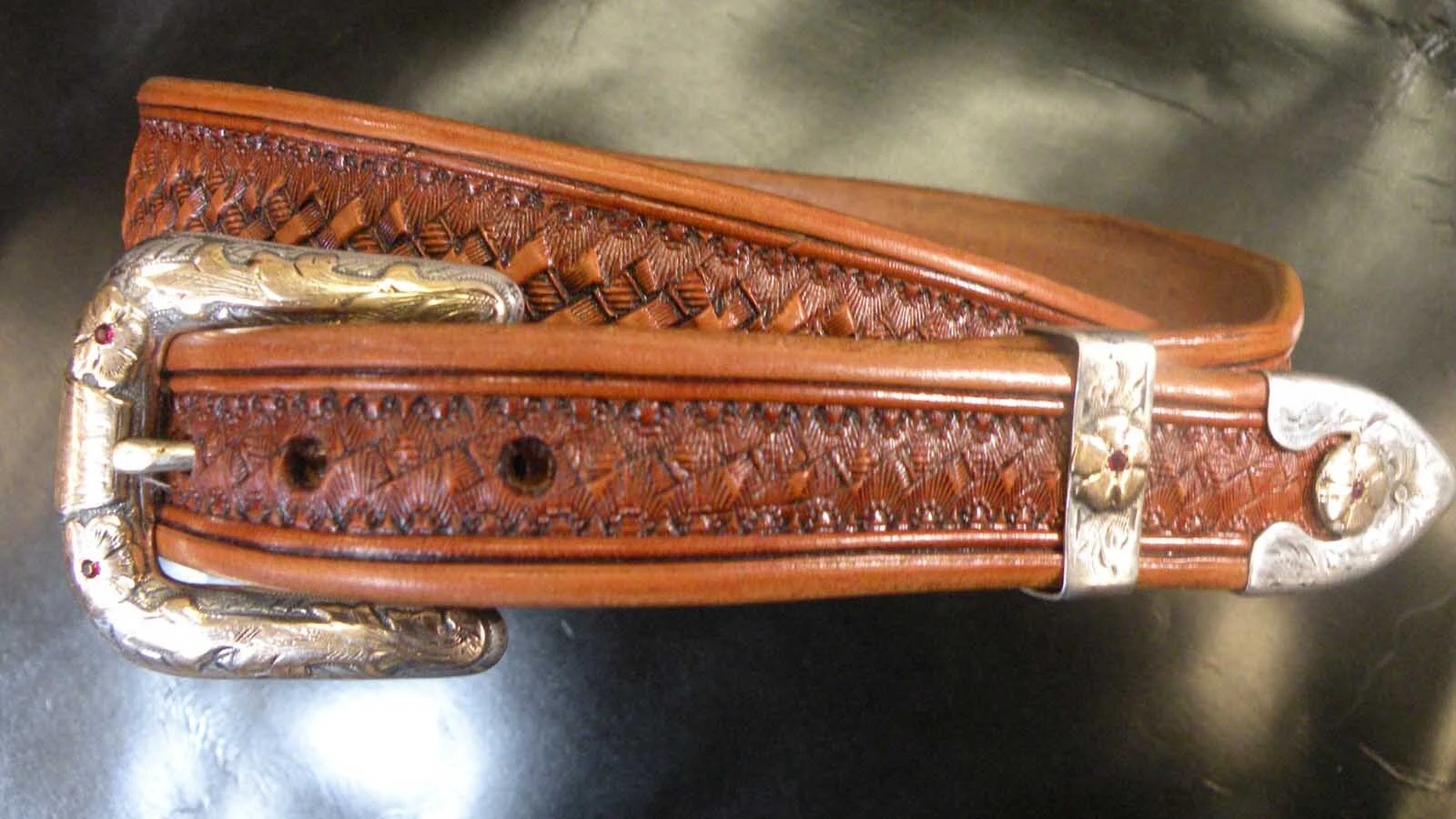
A belt with silver accents made by wyoming leatherworker and saddlemaker John L. Blair. (Courtesy John L. Blair)
Working Rigs For Working Cowboys
The custom purse is going to cost that Nevada rancher pretty penny: $8,500.
Blair’s bowls, meanwhile, run around $10,000 and his vases about $15,000.
Those kinds of prices take a commitment, Blair acknowledged, but he is making heirlooms: unique, functional art pieces that families will want to keep for generations.
That has made him fearless about setting a price that values his time and his 45 years of experience.
His saddles, meanwhile, are an even bigger commitment, but that makes sense in Wyoming, where saddles have a special place in the state’s cultural heritage.
They are art and legacy, all-in-one packages intended for hard use in hard terrain.
A saddle made by Blair runs upward of $45,000 or more, depending on the individual details.
But they’re not just for the wealthy. In fact, most of his saddles are working rigs for working cowboys, Blair said.
“Some of them struggled to make enough money to pay for it, but they did,” he said. “Because they wanted a saddle done right.”
Blair’s customers are from everywhere and from all walks of life. Nevada, Missouri, Wyoming and beyond, and local ranchers, professionals, and celebrities, like the late rodeo performer and character actor Slim Pickens.
Blair built him an elkhorn riding saddle, trading for one of Pickens’ own California-built mountain man saddles. Blair still has his mountain man saddle and assumes the Pickens family still has Blair’s.
Not only have Blair’s saddles gone all over the world, Blair has been invited places to show his work, including the White House in 2020 for then-President Donald Trump’s "Made in America Showcase," and Osaka, Japan, where he was invited to be part of a trade delegation from Douglas, Wyoming.
Everyone Starts Somewhere
Making saddles “done right” is an intricate process, one that took years to learn, Blair said.
But he didn’t start with a saddle. He started with something humble: a blue, laced leather wallet, simple and plain.
Blair still has that piece. It’s a reminder of just how far he’s come in the world of leatherworking.
“Anyone I have who comes in to learn, I try to make sure they save those pieces and put them back, whether they like them or not,” he said. “They can put a date on it and that way, 20 years from now, they can go back and see their improvement. See what they’ve done.”
Blair learned leatherworking from his father, as well as a man named Tony Holmes, who had a shop in Cheyenne.
He counts Holmes as among the greatest saddlemakers in Wyoming.
“People would argue that there were people who are better known, no doubt about that,” Blair said. “But as far as the construction of the saddle, I think he was probably one of the better ones.
"He never really had the recognition out there, but he built saddles a whole lot better than a lot of people did.”
Blair’s first day with Holmes was a lesson in patience.
Holmes didn’t let him so much as touch a single saddle. Instead, he sent him to the alley to pull weeds — a test to see if he’d stick around.
“You just did not start out building saddles,” he said. “It was two years before I was able to touch anything new.”
He swept floors and picked more weeds than he cares to remember until finally, one day, he was allowed to take down a saddle to scrub it clean and put it back together.
Any ambition Blair might have had to become a rodeo cowboy and saddlemaker were quickly curbed.
Holmes didn’t allow rodeo cowboys to work for him because just when he needed them, they would be off rodeoing somewhere else.
The Only Limit Is Mozart And Imagination
Eventually, Blair’s skill advanced enough that he could open his own shop in Cheyenne. That gave him a great customer base, but he found himself drawn to a slower pace and different way of life.
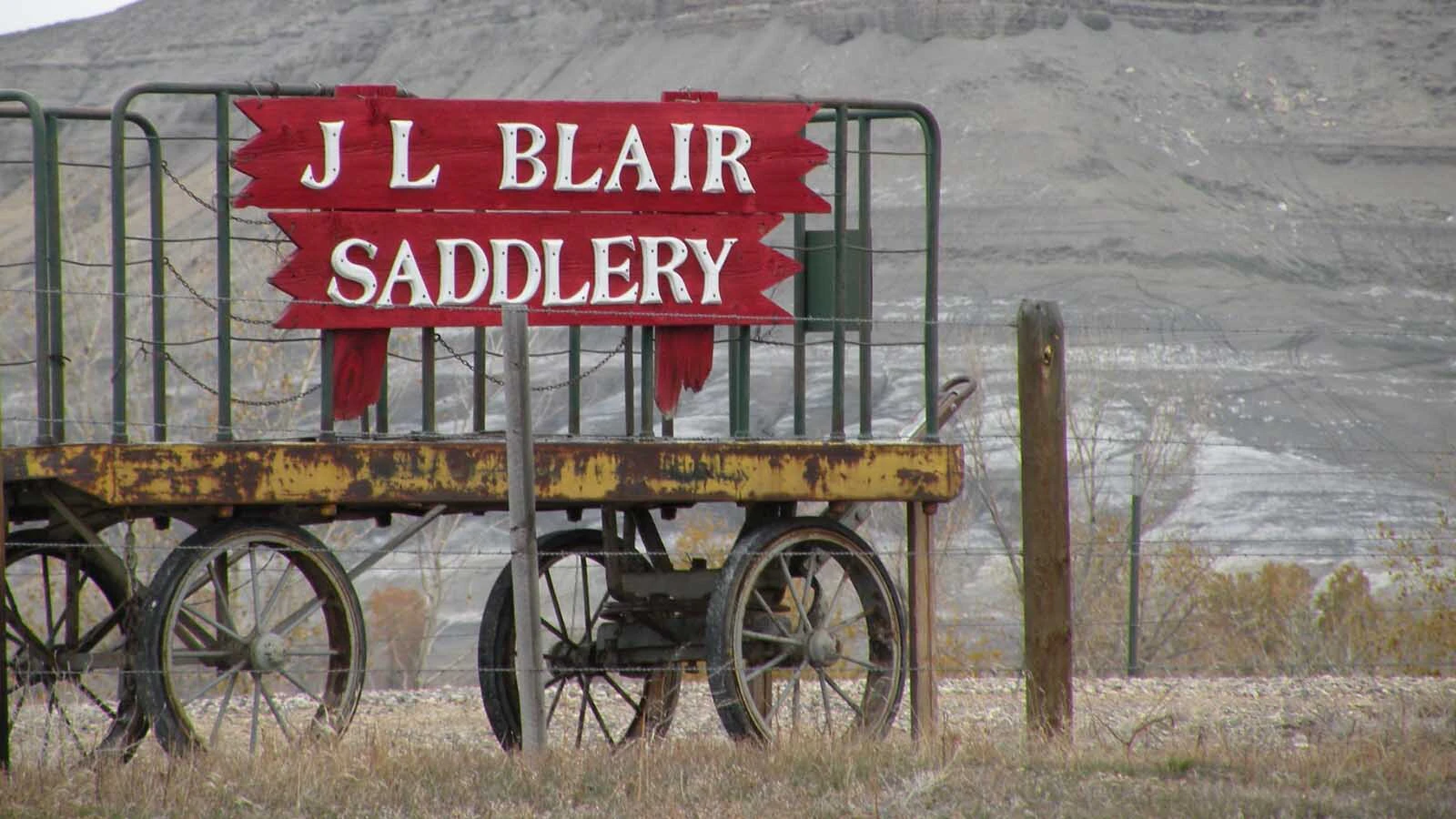
That led him first to Douglas, home of the Wyoming State Fair, and then eventually to Shell, where he’s even more off the beaten track.
That’s just the way he likes it.
That way, when a customer shows up on his doorstep or someone turns up interested in learning the art of saddle making or leatherwork, he knows that’s someone he can take seriously.
After 45 years at the same craft, there are days Blair wonders why he’s still making saddles, still working with leather.
It’s a question that doesn’t last for long. The leather is calling to him as it always has, even when he was a 6-year-old boy just beginning to learn what leather can do.
“You have to understand the leather itself,” Blair said. “You’ve got to be able to feel it with your hands and know what it’s going to do.”
Sometimes, even he, a master at his craft, chooses the wrong piece of leather for a job.
“So, you have to start all over again,” he said. “It’s a matter of choosing the right piece, and then knowing what to do with it, whether you need to firm it up, temper it a little bit to make it harder, or it has to be softer when you’re working with it.”
The variables when it comes to working with leather never end, and the puzzles he can solve with leather have no limit either.
t’s all up to Mozart and Blair’s imagination.
Blair’s shop is now filled with hundreds of tools collected over 45 years. They were shiny once upon a time, but now they are soft, dulled silver.
Some tools date back to the 1950s, and some were inherited from his father.
Other tools he made himself, inventing them from nails or bits of steel to suit his carving style.
Each is its own musical instrument, built to strike a different note from leather — cuts, bevels, textures.
As the sounds of Mozart fill his shop, he’s pulling and pushing the leather beneath his hands into a visual symphony. Flower petals, a leaf vein, a basket weave, a rope edge created by the hands of a leather virtuoso.
“Sometimes (a career) selects you,” he says thoughtfully. “So, you do it, and you find a way to keep doing it, and you enjoy it. It’s a struggle upward. That’s just all part of it.”
Renée Jean can be reached at renee@cowboystatedaily.com.