
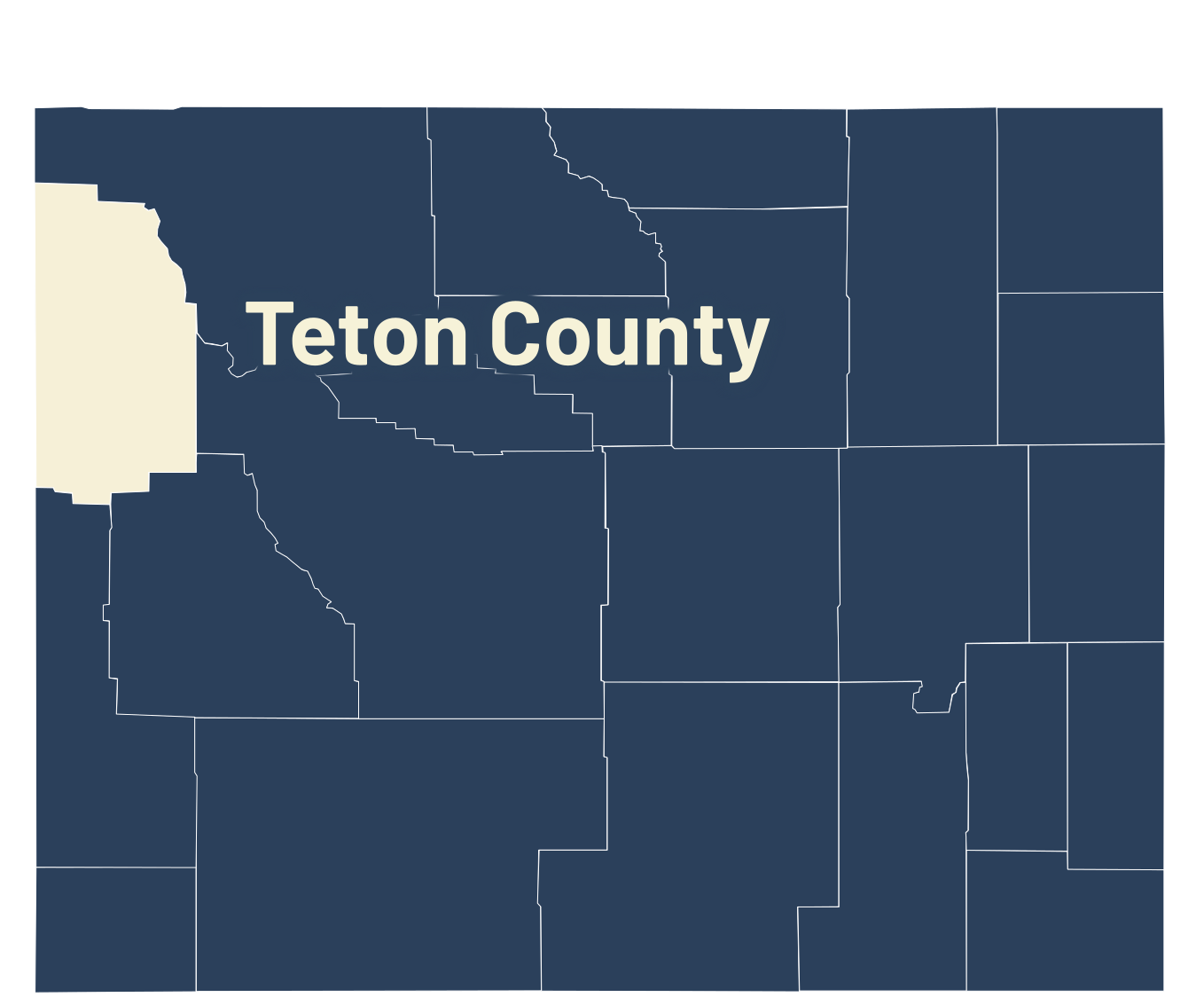
The Teton County family trying to put in a new 553-home neighborhood south of Jackson submitted a build proposal to the county last week that, if approved, would have them convey more than half of their land to nonprofit groups.
In return, 70% of the homes will be under perpetual price caps to satisfy a county land use requirement.
The Gill family, a sixth-generation Teton County ranch family, submitted its development plan application to the county on Thursday.
While less common in other Wyoming communities, price caps, mitigation fees and other development restrictions are prevalent in the nation’s richest county.
Teton County has struggled for years to house workers, like nurses and snowplow drivers, who serve the ultra-wealthy.
Many workers commute from neighboring communities. Many live in government-built housing projects which are also price-capped and tied to residents’ incomes.
According to a statement released on behalf of the Gills, the last time Teton County allowed a non-luxury residential neighborhood of more than 100 homes was more than 30 years ago in 1995.
That was in the Melody Ranch neighborhood.
Teton County Commission Chair Mark Newcomb, who has supported the Gills’ project so far, told Cowboy State Daily that the Melody Ranch project was considered non-luxury when built, but now with homes in the $3 million range, it’s left that category.
“Even houses like the Gills are proposing, if there were no restrictions, they’d get quickly bought up by outside money,” Newcomb said.
This project represents a “tremendous opportunity,” and Newcomb is anticipating discussion on the project, he said.
Nikki Gill, who noted with a laugh that she’s had two kids since her family started working toward authorization six years ago, told Cowboy State Daily she expects the county to vote on the newest application, a detailed construction plan, around November.
Newcomb said he hopes it doesn’t take that long, but acknowledged specific processes, including county planning work, must unfold before the vote.
If the county approves the development plan, the project will still require infrastructure-related permits from the county, the town of Jackson and the Wyoming Department of Environmental Quality.
“It will likely be another two years before the County will allow construction on any homes to begin,” the statement says.
Capped
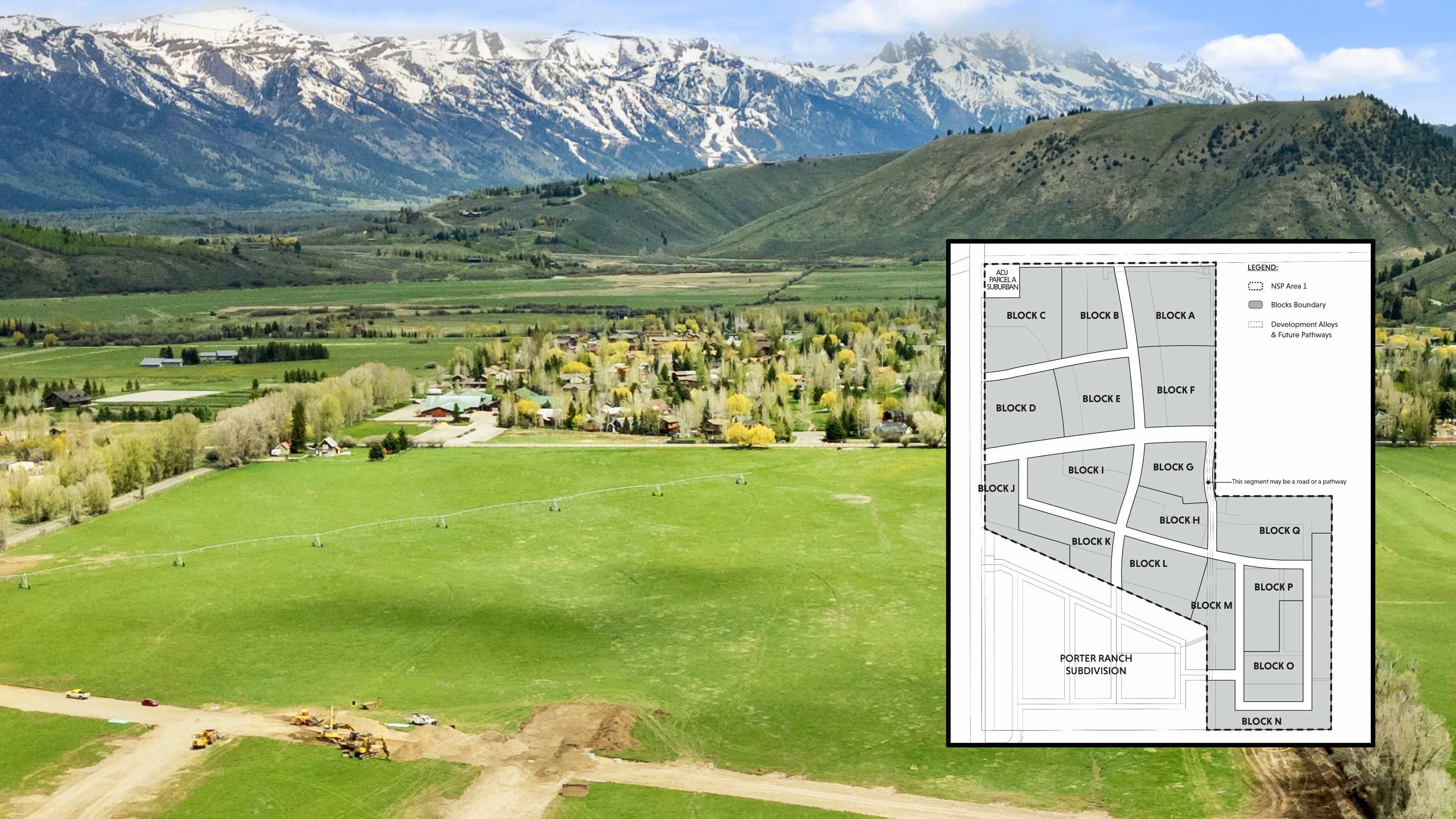
Slated for a region south of Jackson called Northern South Park Area 1, the project spans 74 acres.
Of those, the Gills are conveying 45 acres to private nonprofit groups like Jackson Hole Community Housing Trust and Habitat for Humanity of the greater Teton Area.
Those groups are expected to build 388, or 70%, of the homes under perpetual price caps on the free land to fulfill a county requirement.
That leaves 165 or fewer homes in the region in the free market.
“We are part of the solution,” said Robert Gill, Nikki Gill’s dad, in the press release. “It can’t be that the only housing solutions are subsidized, government projects — that will be like trying to fill a bathtub with a teaspoon — after 30 years of delayed need.”
Robert Gill said he’s proud that this project plan includes backyards and other places “for little ones to play.”
“After decades of no new supply for local families and frankly a lot of excuses, it is time to just do the right thing and say ‘yes' to a place for locals,” he said.
That Road
It’s a good idea in theory and the county needs affordable housing, said Kathy Tompkins, who lives near the proposed project site.
But as the easements sit now, she said the neighborhood will dump more traffic onto High School Road, which already earns “a D or an F, certain times of day,” for its congested school drop-off and pickup traffic.
“So there’s plenty of action going on with students and very young kids that attend the elementary school right there,” she said.
Also, Central Wyoming College is buildillng an outpost in that same area, Tompkins noted.
“Bottom line, high school road will be the one where all the traffic is dumped onto, until an easement is approved all the way through,” she said.
She also referenced the extra load that construction will bring to the road. The CWC project has brought “15 or so vehicles and trucks and construction equipment” already, she said.
Tompkins pointed to a land development regulation that outlays mandatory connectivity standdards for roads.
Stagger
The traffic influx “is a significant issue,” Newcomb acknowledged, saying the road is nearly “clogged” during school dropoff and pickup.
Those times don’t last very long, he said, adding that the county’s transportation planner and county engineer have been working to mitigate that impact.
One way to ease the influx is to have the Gills “have their own quarry and do their own crushing on their property” so raw materials don’t traverse the road at all.
Nikki Gill said the road has essentially “zero traffic on it all day” outside of those pickup and drop-off times, so urging the different schools to stagger their start and end times more could help as well.
“But according to all the traffic studies, even this neighborhood doesn’t trigger major traffic problems,” she said.
Last Year
The project eclipsed another major milestone last May, when Teton County commissioners voted 4-1 in favor of the master site plan.
The lone nay vote at the time, Commissioner Luther Propst, did not immediately respond to a Monday voicemail request for comment.
He told the Jackson Hole News & Guide at the time that he was concerned based on a county staffer’s figures that the 45 acres for affordable capped housing could be winnowed after the required exactions for schools, parks and roads.
Chris Neubecker, Teton County director of planning, said it’s possible to see those 45 acres winnowed.
“When land is actually subdivided, several required elements reduce the amount of land available for housing,” he said. School land dedications, parks land dedications and public rights of way for streets are among those, with the rights of way consuming between 16% and 35% of total land area depending on design.
“Yes - under certain assumptions, it is plausible that an initial 45-acre ‘raw land’ concept could yield something on the order of 16–25 acres of net developable land once standard subdivision requirements are applied,” he wrote in a Monday email response to Cowboy State Daily’s request for confirmation.
Nuts And Bolts
In the higher density “opt-in” zoning, the County requires 70% of the homes to be deed restricted, a means of price capping home value in perpetuity to preserve affordability.
Those homes are designated for people making under 120% of area median income, says the Gill family’s statement. Teton County then allows the remaining 30% of the homes to be unrestricted, free-market homes.
For this project, uniquely, Teton County is requiring a traffic mitigation impact fee assessed on each home in the Area 1 neighborhood
Each home will carry a new traffic mitigation impact fee, before the builder can gain a permit. That money is slated for future “off-site” road improvements, says the statement.
“This fee is on top of the property and sales taxes the new homeowners will pay as residents of Teton County,” it adds.
Clair McFarland can be reached at clair@cowboystatedaily.com.


