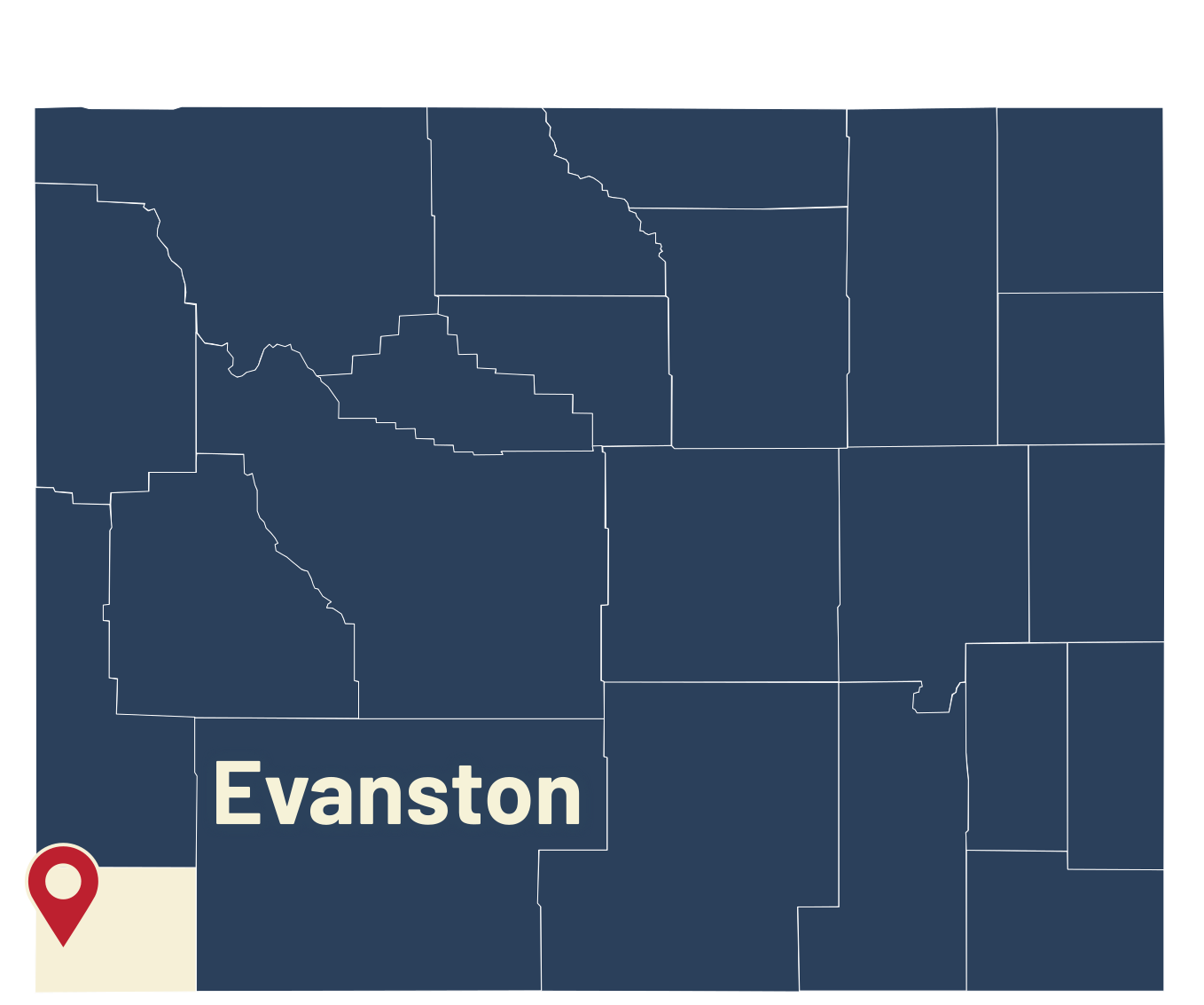
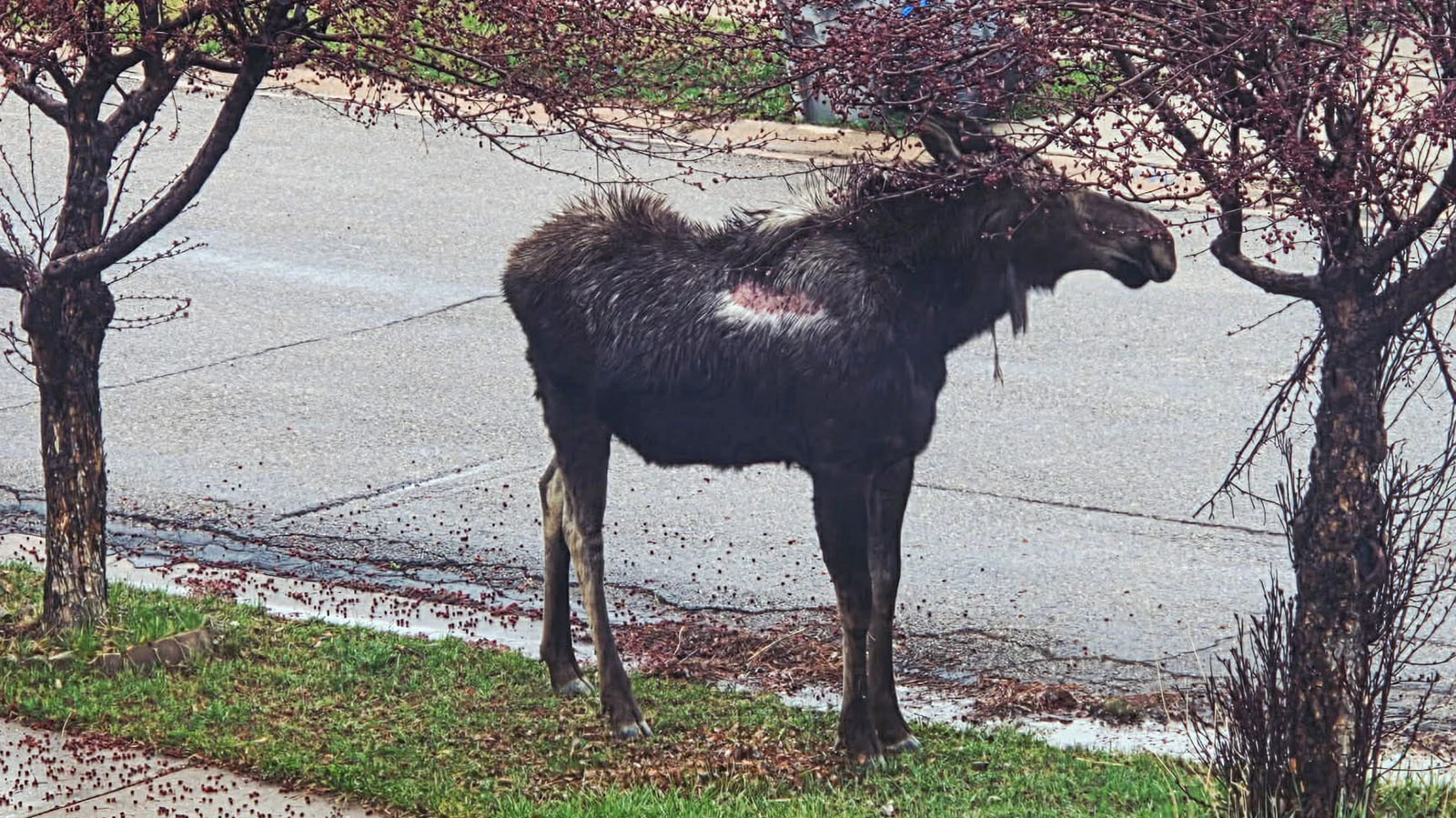
What happened to Big Betty? Evanston residents are concerned that their resident neighborhood moose looks a little worse for wear this spring.
Big Betty is a moose that’s known to many people living in this southwest Wyoming city. They frequently find her resting in their yards, occasionally with a calf alongside her.
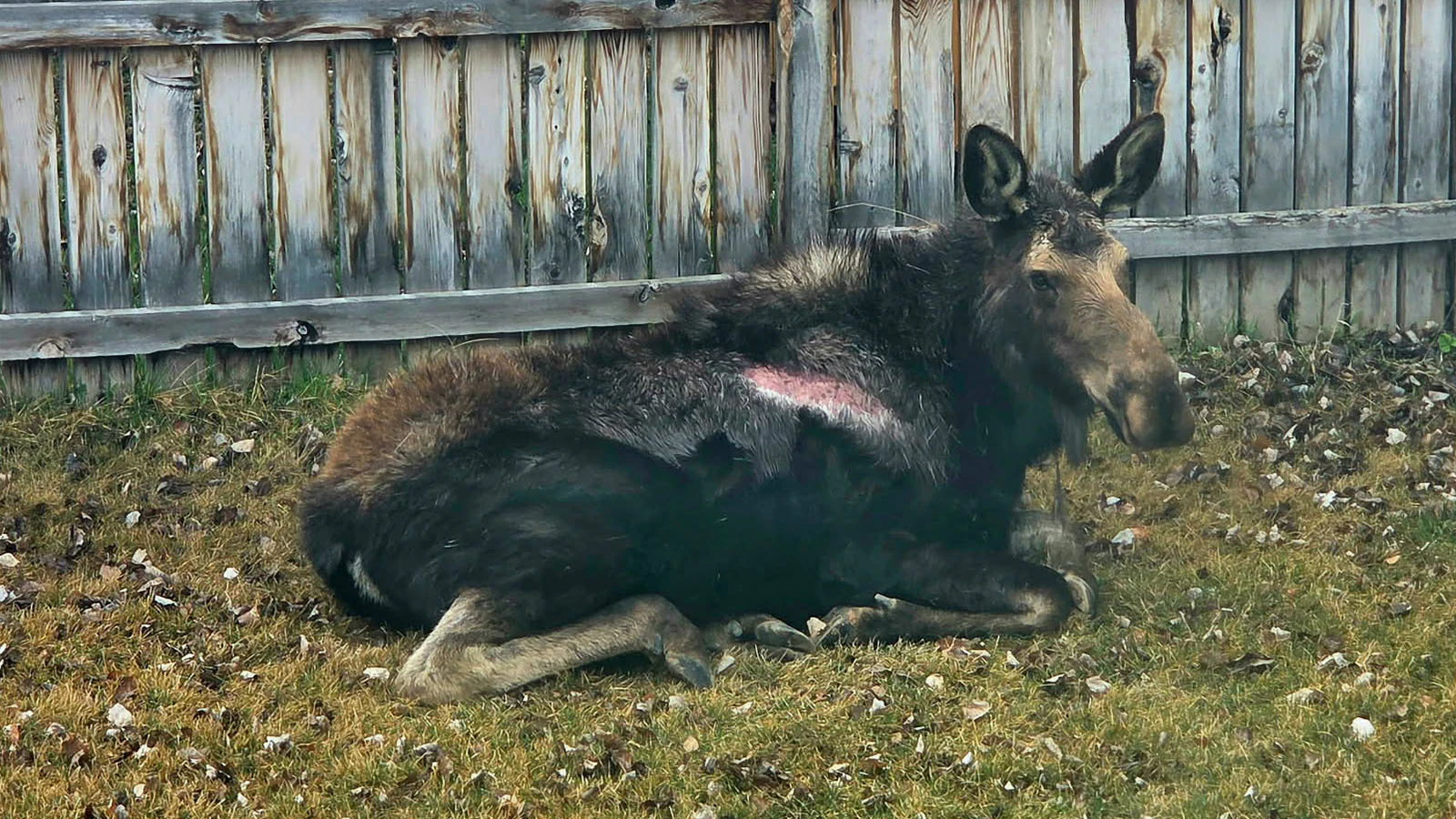
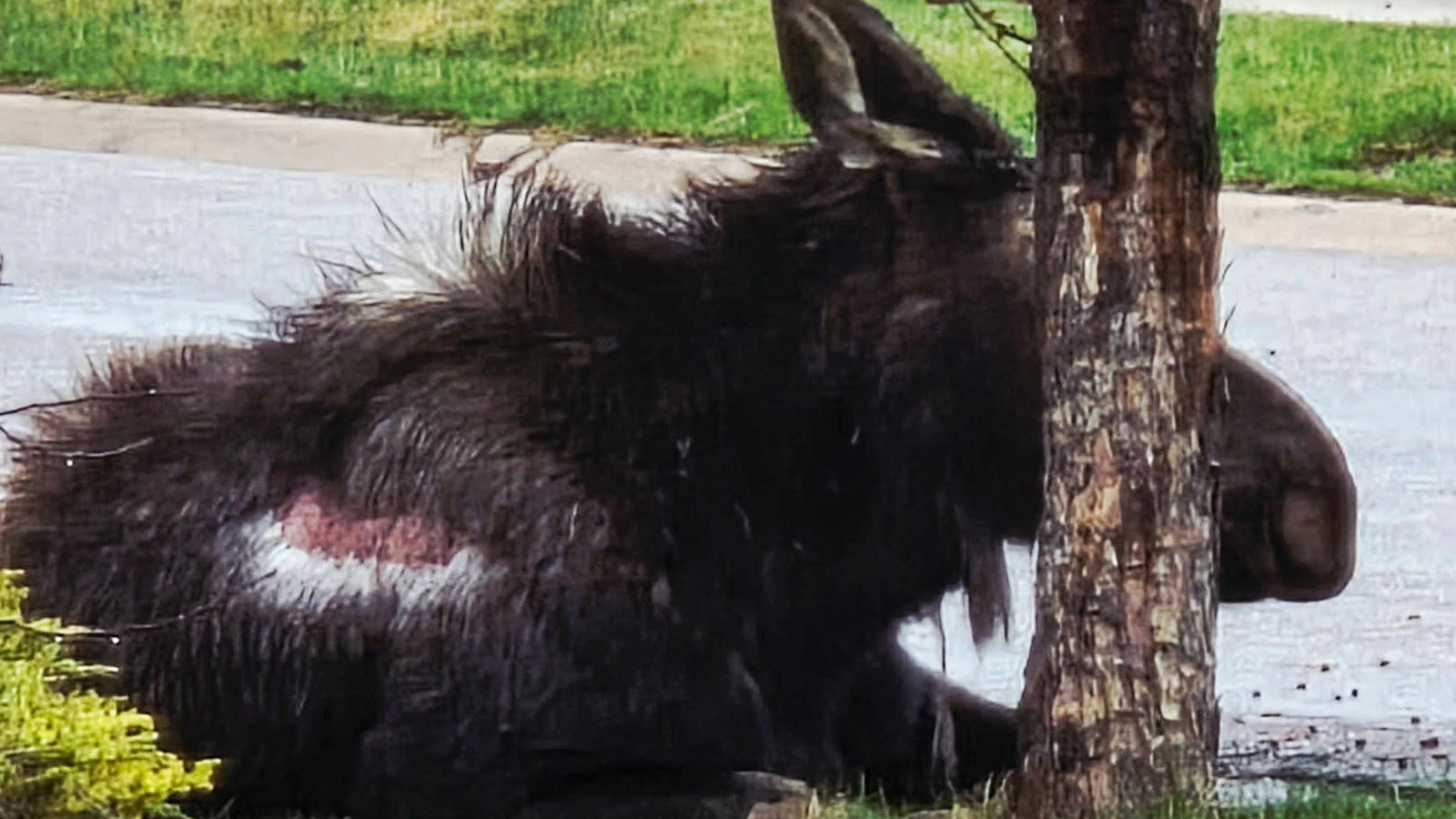
When Shasta Sharp noticed Big Betty in her backyard on Wednesday morning, she was alarmed by the moose’s appearance. A large patch of hair was missing on her right side, exposing raw, pink skin that looks like an injury of some kind.
“She’s been visiting us for three years,” Sharp said. “As I watched her from my home office (on Wednesday), she was struggling to lie down. She looked like she was in pain.”
Big Betty hung around Sharp’s yard until 4 p.m., when she wandered off to the comfort and security of someone else’s yard.
When Sharp shared images of Big Betty in her current state, many Evanston residents were alarmed. Some called seeing her in that condition “heartbreaking.”
“She is our friendly neighborhood moose,” Sharp said. “We all love her very much.”
House Call
Concerned about Big Betty's condition, Sharp called the Evanston office of the Wyoming Game and Fish Department. One of their field personnel arrived at Sharp’s home to give the moose a once-over from a safe distance.
“We got as close as comfort allowed and watched her for a while,” she said. “We could tell that her legs weren’t broken, so there wasn’t a concern that she had been hit by a car.”
Beyond that, there wasn’t anything they could do.
Sharp was told to keep an eye on Big Betty and to call the Evanston office again if her condition worsened.
“I was told it’s painful to watch, but for now, they’re going to leave her alone,” she said.
Moose M.D.
James Hobbs, Wyoming Game and Fish’s regional wildlife supervisor for the Green River region, confirmed that someone from his office went out to assess the health of a moose in Evanston.
Based on the field report, he thinks the moose looks worse than she feels.
“From what was described to me, the moose appeared to be in good condition,” he said. “It was still feeding and moving around just fine with no apparent broken limbs or anything like that.”
Hobbs didn’t have an explanation for the moose’s missing hair. At this time of year, it could be for any number of reasons.
“There’s the possibility that she was clipped by a car, but that’s something that could have been caused by rubbing,” he said. “As the temperature starts to warm up, they're rubbing on all sorts of things, whether it's vegetation or buildings or whatever it might be, and they sometimes rub hair off.”
Hobbs also noted that Wednesday was a wet, cold day in Evanston. That probably made the swatch of exposed pink skin look worse than it was.
“When the hair is wet, it makes that hair darker,” he said. “That makes the pink of the skin pop out more, especially with a moose that’s in the local city limits.”
After seeing Sharp’s photos and hearing the assessment of his peers, Hobbs said there “wasn’t a concern” about Big Betty’s health.
“Just like humans, animals run into all sorts of different afflictions,” he said. “That moose didn't look like it was sick or severely injured. It was hard to tell if that even was an injury, because (the skin) was more pronounced because it was raining.”
Moose Maladies
A fully-grown moose has few natural predators.
Adults can even survive vehicle impacts, although attempting to ride one is a crime.
One fatal problem for moose is tick infestations. There have been documented cases in the eastern U.S. of moose found with 50,000 to 100,000 ticks on their bodies.
Wyoming’s moose aren’t immune to tick infestations. In fact, they seem particularly susceptible to them, which can lead to blood loss, weight loss, and overall health problems.
Ticks can easily be a death sentence, directly or indirectly, for any moose.
Is Big Betty enduring death by 10,000 bites?
Hobbs admitted that it’s possible Big Betty lost her hair while trying to rub off ticks, but there was nothing to indicate she was battling an infestation.
“Our field guy got really close with binoculars, and he couldn't see any ticks apparent at that time,” he said. “They have heavy tick load, they’re really apparent, but he couldn’t see any evidence of that.”
Overall, Hobbs has a positive prognosis for Big Betty. She might not look her best at the moment, but she didn't seem to be outwardly ill or injured.
“If they look like and are moving and feeding just fine, we allow them to keep doing what they like to do, which is surviving,” he said. “I don't think there was anything to worry about.”
Despite the reassurances, Sharp and many others will still be keeping an eye out for their resident moose, knowing there is little they can do if Big Betty takes a turn for the worse.
“She’s an old lady,” Sharp said. “Hopefully, that patch clears up, and her body starts healing soon. But she’s going to have to heal herself, because they don't have antibiotics for moose.”
Andrew Rossi can be reached at arossi@cowboystatedaily.com.