UPDATE: This story has been updated to reflect that one of the people caught in recent avalanches in the Tetons died of his injuries.
Two skiers survived avalanches in the Wyoming Tetons in the last two weeks, including one who was caught in a slide in No Name Bowl near Rendezvous Peak on Sunday.
It’s a sign that the sizable snowpack in the mountains of western Wyoming is less stable and more dangerous than backcountry enthusiasts might anticipate.
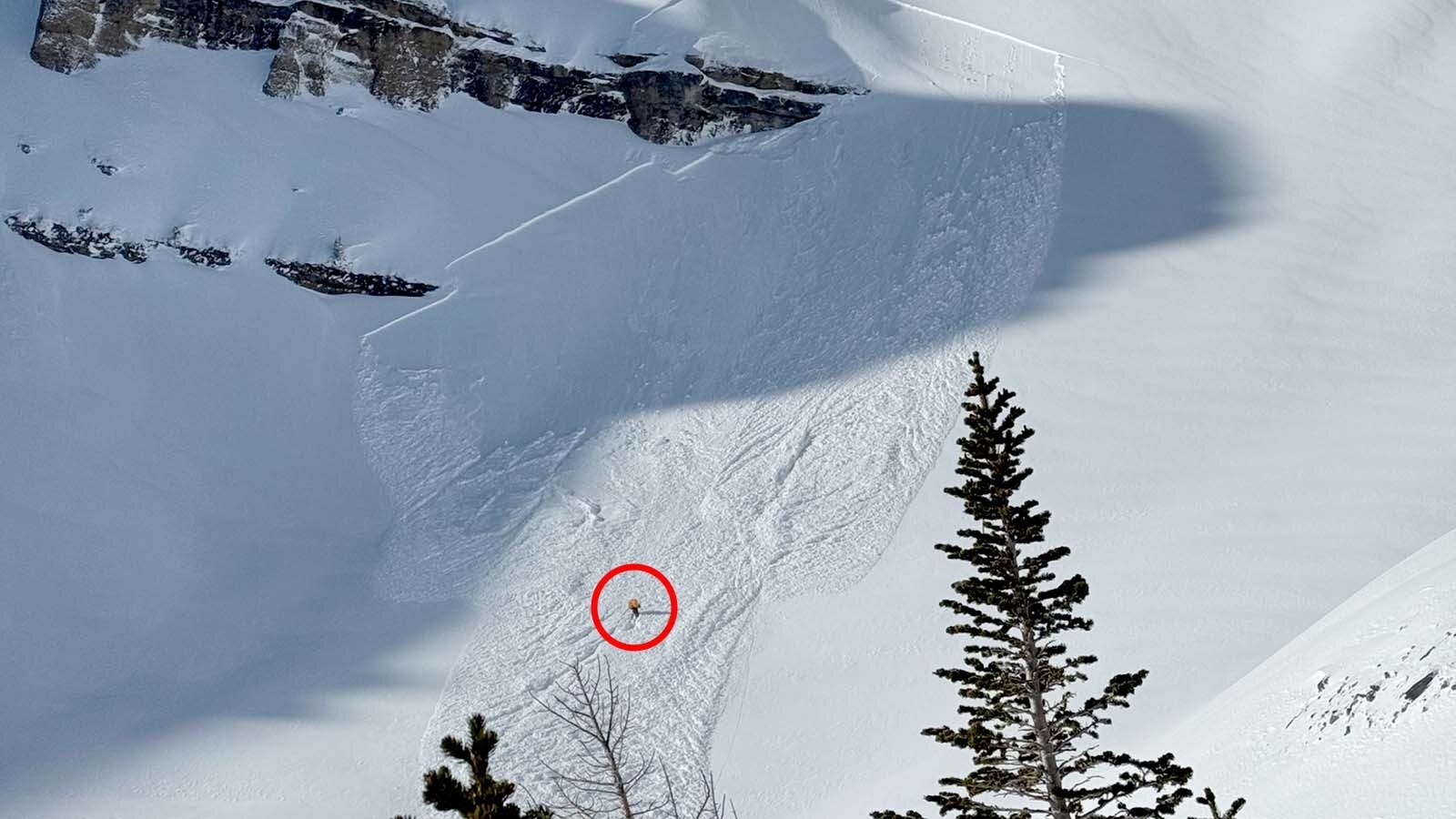
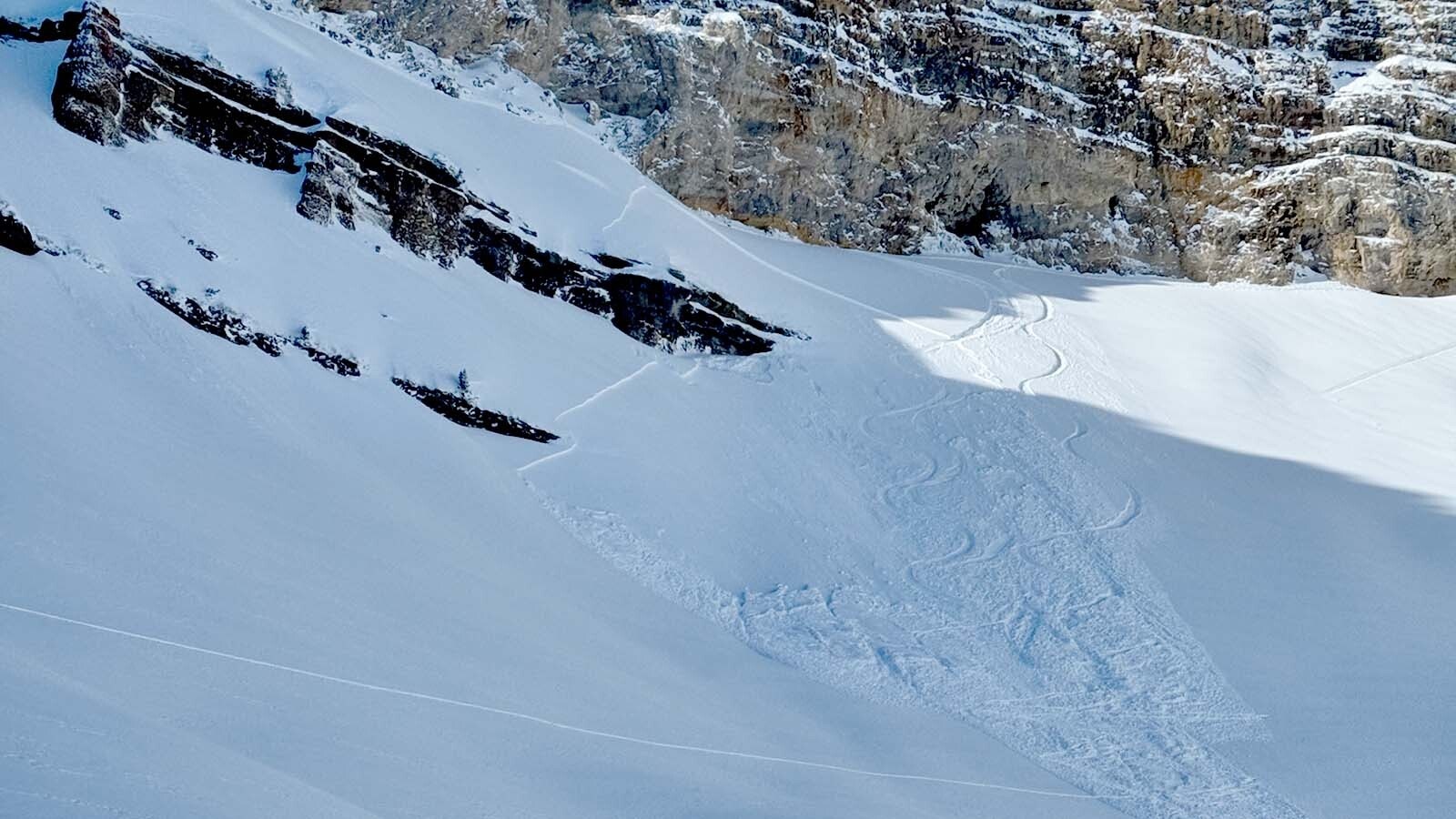
Sunday’s skier was caught and carried in No Name Bowl south of Jackson Hole Mountain Resort. An avalanche airbag prevented the skier from being buried and helped locate them for a successful rescue, the Bridger-Teton Avalanche Center reports.
On Dec. 20, a skier was hospitalized after being caught in an avalanche in The Claw, an area on the south side of Teton Pass. The 31-year-old Jackson resident was rescued via helicopter and transported to St. John’s Health.
That skier died of his injuries Friday, the Jackson Hole News&Guide reports.
The Bridger-Teton Avalanche Center has received reports of 32 avalanches in the Tetons since Dec. 19.
It’s a reminder that skiers, snowboarders, snowmobilers, and snowshoers need to stay on their toes before they head into the mountains.
“Anytime we have heavy weather and snowfall, we're going to get avalanches, without question,” said Frank Carus, director of the Bridger-Teton Avalanche Center. “Avalanche occurrences and forecasts change every 24 hours, so things can be dramatically different from one day to the next.”
Triggered
Of the 32 avalanches reported to the Bridger-Teton Avalanche Center, 20 were natural or triggered by explosives.
The avalanche that covered Wyoming Highway 22 with 30 feet of snow on Dec. 22 was a planned avalanche triggered by Gazex exploders in Teton Pass.
Carus said the frequency of avalanches varies based on conditions in the mountains.
While the lower elevations of Wyoming have been warm and dry, the mountains — especially in western Wyoming — have been building immense snowpacks with wet, heavy snow.
“Wind and weather are the architects of avalanches,” he said. “We had quite a dry fall and early winter, but things started off in early December, and our snowpack built pretty quickly.”
The other 12 avalanches, including the one reported Sunday, were “human-triggered,” he said.
That means they were accidentally caused by people in the mountains.
Carus said the Tetons are well-known for having “deep, stable snow” that’s “usually low-density and right-side up.”
However, those conditions can vary depending on many factors, such as terrain and vegetation cover.
“In those cases, an avalanche can be triggered by a single person traveling through the terrain,” he said. “Even the quality of the snow in the Tetons can be uncertain.”
An observer reported to the center watching Sunday as the skier moved "down into the bowl over a small cliff band that had visual wind loading,” according to the center.
"Right above the cliff band, the snow cracked and propagated across the top of the cliff, taking the skier over the left-most section of the cliff,” the report says.
The skier survived partially because of an airbag pack, an excellent piece of safety equipment that more winter recreation enthusiasts are using, Carus said.
The airbag pack works through a process called inverse segregation, helping people rise above the snow and debris of an avalanche.
A photo by an observer submitted to the Bridger-Teton Avalanche Center shows the skier on top of the slide area with the orange airbag visible.
“The thought is that that will keep you above the surface of the snow,” he said. “If you shake a bowl of nuts, the big walnuts will come up while the smaller pecans and hazelnuts will sink.
"These ABS packs have been proven to assist in better outcomes up to 11% of incidents.”
'Powder Fever'
While the lower elevations of Wyoming have been warm and dry, the mountains — especially in western Wyoming — have been building immense snowpacks with wet, heavy snow.
Carus said that heightens the risk of human-triggered avalanches in the Tetons.
“If we haven't had good skiing, people are all going to want to get out after it, all at once, when it is good,” he said. “It’s an acknowledged thought process, called heuristic shortcutting, that humans have and definitely propels some of us to pursue snow.”
Carus also acknowledged that many of his peers can succumb to “powder fever,” which can influence people to think less clearly than they normally would.
That can mean they don’t assess their risk as accurately as they should, given the conditions and their excitement to get out there.
The best way to not get caught in avalanches, natural or triggered, is to avoid them altogether. That can be easier said than done, but Carus advises that the best thing to do is anticipate what you’re getting into.
A beacon probe and shovel are “the absolute minimum” for anyone venturing into the snow-covered mountains, Carus said. The best tools available are foresight and attentiveness.
“It's really important for people to read the avalanche forecast every day and understand the problems associated with the current snowpack before they go out,” he said. “You need to know the 24-hour period, the 12-hour period, and what's right in front of you.”
Andrew Rossi can be reached at arossi@cowboystatedaily.com.