April Mead, a wildlife photographer based in Gardiner, Montana, was doing her daily rounds through Yellowstone National Park in August when she happened upon an unnatural encounter in the Hayden Valley.
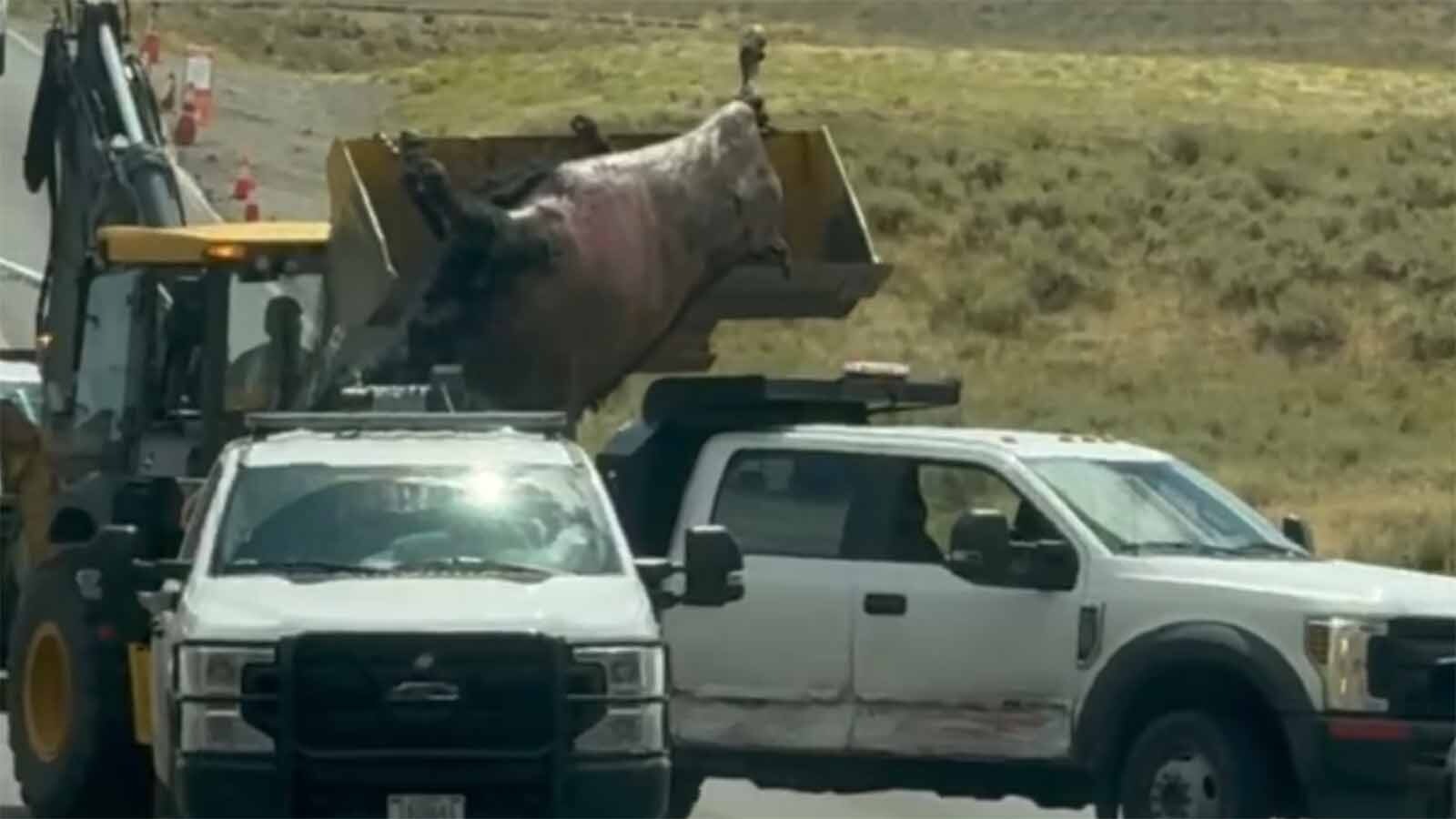
Several park rangers were working to remove a bison carcass from the landscape.
“A very large male bison died from injuries during rut,” she said. “They had to pick it up with a front-loader and put it in the back of a bear management truck.”
Mead recorded video of the bison carcass being winched out of the field and lifted by the front-end loader. It was a morbid moment, one that most Yellowstone visitors will never see.
For her, it’s a reminder of what is and isn’t true about the world’s first national park.
“Yellowstone can only be truly untouched if humans are not there,” she said. “As long as masses of people are there, we have to step in and make decisions to protect the animals and people.”
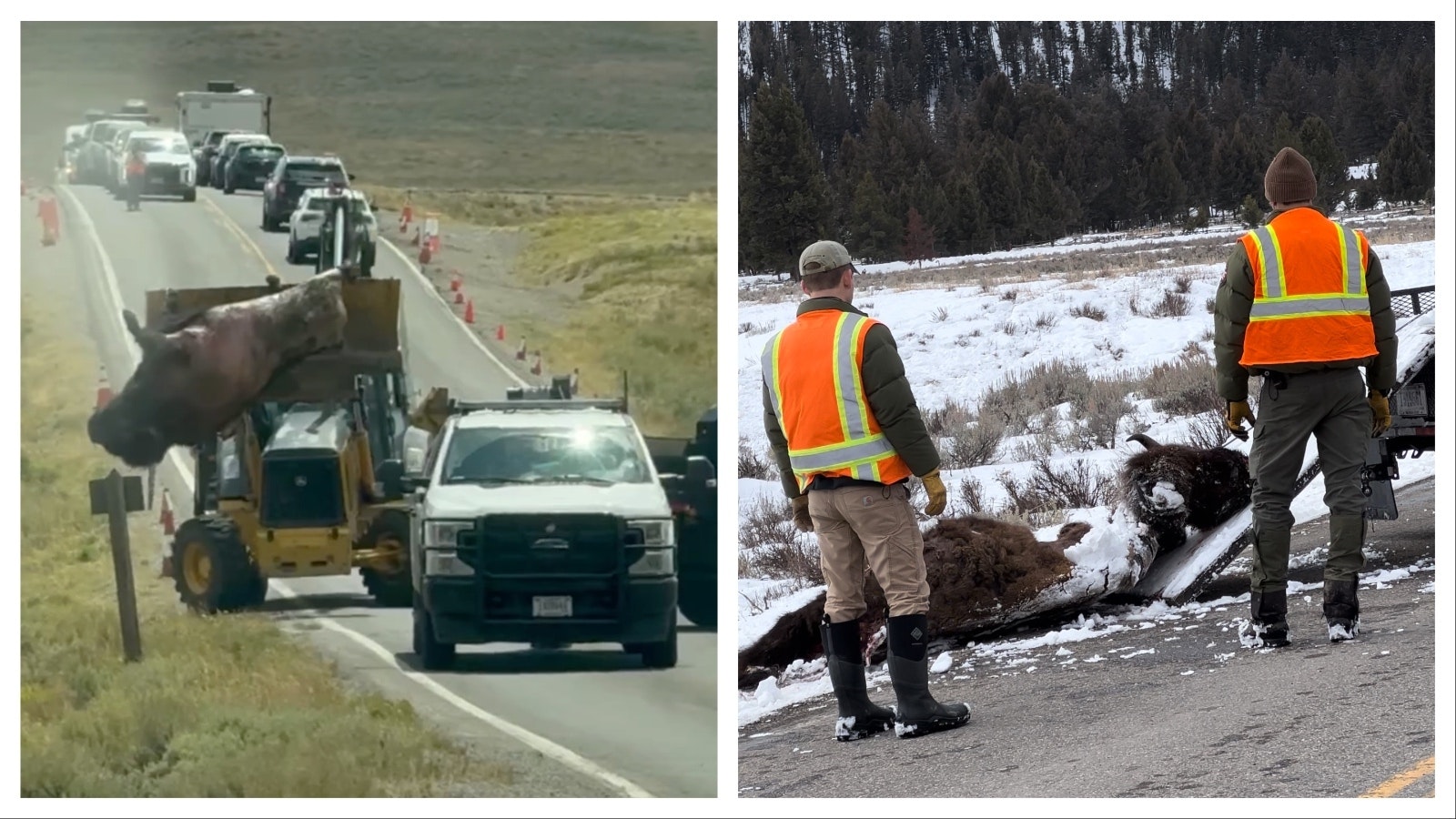
When a 1,000-pound bison dies too close to tourist hotspots in Yellowstone National Park, rangers have to move it. That’s a big job that takes tractors, winches, and front-end loaders. (Courtesy April Mead) 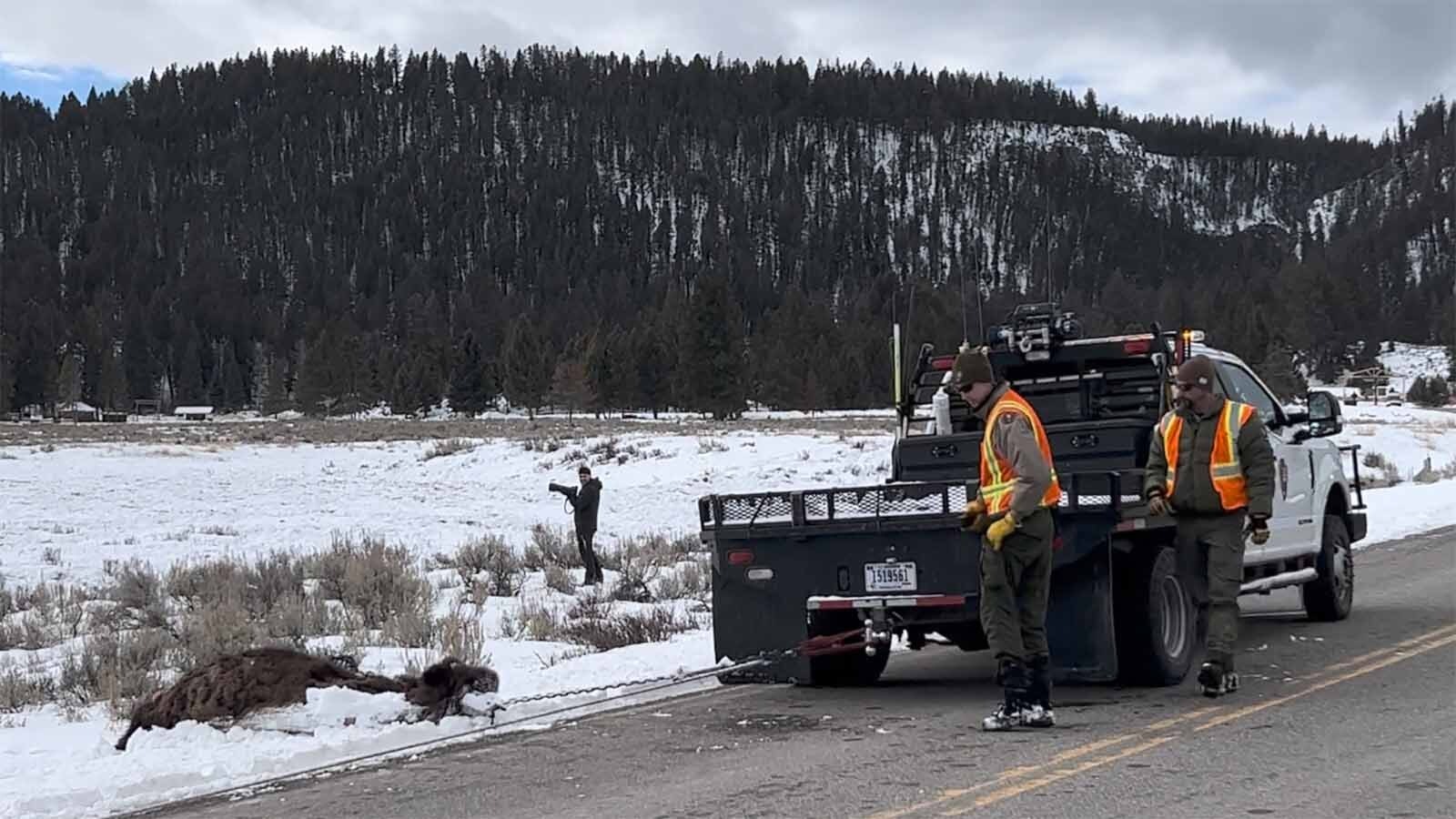
When a 1,000-pound bison dies too close to tourist hotspots in Yellowstone National Park, rangers have to move it. That’s a big job that takes tractors, winches, and front-end loaders. (Courtesy April Mead) 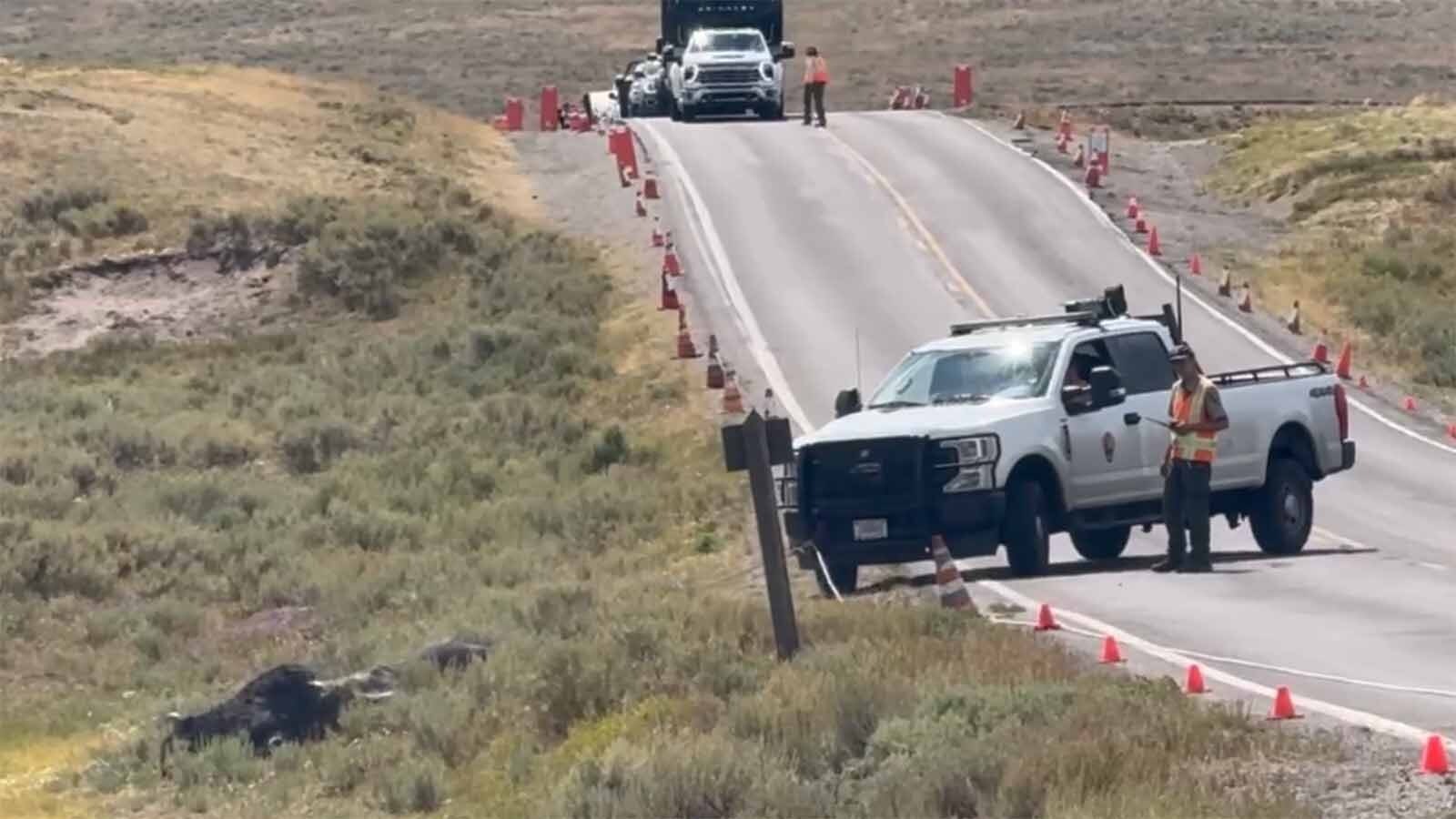
When a 1,000-pound bison dies too close to tourist hotspots in Yellowstone National Park, rangers have to move it. That’s a big job that takes tractors, winches, and front-end loaders. (Courtesy April Mead)
Carcass Control
Yellowstone is lauded for being a mostly intact piece of the Greater Yellowstone Ecosystem.
Most of its 2.2 million acres are untouched after 153 years of being one of the nation’s top tourism destinations.
Nevertheless, Yellowstone has required human management and protection to endure.
That’s where carcass control becomes a crucial part of keeping the park’s wildlife and visitors safe. Leaving a dead bison near a road is likely to attract hungry bears and wolves right to where tourists gather.
Mead’s first encounter with a carcass control operation was in February 2024.
She was driving through Tower-Roosevelt near the Northeast Entrance when she encountered park rangers dealing with two bison carcasses.
“I don't know if it was a kill or if one of them was a kill and one just passed away,” she said. “One of the carcasses had coyotes on it when I got there, and there were wolf tracks all around the area.”
Even amateur Yellowstone photographers know that a carcass makes for excellent photo ops.
Mead stopped to capitalize on the opportunity, but park rangers had already converged on the scene to dispose of the carcasses.
Both bison had died close to the Grand Loop Road and the only section of Yellowstone’s interior roads that’s maintained and open to traffic year-round.
For park rangers, it was too close for comfort.
“Anytime a carcass is too close to the road, the park has to step in,” she said. “That area gets a lot of traffic, so there’d be a constant flow of people and animals. They didn’t want any animals being compromised, and that’s what they were trying to prevent.”
Dead Lift
Mead noted the well-honed technique Yellowstone’s rangers used to haul the two bison off the landscape. All they needed was two trucks and a winch.
“It’s like a pulley system,” she said. “One truck acts as a pivot, and then they use a winch to pull the bison out of the field and into the back of another truck.”
The winch was wrapped around the necks of each bison. With surprising speed, the 2,000-pound carcasses were dragged through the snow and into the bed of the trucks.
The carcass removal Mead witnessed in August involved a much heavier bull bison. They needed to bring in a front-end loader because the massive animal was too heavy to winch onto a truck.
“They obviously can’t lift these things by hand,” she said.
Many people might see this as “carcass disposal,” but Mead rejects that definition.
The carcasses were removed from where the bison dropped, but the park’s wildlife weren’t deprived of the valuable resources that carcasses provide.
“They usually take carcasses to one of their different dump sites so that animals can enjoy them without danger,” she said. “Park rangers aren't taking these carcasses away.
"They still go to the animals, but they’re moved to a safer place where they can enjoy it without humans being around.”
The location of these dump sites is a closely guarded secret, specifically so humans can’t intrude on an important and potentially dangerous place where predators converge to feed.
It’s one of many Yellowstone locales that exist primarily for the benefit of wildlife rather than tourists.
These carcass removals were a no-brainer for Mead. If they had stayed where they were, conflict would have been inevitable.
“Tower Junction gets so much traffic, and the Yellowstone Wolf Project explained that animals migrate through that spot while we were there watching (the removal),” she said. “Wolves would have to cross the road to get to those carcasses, so they’d be in danger of being hit by a car or becoming too comfortable with people.”
‘Behind-The-Scenes' Access
Carcass control is something Yellowstone rangers and the National Park Service (NPS) conduct regularly to mitigate the potential risks carcasses present to animal and visitor safety.
Certain locations, like Blacktail Pond, are notorious as “death traps” for bison and rangers regularly winch their carcasses out of the partially frozen pond because it’s too close to the road.
Nevertheless, both Yellowstone officials and the NPS avoid disclosing details of these operations and avoid discussing it publicly.
Mead understands why they’re reluctant to talk about it.
“It’s controversial,” she said. “Park rangers and their families have been threatened because of decisions that have been made.
"I’ve had some people say some awful things on my page because I shared my videos, so I totally understand why the NPS is cagey about it.”
As an outside observer, Mead has the ability to share the “behind-the-scenes” moments with Yellowstone’s global fans and supporters.
Carcass removal is a less savory aspect of park management, but it’s important to ensure everyone and everything in the park can coexist without conflict.
“There's a lot of important work that happens in the park, and I don't think that there's a very good awareness about what's involved,” she said. “People dedicate their lives to keeping animals safe and ensuring people can enjoy the animals safely, and I think it's important that people understand what they do and why they do it.”
Mead has no interest in being an “influencer,” but takes pride in sharing the lesser-known aspects of Yellowstone with the world.
The millions of views on her carcass control videos are evidence that millions of people are fascinated by all aspects of Yellowstone.
Even Yellowstone’s most qualified, well-intentioned, and dedicated employees have to intrude on the serenity of the natural landscape to keep people safe.
“I was really happy to see that people are interested in what the NPS does,” she said. “That takes somebody to be in Yellowstone a lot, see these different events happen, and capture them sso they can be shared.
"As long as people are in the park, they have to step in and make decisions to protect the animals and people.”
Andrew Rossi can be reached at arossi@cowboystatedaily.com.