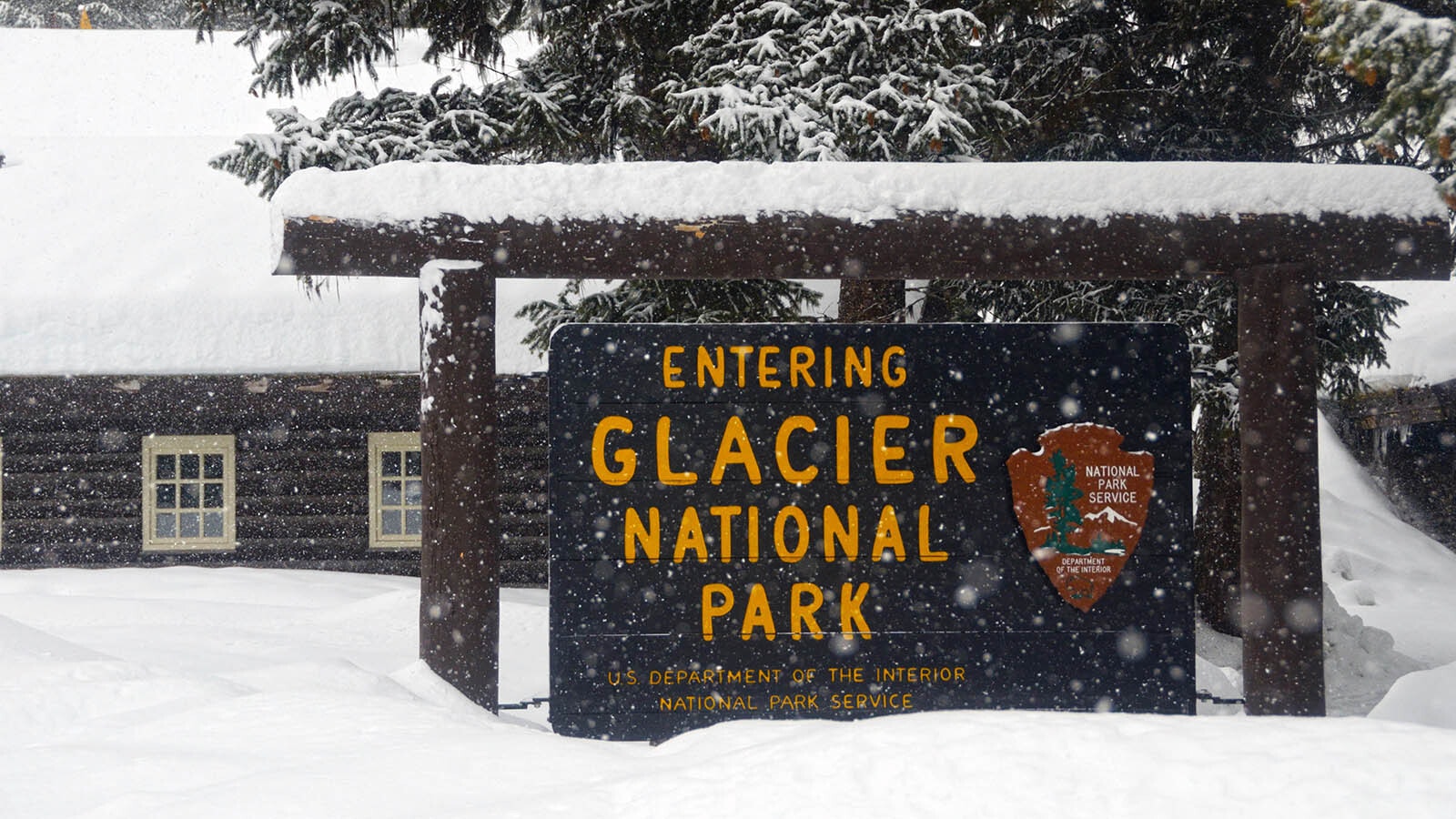
Glacier National Park in Montana reportedly plans to end its reservation entry system that it rolled out four years ago to cut down on long lines and keep the park from getting mobbed.
The system works by having people register, often months in advance, to enter the park at a specific time during peak hours, such as 7 a.m. to 4 p.m.
However, the solution apparently created a new problem. While it eased midday traffic congestion, it pushed more people to show up early, before restricted hours began.
The park plans to end reserved entry during the summer 2026 season, according to news reports.
“People were trying to game the system by all showing up before 7 a.m., to cram themselves into Glacier before the timed entry started,” former Assistant Interior Secretary and Wyoming resident Rob Wallace told Cowboy State Daily.
And people determined to beat the clock likely would have done that, regardless of the hour, Becky Burge, who works for Tour Glacier, told Cowboy State Daily.
“I’m sure if they set it at 5 a.m., people would have shown up at 3 a.m., she said.
Unintended Consequences
The unintended consequence of putting more traffic on the park’s road in dim light or pre-dawn darkness primarily drove the decision to do away with restricted entry, Glacier National Park Superintendent Dave Roemer said during a meeting with Montana business owners and civic leaders.
Roemer indicated plans to end the restricted entry program while speaking Dec. 9 at a Columbia Falls, Montana Chamber of Commerce meeting, the Daily Inter Lake reported.
Glacier National Park has yet to officially announce the end of restricted entry.
Yellowstone, Grand Teton Don’t Have Restricted Entry
Yellowstone National Park doesn’t have a restricted entry reservation system.
Neither does Grand Teton National Park, park superintendent Chip Jenkins told Cowboy State Daily.
Nor are there any plans to implement one, he added.
While there’s no reservations required to drive into Grand Teton, many activities in the park require reservations, Jenkins said.
Those include reservations for camping spots, backcountry permits and guided climbing and fly fishing, he said.
“There’s a reservation system to have dinner at Jenny Lake Lodge and at Jackson Lake Lodge,” he said.
And parking can be limited at String Lake.
“When the parking lot is full, it’s full, and you have to wait,” he said.
Visitation at Grand Teton continues to swell, and not just during the typical summer season.
The so-called “shoulder seasons” in spring and fall continue to get busier, Jenkins said.
Visitation growth is “less about the (summer) peaks getting bigger, and more about the shoulders getting broader,” he said.
For instance, October has become one of the busiest months, he said.
Yosemite ‘Fought Hard’ For Restricted Entry
Yosemite National Park in California implemented a restricted vehicle entry reservation program earlier this year.
Beth Pratt, who lives near Yosemite, was one of those behind the push for restricted vehicle entry reservation system.
“We really fought hard to implement it,” Pratt told Cowboy State Daily.
She’s the regional executive director for the National Wildlife Federation and worked in Yellowstone National Park from 2008 to 2011.
Yosemite seems busier than ever, she said. And like Jenkins said about Grand Teton, Pratt said bigger crowds are showing up during the shoulder seasons.
“There’s no real quiet season anymore,” Pratt said.
From her perspective, reserved entry has helped keep the park from being mobbed, which is an improvement.
“I’ve seen firsthand the damage to habitat, the threats to wildlife and the damage to the resources” caused by unrestricted entry,” she said.
The program has also improved the flow of traffic into and around the park and kept things from getting jammed up, Pratt said.
“This has improved the visitor experience. People don’t want to be sitting outside the gate for hours, like it used to be at Yosemite, just to finally get in, and then have no place to park,” she said.
‘We Just Want Our Guests To Be Happy’
Burge, who owns a Glacier National Park tour service, started working at one of the lodges in the parkin 2019, before the restricted entry program.
And some days back then it was an absolute mob scene, she said.
“There was no parking. There was traffic everywhere. You would be driving along the road, but there was no place to pull off and take a picture,” she said.
Burge’s business, Tour Glacier, has focused mostly on the winter season in the park. Most of their summer business involves taking people on kayak trips on Montana’s Flathead Lake.
However, they ran shuttles to the park this summer, picking clients up “from the surrounding area” and taking them to popular spots in Glacier.
She’s not sure how lifting the reservation system for entry next summer will change things.
For one, it might be harder to find parking spots inside the park.
It could be a situation where “we drop you off where you want to go, and then we keep circling around, looking for a parking spot,” she said.
Even if that’s the case, “that’s fine by us. We just want our guests to be happy,” Burge said.
Mark Heinz can be reached at mark@cowboystatedaily.com.