
Eighty 8-foot-tall cowboy boots will make an impression.
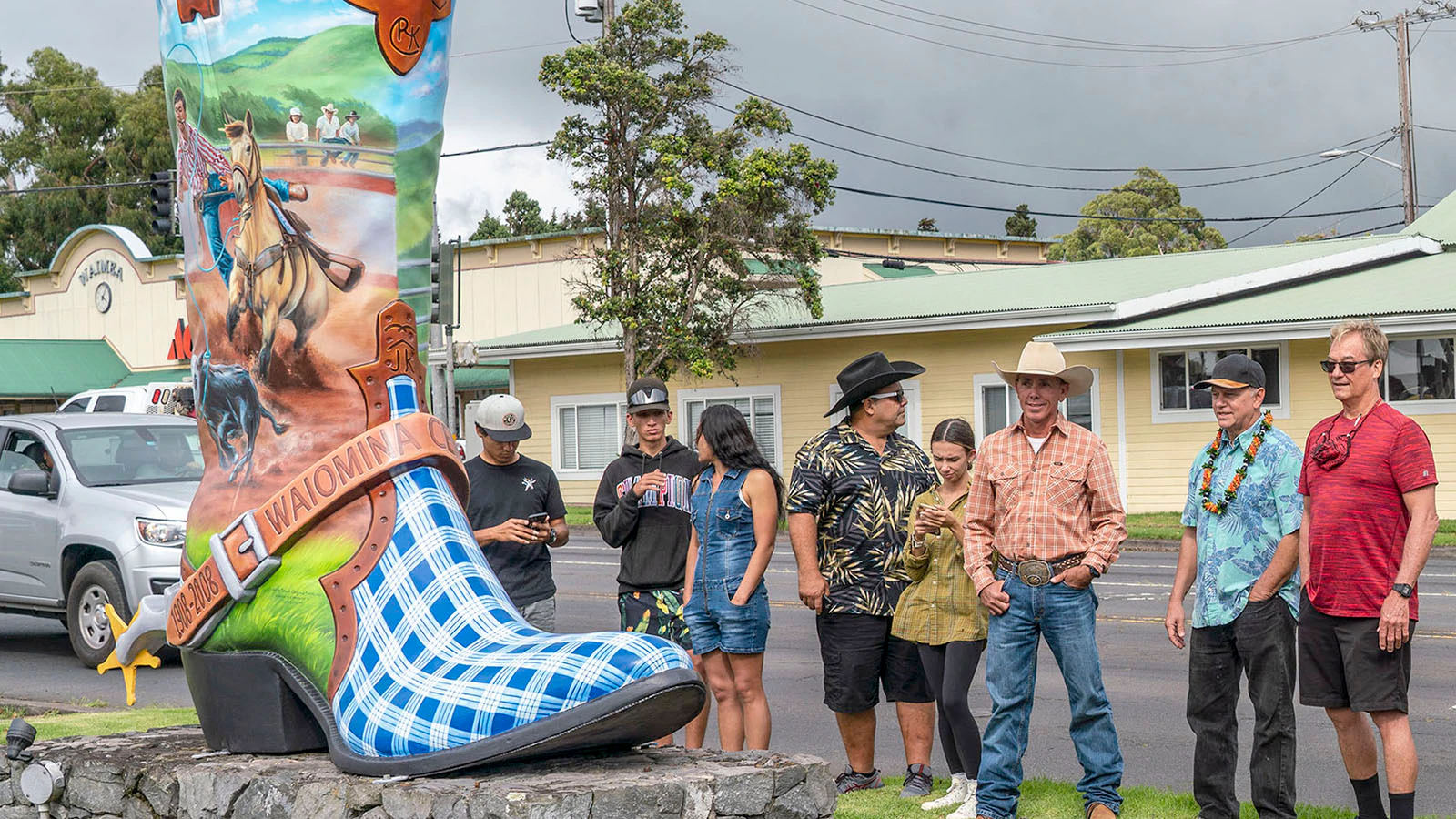
And that impression is why one of Cheyenne’s giant hand-painted cowboy boots is standing in the historic upcountry town of Waimea, Hawaii, today, a place well-known for rolling green pastures and cowboy — or as they say on the island, paniolo — culture.
A delegation of paniolos came to Cheyenne in 2008 to celebrate the centennial of the 1908 Aloha Rodeo, where three cowboys from the Parker Ranch showed up at Cheyenne Frontier Days to show the world Hawaii has great cowboys, too.
Ikua Purdy won first place in steer roping that year. Archie Kaaua took third and Jack Low sixth. Purdy roped his steer in a record-breaking 56 seconds winning the $240 prize and the World Champion Roping title.
The Hawaiian cowboys were an absolute sensation.
The 2008 delegation that traveled to Cheyenne included Hawaiian cowboy Billy Bergin. When he saw Cheyenne’s massive boots scattered across town he couldn’t resist bringing one back to Hawaii.
“It started when we flew in,” Bergin told Cowboy State Daily. “They had a boot at the airport. Union Pacific Station had a boot. A local high school had a boot. I mean, everybody had a boot.”
Bergin paid $7,000 to commission one of the Cheyenne boots for Hawaii, which was painted by Ross Lampshire. Then he paid another $1,000 to ship it to Waimea.
It now stands along the Mamalahoa Highway in front of the Waimea Center, anchoring the Great Waiomina Centennial Celebration.
Waiomina: Hawaiian For Wyoming
Waiomina is how Hawaiians say “Wyoming,” a language that has no ‘G” and ends every word with a vowel.
“That makes it very melodious,” Bergin said.
The word “paniolo” goes back to the Spanish-speaking vaqueros King Kamehameha III brought from Mexico in the 1830s to help the island bring its wild cattle under control.
But being a paniolo has nothing to do with ethnicity, Bergin added.
“You can be Portugese, you can be Japanese, you can be Chinese, you can be Scandinavian,” he said. “You can even be an Irishman.”
Bergin helped start the Paniolo Preservation Society in 1998. For the 2008 trip, the society brought around 50 people to Wyoming, including hula dancers, musicians, rodeo cowboys, and the manager of Parker Ranch.
Then Cheyenne Mayor Jack Spiker signed a memorandum making Cheyenne and Waimea sister cities, a relationship Bergin says has continued to thrive.
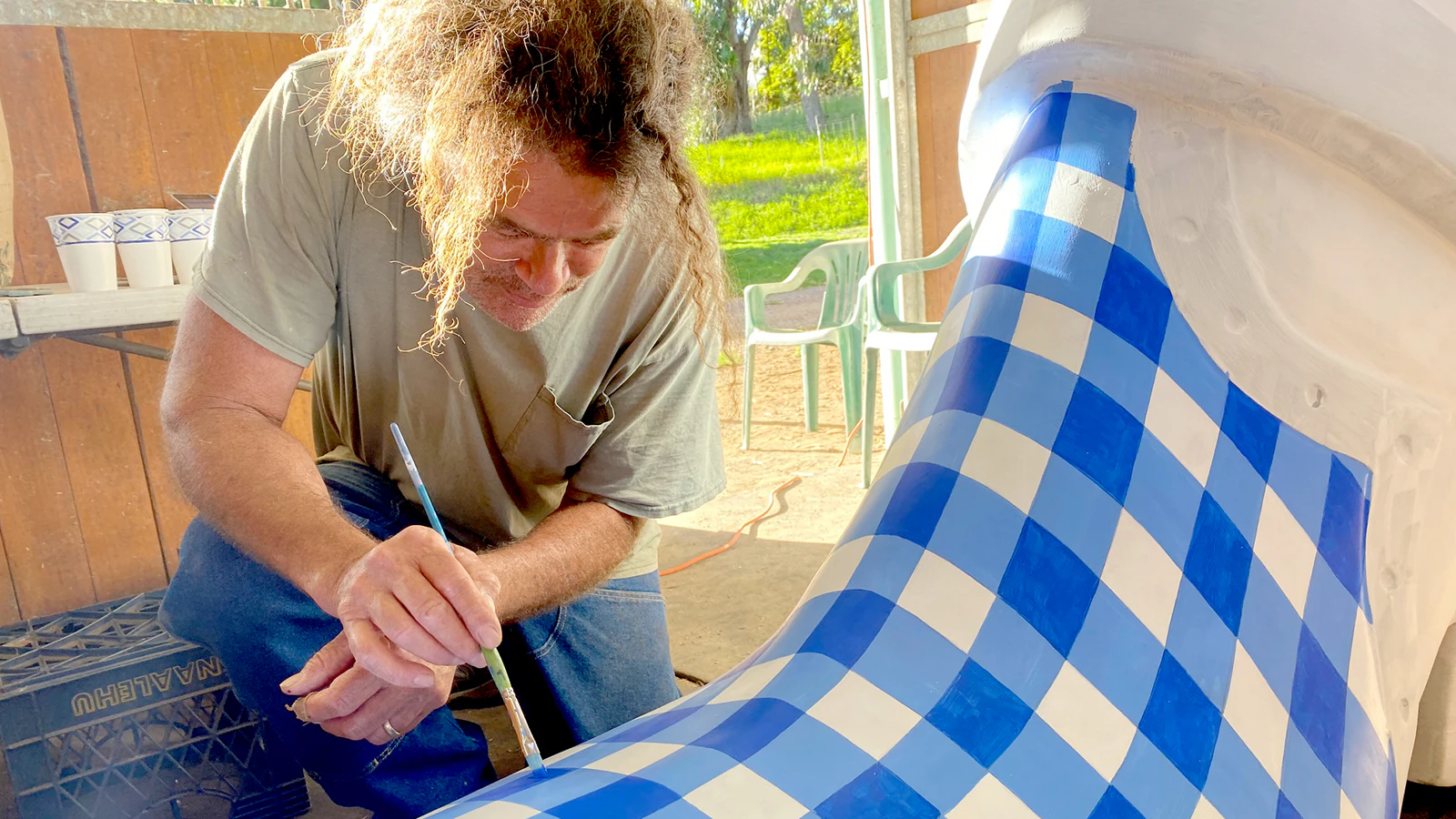
Tommy Mehau paints the Palaka pattern onto the Waiomina boot. (Courtesy Photo) 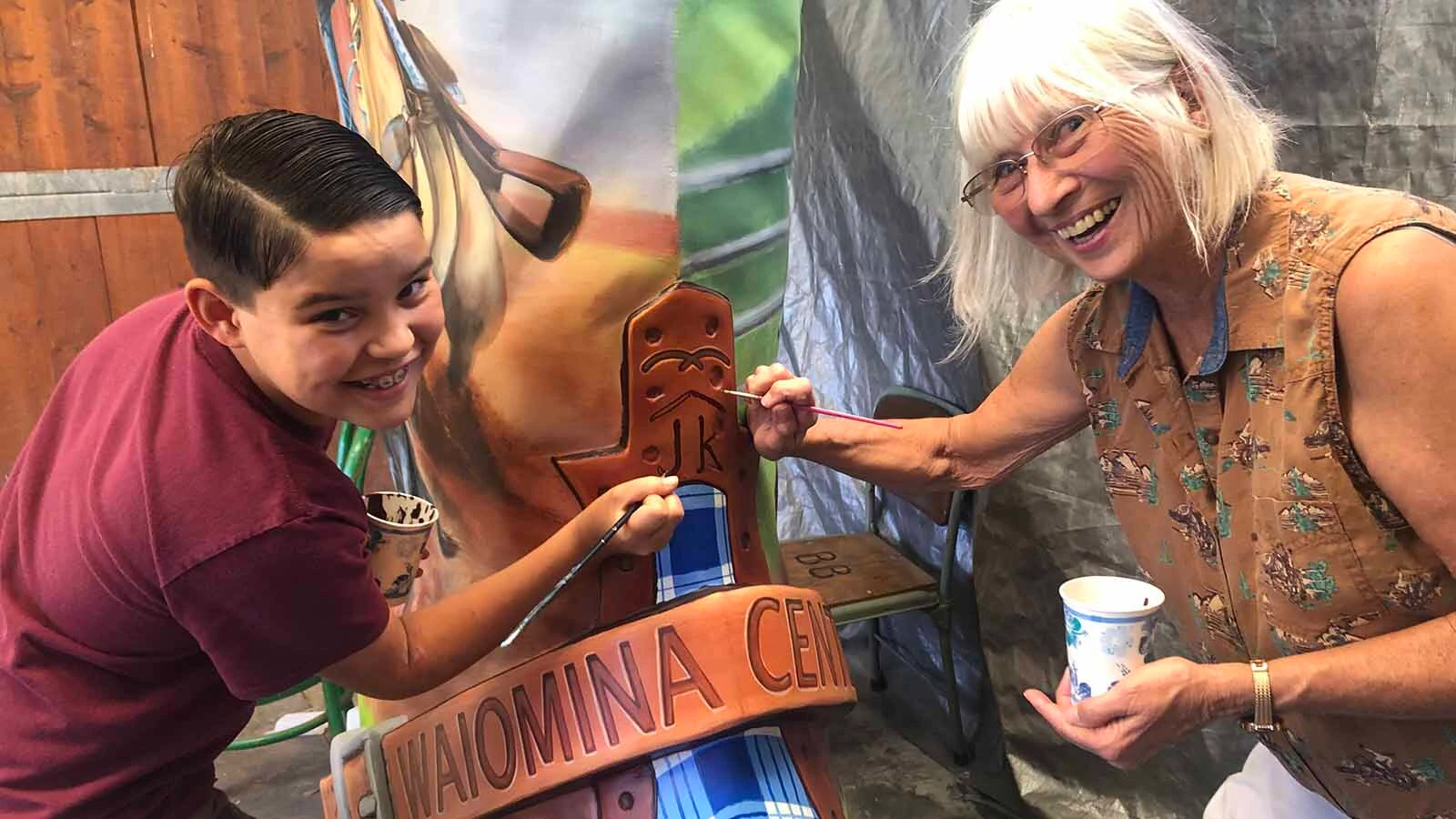
Ranch family members help repaint the Waiomina boot in Hawaii. (Courtesy Photo)
A Popular Photo Spot
The Waiomina boot is considered a major landmark in Waimea, though there have been some notable changes to it through the years.
Bergin and his wife decided Lampshire’s painting wasn’t holding up well to Hawaiian weather, which includes both rain and sometimes hurricane-strength wind.
In 2022, they had an artist named Pat Ching redo the boot.
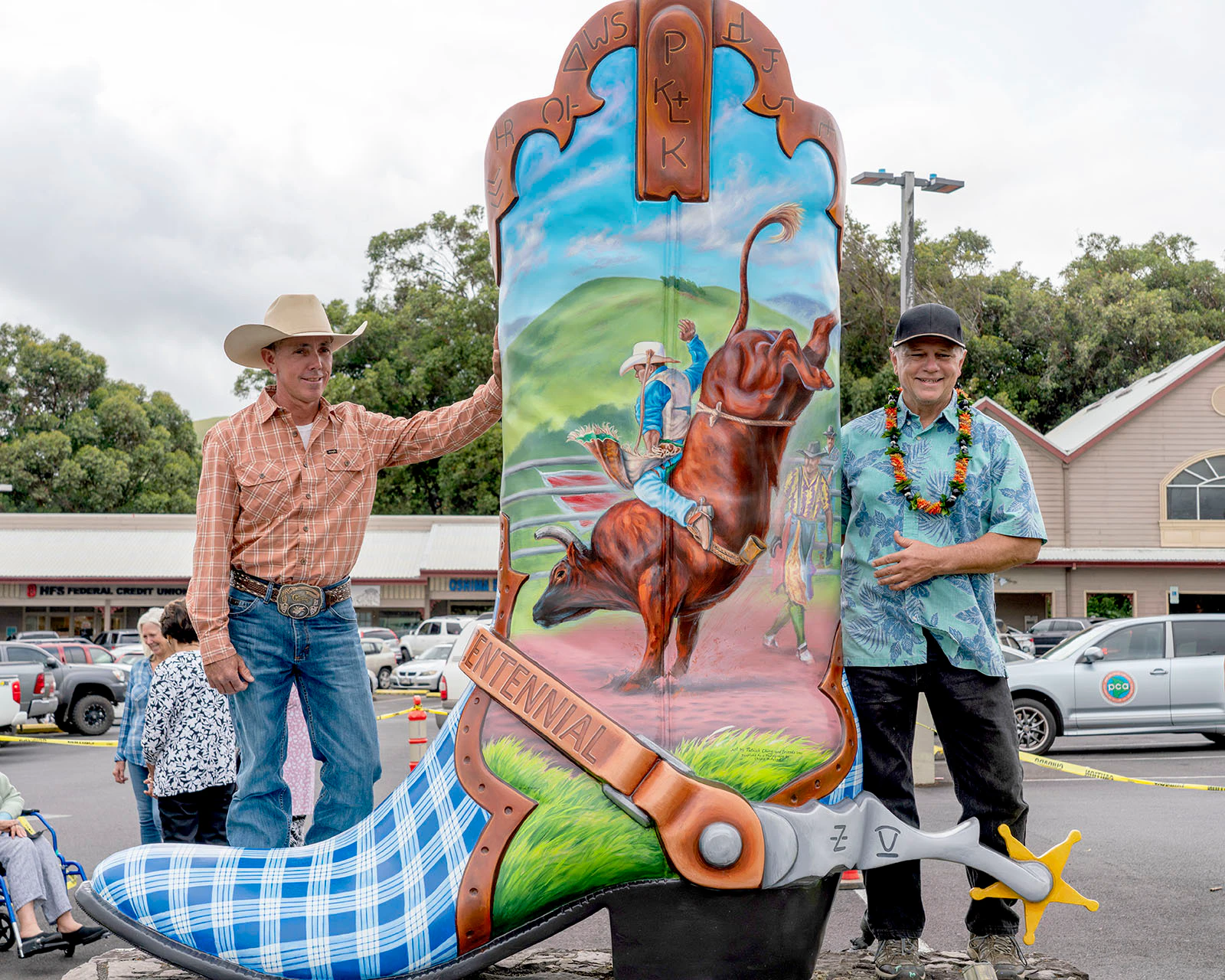
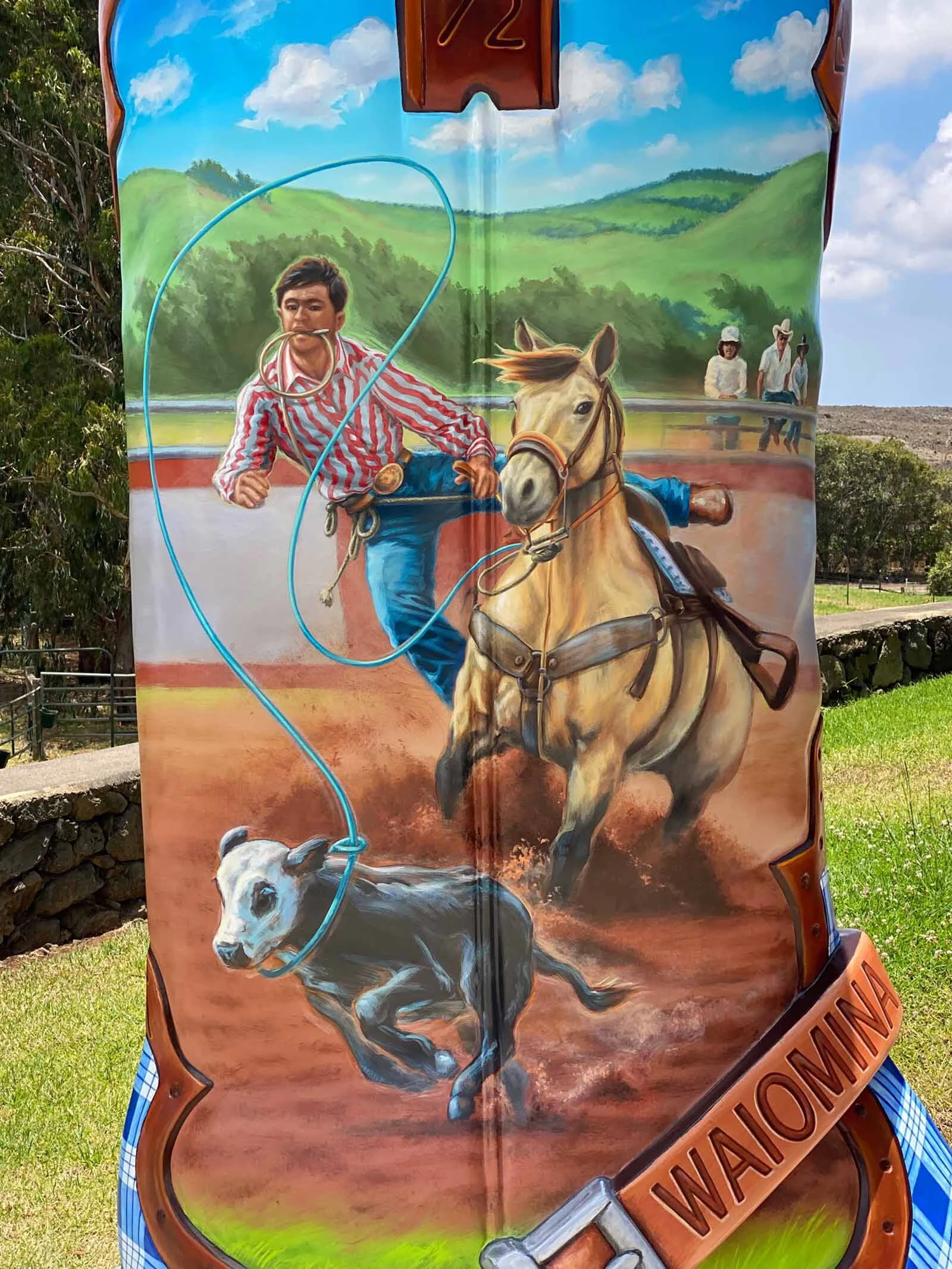
Ching’s new design salutes a champion bull rider named Dusty Miranda, as well as Bergin’s son Holi, a roper who recently died. That image is based on a photo taken by Christy Lassiter.
The painting of Miranda was especially meaningful to Ching.
“I’m a bull rider and rodeo clown, so Dusty is someone I worked with for years,” Ching told Cowboy State Daily. “I was happy to paint my friend.”
The toe is covered in a pattern called palaka, a checkered cloth often worn across Hawaii by ranch and plantation workers because it was cheap and tough.
The boot stands next to a massive bronze statue of Purdy. He is shown roping a steer as it comes down a hill.
Cheyenne’s cowboy boot and that statue are part of what marks Waimea as the cowboy capital of Hawaii.
Kids pass it every day on their way to and from school, and tourists pose for photos almost daily.
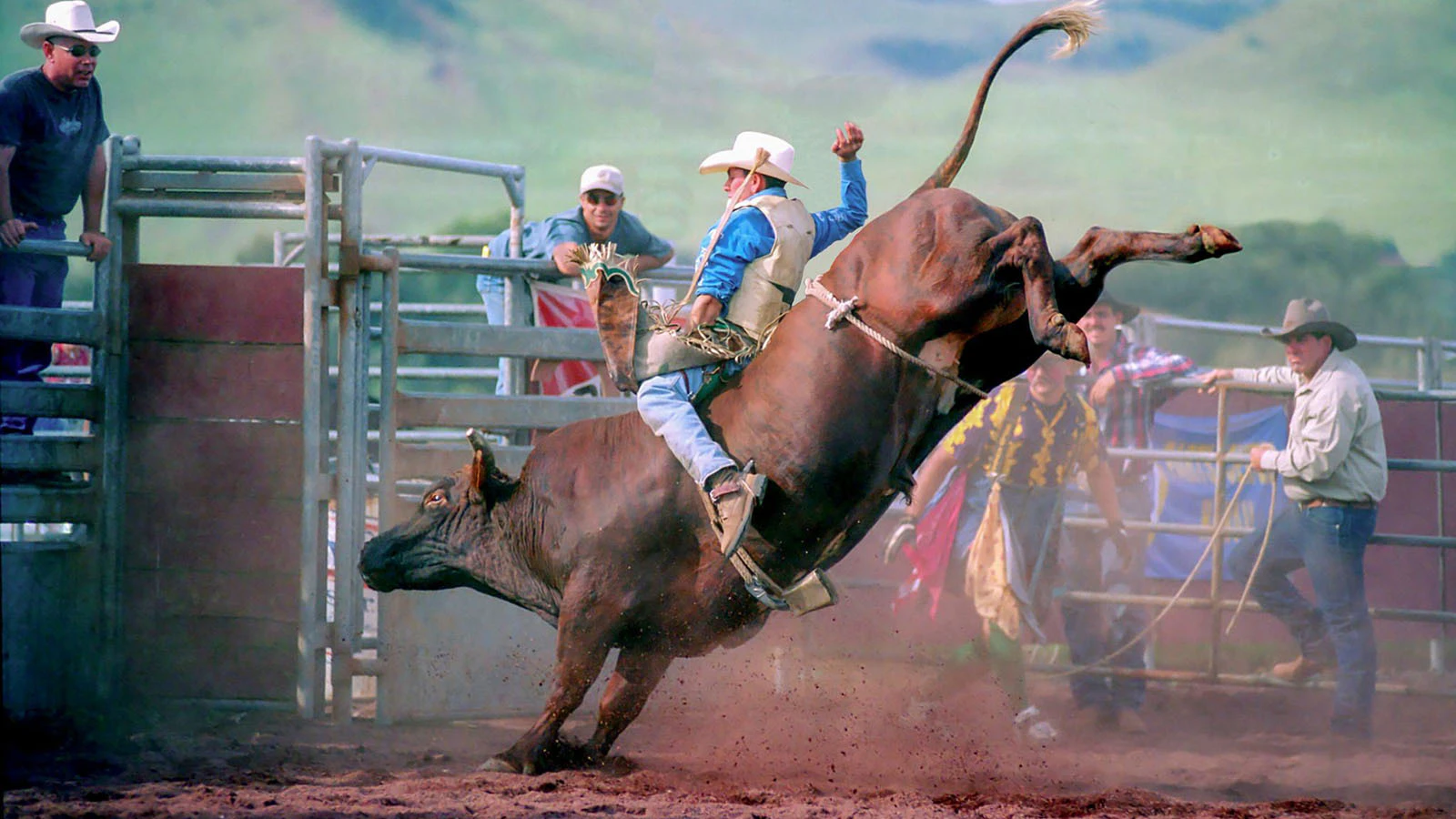
Dusty Miranda riding a bull named Arthur. (Chuck McKeand) 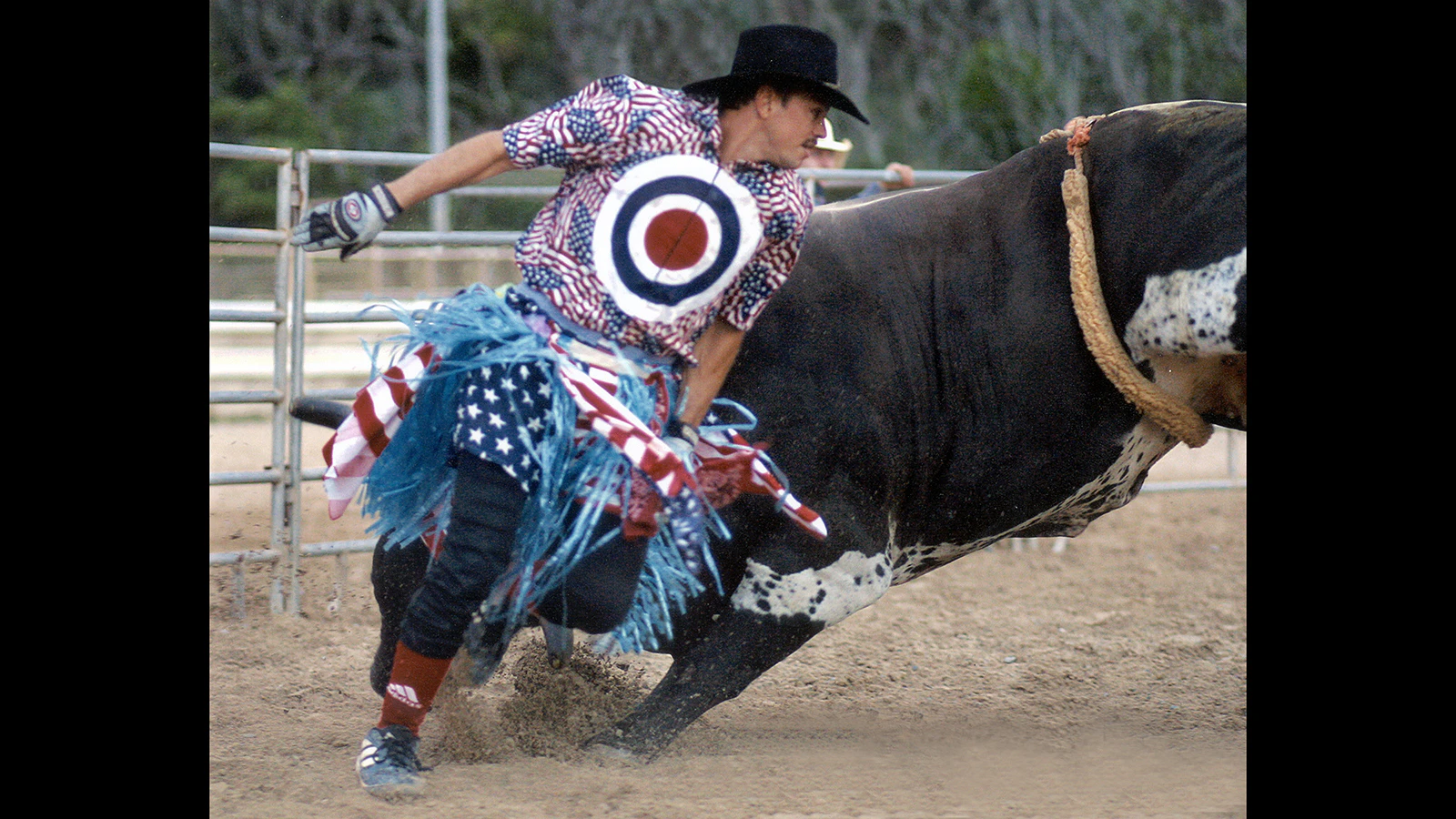
Patrick Ching plays a rodeo clown during a 2004 rodeo. (Courtesy Photo)
A Special Bull
The red bull Miranda rides on the boot has a special story all its own. It was an orphan, raised on a bottle and grain-fed until he became what Bergin described as a “600-pound nuisance.”
”They decided to cinch him up one day to see how he would do,” Bergin said. “Turns out, as gentle as he was, he absolutely loved to buck.”
Expectations for the bull had been pretty low, Bergin added.
“Orphans don’t usually grow as big and certainly, they’re over-tamed, because they’re used to somebody approaching them with a milk bottle,” he said. “They tend to be super friendly.”
The idea he could make a great bucking bull surprised everyone.
“It’s a wonderful statement of the humane care of animals,” Bergin said. “You give him a good start in life, and look at what you got.”
The animal went on to become a famous bucking bull, which Bergin said underscores why the cowboy attitude toward livestock is so critical.
“The typical cowboy attitude toward all animals is care and giving them a good upbringing, even though they’re an orphan,” Bergin said. “That’s not only a cowboy tradition, it’s very Hawaiian.”
The Hula-Dancing Pines
About a year ago, a severe windstorm knocked the Waiomina boot off its pedestal. Ching did some touchup work, and the monument has since been bolted down more securely.
Powerful wind, Bergin added, is something Hawaii has in common with Wyoming.
“This little town of Waimea, where we live, is a windy town,” he said. “I’m looking out the window, and these pine trees are probably about 80 feet tall and they almost look like hula dancers out in the field because the wind is causing them to blow back and forth.”
Waimea wind typically blows about 30 mph, Bergin said, but when it’s gusty, 50 mph isn’t uncommon.
During a hurricane, gusts over 100 miles plus aren’t impossible.
The wind keeps Waimea cooled off, Bergin said, giving it an almost alpine feel, which is why it has so many pine trees.
“We have a lot of rolling hills that are green,” he added. “They don’t have snow, but they certainly have the beauty of nature.”
Wind is just one of the many threads that have kept Hawaii’s cowboy capital close to its sister city in Wyoming, where the Daddy of ‘em All — the world’s largest outdoor rodeo — is held every year. It’s a rodeo Bergin said is on the bucket list of many Hawaiian cowboys.
Bergin was back in Cheyenne just six weeks ago to visit the Cheyenne Frontier Days Old West Museum’s Aloha Vaqueros exhibit, which will eventually be coming to Hawaii.
It’s a sign, Bergin believes, that the brotherhood between Waimea and Wyoming cowboys will only continue to grow stronger.
Renée Jean can be reached at renee@cowboystatedaily.com.


