
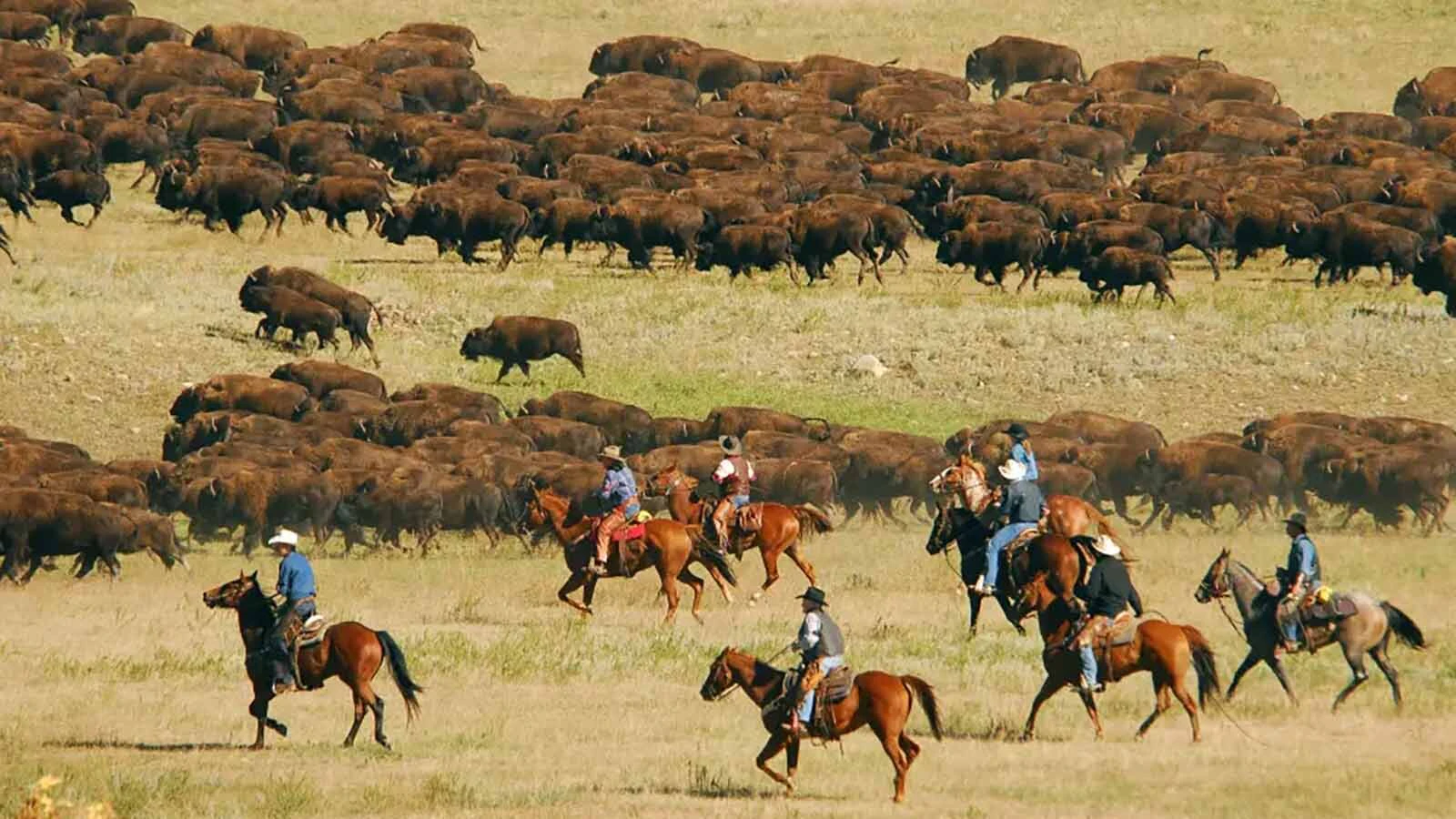
More than 600 bison from one of the nation’s best-known public herds will go on the auction block this fall as drought forces Custer State Park to thin its herd more aggressively than usual.
The park in far western South Dakota auctioned off 435 bison last year.
How many animals are sold each year isn't determined by a set formula. It ’s based largely on something western ranchers know well: How much grass is available for grazing.
“The way we look at it is it’s our job to take care of the grasslands as well as animals,” said Nick Harrington, communications manager for South Dakota Game, Fish and Parks.
This year's drought means the park's rangeland simply can't support as many mouths.
A Herd – And A Grassland – To Manage
Custer State Park covers about 71,000 acres in the southern Black Hills and is home to one of the largest publicly owned bison herds in the world.
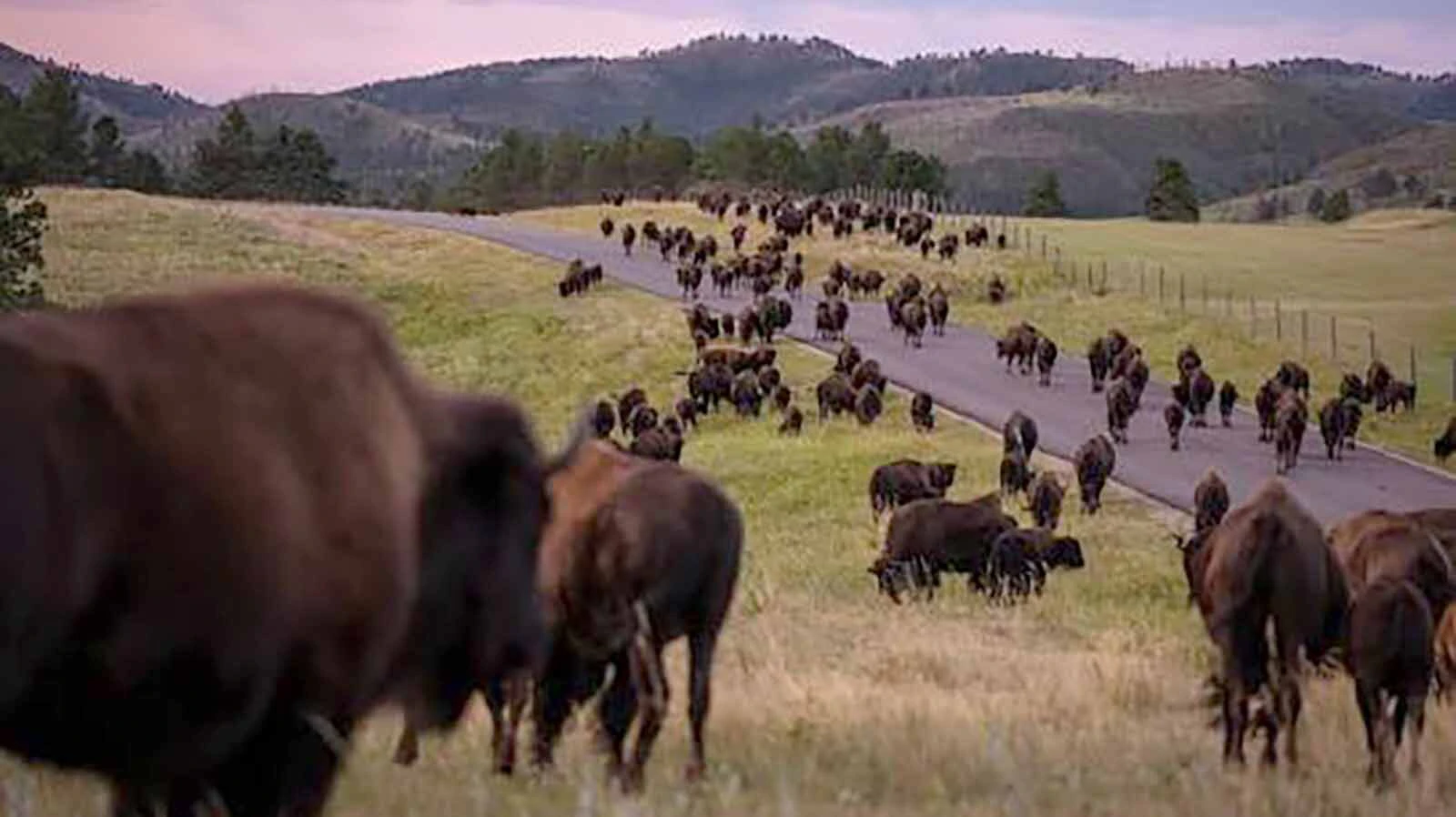
During the warmer months, the herd generally numbers between 1,300 and 1,500 animals that roam alongside elk, pronghorn, deer and the park's famously persistent wild burros.
Unlike Yellowstone National Park’s bison, all of Custer’s bison have traces of cattle genes.
Keeping that many bison on the land requires careful management of both the animals and the land beneath their hooves, Harrington said.
“Ultimately, the purpose of the auction is herd management,” he said.
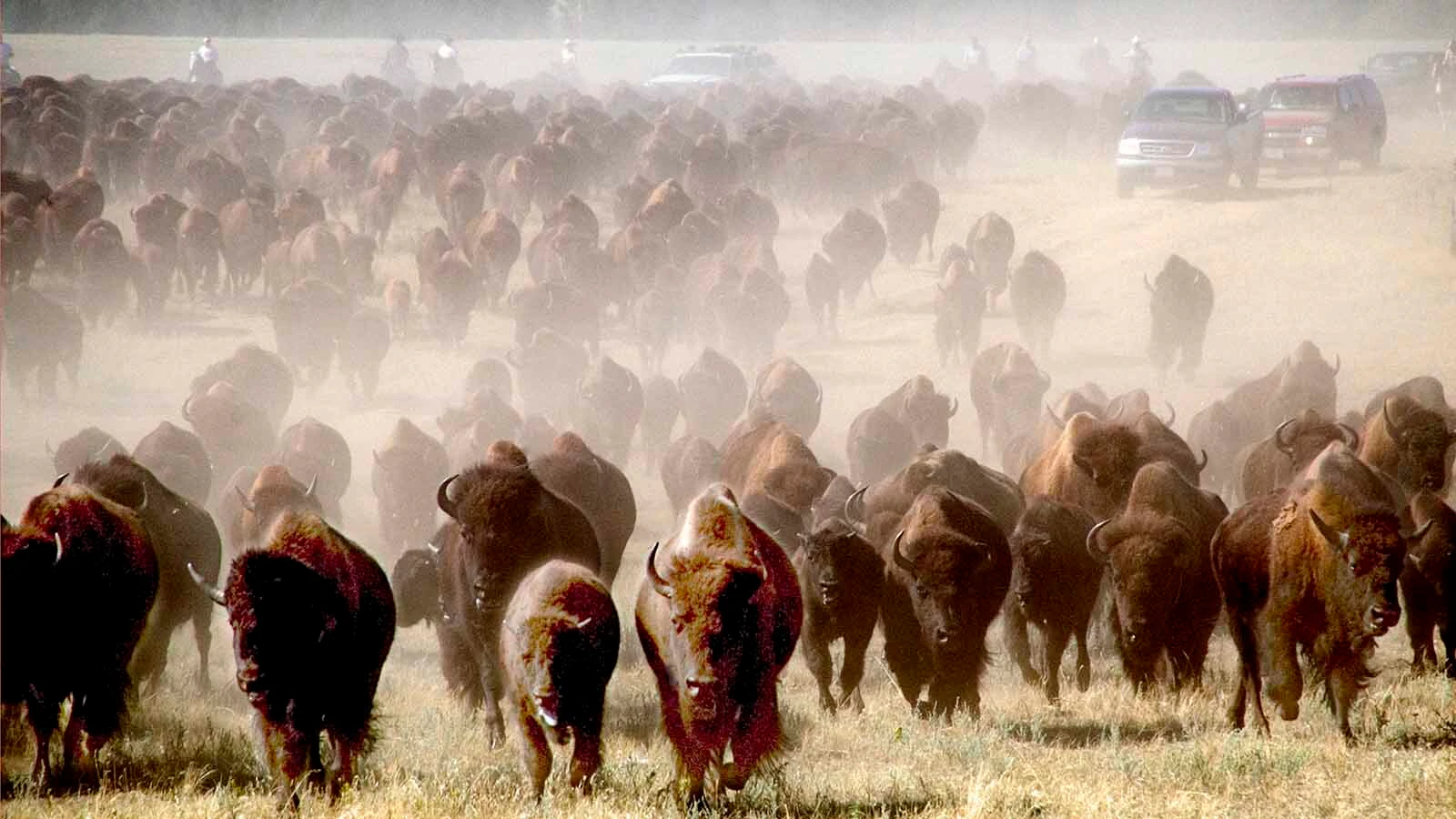
Every September, the park hosts its annual Buffalo Roundup, when riders on horseback gather the free-roaming bison scattered across the park and drive them into corrals.
The spectacle attracts roughly 20,000 to 25,000 people, many of whom begin lining the roads before sunrise to secure a spot to watch hundreds of bison thunder across the prairie.
Once in the corrals, the animals are sorted and undergo health checks and vaccinations. Park managers also determine which animals will remain part of the herd and which will be sold at auction.
In a good grass year, the land can support more animals. During drought, the equation changes.
Drought Year
According to www.drought.gov, 100% of Custer County is in a moderate drought. Rainfall is 3.35 inches below normal, and the area has recorded its 25th driest year to date over the past 132 years.
The number of bison that remain through the winter largely depends on available forage, according to Harrington. This year, park managers have determined the park can support about 900 animals over the winter.
Earlier this year, the park considered other ways to feed the herd because of drought. Park officials even entertained the idea of hosting a summer sale to cull the herd sooner than normal.
But some timely moisture offered a welcome reprieve.
“Honestly, we got pretty lucky because it did rain,” Harrington said. “By the time we did the roundup it was pretty green.”
But the late rain didn't erase the effects of drought over the growing season — or change the number of animals the park determined the range could sustain.
Where Do 600 Bison Go?
Many of the bison purchased at the annual auction go to private bison producers around the country, Harrington said.
Bradeen Real Estate & Auctions of Custer, South Dakota, has hosted the park’s annual bison auction in the past. Cowboy State Daily was unable to reach an auctioneer there for comment.
According to the Bradeen Real Estate & Auctions website, the company has sold tens of thousands of bison across the country throughout its four-decade history.
Some of the animals that go for auction are used to expand existing herds, while others can become the foundation for entirely new ones.
Processors also purchase animals, as do other state parks.
“I think they’ve done it all over the years,” Harrington said.
The annual auction attracts buyers looking for different ages, sexes and classes of animals, with prices varying accordingly.
According to 2024 numbers, the most recent publicly available, yearling bulls sold for an average of $2,200 while two-year-old breeding bulls went for an average of $5,450. Among 14 classes, the 2024 auction resulted in a sale of 482 bison and brought in $885,425. Three of the bison went to Wyoming, data shows.
Money raised through the sale goes back into management of Custer State Park's bison herd, Harrington said.
No date has been publicly listed for the 2026 auction, though Harrington said it will likely be in early November.
And while those late-season rains might have turned parts of the park green again by roundup time, the larger effects of a dry year remain.
Kate Meadows can be reached at kate@cowboystatedaily.com.


