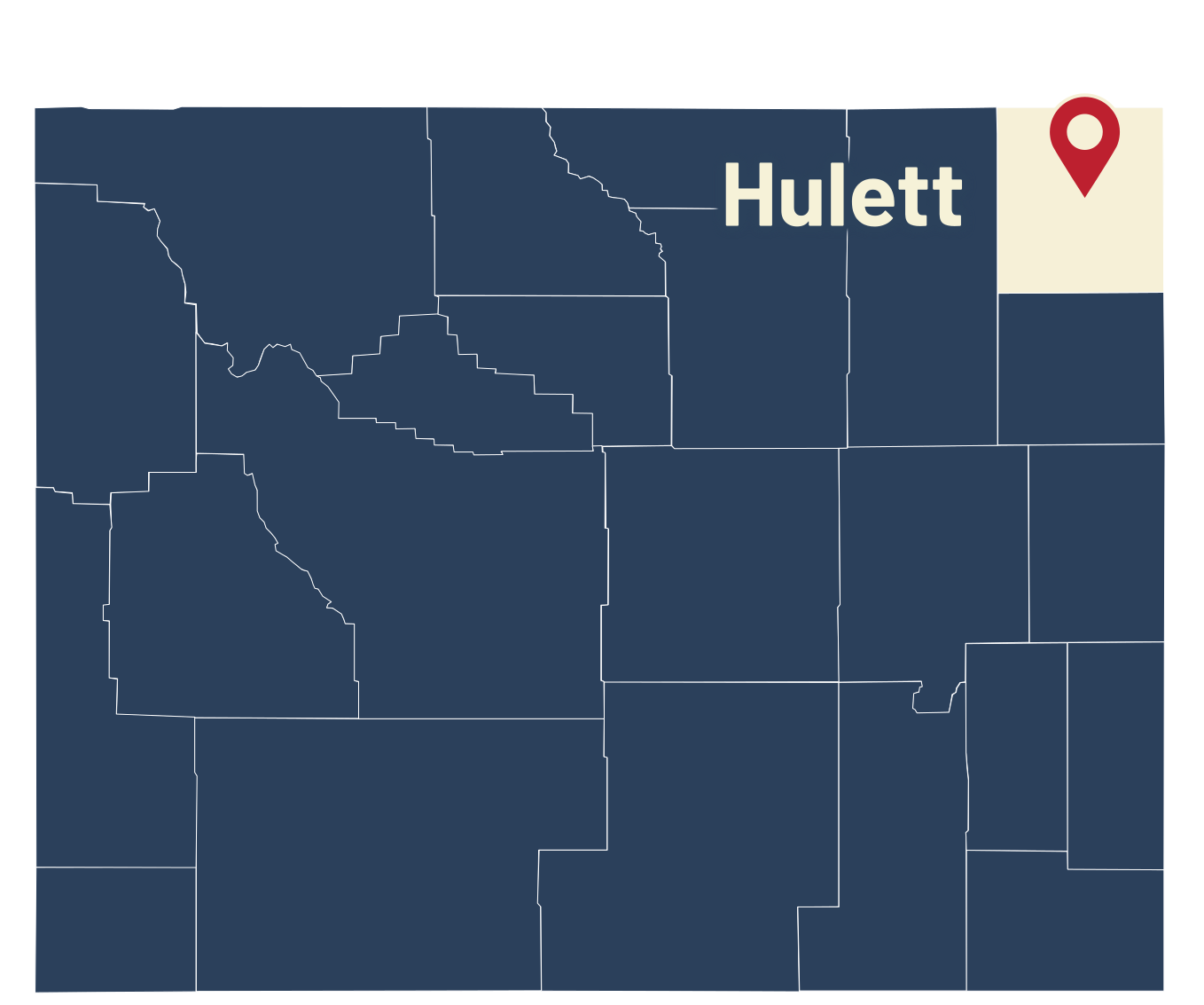
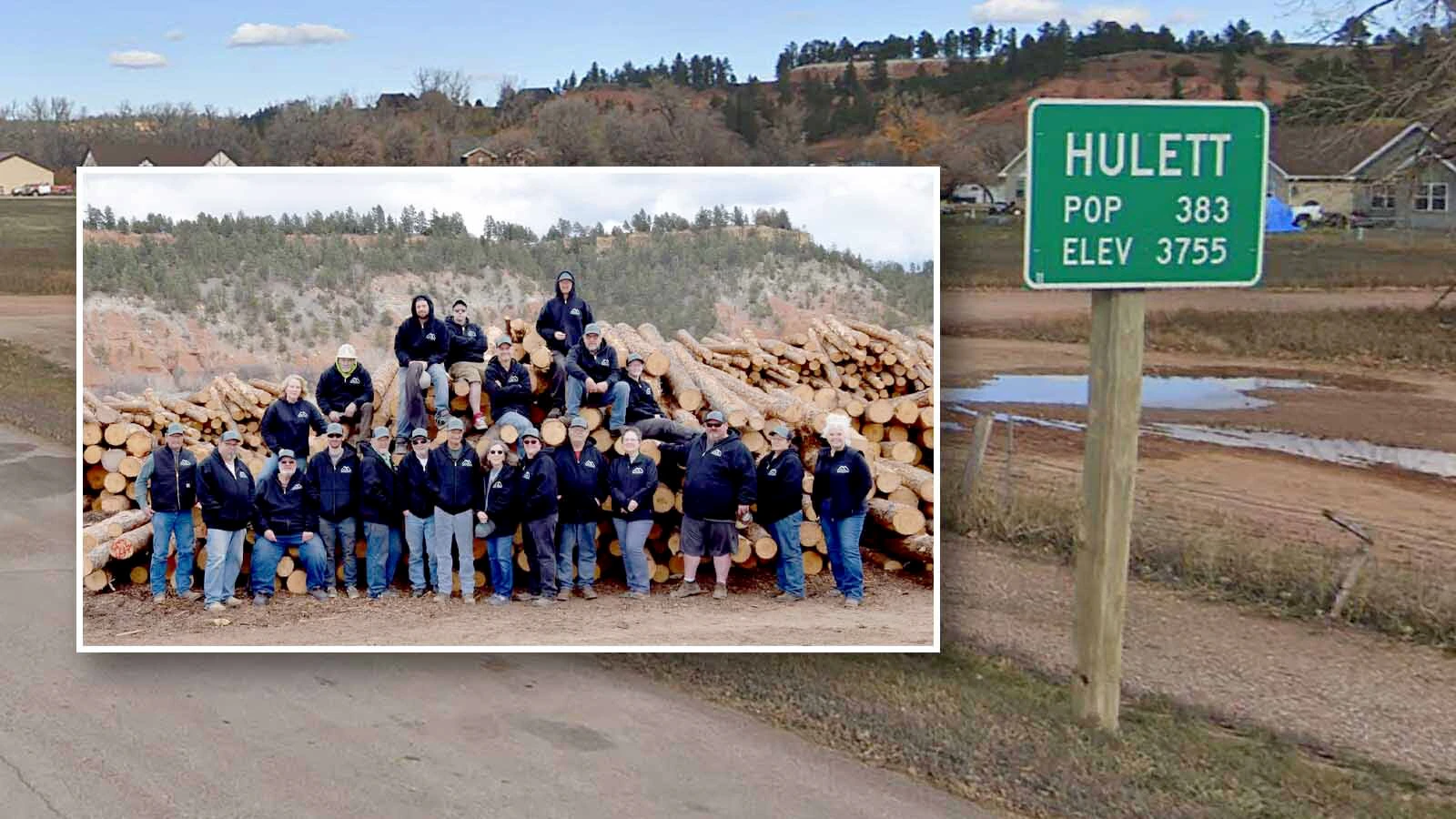
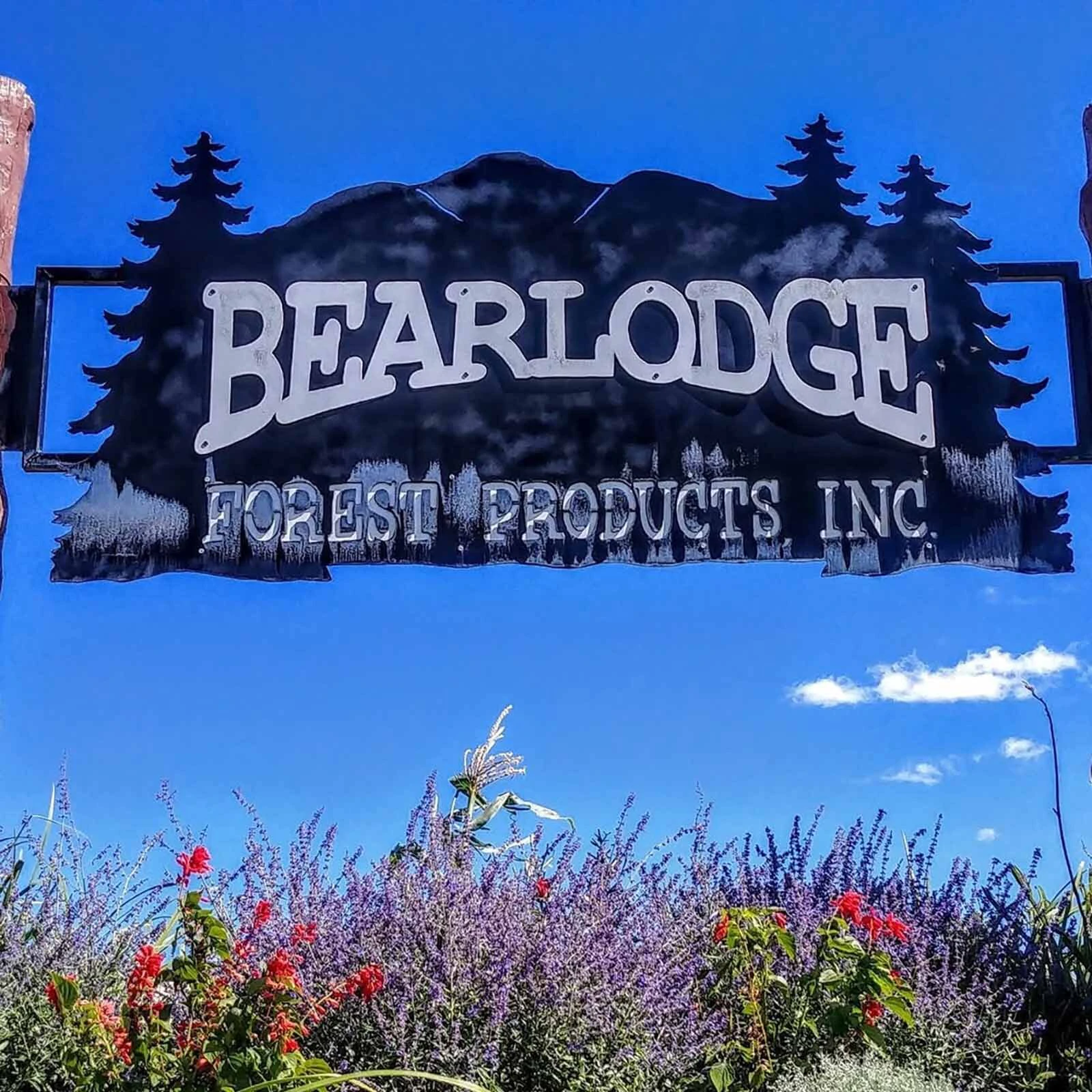
For nearly five decades, Bearlodge Forest Products has been part of the soundtrack for daily life in Hulett.
That will end Oct. 31.
Bearlodge Forest Products will close its sawmill and pallet operations, ending a nearly five-decade run in a community with deep ties to Wyoming’s timber industry.
The company cited a number of factors in a Facebook post about the closure, including high input costs, a limited labor pool, scarce housing, and sustained downward pricing trends. Wyoming’s timber industry has also been struggling for years.
“No single issue brought us here,” the company, owned by Doug and Dena Mills, said in its post. “It was the weight of many.”
The closure is a jolt to the community, whose identity and economy have long been tied to timber and agriculture.
Mayor Brian Kennah estimated the closure leaves about 5% of Hulett’s 349 people looking for work.
“We haven’t really had time to absorb it all yet, but we’ll come out and we’ll be all right,” he said. “We just have to make plans and figure out what we’re going to do.”
Kennah said his community is always seeking new businesses and industry for Hulett and will continue those efforts. He added that he believes the community will rally.
“This is a small town,” he said. “You’ll see people come together when things happen, and it’ll just amaze you.”
Spinoff Money ‘Incredible’
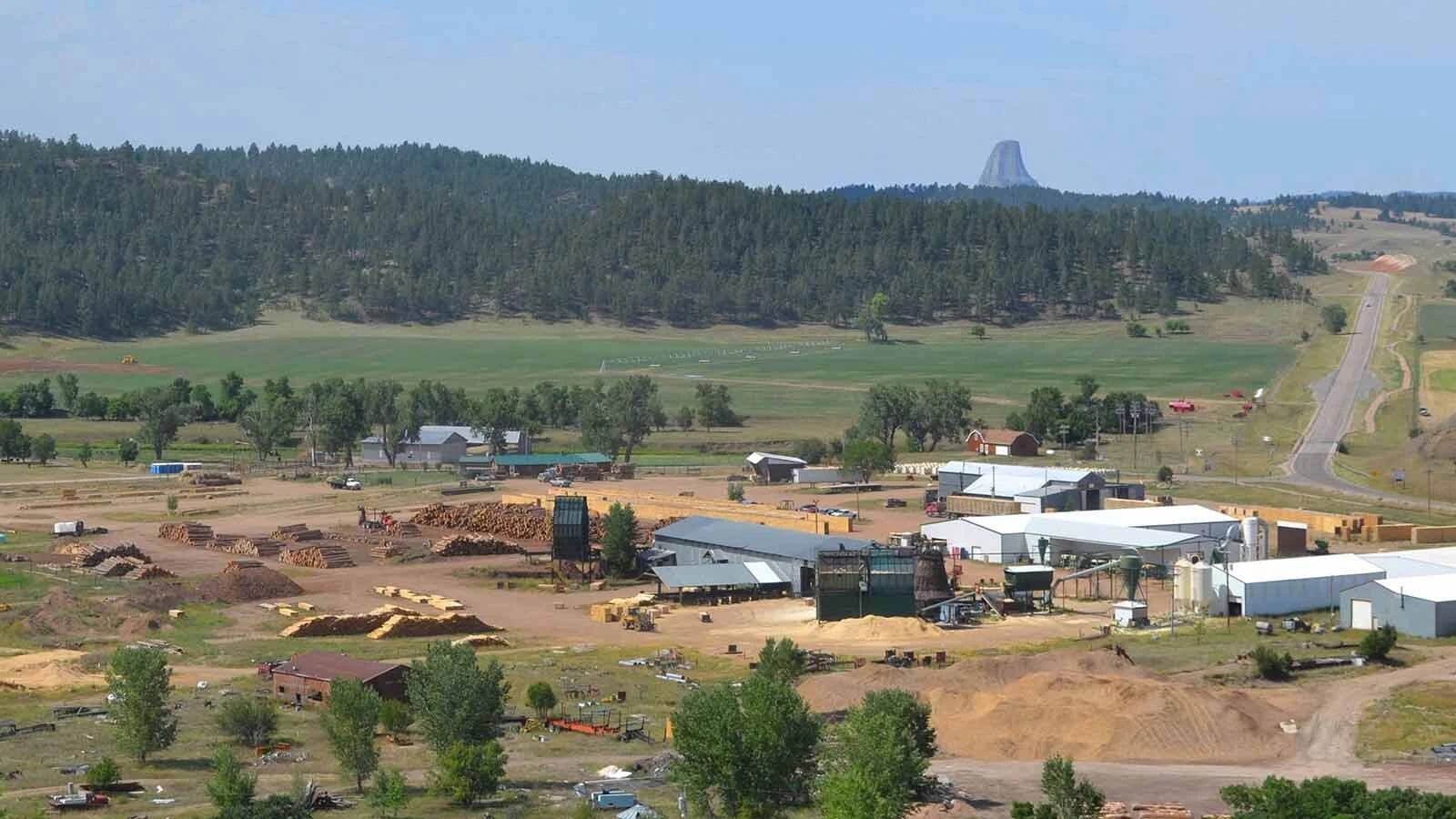
Bearlodge is a pallet mill that also makes other forest products. It’s been a stable employer in Hulett for years, Sen. Ogden Driskill, R-Devils Tower, told Cowboy State Daily.
“This is an absolute blow to the community,” Driskill said.
The business is connected to the Neiman family, which has long played a role in Hulett’s forest-products history. The family moved to Wyoming in the mid-1930s and permanently located a sawmill business in Hulett in 1939.
The Mills’ business occupies a completely different niche than the larger sawmill in Hulett owned by Jim Neiman and Neiman Enterprises. The two are owned by different members of the Neiman family but are separate businesses that operate independently.
Bearlodge’s loss will have ripple effects for the economy, Driskill said. Forest-product businesses buy equipment and vehicles, parts, welding supplies, tractors and loaders, generating work for area businesses.
“They spend so much spinoff money that it’s incredible,” Driskill said. “This affects our local parts stores or what we have availability to buy for parts.”
Driskill said the community will survive, but added that it’s hard for him to see so much change.
“I want the town I love,” he said. “I want the smell of fresh-cut lumber in the morning. I want to drink coffee with a guy who cuts trees, not a tourist who wants to eat tofu.”
Hulett Needs Timber Industry
Bearlodge’s owners said what they value most are the relationships built over the years with employees, contractors, customers, vendors and the community that’s supported their business for almost half a century.
They also emphasized that the closure doesn’t mean Doug and Dena Mills are leaving town.
“Hulett has been our home, and it will continue to be,” the owners said. “We will continue to live, work and contribute to the Hulett community.”
Kennah said the city has not yet formulated a response plan because the news is so recent.
The mill’s loss raises concerns the town could become more reliant on seasonal tourism — an industry that is important, but less stable than year-round industrial employment.
Americans for Prosperity-Wyoming State Director Tyler Lindholm said the closure is a significant loss not just for Hulett but for Wyoming as well because Bearlodge was one of few pallet manufacturers in the state.
“While it might seem small to a lot of folks, that is a blow to that community,” he said. “This is a blow to Wyoming.”
Hulett can’t afford to become wholly dependent on tourism, he added, particularly given its seasonal nature.
“Tourism is a great aspect, but we don’t want to rely solely on tourism,” he said. “And that’s slowly what’s happening to that little town of Hulett. They’re going to get to the point where they’re 100 percent dependent on tourism.”
Timber Pressure Continues
Kennah, Lindholm, and Driskill all said the community’s timber industry has been walking a fine line for years over government timber sales.
“The cut-up rate in the Black Hills has been reduced time and time again,” Lindholm said. “And it’s at an all-time low right now.”
Lindholm said areas of Wyoming where the Good Neighbor Authority has been allowed to function well have seen higher cut rates and better-managed forests.
The federal Good Neighbor Authority allows states to work on federal forest projects using state contracting processes.
Wyoming’s Legislature expanded the state’s Good Neighbor Authority statutes and created a forest-health grant program, appropriating $3.5 million for 22 projects, State Forester Kelly Norris said.
Norris said that money is intended to help make forest-health projects more economically feasible, particularly in areas where timber might be marketable but difficult or expensive to access.
“I think we’ve got to keep pushing for an expanded Good Neighbor Authority,” Lindholm said. “Those of us who actually live in that area see it, and I’m a volunteer firefighter as are most of my neighbors and my family and friends.”
Lindholm said he’s seen what happens when cut rates are reduced and overgrowth is allowed to proliferate.
“We don’t clear-cut, and the Black Hills has never been clear-cut,” he said. “We go through and do what’s just simply called thinning and that thinning product has been the lifeblood for these sawmills for years. It’s created a generational forest, which is tremendous.”
Lindholm said he believes Wyoming’s Black Hills has survived bark beetle infestations better because of more aggressive thinning.
“The trees weren’t packed densely together,” he said. “They weren’t overgrown, so they could survive the bark beetle infestation.”
Expanded Good Neighbor Authority
Norris said Wyoming recognizes timber supply as one of the industry’s challenges and has been working to increase capacity under the federal Good Neighbor Authority.
Wyoming has more than doubled its work over the previous year, and handled 59% of the contracted timber sales on federal forests, she told Cowboy State Daily.
Wyoming is also working with the U.S. Forest Service, the National Wild Turkey Federation and other partners on timber sales in the Bear Lodge Ranger District on the Black Hills National Forest.
Still, she acknowledged the state’s efforts to increase access and supply may not move fast enough to change the trajectory for its timber industry.
“It’s just heartbreaking for the community, the families, and for the business itself,” Norris said, adding, “We’re gonna just keep going. We’re gonna keep trying to get a sustainable supply for our industries so that they can make the right investments and decisions for themselves.”
Forestry Plans Concerning
Driskill told Cowboy State Daily he’s worried the trend toward less lumber availability from the region is going to continue.
“The new forest plans for the next five years are coming out, and contrary to what we’re hearing from the administration, they’re showing a decreasing timber availability for our sawmills for the next five years going forward,” he said. “Not an increase, a decrease — and that almost guarantees we’re going have bad results, not just in Wyoming but all across the West.”
Driskill said he believes that will lead to forests burning, too.
“I’m heartbroken,” he said. “These people are doubling down. The guys are going to let our forests burn. If we don’t manage them, they’re going to burn.”
Little mills like Bearlodge, and to some extent even larger mills, don’t tend to come back once they close, Driskill added.
Buyers for mills, due to timber availability, are few, he added.
“The mill in Colorado that’s up for sale is probably just going to close down and be scrapped,” Driskill said. “And that’s the largest sawmill in the state of Colorado. And the largest sawmill in the state of Wyoming, I believe is in Hulett, and it’s in the crosshairs as well.”
The Colorado mill Driskill referred to is the Intermountain Resources mill in Montrose, and is owned by Neiman Enterprises.
Losing its timber industry would move the region into a situation where its economy is not producing “real things,” Driskill said.
“Selling souvenirs like my business does is not the same as a sawmill,” he said. “And I love my business and we definitely play a role in helping the economy in northeast Wyoming, but we don’t even hold a candle to a sawmill.”
Mayor Kennah: ‘We’ll Regroup.’
For people like Kennah, the impact goes beyond the economic. The business is part of the community, and that makes it feel personal.
“There’s a lot of people around who, it was their first job,” he said. “So, it’s a family thing.”
He praised local timber operators for what he described as responsible forest management.
“The Neimans and the Mills — they’ve done it right,” he said. “And they continue to do it right.”
For Hulett, the immediate future remains uncertain, but Kennah added the community has weathered hardships before and will weather this one.
“We’re still kind of in shock,” he said. “But we’ll regroup and figure things out.”
Renée Jean can be reached at renee@cowboystatedaily.com.