The May 8, 1906, mayoral election in Hartville seems worthy of a Hollywood script.
The results had the town’s citizens choosing the “wrong” guy, at least in the sitting mayor’s opinion. Challenger Anthony Wilde had campaigned as part of the “Improvement Party.”
Longtime Mayor Joseph J. Hauphoff backed the other candidate to succeed him.
How to solve the problem?
Get the acting city clerk to refuse to canvass the vote and certify the election.
Meanwhile, the aggrieved winning candidate, who also served as justice of the peace, decided to take matters into his own hands. He swore out a warrant for the arrest of the city clerk — who happened to be his father-in-law.
The clerk was thrown in jail by the town marshal.
The 55-year-old wannabe mayor then crawled through a window and took possession of the town hall.
Such were the headlines in Hartville, Wyoming, just more than a month after the San Francisco earthquake. Even a San Francisco newspaper took time out from chronicling recovery efforts to mention the shakings in the Platte County mining community.
“Mayor-Elect of Hartville Tries To Capture Seat Denied Him,” The San Francisco Call Bulletin reported on June 1, 1906. “Incumbent Refuses to Give Way to Man Who Beat Him in Polls.”
Leading characters in this real-life melodrama on the high plains had both come to Wyoming as pioneers.
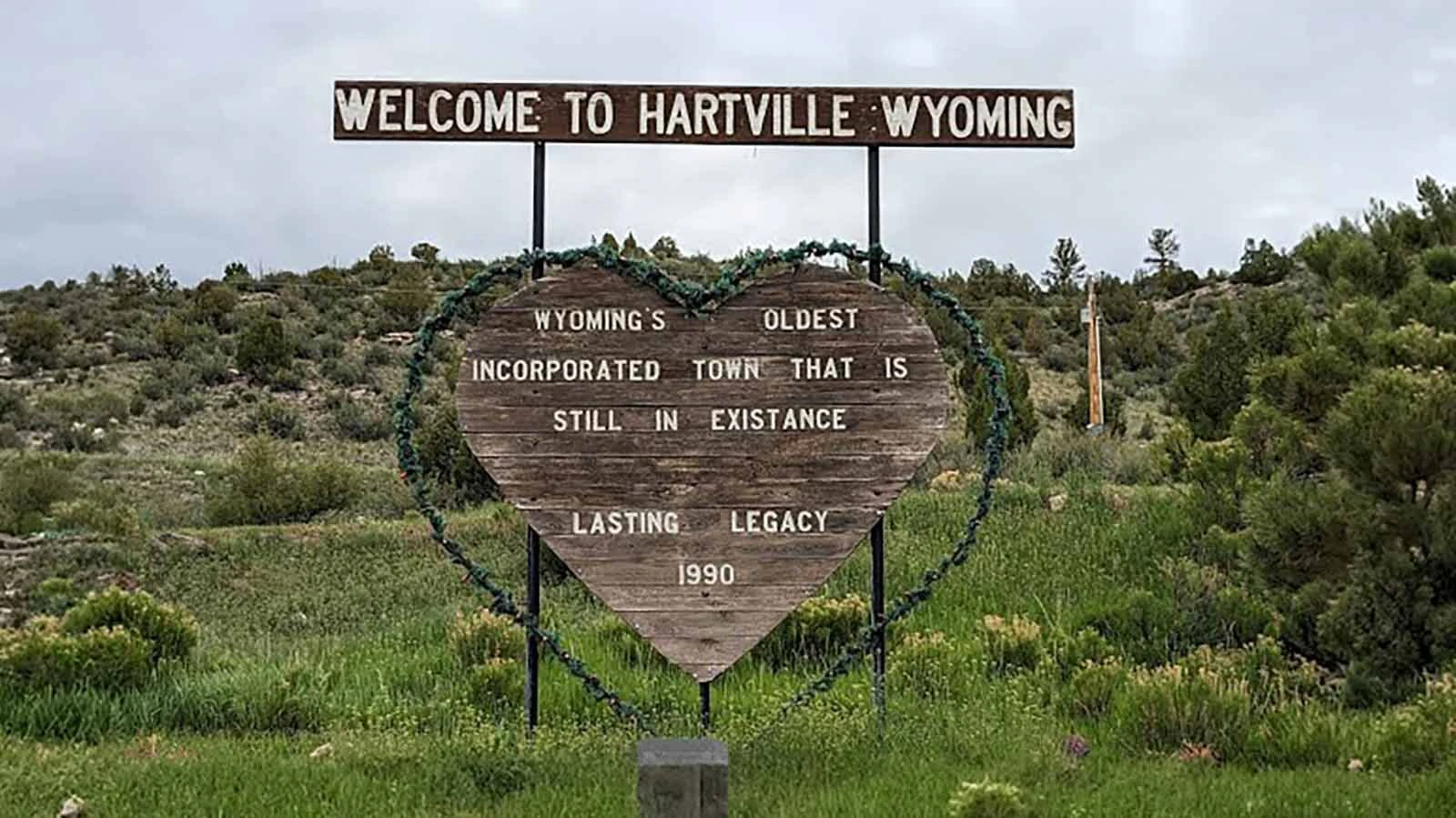
Hartville is wyoming's oldest incorporated town that remains an active town. 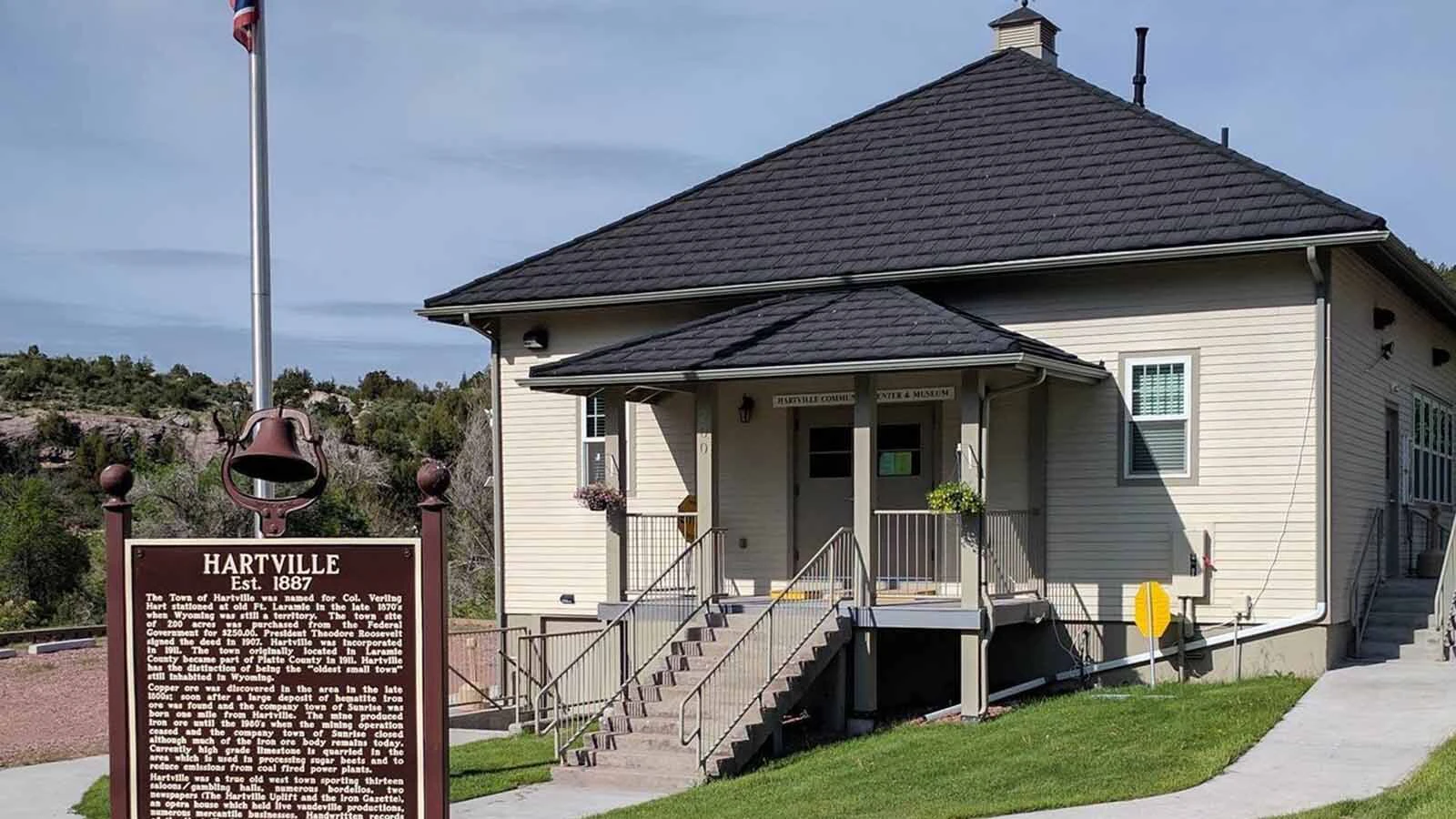
Hartville is wyoming's oldest incorporated town that remains an active town. (Town of Hartville) 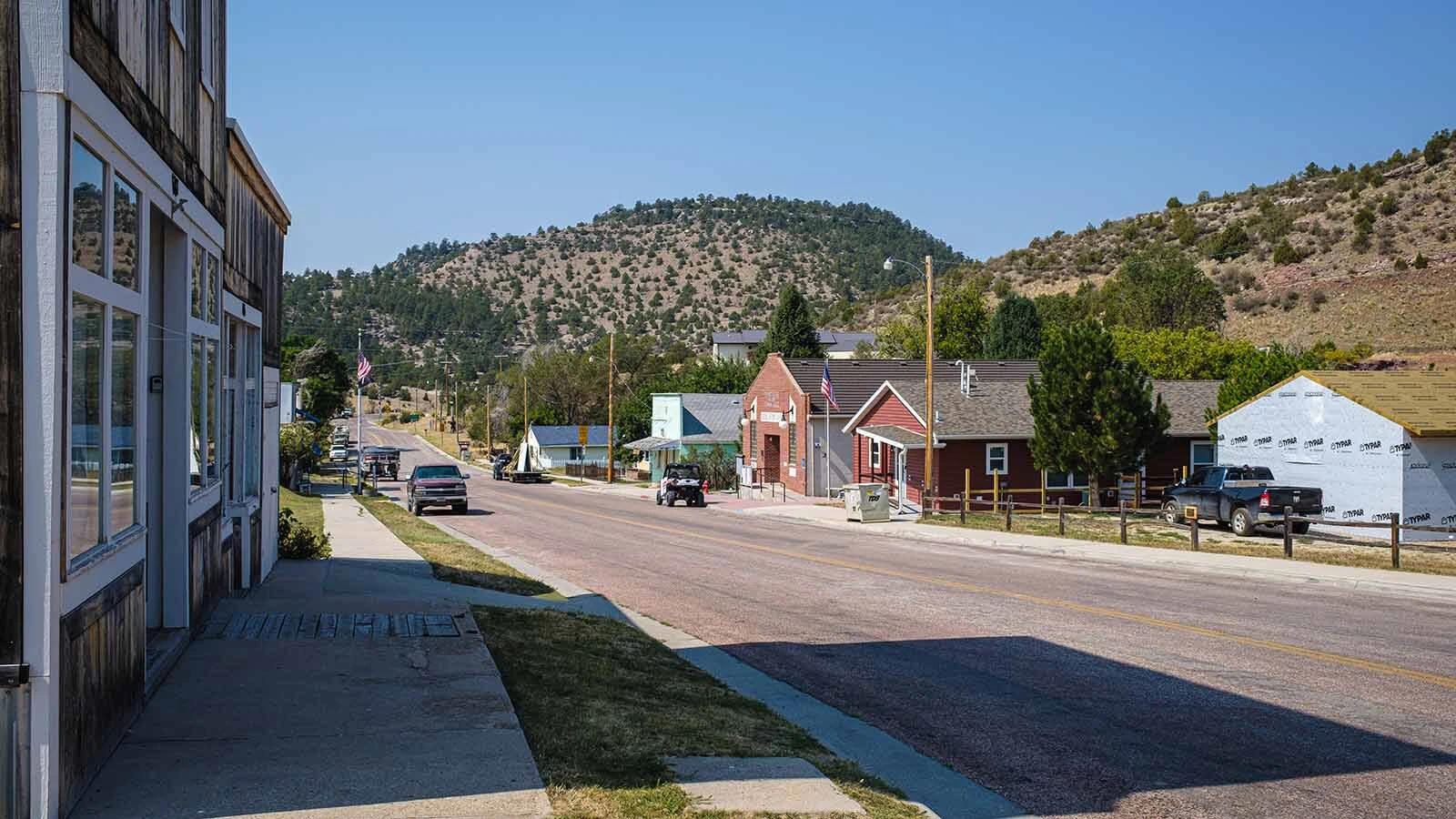
Main Street of Hartville, Wyoming. (Jared Winkler, Public Domain)
The Players
Hauphoff had a long association with Wyoming. He operated a saloon and shoe store in Cheyenne, then moved on to running hotels at Fort Laramie and Badger.
Before the territory became a state, Hauphoff served as a United States commissioner and was justice of the peace at Fort Laramie in the mid-1880s.
Hauphoff’s name can be found in newspapers in 1883 and 1884 officiating weddings. He retained the honorary title of “Judge” for the rest of his life.
In 1895, The Salt Lake Tribune published a story on Aug. 31 that Hauphoff was sitting at a table at Fort Laramie reading by lamplight when someone fired a shot through the window at him.
“The bullet passed close to his head and embedded itself in the wall on the opposite side of the room,” the newspaper reported. “There is no clue to the would-be assassin.”
In 1897, Hauphoff opened the Good Fortune Mine in Hartville with a partner, Ichabod Bartlett.
The Cheyenne Daily Leader on Sept. 6, 1888, reported “Judge J. J. Hauphoff” as “now living in Hartville.” Hauphoff was quoted talking about smelter operations in the mining community.
The Wyoming Industrial Journal reported on Jan. 1, 1900, that the new year was bringing a new saloon to Hartville courtesy of “J. J. Hauphoff.”
Meanwhile, Wilde, who ran for mayor in 1906, was equally a pioneer in the West.
The Wyoming Tribune reported that he grew up in North Dakota and Minnesota and could speak the Sioux language as well as German and French with fluency.
He entered the mining field early in adulthood and had been involved in mines at Leadville and Cripple Creek, Colorado. After investing in cattle, Wilde arrived in Wyoming.
“Mr. Wilde has a cattle ranch on the Laramie River and mining interests in Hartville,” the Tribune reported in its June 18, 1906, edition. “He is interested with a number of prominent Wheatland parties in the well-known and valuable group of iron mines … north of Guernsey and is half owner of the famous Moss Agate mine south of Hartville.”
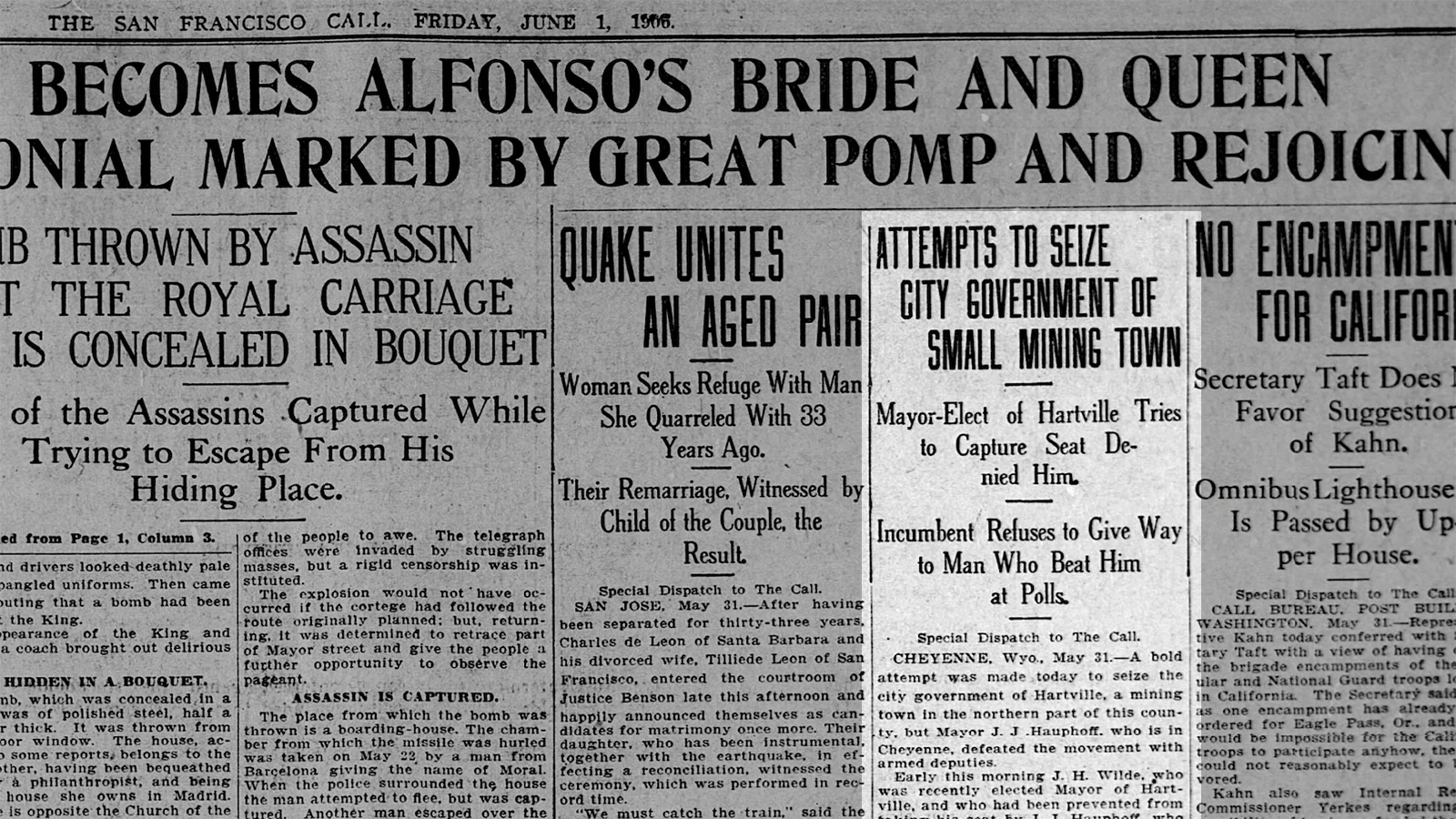
The San Francisco Call newspaper put a story about the Hartville controversy next to one of its earthquake follow-up stories on June 1, 1906. (Newspapers.com) 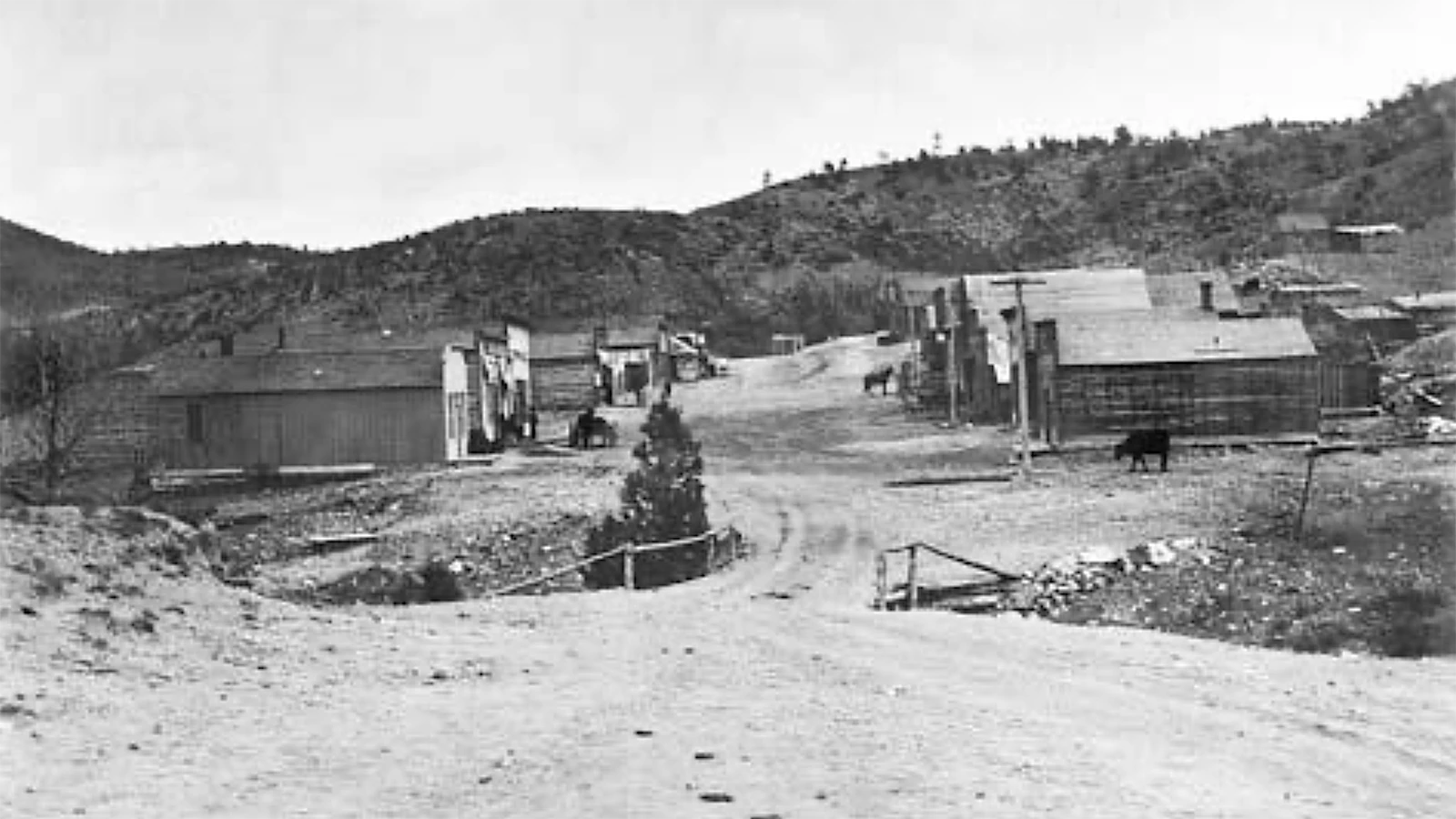
The town of Hartville as it appeared in 1904. Joseph Hauphoff was mayor at that time. (Wyoming State Archives) 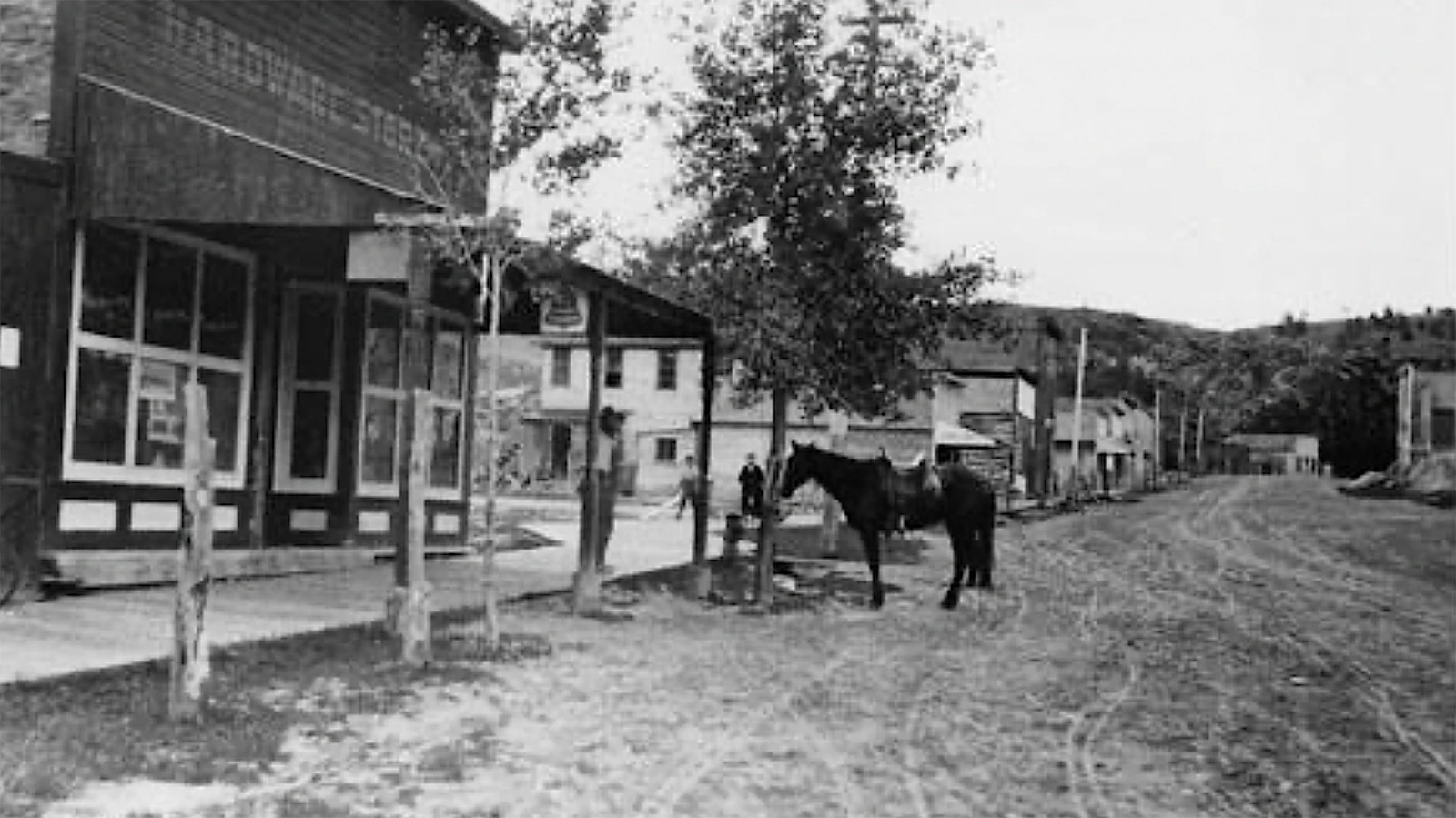
A shot of Hartville’s downtown, possibly at the turn of century near 1900. (Wyoming State Archives)
The Scheme
Hauphoff did not run for re-election on the 1906 ballot. His apparent favored successor, L. H. Pierce, did. Initial unofficial results showed town residents put Wilde, 55, over the top.
Hauphoff encouraged acting town clerk Jack Adams to keep his son-in-law, Wilde, from taking office by refusing to canvass the vote.
Wilde, as justice of the peace, swore out a complaint against Adams for not following statute, and town marshal George Fenton agreed to enforce it.
Adams was arrested and put in jail, and Hauphoff responded by ordering other men deputized and creating charges of kidnapping against the pair.
A lawyer advised Wilde to release Adams, which he did. Wilde also crawled through a window and took possession of the town hall building with the help of Fenton.
Two opposing governments set up shop. Both Hauphoff and Wilde turned to the courts to try to claim the mayoral role.
Hauphoff fought back, claiming Wilde as justice of the peace had misused funds. He had charges filed against Wilde.
In his June 18 interview in Cheyenne, Wilde told the newspaper that at that point the vote was canvassed and he was the mayor.
“Marshal Fenton” was able to keep peace in the town and the community was functioning normally, he said.
“I have the support of at least four-fifths of the people of Hartville,” Wilde told The Wyoming Tribune. “Many that were opposed to me on election day are now my friends and are now utterly opposed to the efforts to disfranchise an entire community.”
Wilde called Hauphoff’s efforts to retain his seat and authority by running a rival government in the city “absurd.”
Wilde said Cheyenne Judge H. T. Burke advised Hauphoff to canvass the election and leave Hauphoff’s contentions of “illegal conduct” at the polls out of consideration.
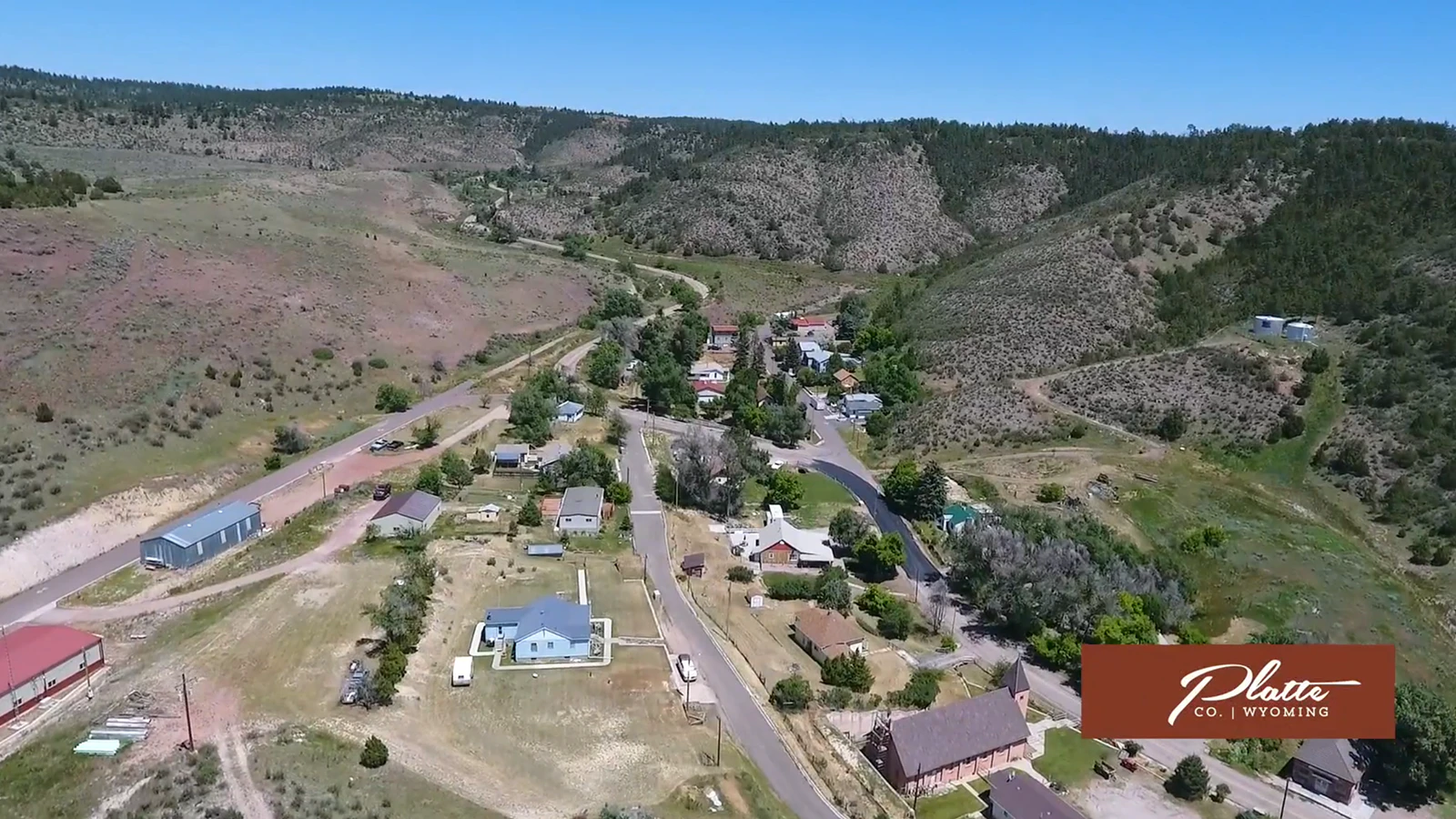
An aerial view of the town of Hartville, Wyoming. (Platte County Tourism Board via YouTube) 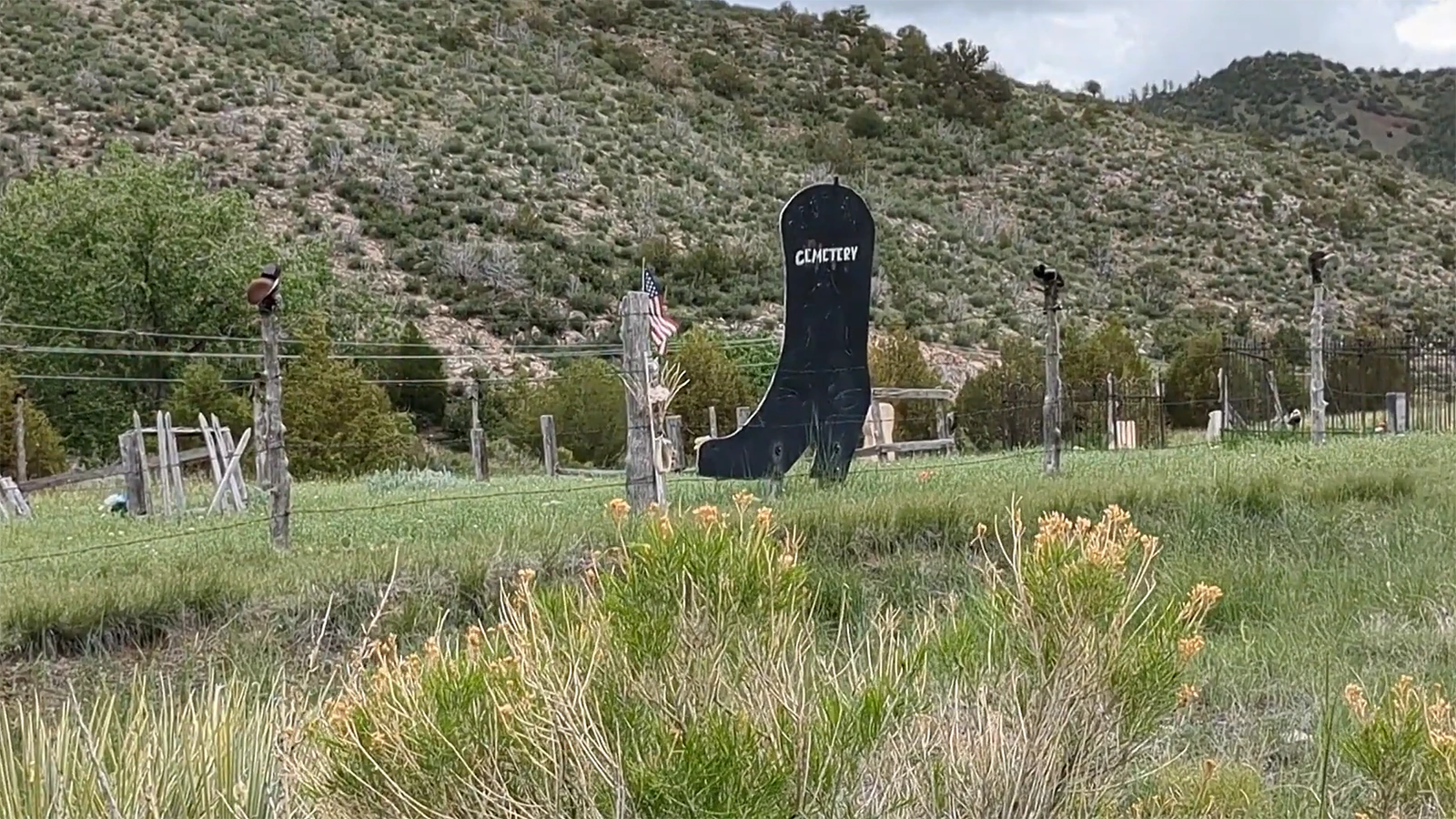
The cemetery at Hartville, Wyoming, has its own Boot Hill. (Missing Trails via YouTube) Main Street of Hartville, Wyoming. (Jared Winkler, Public Domain)
Court Fights
Hauphoff continued to oppose Wilde and his faction through the summer, maintaining his own role and rule, having a separate town marshal and working with the city council that continued loyal to the former mayor.
In a July 7, 1906, article, The Wyoming Tribune interviewed Adams, the clerk and father-in-law of Wilde, and wrote that he stated the Greek and Italian populations in Hartville were being targeted for fines.
“Considerable rivalry exists between these tribunals in connection with the arrest and fining of malefactors,” the newspaper reported.
On Sept. 12, 1906, Judge Charles E. Carpenter of Laramie ruled in a lawsuit filed by Hauphoff that Wilde could not perform the duties of mayor or interfere with Hauphoff continuing to exercise the duties.
The judge also ordered that Fenton could not be the town marshal and that Fenton and Wilde could no longer hold possession of the town hall and jail.
The court ruled both men had to “establish his title and right to possession of the said office.”
“Yesterday’s actions in the district court bring the case to date and leave Mayor-elect Wilde as far from the office to which he was elected as in the beginning of the litigation,” The Cheyenne Daily Leader reported.
In September, Wilde and his wife also lost an “infant child,” according to The Guernsey Gazette.
By the end of 1906, Wilde was headed back to court for an alleged assault and also preparing to “get out another shipment of ore from the Empire lode,” The Cheyenne Daily Leader reported on Dec. 8.
As the court fight for the mayoralty dragged on, The Guernsey Gazette reported on Feb. 22, 1907, that Hauphoff denied all allegations filed against him by Wilde and provided other allegations in return.
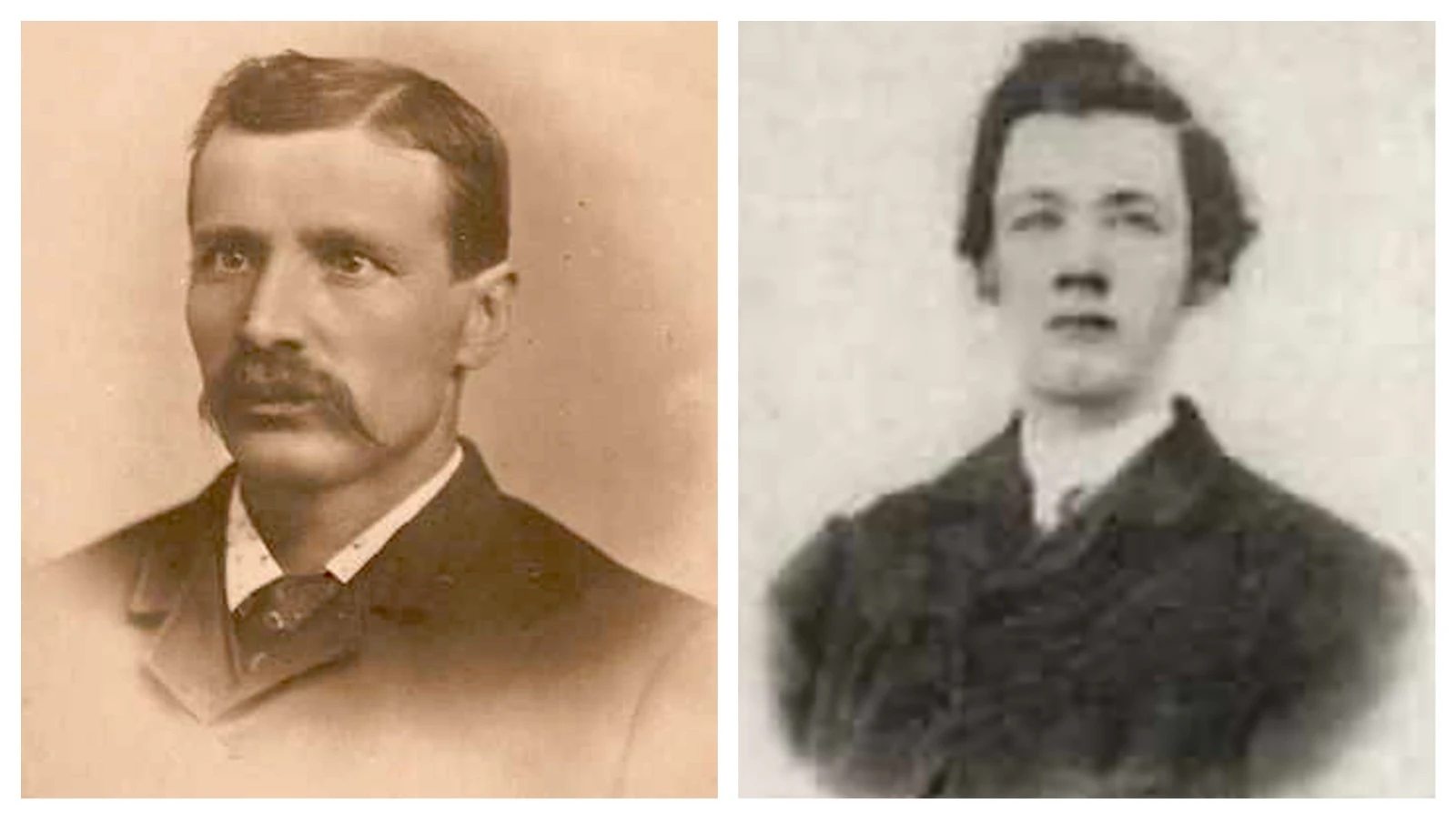
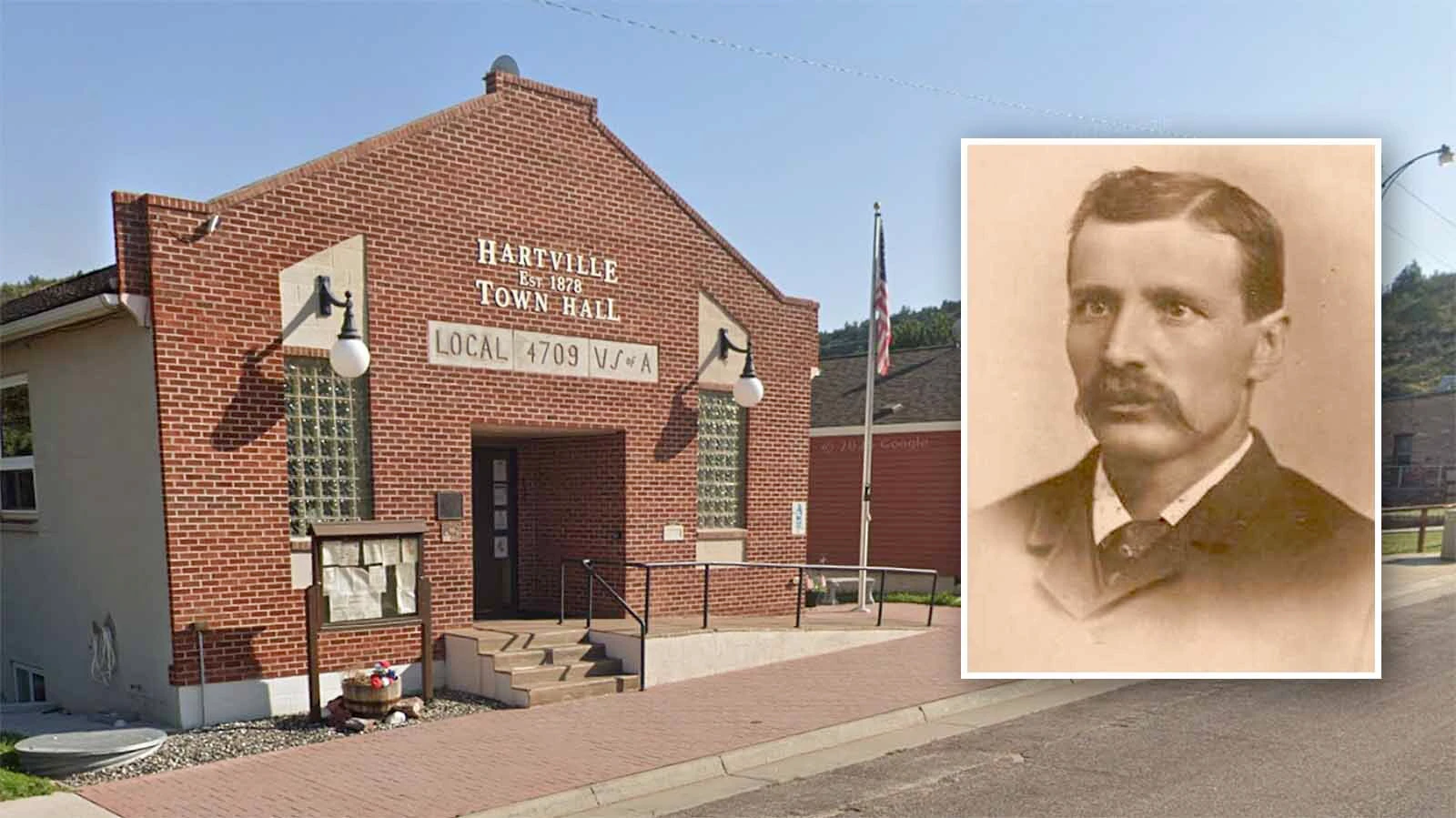
Anthony Wilde, left, won the election to be Hartville mayor in 1906, but had to stage a coup to take office. That's because the outgoing mayor and clerk Jack Adams, right, refused to recognize his win. 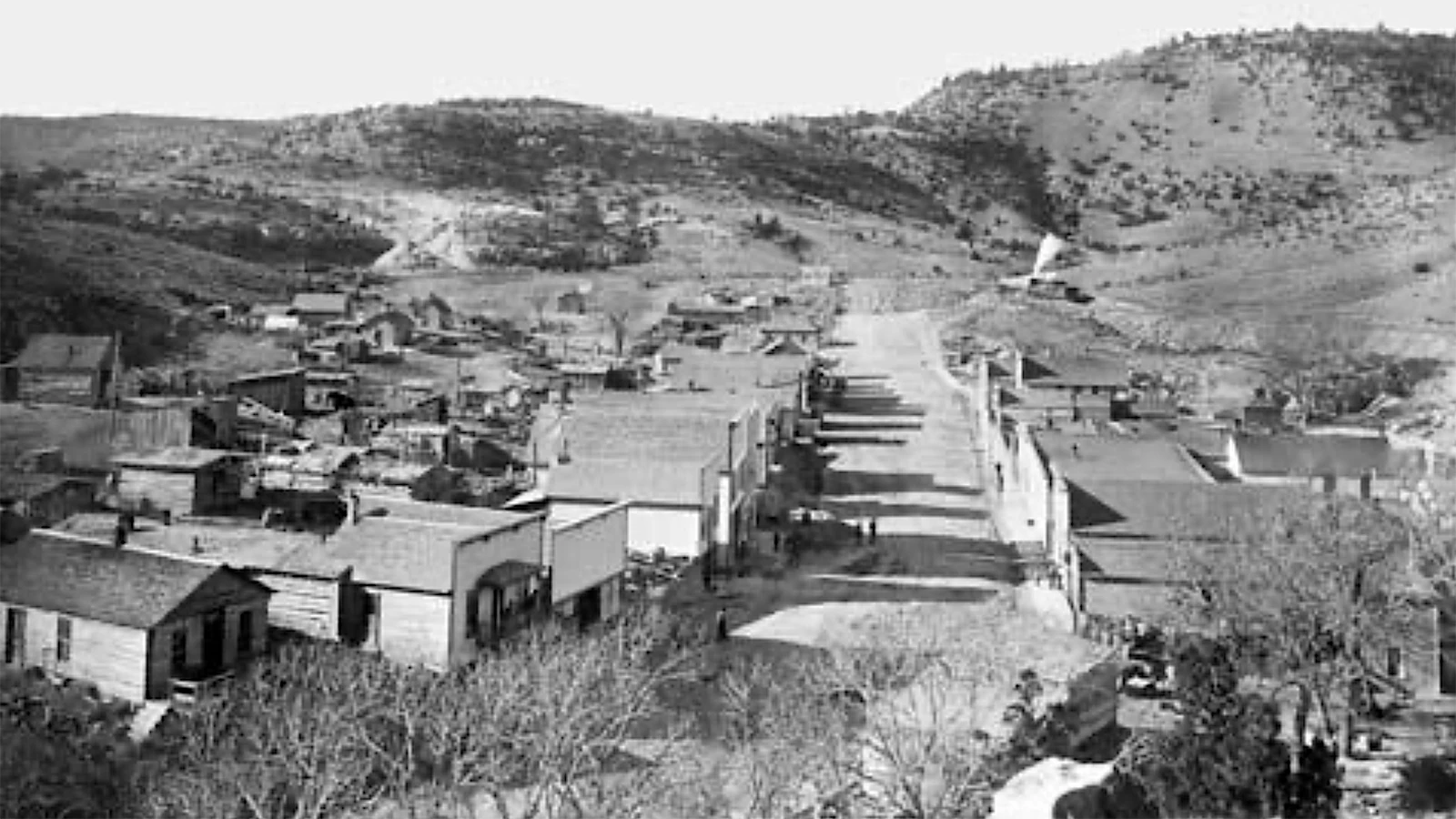
Hartville in 1902 while Joseph Hauphoff was mayor. (Wyoming State Archives)
Alien Voter
The following month, Wilde “swore out” information that Hartville councilman William Sommers had voted illegally in the May 1906 election and had illegally been serving as councilman and mayor pro tem for Hauphoff.
Wilde charged that Sommers had been in the U.S. for 50 years but that it was not until after the May 8 election that he filed his final naturalization papers, on May 11, 1906.
“His holding these positions illegally, it is claimed, invalidates all the acts of the town government of Hartville, since the town election of last May,” The Cheyenne Daily Leader reported on March 23, 1907.
As a new election approached on May 14, 1907, The Cheyenne Leader editorialized that Wilde and his “Improvement Party” had continued to face court opposition from Hauphoff without any evidence and hoped that in the coming election “the defeated parties will gracefully acknowledge defeat and not plunge all concerned into useless litigation.”
The newspaper noted that Sommers, despite his arrest and the charges against him, still clung to an office “to which he has no legal right.”
When the election arrived, Wilde and his slate of “Improvement Party” candidates were elected overwhelmingly by a large turnout of voters, The Cheyenne Daily Leader reported on May 16, 1907.
In addition to Wilde as mayor, former town marshal Fenton was elected as a councilman.
At their first council meeting on June 5, the council directed the new clerk to offer the sale of town lots, “the first step toward giving the people of the town title to their property.”
The council also voted to seek bids for lumber for town sidewalks, make preparations for a town water system, and “to have the entire town cleared of rubbish.”
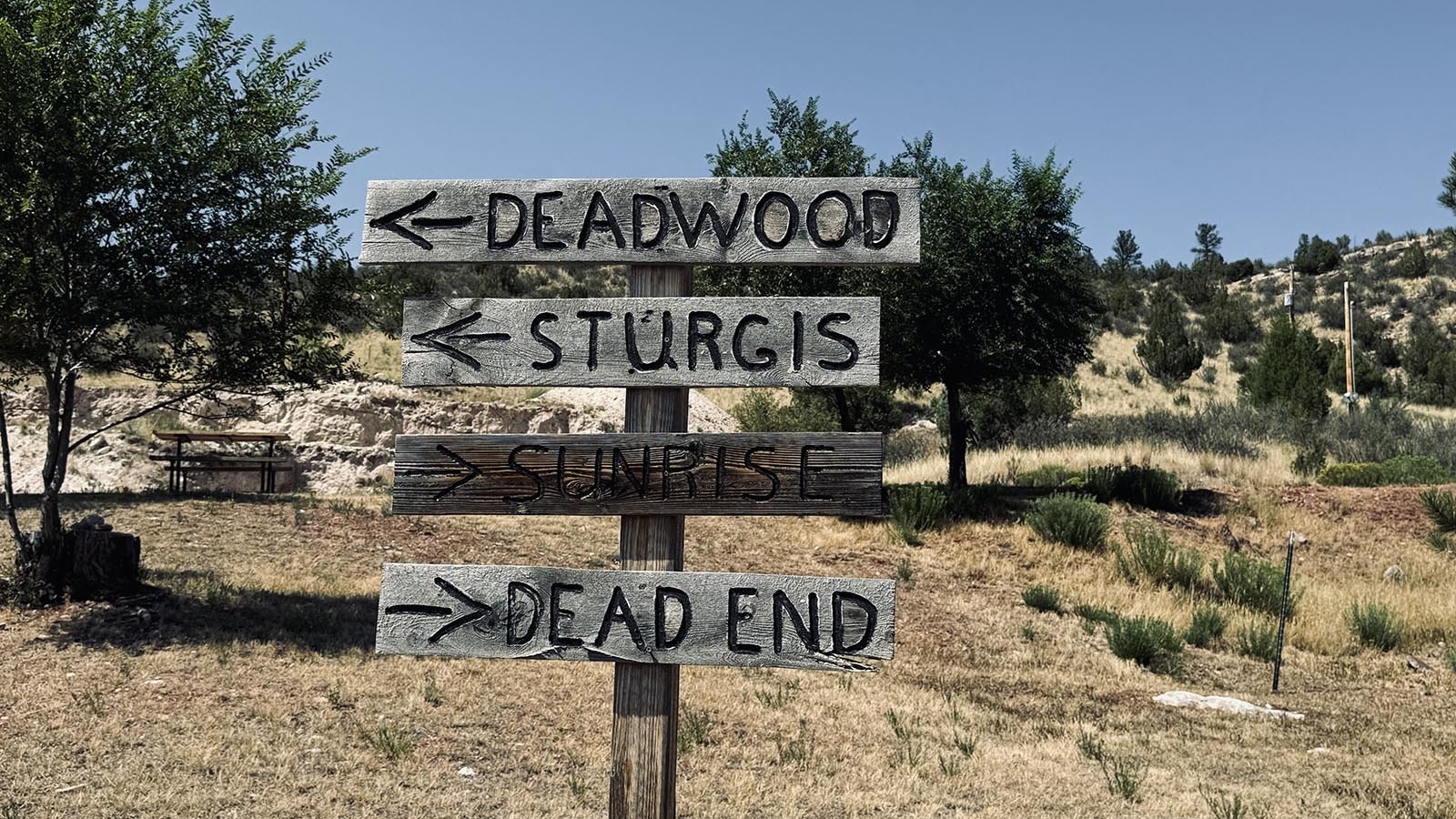
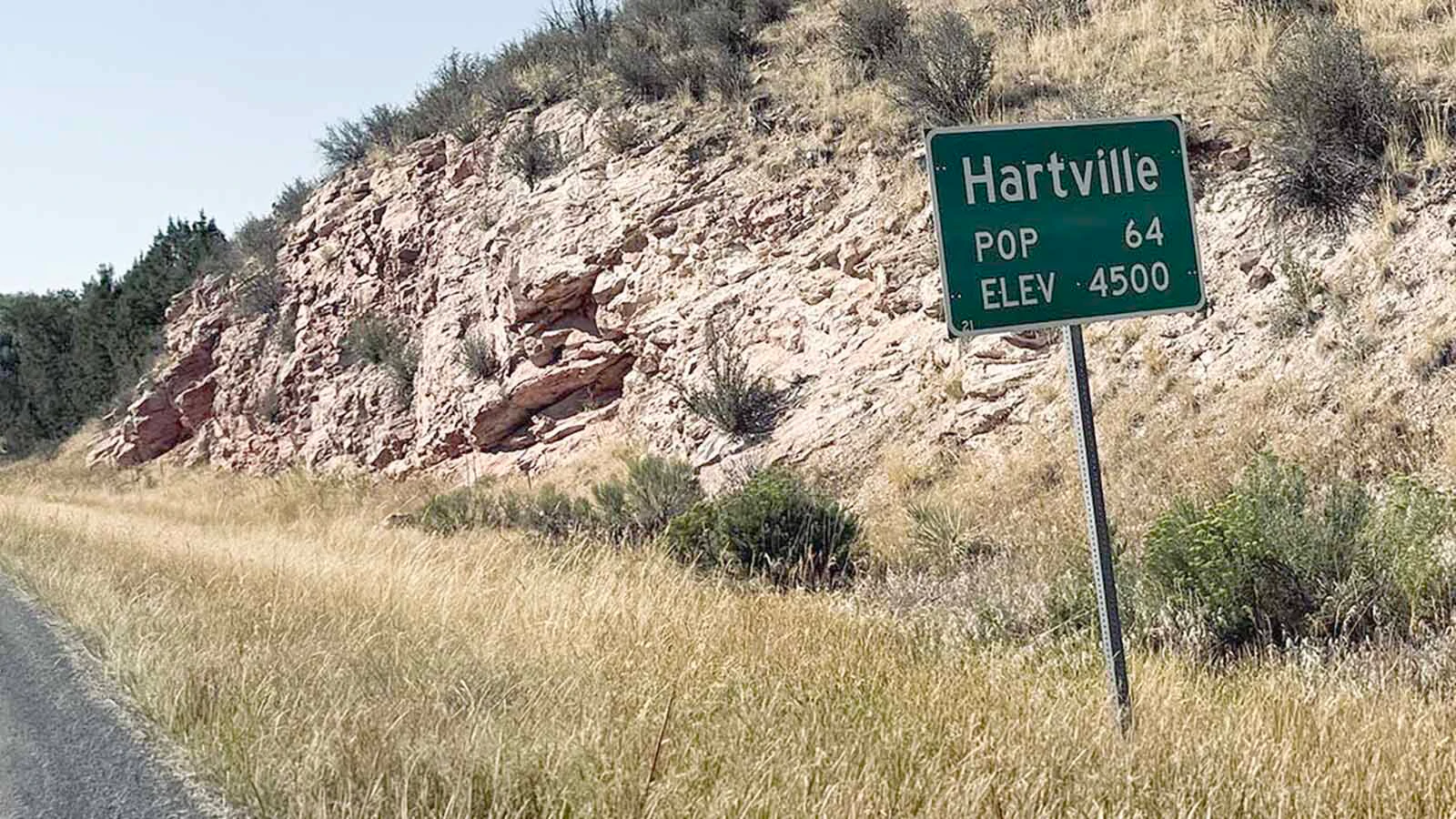
A sign at the entrance to Hartville points directions to Deadwood, S. Dakota, the Sturgis motorcycle gathering in South Dakota, nearby mining town Sunrise, and the end of the road about a mile to the east of Hartville. (CSD File) 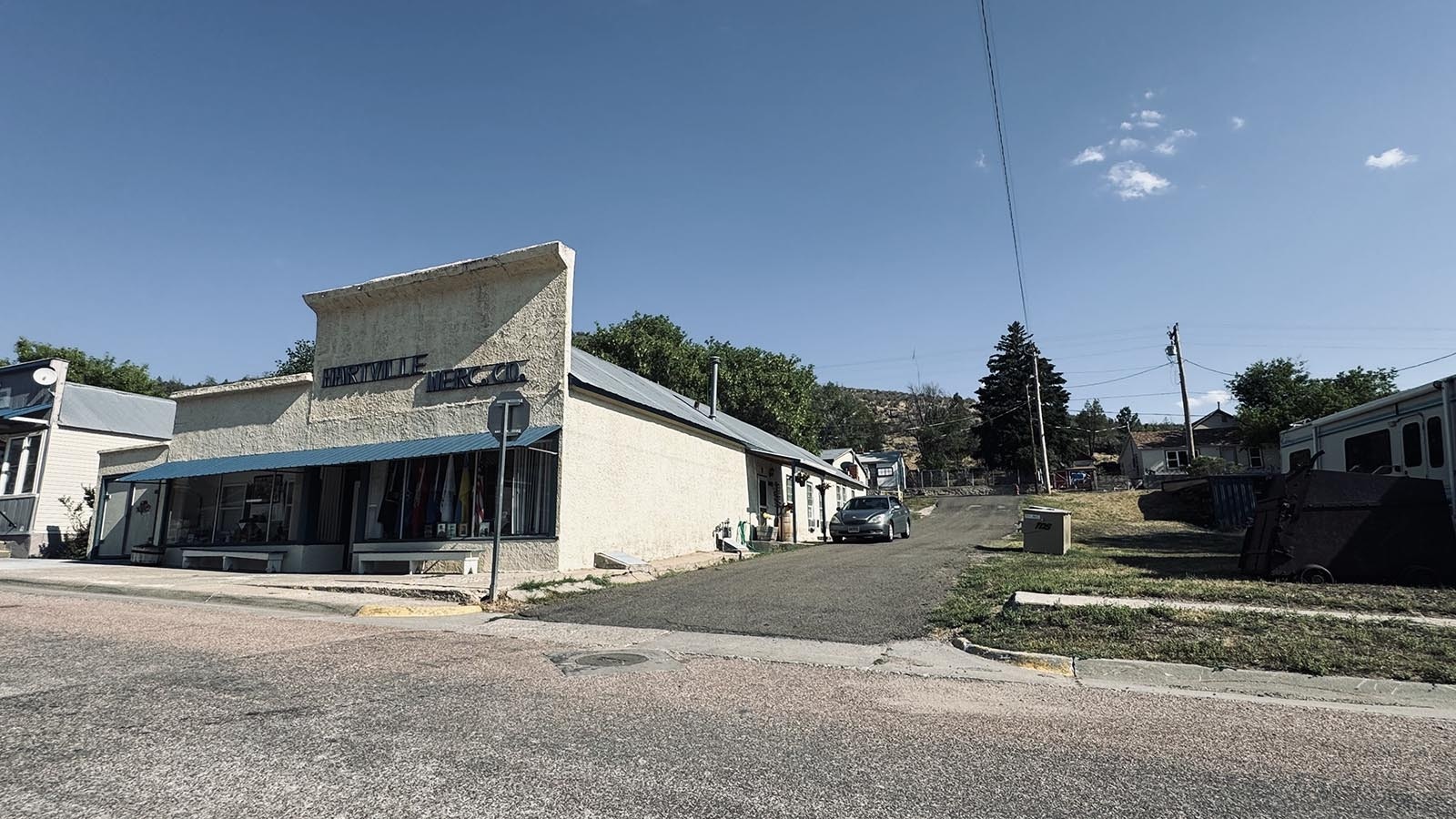
Darrell and Miriam Offe live in the home behind this mercantile store along Main Street in Hartville. (CSD File) 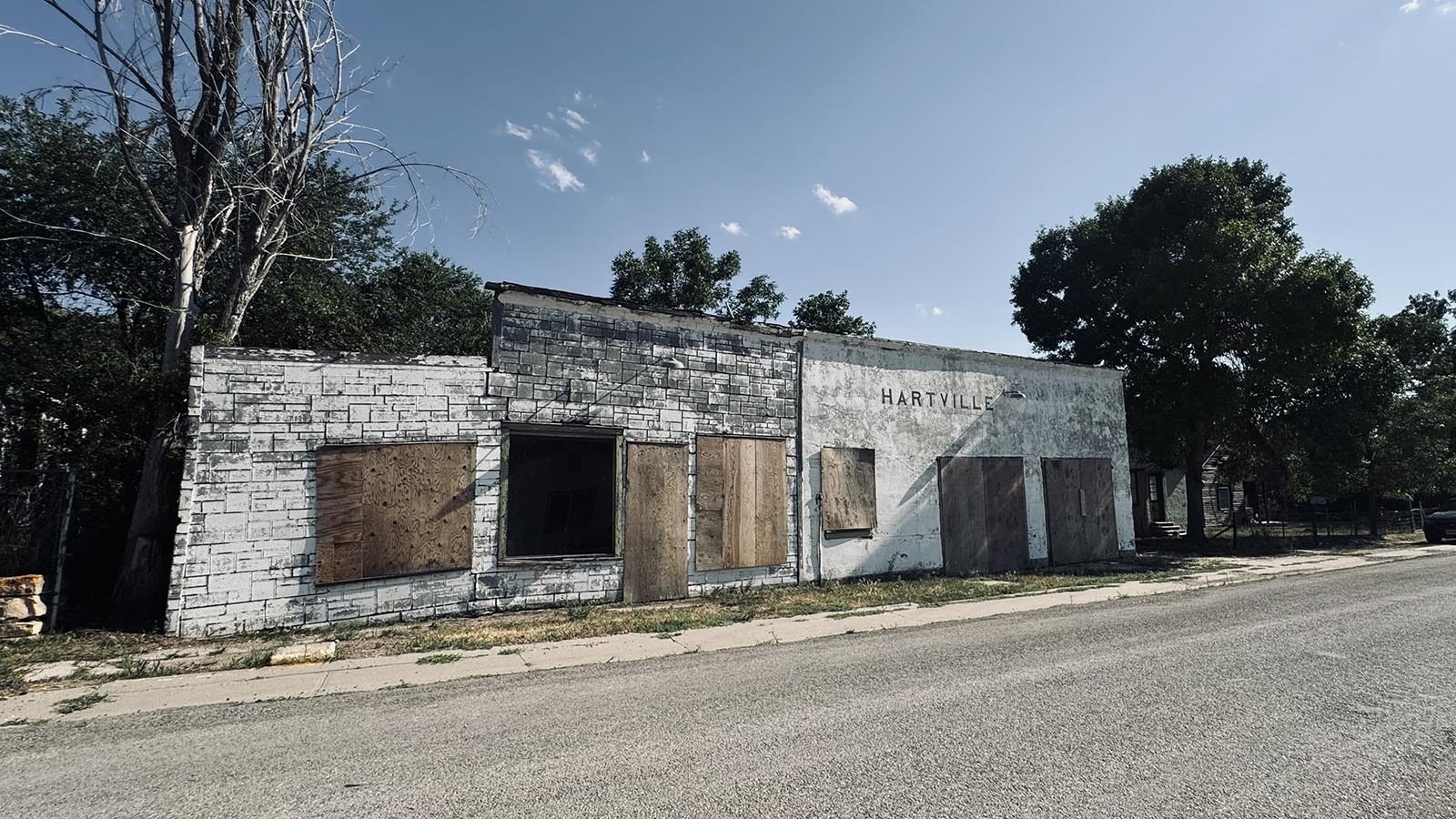
An old boarded up gas station in Hartville. (CSD File)
New Opportunities
Wilde told The Cheyenne Daily Leader on June 22, 1907, that Hauphoff should years earlier have allowed town residents to gain title to their lots. He said doing so would settle real estate values and lead to more investments in the community.
He said he wanted a town in which “we can all take pride.”
“With its great surrounding resources built up by the iron, copper, and limestone industries, Hartville is bound to grow and prosper,” Wilde said. “All that is necessary is for the people to work together, become genuine boosters, and let bygones be bygones.”
Two weeks later, Hauphoff was gone.
He died on July 2, 1907, from a “complication of diseases.” He was 76.
“Judge Hauphoff is survived by a widow, and was the father of 12 children, six of whom survive him,” The Cheyenne Daily Leader reported in a front-page story on July 3. “For a number of consecutive terms, he served as the mayor of Hartville, and his fight to retain control of the town government, which ended only recently, supplies one of the remarkable chapters of the history of the state.”
Wilde continued to serve as mayor until 1911. He faced a “statutory charge” in Laramie County and was found not guilty a year or so earlier. He was then charged with perjury, found guilty by a jury, and sentenced to seven years in prison.
Wilde appealed to the Wyoming Supreme Court.
Adams, his father-in-law — the same man he put in jail in 1906 — filed a lawsuit demanding that Wilde resign from office due to his felony conviction.
Judge’s Ruling
Judge Carpenter ruled that Wilde had to resign from his office unless he appealed his decision to the state Supreme Court, The Laramie Republican reported on Jan. 10, 1911.
Adams died the following month on Feb. 7, 1911, of cancer. He was 69.
Wilde clung to his office until the election in May.
On June 16, 1911, The Cheyenne State Leader reported that Wilde, “the former mayor of Hartville,” was in the city “attending court.”
The state Supreme Court heard Wilde’s appeal of his perjury charge in October 1911. In April 1912, the court remanded the case back to Laramie County District Court for a retrial because the justices ruled that Wilde had been convicted of perjury by the lower court “in error.”
Before that retrial could happen, Wilde died on May 15, 1912.
“The entire community was shocked early Wednesday morning by the news of the death of Anthony Wilde, ex-mayor of Hartville,” The Guernsey Gazette reported on May 17. “He passed away at his home about four o’clock in the morning, the cause of his death being heart failure.”
Wilde was 60 years old.
Dale Killingbeck can be reached at dale@cowboystatedaily.com.