
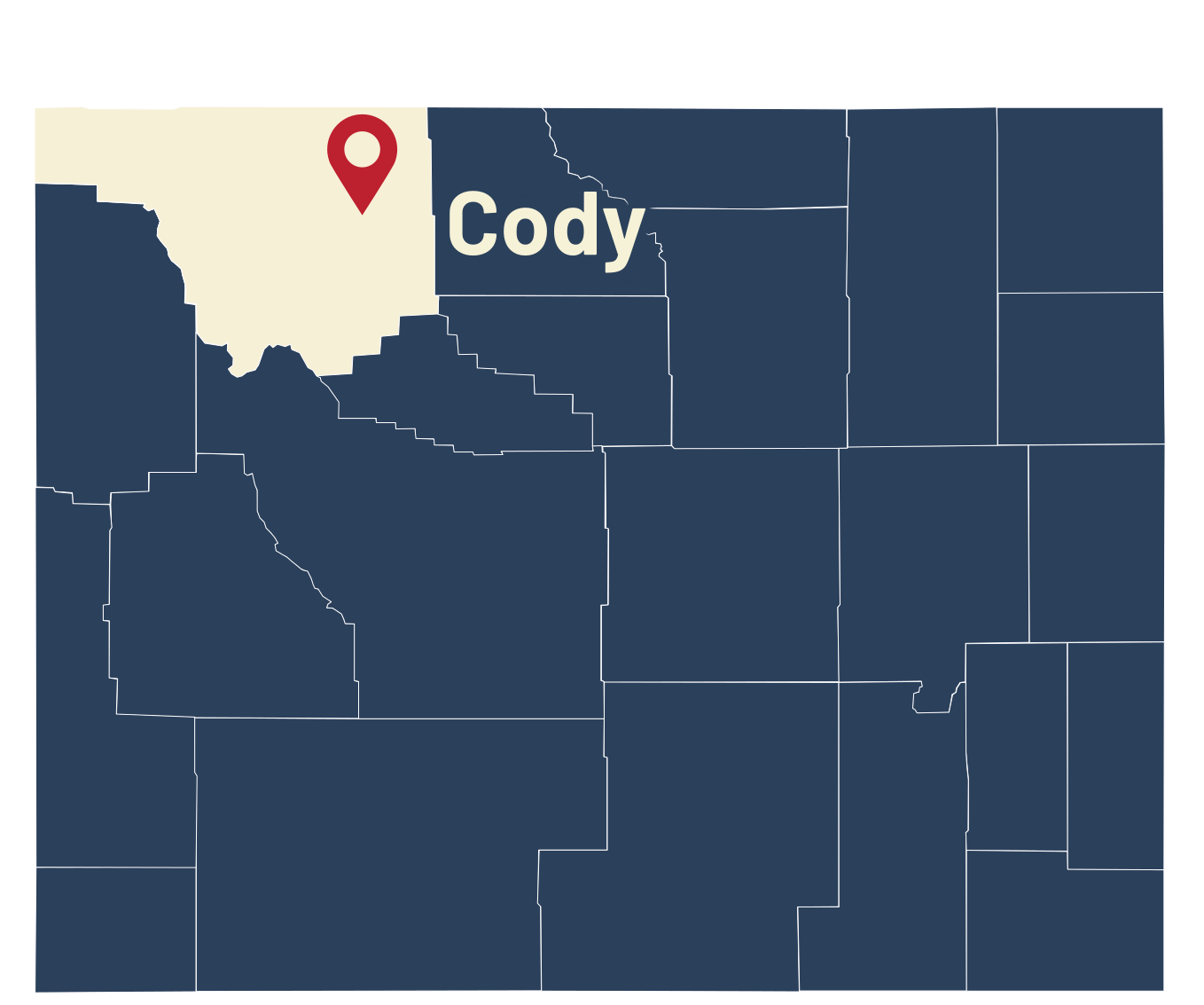
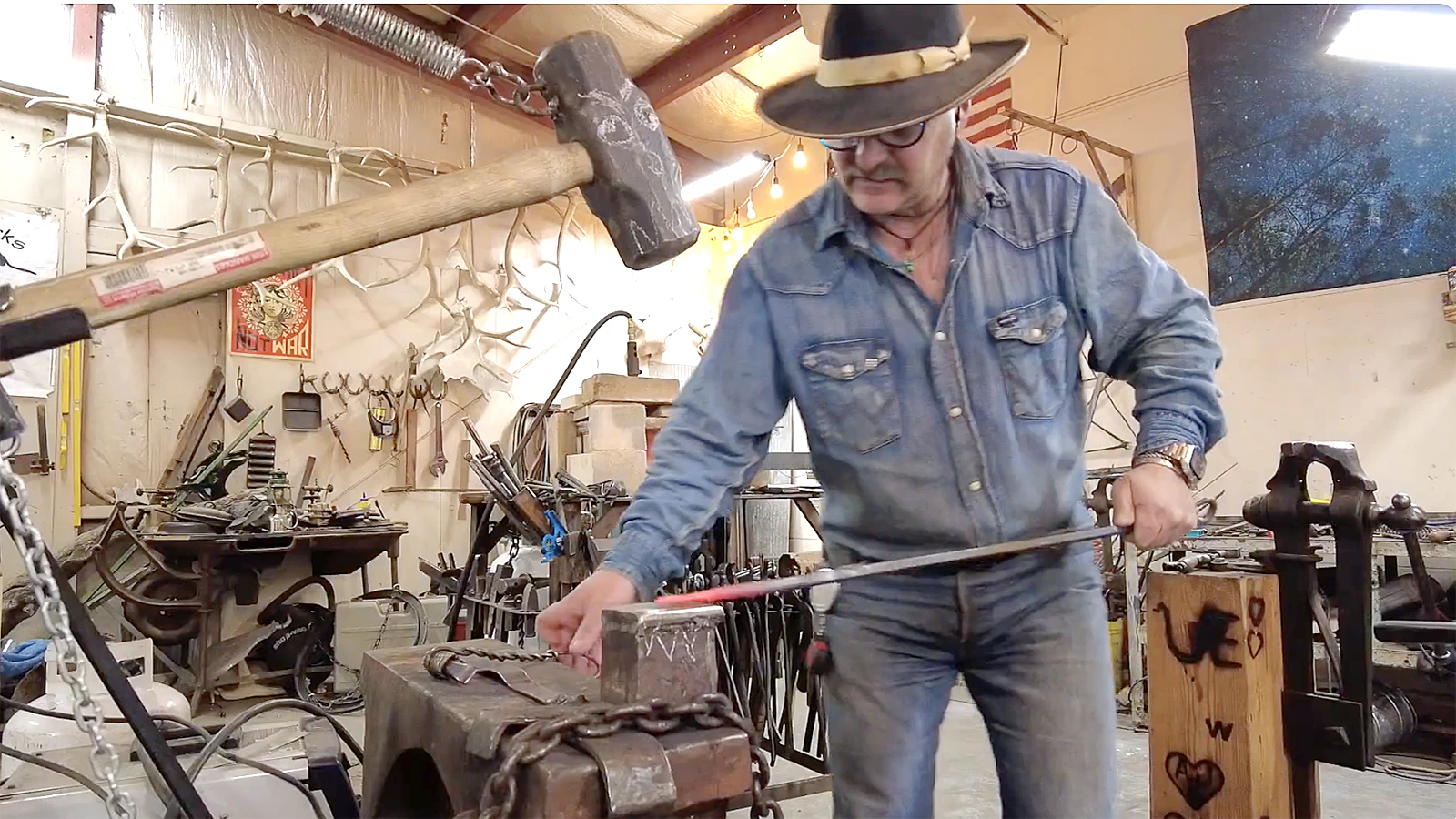
“Artist” wasn’t a word Cody blacksmith N.J. Pawley had ever used for himself. He was a farrier and horse trainer who learned to make things from steel mainly so he could shoe horses.
Along the way, though, Pawley crossed over into artistry without realizing it.
When someone famous noticed.
Pawley was working as an artist in residence at the Sundance Resort, then owned by the late Robert Redford. He’d gotten the gig because the glassblowers who usually worked at the resort all went home for the winter.
“The reason they wanted me there is because I was tough,” Pawley said. “I could take the cold.”
One day, after one of Pawley’s demonstrations, the crowd drifted away. All but one man.
“I didn’t realize who it was until I looked up,” Pawley said. “He goes, ‘You know, N.J., you really are an artist.’ And I went, ‘Well thank you, Mr. Redford.’”
That was a turning point.
“He changed my whole damn life,” Pawley told Cowboy State Daily. “Because if Robert Redford tells you you’re an artist, you’re an artist.”
Pawley is quick to add, after telling the story, that he and Redford were acquaintances, nothing more.
“It’s not like we were having cocktails or anything,” he said.
After that encounter, Pawley couldn’t help but feel differently about his blacksmithing.
He’d already been making some pieces for the Sundance catalog — Christmas wreaths, barbed-wire Christmas trees and hand-forged horseshoe pitching sets.
But he began leaning further into the work, making large horseshoe wine racks, including one for Sundance’s Tree Room restaurant and another for Redford’s home.
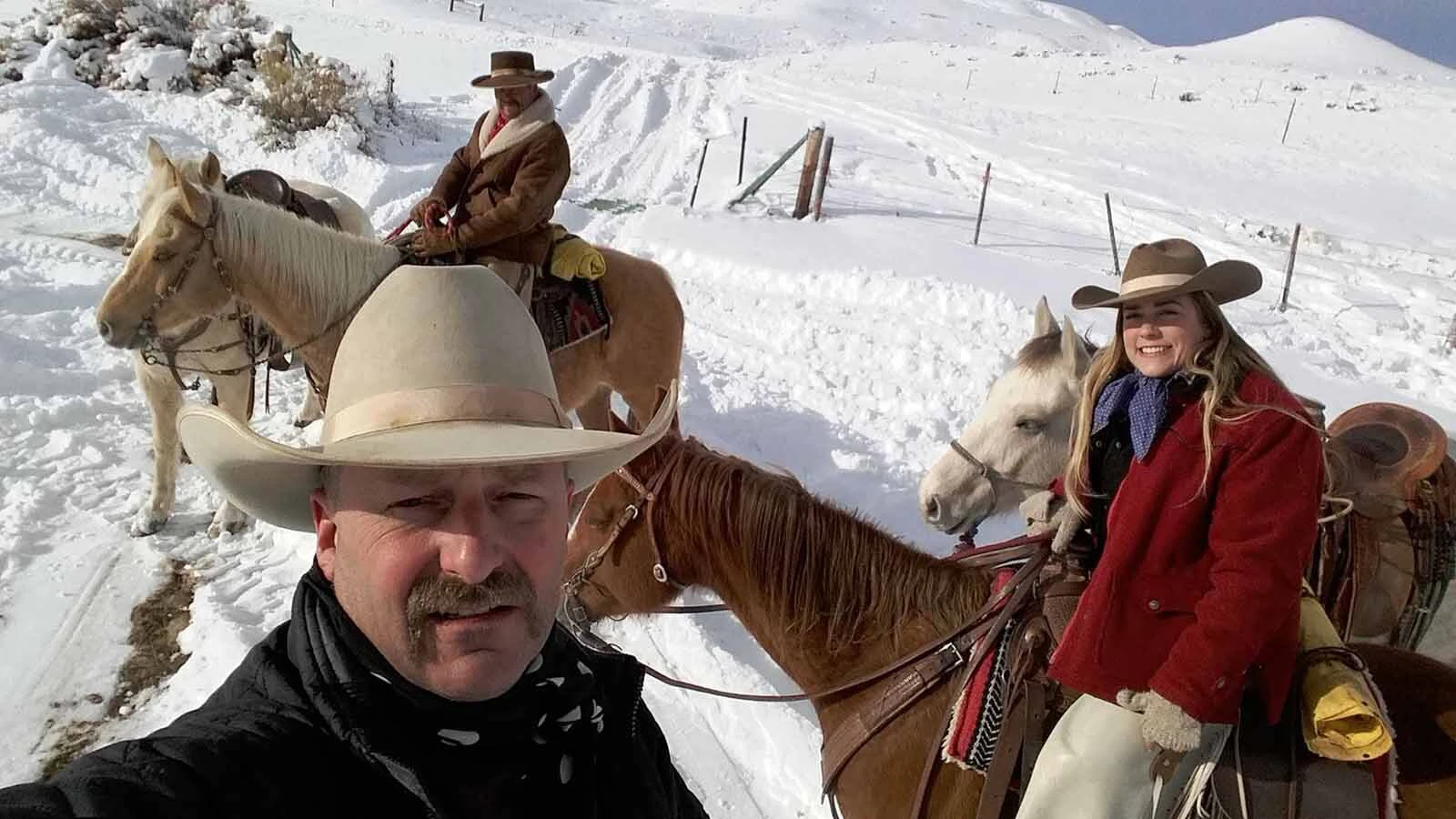
Cody blacksmith NJ Pawley working on a modeling job at Hideout Ranch in 2017. (NJ Pawley) 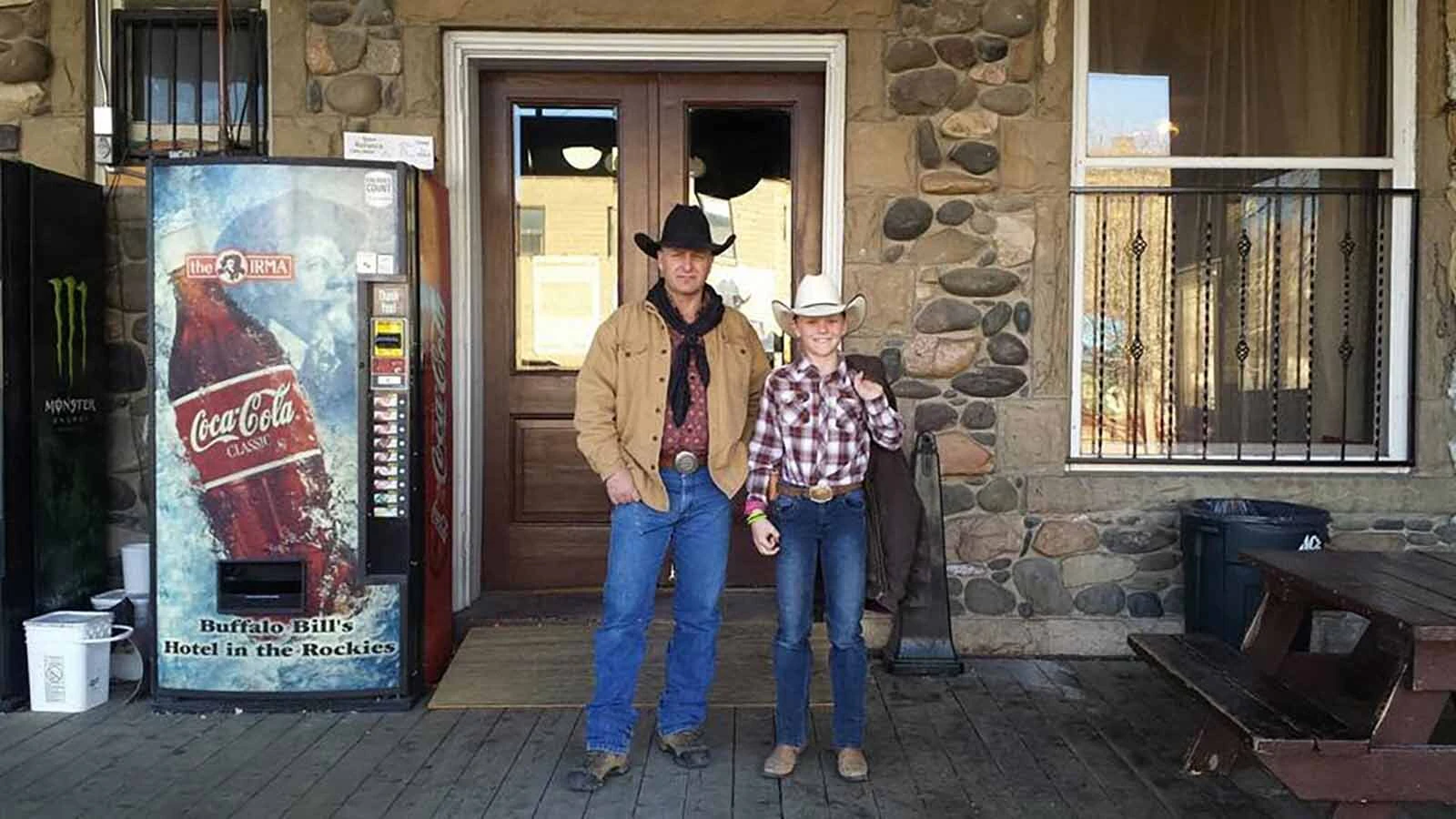
NJ Pawley with his son back when they were both much younger. (NJ Pawley) 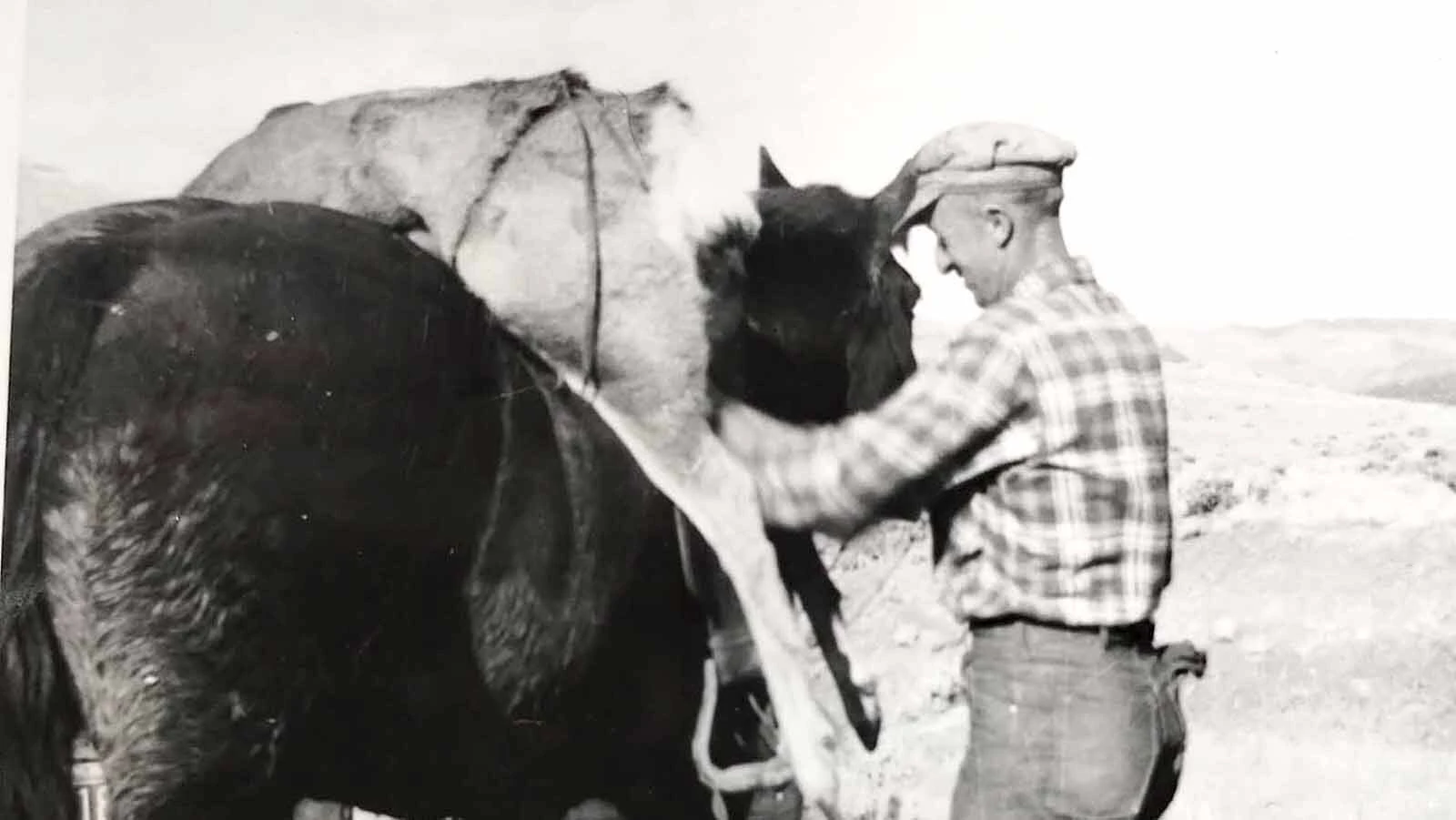
NJ Pawley's grandfather. (NJ Pawley) 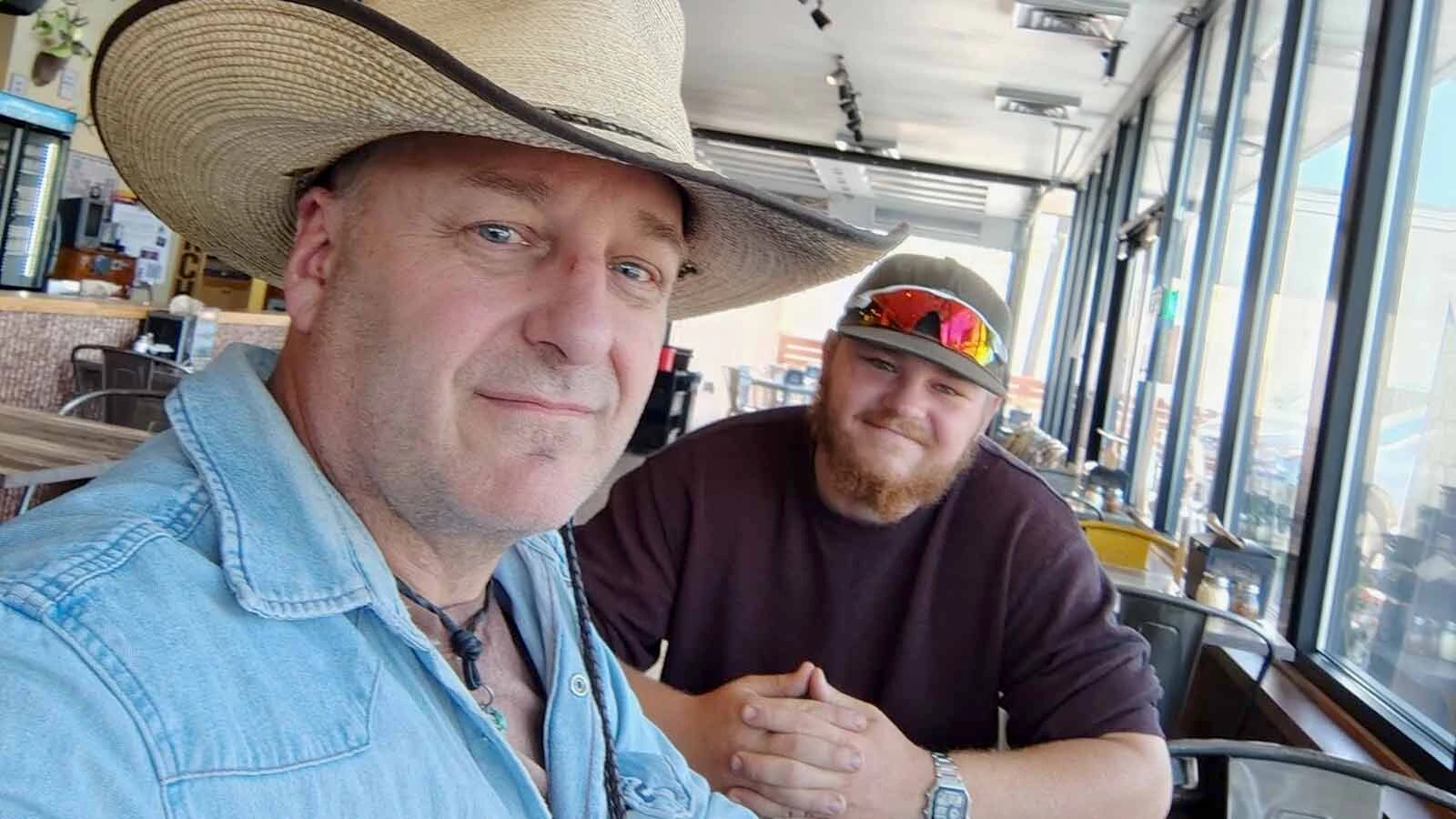
Cody blacksmith NJ Pawley with his son, Trey. (NJ Pawley)
Horses And Hammers
In the beginning, making stuff was just a matter of practicality.
“In 1991, there was no internet. There was no Amazon,” he said. “If you needed a specialty shoe to put on a horse as a corrective, you had to make it.”
So he enrolled in a farrier program at Northwest College and liked it well enough to take it twice.
“I never would have picked up a hammer if I didn’t need to shoe horses,” he said. “Then I wanted some wall hooks, and then I needed some tools, and then I wanted to see if I could build a knife. One thing fed off of the other and, next thing you know, I’m doing more blacksmithing than I was horse training.”
Pawley has had horses in his blood for as long as he can remember — and even before that.
“I went in my first horse show when I was 2 years old,” he said. “It was the walk-trot class in Thermopolis. My mother has the old, 8-millimeter film of me showing lead line down in Thermopolis, from what must have been 1973.”
Horses were a constant presence from then on.
“I didn’t play basketball,” he said. “Everything was around horses. If we played kickball or something we used the horses. If we were playing Star Wars, the horses were tauntauns or whatever they were riding in Star Wars.”
Pawley didn’t even learn to ride a bike until he was 12. A horse was always around, and a horse was always a better ride in his opinion.
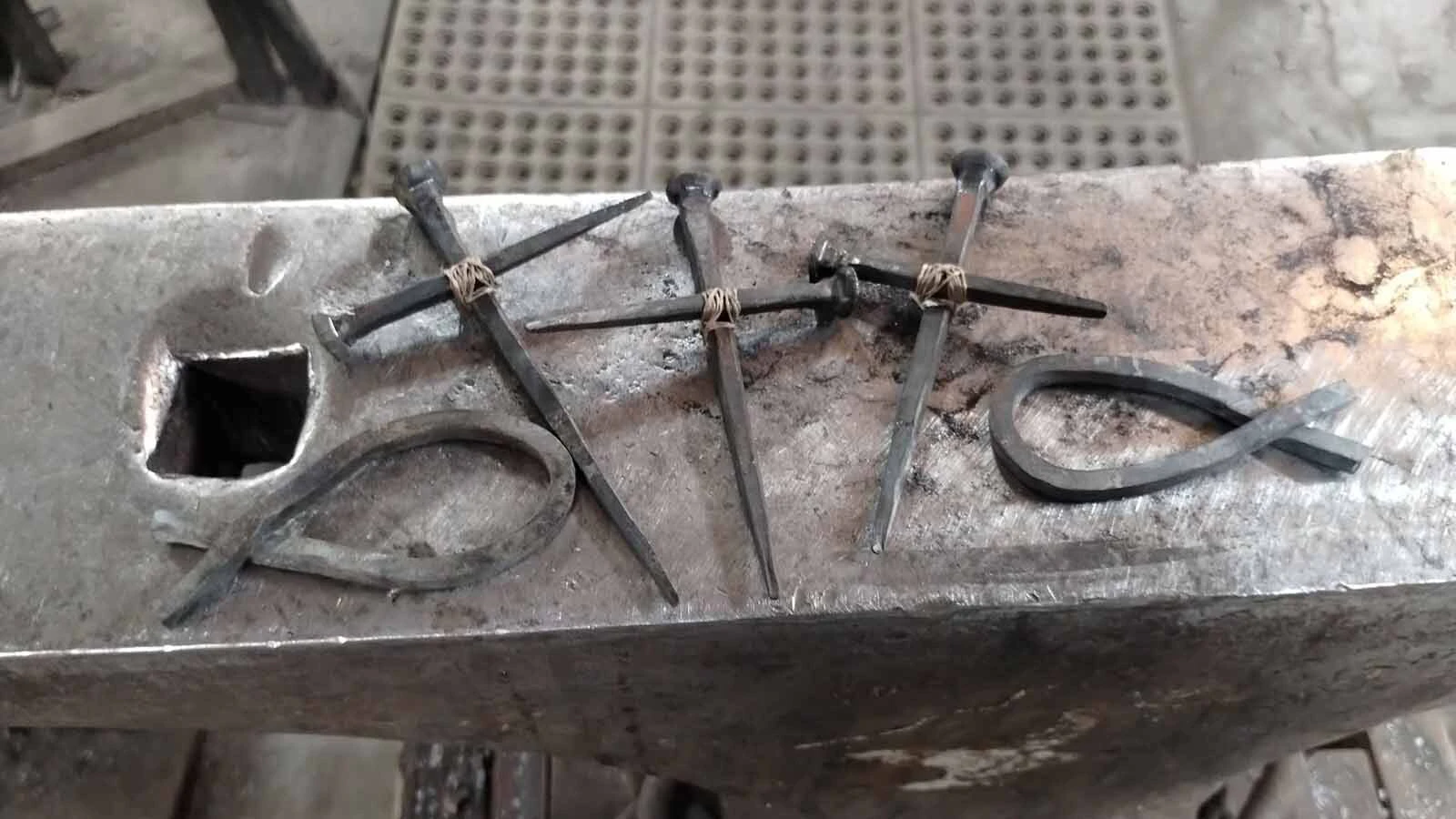
Some of NJ Pawley's Easter creations. (NJ Pawley) 
A horseshoe pumpking made by NJ Pawley. (NJ Pawley) 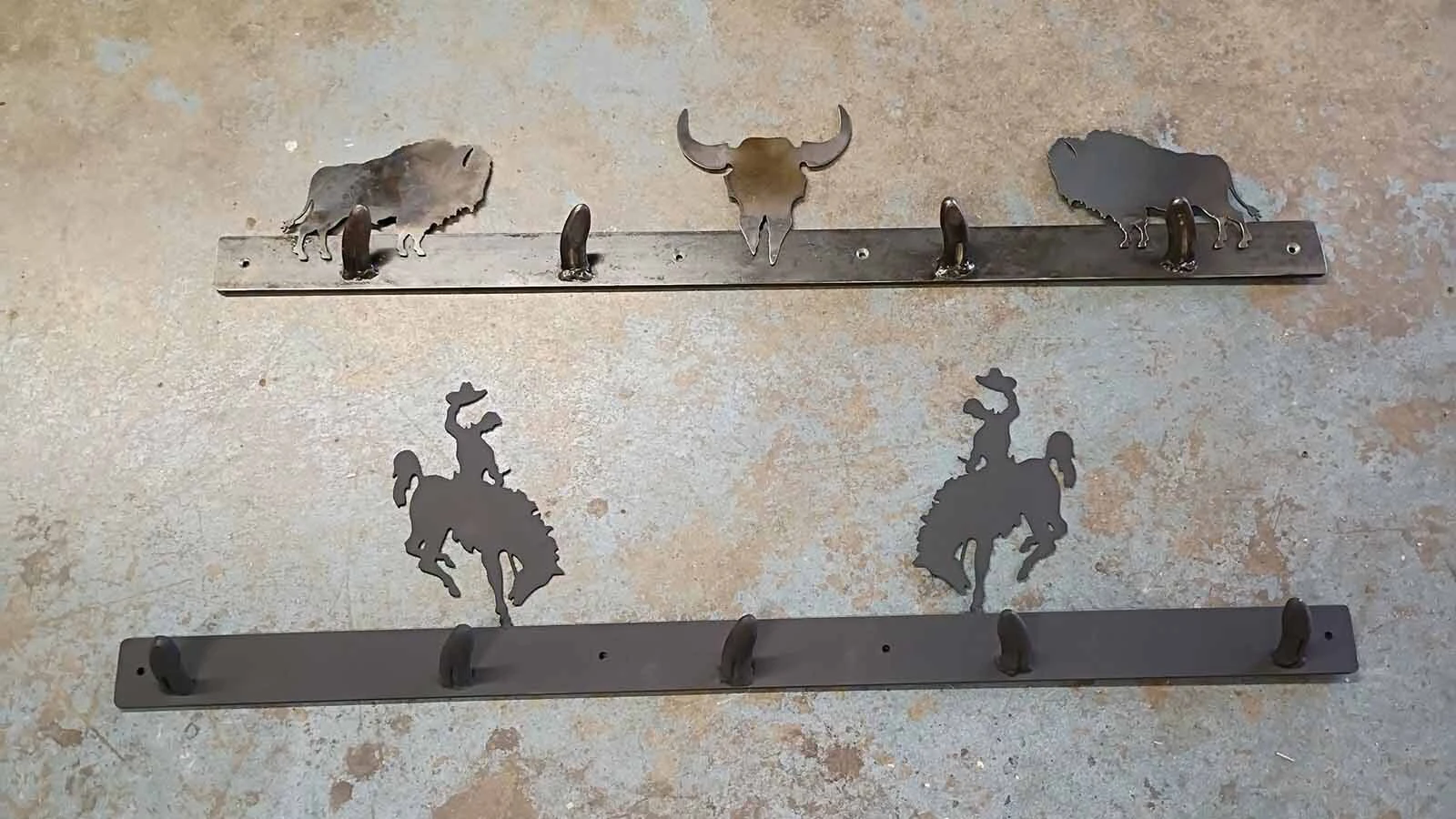
Some of NJ Pawley's handiwork. (NJ Pawley) 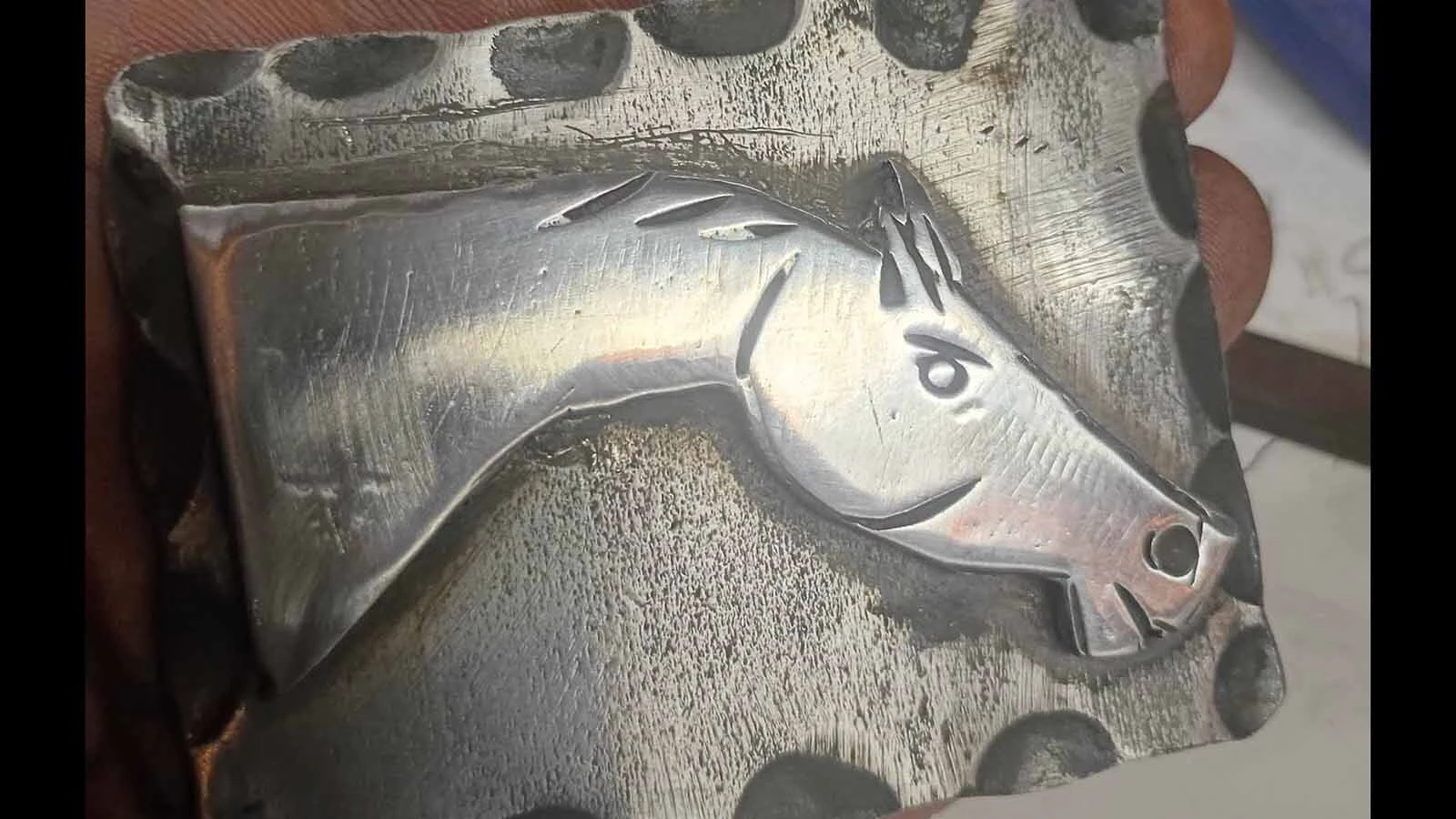
Some of NJ Pawley's handiwork. (NJ Pawley)
No Business Training Colts
Sometimes, if a horse wasn’t handy, he would borrow one to get across someone’s pasture.
“What you’d do is, take a piece of baling twine and get on the horse in your pasture and ride to the edge of the next pasture,” he explained.
Then he’d catch a new horse from that pasture and ride over to the next one, until he was wherever he needed to go.
“I might ride one of my dad’s horses, one of my aunt’s horses, and one of my neighbor’s horses to get to the neighbors’ to go play Star Wars on their horses,” he said.
Star Wars, he added, is, to all intents and purposes, a Western, even if it happens in space.
“My dad took me to Star Wars in 1978 to the Valley Drive-in over in Powell,” Pawley said. “And he had nightmares about the original Star Wars bar scene. Now this was a man raised on John Wayne and Hopalong Cassidy. Even he would tell you Star Wars was like a lot of Westerns.”
Pawley’s dad has a lot to say about horses, himself. He still raises a few horses every year. Pawley has been going out to help his dad break them in, even though he’s sworn off horse training and no longer shoes horses.
“I’m 55 years old now, so I have no business starting colts,” Pawley said. “But here I am.”
His father told him a few days ago, “You can’t be a cowboy and not have horses.”
Horses have taken Pawley places he never expected to go. But the work began close to home.
By age 6, he was helping his dad out in the barn as the family raised and trained Appaloosas, Quarter Horses and later Fjords. He did not know what he would become, but he knew horses would be part of it.
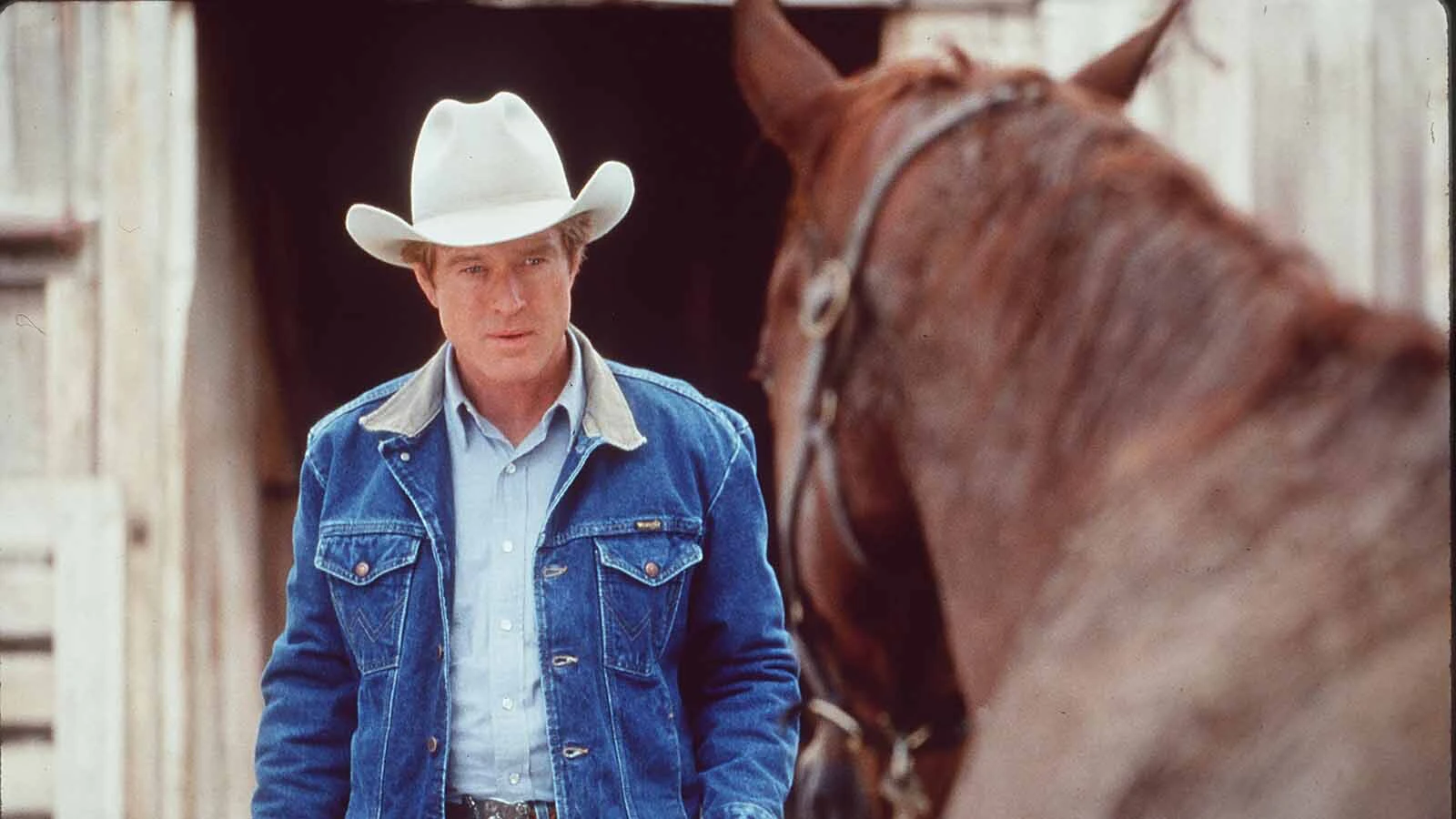
Robert Redford in the 1998 film "The Horse Whisperer." (Getty Images) 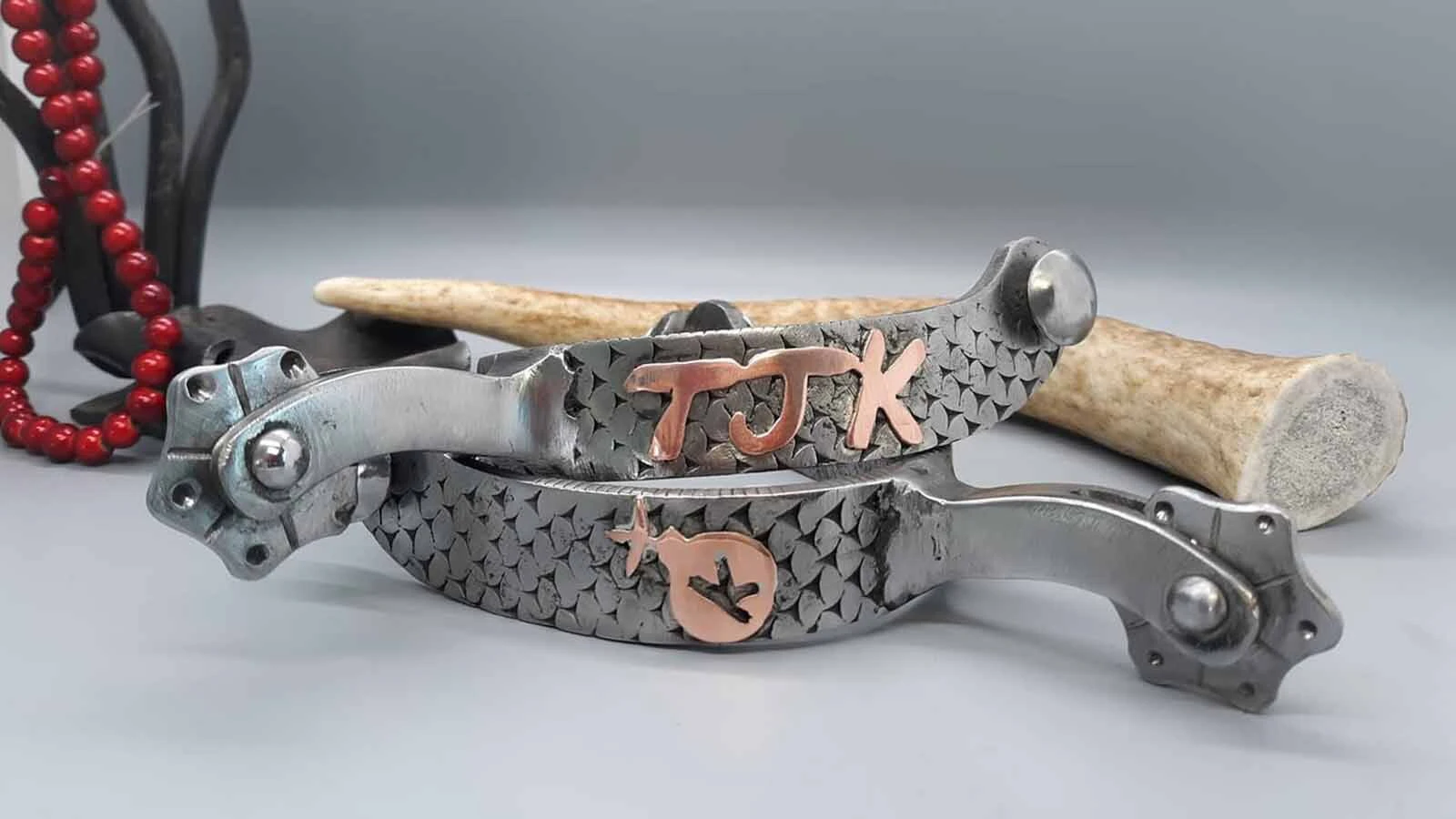
A set of spurs made by NJ Pawley. (NJ Pawley) 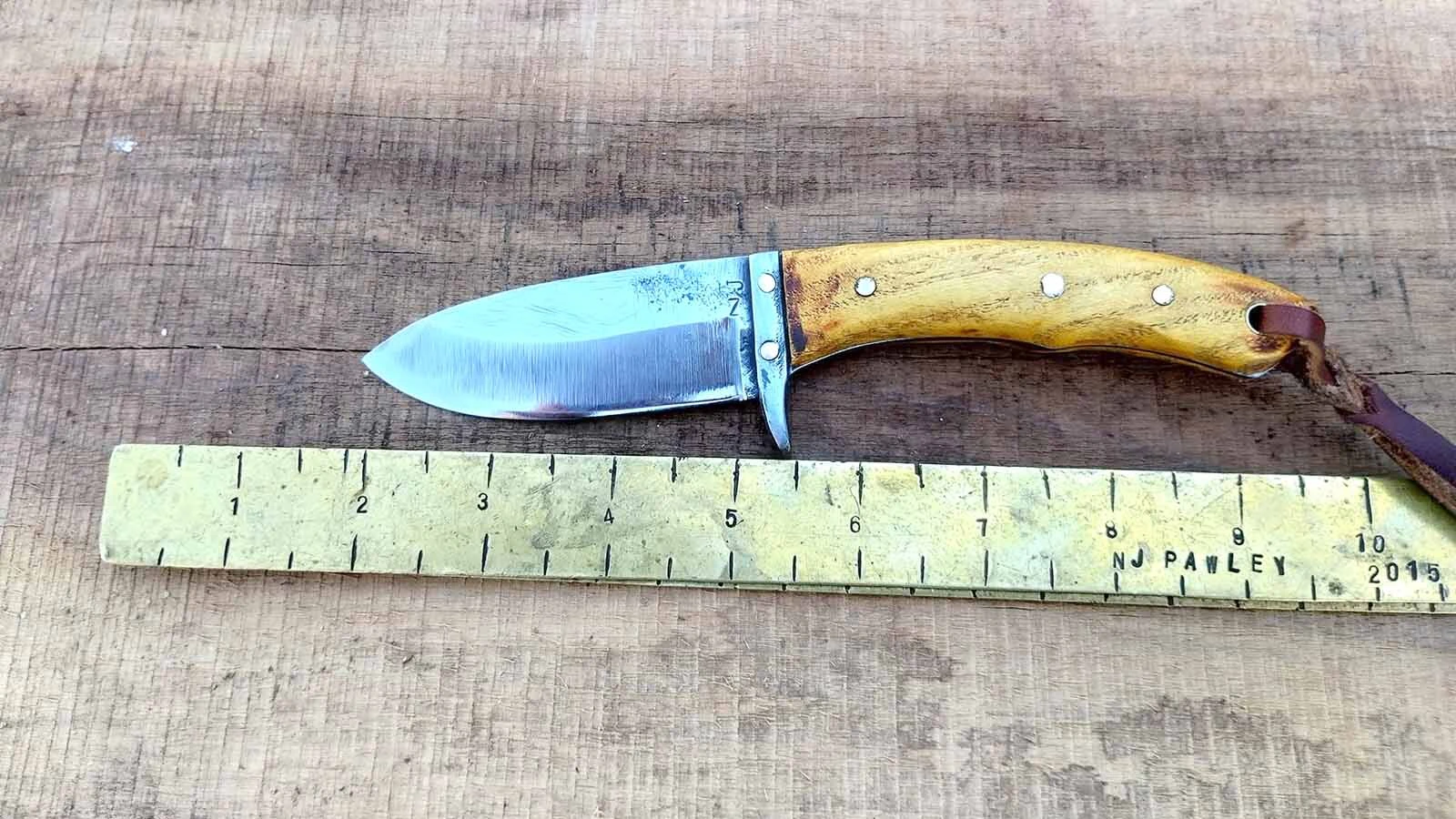
A knife made by NJ Pawley. (NJ Pawley) 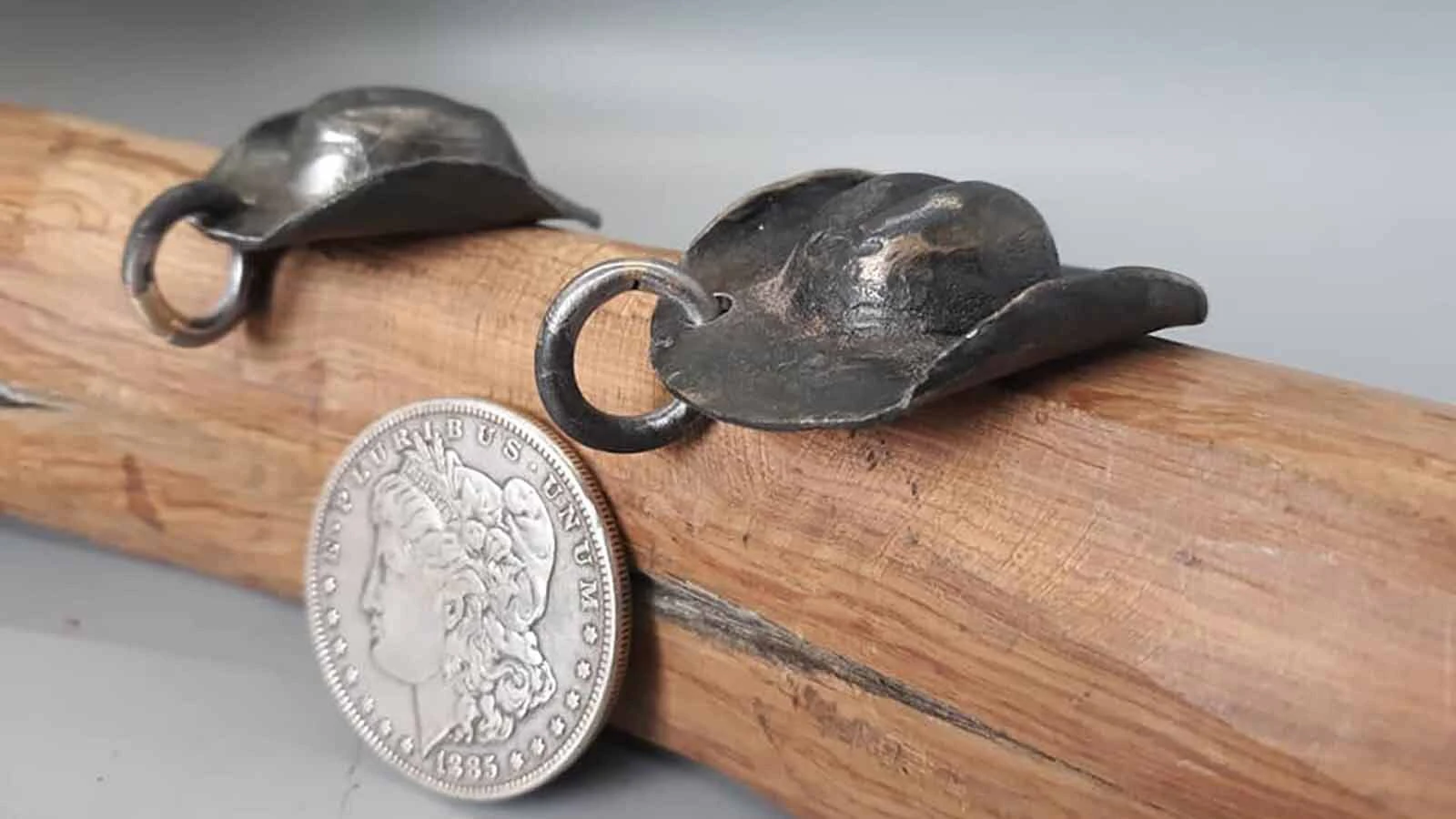
A pair of tiny cowboy hat charms. (NJ Pawley)
A Wyoming Cowboy In Park City
When Pawley was older, he followed a woman to Park City, a relationship he says, with a wry tone, lasted just “fifteen minutes.”
Eventually, Pawley met and married Olympic skier Picabo Street while there.
Park City was a major culture shock for a Wyoming cowboy.
“One of the very first house parties we went to was a ski-in, ski-out on top of the hill,” he said. “This was Lonesome Dove time. So I’m in cowboy boots, wild rag, waistcoat, cowboy hat. That was me every day.”
Park City might think of itself as a cowboy town, but Pawley saw things differently.
“It certainly isn’t, especially in wintertime,” he said. “That is all New York, East Coast skiers. It was weird.”
While in Park City, Pawley was tapped to co-host a public radio show called “Horse Talk.”
“We based it on ‘Car Talk,’” he said. “It was a call-in show about horses. And you can still go online and listen to some of those. It was syndicated for a couple of years.”
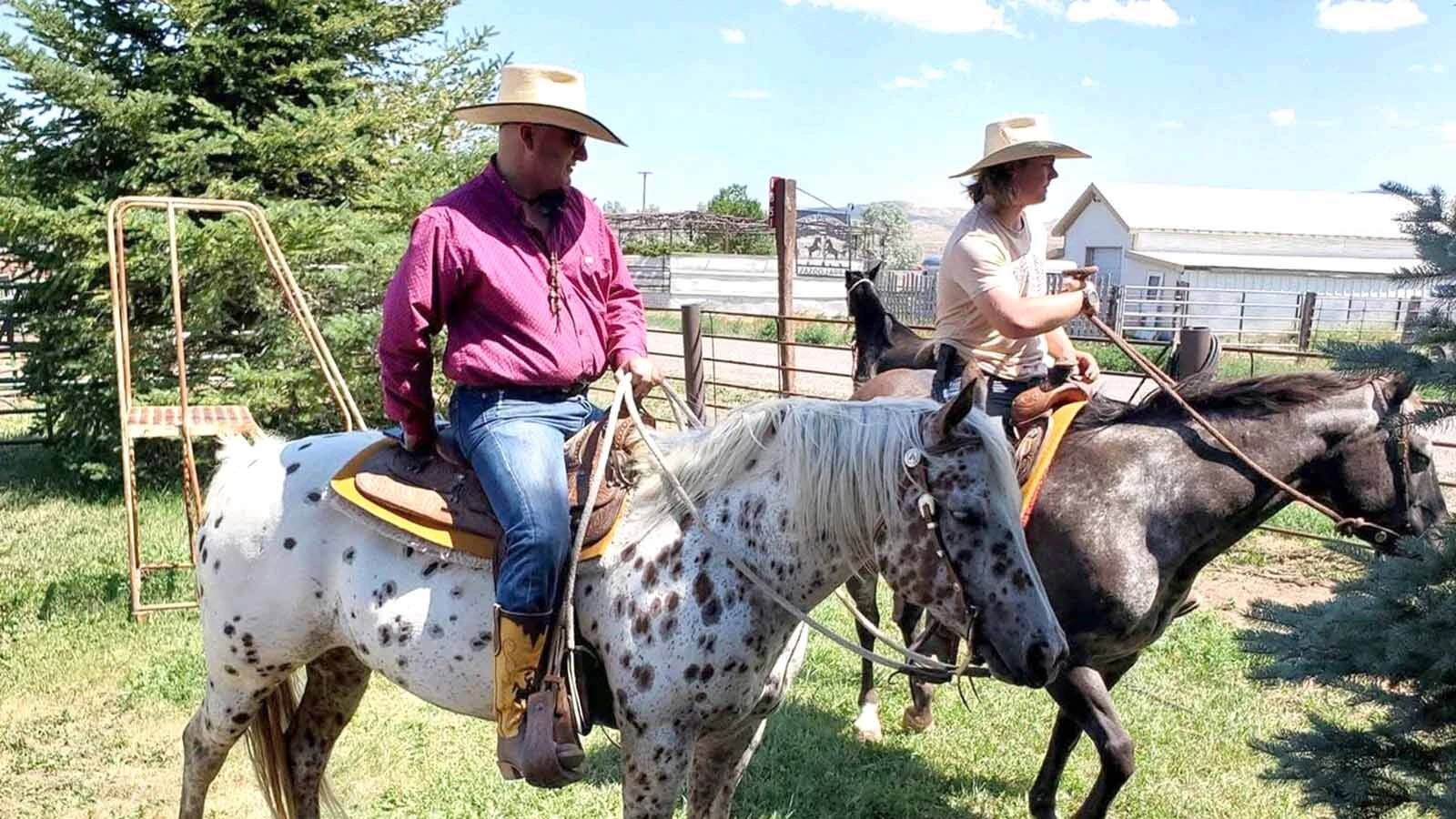
NJ Pawley enjoys some time on a horse. (NJ Pawley) 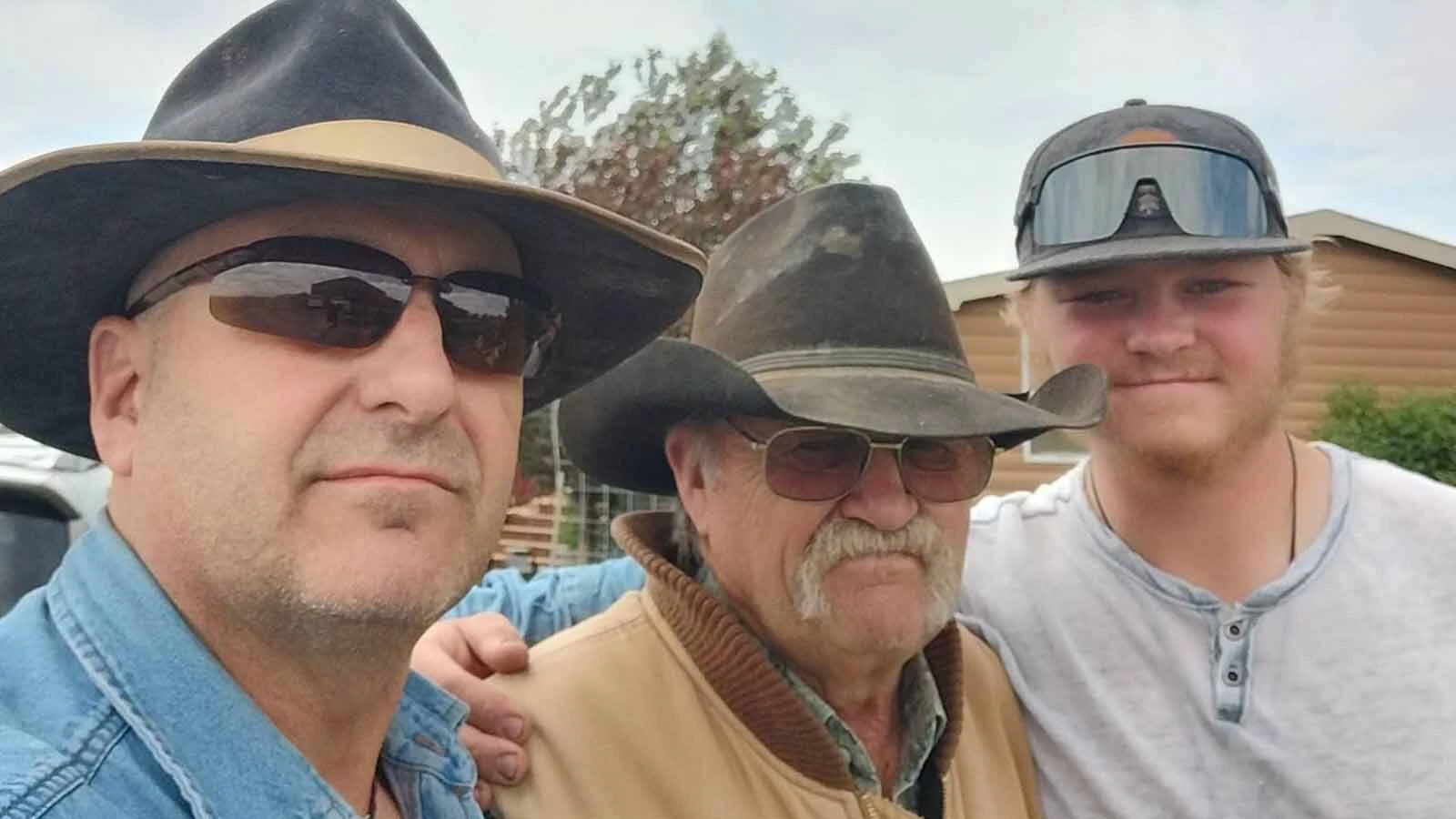
Cody blacksmith NJ Pawley with his dad and son. (NJ Pawley) 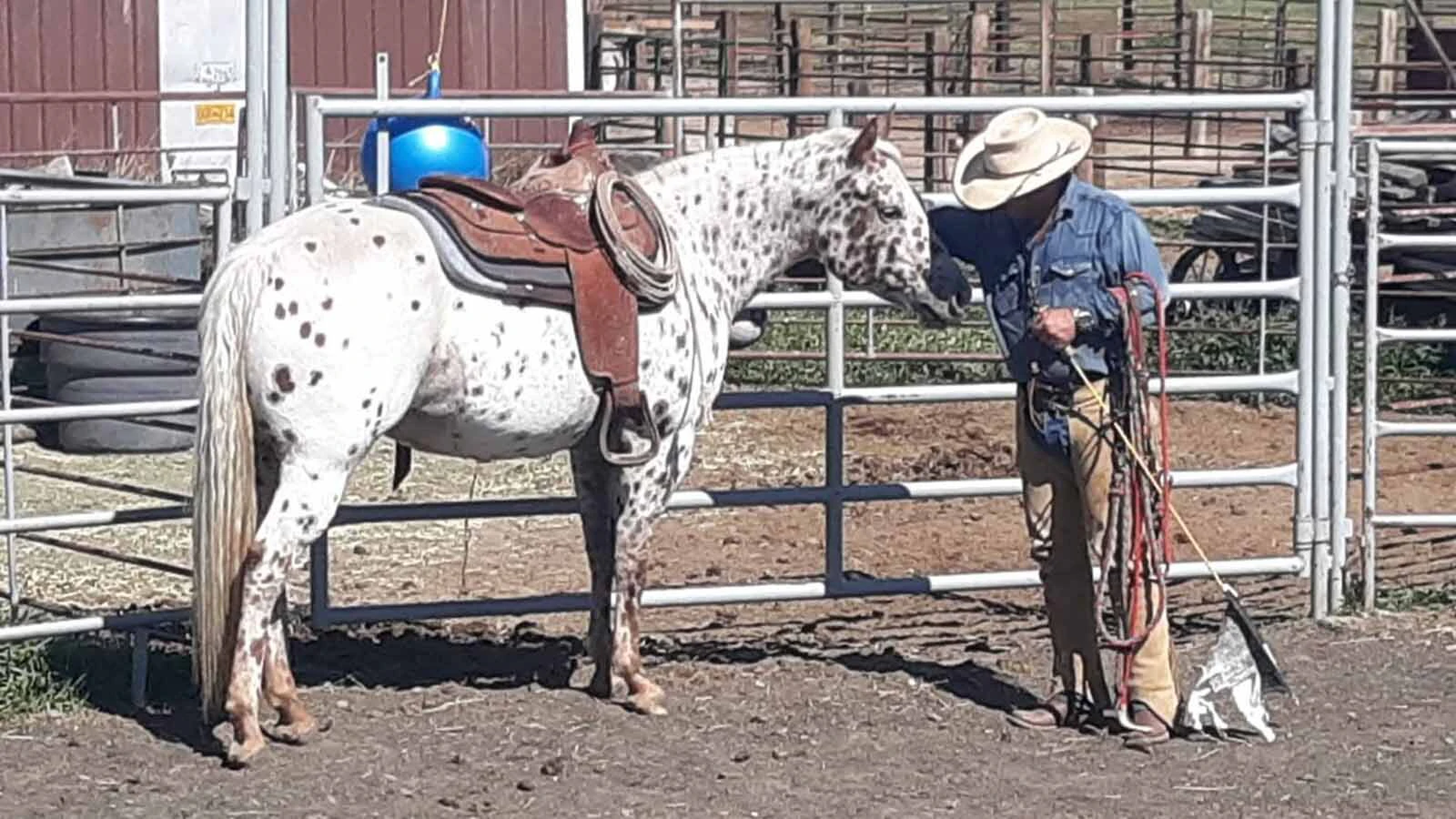
Cody blacksmith NJ Pawley with his horse, Starlee. (NJ Pawley) 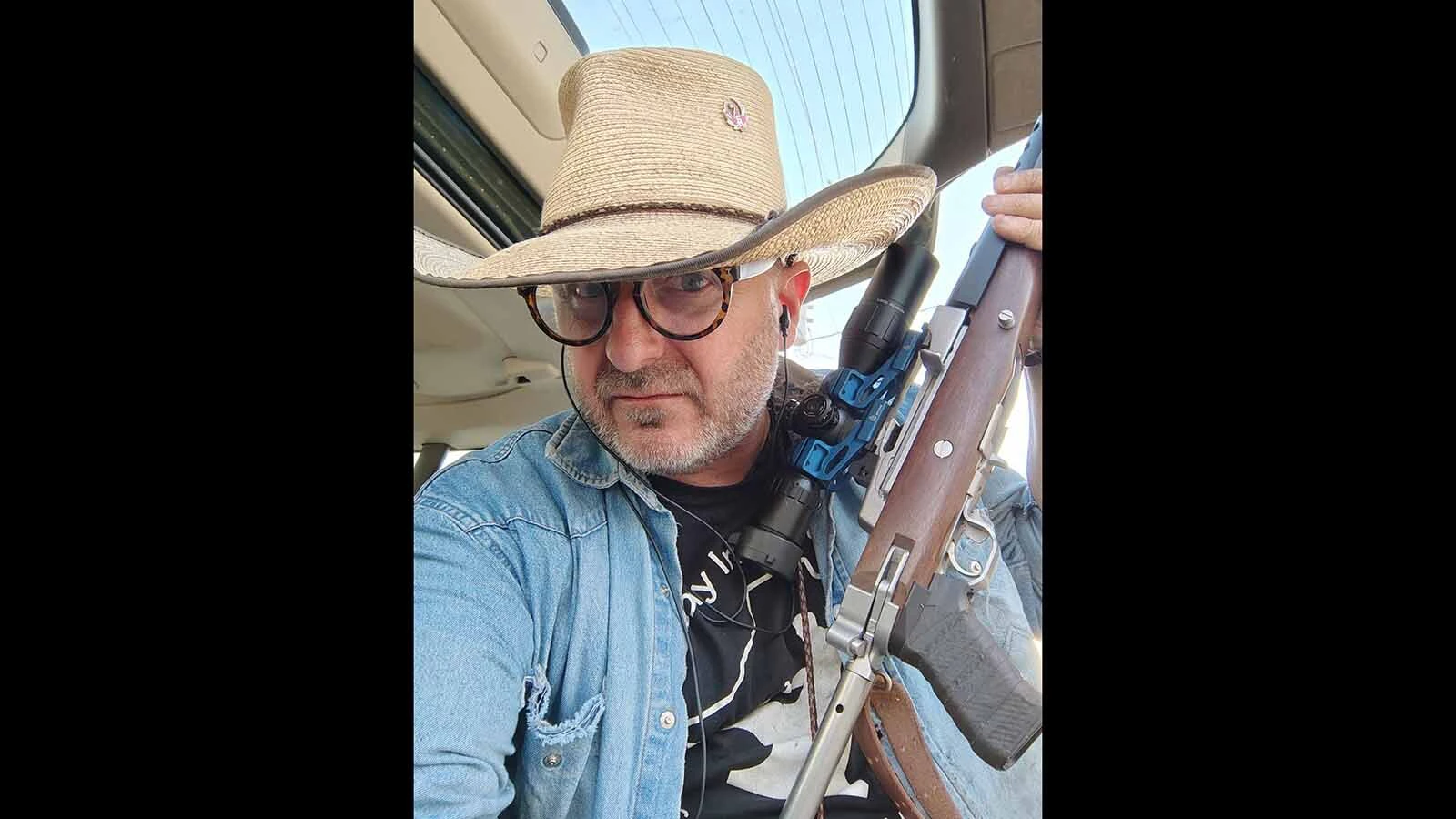
Cody blacksmith NJ Pawley with his gun. The hat has a pin he was given in 1995 when Bill Ruger owned the a2z Ranch. (NJ Pawley)
Enter Buck Brannaman
During that same time, Pawley also ran a hunter-jumper barn. One of his clients happened to be a buyer for the Sundance Catalog, part of Robert Redford’s brand.
He made Christmas presents one year for all of the clients, including the Sundance Catalog buyer.
“When she saw those, she was like, ‘Can you make 100 of those?’” Pawley said. “And I said, ‘Yeah, I can make 1,000. Next thing you know, I was making thousands of them. And I ended up riding some of Redford’s horses.”
He also rode in Buck Brannaman’s horse clinics during his Park City years. Brannaman was a consultant on Redford’s 1998 film, “The Horse Whisperer.”
“People actually paid me to ride their horses at Buck’s clinics,” Pawley said. “So I hauled horses clear out to Redmond, Oregon for that. I used to do at least two and sometimes three Buck Brannaman clinics a year.”
Pawley had long been following Brannaman’s work, ever since the horse trainer’s ranch roping book came out.
“It was a little pamphlet about doing all those fancy rope tricks with the big long ropes,” Pawley said. “Which was kind of an oddity in this country, because everyone used a short rope here.”
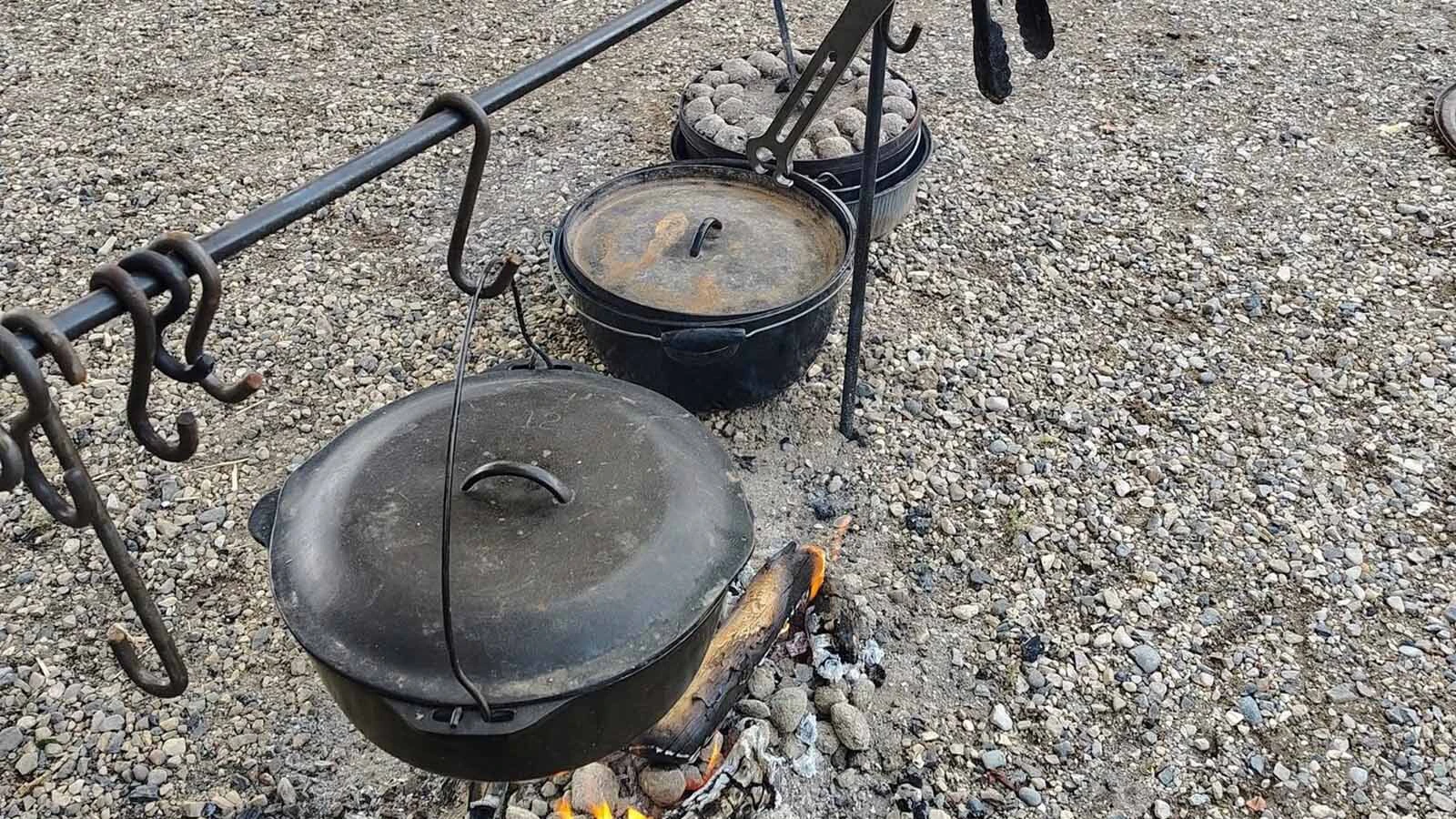
(NJ Pawley) 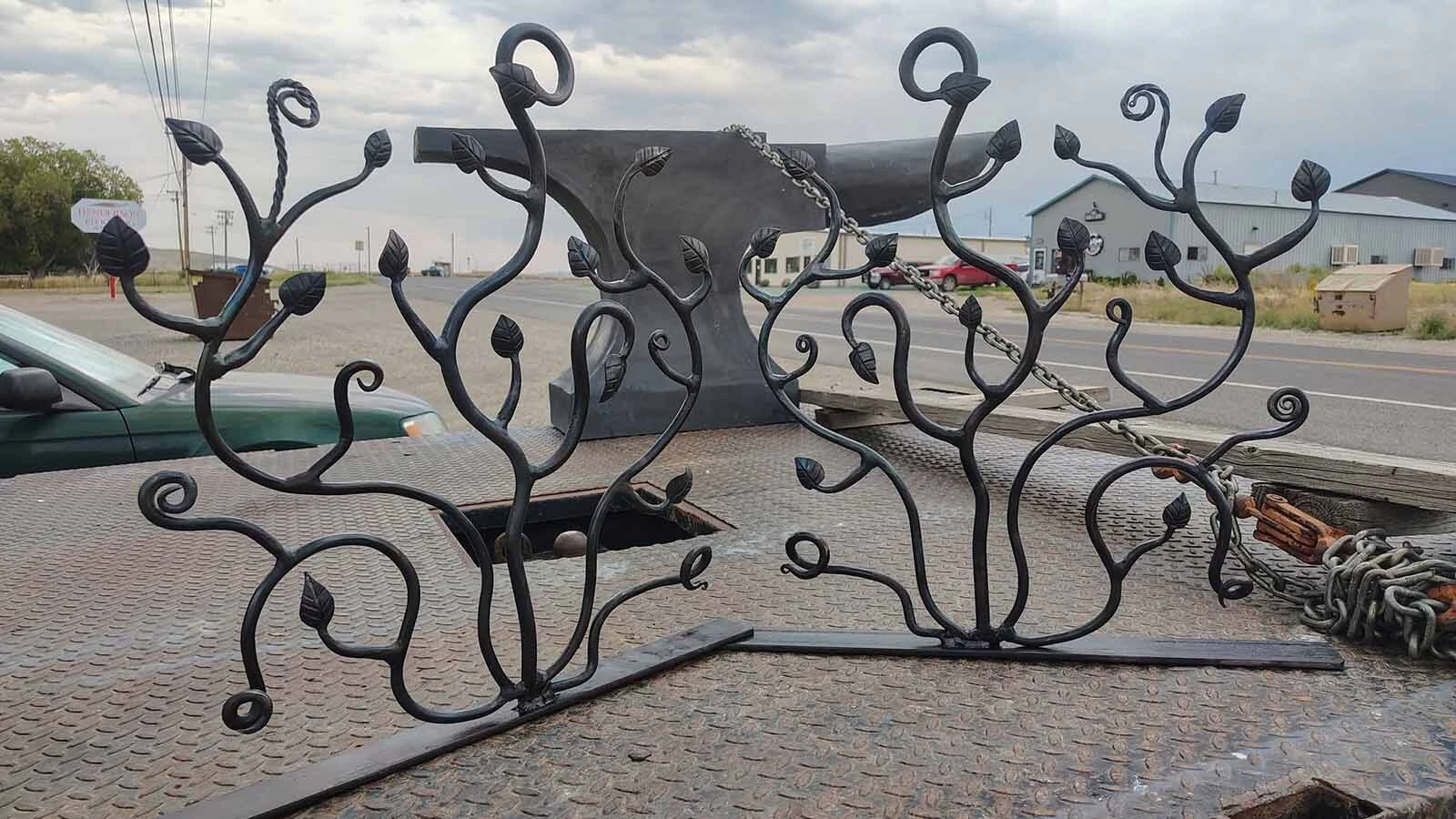
(NJ Pawley) 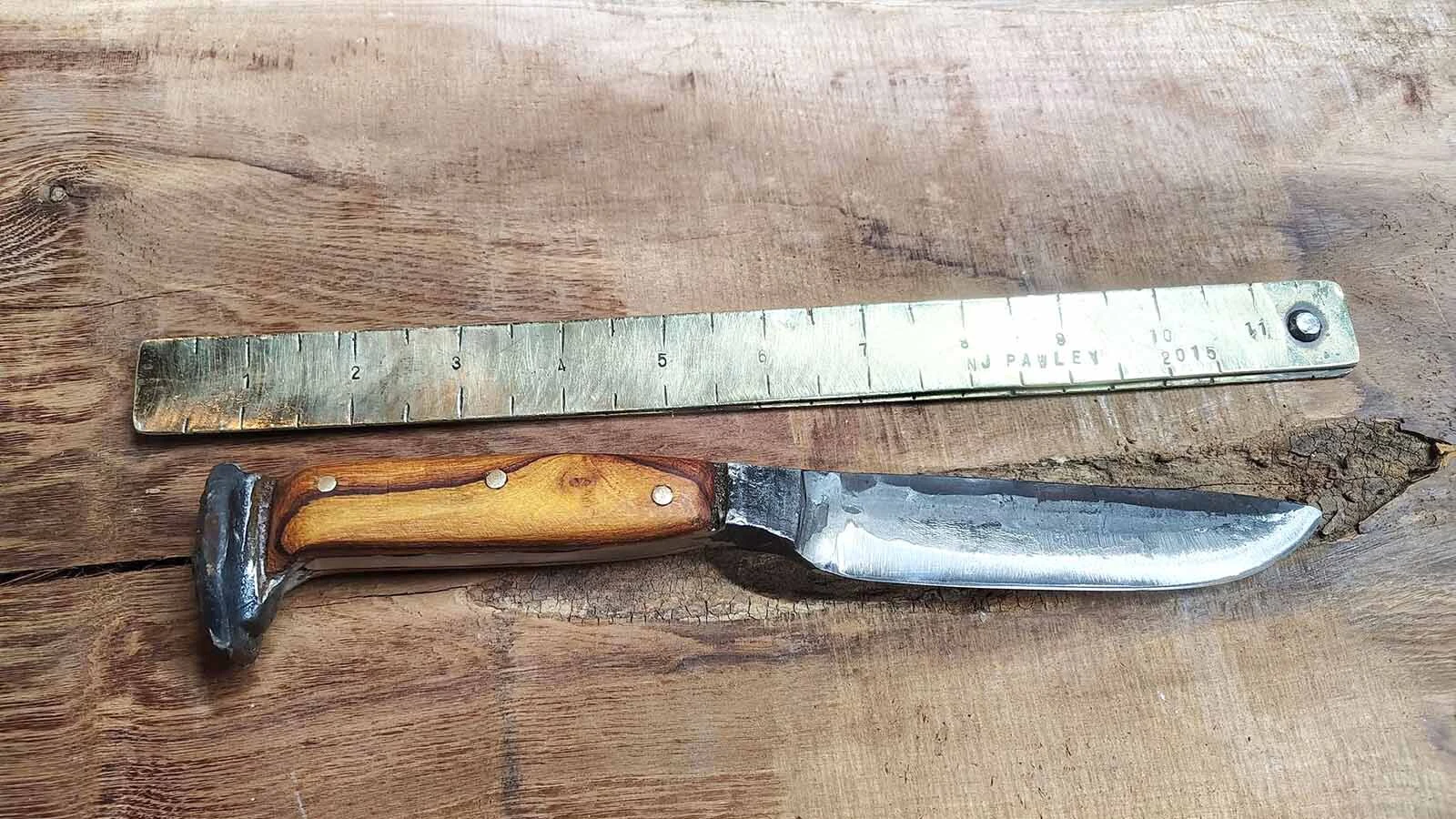
One of NJ Pawley's knives. (NJ Pawley) 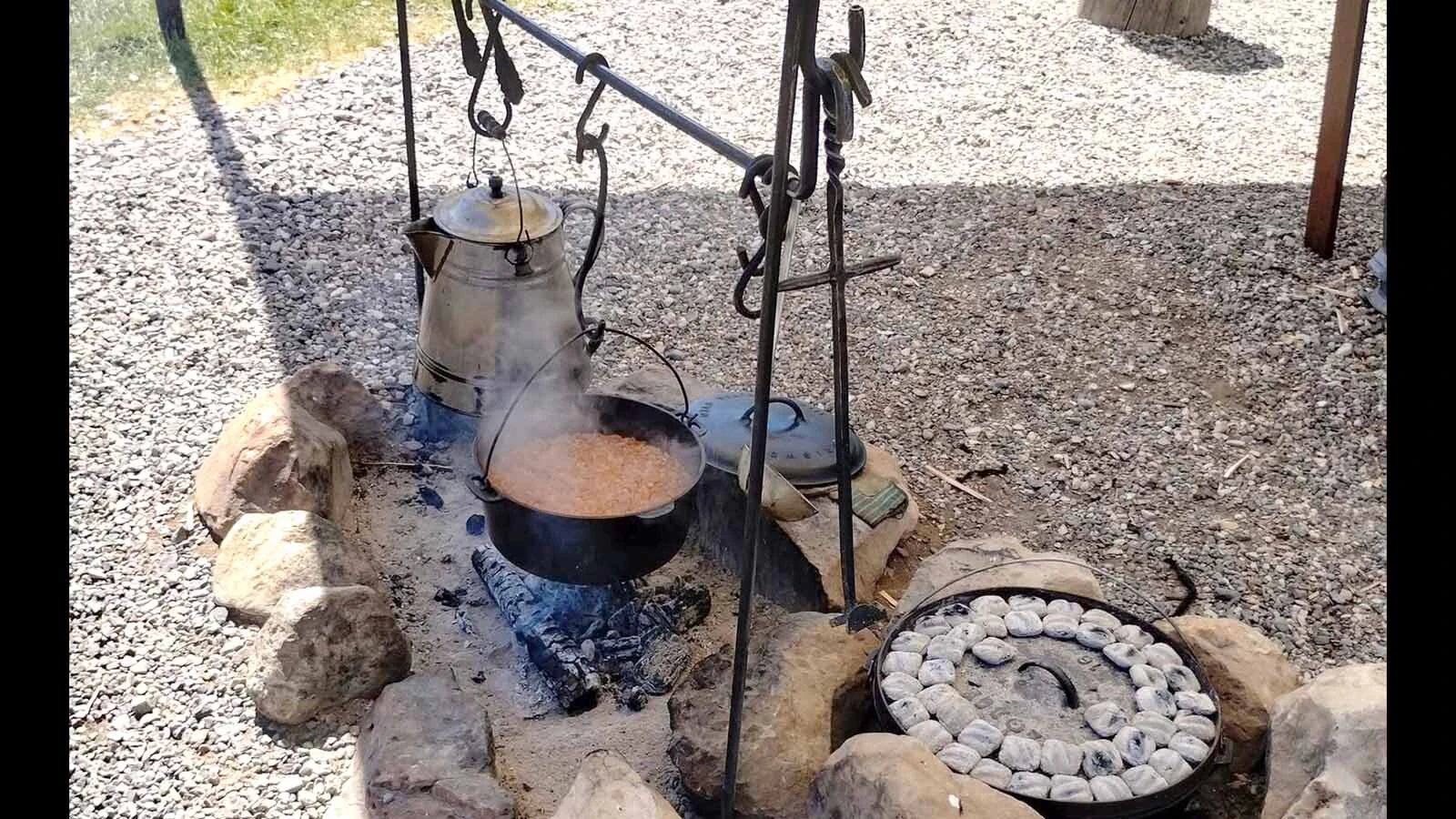
(NJ Pawley) 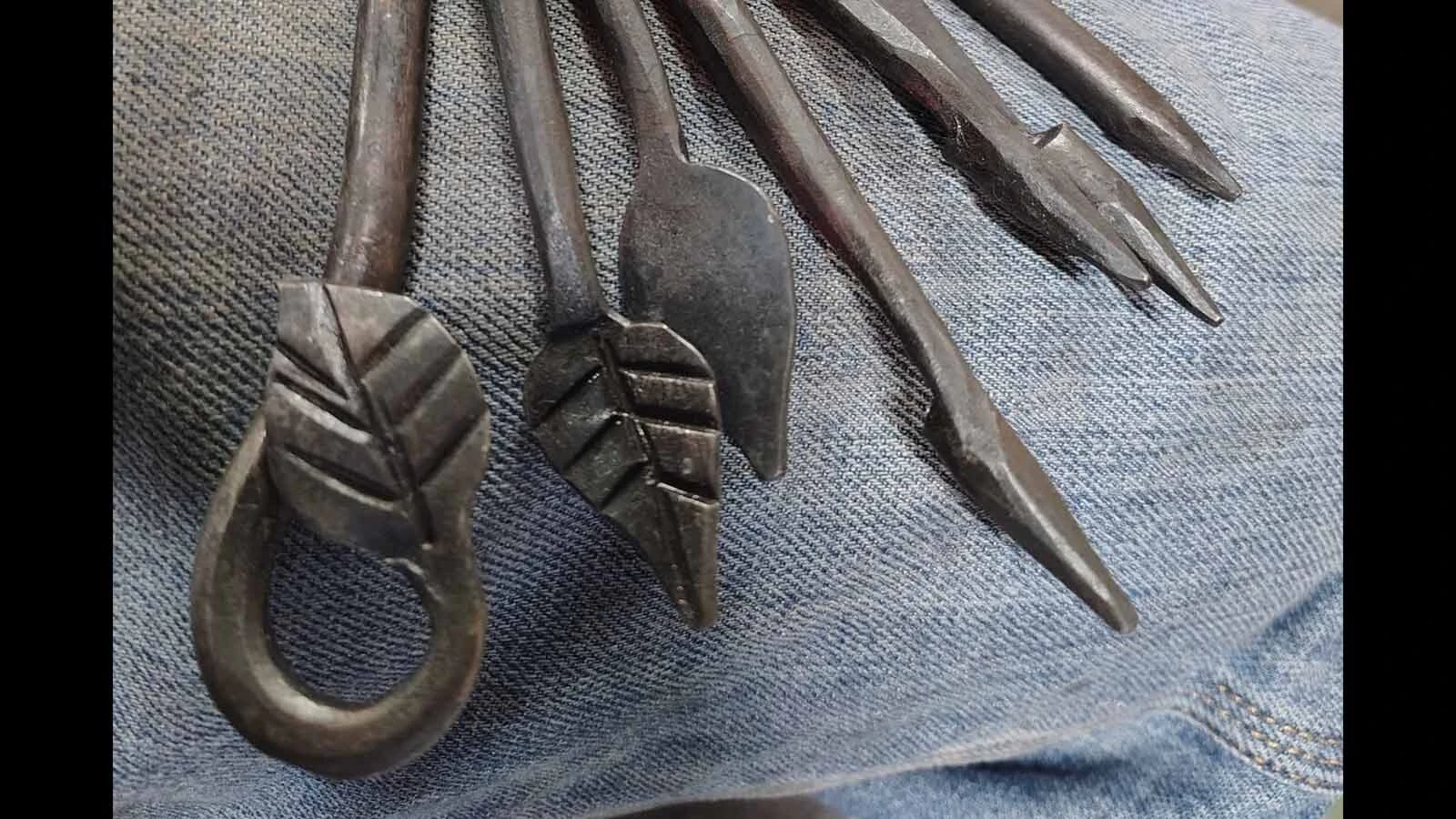
(NJ Pawley)
Still Dreaming About Horses
The 2008 financial crash and his father’s stroke brought Pawley back home to Cody, where blacksmithing became his full-time work.
When he returned to Wyoming, he decided to quit shoeing horses altogether and even sold his shoeing tools as insurance against being talked back into it.
“That’s the only way you’re going to stop doing it,” he said.
But horses aren’t done with him yet, it seems. He posted a few photos of himself riding on Facebook recently, which prompted a wave of calls from people hoping he was back training horses again.
He is not, at least not full time. He’s just doing a few horses for family and close friends.
His advice on training horses is simple.
“It’s one word: time,” he said. “Quality time spent with your horses. That’s what makes them good.”
Horses, Pawley acknowledged, do still have a hold on him, as they have since he was old enough to climb on top of one and ride.
“I still dream about horses,” he said. “There were times in my life that if I didn’t have horses to take care of, I would not be here.”
After his breakup with Olympic skier Picabo Street, he found himself in a “deep, dark place.”
“If I hadn’t heard those horses in the morning looking for breakfast, I wouldn’t have gotten up,” he said.
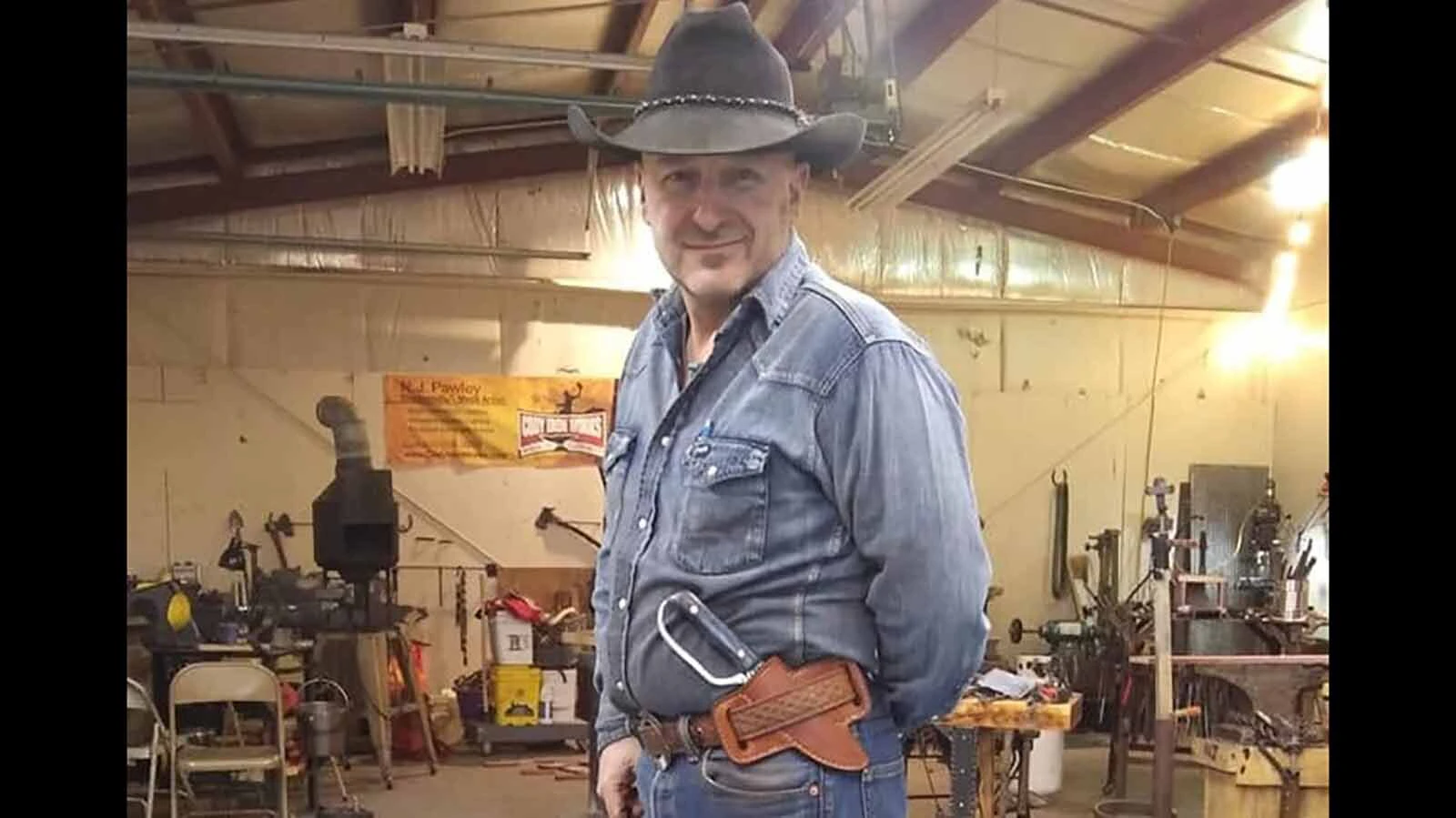
Blacksmith NJ Pawley in his blacksmith shop in Cody. (NJ Pawley) 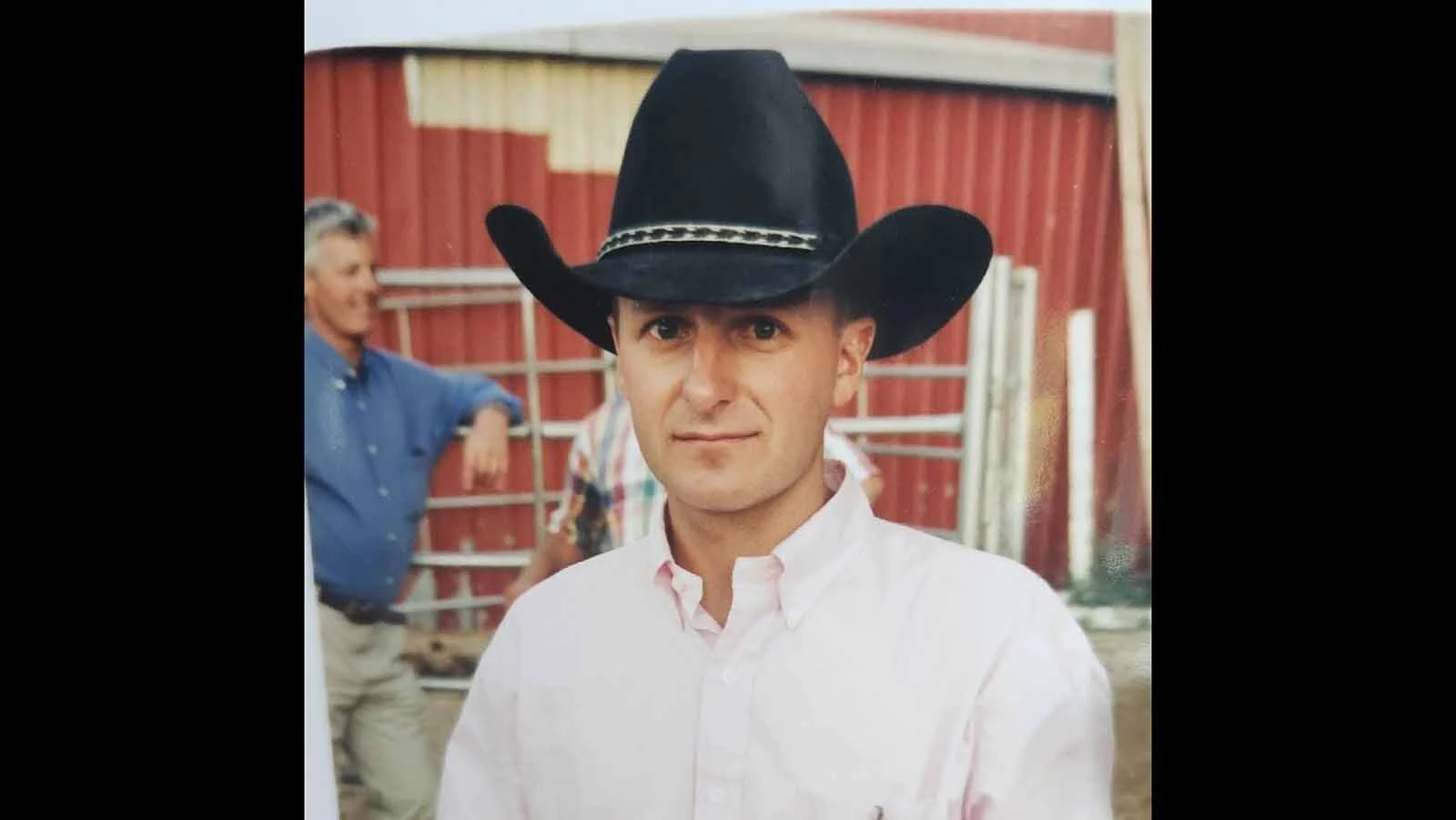
Cody blacksmith NJ Pawley in 2001. (NJ Pawley) 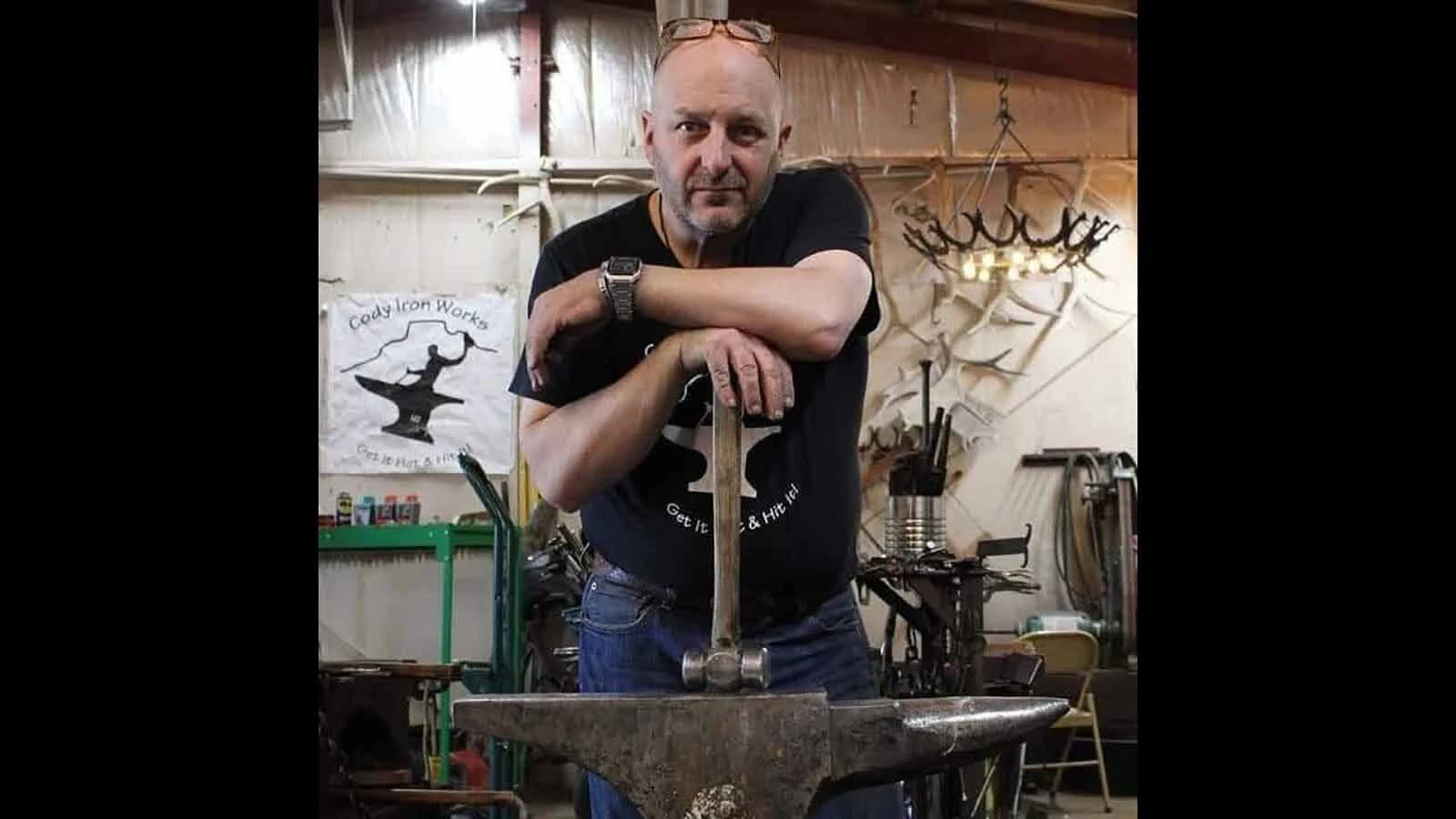
NJ Pawley, blacksmith. (NJ Pawley) 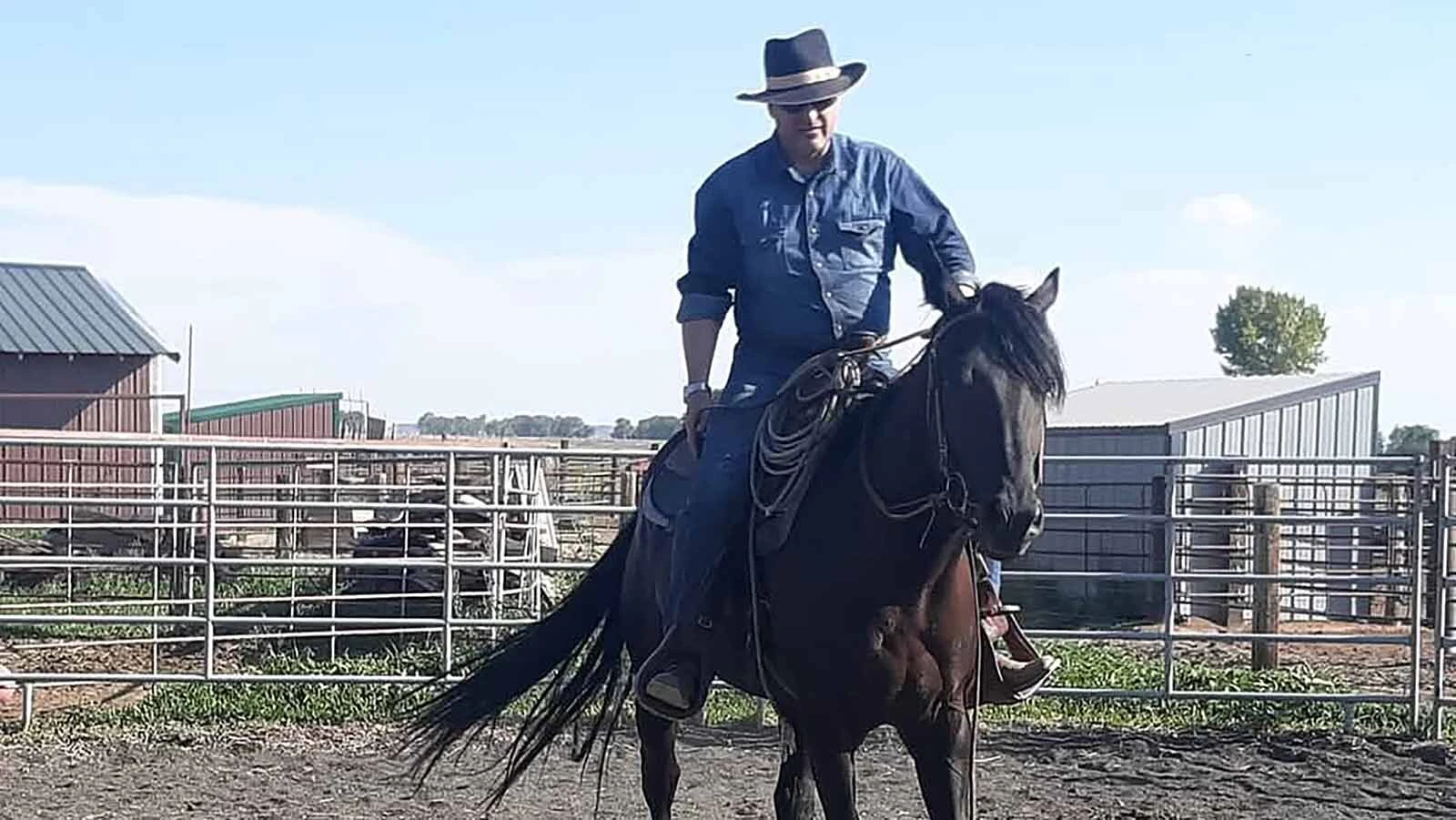
Cody blacksmith NJ Pawley riding a horse. (NJ Pawley)
Cowboys Have Horses
Working the colts gives Pawley another reason to spend time with his dad, so he’s not really fighting it.
“My father is a cross between Robert Redford and Santa Claus,” Pawley said. “When he was a young man, he looked like Robert Redford, and he is jolly and happy like Santa Claus. But a tougher man you’ll never meet.”
Pawley has seen his dad ride horses a professional saddle bronc rider couldn’t have stayed on.
“And I’ve watched him ride them and then step off them,” he added. “In a stock saddle in the middle of a cut-off barley field.”
In a rodeo arena, Pawley said a cowboy is ready when he comes out of the chute for the horse to buck. It’s a controlled environment with pickup men to help.
“It’s a lot different out there on some 3-year-old that weighs 1,200 pounds in the middle of a stubble field,” he said. “I’ve seen some pretty good wrecks.”
His father’s advice, Pawley added, was always the same when times were tough, whether it was a bucking-horse wreck or careening down the washboard roads of life.
“It’s just cowboy up,” Pawley said. “That was well before anybody ever put it on a T-shirt.”
One reason Pawley likes horses is that they never lie. If they like you, he said, you’ll know it. And if they do not, you’ll know that, too.
“There’s just something about a horse, man,” he said.
It all goes back to what Pawley’s father told him a few days earlier. Cowboys have horses.
That’s just the way it is when you’re a Wyoming cowboy.
Contact Renee Jean at renee@cowboystatedaily.com
Renée Jean can be reached at renee@cowboystatedaily.com.


