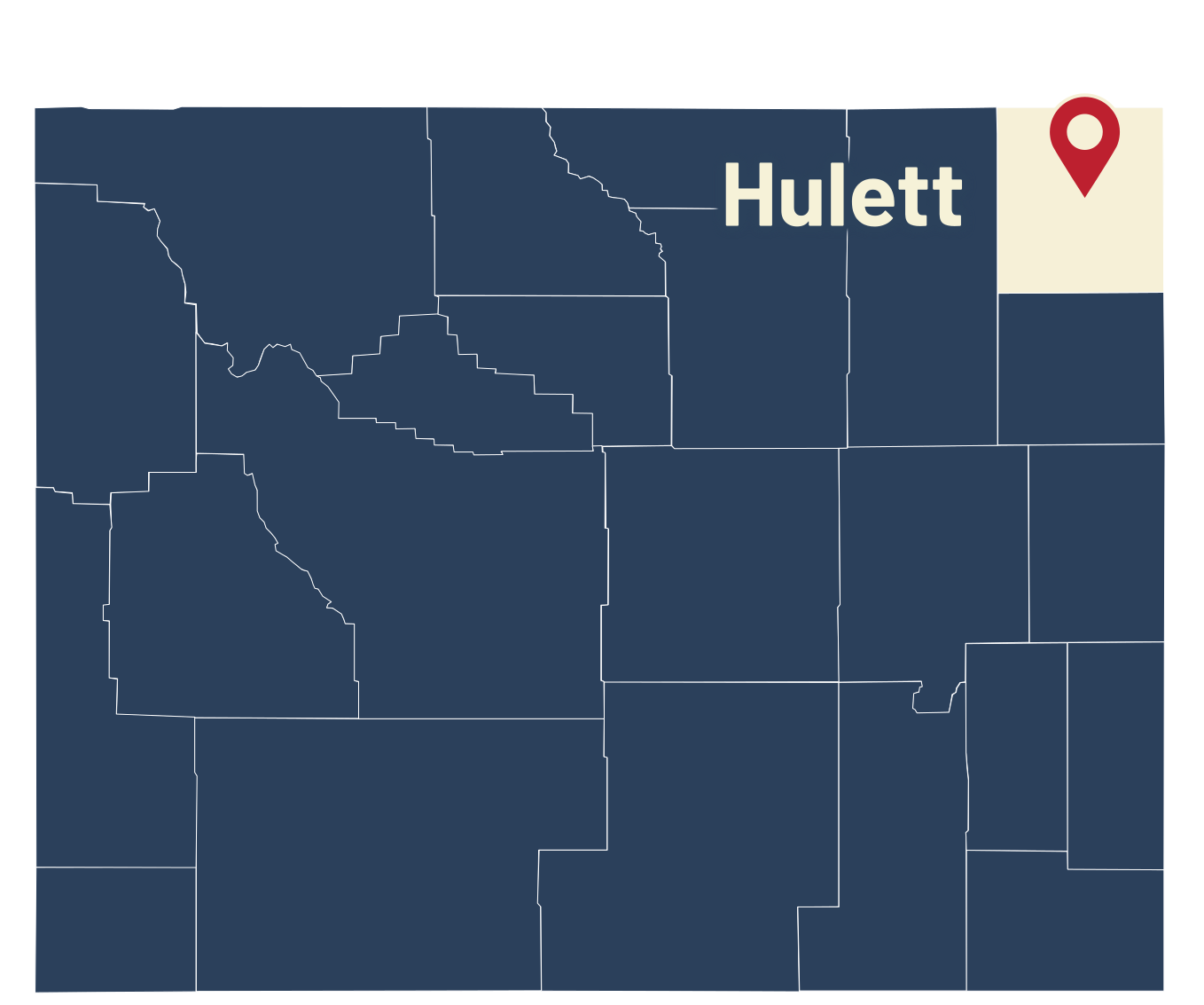
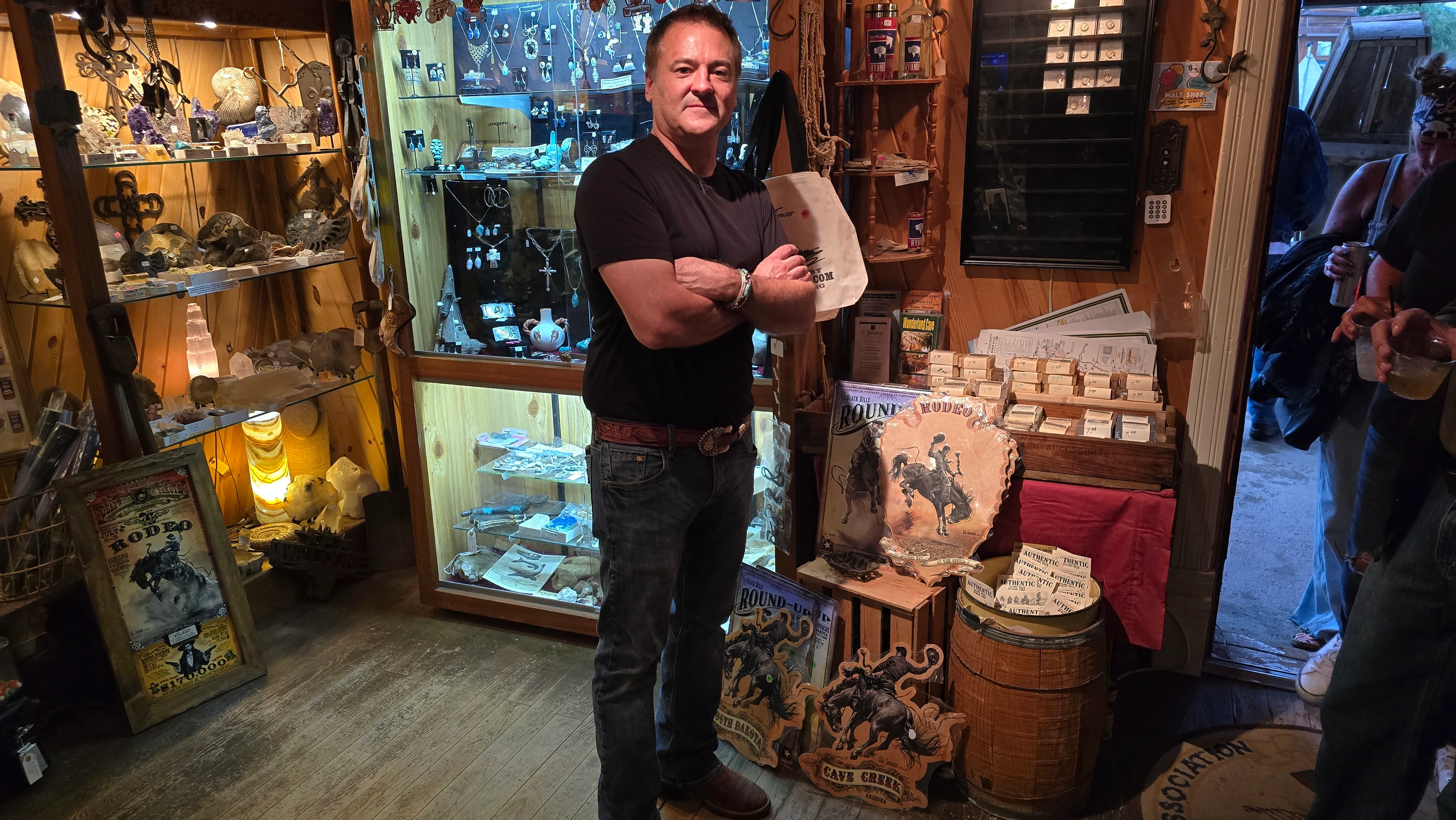
The Wild West of Artificial Intelligence has found its way into the Western art world, says prominent Western artist Bob Coronato, who recently spotted what he believes is an example of a new type of AI-assisted art forgery in a high-dollar private art collection.
The scheme, as the Hulett artist describes it, works like this: An AI-generated image is painted by a third party overseas, lightly finished and signed by the named artist, then sold as an original work.
Coronato wouldn’t name the artist or the sales price, but said the painting he suspects was produced this way was sold for a high-dollar amount to an individual who believed he was getting something original.
What tipped Coronato off, he said, were Western details that didn’t fit the painting’s setting, along with marks he associates with painting “sweatshops” in the Philippines.
He said he believes the artist made the image with a 99-cent AI app, sent it overseas to be painted, then set the canvas on an easel to videotape himself adding a few highlights before signing it.
It’s Easy, Even If You Don’t Know How
Coronato has demonstrated the idea to a few friends and they’re always shocked by just how easy it is.
“You don’t even have to type it in. You just tell it what you want it to show,” he said. “Maybe you don’t understand or know anything about it, but you know there’s a market there.
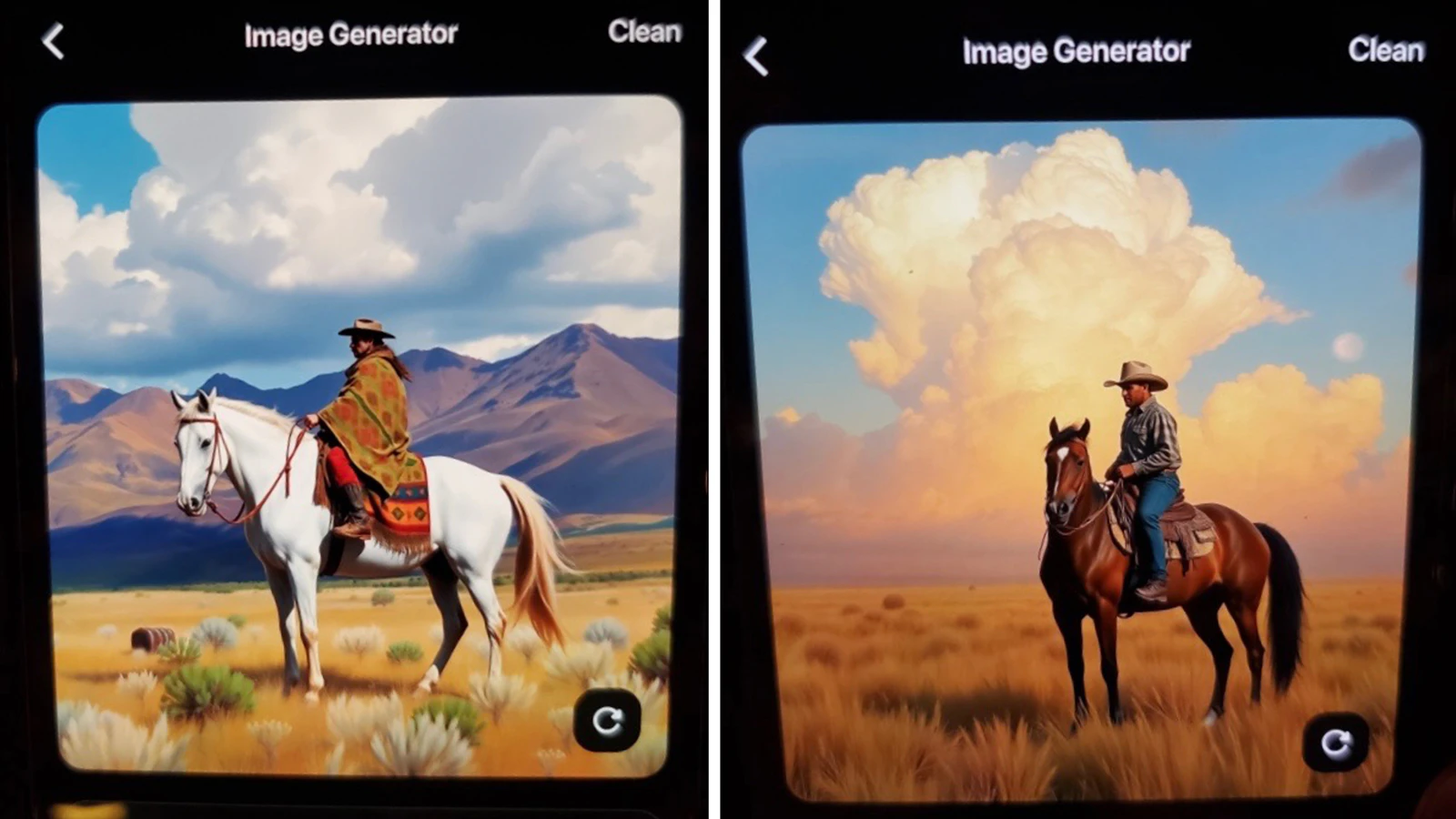
"All you say is, ‘Big clouds, sunset, prairie, horse, Indian,’ and boom, there’s a painting. It takes like five minutes to generate 35 paintings.”
Most of the images will look good, if not great, Coronato said, because AI will go looking for the five best examples closest to the desired image.
“It grabs the best artworks, figures out the best lighting and the best subject matter,” he said. “And then it basically collages that into a new item and everyone goes ‘Oh wow, that’s amazing.’”
Once the artist chooses images, they can be shipped electronically to a sweatshop in Asia, which will produce the paintings, then ship the finished works back.
“Then you just film yourself putting highlights on them and post them online, and everyone thinks you painted them,” Coronato said. “It’s misleading the people who are viewing that movie of you painting it, thinking that you painted the whole thing, when really, you just added the highlights.”
The art world is anything but ready for this, Coronato added.
“There’s a whole wave of this coming that the old and ignorant art dealers aren’t ready for,” he said. “It’s already out there. It’s already happening. And it’s going to flood the market with, I don’t know if you want to call it fraud, but it is a kind of fraud.”
The Telltale Signs
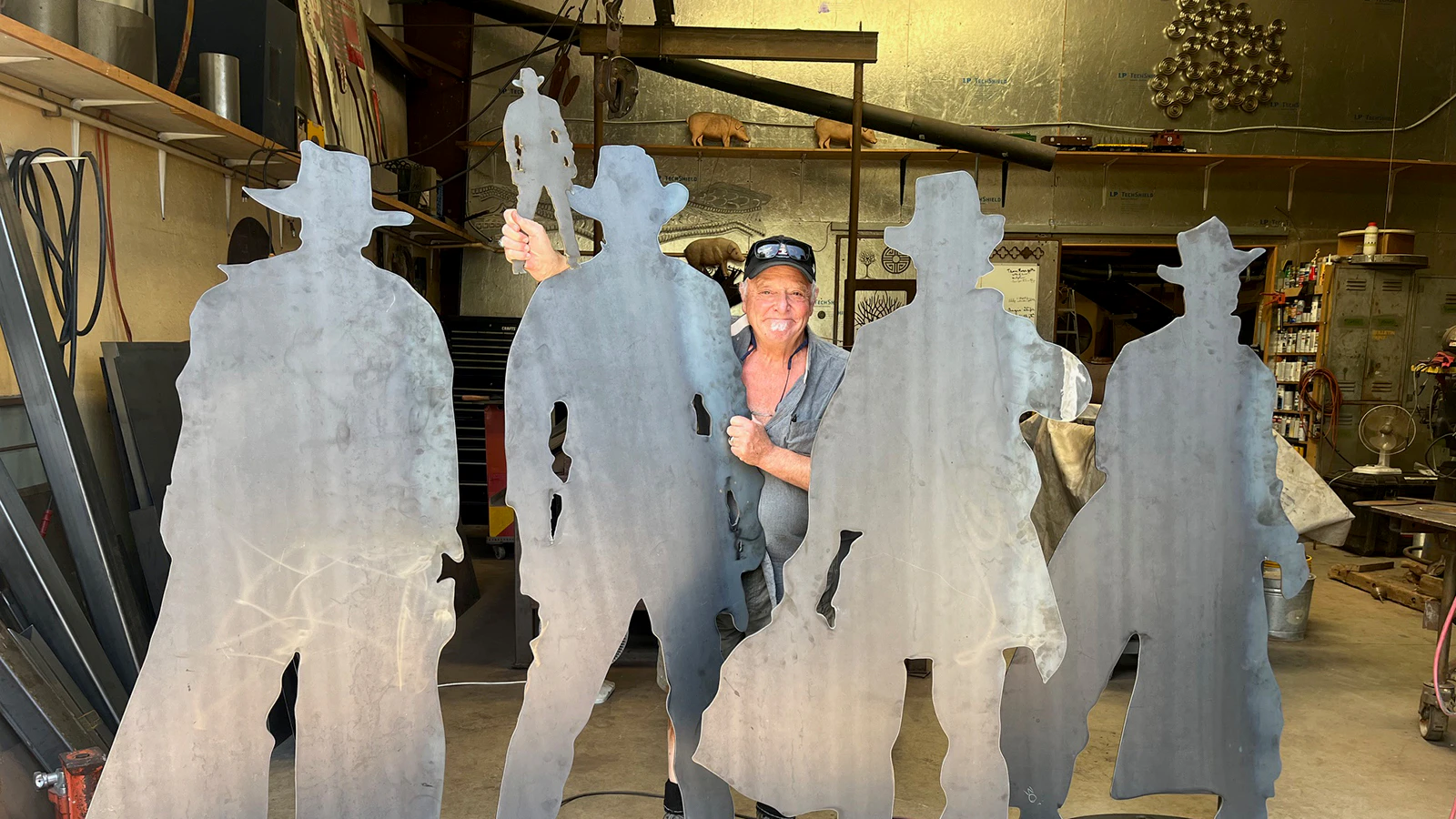
Coronato has made a living for more than 30 years finding rare objects, which has given him the experience to spot fakes.
In the case of the AI forgery passed off as an original, a couple of things stood out.
AI might produce strong compositions, but it struggles to keep anachronistic things out of a setting.
“AI will grab a thoroughbred instead of a ranch horse,” Coronato said. “It will grab a show jumper. Or maybe it has a cowboy wearing woolies in the middle of the summer in an area they never wore woolies in a time period they never had them.
"AI doesn’t know any of that, because it doesn’t know anything. It can only steal. It can’t actually produce something.”
Paintings produced in Asia, meanwhile, have their own set of tells.
“If you’ve ever seen production-line paintings that are done overseas, they have a certain look to them,” Coronato said. “But you have to have seen one to know one. I’ve seen hundreds of them.”
Art fraud, Coronato added, is nothing new. It’s been a constant battle for him through the decades.
AI is just adding a new wrinkle.
“I actually was contacted by a firm in the UK who represents me because there was so much stuff being stolen of mine in Europe, they represent me for free,” he said. “So we won 30-plus lawsuits last year alone.”
When Coronato went to the National Finals Rodeo in Las Vegas recently, he and his brother handed out 35 letters to people who were using his artwork without permission.
“Some of it was AI-ed,” Coronato said. “Some of it was the person didn’t know they were stealing it because they downloaded things on Etsy and the person who they got it from stole it. So I have to battle it all the time.”
Other Artists React
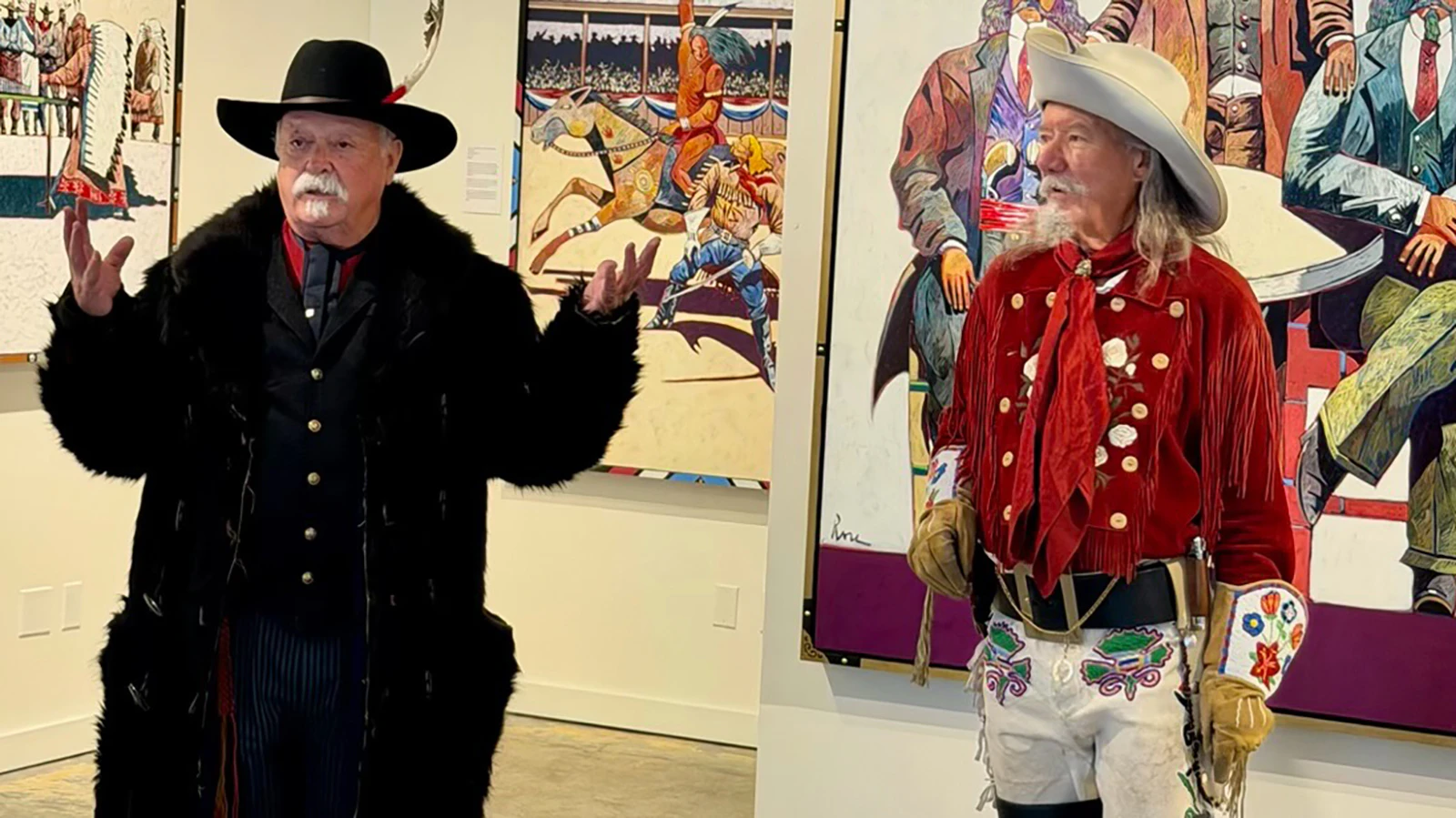
Thom Ross, a Wyoming artist whose painting Wright-Patrol is in the Wyoming State Museum, was gobsmacked once the scheme was explained to him. It was not a use of AI he’s seen, nor one he had thought about.
“Oh my God,” he said. “This is a nightmare.”
Ross said he does know of some popular commercial artists who hire other artists to do paintings for them. In fact, when he was young, he worked for one in a commercial art studio.
The apprentice painters would lay down base layers, replicate specific textures, or execute background elements, which helped his employer keep up with commercial demand.
“If you buy one of those paintings, the brush stroke you see is not necessarily done by the guy whose signature is on the canvas,” he said. “I knew a gal who worked for one of these guys and she would paint a smiley and he would yell at her and say, ‘Get that out of there!’”
Still, the images were at least conceived by the artist, Ross said, and the guy himself could paint — and sometimes did. Also, the arrangement was not unknown to the buyers.
“If they’re painting Westerns as the theme, they should be dealt with in a Western theme,” Ross said with a chuckle. “Such as hang them. Let’s just hang them.”
Not All Artists Are Worried
Other artists were less alarmed.
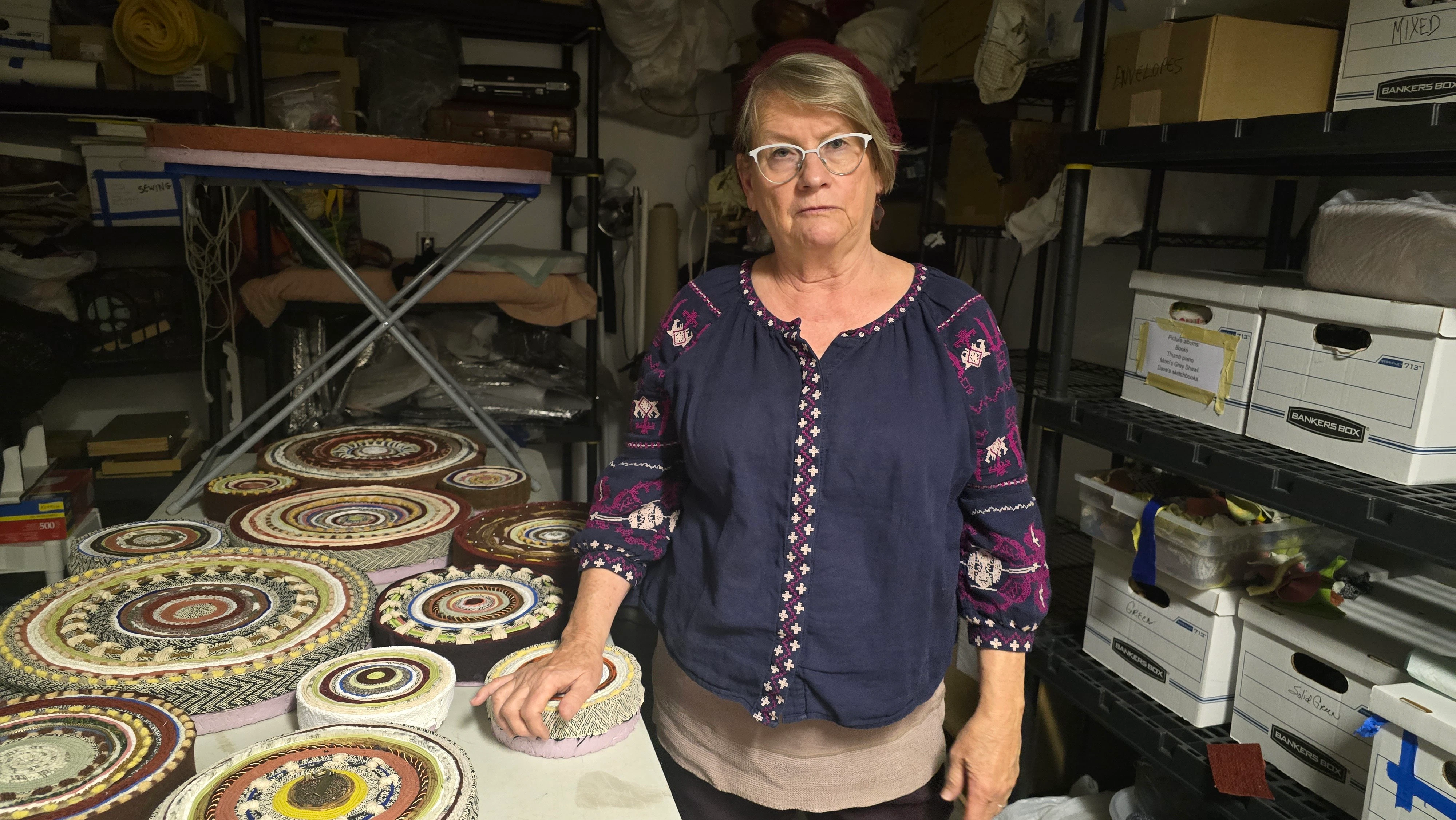
“To me, anything powerful can be used for good or bad,” Cheyenne artist Georgia Roswell told Cowboy State Daily. “We have to come up with ways to protect ourselves from the bad and find the ways to use that kind of intelligence for the good.”
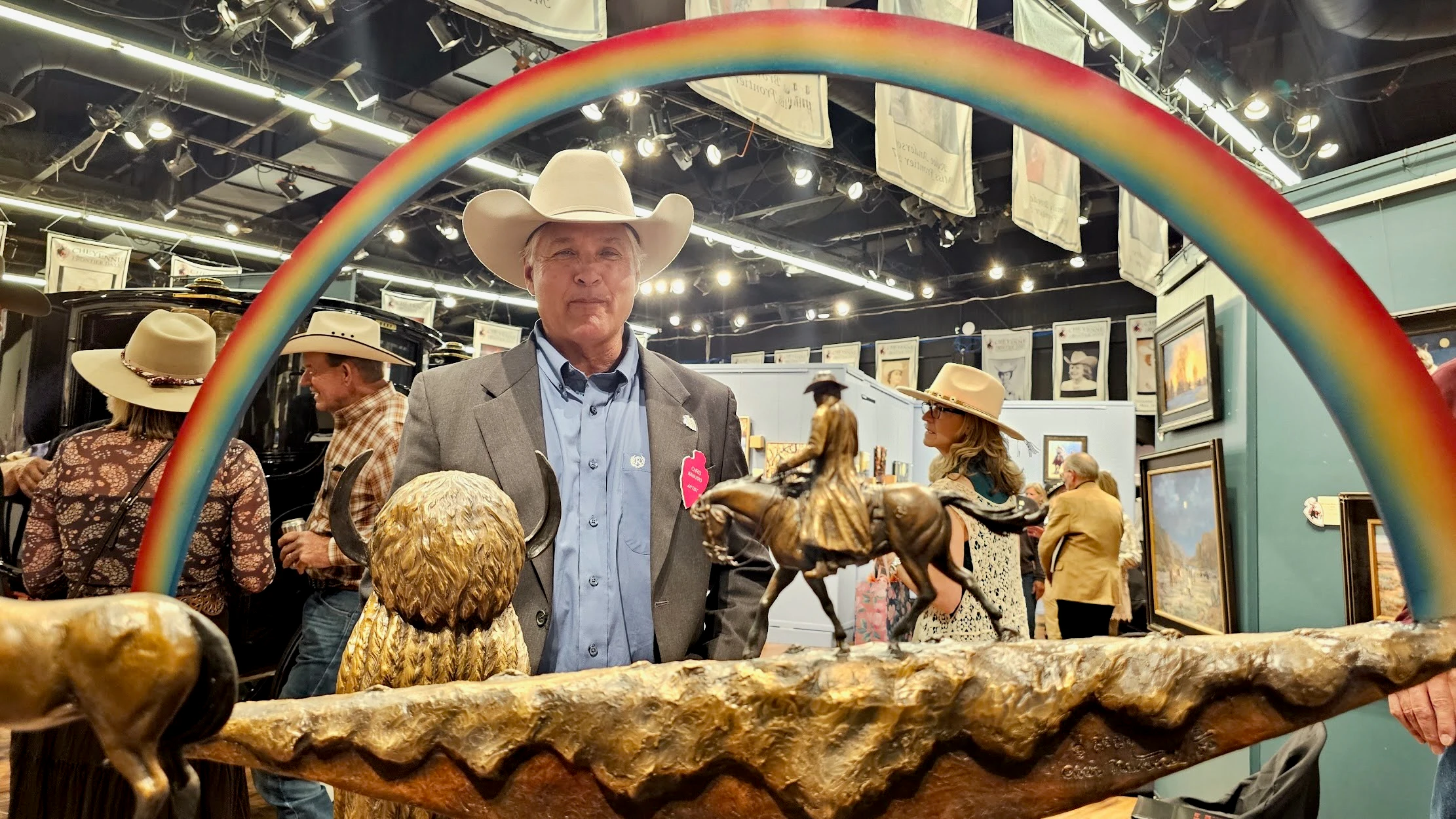
It’s human nature to take the easy road, Casper sculptor Chris Navarro told Cowboy State Daily.
“If you’re going to make AI art, you gotta say it’s AI art,” he said. “You shouldn’t say it’s original, in my opinion.”
That said, he hasn’t really worried about it much — though he has taken note of some Asian sweatshops ripping off his sculptures.
“There’s a website in China that’s got some of my stuff for sale,” he said. “Me and a bunch of other artists. They don’t have any copyright laws, and it’s not worth hassling and going overseas.”
Navarro said he knew a sculptor who tried going after them, and things didn’t go so well.
“He spent a bunch of money, got an attorney, and nothing happened,” Navarro said. “I try not to worry about things you have no control over.”
Casper artist Travis Glasgow, who creates digital art using photographs he’s superimposed one over the other, said he believes most of the artists who try such tactics will produce inferior art.
“Real art is even more rare,” he said. “There’s all this other crap out there. So I see it as actually adding value to real artists.”
Some Western Art Is Worth Millions
The financial stakes are high for Wyoming art galleries and auctions, where premier operations are lately pulling in gobs of money from single-day sales.
The recent 45th annual Buffalo Bill Art Show and Sale in Cody, for example, raised more than $1 million with 107 pieces that included both paintings and sculptures, many going for five figures.
Collectors also recently flocked to Jackson for the Rise of the Western Lights solo exhibition and auction, snapping up artwork as luxury investments left and right.
Some bids for individual paintings topped $1 million and the overall auction sold $9.3 million worth of art in one night, according to organizers.
Harvey Deselms, who owns Deselms Fine Art & Custom Framing in Cheyenne, will be heading to an art show with six-figure paintings soon. He said knowing about this emerging tactic means he’ll be looking at those paintings more closely this year.
“I haven’t seen anything yet that screams AI that’s come through my gallery,” he said. “But if someone is having AI do everything and then just painting a little bit of some stuff on it, that’s ... I would call it fraud.”
He knows some artists use AI as a legitimate tool, such as placing a bronze inside a park to show what it will look like, trying out poses for a bison, or moving elements around to test a composition.
“That’s using it as a tool,” he said. “But having it do the whole thing and then having some Filipino dude paint it … that’s BS. It’s just going to give the whole art world a black eye.”
Buyer Beware
Like Deselms, Jackson Hole Art Auction Director Kevin Doyle hasn’t seen anything in reputable galleries yet that screams AI forgery, though he finds the whole idea concerning.
“I mean, talk about taking the easy way out at every single turn,” he said.
He said he believes most reputable art galleries will be able to spot such things quickly, just as Coronato has said he did.
“I would like to think the art world is prepared for this,” he said. “In the traditional gallery and auction-house world, it won’t happen. We would be prepared for it.”
But people who are buying artwork directly from an artist online through a social media platform might be vulnerable.
“You have to do your due diligence,” he said. “Ask people in the field. Just, ‘What do you think about this?’ And they’ll probably say, ‘Oh, I’d stay away from that. I don’t think it’s worth nearly that much, or it’s not a bona fide artist.’”
The art world, Doyle added, has always been a bit “buyer beware.”
Doyle pointed out that even hundreds of years ago many of the old masters ran large workshops where apprentices and assistants painted significant portions of commissioned works. The master just supervised or only painted key details.
Doyle also sees where AI can be used to make legitimate art.
“Art is subjective and it’s imaginative,” he said. “It doesn’t have to be out in the field in Montana or wherever, painting what you see. It doesn’t need to be that.”
Going The Pre-AI Artist Route
Coronato isn’t convinced people are ready for this new type of con in the art world.
“My eyes are trained to see fraud because I have to deal with it all day long,” he said. “Artists are … producing tons of art when it’s actually just AI producing it. They’re taking advantage of people’s ignorance at this time. It’s the Wild West of AI.”
To spot these types of forgeries, Coronato recommends thinking about the background of an artist before buying any of their work.
“Maybe do a deep dive and see did this person actually, you know, train? Did this person spend the time?” Coronato said. “Me, personally, I buy into the artist. I go, ‘Wow, that person had a really cool life, or they tried really hard and they succeeded.’ So get to know their life story and follow their journey.”
Coronato is already taking steps to establish himself as a pre-AI artist, betting that at some point consumers will become a little more savvy.
“I think there will be a day where people will notice,” he said. “They’ll say, ‘Wait a second, something’s wrong with this. It’s too good, in a way.’ And they’ll want to go backward and say, 'OK, let’s go back to a time when that wasn’t possible.'”
Renée Jean can be reached at renee@cowboystatedaily.com.