

Colorado’s wolf population might be stalled in the face of harsh demographic realities, casting some doubt on the future of the state’s reintroduction program.
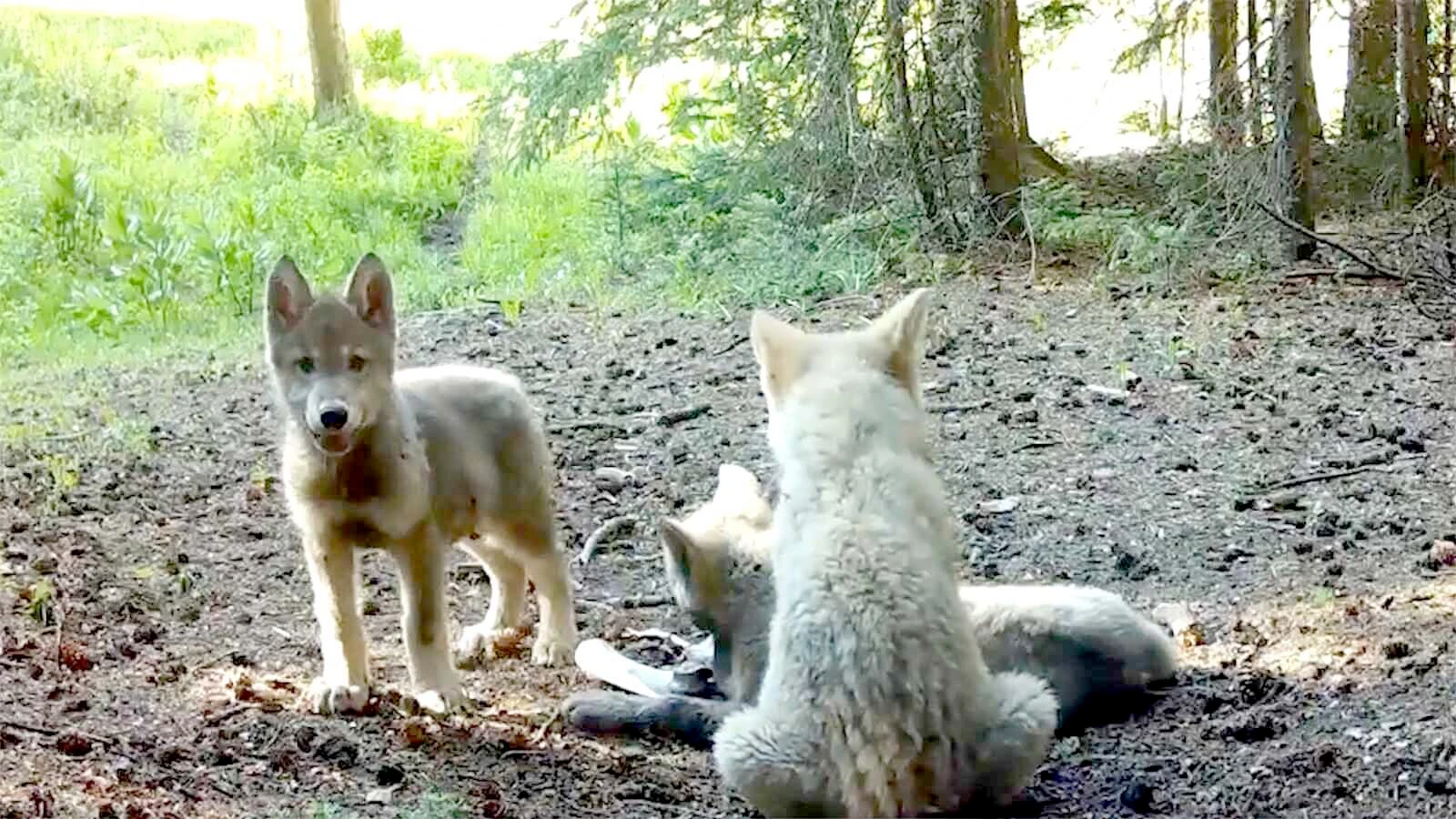
Wildlife officials estimate that 20 of Colorado’s 45 wolves are pups. And the survival rate for wolf pups during their first year typically runs at 50-60%.
The yearly survival rate for adult wolves dropped from the typical level of 75% to 61%, according to Colorado Parks and Wildlife (CPW).
The decline might be due to a combination of disease and wolves being killed, mostly for attacking cattle.
CPW announced Wednesday it will dial back on killing wolves for cattle depredation. Instead of a blanket policy of killing wolves that attack cattle, instances will be decided on a “case-by-case” basis, according to CPW.
According to Colorado’s Wolf Restoration and Management Plan, 150 to 200 wolves are needed to establish a self-sustaining population.
No New Wolves Coming
No new wolves will be coming to Colorado anytime soon. CPW last reintroduced wolves in January 2025, when a batch of 15 was flown in from British Columbia.
In October of that year, U.S. Fish and Wildlife Service (FWS) Director Brian Nesvik told Colorado officials no more wolves from Canada would be allowed.
The state’s agreement with FWS specifies that only wolves from western or northwest states could be used for Colorado’s reintroduction program, Nesvik argued.
Oregon provided the first batch of wolves, released in Colorado in December 2023.
But since then, no other states have been willing to provide wolves. Gov. Mark Gordon refused to provide wolves from Wyoming.
So, for now, at least, Colorado seems out of options.
“CPW has not identified a source population for gray wolf translocations for winter 2026-2027 but continues to explore options for future translocations,” department spokesman Luke Perkins wrote in an email to Cowboy State Daily on Thursday.
“Because of the sensitive nature of these types of conversations, CPW does not publicly comment on them,” he added.
A Move In in the Right Direction
CPW dialing back on killing wolves is a step in the right direction, Delaney Rudy, Colorado director for the Western Watersheds Project environmental group, told Cowboy State Daily.
This is evidence of CPW being responsive, Rudy said, and part of Colorado’s wolf-recovery program is adaptive management.
"This represents adaptive management, she said.
Right now, Colorado wolves need all the help they can get, she said.
“We’re in a tight spot in Colorado,” Rudy said.
So far in 2026, eight wolves have died from human-related causes.
Five were killed by CPW for attacking cattle. A sixth was shot by a ranch hand who claimed to have been protecting livestock.
One wolf died during a collaring operation, and another was shot by a hunter who claimed to have mistaken it for a coyote, according to CPW.
Many of the wolves shot for attacking cattle were yearlings, Rudy said.
“There’s very little evidence that removing yearlings helps livestock depredation,” she said.
As grim as things look now, Rudy said she doesn’t think Colorado’s wolf recovery is on the verge of collapse.
“Wolves are a resilient species. They survived a lot of persecution in the 19th and 20th centuries,” she said.
‘Honor That Agreement’
Howard Cooper, who ranches near Meeker, Colorado, told Cowboy State Daily he’s not pleased with CPW’s shift in lethal wolf removal policy.
“They signed agreements with us, CPW with the ranchers, that if the wolves attack our cattle and sheep, they will come in and remove the wolves,” he said. “That’s the agreement we made with them, and they need to honor that agreement.”
Ranchers felt betrayed because CPW promised to bring in wolves with no history of cattle depredation. And yet, the wolves from Oregon came from packs with a history of attacking livestock, Cooper said.
While the future of the wolf program might be uncertain, Cooper said that as a rancher he’s focused on his livelihood.
“It’s not my job to find more wolves for CPW. CPW needs to manage the wolves that are causing problems with ranchers,” he said. “Nothing has really changed. They have to manage what they have and honor their agreements with us to make sure we’re not losing livestock, because that costs us a lot of money.”
Not Sure Which Disease
An outbreak of disease has caused hair loss and other serious symptoms among some of the Colorado packs.
When asked if that was mange, which is known to cause canines to lose fur, Perkins said that hasn’t been determined.
“No final diagnosis has been confirmed at this time. The agency will share further details when the investigation is complete,” he said. “Possible health concerns with two packs” played a part in CPW’s decision to back off on killing wolves.
Meanwhile, CPW will move ahead with wolf restoration, despite setbacks, Perkins added.
“CPW is doing everything we can to meet our objective of establishing a sustainable wolf population while working with livestock producers and continuing to follow the adaptive guidance provided in the Wolf Restoration and Management Plan,” Perkins said.
In a statement issued Wednesday, CPW Director Laura Clellan said she’s confident the wolf program will succeed.
“Our current genetic analysis demonstrates that the wolf population has high diversity, indicating that inbreeding is not a hurdle to wolf recovery,” Clellan stated.
Mark Heinz can be reached at mark@cowboystatedaily.com.


