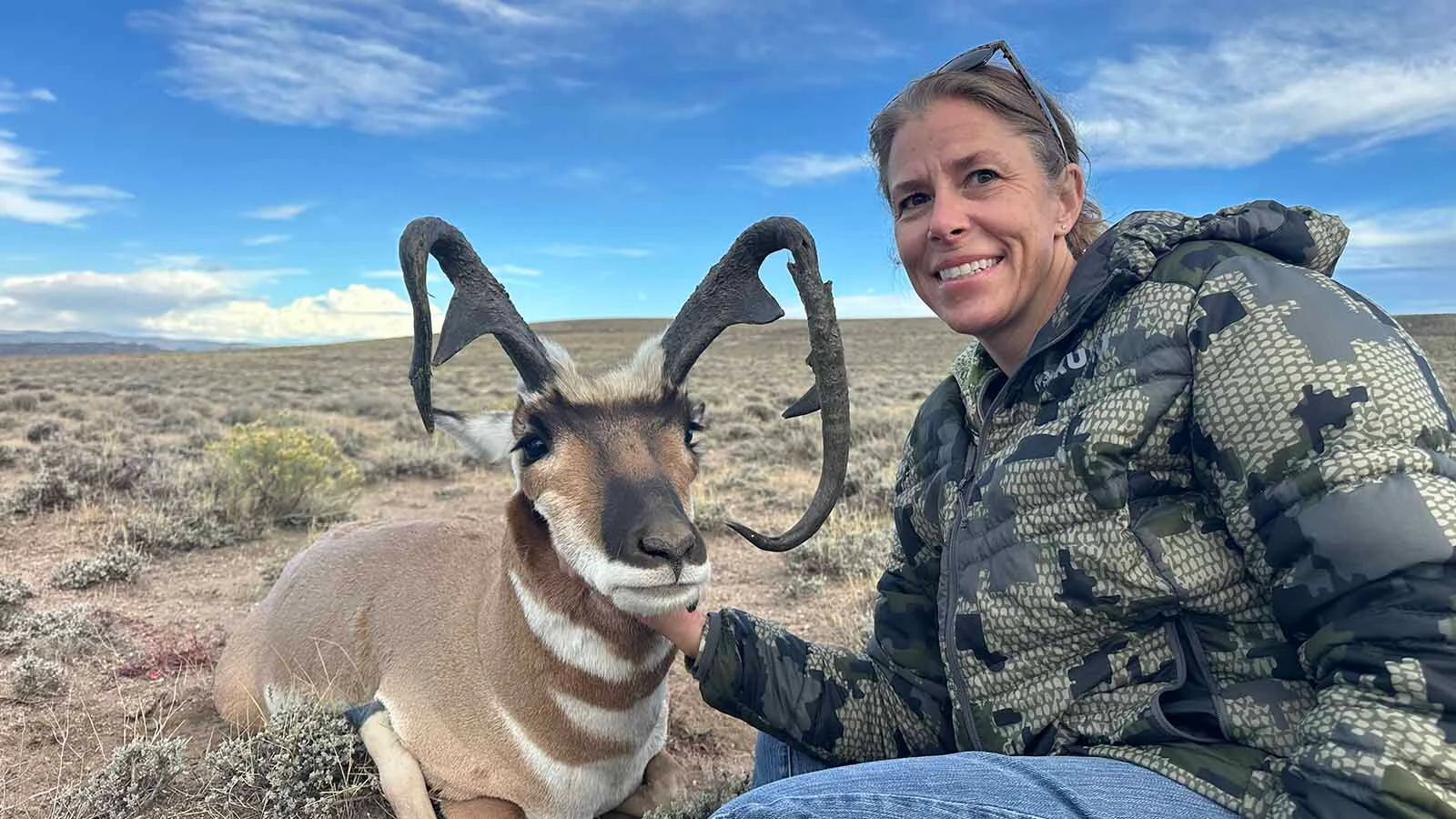
One could say that a pronghorn buck in southeast Wyoming was cheating if he was competing with other bucks over who could grow the longest horns.
Instead of shedding last year’s horn sheaths, he just grew a new set right behind them, creating a supersized double set of horns.
By the time hunting season rolled around, the extra sheath had fallen off one side. But it remained on the other, leaving a bizarre-looking trophy for hunter Deb Tonsager-Burke, who shot the buck on Tuesday.
Shaylee Martin owns Trophyroom Taxidermy and has done a few pronghorn mounts for Tonsager-Burke and her husband, Jason Burke.
She was wowed when they brought this buck in, requesting a European mount (a mount with just the horns and cleaned skull).
“I’ve seen a lot of non-typical antelope. Something like that, I’ve never seen,” she told Cowboy State Daily.
Double the Horns
Tonsager-Burke declined to be interviewed for this story but gave her husband, who owns Spur Outfitters, the green light to tell the tale.
Pronghorn can grow horns at odd angles and in weird directions, and Burke said that’s the type of buck his wife likes to hunt.
“Sometimes they’re extremely funky, and sometimes there’s just a little bit funky,” he told Cowboy State Daily.
He first spotted the double-the-fun buck early in the summer. It was certainly at the extreme end of the scale.
“I showed my wife pictures of it in the field, and she was definitely jazzed about it,” he said. “She said, ‘That’s the buck I want to hunt this year.’"
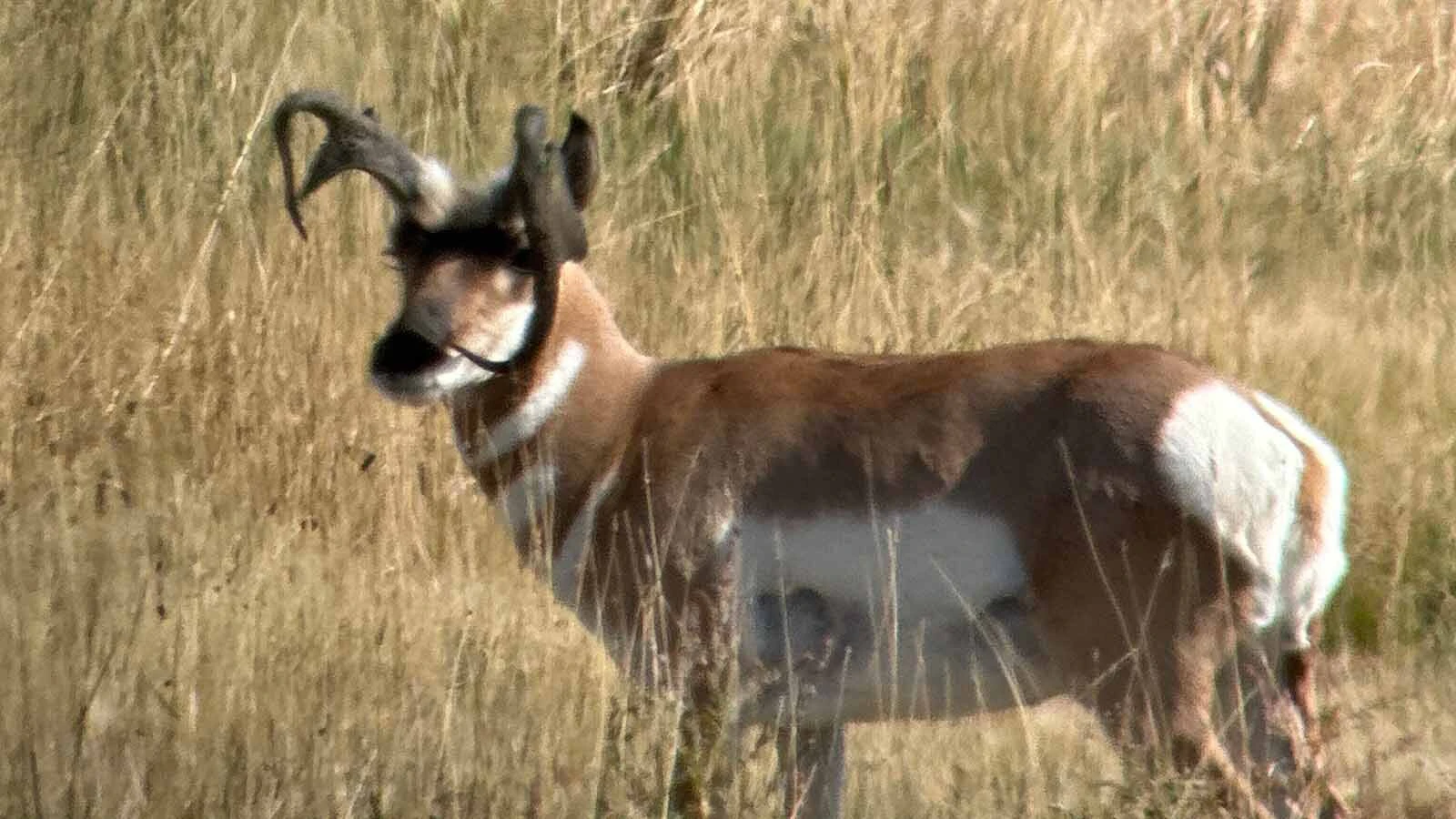
Early on, the buck had the extra horn sheaths connected on both sides, essentially doubling his crowning glory.
“By July, the extra sheath had fallen off one side, but it stuck on the other side,” he said.
The loss of an extra horn on one side didn’t deter his wife; she still wanted that buck.
How Did That Happen?
Male deer, elk, and moose grow entirely new sets of antlers every spring and summer, and then shed them in the late winter or early spring.
Pronghorn are horned animals, meaning they have a permanent set of horns protruding from their skulls.
Their iconic black horns, with the namesake prongs jutting out, are hollow sheaths that grow over their permanent horns.
Normally, the sheaths pop off in winter, sometimes with a vigorous headshake from the buck.
A common assumption is that the horn sheaths are made up of compacted hair, but that’s not the case, retired Wyoming Game and Fish biologist and pronghorn specialist Rich Guenzel told Cowboy State Daily.
“They are keratin,” he said.
Keratin is the same stuff their hooves are made of.
“However, some hairs at the base get trapped in the developing horn sheath,” he added. "You don’t find trapped hair in the prong or upper part of the horn sheath."
For whatever reason, Tonsager-Burke’s buck didn’t fully shed his sheaths last year, Guenzel said. Instead, they loosened up just enough for new ones to start developing behind them.
That just pushed the old horns out as extensions of the new ones, he said, adding that hormones might play a part in it.
“Testosterone levels control the horn sheath growth and replacement cycle,” Guenzel said.
‘Not Our Most Extravagant Stalk’
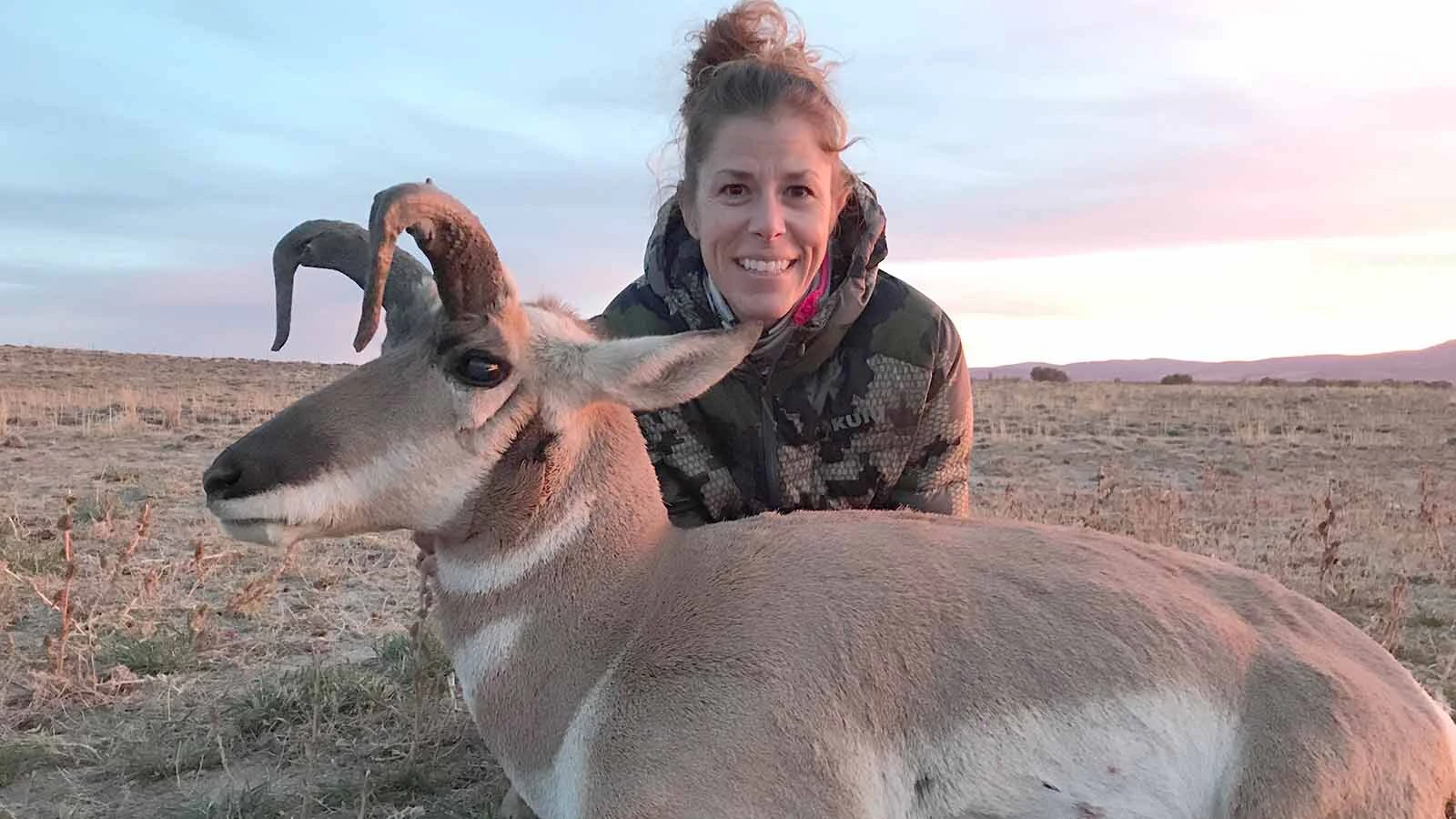
In addition to having weird horns, this buck was mighty fat, as were many pronghorn in the area this year, Burke said.
Dry conditions made pickings thin for natural forage, so the pronghorn and other critters headed toward agricultural fields this year.
A high-protein diet of alfalfa probably contributed to the buck’s impressive body size, he said.
When it came time for the hunt, pronghorn were bunched up around a field. So, the opportunities were ripe for numerous bucks.
But Tonsager-Burke was determined to get the buck she’d come for.
“It wasn’t our most extravagant stalk,” Burke said. “The hardest part was trying to sort through a herd of 200 antelope to get a shot at that particular one.”
With a well-placed rifle shot, the desired trophy was down.
Martin said it might have been fun to do a full head-and-shoulders mount of the unusual buck, but she’s eager to see how the European mount turns out.
Burke agreed.
“European mounts work great for antelope because you get the black horns contrasting with the white skull,” he said.
Mark Heinz can be reached at mark@cowboystatedaily.com.