
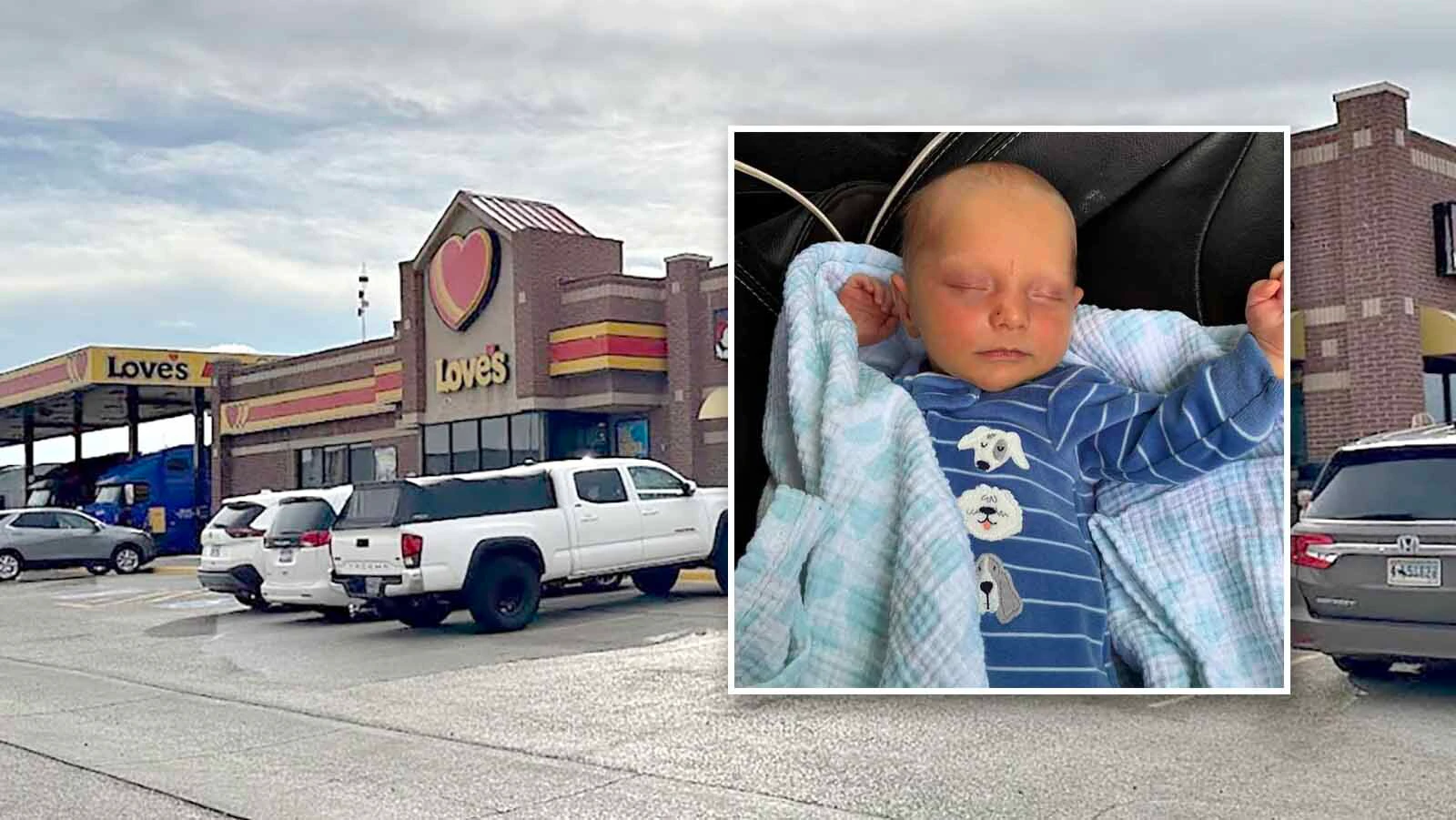
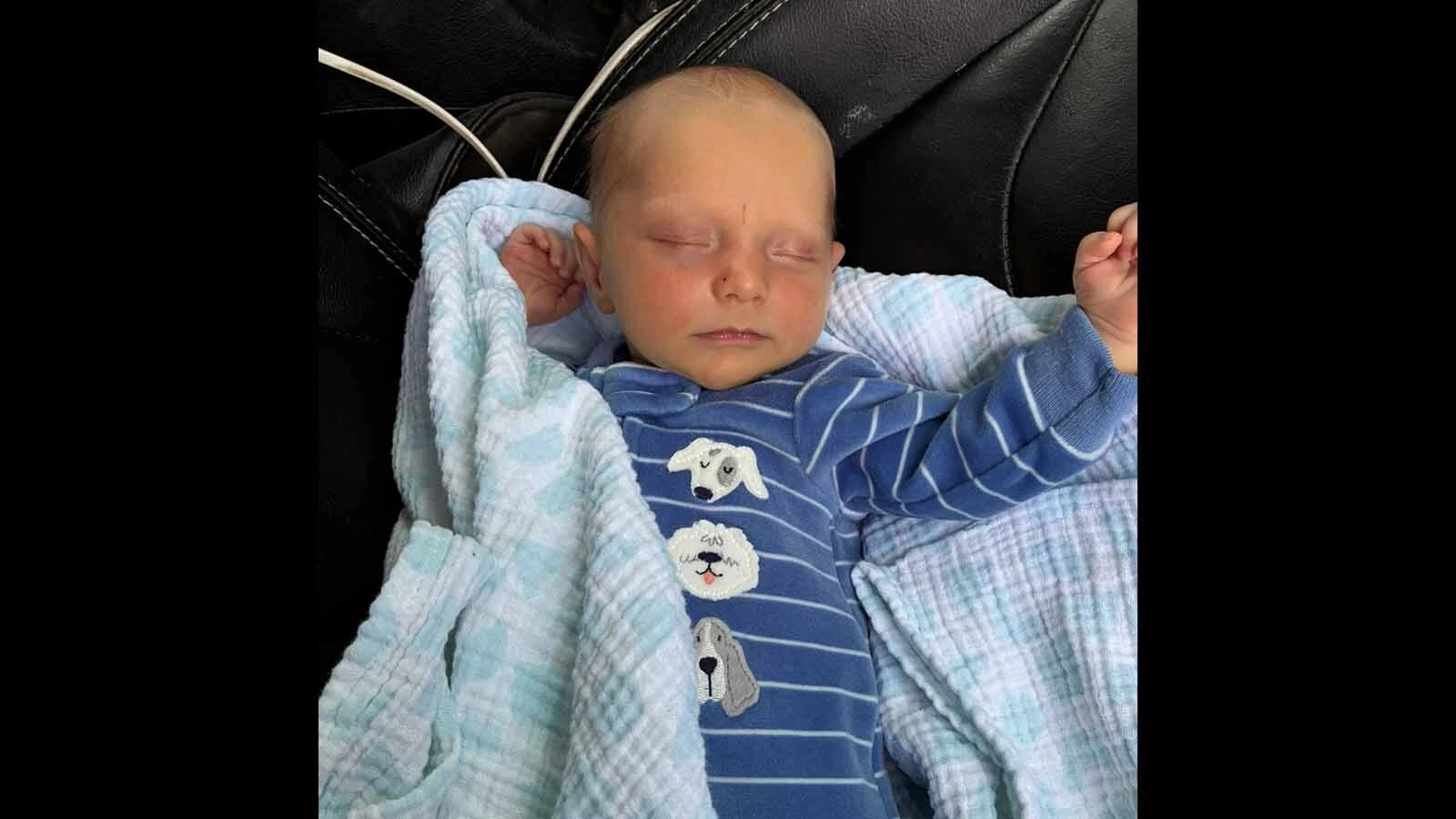
Max Hemi Blake came into the world in a Ram 2500 with a Hemi engine, so really, what else were his parents supposed to name him?
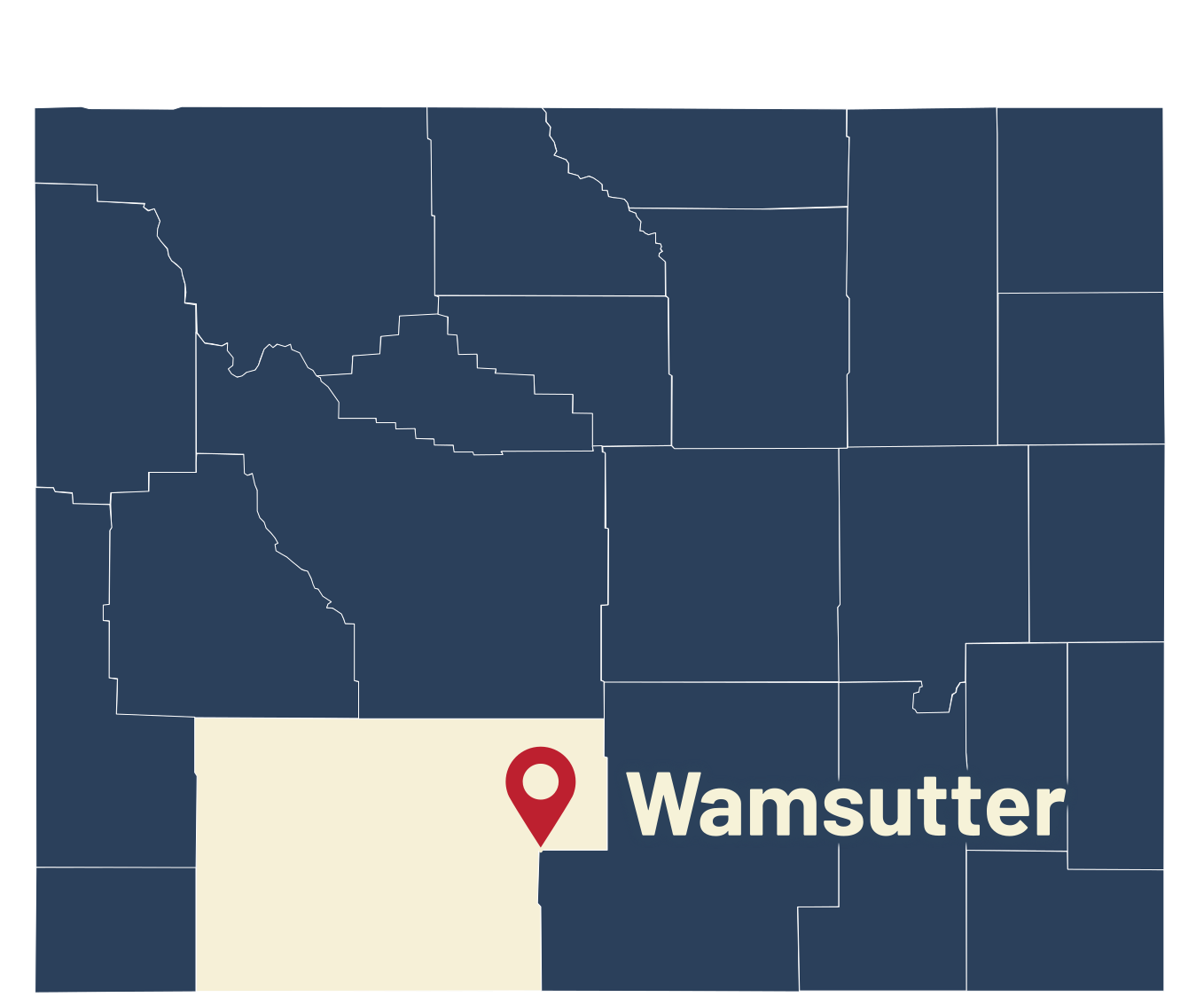
The 6-pound, 11-ounce Wyoming boy was born Aug. 8 in the parking lot of the Love’s Travel Stop in Wamsutter after his parents realized they weren’t going to make it to the hospital in Rock Springs.
“I hope we don’t have this baby in this truck,” Catherine recalled her husband, Kyle, saying before they set out that morning.
She laughed.
“I’ll try not to.”
Little did he know, his youngest son would come into this world at a packed truck stop with his three other kids watching from inside the pickup, and a 911 dispatcher giving instructions over the phone while he figured out what to do in real time.
The Baby's Coming!
Catherine started having contractions that Saturday morning, but she wasn’t alarmed.
She had been having them off and on since Tuesday. At a Thursday appointment, she’d had contractions all day before they eventually disappeared, so when they returned Saturday, Catherine figured "maybe they'll stop."
By about 10:30 a.m., though, the Blakes decided it was time to get moving toward the hospital.
Catherine remembered thinking. “Maybe it’ll be nothing or whatever," but the farther they drove, the stronger the contractions became.
Then, just outside Wamsutter, Catherine’s water broke.
“Oh dear,” she said out loud.
They tried to find a number for an ambulance in Wamsutter. When they couldn’t, Kyle called 911.
By then, Catherine knew the decision had been made for them.
“The baby’s coming at this point,” she said. “We’re gonna have to stop anyway.”
So they pulled into Love’s.
“We’ll just stop, have him, and then we’ll go from there,” Catherine remembered thinking.
Seven Minutes
On the other end of Kyle’s 911 call was Sweetwater Combined Communications Center dispatcher Val Gelinas, who has been doing the job for more than 37 years.
“It’s kind of unusual for that,” Gelinas told Cowboy State Daily. “Usually, they make it to the hospital, or, you know, at least in the ambulance.”
Kyle sounded “a little bit nervous,” she said, but he listened.
“He followed all the instructions very well,” Gelinas said.
Dispatchers have a childbirth protocol for precisely this kind of call. Gelinas began walking Kyle through it while the rest of the communications center worked behind her, dispatching the ambulance and handling other emergency calls so she could stay on the line.
“I had a crew behind me,” she said. “They were getting the ambulance and, you know, taking all the other calls, so I didn’t have to hang up the phone with him. … It was a team effort here.”
Only afterward did Gelinas look at the clock closely enough to realize just how fast everything happened.
From the beginning of the 911 call until Max was born: About seven minutes.
Best Seats In The House
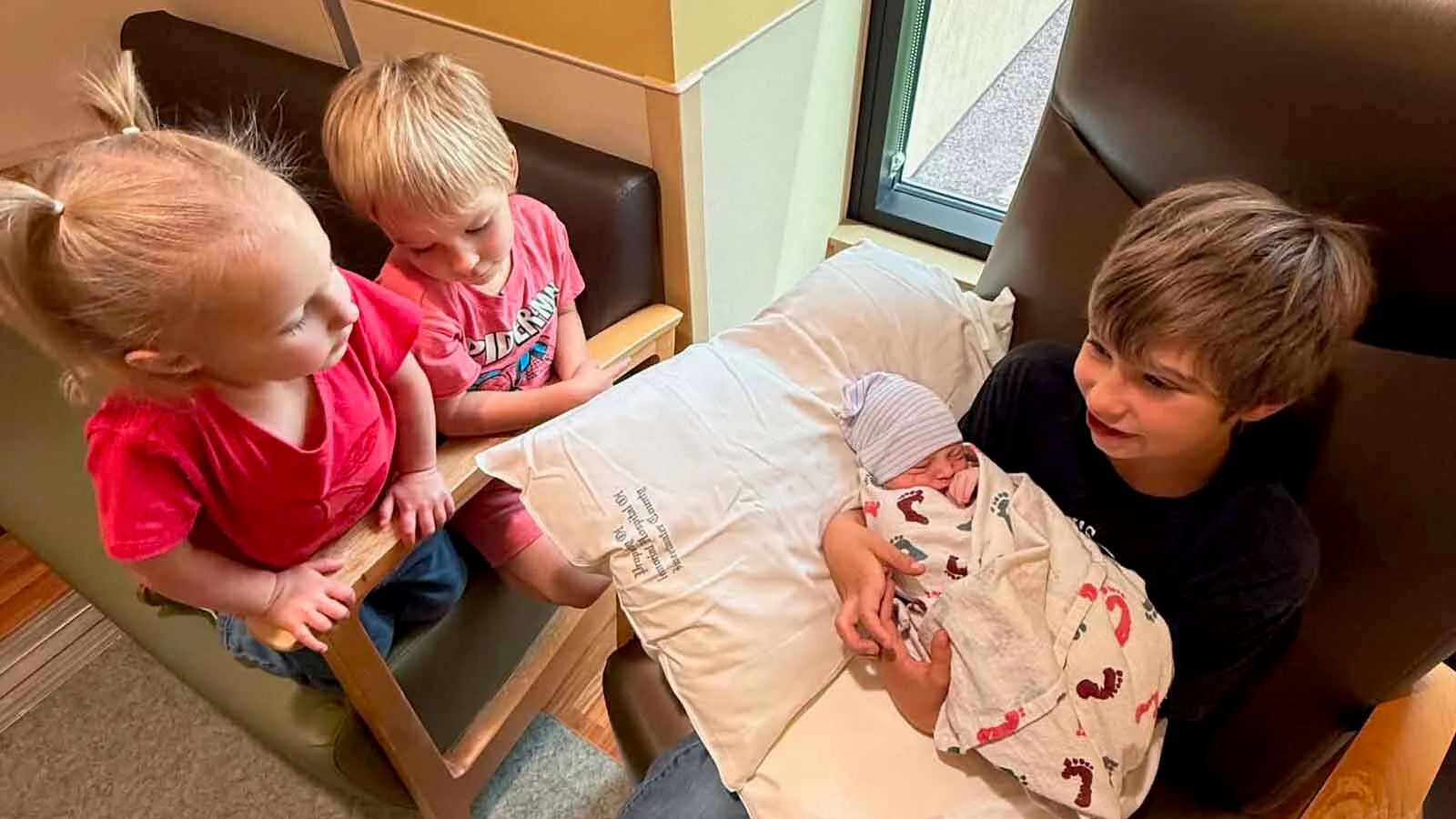
Kyle and Catherine weren’t alone. They had all three of Max’s older siblings with them in the Ram.
Braxton, 8, "got unbuckled and he pretty much sat in the center console and was like there the whole time,” Catherine said.
“He will tell you a different story of his experience that day," she chuckled.
Wyatt, 4, and their 3-year-old sibling remained in the back. "They were surprisingly quiet."
Kyle, meanwhile, tried to stay calm.
“He handled it awesome,” Catherine said. “He handled it very well and didn’t have a choice really at that point, either.”
Outside, Love’s was bustling.
Catherine said another vehicle parked right next to them as Kyle moved around to her side of the truck and opened the door.
People noticed, but mostly, they minded their business.
“Whoever sees anything at that point, it doesn’t matter,” Catherine said.
Getting from the pickup onto the ambulance gurney afterward was another matter.
“It was a little awkward,” she said.
Then Max Didn't Cry
For all the humor the Blakes can find in the story now, there were a few moments in the Love’s parking lot that weren't funny at all.
Max was born with his umbilical cord wrapped around his neck.
“He wasn’t, like, breathing,” Catherine said. “He just wasn’t, like, crying or doing anything at that moment.”
Gelinas knew that was one of the complications dispatchers watch for during an emergency delivery.
“If it’s breech or if the cord’s wrapped around its neck or if the baby’s not breathing,” she said, those are among the immediate concerns.
Kyle removed the cord from around his son's neck, then he and Catherine rubbed Max, trying to get him going.
“That was a little panicky at that point,” Catherine said. “Once he started crying, we were all good."
An ambulance arrived shortly afterward, though the crowded Love’s lot initially made the family difficult to find.
Kyle had to flag down responders.
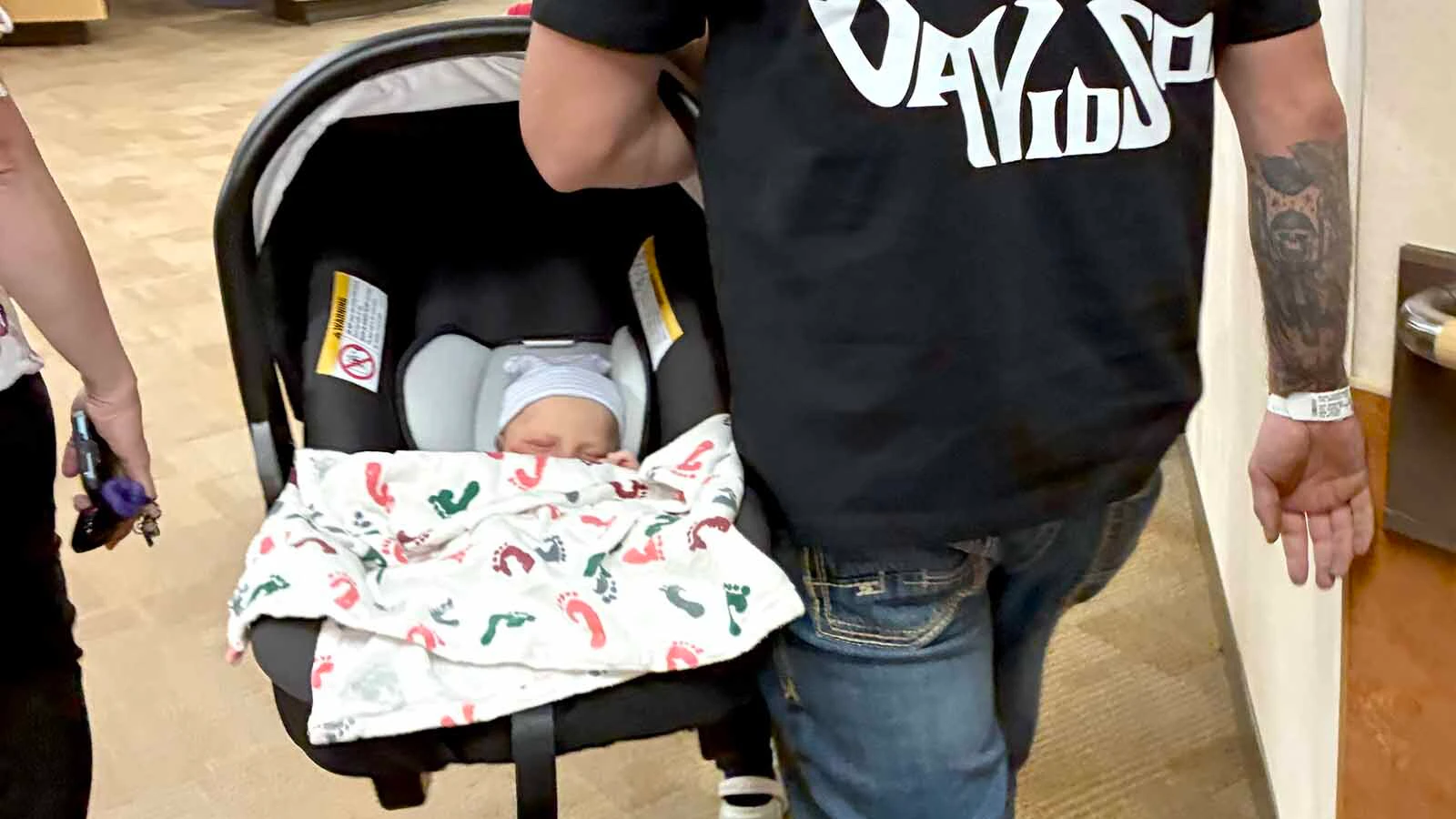
EMS clamped and cut the umbilical cord, loaded Catherine and Max into the ambulance and headed for the hospital.
Kyle beat them there.
Mother and baby stayed overnight and went home the next day.
Not-So-Funny
Max's roadside arrival happened against a much larger problem facing pregnant women in Carbon County and other parts of rural Wyoming: There aren't that many places left to have a baby.
Memorial Hospital of Carbon County in Rawlins closed its labor and delivery department June 15, 2022, citing staffing problems and the financial strain caused by reliance on traveling nurses.
The hospital subsequently partnered with Ivinson Memorial Hospital in Laramie. Prenatal care can still be provided locally, but planned deliveries occur at Ivinson, while emergency deliveries can be handled by trained emergency room personnel at MHCC.
Wyoming health officials now explicitly classify Rawlins as one of the state's “new” maternity deserts — communities that lost hospital labor and delivery services within the past five years.
The Wyoming Department of Health says Rawlins joined Riverton, Kemmerer, Evanston and Wheatland in losing labor and delivery services in recent years, and that the median drive time between mothers' homes and their birthing hospitals has “significantly increased” in Wyoming's frontier areas.
A 2025 review by the Wyoming Legislature's research staff found 15.4% of Wyoming women have no birthing hospital within a 30-minute drive, while women in the state's most isolated areas can face average trips approaching 79 miles to the nearest birthing hospital.
“I didn't know that Carbon County didn't have an OB unit until I called them,” Catherine said. “They said they had gotten rid of theirs, and that's why they were coming to Rock Springs.”
Catherine now thinks families making those drives ought to be prepared for the possibility that babies don't always respect estimated travel times.
“You guys have so many people traveling to Sweetwater County to deliver babies,” she said she plans to tell her doctors at a follow-up appointment.
Sometimes labor takes forever, she said, and sometimes it doesn't.
“There's dead spots from here all over anywhere,” Catherine said. “If you're traveling, a little more knowledge” could help.
Catherine said she especially wished she'd known beforehand what families should do with the umbilical cord while waiting for emergency responders.
The experience left her convinced that families facing long drives for delivery should receive basic emergency-birth guidance before they ever need it.
“There's lots of moms that are having to travel that far,” she said.
Stork No. 3
For Gelinas, Max makes three.
She has now helped talk families through three babies arriving before the hospital.
The other two — one boy and one girl — were born at homes in Green River many years ago.
Max earned Gelinas her third Stork Award, an honor given to dispatchers who help with successful emergency deliveries.
Even after nearly four decades behind a dispatch console, she said this one had the communications center cheering.
“We were so excited for them,” Gelinas said.
In fact, everything happened so quickly that when the call ended, the dispatchers realized there was one fairly significant detail nobody had thought to ask.
“We didn't even know if it was a boy or girl,” Gelinas said.
So she called the hospital to find out.
Her final assessment of the Blakes?
“They did an awesome job for, you know, having a baby in a car,” she said. “They did really good. They did awesome.”
The Love's Baby
Love’s, whose phone greeting welcomes callers to “the home of clean places and friendly faces,” referred Cowboy State Daily to its corporate public relations office, which did not respond to a request for comment.
Catherine and Max are doing well, and the story has already made its way around Wamsutter, where the Blakes once lived and Kyle still knows people.
People in Wamsutter recognized the story immediately.
“That was you?” Catherine remembers asking them.
“Yes,” she told them. “That was us.”
Kyle's coworkers have floated an idea for commemorating the occasion properly.
“We're gonna go in there. We're gonna paint the parking spot,” Catherine recalled them joking.
Reserved for the Love's baby.
Kolby Fedore can be reached at kolby@cowboystatedaily.com.


