
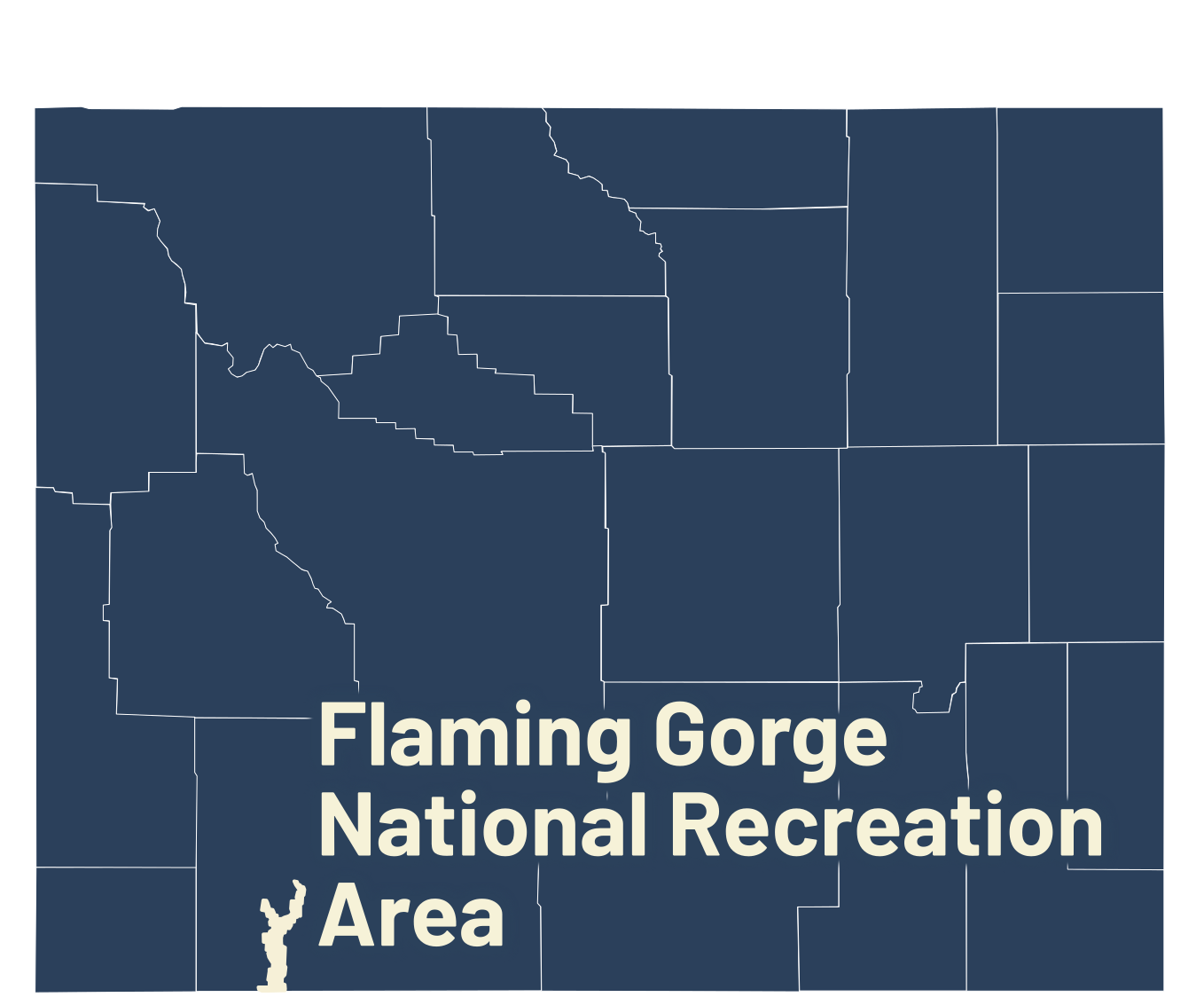
Lake Powell probably won’t hit “dead pool” this year, but a drawdown on Flaming Gorge Reservoir that helped make that possible should be made up for, water commissioners decided Monday.
The four-member Upper Colorado River Commission voted to send a letter to U.S. Interior Secretary Doug Burgum stating the Drought Response Operation Agreement (DROA) water released appears to have been effective in averting a crisis.
However, recovery of those releases from Flaming Gorge, on the Wyoming-Colorado state line, “is a priority when hydrologic conditions improve,” the commission decided during an online meeting.
The commission is comprised of representatives from each of the Upper Basin States: Wyoming, Colorado, Utah and New Mexico. State Engineer Brandon Gebhart is the commissioner for Wyoming.
‘Snowpack Is Just It’
As things stand, farmers, marina managers and others are bearing the brunt of the drought, according to the commission. During the meeting, video clips were shown of statements from people in the Upper Basin states most affected.
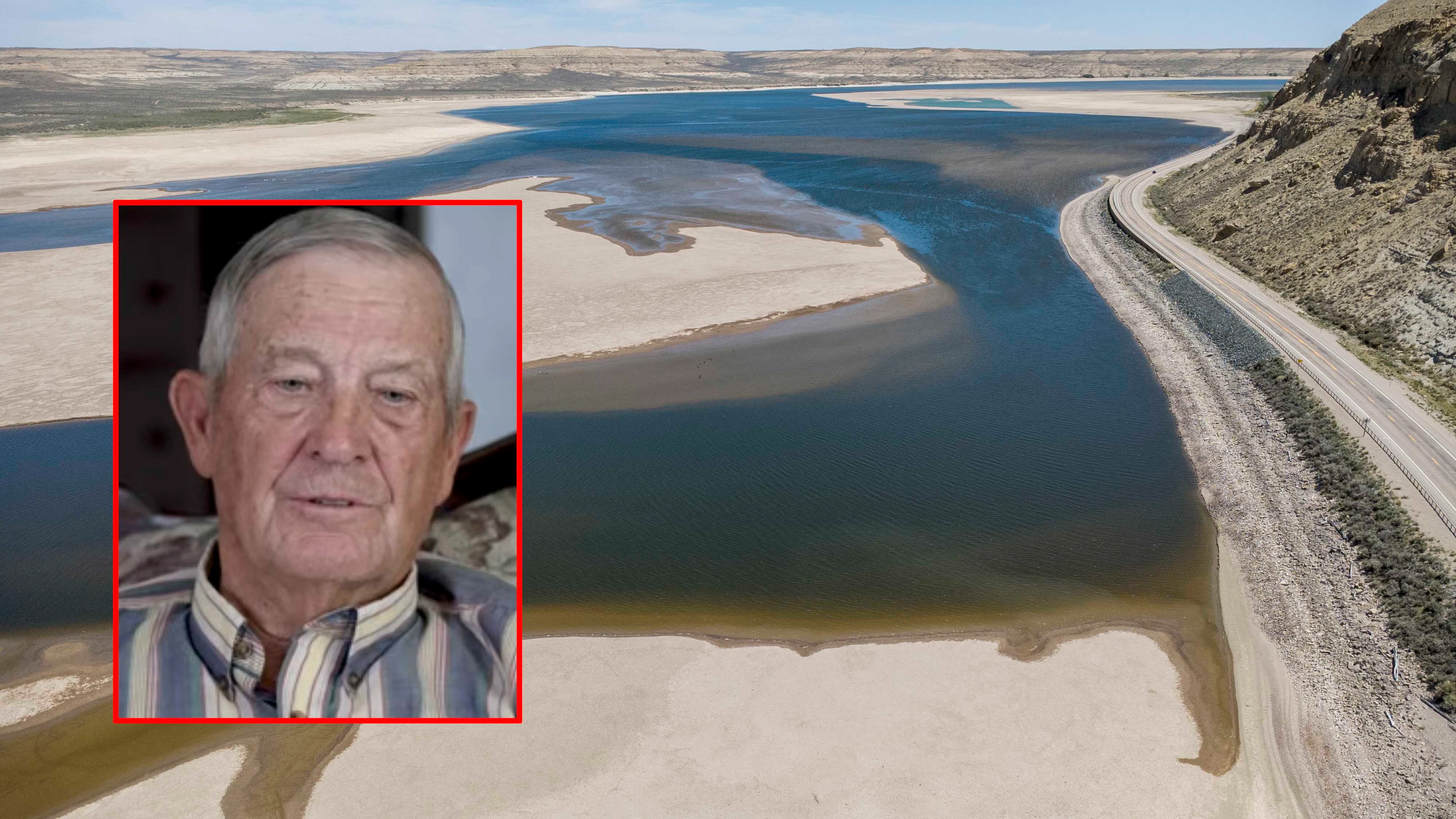
Included was Ron Micheli, a Fort Bridger rancher.
In his video, Micheli states that he and other ranchers along Wyoming’s Upper Green River are dependent upon snowpack to fill the river.
And this year’s snowpack was one of the worst on record, he said.
“Snowpack is just it. If we don’t have snow, we don’t have water,” he said.
Micheli said he doesn’t like animosity between the Upper Basin and the Lower Basin states of Arizona, California and Nevada.
“I’ve come to the conclusion that there’s not much good that is going to come from ‘us' versus 'them,'" he said.
“We’ve got to work it out for ourselves. And I hope that the states – all seven states – can figure that out and try to work out something.”
Flaming Gorge Way Down
When conditions might improve enough to put water back into Flaming Gorge is anybody’s guess. For now, Flaming Gorge is feeling the pinch of emergency releases to make up for severe shortages at Lake Powell, on the Utah-Arizona state line, commission executive director Chuck Collum said.
Flaming Gorge is about 70% full and down about 38 feet from normal, he said.
DROA releases from Flaming Gorge are expected to continue until early April and will end up being about 1 million acre-feet.
The Flaming Gorge and other DROA measures should be enough to Lake Powell from shrinking below a surface elevation of about 3,500 feet, Collum said.
If the surface elevation dips to 3,490 feet, Lake Powell is at risk of hitting a dead pool, the lever at which the generation of hydroelectric power at Glen Canyon Dam is no longer be possible.
Seeking Security
The commission expressed optimism that the Bureau of Reclamation might be moving toward a policy based upon water supply, rather than strict adherence to use and supply expectations set by the 1922 Colorado River Compact.
The Federal Government recently supplied $100 million in grant money to the Upper Basin States for conservation programs.
If the drought persists, the long-term outlook could be grim, commissioners said.
Water users in Colorado are facing the curtailment of “very senior water rights” dating to the 1860s, Colorado commissioner Becky Mitchell said.
She noted that Blue Mesa Reservoir in Colorado is “just barely above power pool".
Wyoming has limited water storage and could be facing another dry year in 2027, Gebhart said.
“We simply don’t have the water security and certainty that our partners in the Lower Basin have enjoyed for years,” he said.
Mark Heinz can be reached at mark@cowboystatedaily.com.


