
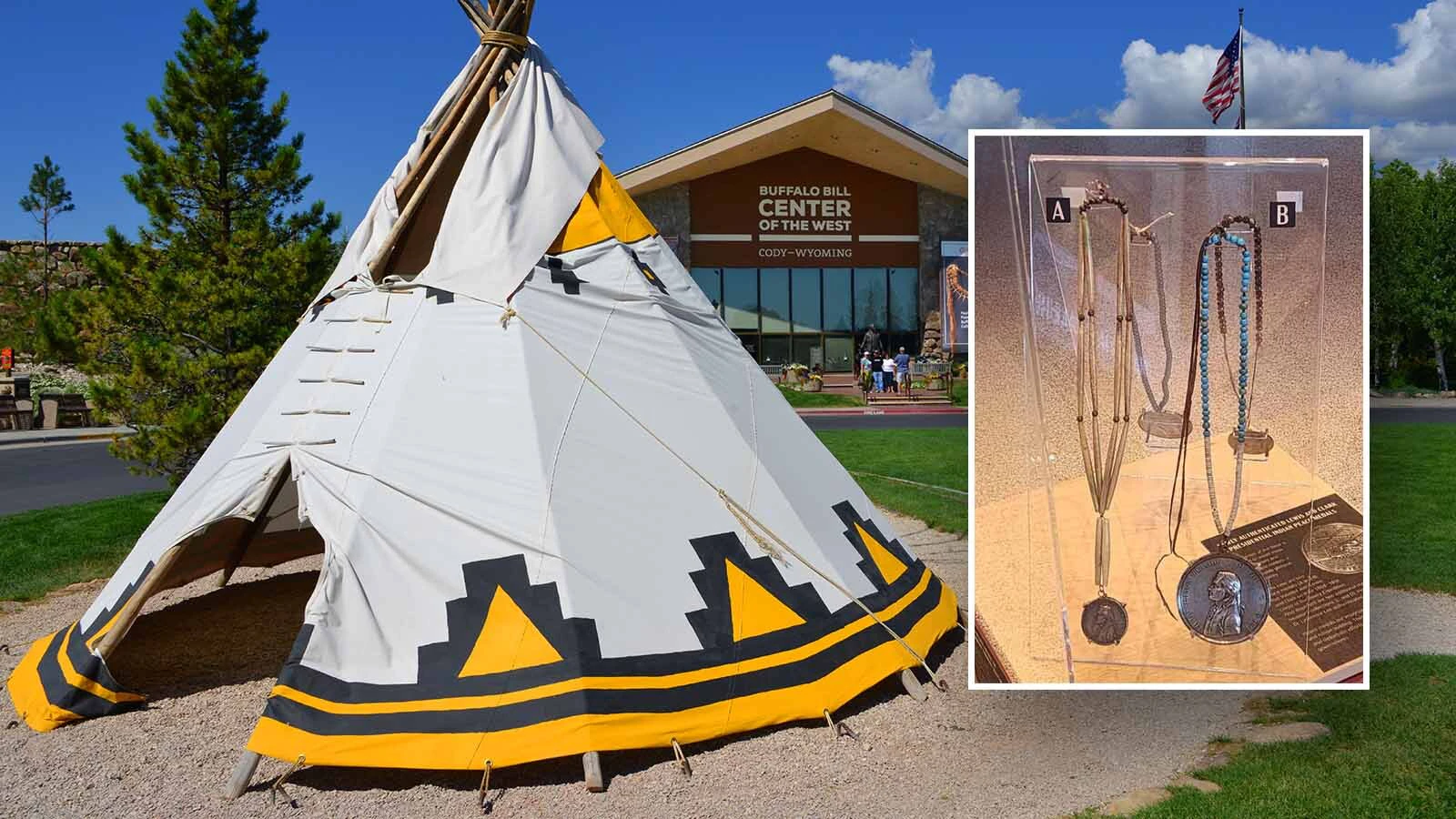
Two rare Jefferson peace medals that have been part of the Buffalo Bill Center of the West collection for decades have been confirmed as authentic artifacts from the 1804 Lewis and Clark expedition.
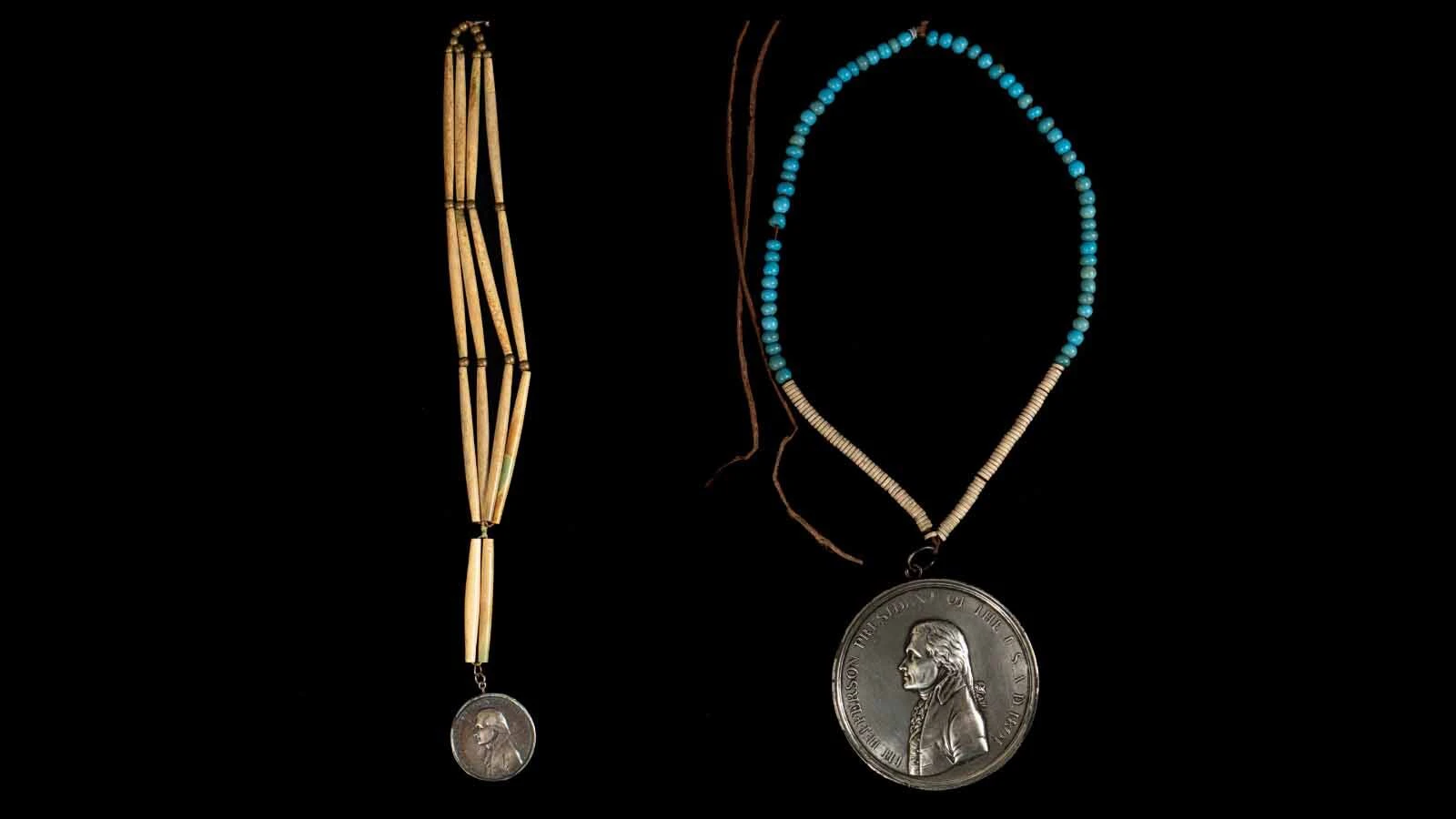
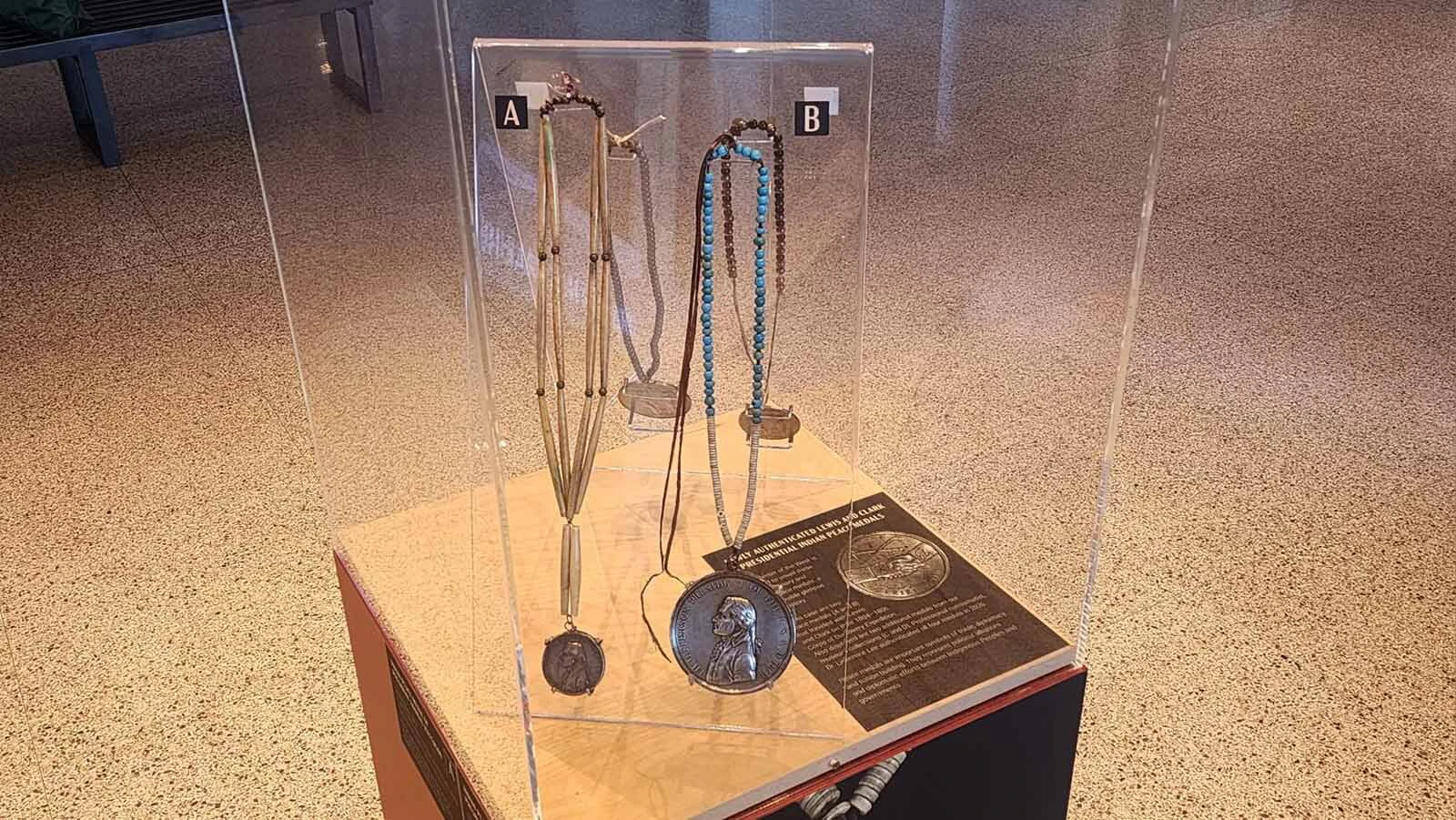
One is a large Thomas Jefferson “shell” medal — a hollow medal assembled from silver outer pieces. It is one of only three of that size carried by the Corps of Discovery from 1804 to 1806. The other is a 2-inch Jefferson shell medal, one of 16 of that size carried by the expedition.
Historical research suggests the large medal might be the one presented to a Mandan chief known as Black Cat during an October 1804 council. The smaller medal could be linked to Cameahwait — Sacagawea’s brother — a Shoshone leader the expedition met in 1805.
These identifications have not been described as final but have a high likelihood, according to professional numismatist Lawrence Lee, who was hired to sort out the authenticity and historical background of the High Plains Museum’s collection of 33 peace medals.
Four of the rarest medals are now on display in the Rendezvous Hall of the Center of the West. Later, a more permanent location will be developed for these historically significant artifacts.
Early Tool Of Diplomacy
Lewis and Clark took 89 peace medals of varying sizes on their 1804 Discovery Corps expedition, but only three of the largest-sized medals, which were reserved for the most important American Indian chiefs of the time.
Peace medals were meant to signify an agreement between nations to maintain peace, and were in common use before the Corps of Discovery by countries such as France, England, and Spain.
“Medals were given as a source of reciprocity,” Hunter Old Elk, the Buffalo Bill Center of the West’s Plains Indian curator, told Cowboy State Daily. “They only ever gifted these to the highest and revered leaders of a tribal community. Mostly the chief, or the military leader, and then they were passed down through families.”
The medals were framed as gifts of peace and friendship. They were meant to replace any peace medals given by other countries.
They also signaled a new power relationship on American terms.
The Trail Of History
Most of the peace medals were given at the Lewis and Clark expedition’s discretion, but recipients of the 4-inch medals were designated in advance, Lee told Cowboy State Daily.
“They knew they were going to give one to the Otoe, one to the Missouri, and one to the Mandan,” he said.
Based on its provenance, Lee said he believes the 4-inch medal was likely the one given to Black Cat.
“The medal was found within 50 miles of where it was given to (Black Cat,)” Lee said. “And he had no descendants that are recorded.”
The medal thought to have been given to Sacagawea’s brother has an even stronger historical trail, he added.
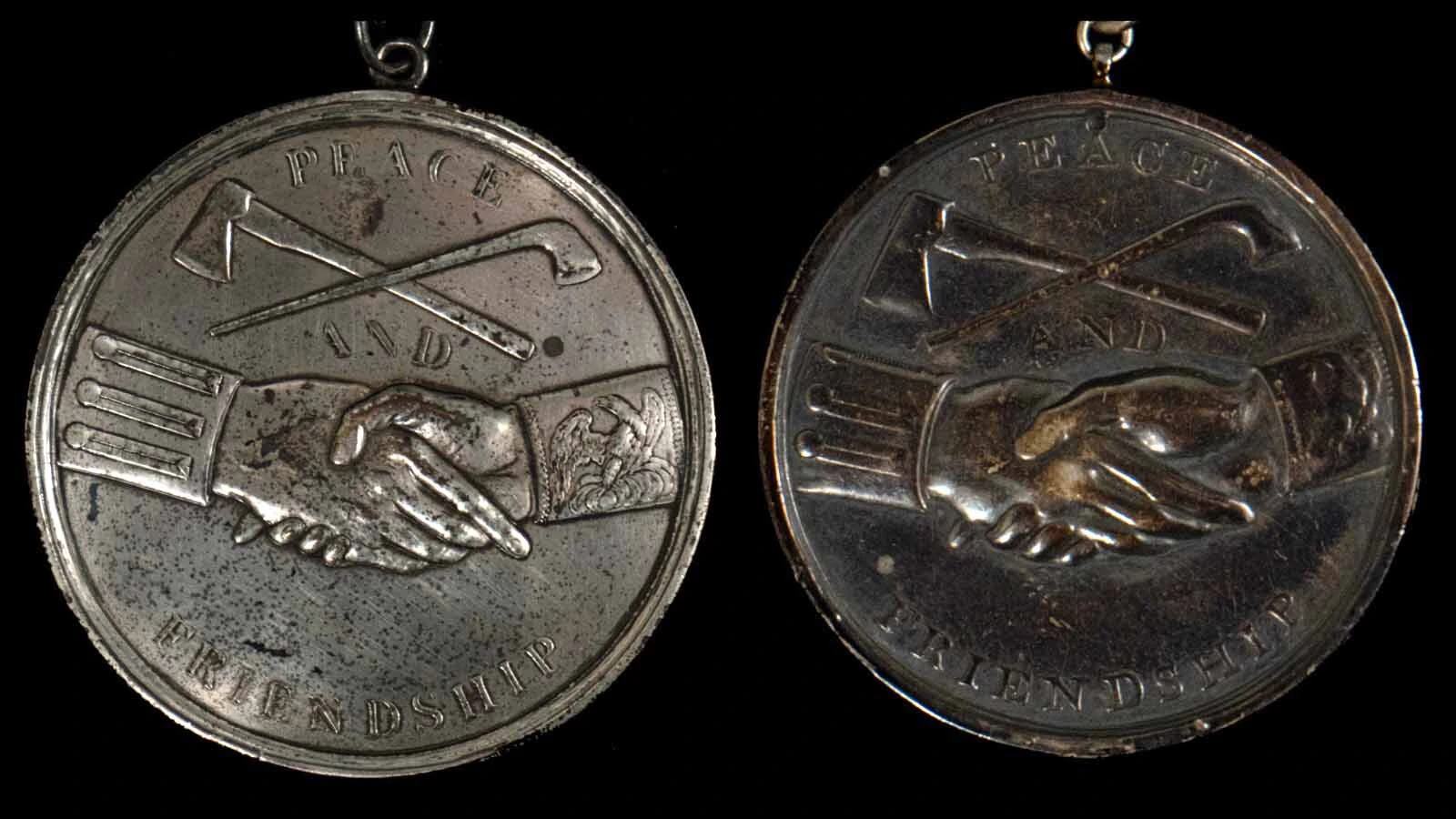
Lee was also able to verify two bootleg, fur trader medals, which he said are also rare.
“Private individuals were giving out lookalike medals,” he said. “These were diplomatic medals. They were supposed to be the sign of a treaty between one nation and another nation. When you get fur traders giving these out, they don’t have that level of government authority.”
Congress passed a law in 1844 to ban that practice, Lee said.
“What they did then was predate all their medals to 1843,” he said, adding, “There’s only seven known of them.”
Link To Iconic History
The museum has always known that its peace medal collection was special, Old Elk said. But it took time to find the right expert, as well as modern science, to unlock just how rare the artifacts are.
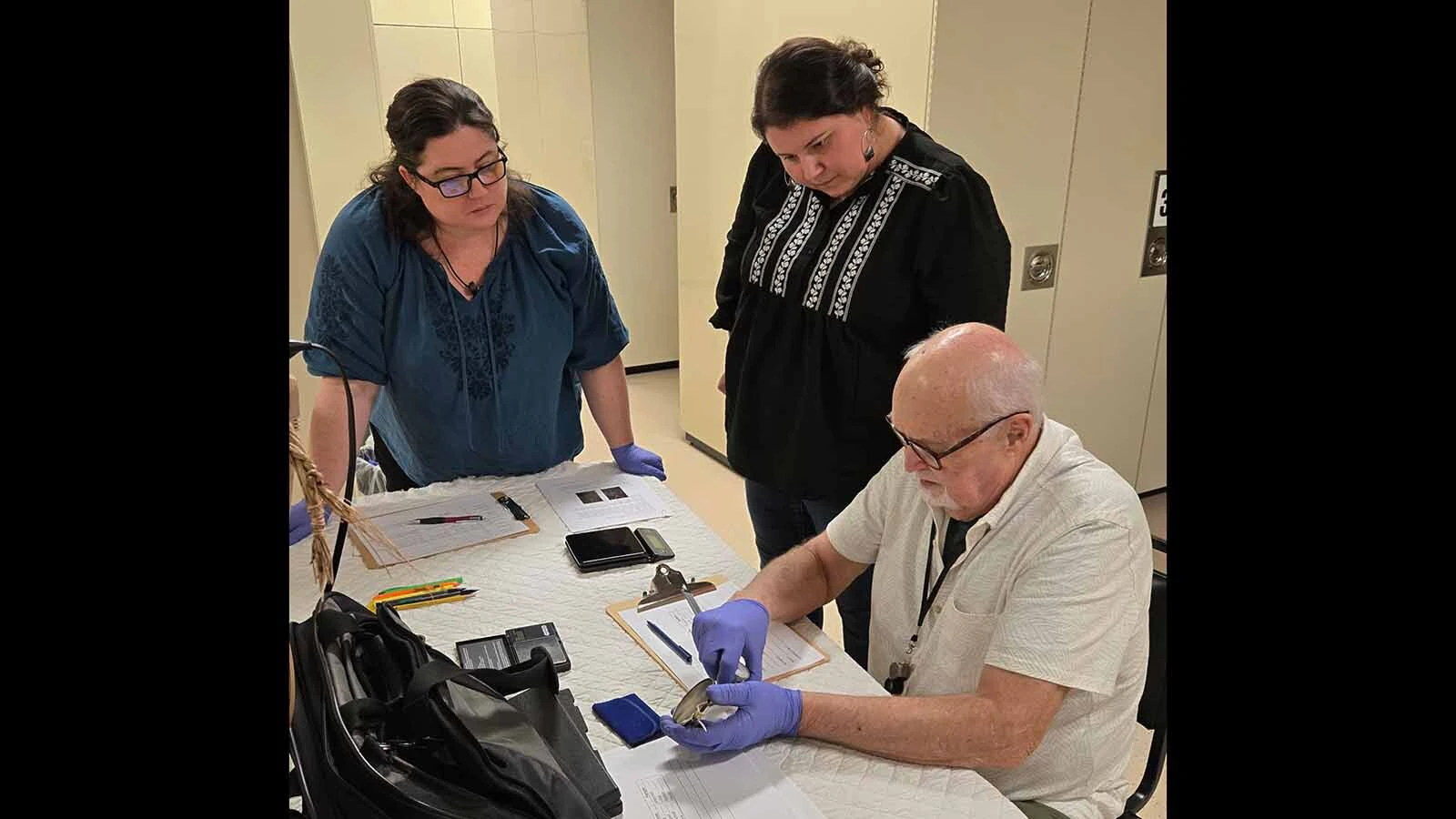
“We worked with a technology called XRF and hired a professional numismatist to help us,” she said. “The whole project actually entailed 33 medals that are in the Plains Indian Museum collection.”
To see this work completed during America’s 250th anniversary feels especially meaningful to Old Elk.
“This is huge,” she said. “Lewis and Clark is such an important name, especially here in the Mountain West, with all the connections we have during the expedition. I think this really cements the impact and importance of the Plains Indian Museum collection and the many treasures we care for.”
It’s a profoundly significant find, Lee agreed.
“There are a fair number of these medals around,” he said. “But who they belonged to, I mean, they didn’t scratch their names on them, with rare occasion. So to be able to link up, ‘Oh, this medal went to this person, that’s kind of unusual.’”
Using Science To Authenticate
Indian peace medals are among the most counterfeited objects when it comes to historical artifacts, Lee said. People were creating reproductions or “restrikes” of peace medals throughout the late 1800s and 1900s.
“Genuine Indian Peace medals bring up to $150,000, so that’s why they’re so commonly counterfeited,” Lee said.
There are lots of tricks to sorting out whether an artifact is counterfeit, Lee said, but XRF analysis has proven useful for authentication. It can instantly reveal whether a medal contains the wrong mix of metal composition, or trace elements that didn’t occur in the raw silver used by the Philadelphia mint in 1801.
The technique works by shooting fluorescent X-rays at an object, causing it to emit a unique series of energy spikes back to sensors. The data from that unique energy signature can then be used to calculate the exact percentages of silver, copper, or other trace metals making up the medal.
Because it is non-destructive, the technique is also used to authenticate historical artifacts such as paintings and tapestries.
Renée Jean can be reached at renee@cowboystatedaily.com.


